Tag: coronavirus

  • Reports saying ‘Pakistan exported COVID-19’ upset Imran’s aide

    Reports saying ‘Pakistan exported COVID-19’ upset Imran’s aide

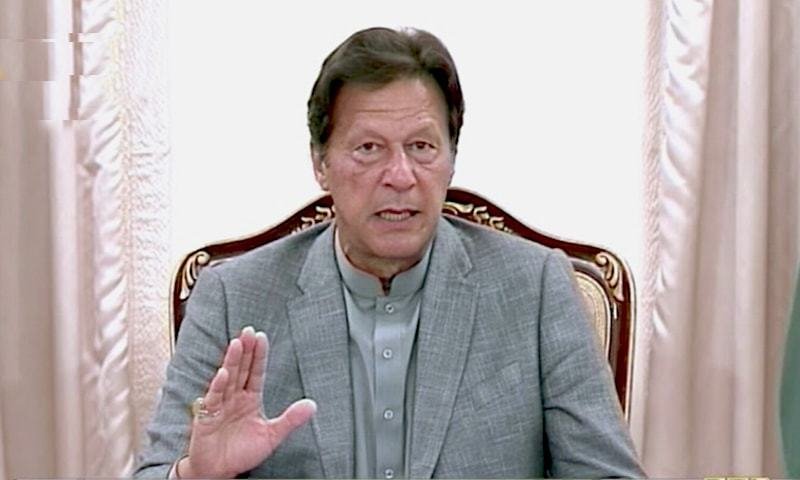
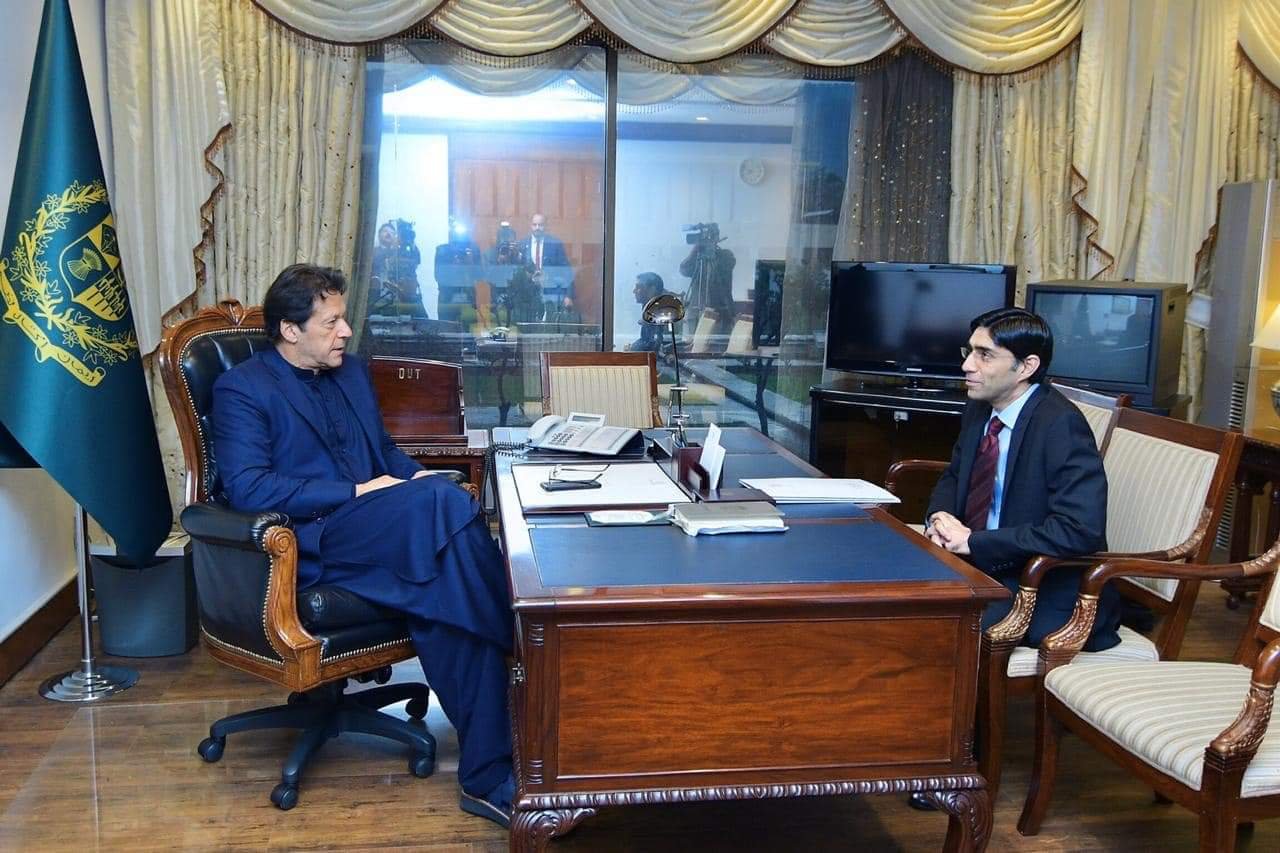
    Dr Moeed Yusuf, special assistant to the prime minister (SAPM) on national security, has denied the impression that Pakistan has been a source of the coronavirus in other countries, saying that the country has “been the most responsible” in the world.

    Last week, the United Arab Emirates (UAE) temporarily stopped receiving passengers on flights coming from Pakistan. The suspension, the UAE civil aviation authority said, will last until a special laboratory to conduct coronavirus tests is established. The decision was taken after as many as 30 passengers aboard an Emirates flight tested positive for coronavirus.

    “Over the past three months, Pakistan conducted tests and quarantined several people so that they won’t be the source of spread. No one appreciated us for that […] We will not allow Pakistan to be singled out,” Yusuf said while addressing a press conference in Islamabad on Thursday.

    He said that Pakistan’s government had also contacted the British High Commission and the latter’s officials had assured that this was not the position of the United Kingdom’s government.

    Yusuf told reporters that only 30 people who had travelled from Pakistan had tested positive. “This [impression to ‘export’ coronavirus] is absolutely false,” he said.

    Yusuf also urged people to avoid unnecessary travel as the government “cannot guarantee that the airspace will remain open three weeks from now”.

    He said that Pakistan has been “the most responsible among all developing countries in repatriating people as well as sending them away”.

    According to him, any passenger who is showing symptoms will not be allowed to leave the country. The SAPM told people to follow the guidelines set by the airlines they are travelling from and their destination countries as it would be a source of embarrassment for the country if the rules were violated.
  • The Current data: Are Lahoris actually ‘weird creatures’ not taking coronavirus seriously?

    The Current data: Are Lahoris actually ‘weird creatures’ not taking coronavirus seriously?

    Punjab government has finally once again sealed worst-hit areas of Lahore for at least two weeks despite which the number of coronavirus infections in Punjab rose to 71,987 on Friday.

    The development came days after Punjab Health Minister Dr Yasmin Rashid slammed the people of Lahore for not taking precautionary measures against COVID-19 and held them responsible for the surge in the number of infections in the country’s most populous province.

    “Lahoris are weird creatures. For them, everything is a joke. They are so ignorant… they do not listen and don’t care. No other nation is more ignorant and stupid than Pakistanis,” she had said.

    WATCH VIDEO:

    Seven COVID-19-affected areas have been sealed in Lahore over the past week. These include Gulberg, Model Town, Faisal Town, Garden Town, Defence Housing Authority (DHA), Gulshane Ravi and the Walled City.

    A complete ban has been imposed on transportation and businesses in the sealed areas where 3,606 cases have so far been reported. The actual number of cases is likely to be way more than official figures that are as follows:

    DHA Gulberg Model Town Faisal Town Garden Town Gulshan-e- Ravi Walled city
    1,403 736 659 188 238 212 170

    Government guidelines were issued before re-opening business ahead of Eidul Fitr, under which shopkeepers were told not to let people gather at their stores, social distancing was stressed, availability of sanitisers for general public’s use was to be ensured and wearing gloves with masks was made necessary in most spaces.

    However, none of the SOPs [standard operating procedures] were followed by most Lahoris, resulting in the provincial capital of Punjab becoming the epicenter of COVID-19 in the province.

    At present, there are 71,191 coronavirus cases in Punjab while 35,582 cases (about 49.98 per cent of the total number of infections) are in Lahore alone with the local spread in the city standing at 69.4 per cent.

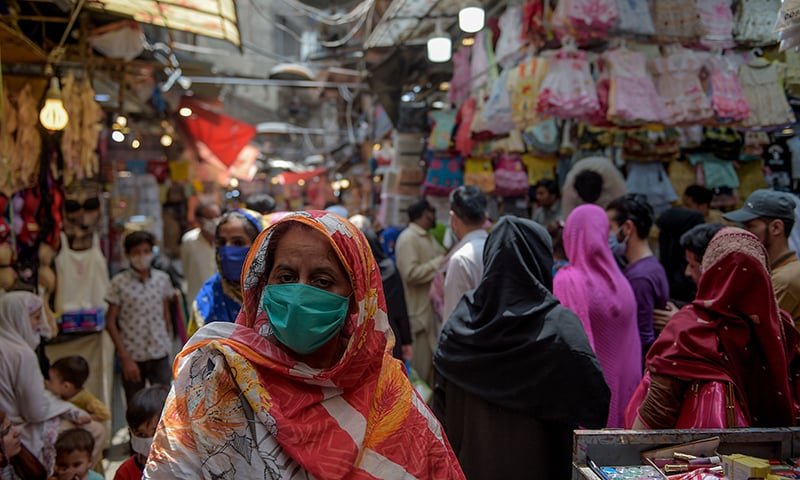
    Despite a lockdown being put in place again, government SOPs are still not being followed by people as many believe that coronavirus “does not even exist”, and throng to markets, destroying social distancing among other guidelines.

    A look at stats of police actions against violators of SOPs amid the government’s “smart” lockdown, also proves the same.

    According to Lahore police stats from June 16 to June 24, almost 238,400 citizens violating coronavirus guidelines were warned and sent back home. As many as 8,251 motorcycles and vehicles were confiscated while 4,599 citizens submitted surety bonds for not unnecessarily leave their homes again.

    During the ongoing lockdown, 8,927 cases have been registered and 1,888 shops have also been sealed for violating SOPs in Lahore.

  • Hafeez, who tested positive for coronavirus at PCB, tests negative at private lab a day later

    A day after testing positive for coronavirus at Pakistan Cricket Board (PCB), Mohammad Hafeez says he has tested negative at a private facility.

    On Tuesday, Hafeez was announced as one of ten Pakistani national cricket team players who tested positive for the virus as the entire 29-man squad due to fly out to England on June 28 underwent COVID-19 testing.

    Hafeez, however, got himself tested from a different lab in Lahore for a “second opinion” for him and his family. That result, he said in a tweet, was negative.

    https://twitter.com/MHafeez22/status/1275689746765840395

    All of PCB’s tests were conducted by Shaukat Khanum Laboratory.

    Other players who tested positive for the virus include Fakhar Zaman, Imran Khan, Kashif Bhatti, Mohammad Hasnain, Mohammad Rizwan, and Wahab Riaz.

    Apart from the seven players, one support personnel — the masseur — also contracted the illness after the cricket body had 35 tests carried out for COVID-19 in Karachi, Lahore, and Peshawar.

    Pakistan’s Test and limited-overs squads will tour England for three Tests and three T20 internationals.

    England director of cricket Ashley Giles has said that the tour is expected to go ahead.

  • PTI’s Fatyana thinks eating locusts can eradicate coronavirus

    PTI’s Fatyana thinks eating locusts can eradicate coronavirus

    Amid statements from other government members regarding coronavirus cracking netizens up, it has emerged that Pakistan Tehreek-e-Insaf (PTI) lawmaker Riaz Fatyana thinks eating locusts, an infestation of which is threatening food security in Pakistan among other South Asian nations as well as in Africa, the Arabian Peninsula and South America, could end the COVID-19 pandemic.

    “It is said that eating locusts can lead to the eradication of coronavirus,” reports quoted the senior PTI MNA as saying.

    He went on to say that the government should look into the claims and if verified, people themselves would deal with the locust infestation.

    LOCUST INFESTATION:

    The 2019-20 locust infestation is an outbreak of desert locusts which is the worst in 70 years in Kenya and the worst in 25 years in Pakistan, India, Ethiopia and Somalia.

    The outbreak began with heavy rains in 2018 in the Arabian Peninsula in spring 2019, swarms spread from these areas, and by June 2019, the locusts spread north to Pakistan, India, Iran and south to East Africa, particularly the Horn of Africa. By the end of 2019, there were swarms also in Ethiopia, Eritrea, Somalia, Kenya, Saudi Arabia, Yemen, Egypt and Oman.

    By June 2020, another swam appeared in South America, affecting Paraguay and Argentina while as of April 2020, efforts to control the locusts were being hampered by ongoing restrictions in travel and shipping due to the COVID-19 pandemic.

    According to reports, around 37 per cent area of Pakistan is more vulnerable to the attack. This includes 60 per cent area of Balochistan, 25 per cent area of Sindh and 15 per cent area of Punjab.

    “If the desert locust is not contained, Punjab and Sindh may become summer breeding zone of the pest,” said a report submitted to the Supreme Court (SC) by Punjab government through Additional Advocate General Chaudhry Faisal Hussain earlier this month.

    It said desert locust appeared in Punjab’s Cholistan area in July last year. In November last year, locust swarms started migration toward Balochistan and South Punjab.

  • Patient dies after ‘family unplugs ventilator to turn on air cooler’

    Patient dies after ‘family unplugs ventilator to turn on air cooler’

    A 40-year-old man died at a hospital after his family members allegedly unplugged the ventilator he was on to plug in an air cooler.

    Hospital authorities said a three-member committee will probe the incident.

    According to reports, the patient, who was suspected to be suffering from COVID-19, was brought to the ICU of the government-run hospital in the Kota city of India’s Rajasthan state on June 13. His test report, however, came negative later.

    The man was shifted to an isolation ward on June 15 as a safety measure after another patient in the ICU tested positive for the disease.

    Since it was very hot in the isolation ward, his family members bought an air cooler the same day. On finding no socket for the cooler, they allegedly unplugged the ventilator.

    They immediately informed doctors and medical staff, who administered CPR upon the patient, but he died.

    Hospital Superintendent Dr Naveen Saxena said the committee comprising the deputy superintendent, nursing superintendent and chief medical officer on duty will probe the incident and submit a report.

    The committee has recorded statements of medical staff in the isolation ward but the family members of the deceased patient are not responding to the panel, he alleged.

    The family members allegedly did not seek permission to plug in the cooler and when the patient died, they “misbehaved” with the medical staff and the resident doctor on duty, other hospital authorities said.

  • Hajj to be held with a limited number of people this year: Saudi Arabia

    Hajj to be held with a limited number of people this year: Saudi Arabia

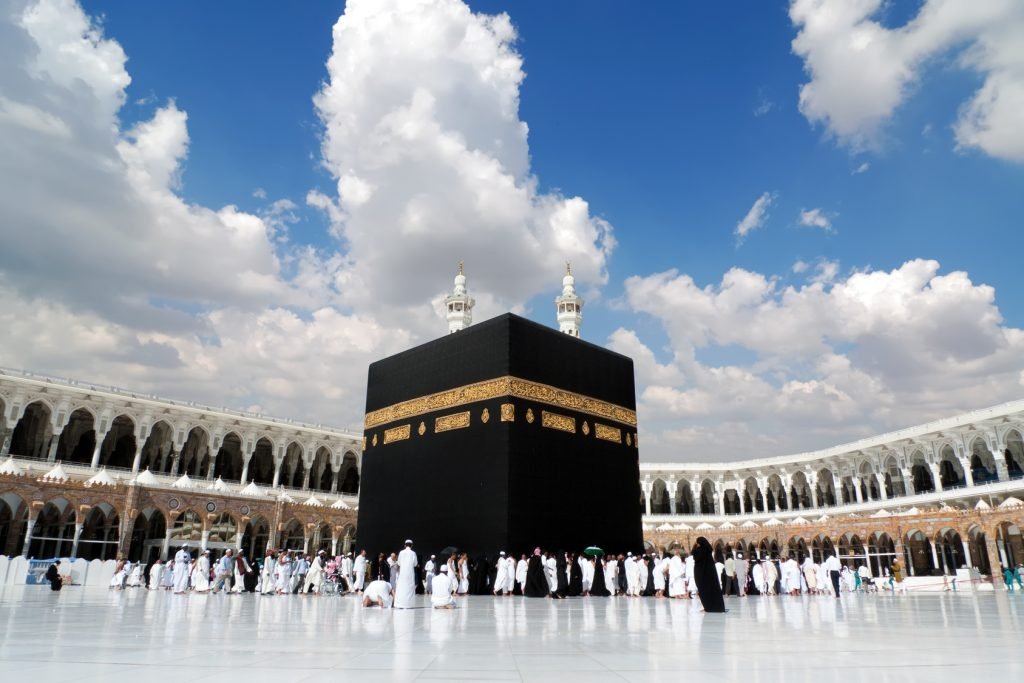
    Saudi Arabia has announced that it will strictly limit the number of people who can take part in this year’s Hajj pilgrimage because of the coronavirus, putting to rest the fears that Hajj might be cancelled altogether. Saudi Hajj Minister Mohammed Banten had asked Muslims to delay finalising their plans “until the situation is clear” back in March.

    In a statement, Saudi Arabia’s Ministry of Hajj and Umrah said that the annual Holy pilgrimage would be restricted to a very limited numbers of pilgrims of all nationalities who are already residing in Saudi Arabia. The statement said that as COVID-19 cases continue to grow globally, and because of the risks of coronavirus spreading in crowded spaces and from other countries, the Hajj will “take place this year with a limited number of pilgrims from all nationalities residing in Saudi Arabia only, who are willing to perform Hajj.”

    “This decision is taken to ensure Hajj is performed in a safe manner from a public health perspective while observing all preventative measures and the necessary social distancing protocols to protect human beings from the risks associated with this pandemic and in accordance with the teachings of Islam in preserving the lives of human beings,” the statement added.

    The Ministry also tweeted that people’s health and safety “is our priority”.

    Pakistan’s Ministry of Religious Affairs Noor-ul-Haq Qadri shared the Urdu version of the press release and said that the KSA’s Minister of Hajj and Umrah contacted him via telephone to let him know about Saudi Arabia’s decision about this year’s Hajj.

    Hajj is one of Islam’s most important religious obligations. Recently, singer Atif Aslam expressed his desire to recite the Azaan at the Holy Kaaba in Makkah.

  • Three Pakistani cricket players test positive for COVID-19

    Three Pakistani cricket players test positive for COVID-19

    The Pakistan Cricket Board (PCB) has announced that three players – Haider Ali, Haris Rauf, and Shadab Khan – have tested positive for COVID-19.

    The board said that the the players had shown no symptoms until they were tested in Rawalpindi on Sunday ahead of the Pakistan men’s national cricket team’s tour to England.

    According to a press release, the PCB medical panel is in contact with the three who have been advised to immediately go into self-isolation.

    Imad Wasim and Usman Shinwari, who were also screened for the virus in Rawalpindi, tested negative and will travel to Lahore on 24 June.

    Read more – Mohammad Amir reveals why he backed out of England tour

    The statement further added that “other players and team officials, barring Cliffe Deacon, Shoaib Malik and Waqar Younis, underwent tests at their respective centres in Karachi, Lahore, and Peshawar on Monday.”

    Their results will be announced as soon as they are received.

    “Until then, the PCB will not make any further comment,” added the statement.

    Meanwhile, PCB on June 12, had announced a 29-player squad for three Tests and three T20Is against England to be played in August-September.

    “An extended squad, including white-ball specialists, is being sent to England as the players, in accordance with series SOPs in the wake of COVID-19, will remain in England from start to finish,” stated a press release.

    According to details, the Pakistan Cricket Team is scheduled to depart on June 28 for Manchester, before driving to Derbyshire for their 14-day quarantine period during which they will be allowed to train and practice. Apart from training and practicing, there will be intra-squad matches to compensate for the lack of practice matches due to non-availability of local teams as the ECB is yet to commence its domestic season.

  • Projection: August likely to be the worst month for Pakistan with one million coronavirus cases

    Projection: August likely to be the worst month for Pakistan with one million coronavirus cases

    The effects of poorly managed or no lockdowns at all are raising their ugly heads as Pakistanis has reached the 14th position in the global ranking of countries most affected by the new coronavirus — COVID-19 — with 165,062 cases, while it now ranks 6th among nations with the most number of active cases around the globe, as per Worldometers.

    The World Health Organization (WHO) earlier this year warned that South Asia could become yet another new epicenter of the pandemic, however, despite the warning and rapidly increasing number of coronavirus cases, Prime Minister (PM) Imran Khan has only announced the imposition of “smart lockdowns” with only certain areas in worst-hit cities being put under restrictions.

    The decision was taken keeping in view the consequent struggles of the poor, whom the government believes might not be able to survive a complete lockdown and its effects on the already deteriorating economic conditions.

    While experts, including Dr Attaur Rahman of PM’s task force, believe the government has already failed to deal with the pandemic and is grossly under-reporting both COVID-19 fatalities and infections, the virus is yet to peak — by the end of July or August –, data suggests.

    An analysis by The Current showed that before lockdown restrictions were eased in Pakistan ahead of Eidul Fitr, the highest number of confirmed coronavirus cases stood at 24,648 during the first week of May. The figure then crawled up to 122,574 by June 11, while the number of coronavirus cases as of this moment stands past 165,000 with thousands of cases being reported every day despite a low testing capacity.

    It is estimated that the actual number of infections is very high with Lahore alone having more than 2 million cases by now.

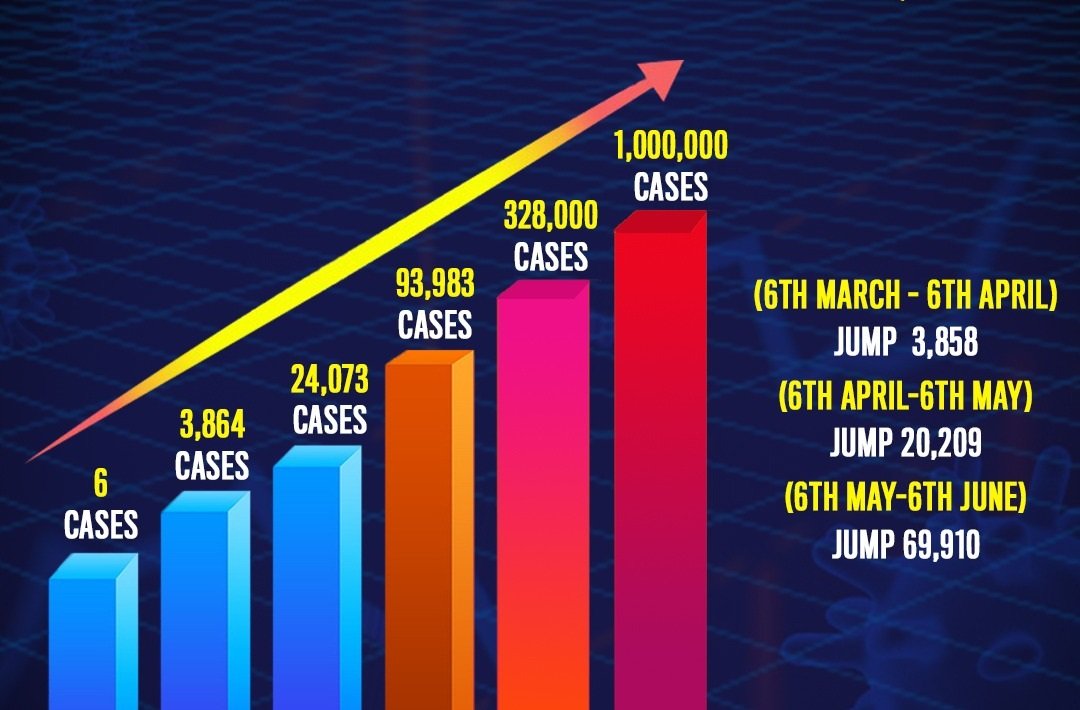
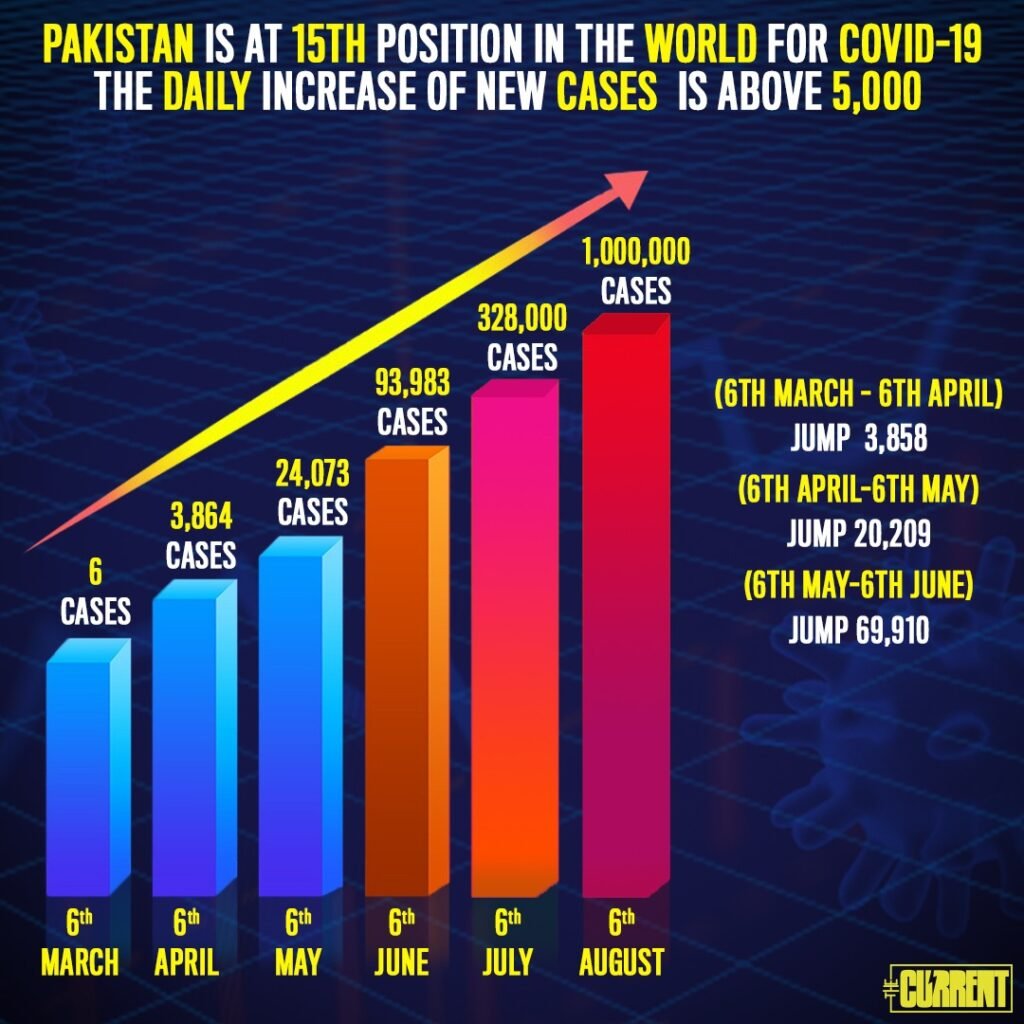
    Pakistan has experienced its largest month-wise jump since the pandemic began, with 69,910 cases being reported between May 6 to June 6. Earlier, 3,858 COVID-19 cases were recorded between March 6 and April 6 while 20,209 were reported between April 6 to May 6.

    According to projections, the figure is likely to reach a million by August 6 if strict lockdowns aren’t imposed and social distancing guidelines are not followed.

    A comparison with the best and worst managed lockdowns from across the globe also puts things into perspective.

    Country Outcome
      New Zealand
    Prime Minister Jacinda Ardern announced a strict lockdown on March 25 when 100 people had tested positive and no deaths had been reported.   After a 76-day lockdown, New Zealand lifted all restrictions, declaring the country ‘corona free’ but borders remain closed. No new case for more than two weeks has been reported in the country except three suspected ones.
    Wuhan
    The capital of Hubei province of China was the origin of the deadly virus, where 11 million residents were locked up at their homes since January. After an effective 77-day lockdown, Hubei reports zero COVID-19 infections and the country has reported zero coronavirus deaths since January.        

    On the other hand:

    Country Outcome
    India
    On March 25, India imposed a countrywide lockdown that was called a curfew by PM Narendra Modi. The development had come when 519 confirmed cases and 10 deaths had been reported across India.   A bit over two months later, with India easing lockdowns and shopping malls, restaurants as well as temples being re-opened, it has become the country with 4th highest number of coronavirus cases in the world.
    Iran
    Iran shut schools, postponed events and discouraged travel since the country reported its first COVID-19 death in February. Despite these measures, the number of deaths and infections continued to grow until a countrywide lockdown was imposed in March.   With the lockdown being eased from mid-April to May 26 when everything was reopened, including shopping malls, parks, religious shrines, restaurants and historical sites, the number of deaths has jumped to nearly 10,000 with over 200,000 infections.

    By the time this report was filed, Sindh topped the chart with most infections in Pakistan (62,269), with Punjab trailing behind at 61,678, Khyber Pakhtunkhwa (KP) at 20,182, Islamabad at 9,941, Balochistan 8,998 and Gilgit-Baltistan and Azad Jammu Kashmir (AJK) at 1,225 and 769 infections, respectively.

  • ‘Chhalawa’ director Wajahat Rauf reveals he had COVID-19 for a whole month

    ‘Chhalawa’ director Wajahat Rauf reveals he had COVID-19 for a whole month

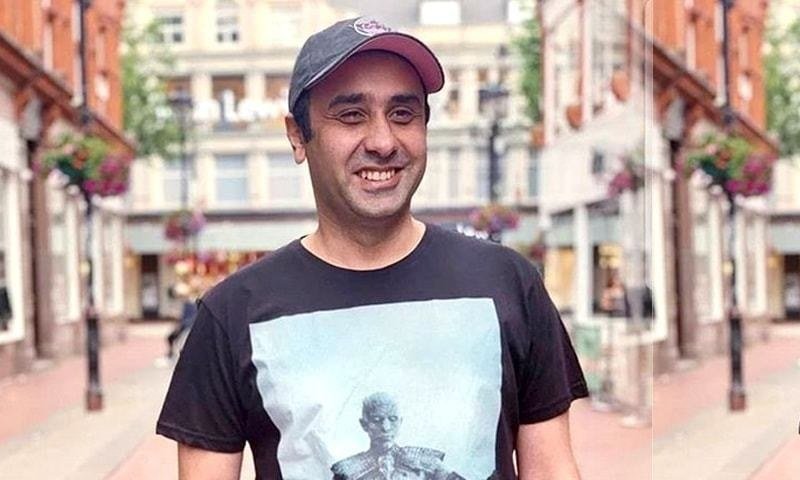
    Chhalawa and Karachi Se Lahore director Wajahat Rauf has revealed that he had COVID-19 for 31 days.

    In an Instagram post, Rauf said “Corona fell in love with me for 31 days and just wouldn’t let go. It was probably the longest one-sided affair I’ve had in my life. But she didn’t love me all the way hence I had mild symptoms only.”

    The director said that he isolated himself for the whole time and “didn’t tell anyone as haven’t met anyone in 45 days and didn’t want the attention for the wrong reasons. But I’m cool with seeking attention now.”

    Rauf also thanked those who helped him in this testing time, namely his wife Shazia Wajahat and their sons.

    “A big thank you to Shazia Wajahat for taking such good care of me, my sons for keeping me entertained from a distance and immediate family for their prayers.”

    Summing up his experience, Rauf said: “The only real advice I can give you is, don’t panic! I know it sounds a lot worse when the PM says it.”

    https://www.instagram.com/p/CBjNy8KDx9t/?utm_source=ig_embed

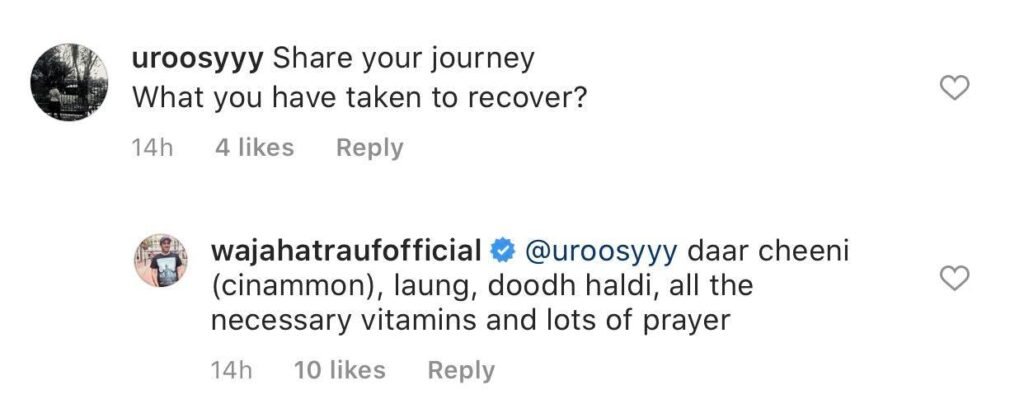
    When a follower asked him what remedies he followed to recover, Rauf shared that he took cinammon, laung, doodh haldi and all necessary vitamins.

    Besides Rauf, Vasay Chaudhry and Nida Yasir, who had also tested positive for the virus, have also recovered from the illness.

    https://www.instagram.com/p/CBc07Okp_ew/

    Rauf had been shooting his upcoming film Parde Main Rehnay Do with Ali Rehman Khan and Hania Aamir when the coronavirus situation in Pakistan took a turn for the worse and a lockdown was imposed in the country. Consequently, the shooting of the film was postponed.

    https://www.instagram.com/p/B9T8faEjPtl/
    https://www.instagram.com/p/B97QPnSn4BO/
  • Govt is grossly under-reporting coronavirus deaths and infections: PM’s task force head

    Govt is grossly under-reporting coronavirus deaths and infections: PM’s task force head

    Pakistan is understating its rate of infections and the death toll from the coronavirus, the head of a government task force has said as the country becomes a hotspot for the pandemic in South Asia, Bloomberg reported.

    “The actual numbers will be two to three times more than what the government is reporting,” Dr Attaur Rahman, chairman of Prime Minister (PM) Imran Khan’s task force on science and technology, said and added that a large number of cases weren’t being reported because of low testing and as reasons other than respiratory failure weren’t being counted in deaths.

    WATCH VIDEO:

    Pakistan’s coronavirus cases have increased manifold since the government eased a lockdown in the second week of May after a partial shutdown of about two months. PM Imran has said he is allowing some businesses to open as he fears people will die of poverty and hunger instead of the virus. Alarmed by the rising number of cases, the authorities have again started shutting down residential localities in 20 key cities including the federal capital and Lahore.

    Pakistan is the second most infected nation in Asia after India with over 150,000 cases and about 3,000 deaths. The fatality rate of 2% is less than half of the 5% global average.

    Random testing in Pakistan’s second-largest city, Lahore, by the health department of Punjab in May showed that at least 6 per cent of all tests came back positive for COVID-19 while in some areas the percentage was as high as 14 per cent, Voice of America reported.

    Based on the city’s population and the sampling data, the health department working group, comprised of epidemiologists, public health specialists, applied economists, statisticians and public policy specialists, calculated the number of cases in Lahore to be 670,800 on May 15.

    The rate at which the infection was spreading alarmed those involved.

    “Our calculations said the numbers were doubling every two weeks,” said Dr Waheeduzzaman Tariq, a senior virologist who was part of the group and sits on multiple government committees dealing with the coronavirus pandemic.

    According to those numbers, on June 15, the figure should be approximately 2.7 million infected people in Lahore alone.