Tag: coronavirus

  • Pakistan receives export orders of face masks from US, Canada and Europe

    Pakistan receives export orders of face masks from US, Canada and Europe

    Adviser to Prime Minister (PM) on Commerce Abdul Razak Dawood has said that Pakistani exporters have received large orders of face masks from the United States (US), Canada and Europe.

    In a series of tweets on Thursday, he congratulated the exporters and termed their achievement a major breakthrough in the country’s export sector.

    “I have received information that some exporters have obtained large orders for face masks from US, Canada and Europe. This is a major breakthrough and I congratulate them for this achievement,” he tweeted.

    He further emphasised the need for Pakistani exporters to diversify into new segments in order to meet the changing global needs.

    “It is part of our strategy to diversify into new segments and this has been achieved by the exporters through their own efforts. I’m sharing this information with others to encourage them to seek more orders from different parts of the world,” he stated.

    Separately, the adviser stated that in order to achieve the target of agricultural exports, the government was striving hard to make space in the rice markets of the Middle East, North America and Africa.

    Talking to APP, he said the government intends to take the exports to the highest-ever level and in this regard, it was taking different measures to reclaim traditional markets besides getting access to new ones.

    “All members of the Rice Exports Association Pakistan (REAP) should prepare themselves for this opportunity so that they could get their orders approved in the Mexican market.”

    He further informed that rice export to Mexico was stagnant for the past few years but after the delegation’s visit, “we are hoping that our rice will be able to enter the Mexican market”.

    Dawood said that rice was the largest agro-export commodity in the country’s export basket, having a total volume of over $2 billion, which would be increased to $5 billion in the next five years.

  • Pakistan deploys militant-tracking technology to trace coronavirus patients

    Pakistan deploys militant-tracking technology to trace coronavirus patients

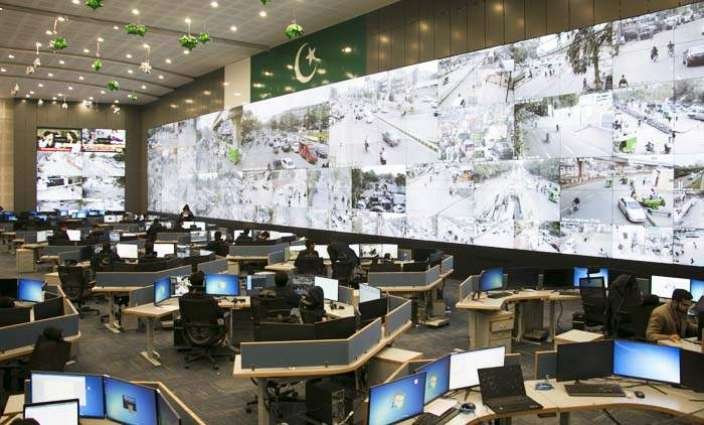
    Pakistani intelligence service is deploying surveillance technology to track suspected and confirmed patients of coronavirus, which is usually used to locate high-value militants.

    The development came after Prime Minister (PM) Imran Khan announced seeking assistance from the Inter-Services Intelligence (ISI) for tackling the virus.

    Details of the project have not yet been made public but two officials told AFP that the spy agency was using geo-fencing and phone-monitoring systems for monitoring.

    Geo-fencing, a strategic tracking system alerts authorities when a suspect leaves a specific geographic area. This tool is also helping officials to monitor neighbourhoods during the lockdown.

    Authorities are also tapping phone calls of COVID-19 patients to check, whether their contacts are talking about having symptoms.

    Speaking on conditions of anonymity, a senior security official said that the trace-and-track system helped authorities track the mobile phones of coronavirus patients as well as anyone they get in touch with before or after their disappearance.

    “The government has been successful in tracing even those who tested positive but went into hiding,” added the official.

    “It was originally used against terrorism, but now they can be used effectively to trace-and-track corona patients,” they maintained.

    Rights groups, on the other hand, are concerned that institutions with such power can abuse their sweeping surveillance to curb political dissidents.

    Countries across the world have employed track-and-trace methods to control the virus spread, raising privacy concerns.

    More than 61,000 people in Pakistan have tested positive and more than 1,200 patients have died.

  • Punjab ‘controls’ coronavirus numbers by sending lab staff on Eid holidays, resulting in less testing

    Punjab ‘controls’ coronavirus numbers by sending lab staff on Eid holidays, resulting in less testing

    The secret behind the sudden drop in number of new coronavirus cases being reported in Punjab has been revealed as journalist Amber Rahim Shamsi quoted Punjab Minister for Industries, Commerce, Investment and Skill Development Mian Muhammad Aslam Iqbal as saying that lab workers had been given Eid holidays, resulting in less testing.

    After easing lockdown restrictions, Punjab has generously announced six Eidul Fitr holidays from May 22 to May 27, which means the rate of increase in the number of cases in Punjab started going down Friday as lab personnel, who had been working tough shifts since the outbreak began, started getting off work and heading home to celebrate Eid with their families.

    The number of COVID-19 infections in Punjab, which increased from 13,914 to 14,584 from May 16 to May 18 and then 16,685 on May 20, stood at 18,455 on Friday with over a thousand cases being reported every day since May 17-18.

    However, the same number on Saturday stands at 18,730 with an increase of just 275 cases — unlike what trends had suggested.

    “It is true that labs have started working at a lower capacity that is leading to the number of cases going unreported as of yet,” a provincial health official told The Current on the condition of anonymity. They refused to comment on the government’s decision of allowing Eid holidays to lab personnel, but said it was a much-needed relief.

    “Things will get back to normal and the testing capacity will be restored after… or maybe even during Eid,” the official added.

    By the time this report was filed, the total number of coronavirus infections in Pakistan stood at 52,437 with 1,101 deaths. Sindh topped the chart with 20,883 cases, followed by Punjab with 18,730 infections, Khyber Pakhtunkhwa (KP) with 7,391 and Balochistan with 3,198. Islamabad had reported 1,457 cases while Gilgit-Baltistan (G-B) and Azad Kashmir had 607 and 171 infections, respectively.

  • Wuhan officially bans eating wild animals

    Wuhan officially bans eating wild animals

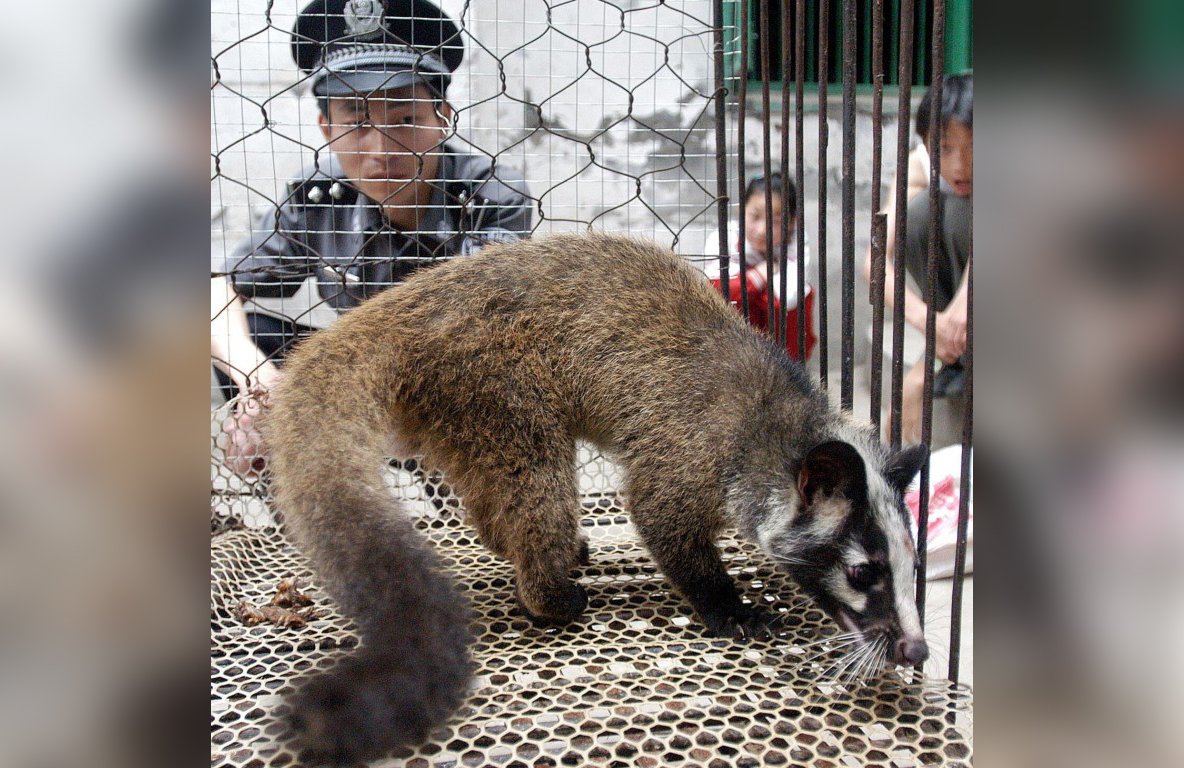
    The city at the centre of the coronavirus crisis — Wuhan — has banned the eating of wild animals and Chinese farmers are being offered cash to quit breeding exotic animals. Both moves come amid mounting pressure for China to crack down on the illegal wildlife trade blamed by many for the pandemic that has killed more than 330,000 people and left over 5 million infected.

    The local administration in Wuhan, the city of about 11 million people in China’s central Hubei province where cases of the new coronavirus were first recorded late last year, announced that the eating of all wild animals was officially banned.

    The city also banned virtually all hunting of wild animals within its limits, declaring Wuhan “a wildlife sanctuary,” with the exception of government-sanctioned hunting for “scientific research, population regulation, monitoring of epidemic diseases and other special circumstances”.

    Wuhan also imposed strict new controls on the breeding of all wild animals, making it clear that none could be reared as food. City officials said the local administration would take part in the wider national scheme to buy wild animal breeders out.

    The national plan is the first time Chinese authorities have pledged to buy out breeders in an attempt to curb exotic animal breeding, animal rights activists say.

    China had already banned the sale of wild animals for food as the new coronavirus — COVID-19 — spread around the world, citing the risk of diseases spreading to humans, but the trade remains legal for other purposes, including research and traditional medicine.

    The virus that causes COVID-19 is widely believed to have passed from bats to people, possibly via another species, before spreading worldwide.

  • ‘Ye Watan Tumhara Hai’: celebrities honour nation’s heroes

    ‘Ye Watan Tumhara Hai’: celebrities honour nation’s heroes

    To honour those fighting on the frontlines against the COVID-19 pandemic, producer (Naqsh Shany) Haider has released a rendition of Mehdi Hassan’s Ye Watan Tumhara Hai.

    The song features a plethora of celebrities including Adnan Siddiqui, Imran Abbas, Zara Noor Abbas, Faysal Qureshi, Ahsan Khan, Asma Abbas, Zhalay Sarhadi, Asad Siddiqui, Anoushey Abbasi and Gohar Rasheed among others.

    According to the song’s producer, “Tum Se Hai Yeh Watan is a symphonic tribute to the sovereignty of Pakistan featuring silver screen artists as singers. This song is dedicated to our nation’s unsung heroes during COVID-19 pandemic and a salute to the armed forces, doctors, engineer’s, scientists, artists and our overseas Pakistanis and the entire nation.”

    The song has been recorded and produced over social media apps in a completely virtual environment.

    “It is a special effort to uplift nationalism within our hearts”, says the producer.

    Watch video:

  • Cambridge University suspends all in-person classes until summer 2021

    Cambridge University suspends all in-person classes until summer 2021

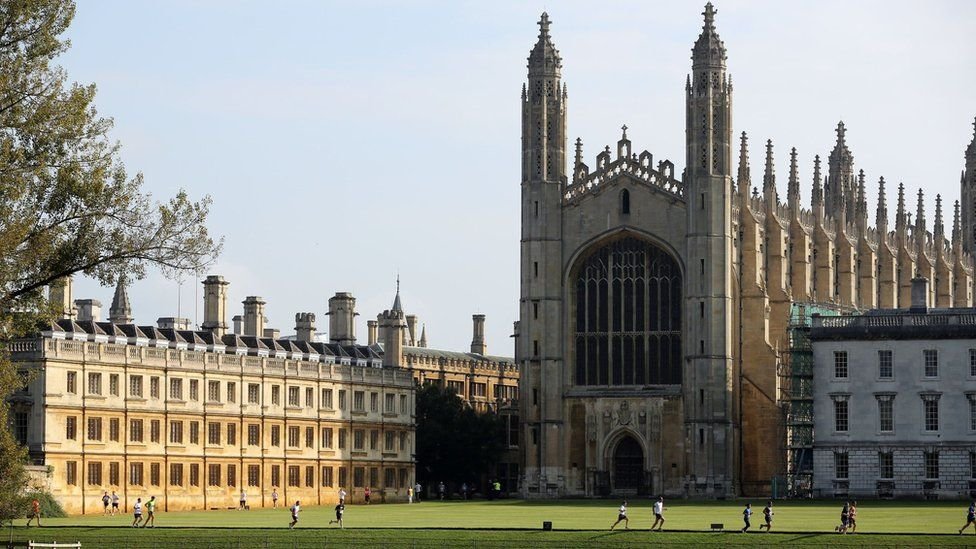
    The University of Cambridge in the United Kingdom has become the first university to announce that it will move all “face-to-face lectures” online for the upcoming 2020-21 academic year. The institution added that it was “likely” social distancing would continue to be required.

    According to a report in The Guardian, the university said that while lectures would continue virtually until summer 2021, it may be possible for smaller teaching groups to take place in person if it “conforms to social-distancing requirements”.

    A statement from the university read: “The university is constantly adapting to changing advice as it emerges during this pandemic. Given that it is likely that social distancing will continue to be required, the university has decided there will be no face-to-face lectures during the next academic year.

    “Lectures will continue to be made available online and it may be possible to host smaller teaching groups in person, as long as this conforms to social-distancing requirements. This decision has been taken now to facilitate planning, but as ever, will be reviewed should there be changes to official advice on coronavirus.”

    All teaching at the university was already moved online in March and exams were being carried out virtually.

  • VIDEO: Unusual snowfall in Ayubia in May after a century

    VIDEO: Unusual snowfall in Ayubia in May after a century

    In an unusual occurrence, the lush green mountains of Abbottabad district’s Ayubia village, after over a century, have received snowfall in the month of May that is known for bringing warmer weather.

    According to The Express Tribune, nearby areas, including the Galiyat region, also received light snowfall on Tuesday, which was very unusual even for the local population.

    A report by the local English daily quoted a 90-year-old resident of Ayubia as saying that he hadn’t seen such weather since the British colonial rule. The resident said that his elder brother told him how in the 1920s the beautiful hilly region received snowfall for the last time in the month of May, while back when his forefathers resided in the region, the cold weather used to be very harsh even in June.

    WATCH VIDEO:

    Galliyat Development Authority (GDA) Director General (DG) Muhammad Raza Habib said he had received reports from his team in Ayubia about the weather, adding that there was no causality or disturbance for civilian life in the region due to the unexpected snowfall.

    Rina Saeed, an Islamabad-based writer and author, said the changes in weather were due to coronavirus pandemic as most of the world was under lockdown.

    READ: Improved air quality leads to breathtaking view of Kashmir from Sialkot

    “The environment is much cleaner now as compared to pre-coronavirus period. Since there is no pollution in the atmosphere, the flora and fauna of this region would benefit from it,” she said.

  • Murad Saeed trolled as Donald Trump ‘follows footsteps of PM Imran’

    Murad Saeed trolled as Donald Trump ‘follows footsteps of PM Imran’

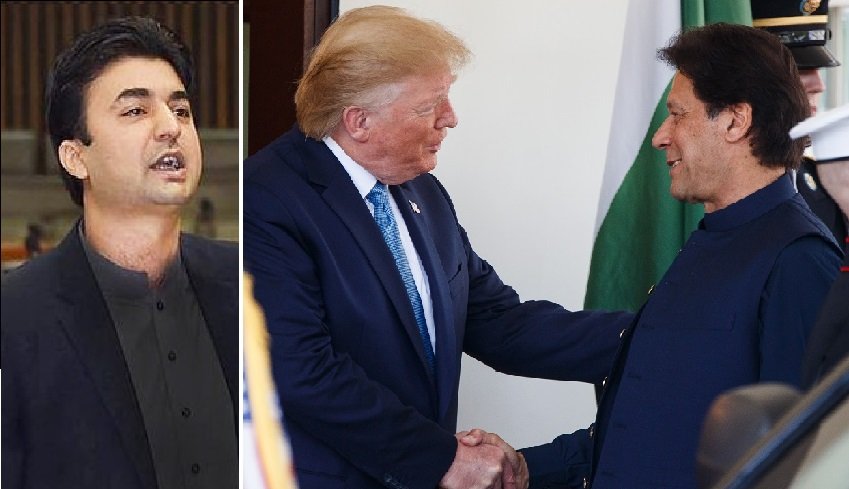
    Federal Minister for Communications Murad Saeed, who had falsely claimed that New York was to follow Prime Minister (PM) Imran Khan’s coronavirus lockdown model, has been trolled by lawyer Reema Omer among others as United States (US) President Donald Trump expressed the desire for his country, worst-hit by the COVID-19 pandemic, to reopen.

    The tweet by the lawyer came as Trump, who has been voicing his concerns over the adverse effects of the lockdown on the economy, tweeted, “REOPEN OUR COUNTRY!”

    The tweet by the US president coincided with PM Imran allowing to ease restrictions across Pakistan ahead of Eid to “wisely” provide relief to the labour class, daily wagers and lower-middle strata of the society.

    “Epic trolling,” tweeted senior journalist Abbas Nasir in response to Reema’s dig at the federal minister.

    ‘NEW YORK TO FOLLOW PAKISTAN’S LOCKDOWN MODEL’:

    In a May 11 viral video, Saeed had claimed that the US state of New York was going to follow the “smart lockdown” concept after being inspired by Imran Khan and Pakistan, however, fact checks revealed otherwise. Meanwhile, netizens shared videos and pictures of how the partial lockdown measures were failing even in Pakistan.

    The clip instantly gained popularity on social media and was reported by several Pakistani and international news outlets.

    “If you look at the smart lockdown concept implemented by PM Imran Khan even the governor of New York has quoted Pakistan’s contact tracing and tracking concept and are following it now,” the federal minister is heard saying while speaking at the National Assembly.

    Saeed also reportedly said that the cluster lockdown concept discussed by Khan is being taken forward by his counterpart Boris Johnson in the United Kingdom (UK).

  • PTI MPA passes away two days after testing positive for coronavirus

    PTI MPA passes away two days after testing positive for coronavirus

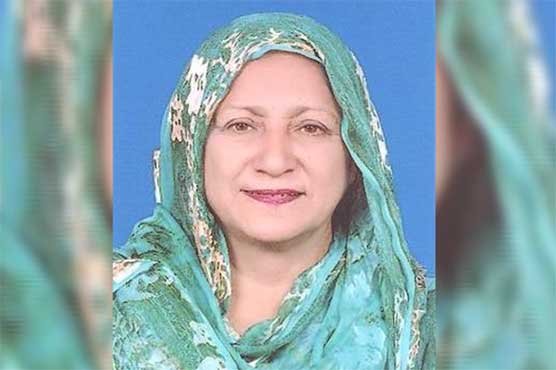
    Pakistan Tehreek-e-Insaf (PTI) member of Punjab Assembly Shaheen Raza passed away on Wednesday, two days after she tested positive for coronavirus and was shifted to an isolation ward at Lahore’s Mayo Hospital.

    While the cause of death earlier remained unclear as Mayo Hospital CEO Dr Asad Aslam said she was also a patient of blood pressure and diabetes, Punjab Chief Minister (CM) Usman Buzdar confirmed that his colleague had succumbed to COVID-19.

    He separately also expressed a deep sense of sorrow and grief over the death, and extended sympathies to the bereaved family.

    On Saturday night, Raza was quarantined at a district headquarters (DHQ) hospital after symptoms of coronavirus. Her test sample was sent to a laboratory that on Sunday confirmed she had contracted the deadly virus.

    On the instruction of CM Buzdar, the MPA was later shifted to Mayo Hospital and put on a ventilator.

    Raza becomes the first lawmaker in Pakistan to succumb to the virus that has so far claimed at least 324,970 lives across the globe and over 900 in Pakistan.

  • Coronavirus: Army takes over distribution of protective equipment to ensure transparency

    Coronavirus: Army takes over distribution of protective equipment to ensure transparency

    National Disaster Management Authority (NDMA) chief Lieutenant General Muhammad Afzal has said that the army, amid doctors’ complaints regarding the nonavailability of personal protective equipment (PPE), has taken over the distribution of the same and the equipment is now being provided to hospitals with the help of respective corps headquarters.

    “As we had received complaints from some doctors that they were not getting PPE, I requested COAS [Chief of Army Staff Gen Qamar Javed Bajwa] after which it was decided that PPEs will directly be sent to the corps headquarters concerned rather than sharing them with the provincial governments,” Lt Gen Afzal said while addressing a press conference.

    According to Dawn, he added that the information regarding the dispatching of PPEs was, however, duly shared with the provincial governments. “Now the army is distributing the protective gear in the hospitals, and since then we have not received any complain.”

    The NDMA chairperson said the authority had adequate stocks of protective equipment which could cater to the needs of doctors and patients for the next month.

    He said initially Pakistan was dependent on foreign-made equipment but now except ventilators, everything else was being manufactured by local companies. “As a result of the local production of equipment, the cost of normal mask has dropped from Rs50 to Rs10 and N-95 mask is now available for Rs300 against its previous price of Rs2,000.”

    Lt Gen Afzal said so far five tranches of equipment had been sent to provinces and a universal helpline 111-157-157 set up to receive complaints regarding unavailability of PPE and other material being used against the virus.

    He said a quarantine centre established at Haji Camp in the capital was not being utilised as people of the area had demanded that such a centre should be away from populated areas.