Tag: coronavirus

  • Ayeza Khan makes a fashion statement with a face mask

    Ayeza Khan makes a fashion statement with a face mask

    Have to say, we saw this one coming. Given how important a mask is during the ongoing global pandemic, it was only a matter of time before designers started producing well, designer masks.

    And Ayeza Khan, for a Ramzan transmission appearance, decided to accessorize her look with a matching mask and said that every outfit should come with a matching mask now.

    https://www.instagram.com/p/B_c1YeIAWef/
    https://www.instagram.com/p/B_c18eLgkUh/
    https://www.instagram.com/p/B_c2ISBATd6/

    What do you think of the trend?

    Following criticism on social media, Ayeza hit back saying that masks are an essential now and that designers were just trying to meet the growing demands.

    https://www.instagram.com/p/B_dsijynxrG/

    Here is her complete look, minus the mask.

  • Lockdown, you still there?

    Lockdown, you still there?

    As per authorities, a lockdown is not only in place in Pakistan but has also been extended.

    Yet, there is no lockdown.

    We all know that when the federal and provincial governments imposed restrictions all across the country to curb the spread of coronavirus –COVID-19 –, most people followed the rules and stayed indoors. Less traffic was seen on the roads and consequently, the air quality became much better. But most importantly, the lockdown to some extent served its actual purpose in helping the authorities control coronavirus.

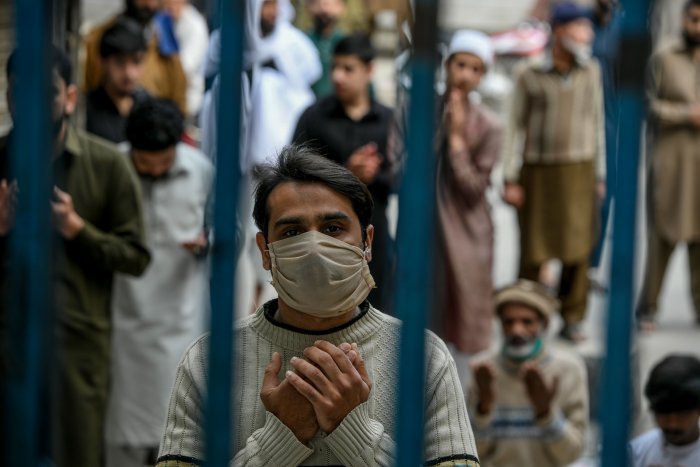
    Then in mid-April, the government announced that while the lockdown had been extended, some industries and shops ccould re-open. This led to ulema announcing that they too would reopen mosques and offer Taraweeh during the holy month of Ramzan. The government finally held negotiations with religious scholars and an accord was signed, as per which all mosques would have to follow 20 SOPs to remain open.

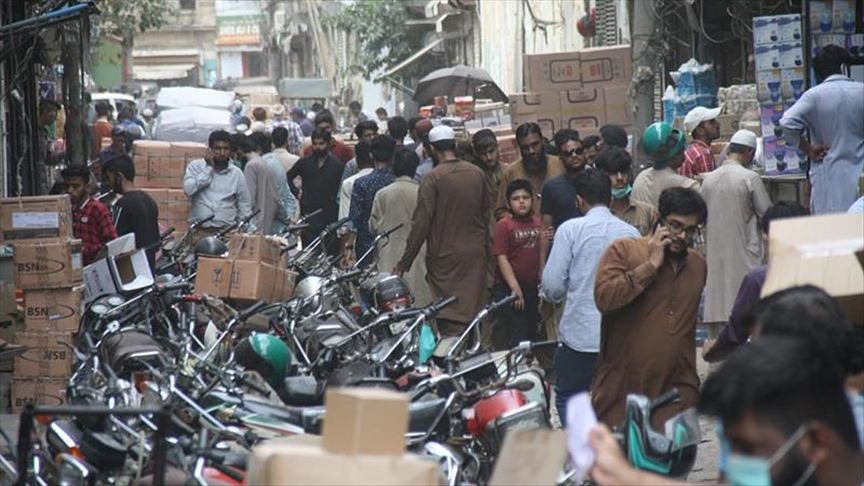
    A few days before Ramzan, senior doctors in Karachi held an urgent and heart-wrenching press conference. They said that after the lockdown was eased, a 40 per cent spike in coronavirus cases had been recorded from April 16-21. A 40 per cent increase in just five days. Imagine! The following day, senior doctors in Lahore also held a similar press conference and urged the government to consider imposing a stricter lockdown for the next two weeks.

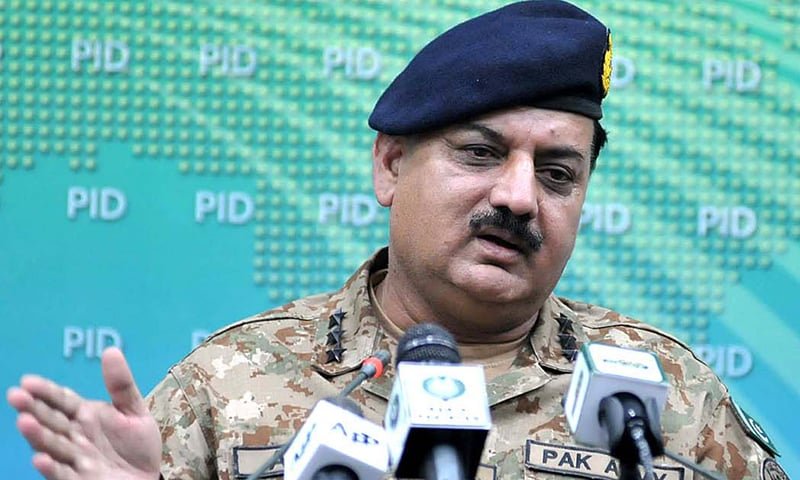
    All this came amid the government’s realisation of the fact that the number of cases in Pakistan is likely to increase by mid-May. The Inter-Services Public Relations (ISPR) chief also warned of this in his press conference.

    In view of what the medical community was saying, the Sindh government on Thursday night decided to go back to their old SOPs of allowing just 3-5 people — mosque administration — to offer prayers at mosques. The rest of the country has allowed resumption of congregational prayers due to Ramzan. Apparently, not all mosques are following the agreed-upon SOPs. According to a survey conducted by the Pattan Development Organisation and published by Dawn, more than 80 per cent of mosques in Punjab and the federal capital did not put in place the measures agreed upon by the government and ulema regarding first Taraweeh congregations on Friday.

    The government will eventually have to reconsider this relaxation in lockdown. We understand that the economic downturn due to the coronavirus outbreak and lockdown was something the government was worried about and rightly so. The choice between saving the economy and an increase in coronavirus cases is difficult. But we will have to make a choice. Pakistan has crossed 13,000 cases. The number of deaths is also slowly increasing. We must remain vigilant.

    An aside: In his dua during Prime Minister (PM) Imran Khan’s telethon to raise funds for coronavirus relief, Maulana Tariq Jamil came under fire for criticising media. He later apologised when different anchors conducted shows against what he had said, but what he didn’t apologise for and what was not even highlighted much either, was how he correlated women and ‘behayai’ (vulgarity) and then said this ‘azaab’ is a result of the vices that exist in our society.

    Minister for Human Rights Shireen Mazari rightly pointed out in a tweet that it was “absurd for anyone under any guise to even suggest the COVID-19 pandemic was a result of women wearing short sleeves or because of private schools/universities misleading the youth. This simply reflects either ignorance abt pandemics or a misogynist mindset. Absolutely unacceptable.”

    In a country where thousands of women are killed in the name of honour annually, where domestic abuse is on the rise, where crimes against women keep increasing instead of decreasing, blaming women for a pandemic is unacceptable.

  • COVID-19: Should we worry about Pakistan’s economy?

    The world has come to a screeching halt.

    The coronavirus pandemic has affected lives in so many different ways that no one could have imagined only a few months ago. Large metropolitan cities like New York and London seem like ghost towns right out of a Hollywood movie. Restaurants, cinemas and airlines have stopped operating and malls are deserted. People, no matter where they are, are just afraid to get out of their houses and carry on with normal life. It is no more a health crisis, and is instead, taking the shape of an unprecedented economic catastrophe.

    No one knows the exact scale of this catastrophe, but everyone knows that a major recession is in the offing.

    Pakistan is no exception and the International Monetary Fund (IMF) has projected a 1.5 per cent contraction in the country’s GDP this year, the first in over seven decades, whereas the World Bank (WB) estimates that it can be as much as 2.2 per cent. Next year would be no different and the economy is expected to post negligible growth, that too if we are lucky. However, even this guesstimate can very easily turn into further contraction, if the crisis continues to deepen.

    HOW TO UNDERSTAND COVID-19’s IMPACT ON PAKISTAN’S ECONOMY?

    In layman’s terms, there are two major ways in which the pandemic can affect the economy. The first is what’s happening outside the country, while the second is what’s happening inside. In other words, the effects on the economy can be driven by both global factors and domestic developments.

    If you remember the 2008 global financial crisis, which turned the world’s financial markets upside down, you would also remember that it did not have a major impact on Pakistan’s economy. That can be explained by our poor integration with the world’s financial markets, which has been a blessing in disguise. Therefore, one thing is certain that the impact of a global economic meltdown is going to have a much more diluted effect on Pakistan than other countries that are fully integrated into the global economy.

    There is no doubt that the country would sail through this storm, but not without a well-thought-out action plan to stimulate the economy and bring it back to life, once the crisis is over.

    Let’s look at the global travel and tourism industry, for instance, that is taking a major hit. But Pakistan hardly had any share in this market and therefore is not likely to get impacted much. Nevertheless, disruptions in economies of Pakistan’s export destinations like the United States (US) and Europe are having a major bearing on Pakistan’s exports. Export orders are being cancelled, leading to a serious dip in the country’s already flailing exports. Fall in workers’ remittances is another area that is going to adversely impact the country, as Pakistani workers in the Middle East and elsewhere suffer job losses.

    Now we come to the in-country crisis, the impact of which is going to be driven by the severity and duration of the disease outbreak and the state’s response to it i.e. the nature and duration of the lockdown and the restrictions imposed. The already imposed lockdown, though enforced unevenly, has affected the economy in a big way. Millions of jobs are at stake and daily wage workers, who in most cases already belong to a vulnerable segment, are likely to be the major sufferers of the crisis.

    The lockdown has also suppressed demand in a number of industries such as automotive, consumer goods and construction among others. But more significantly, services sectors like domestic travel and transport, retail and wholesale trade, and hospitality are the worst casualties with their business activities coming to a standstill.

    Suppressed economic activity is resulting in a significant revenue loss for the government, whereas massive emergency response and relief activities are driving the expenditures high. The fiscal deficit is likely to touch 10 per cent of the GDP, leaving hardly any money for development, while the debt-to-GDP ratio is expected to hit the roof on the back of substantially increased debt burden. And if the country has to impose a blanket lockdown again at some stage, owing to the worsening health situation, all these indicators could quickly go from bad to worse.

    It is time for us to start thinking about some difficult fiscal and economic reform sore points that we have been avoiding for years.

    However, there is also a silver lining. Looking at Pakistan’s GDP composition, there are quite a few sectors like agriculture, electricity generation and distribution, gas distribution, communication, government services etc that are going to be much more resilient to this crisis. Moreover, there could also be some windfall earnings from the global economic downturn. The unprecedented fall in global oil prices is likely to bring in some relief for the country through the reduction in import bill. Additionally, as the world gears up for providing relief to developing countries to fight the economic shock, Pakistan is likely to be one of the beneficiaries of debt relief measures and aid inflows. In fact, the country has already received $1.4 billion in rapid financing from the IMF.

    Nevertheless, we must realise that Pakistan was already facing a tough economic situation and COVID-19 hit the country just when macroeconomic indicators were beginning to stabilise. There is no doubt that the country would sail through this storm, but not without a well-thought-out action plan to stimulate the economy and bring it back to life, once the crisis is over. And this would need much more than what’s being offered in the recently introduced fiscal stimulus package. Moreover, we would need years of fiscal discipline and economic prudence before we are fully able to recover from this shock.

    Now is the time to start thinking about some of the difficult fiscal and economic reform sore points like bleeding state-owned enterprises, ballooning wage and pension bill, swelling circular debt and inefficient government machinery, that we have been avoiding for years.

  • Coronavirus: ‘Pakistan to start conducting 50,000 tests a day,’ says Lt Gen Afzal

    Coronavirus: ‘Pakistan to start conducting 50,000 tests a day,’ says Lt Gen Afzal

    National Disaster Management Authority (NDMA) Chairman Lieutenant General Muhammad Afzal has said that Pakistan will start conducting 50,000 coronavirus tests a day from next week as a meeting held at the National Command and Operations Centre has decided that virus detection kits would be provided to all departments concerned at the earliest.

    Speaking to journalists, the NDMA chairman said that earlier only those who showed symptoms of the coronavirus were being tested, but the authorities are now shifting to randomised testing for effective implementation of the government’s plans to curb the menace of COVID-19 that has so far claimed 251 lives in Pakistan and left over 12,000 people sick across the country.

    Lt Gen Afzal added that 800,000 testing kits were available and efforts were being made to procure more.

    On April 11, the NDMA received a medical consignment from China consisting of 59 ventilators, about 936 kilogrammes (kg) of surgical masks, protective suits, safety lenses, thermometers, and 1,720 kg of unstitched cloth for surgical gowns, all of which were distributed among provinces.

    Meanwhile, according to Inter-Services Public Relations (ISPR) Director General (DG) Major General Babar Iftikhar, Chief of Army Staff (COAS) General Qamar Javed Bajwa has instructed the military to help civilian administration during the holy month of Ramzan that has arrived amid the global coronavirus pandemic.  

    “COAS held a special conference at General Headquarters (GHQ) today where the overview of the coronavirus deployment and situation was taken into account. COAS instructed all commanders to ensures border security and carry out routine activities as per schedule,” the military spokesperson said while addressing a press conference on Friday.

    “The army chief gave the instruction to work with civil authorities to ease the difficulties being faced by the people during Ramzan,” he said.

  • Hospital employee tests positive for coronavirus during PM’s visit

    After Edhi Foundation head Faisal Edhi tested positive for the new coronavirus less than a week following his meeting with Prime Minister (PM) Imran Khan, who, however, has tested negative for the same, concerns have been raised over another health risk that the premier may be facing as an employee of Coronavirus Care Hospital of Pakistan Red Crescent Society (PRCS) in Rawalpindi tested positive for COVID-19 the same day Imran visited the facility.

    As per the details, Khaleeq Abbasi, who works at the Logistics Department, had been deputed at the hospital to take care of the logistics and was also involved in logistics provision for PM Imran’s visit along with other staff.

    “Abbasi was not feeling well for quite a few days. He tested for coronavirus on Monday which came positive on Wednesday,” reports quoted an official as saying.

    “After testing positive, Abbasi has been directed by the PRCS management to self-isolate,” they said, adding that as a follow-up measure, the management had also isolated the entire logistics department and sent samples of all of the department’s employees among a number of other persons for testing.

    According to a press statement issued by PM House, the premier during his visit was briefed in detail by PRCS Chairman Abrarul Haq on the measures taken by the organisation in the wake of the situation arising out of the COVID-19 outbreak and the facilities at the hospital.

    A video doing rounds over the internet also showed PM Imran and his delegation at the facility without any specific protective measures.

    Minister for Railways Sheikh Rasheed Ahmad, PM’s special assistants Dr Sania Nishtar, Dr Zafar Mirza and Member National Assembly (MNA) Amir Mehmood Kiyani were among those who accompanied Imran.

    PRCS spokesperson Rehal Ali has confirmed that an employee named Khaleeq Abbasi tested positive for COVID-19 the same day the premier visited the hospital. “Actually, Abbasi’s test sample had been sent on Monday and the confirmation came on Wednesday,” said the spokesperson, adding that Abbasi and all other staff members had been isolated at their homes as a safety measure.

    “We have tracked back around 10 people who had been in contact with Abbasi and isolated them at their homes. Their samples have also been taken and sent for tests,” he said, adding that all measures identified by the National Institute of Health (NIH) were being followed at the hospital as well as the national headquarters of the PRCS.

  • VIDEO: Tariq Jamil apologises for calling journalists ‘liars’, doesn’t break silence on his ‘misogynist’ remarks

    Prominent preacher Maulana Tariq Jamil’s statements from Prime Minister (PM) Imran Khan’s Ehsaas Telethon to raise money for the government’s coronavirus relief fund on Thursday have received mixed reactions, which were followed by the religious scholar also apologising as he drew the ire of several netizens, including senior journalists and rights activists, who called him out for “targetting women” and calling media personalities “liars”.

    “I apologise if someone has misconstrued my words. It was not a sweeping statement and I was referring to certain journalists when I said they lie,” Jamil said while appearing on a private media outlet’s show hosted senior journalist Javed Chaudhry, who was seen making the religious scholar realise that his words had not been very well-received by many.

    WATCH VIDEO:

    https://www.youtube.com/watch?v=IE6KhNlpK7A

    Earlier, he was also called out by senior journalist and analyst Hamid Mir and his colleague Murtaza Ali Shah.

    Mir also asked Jamil to name the media owner he had alluded to in his prayer at the live telethon.

    WHAT DID MAULANA SAY?

    Other than speaking against “certain journalists”, Maulana had on Thursday also blamed “immodest women” for causing the coronavirus pandemic in Pakistan.

    According to reports, he advised people to abstain from vices like indecency, lying, fraud and illegal means of earning a livelihood, adding that pre-Islamic nations were annihilated because they transgressed the limits set by God.

    He went on to call some women “behaiya [immodest]” and talked about the indecency and mixing up of genders and leading the youth astray. In one particular sentence, he expressed remorse over women dancing. He, however, did not clarify his stance further.

    He then concluded the transmission with a special prayer asking God to end the pandemic coronavirus and save entire humanity.

    Here’s what Twitterati had to say:

    The Human Rights Commission of Pakistan (HRCP) has also condemned Jamil’s remarks.

    Meanwhile, “#TariqJamil” continues to trend on Twitter in Pakistan.

  • Much-awaited coronavirus drug ‘fails in first trial’

    Much-awaited coronavirus drug ‘fails in first trial’

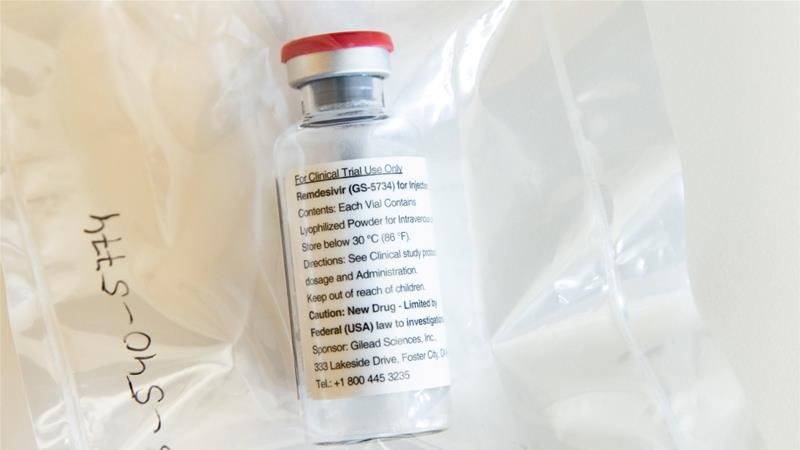
    A potential antiviral drug for the coronavirus has reportedly failed in its first randomised clinical trial, Financial Times reported.

    According to reports, there had been widespread hope that remdesivir could treat the new coronavirus — COVID-19 — that has left at least 191,000 people dead and 2.7 million infected across the globe.

    But a Chinese trial showed that the drug had not been successful, according to draft documents accidentally published by the World Health Organization (WHO).

    The drug did not improve patients’ condition or reduce the pathogen’s presence in the bloodstream, it said.

    Researchers studied 237 patients, giving the drug to 158 and comparing their progress with the remaining 79. The drug also showed significant side effects in some, which meant 18 patients were taken off it.

    Interest in the drug, had been high as there are currently no approved treatments or preventive vaccines for COVID-19, and doctors are desperate for anything that might alter the course of the disease that attacks the lungs and can shut down other organs in extremely severe cases.

    The United States (US) firm behind the drug, Gilead Sciences, is testing it in multiple trials, and highly anticipated trial results from a study involving 400 patients hospitalised with severe cases of the illness are expected later this month.

    It says the WHO documents mischaracterised the study.

    Remdesivir, which previously failed as a treatment for Ebola, is being tried against COVID-19 because it is designed to disable the mechanism by which certain viruses, including the new coronavirus, make copies of themselves and potentially overwhelm their host’s immune system.

  • Celebrities come together for a short film on coronavirus

    Celebrities come together for a short film on coronavirus

    A host of Pakistan’s much-loved celebrities have come together for a short film titled Call To Action to raise awareness on the coronavirus pandemic.

    Among those who feature in the film includes Hamza Ali Abbasi, Humayun Saeed, Reema, Shehzad Roy, Ali Rehman Khan, Zara Noor Abbas, Maya Ali, Anwar Maqsood, Bilal Maqsood, Sheheryar Munawar, Wasim Akram, Shaniera Akram, Ayesha Omar, Iqra Aziz, Yasir Hussain and Mikaal Zulfiqar. The film follows them as they talk to each other on the phones. While the conversation appears to be like one anyone would be having with their friend or family on the phone, each dialogue has a message behind it.

    For example, Shehzad Roy talks about how important it is to keep washing our hands, while Iqra says, “Fasla rakhain, kaheen corona na ho jaye.” Ayesha Omar expresses her annoyance at unverified Whatsapp forwards. The dialogues are fun, short and witty.

    The film has been written and directed by Faisal Qureshi.

    https://www.facebook.com/99319189034/videos/332682641054551/?__xts__[0]=68.ARCUqC90EHnhYu44OAka_NzkLjp4DPNDfxreqZ-g-_0VvCS45Ba3b-bv-IRWsooBrSfOIDGlgcz3u7pwWtGlDSUt0LTpgQs4F6gJqexpQBP0IotW5eV1WDzmpvdlt8Aa0qLvWG-SubERhJqtVPUlp6nMGL1SkWb42Yo1Xas-OxDy7PV9pinB2TDABda0EOjNGLZWrJnId_jZ6Hz77caiszjYUmipE3T0Ajhw2qVjfAQUuIPsVa65EEtjWNAHI8gERPE9W2y-eaUIjz1OGquIvkE5NZw1H9QORWVeqGVjPA4RVpdXzH213FAbVC0RbXN6AUuxCTVxFHH7Bl2fMM4L7wRtWU8tDXfl93NDqM5wzCXsWNpcPEiUW9CMORhzeJC7jcvdM6rpgTOqdExvjySH6ZB4_bkPnV0xJgC3NBCBgkDDGS5NlE41VZV7Q9xam0N8pMywt_N9l6pFk99nCd59228jdERIns7LawD5z0ZVfq7KZMkYIPvlJmPTuhbn8A&__tn__=-R
  • Twitter updates its COVID-19 policies in a bid to contain the spread of false information

    Twitter updates its COVID-19 policies in a bid to contain the spread of false information

    Twitter is working to ensure that misinformation and panic does not spread through the platform. According to the official Twitter Safety handle, the social media site has “removed over 2,230 tweets containing misleading and potentially harmful content.”

    https://twitter.com/TwitterSafety/status/1253044734416711680?s=20

    Twitter Safety tweeted: “We have broadened our guidance on unverified claims that incite people to engage in harmful activity, could lead to the destruction or damage of critical 5G infrastructure or could lead to widespread panic, social unrest, or large-scale disorder.”

    “Our automated systems have challenged more than 3.4 million accounts targeting manipulative discussions around COVID-19,” the tweet further read.

    “We’re prioritising the removal of COVID-19 content when it has a call to action that could potentially cause harm,” TechCrunch quoted a spokesperson for Twitter as saying.

    With the entire world fighting against coronavirus, many social media domains have made consistent efforts on their part to ensure only relevant remains on their platforms. Earlier, Whatsapp placed a limit on the number of times a message could be forwarded.

  • COVID-19 cases in Pakistan can rise to 200,000 by July, warns World Health Organization

    COVID-19 cases in Pakistan can rise to 200,000 by July, warns World Health Organization

    The number of estimated coronavirus cases in Pakistan can rise to 200,000 by mid-July if “effective interventions” are not taken, the World Health Organisation (WHO) has warned.

    According to WHO Director General (DG) Dr Tedros Adhanom, who was speaking at the launch of a virtual conference titled “Pakistan National Strategic Preparedness and Response Plan”, without effective interventions, there could be an estimated 200,000 cases by mid-July, the impacts of which on the economy could be devastating and double the number of people living in poverty.

    He said that the required funding for the plan was $595 million, which would be allocated to support various measures.

    “We must act in solidarity, with a coherent, coordinated approach,” Dr Tedros was quoted as saying.

    The statement from the global health body comes at a time when coronavirus cases in Pakistan have reached 10,982 with at least 230 fatalities.