Tag: coronavirus

  • Nestlé Pakistan pledges Rs 100 million to support vulnerable communities during COVID-19 pandemic

    To meet the nutritional needs of both affectees and frontline workers during these times, Nestlé Pakistan has committed 100 million rupees in the national response to the COVID-19 pandemic. As part of the pledge, Nestlé Pakistan will give product and cash donations, which will include 4 million servings of milk, iron-fortified dairy products, baby cereals, water and juices.

    Sharing details, CEO Nestlé Pakistan Samer Chedid said, “We will be mobilizing relief to medical facilities (quarantine centres) and food-delivery organisations serving vulnerable families, worth 100 million rupees, in the form of product and cash donations, through national and provincial disaster management authorities and local governments.”

    “We have also joined hands with reputable NGOs in response to their COVID 19 emergency appeals to support deserving people across Pakistan. We have invited all our employees to step forward and donate one day’s salary for supporting people going through hard times. The donation intimations by employees will be matched by Nestlé Pakistan,” Chedid said.

    Chedid also emphasized on the additional safety measures Nestlé was undertaking internally. “We are making sure that we keep our employees healthy and safe, and that they follow the most stringent safety protocols at all our manufacturing and warehouse facilities, as advised by the World Health Organisation.”

    Nestlé Pakistan is also working to ensure that their food and beverage products are available for consumers across Pakistan, in line with the strategic roadmap laid out by Prime Minister Imran Khan and respective provincial leaderships.

  • Blog: Knee Jerk – Plan of Action

    Blog: Knee Jerk – Plan of Action

    Typical Ration Bag: Rs1,600
    Includes: Flour, oil, sugar, rice, lentil and a soap

    “We’re building a stockpile. The word stockpile by definition means not for immediate use. It means you’re preparing for a battle to come and you have to have the equipment and you have to have it now. I can tell you this, if you wait to prepare for the storm to hit, it is too late, my friends. You have to prepare before the storm hits. And in this case, the storm is when you hit that high point, when you hit that apex. How do you know when you’re going to get there? You don’t. There is no crystal ball but there is science and there is data and there are health professionals who have studied this virus and its progress since China. Listen to them and follow the data to develop one coordinated plan,” said Governor Andrew Cuomo of New York in a press briefing on coronavirus on March 30.

    I witnessed the nation coming together when the deadly 2005 earthquake hit northern Pakistan. It devastated entire communities in Khyber Pakhtunkhwa (KP) and Azad Jammu & Kashmir (AJK). The 7.6 Richter scale quake wreaked havoc and misery to 400,000 families when at least 80,000 lost their lives. 90% of the affectees were from difficult-to-access rural areas in the mountains.

    Pakistan had in recent times not seen such extensive devastation and was hardly prepared to handle such a disaster. But the nation witnessed an unprecedented surge of sympathy for the affected communities when people from all over the country and the world rushed for assistance.

    Today, amid the coronavirus pandemic, an unprecedented lockdown is in place. And as all of us reflect on our daily lives, I hear nonprofits, independent guerrillas and civil society members coming forward and donating and collecting ration bags for daily wage affectees or families living under the poverty line. Several good-hearted folks have come together and started the drive by spreading the word on social media platforms to support the cause.

    Each cause has a different price and structure of distribution. We can select packages for a week, a month and so on. But what’s next? 

    My question is: where is the map of action for the households or the system where it’s equally, ethically and socially distributed? How are we deciding what neighbourhoods need the most? 

    Arif Hasan and I were are in an anti-encroachment WhatsApp group, where he said, “It’s frightening to see how everyone will end up washing for 20 seconds in a country where water is a contested property.”

    Celebrities and social media influencer’s are following a global practice of how to deal with COVID-19. Whereas we need to rethink of global south issues and practice a regional solution. Standards come from international forums, but they need to be localised and regionalised. 

    If today non-profit organisations and independent ration collectors are designing packages and sending mass messages to collect funds to feed the affectees, then maybe we also need to study and collect per household data and map the areas where any organisation is not distributing.

    What we need is a holistic plan for preparedness for disaster or unprecedented situational circumstances. This is the time when we need platforms to come together and work closely with local authorities and develop a strategy or a masterplan, through breaking down clusters, focusing on vulnerable communities and involving organisations.

    In our provincial context, where the Sindh government has shown a strong sense of perspective in times like these, maybe this is when we need to reflect and look for local strategic plans and grassroots level data analysis for future disaster distribution methodology, where civil society’s intervention is not just out of goodwill but equality and social systems. Where collaboration can be meaningful, and data sharing becomes a common practice.

  • Asim Jofa delivers first batch of protective suits

    Asim Jofa delivers first batch of protective suits

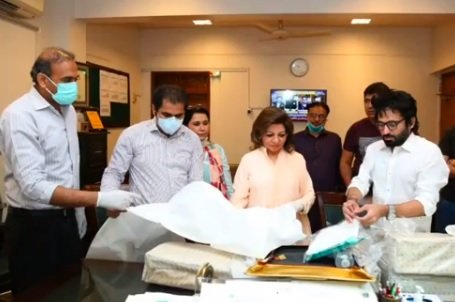
    Renowned designer Asim Jofa, who stepped forward to help the government procure protective suits, has delivered the first batch of protective suits to the team of Dr Seemin Jamali at Jinnah Post Graduate Medical Center (JPMC).

    The designer shared the announcement on social media along with a slideshow of his team delivering the suits to the hospital and Dr Seemin inspecting them.

    Jofa on March 28 had announced that he and his team have taken the “initiative to contribute to society and play our part in helping our front liners win this fight against coronavirus.” He said that his company had started working on stitching protective gear for doctors and medical staff to wear for their safety.

    The designer shared updates throughout the process.

    The designer asserted that he and his team stand with the nation and the Government of Pakistan in these testing times.

    https://twitter.com/asimjofa/status/1246084172634095617?s=20

    In an interview with a daily publication, Asim shared that he got the idea about producing these suits after he read a story on Bloomberg about how there was a shortage of PPE in Italy and Spain.

    “It got me thinking about the situation in my own country,” he says.

    Jofa has produced two types of PPE: fawn and white coloured ones. The fawn-coloured suits are for the use of doctors working in wards and the white ones are for doctors working in intensive care units or the special isolation wards. The designer explained that the white suits have 3M layering, making them able to be washed and reused up to 15 times while the fawn ones are only for five-time use.

    Jofa’s initiative prompted other designers including Maheen Khan and Deepak Perwani to do the same and help produce PPE for healthcare workers who are putting their lives on the line to combat the pandemic.

    Meanwhile, Deepak Perwani also shared the first look of the washable/reusable and disposable suits he has made.

    There is a dire shortage of protective medical gear in the country and across the world and designers all over the world from Louis Vuitton to Ralph Lauren are stepping up to meet the demand.

  • The Common Good

    “Pure capitalism is basically selfish in nature and it leads to a particular attitude in the rich — that they deserve to be wealthy and the poor are poor because they are either lazy or stupid or both — or else because they are just an ‘inferior species’.”

    A friend in Karachi describes the unease that fills shoppers at an affluent Karachi supermarket when they step out of the store laden with as much as they can buy amid the coronavirus lockdown. They are faced with the sight of desperate day labourers standing outside staring quietly as they load bags of food supplies into their cars. The labourers hold the tools of their trade — shovels and pickaxes — and to the affluent shoppers, these now appear to be dangerous weapons.

    “They are starving,” says my friend, “their families don’t have food, they could be driven to despair and could easily attack shoppers to get food”.

    The public response to the crisis has been impressive in Pakistan, but can such efforts provide the scale of relief that is needed in a country where, according to a 2016 national assessment, almost 40 per cent of the population lives in poverty? People have donated generously to schemes that deliver basic rations to those in need and many organisations and individuals have mobilised their time and resources to feed the hungry but reports seem to indicate that this is proving woefully inadequate. The livelihood of so many households has been affected that the knock-on effect is totally devastating. Apart from those dependent on a daily wage, those running small business initiatives or taking on work outsourced from running businesses now have no work, no money and no food.

    And they are being told to stay in their homes and maintain social distancing in public places…

    In such circumstances, riots are a very real possibility. Not just in Pakistan but in other countries as well, particularly those with great social and economic inequality. And interestingly, it is this fear of unrest that is now leading many people to the realisation that depriving people of basic rights is not just an issue for the poor and oppressed but rather it is something that, eventually,  affects everybody — even the very rich and powerful. Pure capitalism is basically selfish in nature and it leads to a particular attitude in the rich — that they deserve to be wealthy and the poor are poor because they are either lazy or stupid or both — or else because they are just an ‘inferior species’.

    “For years the world has been veering towards a nasty form of capitalism in which the erosion of workers’ rights and social welfare is seen as an ‘efficient’ way to manage the economy. But the only thing it did efficiently was enriching and protecting a small minority that lived in a fortress bulwarked by wealth and privilege.”

    This basic lack of social empathy is rooted in the belief that wealth can buy you an island of privilege and anything outside the walls of this wealth is a) not your problem and b) does not affect you. Hence the attitude of the Pakistani glitterati, who spend millions on making their homes into palaces but then just tip their garbage onto the street corner instead of a bin; who spend thousands on fast food and designer outfits but are outraged when a staffer asks them for a salary of a few thousand rupees in advance. It is the same attitude that drives coalitions like the Conservative-LibDem one in the UK to close down public libraries or threaten the funding of the public service broadcaster. Instead of understanding that libraries and public service broadcasting can inform and educate, the attitude is that these are not essential as they have no tangible benefit i.e. profit. Public libraries, in particular, are essential to any civilised society as they provide access to learning, opportunity and advice and also provide resources like computers, printers and internet access.

    In Pakistan, schools and colleges with adequate resources have switched to online learning but what about all of those students from poorer institutions? And what about students who are expected to follow online curriculums but may not have a wifi connection or a laptop? The same question is relevant in the UK even though efforts are being made to cater to students with these sorts of disadvantages, many may fall through the cracks. Just a few months ago when the Labour Party announced a policy of free wifi for all in their election manifesto, the idea was widely derided, scoffed at and dismissed as ‘unworkable’, but now Jeremy Corbyn’s insistence that broadband access should be regarded as a basic right does not seem so ridiculous after all.

    For years the world has been veering towards a nasty form of capitalism in which the erosion of workers’ rights and social welfare is seen as an ‘efficient’ way to manage the economy. But the only thing it did efficiently was enriching and protecting a small minority that lived in a fortress bulwarked by wealth and privilege. But now a virus has illustrated that we are all connected. Ensuring access to basic rights and a proper welfare structure provides for a less insecure society and ‘feel good’ philanthropy and private charity or a mai baap approach to individual staff is simply not enough.

    Perhaps it’s time for all of us to embrace the idea of a socialist society, to recognise the importance of the dignity of labour and the protection of employee rights, to stop privatising and outsourcing and spending compulsively. It’s time for us to completely rethink the way we live.

  • Coronavirus lockdown is making us all fatter: report

    Coronavirus lockdown is making us all fatter: report

    The coronavirus has shaken the world like nothing else. But beyond the terrible toll of death, economic devastation and fear, the virus is likely to leave another lasting mark.

    It is going to make us all fatter.

    “I don’t know if we are going to come out of this experience stronger, but we will have gotten fatter,” nutritionist Beatrice de Reynal told AFP, adding that there was only one solution to this: eat less.

    “It is going to happen to us all, even if we try to exercise,” said the similarly fatalistic Julian Mercier, a French sports, health and cooking coach.

    With more than a quarter of humanity shut up at home or under lockdown, and with many worried they will get the virus next, the temptation to comfort eat is hard to resist.

    “I am the first to turn to chocolate rather than to an apple,” Mercier admitted. “And that is what risks being our undoing.”

    Dietician Jennifer Aubert said that by doing little or none of the physical activity we normally do, an adult is likely to burn off up to 400 fewer calories a day.

    Which is why we have to reduce our portions and move as much as we can — as long as it is not to the fridge and back.

    Other experts point to people who have panic-bought a cupboard full of fresh food, finding themselves duty-bound to eat their way through it.

    Being alone and coping with the stress of the situation, as well as worries about whether they will have a job to go back to, can tip people into over-eating, the British Nutrition Foundation warned.

    “With concerns about the availability of food, eating well and staying healthy alongside all the other stresses of the coronavirus outbreak is a challenge,” it admitted.

    “Food can be a comfort and it’s easy to overeat when spending so much time at home, especially if you like to cook in order to pass the time.”

    But it is advising people to embrace the lockdown to learn to “put together healthy meals” which “can be a source of enjoyment and help your well-being”.

    Not everyone cooks, however, as Pascale Hebel, of the French CREDOC research institute said, and some may not have the wherewithal to cook.

    Others warned against using food as a way of soothing children forbidden from going outside to play with their friends.

    “To avoid problems it is easy to make spaghetti bolognese that everyone likes rather than to fight to make them eat spinach,” Mercier said. But that would be a mistake.

    Experts were unanimous that cooking for yourself and structuring your day with regular meals and physical activity, were vital if we are to come out of this in decent shape.

    It can even be possible to lose weight, said Aubert, because “we actually have more time to do sport at home”.

    And with hashtags like #homemadefood proliferating on social media as users show off dishes and compare recipes, it could also be the chance to teach a whole new generation how to cook.

    British celebrity chef Jamie Oliver certainly thinks so and has been doing his bit with a nightly show based on “store cupboard and freezer faves” called “Keep Cooking And Carry On”.

    It includes dishes fast but healthy dishes such as “Cornershop Curry” and “Quick green pasta”.

    “I understand that it is easy to fall into watching the television, or lying around reading and snacking. I am the first to do it,” his French opposite number Cyril Lignac told AFP.

    “But this period is a great chance to teach children and teenagers how to cook simple dishes. And when I am at home I tend to cook with less fat and sugar.”
  • Jemima Khan sends love and salaams to Pakistan

    Jemima Khan sends love and salaams to Pakistan

    If there is one person Pakistanis unanimously and wholeheartedly love, it’s Jemima Khan, former wife of Prime Minister Imran Khan.

    Amid the coronavirus crisis which has shaken the entire world, Jemima sent “love and salaams” to Pakistan in a Twitter message.

    Pakistanis were quick to send their love back to her.

    https://twitter.com/SheemaMehkar/status/1246158785380524033?s=20

    Some people couldn’t resist from giving her updates about PM Khan and his efforts.

    https://twitter.com/RamlahSeraj/status/1246141968096387076?s=20

    With more than one million cases of coronavirus across the world, which is currently under lockdown, the situation appears to be dire. The UK is one of the worst-hit countries with 38,168 cases and 3,605 deaths. British PM Boris Johson and Prince Charles were also tested positive for the virus.

    Meanwhile Pakistan has reported 2708 cases and 40 deaths.

  • Did PM Imran just give the corrupt a chance to whiten their black money?

    Did PM Imran just give the corrupt a chance to whiten their black money?

    With Prime Minister (PM) Imran Khan offering amnesty for the construction sector, netizens are expressing their “disappointment” at what they say is the premier “flip-flopping on his ideals to hold the corrupt accountable”.

    PM Imran on Friday gave the status of industry to the construction sector, as he announced opening of the sector along with a package of incentives to boost it with a view to keeping the wheels of economy moving and mitigate the impact of the lockdown on people.

    Speaking to reporters after a meeting of the National Command Centre, the PM said the government provided these exemptions to provide employment to the labourers so that they can be saved from “hunger and the coming difficult circumstances”.

    In line with the relief package, the government will not ask construction entities about their source of income for this year as well as approval of a fixed tax regime for the sector.

    The PM said: “This [move] will bring down the amount of tax to be paid. Also, if the investment is for the Naya Pakistan Housing Scheme, we will exempt 90% of the tax on it.”

    He announced an Rs30bn subsidy for the Naya Pakistan Housing Scheme, saying that on the one hand, it will regulate economic activity and on the other, ensure houses for the poor were also built.

    He also said that withholding tax on materials and services had been abolished in the informal sector. “Tax will be collected only on steel and cement, mainly because these are the formal sectors.”

    Here’s what Twitterati have to say in this regard:

    Meanwhile, some resorted to meme-ing it out:

    What do you think of the incentives announced by the PM? Let The Current know in the comments…

  • Inflation at seven-month low in March

    Inflation at seven-month low in March

    Pakistan’s Consumer Price Index (CPI)-based monthly inflation slowed to 10.24 per cent in March 2020 as compared to the previous month, Pakistan Bureau of Statistics (PBS) reported.

    This is the second month in a row that the CPI reading has eased by more than 2 per cent. The bureau had recorded CPI inflation at 12.4 per cent in February. Inflation at 10.2 per cent is the lowest reading in the past seven months.

    According to PBS data, commodity prices remained largely unchanged and markets functioned normally in March despite partial lockdown of the country to control the spread of coronavirus.

    In addition to fuel charges, the prices of food items, including pulses, fresh vegetables and wheat, which have been the main drivers of inflation, also saw a significant downtrend, the bureau said.

    However, it added, the real impact of slash in demand or short supply of commodities due to the shutdown of the market is yet to come.

    “The government’s move to keep the trade of groceries unaffected may support the fall of inflation even in the coming months.”

    The average inflation in the first nine months (July-March) of fiscal year 2020 stood at 11.53 per cent, which in the same period of the last year was 6.3 per cent.

    As per the data, the rate of inflation during the month under review slowed down both in urban and rural areas. Food inflation in urban areas that stood at 15.2 per cent in the preceding month eased to 13 per cent in March. Similarly, in rural areas, the food inflation pace slowed down from 19.7 per cent in February to 15.5 per cent last month.

  • ‘Punjab hospitals cured 18 patients with anti-malaria drug, azithromycin,’ says expert

    Chief executive officer (CEO) of the Mayo Hospital and Corona Experts Advisory Group (CEAG) co-chairperson, Professor Dr Asad Aslam, has said that 18 patients of the new coronavirus — COVID-19 — were successfully treated with anti-malaria drug hydroxychloroquine and antibiotic azithromycin during the past five days.

    According to reports, Dr Aslam on Thursday said that eight patients at Mayo Hospital, four at Pakistan Kidney and Liver Institute (PKLI) and five at other hospitals of the province were administered the drugs during the past five days.

    “The patients were administered two tablets of hydroxychloroquine in the morning and two in the evening on the first day whereas, on the remaining four days, they were given one tablet in the morning and one in the evening. Simultaneously, they were given one tablet of azithromycin in the morning and one in the evening for five days.”

    He, however, urged people to avoid self-medication and said these medicines should only be used upon a doctor’s prescription because they could have serious side-effects, including hepatotoxicity (drug-induced liver damage), bone marrow suppression and risk of sudden death, especially when used with azithromycin and many other medications that can affect heart rhythm.

    Meanwhile, the Medical Microbiology and Infectious Diseases Society of Pakistan (MMIDSP) strongly advised against the inappropriate use and hoarding of hydroxychloroquine and chloroquine.

    According to Dawn, they said there was a lack of undisputed scientific evidence and the risk of adverse events. “Hydroxychloroquine and chloroquine should only be used as a therapeutic or prophylactic agent for COVID-19, under the supervision of an expert,” read a press release.

    It further said that the anti-malaria drugs were also used to treat immune system disorders.

    “Both these drugs have a new and emerging role in treatment of COVID-19 pneumonia (off-label) and a presumed role in prevention against the infection.”

    Experts associated with MMIDSP include infectious diseases physicians, clinical microbiologists and nurses who are trained in infection prevention and control.

  • Man hides COVID-19 symptoms so he could be with his wife in the labour room

    Man hides COVID-19 symptoms so he could be with his wife in the labour room

    A man who was exposed to the coronavirus hid that he was feeling ill so he could visit his wife in the maternity unit of an upstate New York hospital and be with her when she delivers their child.

    According to NBC, the matter only came to light after his wife also began to show symptoms.

    The hospital staff said that the man was questioned by the staff at the hospital before entering and he assured them that he was in good health and had not been exposed to the coronavirus. However, shortly after giving birth, the woman began to show symptoms.

    “That’s when the significant other admitted his potential exposure and that he was feeling symptomatic,” said a hospital official, adding that they cannot share whether the mother, father or newborn child were infected with the coronavirus because of privacy laws. The mother has since returned home.

    Meanwhile, a nurse who assisted the family was also tested for the virus and the results came back negative.

    Many hospitals in New York are banning most visitors to help control the spread of COVID-19, the disease caused by the virus.

    A hospital official said that before they would only ask visitors before allowing them inside, “but now we’re adding the temperature check.”

    “Those with symptoms will be asked to leave the hospital. These screening measures will be completed twice daily throughout the hospitalization,” the hospital said, adding that the guest will not be allowed to leave the patient’s room without the patient.

    https://www.instagram.com/p/B-cDZFIH0_x/