Tag: coronavirus

  • Infected Italian priest dies after giving respirator to younger coronavirus patient

    Infected Italian priest dies after giving respirator to younger coronavirus patient

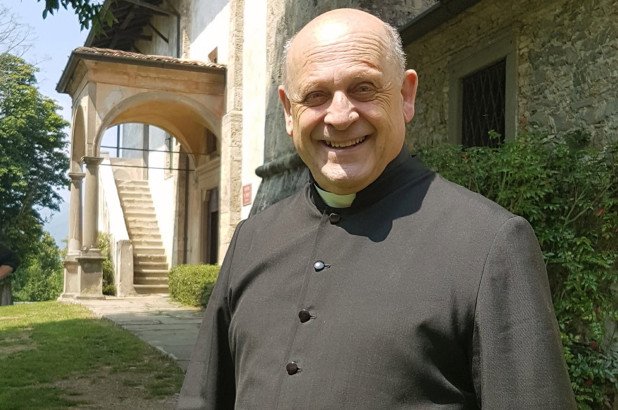
    An Italian priest infected with coronavirus gave up a respirator his parishioners bought for him to a younger patient — and then died from the deadly bug, according to reports.

    Reverend Giuseppe Berardelli, 72, refused to take the respirator while in a hospital after finding out the other patient — who was a complete stranger — also needed it, BBC reported.

    The main priest in the town of Casnigo died last week in Lovere hospital, the broadcaster said, citing hospital officials.

    He was one of at least 60 priests who died in Italy this month as the European nation was the epicenter of the deadly pandemic.

    “He is a ‘Martyr of Charity,’” New York Jesuit priest James Martin said on Twitter, adding the biblical phrase, “Greater love has no person…”

    Martin — an author who edits the Jesuit Journal America — said Berardelli was a “saint like St. Maximilian Kolbe, who in Auschwitz volunteered to take the place of a condemned man with a family, and was killed.”

  • Cleaner hands, bluer skies: what has coronavirus done for us?

    Deaths, economic meltdown and a planet on lockdown: the coronavirus pandemic has brought us waves of bad news, but squint and you might just see a few bright spots, AFP reported.

    From better hygiene that has reduced other infectious diseases to people reaching out as they self-isolate, here are some slivers of silver linings during a bleak moment.

    WASH YOUR HANDS!

    The message from health professionals has been clear from the start of the outbreak: wash your hands.

    Everyone from celebrities to politicians has had a go at demonstrating correct technique — including singing “Happy Birthday” twice through to make sure you scrub long enough, and hand sanitiser has flown off the shelves.

    All that extra hygiene appears to be paying off, at least in some countries, including Japan, where the number of flu cases appears to be sharply down.

    Japan recorded 7.21 million cases by early March — usually around the peak of the flu season that runs until May.

    That was far below figures for previous years, including the 21.04 million infections seen during the 2017/18 season.

    “We estimate that one of the reasons behind it is that people are now much more aware of the need to wash hands… given the spread of the new coronavirus,” Japanese health ministry official Daisha Inoue told AFP.

    CARBON CURBS

    Factory shutdowns, travel bans and a squeeze on demand spell economic disaster, but it isn’t all bad news for the environment.

    In the four weeks to March 1, China’s CO2 emissions fell 200 million tonnes, or 25 percent, compared to the same period last year, according to the Centre for Research on Energy and Clean Air.

    That’s a decline equivalent to annual CO2 emissions from Argentina, Egypt or Vietnam.

    The slowdown in China also saw coal consumption at power plants there down 36 percent, and the use of oil at refineries drop by nearly as much.

    Air travel is also grinding to a virtual halt, achieving at least a short-term drop-off in emissions from a highly polluting industry.

    And there have been other environmental benefits, including crystal-clear waters in Venice canals usually choked with tourist-laden boats.

    Unfortunately, experts say the cleaner air may be short-lived.

    Once the health crisis is over, experts expect countries will double down to try to make up for lost time, with climate change concerns likely to be sidelined in a race to recover economic growth.

    SAVE THE PANGOLIANS

    The source of the coronavirus remains in question, but early tracking focused on a market in China’s Wuhan where a variety of live wildlife was on sale for consumption.

    A number of animals, including bats and the highly endangered pangolin, have been identified as possible culprits for the virus.

    As a result, China in February declared an immediate and “comprehensive” ban on the trade and consumption of wild animals that was welcomed by environmentalists.

    Beijing implemented similar measures following the SARS outbreak in the early 2000s, but the trade and consumption of wild animals, including bats and snakes, made a comeback.

    This time the ban is permanent, raising hopes that it could end the local trade in wildlife.

    “I do think the government has seen the toll it takes on national economy and society is much bigger than the benefit that wild-eating business brings,” said Jeff He, China director at the International Fund for Animal Welfare.

    Reports linking the virus to the pangolin have also scared off would-be consumers of the scaly mammals elsewhere, with bushmeat vendors in Gabon reporting a plunge in sales.

    APART, TOGETHER

    One of the most difficult aspects of the stringent lockdowns imposed to slow the spread of the virus has been loneliness, with families and friends forced to endure weeks or even months apart.

    But some people have found the measures are creating a sense of community spirit and prompting them to make more of an effort to check in with family and reconnect with friends.

    In Colombia, where a nearly three-week period of self-isolation is now in place, 43-year-old Andrea Uribe has organised everything from group exercise classes to family talent shows using video messaging programs including Zoom.

    “I have called my parents more often, I have talked to friends that I usually don’t talk to… I have organised Zoom meetings with friends in multiple countries,” Uribe, who works in development, told AFP.

    “It is wonderful to be forced to be there for one another. It has made me more creative. It just shows that we need to be present in people’s lives.”

  • Coronavirus: Six tips to manage self-isolation anxiety

    Coronavirus: Six tips to manage self-isolation anxiety

    The coronavirus pandemic is affecting our everyday lives, and with things changing so quickly, the stress of it all may feel overwhelming. Fear and anxiety about our health, finances, kids being home from school, caring for our elderly loved ones and social distancing can cause strong emotions in adults and children.

    Laura Rhodes-Levin, a licensed therapist who specialises in the evaluation and treatment of anxiety, depression and trauma, offers six practices we can do at home to manage our anxiety during the coronavirus outbreak.

    1. Have fun with the family by playing games, gardening and cooking

    Rhodes-Levin suggests making the most of spending time with family by playing board games, doing crafts, cooking or gardening. “Distract yourself with cooking. Don’t go for perfection,” she says. “This is a time to get creative and find joy in the moment … build a good ol’ fashioned fort.”

    2. Exercise and stay active

    Physical activity can greatly reduce anxiety. She encourages adults and kids to keep their bodies in motion. “Have fun with chores.” Another suggestion is to start a fitness challenge and see who can do the most push-ups or simply take time to stretch.

    3. Listen to music

    Tap into your senses and listen to music. “Using your five senses is the best way to quiet your mind,” she says. Aromatherapy is another great way to relax. “Any of your five senses are going to be a great way to shift your focus.”

    4. Catch up on movies and TV shows with the family

    Choose to focus on something else besides the coronavirus, and cherish the family bonding time by watching your favorite movies and TV shows. “This is a good time to reinforce the family unit,” she says. “Laugh together. Even if it’s a sad and heavy movie, crying together is a big release of tension,” Rhodes-Levin explains. “We want to release our tension.”

    5. Get productive by fixing things around the house

    She also suggests fixing things around the house to not only keep your mind occupied but to stay active. “We all have things that we have put off doing around the house.” Take time to do research projects, like fixing the plumbing in your kitchen. “Get things done,” she advises. “Get things off that to-do list.”

    6. Write a journal

    Another way to create positivity is to take pen to paper and physically write. “It brings up positive endorphins when you actually write something out that’s meaningful and loving.” By focusing on writing down your feelings it can help you gain a sense of control and that can help with gaining inner peace.

    “Distract yourself with something that engages you,” she says. “Be careful but don’t be fearful.”

  • Coronavirus lockdowns: What is govt doing for the poor?

    Coronavirus lockdowns: What is govt doing for the poor?

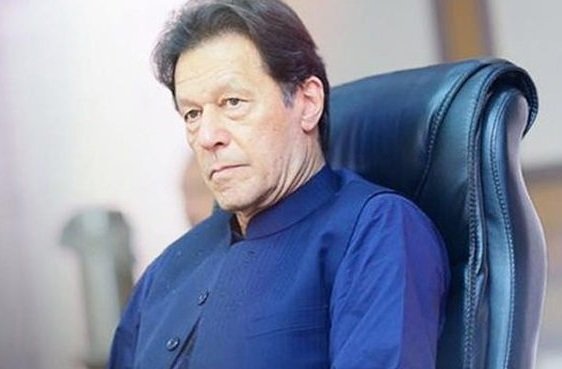
    Prime Minister (PM) Imran Khan has announced his government’s plans to help those facing extraordinary difficulties in the wake of nationwide lockdowns as the new coronavirus — COVID-19 — continues to spread.

    Here’s all you need to know:

  • 95-year-old becomes the oldest woman to recover from coronavirus

    95-year-old becomes the oldest woman to recover from coronavirus

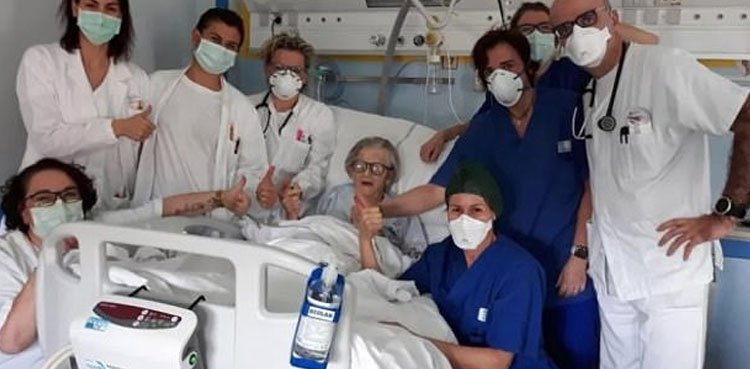
    A 95-year-old has become the oldest known woman to recover from coronavirus in Italy.

    Alma Clara Corsini, from Fanano in the province of Modena, was diagnosed with COVID-19 earlier this month.

    Corsini fully recovered from the Covid-19 without the need for antiviral treatment after her body showed a “great reaction” to the disease, doctors say. The hospital has discharged the 95-year-old. 

    As per reports, Corsini became the ‘pride of the staff’ during her stay at the hospital that has been trying to cope with the increasing number of cases of COVID-19 in the country.

    Italy, the epicenter of the virus in Europe, has had more than 59,000 cases of Covid-19 so far. The death toll from the coronavirus outbreak in Italy yesterday rose to 5476 – an increase of 651 from the day before.

  • Coronavirus: The KP government has a message for you

    Health Minister of Khyber Pakhtunkhwa, Taimur Khan Jhagra, has tweeted a video made by the provincial government explaining why people need to stay at home and what measures the KP government is taking to control the spread of the virus in the province.

    RELATED: ALL CORONAVIRUS UPDATES

    Watch the video here

    There are currently 1090 confirmed cases in the country, 413 in Sindh, 323 in Punjab, 121 in KP, 131 in Balochistan, 20 in Islamabad, 82 in Gilgit Baltistan. Eight people have died.

  • VIDEO: Renowned designer Maria B’s husband reportedly arrested for ‘criminal negligence’

    VIDEO: Renowned designer Maria B’s husband reportedly arrested for ‘criminal negligence’

    Renowned fashion designer Maria B’s husband was reportedly arrested for criminal negligence after the family allowed their house help to travel back home despite being tested positive for COVID-19.

    According to a video of a teary-eyed Maria doing the rounds on social media, which is “an appeal to Prime Minister Imran Khan”, the Punjab Police burst into their house at midnight, arrested her husband and registered an FIR against him for contracting the coronavirus.

    “They arrested him without a lawyer. They didn’t even let a lawyer come,” she said, adding that the police were rude to them and referred to them as culprits.

    “Why [are we culprits],” she questioned. “We are the ones who are suffering. We are the ones whose tests are coming. Anytime positive. My entire family. And we are the ones who have to be arrested? Is this the system?”

    A picture of her husband behind bars is also doing the rounds on social media.

    However, according to the spokesman of the Lahore Police, the designer’s husband was arrested for allowing their cook, who had tested positive for coronavirus, to go back to his village via public transport. They hid the fact that he had the coronavirus which is why the police arrested him.

    https://twitter.com/AsharJawad/status/1242420431426138112?s=20

  • Anonymous person donates Rs1 million to Sindh’s coronavirus fund

    Anonymous person donates Rs1 million to Sindh’s coronavirus fund

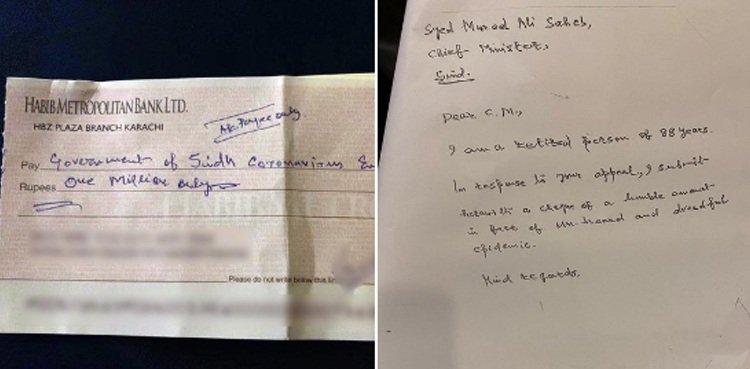
    Sindh Chief Minister Murad Ali Shah received an “anonymous” donation of Rs1 million for the Sindh Coronavirus Emergency Fund on Monday.

    The CM shared this on social media and expressed his gratitude to the person who made the donation.

    “Such acts of kindness strengthen our resolve to continue fighting this challenge, & reassure us that humanity stands tall during such extraordinary times,” he wrote alongside pictures of a cheque and a letter.

    Meanwhile, the letter sent to the chief minister by the anonymous donor reads, “I am a retired person of 88 years. In response to your appeal, I submit herewith a cheque of a humble amount in face of the unheard and dreadful epidemic.”

    Earlier, on March 17, the Sindh government had set up a ‘Coronavirus Relief Fund’ to fight the epidemic.

    The provincial government’s spokesperson Murtaza Wahab in a tweet had said the Sindh chief minister, advisors, special assistants and all PPP MPAs will donate their one-month salary to the fund.

  • Govt hints at imposing curfew as over 470 arrested for violating Sindh lockdown

    Govt hints at imposing curfew as over 470 arrested for violating Sindh lockdown

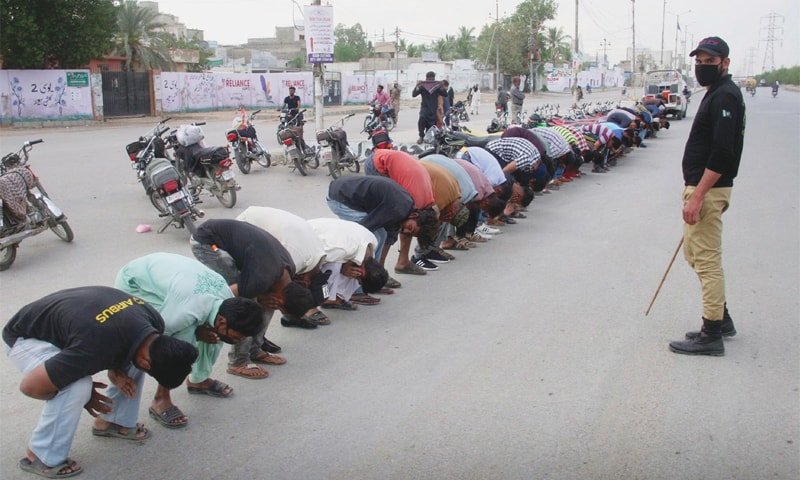
    With people ignoring the provincial government’s orders amid the coronavirus outbreak, which led to at least 472 arrests on the first day of the lockdown on Monday, Sindh Information Minister Nasir Hussain Shah has hinted at imposing curfew across the province.

    The Pakistan People’s Party (PPP) government had on Sunday imposed a 15-day lockdown effective March 23 as Pakistan continued to report cases of coronavirus. Across Sindh, six violators were on Monday arrested in Mirpur Khas, eight in Sukkur, 236 in Larkana and 222 in Karachi for violating the lockdown.

    Separately, a total of 72 cases were registered across the province. In Karachi, 33 cases were registered, whereas two in Mirpurkhas, one in Sukkur, and 36 in Larkana.

    Speaking to a private media outlet, Shah said that the government would be left with no option other than imposing a curfew if people still did not take the lockdown orders seriously.

    He once again appealed to the people to stay at home and support the government in the fight against COVID-19.

    According to reports, the number of confirmed infections in Pakistan has reached 903. At least seven deaths have also been recorded with Punjab reporting its first on Tuesday.

    Punjab Health Minister Dr Yasmin Rashid has said the patient was a 57-year-old and was under treatment at Lahore’s Mayo Hospital.

  • Baby girl born in India’s UP named ‘Corona’

    Baby girl born in India’s UP named ‘Corona’

    A girl born in Uttar Pradesh’s Gorakhpur town on Sunday − the day of ‘Janata Curfew − has been named Corona by her uncle.

    The uncle, Nitesh Tripathi, said that he decided to name the baby after the deadly virus because Corona has unified the world on this issue.

    The baby has already become the talk of the town. The hospital staff who were intially taken aback by this later hailed the newborn’s family for naming her after coronavirus.

    Tripathi said that he had taken permission from the newborn’s mother and father before naming the baby. Other family members had also been taken into confidence.

    “The virus is no doubt dangerous and it has killed so many people in the world, but it has also inculcated many good habits in us and brought the world closer. This baby will be the symbol of people’s unity to fight the evil,” he added.