Tag: coronavirus

  • Pakistan Stock Exchange crashes after 2,200 points wipe off KSE-100 index

    The stock market on Monday crashed during the early trading hours as confusion and uncertainty surrounded potential investors due to the decline in international oil prices by about 30 per cent — the worst since the Gulf War in the 1990s.

    As per the details, the Pakistan Stock Exchange’s (PSX) benchmark KSE 100-Share Index tumbled 2,291.69 points or 6 per cent around 10 am, before recovering to 36,862.34 in the afternoon. The apex of the day remained 38,219.67 (the previous close) and 35,917.34, the lowest.

    The crash was triggered amid a global sell-off on coronavirus fears as well as a crude oil price war between Saudi Arabia and Russia. 

    Trading floors were a sea of red across Asia, with Tokyo, Sydney and Manila plunging around 6 per cent, while Hong Kong shed 3.5 per cent by lunch.

    Mumbai, Singapore, Seoul, Jakarta and Wellington were more than 3 per cent down, Shanghai and Taipei shed at least 2 per cent and Bangkok gave up 5 per cent. The losses tracked sharp falls in Europe and Wall Street on Friday.

    “PSX has triggered a market halt at 9:37 am which will last for 45 minutes,” the management wrote in a press release. “The market halt is triggered as a standard protocol for risk management purposes.”

  • Coronavirus can cause $5 billion loss to Pakistani economy

    Coronavirus can cause $5 billion loss to Pakistani economy

    The Asian Development Bank (ADB) has given a “hypothetical worst-case scenario” that shows Pakistan’s economy sustaining a whopping $5 billion loss due to the outbreak of the new coronavirus, in which case Pakistan’s GDP will go down by 1.57% and 946,000 people will be unemployed, The Express Tribune reported.

    According to the report published Friday, the global GDP will also be affected from $77 billion in the best-case scenario to $347 billion in the worst-case scenario, with China affected the most.

    ADB projected that Pakistan’s economy may face $16 to $61 million losses due to the spread of COVID-19, while in a one-page paper issued by Tola Associate — tax and corporate advisors — it was also claimed that the economy of the country will sustain a $5 billion loss due to coronavirus.

    The firm based its claim on an ADB publication.

    According to the estimates published by the ADB the impact of the coronavirus, in terms of the global GDP ranges from $77 billion in best case scenario to $347 billion in worst-case scenario, or 0.1% to 0.4% of the global GDP.

    The report said the total losses likely to be sustained by Pakistan will be only $16.23 million in best case scenario. It projected that in best case scenario, Pakistan’s agriculture and mining sector could sustain a loss of $5.5 million; business trade, personal and public service $5.54 million; hotels and restaurants $0.67 million;  light and heavy manufacturing $3.6 million and transport services $0.92 million.

    In moderate case scenario, the projected losses to be faced by Pakistan are $34.2 million. In worst case scenario, the projected losses to be faced by Pakistan are $60.8 million.

    In the worst case scenario, Pakistan’s agriculture and mining sector will face $21.7 million losses; business and trade $18.8 million losses; hotel and restaurants $2.4 million losses; light and heavy engineering $14.6 million losses; and transport services $3.4 million.

    While discussing the hypothetical worst case scenario, the ADB projected that Pakistan’s economy will lose $5 billion. There will be $1.5 billion loss to agriculture and mining; $1.94 billion to business and trade; $253.7 million in hotel and restaurants; $671 million to light and heavy engineering and $565.6 million loss to transport services.

    In addition to the global slowdown, the fear caused by the COVID-19 is going to cause an estimated loss of $1.5 trillion across the globe in hypothetical worst case scenario. The lockdown has slowed down the pace of the Chinese economy, if compared to the last 30 years.

    Coronavirus losses will depend on the magnitude of the problem and the scale of the underlying uncertainties in countries which have strong trade and production linkages with China, according to the Tola Associate.

    According to the ADB estimates, around 946,000 people will be unemployed in Pakistan in hypothetical worst case scenario.  The net effect of the drop in oil prices due to coronavirus is neutral, yet alarmingly negative for the economy of Pakistan.

    If this crisis prolongs, it will eventually lead to a significant increase in expenditures; a further slowdown in tax collection; a rise in inflation; and an increase in the fiscal deficit.

  • Coronavirus: Airlines may lose up to $113 billion

    Airlines could lose up to $113 billion in revenues this year due to the coronavirus, equivalent to the damage experienced by the industry during the financial crisis, AFP quoted a trade body as warning.

    The dire prediction came as Flybe — a British airline — collapsed into bankruptcy with the virus, which has killed over 3,200 people worldwide, dealing a fatal blow to the ailing regional carrier.

    With the disease now rapidly spreading outside China, demand for air travel is nose-diving globally, spelling serious trouble for many already struggling carriers. In a new assessment of the impact, the International Air Transport Association (IATA) estimated revenue losses to airlines’ passenger business of between $63 billion and $113 billion in 2020.

    The higher figure is for a scenario where the virus spreads more widely, and would be equivalent to the hit to the industry during the 2007-2008 global financial crisis, the group warned.

    The “industry’s prospects in much of the world have taken a dramatic turn for the worse”, said IATA head Alexandre de Juniac, and appealed to governments for support. “Airlines are doing their best to stay afloat,” he said. “As governments look to stimulus measures, the airline industry will need consideration for relief on taxes, charges and slot allocation. These are extraordinary times.”

    Flybe had narrowly avoided going bust in January when the United Kingdom (UK) government agreed to review air passenger duty paid by its customers — and shareholders pledged extra investment.

    But it finally collapsed after the government reportedly refused a rescue loan for £100 million ($128 million).

    In further bad news Thursday, Norwegian Air scrapped its 2020 earnings guidance after earlier predicting a return to profit following several years of losses.

    Other recent high-profile aviation industry casualties in Europe include French carriers Aigle Azur and XL Airways, as well as Slovenia’s Adria Airways.

    Meanwhile, travel analytics company ForwardKeys said the number of new flight bookings to Europe fell by 79 percent in the final week of February due to the outbreak.

    IATA’s assessment was far bleaker than just two weeks ago, when it forecast revenue losses would come in at $29.3 billion. But since then the virus has spread rapidly outside China, and has now reached some 80 countries and territories, infecting more than 95,000 people. The vast majority of global deaths and infections are in China, which quarantined entire cities, temporarily shut factories and closed schools indefinitely after the virus emerged.

    IATA predicted that worldwide passenger revenues would fall between 11 and 19 percent this year. The impact on Asia-Pacific carriers will be bigger than during the Severe Acute Respiratory Syndrome (SARS) outbreak in 2002-2003, as the Chinese travel market is far bigger now, said IATA chief economist Brian Pearce.

    Like the new virus, SARS emerged in China before spreading to numerous countries, killing hundreds. A plunge in oil prices caused by the virus could cut airlines’ fuel costs by up to $28 billion this year, which would provide some relief but would not have a significant impact, the body added.
  • Indian political organisation plans ‘gaumutra party’ to fight coronavirus

    Indian political organisation plans ‘gaumutra party’ to fight coronavirus

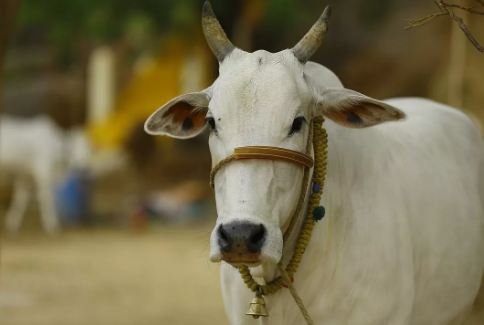
    With the sixth case of coronavirus being confirmed in India, the Hindu Mahasabha — a political organisation formed to protect the rights of the Hindu community and to safeguard Hinduism — has decided to organise a gaumutra [cow urine] party to ensure that the virus doesn’t spread in New Delhi.

    As per the details, Party President Chakrapani Maharaj has told The Print that there was a need to create greater awareness among the people on “how cow urine and cow dung, besides consuming cow products, can help eliminate coronavirus”.

    “Just like we organise tea parties, we have decided to organise a gaumutra party, wherein we will inform people about what is coronavirus and how, by consuming cow-related products, people can be saved from it,” Maharaj, who heads one of the two factions of the Mahasabha, said.

    “The event will have counters that will provide gaumutra for people to consume. At the same time, we will also put cow products like cow-dung cakes and agarbatti made from that. Upon using these, the virus will die immediately.”

    The event will be first organised at Hindu Mahasabha Bhawan in Delhi, following which such ‘parties’ will be held across the country.

    “We are in touch with gaushalas (cow shelters) across the country, who can collaborate and work with us in our mission to eliminate corona,” he said, adding that coronavirus had come to India because some ministers angered it by publicly consuming chicken.

  • Sindh govt rebuts claims regarding first coronavirus case being a ‘hoax’

    Sindh govt rebuts claims regarding first coronavirus case being a ‘hoax’

    • Local English daily had claimed student quarantined at private Karachi hospital under strong suspicions of coronavirus had ‘conclusively tested negative for the disease

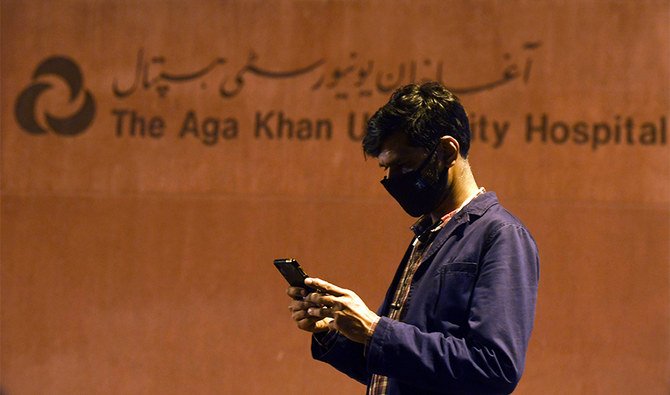
    Sindh health officials have rebutted a media report claiming that the first case of coronavirus in Pakistan, which was reported in Karachi last week, “had turned out to be a hoax” as the 22-year-old patient, who was quarantined at a private hospital under strong suspicions of coronavirus, had “conclusively tested negative for the disease”.

    According to The News, Karachi University (KU) student Syed Muhammad Yahya Jafri had recently returned from Iran and developed symptoms of influenza.

    “The symptoms, coupled with the fact that he had recently returned from Iran, made the doctors and senior provincial health management prematurely declare him as the first case of coronavirus in Pakistan without receiving his final lab reports wherein he tested negative for the virus,” the report had said.

    READ: Two coronavirus cases confirmed in Pakistan

    It had quoted KU Vice Chancellor Professor Dr Khalid Mehmood Iraqi as confirming that Jafri’s medical and laboratory reports “clearly indicated he was not suffering from coronavirus”.

    “Jafri and his family members who were quarantined by Sindh’s Health Department at a private hospital were discharged on Friday,” he was quoted as saying, adding that a large number of students, including Jafri’s classmates at the varsity’s Department of International Relations, were also tested in the same hospital. “None of them were found affected by coronavirus.”

    The claims were, however, refuted by Sindh Health Secretary Zahid Abbasi, who said that the youngster was being kept in isolation after testing positive for coronavirus.

    READ: Coronavirus myths flooding your WhatsApp? Here’s what is actually true

    He maintained there was no truth to Iraqi’s claim and the student would be discharged from the hospital after he would test negative.

  • Major win against coronavirus as China discharges 36,117 recovered patients

    In what is being termed as a major win against the new coronavirus — COVID-19 — for China, the country has discharged a total of 36,117 patients from hospitals after recovery, official state-run Chinese press agency, Xinhua, reported.

    The criteria for deciding if a patient has recovered varies between provinces, but in general, Chinese hospitals require people to test negative twice in a row, and to show no obvious symptoms such as a fever. Patients who are released are supposed to check in with their hospital and can face retesting — which is when some tested positive again.

    A total of 36,117 patients infected with the novel coronavirus had been discharged from hospital after recovery by the end of Thursday, reports quoted Chinese health officials as saying on Friday.

    Thursday saw 3,622 people walk out of hospital after recovery, the National Health Commission said in its daily report.

    By the end of Thursday, a total of 78,824 confirmed cases of novel coronavirus infection had been reported in 31 provincial-level regions of mainland China, and 2,788 people had died of the disease.

    Meanwhile, another report quoted a key Chinese respiratory disease expert as saying that some discharged coronavirus patients could still carry the virus and be infectious, potentially posing another complication to Beijing’s efforts to control the epidemic.

    Zhao Jianping, the head of the coronavirus containment team in worst-affected Hubei province, said a minority of patients who were discharged from hospital after tests showed they were negative for the virus later tested positive again. China counts patients whose throat or nose swabs show up positive for the virus in a nucleic acid test, and those whose CT scans show lesions in their lungs, as infected cases.

    It is pertinent to note that the news of recoveries from China — epicentre of the virus — comes as the world fights a global outbreak of the disease. While cases are being reported in the United States (US), Europe and the Middle East, Pakistan has also confirmed the presence of virus with first two infections.

    The presence of coronavirus in Pakistan was confirmed on Wednesday, with Special Assistant to the Prime Minister (SAPM) on Health, Dr Zafar Mirza, tweeting the reaffirmation.

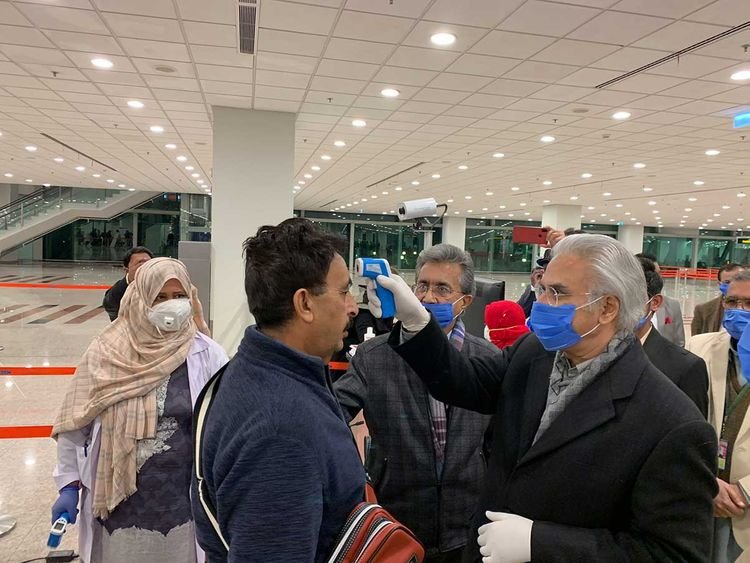
    Dr Mirza also addressed a joint press conference with Balochistan Chief Minister Jam Kamal Khan late on Wednesday night confirming the two cases in Karachi in Islamabad.

    The SAPM, while urging calm across the country, confirmed that the first patient along with his family had been quarantined. The 22-year-old man in question had returned to Pakistan from Iran on February 20, with all passengers from the flight set to be tracked and tested. At least 100 patients have been tested negative thus far.

  • How to protect yourself from coronavirus at office

    How to protect yourself from coronavirus at office

    The Khyber Pakhtunkhwa government’s Department of Relief, Rehabilitation & Settlement has released a list of directives for its employees to help prevent the spread of the novel coronavirus in shared workspaces.

    Here are the measures you can take to ensure a healthy environment for all employees:

    • Employees must be politely directed against hugging and shaking hands or coming into any needless physical contact with each other. This can help prevent the virus from being transferred to healthy employees from employees who may already have the virus but are not showing its symptoms.
    • Employees must wash their hands at least three to four times a day with soap or an alcohol-based sanitizer
    • All towels in toilets should be changed frequently or replaced with disposable towels that can be trashed after first use.
    • Any tissues, once used, should be disposed of immediately in a trash bin.
    • Biometric attendance to be stopped with immediate effect. This can help prevent the virus from being transferred to healthy employees from a sick individual via biometric machines.
    • Any unnecessary contact with side railings and doors should be avoided.  Healthy employees can pick up the virus by touching surfaces that a sick employee has also touched.
    • Likewise, appropriate safety precautions must be taken when coming in contact with office machinery such as telephones, fax machines and computers.
    • In case of cough and flu, the employee must seek medical attention on first priority.
    • A mask should be worn by any person showing symptoms of cough and flu. This is to prevent the virus from spreading in the environment through coughing and sneezing.
    • Face-masks should be discarded after one day of use.
  • Coronavirus in Pakistan: Prices of face masks increase by 900%

    Coronavirus in Pakistan: Prices of face masks increase by 900%

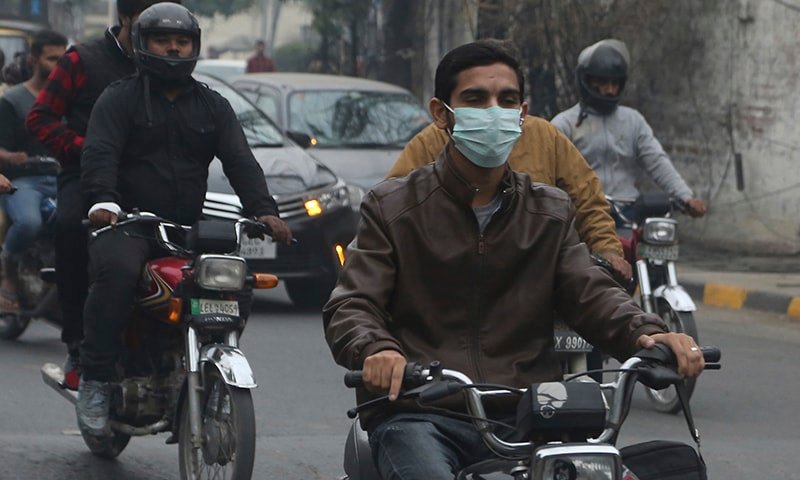
    With a couple of confirmed cases of the new coronavirus — COVID-19 — surfacing in the country, the prices of face or medical masks have increased by staggering 900% as local pharmacies also run out of what is said to provide some protection from the virus.

    While some experts say it provides modest protection against the virus that is new to science, others doubt the effectiveness of such masks for stopping COVID-19 transmission. United States (US) health officials say the virus spreads mostly between people who are in close contact with each other, and from respiratory droplets when an infected person sneezes or coughs.

    China is the world’s largest producer of the said masks, with a reported daily capacity of 20 million pieces, but by the estimate of its manufacturers, domestic demand alone is around 50 to 60 million per day. Amid the surge in demand, medical store owners are citing a shortage of the masks as the reason behind the increase in its price from Rs100 for a box to Rs1,000 for the same in markets across Pakistan.

    CORONAVIRUS IN PAKISTAN:

    First two cases of coronavirus in Pakistan were reported on Wednesday night, one of which was in the provincial capital of the country’s southeastern province of Sindh, and the other in the federal capital.

    While details of the case in Islamabad have not yet been made public, the first reported case is that of a 22-year-old man who, according to government sources, reached Pakistan from Iran by air and has a history of travel to Tehran “from where he acquired the virus”.

    It was also confirmed by Special Assistant to Prime Minister (SAPM) on Health Dr Zafar Mirza.

    “I can confirm first two cases of coronavirus in Pakistan. Both cases are being taken care of according to clinical standard protocols and both of them are stable. No need to panic, things are under control,” he tweeted.

  • Coronavirus myths flooding your WhatsApp? Here’s what is actually true

    Coronavirus myths flooding your WhatsApp? Here’s what is actually true

    The WhatsApp inbox of almost every Pakistani user has been flooding with myths regarding the new coronavirus — COVID-19 — since first two cases of the disease in the country were confirmed by the government last night.

    While the World Health Organization (WHO) has already declared an emergency following the global outbreak of the novel virus that has so far claimed over 2,700 lives and left around 81,000 others infected, here are some myth busters you need to know while maybe ignoring all those forwarded messages on WhatsApp.

    Does the new coronavirus affect older people, or are younger people also at risk?

    According to the WHO, people of all ages can be infected by the new coronavirus (2019-nCoV). Older people and people with pre-existing medical conditions (such as asthma, diabetes, heart disease) appear to be more vulnerable to becoming severely ill with the virus. 

    WHO advises people of all ages to take steps to protect themselves from the virus, for example by following good hand hygiene and good respiratory hygiene.

    Are antibiotics effective in preventing and treating the new coronavirus?

    No, antibiotics do not work against viruses, only bacteria.

    The new coronavirus is a virus and, therefore, antibiotics should not be used as a means of prevention or treatment. However, if you are hospitalised for the COVID-19, you may receive antibiotics because bacterial co-infection is possible.

    Can eating garlic or putting on sesame oil help prevent coronavirus?

    Garlic is a healthy food that may have some antimicrobial properties. However, there is no evidence from the current outbreak that eating garlic has protected people from the new coronavirus.

    As for sesame oil, it does not kill the new coronavirus. There are some chemical disinfectants that can kill the 2019-nCoV on surfaces. These include bleach/chlorine-based disinfectants, either solvents, 75% ethanol, peracetic acid and chloroform.

    However, they have little or no impact on the virus if you put them on the skin or under your nose. It can even be dangerous to put these chemicals on your skin.

    Are there any specific medicines to prevent or treat the new coronavirus?

    To date, there is no specific medicine recommended to prevent or treat the new coronavirus, however, chloroquine phosphate — used for the treatment of malaria — has so far proven to be the most effective drug against the virus.

    Those infected with the virus should receive appropriate care to relieve and treat symptoms, and those with severe illness should receive optimised supportive care. Some specific treatments are under investigation, and will be tested through clinical trials. WHO is helping to accelerate research and development efforts with a range or partners.

    Can pets at home spread the coronavirus?

    At present, there is no evidence that companion animals/pets such as dogs or cats can be infected with the new coronavirus. However, it is always a good idea to wash your hands with soap and water after contact with pets. This protects you against various common bacteria such as E.coli and Salmonella that can pass between pets and humans.

  • Schools in Sindh and Balochistan closed due to Coronavirus scare

    Schools in Sindh and Balochistan closed due to Coronavirus scare

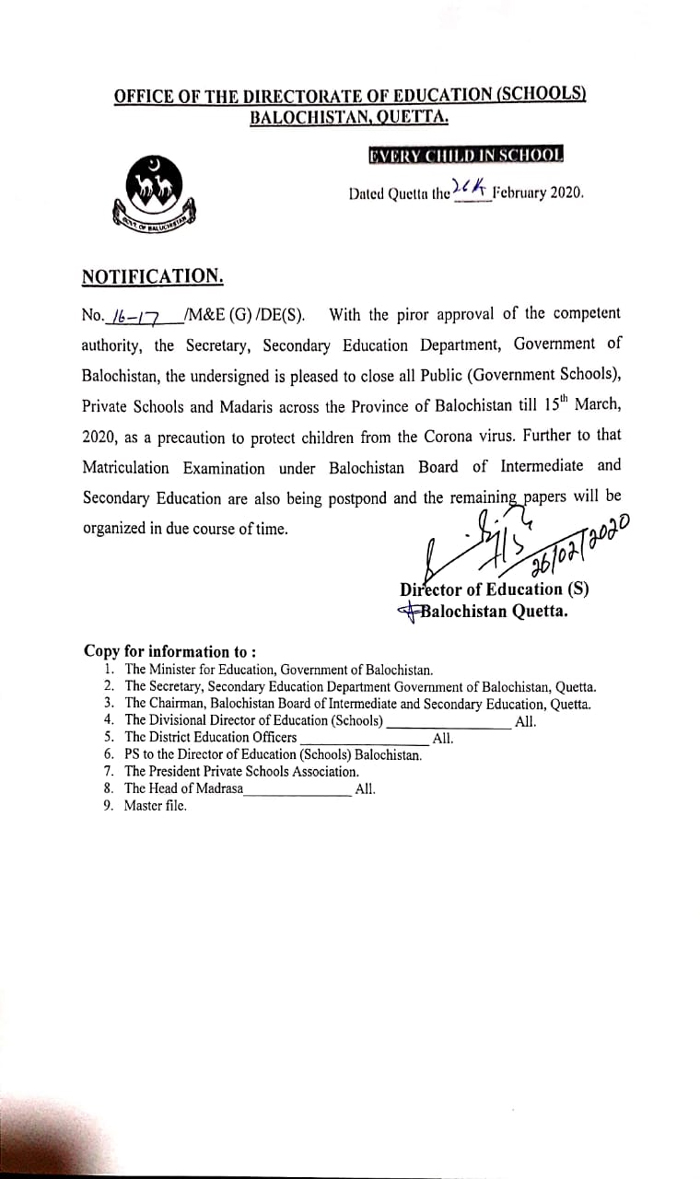
    All public and private educational institutes are closed in Balochistan until March 15 to protect children from the spread of Coronavirus. After two cases were confirmed in Pakistan on Wednesday, one in Karachi and one in Islamabad, governments are taking precautionary measures.

    The notification states that all public and private educational institutes, as well as madrassas, will be closed for more than two weeks.

    “The ongoing examinations of Grade 9 and Matriculation are also suspended,” the education minister said in a video message, “We want to keep our children safe’. He also said that it was a safety measure and no one needed to panic.

    A copy of the notification

    RELATED: Two coronavirus cases confirmed in Pakistan

    Sindh Education Minister Saeed Ghani also announced that the schools in the province would remain closed on Thursday and Friday, after the confirmation of a case in Karachi on Wednesday night.

    Saeed Ghani’s tweet

    The State Minister for Health Dr. Zafar Mirza tweeted last night, confirming the two cases.

    He said that everything was under control and also tweeted a helpline number.

    He asked people to refrain from sharing personal information of the patients saying that the patient in Karachi, as well as his family, was immediately placed in quarantine at a private hospital on the National Stadium Road while the one in Islamabad was moved to the capital’s Pakistan Institute of Medical Sciences (PIMS).