Tag: coronavirus

  • Lahore Zoo’s white tiger cubs reportedly died of COVID

    Lahore Zoo’s white tiger cubs reportedly died of COVID

    Two 11-week-old white tiger cubs that died in Lahore Zoo last month appear to have died of COVID-19, zoo officials have said.

    According to reports, the cubs died on January 30, four days after beginning treatment for what officials thought was feline panleukopenia virus, a disease that zoo officials said is common in Pakistan and targets cats’ immune system.

    But an autopsy found the cubs’ lungs were badly damaged and they were suffering from severe infection, with pathologists concluding they died from COVID-19.

    Although no PCR test for the new coronavirus was conducted, zoo deputy director Kiran Saleem told Reuters the zoo believes the cubs were the victims of the pandemic that has killed 12,256 people in Pakistan.

    “After their death, the zoo administration conducted tests of all officials, and six were tested positive, including one official who handled the cubs,” Saleem said. “It strengthens the findings of the autopsy. The cubs probably caught the virus from the person handling and feeding them.”

    Pakistan’s zoos regularly draw the ire of animal rights activists, who say hundreds of animals have died from poor living conditions there.

    “The last two white tiger cubs have died at Lahore zoo and once again the negligence of the management and authorities has come out,” said Zufishan Anushay, founder of JFK (Justice for Kiki) Animal Rescue And Shelter.

    “White tigers are extremely rare and need a specific habitat and environment to live a healthy life. By caging them in unhygienic conditions with no medical arrangements, we will keep witnessing these incidents,” she added.

    However, Saleem rejected the allegations of neglect at the zoo, saying that animal rights activists were welcome to visit and check the facility’s safety and hygiene protocols themselves.

  • MQM founder Altaf Hussain in ICU due to COVID

    MQM founder Altaf Hussain in ICU due to COVID

    Muttahida Qaumi Movement (MQM) founder Altaf Hussain has been under treatment for nearly three weeks in Britain due to coronavirus.

    Altaf urged his followers to continue praying for him, saying he would speak to them again after recovering.

    “May Allah protect everyone from this disease, COVID-19,” he was quoted by a news media outlet as saying. The MQM founder also appealed to listeners to “take precautions and help each other” in the times of a pandemic.

    On Jan 23, the MQM from its official Twitter handle tweeted: “MQM founder leader Mr Altaf Hussain got ill. After the check-up, the doctor advised him to rest and suspend his political activities.”

    Britain has had one of the world’s highest Covid-19 mortality rates and has recorded more than 106,000 deaths — the worst toll in Europe. The country is currently under a third national lockdown as it battles new strains of the coronavirus.

    On October 10, Hussain was charged by the UK’s Crown Prosecution Services with the terrorism offence in a case related to his incendiary speech relayed from the UK to his followers in Pakistan in 2016.

    After the speech, a crackdown was launched against the MQM and the government sealed its headquarter, Nine Zero, in Karachi. Later, MQM leaders in Pakistan also distanced themselves from him and removed his name from the party constitution, resulting in the formation of MQM-Pakistan.

  • HEC allows online exams after ‘violent’ student protests

    HEC allows online exams after ‘violent’ student protests

    A day after several students were injured as a result of a violent protest against on-campus examination outside the University of Central Punjab in Lahore, the Higher Education Commission (HEC) has allowed universities across Pakistan to conduct online examinations with “adequate safeguards”.

    In a statement, the HEC said it “already allowed universities to use their discretion to conduct exams, either on-campus or online as long as the chosen mode provides a fair assessment of students’ performance”.

    “Online exams either can be used if the universities administer ‘Open Book Exams’ or establish an invigilation system in a supervised environment. In this mode, universities will also have to use Turnitin software to detect plagiarism. Further, viva/oral exam may be integrated with the assessment where necessary, the statement added.

    The HEC said the universities can hold “on-campus exams under strict compliance” of coronavirus SOPs.

    “Universities may also have to organize make-up classes for two weeks in case students consider the course coverage to be deficient,” it said, adding that assessment of all “courses requiring psychomotor skills, such as medicine, engineering, subjects involving lab/studio work must be held on campus”.

    Education Minister Shafqat Mahmood also shared the HEC decision on his Twitter. He said he was “happy to note that HEC has formally allowed the universities to conduct online exams with adequate safeguards”.

    Sharing a picture of the HEC notification, Mahmood said that the decision would “pave the way for [universities] to devise the right procedures to quickly” hold online exams, adding that “education standards must be kept up.”

    On Tuesday, a student protest outside turned ugly when security guards of a private university baton-charged students after they tried to enter the university and march towards the vice chancellor office. Five of them received injuries, with two in critical condition.

    A day before, the police also used force to disperse the students who had gathered to record their protest against the on-campus examination despite the second wave of coronavirus.

  • COVID-19: Does double-masking help?

    COVID-19: Does double-masking help?

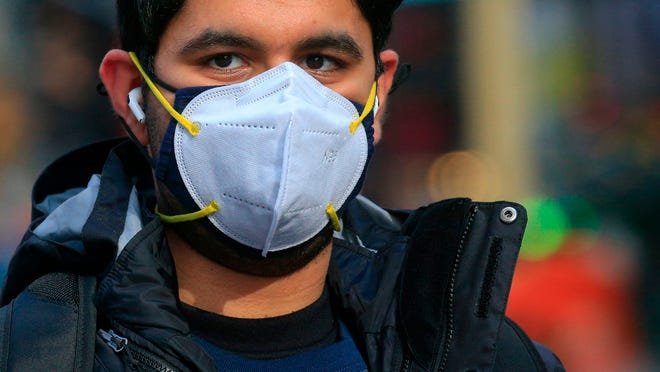
    Wearing a mask has now become an important part of our lives to avoid the transmission of the COVID-19. The appropriate use, storage and cleaning or disposal of masks are essential to make them as effective as possible.

    There are often times when you spot people wearing two face masks at the same time, but the question is, does it help?

    In theory, a virus should have a tougher time getting through two layers than just one layer. In a commentary in the journal Med, Monica Gandhi, MD, MPH, a Professor of Medicine recommended wearing at least a “high-quality surgical mask or a fabric mask of at least two layers with high thread count.” But they added that wearing a cloth mask tightly on top of a surgical mask could provide even more protection.

     Anthony Fauci, MD, Director of the National Institute of Allergy and Infectious Diseases (NIAID) also favours double-masking.

    “If you have a physical covering with one layer, you put another layer on, it just makes common sense that it likely would be more effective,” says Fauci.

  • US asks citizens to reconsider travel to Pakistan owing to terrorism, sectarian violence

    The United States has asked its citizens to reconsider travel to Pakistan in the light of the coronavirus outbreak, sectarian violence, and terrorism.

    In a travel advisory issued on Jan 25, the US administration said it “has limited ability to provide emergency services to US citizens in Pakistan due to the security environment”.

    The US also asked its citizens not to visit Balochistan, Khyber Pakhtunkhwa’s tribal districts, and the areas in close proximity to the Line of Control due to militant threats.

    The advisory is “reissued after periodic review with edits regarding sectarian violence”.

    COVID-19 IN PAKISTAN:

    The Centers for Disease Control and Prevention (CDC) has issued a Level 3 Travel Health Notice for Pakistan due to COVID-19, according to the advisory.

    “The government of Pakistan has lifted stay-at-home orders and allowed the resumption of intercity domestic travel and mass transit services in most cities. Travel restrictions, stay-at-home orders, business closures, and other restrictions can be reintroduced at any time within Pakistan due to COVID-19.”

    BALOCHISTAN AND KHYBER PAKHTUNKHWA:

    The US asked its citizens not to travel to Balochistan due to “terrorist groups, an active separatist movement, sectarian conflicts, and deadly terrorist attacks against civilians, government offices, and security forces”. “In 2019, several bombings occurred in Balochistan province that resulted in injuries and deaths,” it said.

    About KP, it said that “active terrorist and insurgent groups routinely conduct attacks against civilians, non-governmental organizations (NGOs), government offices, and security forces”. “Assassination and kidnapping attempts are common, including the targeting of polio eradication teams,” it said, asking the citizens to avoid these areas.

    LINE OF CONTROL:

    It also mentioned the Line of Control, saying “militant groups operate in the area”.

    “India and Pakistan maintain a strong military presence on both sides of the border. Indian and Pakistani military forces periodically exchange gunfire and artillery fire across the Line of Control (LoC),” it said, asking the citizens to avoid the border.

  • Govt announces free vaccine for all citizens

    Govt announces free vaccine for all citizens

    The federal government has announced free coronavirus vaccine for all Pakistanis, saying the government will inoculate health workers and elderly people in the first phase.

    Dr Faisal Sultan, prime Minister’s aide on health, said that the government is eyeing procurement of at least 20 million vaccine doses in the first stage; however, only 1 million doses will be procured by March this year.

    He further said that the registration process for the vaccination is underway and the government would soon begin the drive once the vaccine doses arrive from China.

    Reports say China will provide 0.5 million vaccines by the end of this month free of cost, while more vaccines from China will arrive in Islamabad next month.

    Foreign Minister Shah Mahmood Qureshi also talked about the procurement from the United Kingdom. He said the government was in talks with the UK to procure the vaccine developed by the British pharmaceutical company.

    So far, three firms, British firm Oxford-AstraZeneca, Chinese firm Sinopharm and CanSino Biologics, have asked Pakistan to buy their vaccine. Oxford-AstraZeneca and Sinopharm are already registered with Pakistan whereas CanSino is conducting phase-III trials in the country.

    Recently, the Human Rights Commission of Pakistan (HRCP) had expressed serious concerns over the government’s decision to ask provinces and the private sector to import the coronavirus vaccine.

    As per the details, with the Cabinet Committee on Procurement of COVID-19 Vaccine briefing Prime Minister Imran Khan on efforts being made to engage more pharmaceutical companies for procurement, HRCP had said that the government’s decision in this regard was not the right step.

    It may be noted that amid reports of a delay in the procurement of vaccine, some journalists claimed that the government was in no hurry to order the coronavirus vaccine as most of the senior government members had already been vaccinated against the deadly disease.

  • ‘It was scary’: Sania Mirza recounts her COVID experience

    ‘It was scary’: Sania Mirza recounts her COVID experience

    Sania Mirza has revealed that she had tested positive for COVID-19 in the beginning of the year.

    In a note posted to social media, the tennis champion said that though she is fine and healthy now, she wanted to share her experience.

    “I was lucky to not have any major symptoms for the most part of it, but I was in isolation and the toughest part was to stay away from my 2-year-old and family,” Sania said, adding that she “can’t even imagine what people and their families are going through when people are sick in [the] hospital all alone and by themselves.”

    “It was scary as you aren’t very sure what to expect and hear so many different things and stories…you get a new symptom every day and the uncertainty of it is extremely hard to deal with, not just physically but mentally and emotionally as well,” she shared further.

    “I just want to say after having been through it, I was fortunate to be more or less ok throughout it all, but to be away from my family was one of the scariest things – to not know when I’ll see them again.”

    “This virus is no joke,” she iterated, adding, “I took all the precautions as I could but still contracted it. We must do everything we can to protect our friends and family.”

    Sania and husband Shoaib Malik were recently in Dubai spending family time.

  • ‘79.3 per cent effective’: Govt to order 1.2m doses of Chinese vaccine

    ‘79.3 per cent effective’: Govt to order 1.2m doses of Chinese vaccine

    Pakistan has decided to purchase 1.2million doses of a Chinese vaccine, developed by China’s state-owned company Sinopharm, amid a worsening coronavirus outbreak across the world.

    According to Science and Technology Minister Fawad Chaudhry, the vaccine will be available in the first quarter of 2021 and it will be administered to frontline health workers in the first phase.

    “The Cabinet Committee has decided to initially purchase 1.2 million doses of the vaccine from the Chinese company Sinopharm, which will be provided free of cost to frontline workers in the first quarter of 2021,” the federal minister wrote on Twitter.

    Meanwhile, China has approved its first homegrown coronavirus vaccine, developed by state-owned pharmaceutical giant Sinopharm.

    CNN reported that the vaccine is 79.34% effective as per the interim analysis of Phase 3 clinical trials. China has drastically scaled up its vaccine emergency use program in recent weeks.

    Since December 15, the Chinese government has administered more than 3 million vaccine doses on “key groups” in the population, Zeng Yixin, vice-minister of China’s National Health Commission, said at a news conference.

    According to the report, fewer than 0.1 per cent developed a light fever, and about two people per million developed “relative serious adverse reactions” such as allergies.

    Beijing Biological Products Institute Co., a Sinopharm subsidiary, has said that interim results show the Sinopharm vaccine is safe and people who received two doses produced high-level antibodies.

  • New COVID strain detected in three UK returnees

    Pakistan has reported three cases of the new strain of coronavirus that first emerged in the United Kingdom, prompting countries to ban travel with the UK.

    This new strain, called the B.1.17 lineage, may be 70% more infectious than the previous strain going around in the UK. According to the Sindh Health Department, three passengers who had arrived from the UK had been infected with this variant of the coronavirus.

    The health department said it took samples of 12 people who had returned from the UK for genotyping, out of which six tested positive for the coronavirus. “Three showed the new variant for the COVID-19 in the first phase of testing,” said the statement of the department quoted by Geo News.

    It said that the samples will be sent to the 2nd phase of genotyping. The health department has already begun tracing the people that these patients had come into contact with.

    Last week, reports that a new strain of coronavirus, similar to the one wreaking havoc in the United Kingdom, had also surfaced in Karachi. Coronavirus Task Force head Dr Attaur Rehman had said that the authorities discovered a new strain of coronavirus in the port city that is similar to the one spreading in Europe.

  • Sisters in Germany invent COVID-19 themed board game

    Sisters in Germany invent COVID-19 themed board game

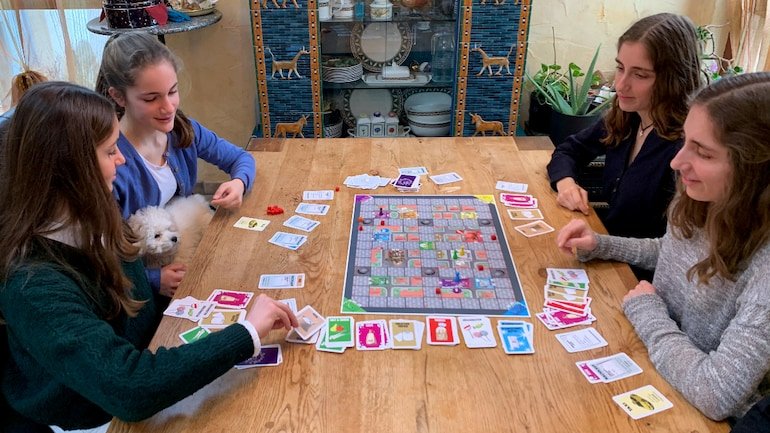
    Four sisters in Germany invented a coronavirus-themed board game during the first lockdown in the country. Corona is the name of the board game that can be played by four players at one time.

    The players compete to purchase all the groceries on a shopping list for an elderly neighbour who is shielding against the virus.

    The players collect and swap game cards. The winner is the one who delivers all the items first. The obstacles along the way include bump into the virus that would send you into quarantine, or finding that hoarders have already snapped up all the pasta or toilet rolls.

    “The basic principle is one of solidarity. But each of the players can decide to cooperate with the others or make thing harder for them by blocking their path with viruses,” Sarah told Reuters TV from their family home in the western city of Wiesbaden, Germany.