Tag: Corporal punishment

  • Ban against corporal punishment enforced in Islamabad

    On Thursday, the federal government of Pakistan introduced rules to enforce the ‘Prohibition of Corporal Punishment Act, 2021’ throughout the capital city and territories, banning corporal punishment in public and private schools.

    According to Dawn, the law was passed three years ago, however the rules were updated a couple of months ago and the act was finally launched on Thursday.

    According to the act, teachers who are found guilty of inflicting violence on students will be punished through major penalities like compulsory retirement, dismissal from service or demotion to a lower post. Minor penalties include withholding promotion for a specific period or increment or financial advancement in accordance with the rules or orders pertaining to the service or post.

    The law states:

    “The child has the right to be shown respect for his personality and individuality and shall not be made subject to corporal punishment or any other humiliating or degrading treatment.”

    Speaking at the launch at the Islamabad Model College for Girls in F-10/2, the Minister of Federal Education Rana Tanveer Hussain praised the act as a shift towards fostering a culture of non-violence and empowering the rights of children:

    “Let us work together to implement these rules effectively and create an environment where every child feels safe and nurtured.”

    Convener of the Parliamentary Caucus on Child Rights and Parliamentary Secretary Law and Justice, Mehnaz Akber Aziz, who was also present at the ceremony, discussed the significance of the rules towards improving the lives of children:

    “The launch of the Prohibition of Corporal Punishment Rules is a testament to our commitment to ensuring children’s well-being and upholding their rights. These rules will provide clear guidelines and enforce strict measures to eradicate corporal punishment from educational institutions and child-related settings throughout Islamabad. I hope this will also incentivise the currently 2.4 million out-of-school children to head to schools.”

    United Nations International Children’s Fund (UNICEF) Representative Abdullah A. Fadil spoke on why corporal punishment must be outlawed in Pakistan:

    “Corporal punishment can inflict immediate pain and suffering, and sadly may also cause irrevocable damage that can last a lifetime. We need to act now and put all our weight behind this act so that all children in Pakistan are able to learn and grow in a safe environment and are protected in a society which respects and upholds their rights and dignity.”
  • Teacher dislocates student’s arm by beating her with rod

    Teacher dislocates student’s arm by beating her with rod

    A teacher in Chiniot dislocated a female student’s arm by beating her with an iron rod for not memorising a lesson, ARY has reported.
    The incident happened at the Girls Elementary School in the Chiniot neighborhood of PS Rajua.

    When a student named Muskan said that she couldn’t remember the lesson, the teacher allegedly beat her up with an iron rod. After her arm got dislocated, the pupil was sent to the hospital.

    Muskan has said her teacher beat her after she could not remember the lecture.

    .

  • Law implemented against corporal punishment, schools told to be vigilant

    The Federal Directorate of Education (FDE) gave the direction to heads of all educational institutions to be watchful against corporal punishment as the new law against hitting students is implemented across the federal capital schools. The President of Pakistan, Dr Arif Alvi approved the Act on December 1.

    The bill on banning corporal punishment was approved in the National Assembly on February 2021.

    The new law states the teachers who commit corporal punishment will face serious consequences including compulsory retirement and dismissal from services.

    A letter was submitted on December 22 by the FDE to 423 heads of institutes that come under them to ensure strict compliance with the new regulations. A huge penalty will be imposed on the individuals who are proven to be guilty.

    The spokesperson of FDE, Abdul Waheed said: “We will ensure complete implementation of the Islamabad Capital Territory Prohibition of Corporal Punishment Act 2021. All heads have been informed about the new law and in case of its violation, the FDE will take action.”

    According to the letter, there are two categories of penalties that are minor and major which will apply to the individuals.

    A minor penalty includes withholding increment in salary or promotion for some specified time period, censuring. Halting from promotion and recovery from pay are included in this category.

    On the other side, if a teacher is found guilty then they will face demotion to a lower position, compulsory retirement, removal, and dismissal from service come under major penalties.

    The FDE also directed all institutions to hold orientation for staff members on the Act within one week of the issuance of the letter.

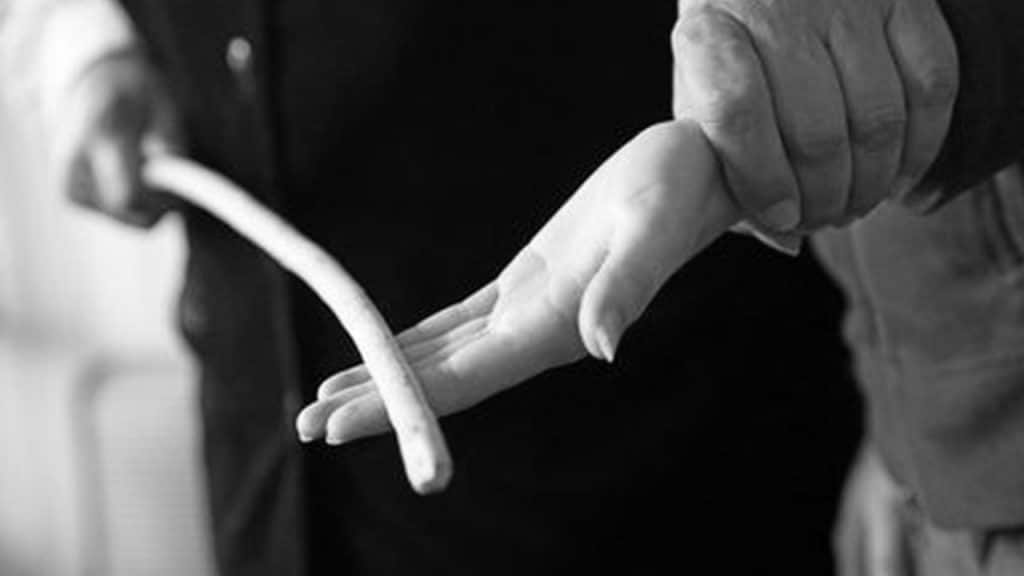
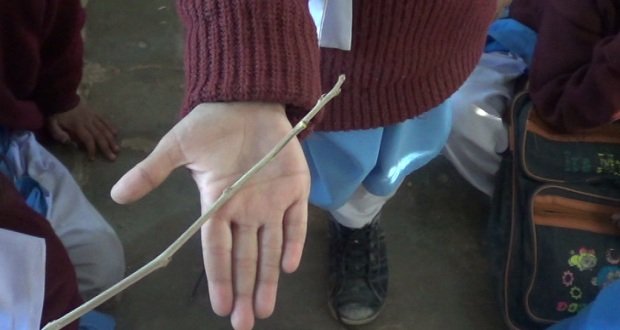
    The law also explains that corporal punishment is such a physical force in which a student receives some degree of pain or discomfort, no matter how light it could be. Hitting (smacking, slapping, spanking) a child or with the use of the stick, belt, whip, shoe, wooden spoon, etc.

    Physical force could be kicking, shaking, or throwing a child, scratching, pinching, biting, pulling hair, or boxing ears. Forcing a child to stay in uncomfortable positions, burning, scalding, or forced ingestion, for example, washing a child’s mouth out with soap or forcing him to swallow hot species, including mental abuse.

    The court of the magistrate shall take the case when the complaint of physical punishment is registered either by a student to whom a physical force is inflicted, his parents, or next of kin.

    The law will also be enforced in private schools. The federal government shall formulate a comprehensive system for the enforcement and monitoring of this law in private institutions whether registered or unregistered. It shall devise a system for complaints to address any corporal punishment.

  • Corporal punishment allegedly led to the death of a teenage student in Lahore

    Corporal punishment allegedly led to the death of a teenage student in Lahore

    Lahore Police has filed a first information report (FIR) against several teachers, for allegedly beating a student to death, ARY News has reported.

    The FIR was registered after the victim’s father, Wajid Hussain, lodged a complaint at Badami Bagh Police Station Lahore. As per the complaint, the 14-year-old Hamza died after being subjected to corporal punishment by his teachers.

    The complaint further states that the father found his son in an unconscious state as teacher Mohammad Majid, along with his colleagues, subjected him to torture. The student was rushed to Mayo Hospital and he died there two days latter.

    As per details, the accused have left the area and the police is trying to locate them.

  • Speaker Asad Qaiser lauds Shehzad Roy for his efforts against corporal punishment

    In a move welcomed by child rights organisations, the National Assembly on Tuesday passed The ICT Prohibition of Corporal Punishment Bill prohibiting corporal punishment in the capital, setting punishments for people physically punishing children.

    Speaker National Assembly Asad Qaiser lauded singer Shehzad Roy for his efforts against corporal punishment.

    The proposed law will cancel out the provisions of Section 89 of the Pakistan Penal Code, which allows physical punishment “for the benefit” of the child by guardians and teachers.

    Section 89 of the Pakistan Penal Code:

    Section 89 of the Pakistan Penal Code 1860 (No XLV) allows parents, teachers and other guardians to use moderate and reasonable corporal punishment as a means to correct the behaviour of children below 12 years of age.

    The bill was tabled by PML-N MNA Mehnaz Akbar Aziz. It will become a law after the Senate passes it and the president signs it.

    Last year, The Islamabad High Court (IHC) suspended Section 89 of the Pakistan Penal Code (PPC) and banned the practice of corporal (physical) punishment by parents, guardians and teachers on children. The decision was announced after singer-activist Shehzad Roy filed a petition in court to ban the use of violence to discipline children.

  • Major win for Shehzad Roy as court bans corporal punishment for kids

    Major win for Shehzad Roy as court bans corporal punishment for kids

    The Islamabad High Court (IHC) on Thursday suspended Section 89 of the Pakistan Penal Code (PPC) and banned the practice of corporal (physical) punishment by parents, guardians and teachers on children.

    The decision was announced after singer-activist Shehzad Roy filed a petition in court to ban the use of violence to discipline children. A division bench of the IHC presided by Chief Justice Athar Minallah, suspended the PPC section until further notice.

    Section 89 of the Pakistan Penal Code 1860 (No XLV) allows parents, teachers and other guardians to use moderate and reasonable corporal punishment as a means to correct the behaviour of children below 12 years of age.

    In his petition, Roy claimed that Section 89 is contradictory to the Constitution as it violates basic human rights and the United Nations Convention on the Rights of the Child.

    “Punishing children is being considered as essential for improving learning. News of torture and punishment of children have been reported every day in the media” read the petition.

    Justice Minallah, during the hearing, remarked that the country’s parliament had adopted a bill barring corporal punishment for children in 2013. The bill was not passed into law due to a technicality.

    Roy’s lawyer maintained that his client wanted the High Court to prevent violence against children until relevant legislation is passed.

    “Corporal punishment affects a child’s mental and physical health,” he asserted.

    After hearing the arguments, Justice Minallah directed the interior ministry to take immediate steps to protect the rights of children and asked for a reply from the federal government on the matter by March 5.

    Roy took to Twitter to express his gratitude over the IHC decision.

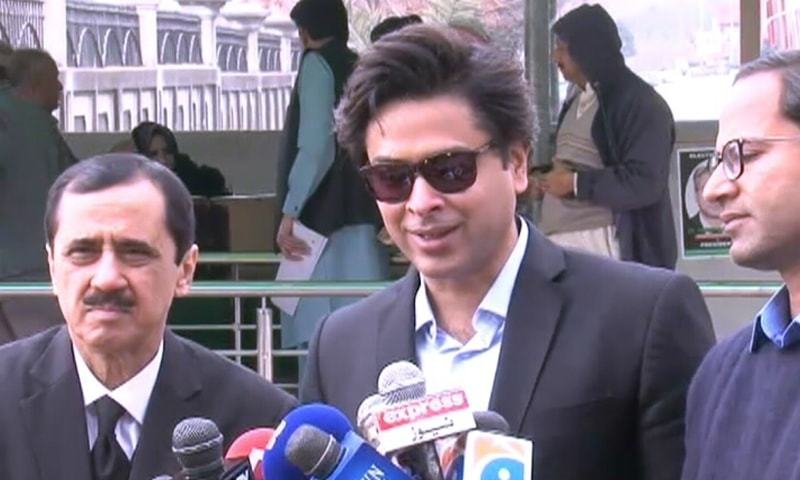
    Earlier, while speaking to the media outside the Islamabad High Court, Roy had said, “When a child is born, parents hit him, when he goes to school, teachers hit him, when he grows older and goes out in the society, police hits him to make him a better person. Research shows that the use of violence only increases violence.”

    Journalists, actors and members of the civil society lauded Roy for his initiative and hailed the court’s decision.