Tag: corruption

  • VIDEO: ‘How to deal with corruption’ ft. Ali Gul Pir

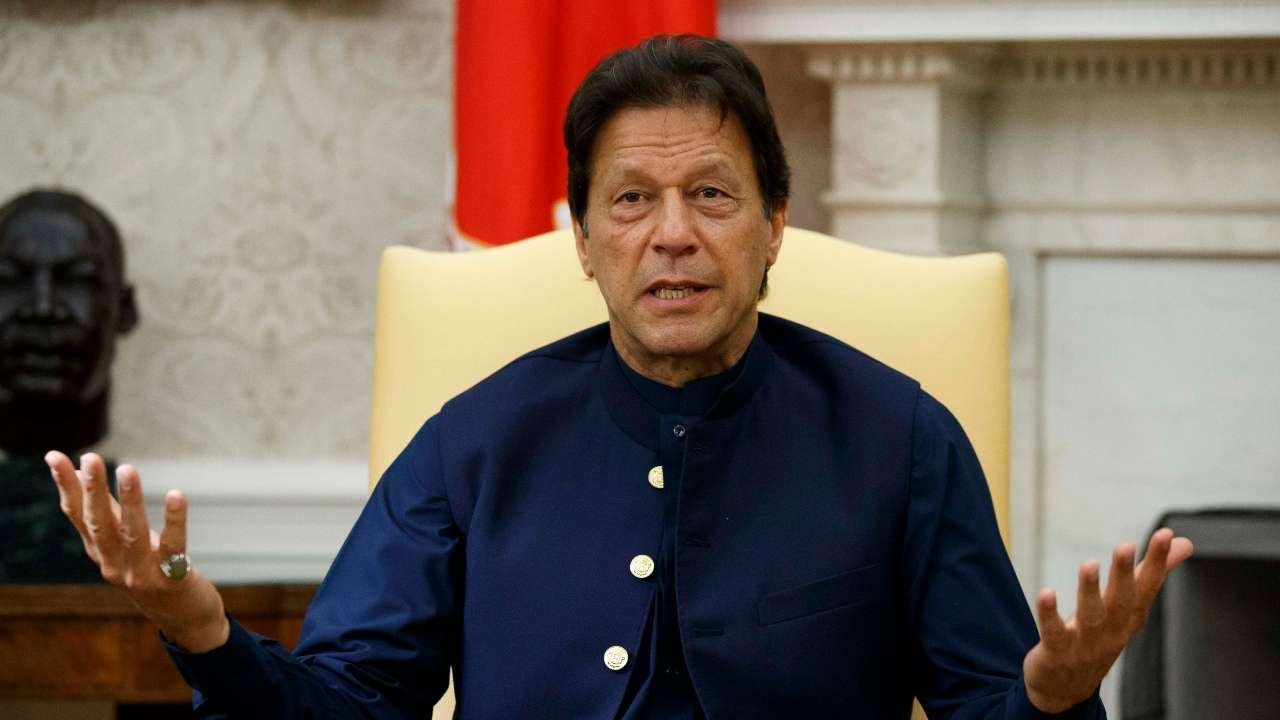
    Comedian and rapper-vlogger Ali Gul Pir, who is known for his sarcastic and funny takes on different issues, has now shared a video on Prime Minister Imran Khan’s plan to eradicate corruption.

    “How to deal with corruption #NoMoreParty #NoMoreShaadi,” wrote Ali in the caption. He also PM Khan and added the original clip in the thread.

    In the video Ali, who has dubbed PM Khan’s voice on him, can be heard saying: “Woh koi jail se niklta hai. Arbon rupay ki corruption ke charges per, log phool pheank rahe hain uske uper.”

    Mujhe yeh batein kaise corruption khatam hogi?,” says Pir further. “Jo corruption karega, rishwat dega, woh hamare me se nahi hai.

    Unn gharon me[jahan corruption hoti hai] log shaadi nahi karein gein, unko log parties per nahin bulaein ge,” adds the comedian.

    Meanwhile, netizens are loving the video. Check out some reactions below:

    https://twitter.com/farazazhar/status/1372205552898506755

    Earlier, on February 27, Pir released a song as a humorous tribute to the four trees Pakistan lost in the Balakot airstrike. In the song, the rapper talked about fantastic tea and fallen trees while gyrating in a forest in the video.

  • PML-N’s Hamza released after First Lady Bushra Bibi’s relatives became involved: sources

    PML-N’s Hamza released after First Lady Bushra Bibi’s relatives became involved: sources

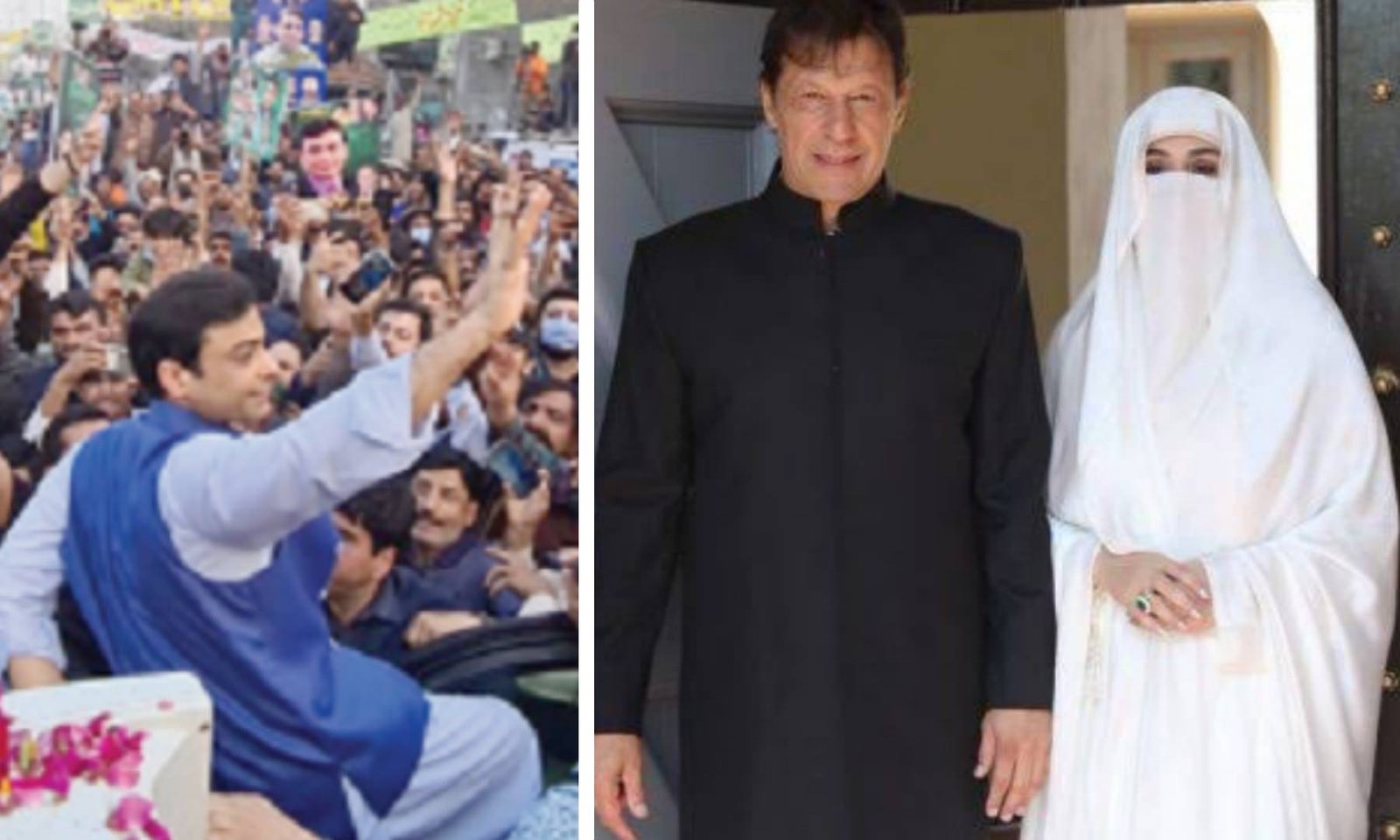
    Leader of Opposition in Punjab Assembly Hamza Shahbaz Sharif was on Saturday released after spending 20 months in jail as the National Accountability Bureau (NAB) probed money laundering accusations against him.

    But there is more to last weekend’s development as sources claim that the Pakistan Muslim League-Nawaz (PML-N) leader’s release became possible when relatives of Prime Minister (PM) Imran Khan’s wife became involved.

    According to sources, First Lady Bushra Bibi’s cousin and nephew became two of the three guarantors in younger Shehbaz’s case.

    “The cousin is Masood Akhtar, and the nephew is Adeel Ali Khan,” they told The Current, adding that the third guarantor, namely Idrees Bhatti, is the son-in-law of Akhtar.

    Sources, however, could not comment over the state of ties the guarantors share with the first lady.

    Speaking to The Current, PML-N Deputy Secretary General Attaullah Tarar neither confirmed nor denied that the three guarantors were related to Bushra Bibi.

    “Masood Akhtar Sahib is the father of a very hardworking MPA of ours. Aneeza Fatima has been working very hard for the party since before becoming a lawmaker,” he said.

    The PML-N leader went on to say that the guarantor was the father of a trusted lawmaker of the party, and they checked the characters of the people, “not their cousins”.

    HAMZA’S RELEASE:

    Hamza was released on Saturday after an accountability court issued the order and dispatched the same to Kot Lakhpat Jail.

    The Punjab lawmaker was welcomed by his cousin and PML-N Vice President Maryam Nawaz outside the jail premises.

    The PML-N had prepared well in advance for the party leader’s release as 12 different camps had been set up across Lahore to welcome him.

    Arrangements were made to bring Hamza from Kot Lakhpat Jail to his residence in the form of a rally.

    PML-N workers showered rose petals and danced while celebrating for hours outside the jail in anticipation of Hamza’s release.

    Earlier, on Wednesday, the Lahore High Court (LHC) had granted bail to Hamza in the money laundering case after a two-member bench of the court heard his bail plea.

    PM’s Focal Person on Digital Media Dr Arslan Khalid is yet to respond to The Current’s query. The story will be updated when we receive his comment.

  • Did PM always know about MPAs selling their votes?

    Did PM always know about MPAs selling their votes?

    Prime Minister Imran Khan had claimed in April 2018 that he had a video of Khyber Pakhtunkhwa lawmakers taking money ahead of the Senate election to vote against the party lines, but the video was released after a period of more than two years, only a day ahead of the Supreme Court hearing over the issue.

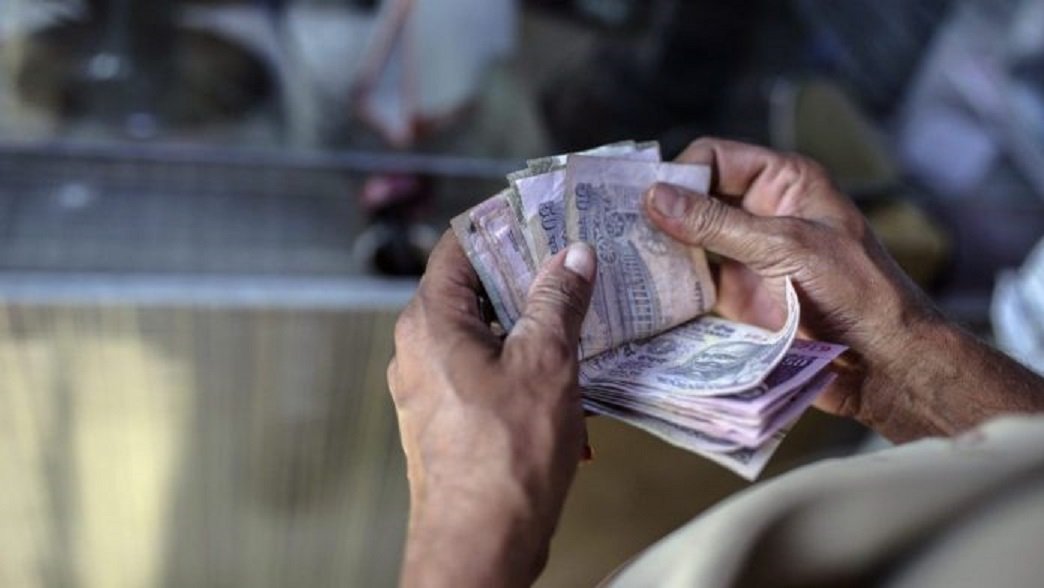
    The PM had said that he had proof of people selling their votes for money and he could show them the video where they were seen “counting money”.

    But if the PM had the video and knew about the people involved in horse-trading then what took the Pakistan Tehreek-e-Insaf (PTI) so long to release it and that too a day before the court hearing, Shahzeb Khanzada asked the federal minister for information on his show.

    As per Khanzada, another question that the video poses is the KP law minister, Mahmood Sultan, who stepped down from the post after the video emerged? If the PM had seen the video, as he has claimed multiple times in past, then why was Sultan made the minister in the KP cabinet? And if he didn’t know about it then why did he claim otherwise.

    Information Minister Shibli Faraz said that the PM hadn’t seen the video, but he did know that something like that existed. “He was only aware of its existence,” he said, adding that the PM took the decision to sack the minister involved right away and this should be praised.

    Speaking during the show, Faraz asserted that the PM hadn’t watched the video, but trusted his “strong sources”. Shibli said that the government was trying to end the menace of corruption during the Senate polls and the media should support its cause.

    ‘LEAKED VIDEO’:

    On Tuesday, the video first released by ARY News showed lawmakers belonging to the now ruling Pakistan Tehreek-e-Insaf (PTI) counting bundles of cash and then stashing the same in a bag.

    The video showed how, during the critical period, loyalties were switched by PTI’s 20 Khyber Pakhtunkhwa lawmakers, all of whom were reportedly expelled by the party’s central leadership after an investigation. The money was dished out in Feb-March 2018, it was reported.

    It may be noted that the damning video comes at a time when Prime Minister (PM) Imran Khan expresses aims to hold Senate elections through open ballot in 2021 in a bid to eliminate horse-trading. Defending his party’s move to hold the elections through open ballot, the premier had last week spoken of bribes paid to buy loyalties, revealing that he himself had been offered some.

    He had further revealed that 20 members of the KP Assembly belonging to the PTI, likely the ones from the video, were paid Rs50 million each during the last Senate polls to vote in favour of certain candidates.

    On February 6, President Dr Arif Alvi signed Elections (Amendment) Ordinance 2021 that will pave way for the organisation of Senate elections through open ballot.

  • ‘Rs50 to Rs70 crores’: PM goes on to reveal corruption surrounding Senate polls

    ‘Rs50 to Rs70 crores’: PM goes on to reveal corruption surrounding Senate polls

    Continuing his tirade against secrecy in polls for the upper house of the parliament while his party also campaigns for election through open ballot, Prime Minister (PM) Imran Khan has gone on to reveal further details of corrupt practices surrounding the vote.

    Speaking to journalists in Kallar Syedan, the premier said the rate for a single Senate vote in Balochistan ranged between Rs50 to 70 crores (Rs500 to Rs700 million), which was unfortunate.

    “The market of corruption in politics is on the rise, but no other party is willing to change it,” he said, regretting that in the past, people became senators by buying votes from members of national and provincial assembly votes.

    “Those involved in such extravagance will later recover by minting money from the public exchequer,” he said.

    PM Imran said that vote-purchase in Senate elections for the past 30 years was a big question mark over the credibility of politicians who supported a corrupt system and “traded conscience in the name of democracy”.

    “A big question lies ahead, whether to go for Senate polls with the old corrupt system or to act transparently instead,” he said in response to queries regarding the leaked videos showing politicians buying and selling votes before the 2018 Senate elections.

    The PM said that corrupt practices were revealed to him after he and his party members received offers from multiple sides for vote-selling before the 2018 Senate elections.

    He recalled that he was approached by different people for money and offered funds for Shaukat Khanum Hospital as another mode of bribe.

    “What kind of democracy is this where votes are sold? This is nothing, but a blot on democracy.”

    He recalled that he ousted 20 from his party who took money for votes in the last Senate elections, adding some of them also invoked the jurisdiction of the court against the action.

    He dismissed the allegations of the opposition for being in knowledge about the video way earlier, saying had he known about it, he would have presented it before the court.

    Training guns at the Pakistan Democratic Movement (PDM), he said the opposition alliance’s aim was to protect their corruption and ill-gotten money.

    To a question on Jamiat Ulema-e-Islam-Fazl (JUI-F) chief Maulana Fazlur Rehman, who advised Imran to learn politics from him, he said the JUI-F chief himself was the one who most benefited from secret ballot.

  • Secretly recorded video shows PTI MPAs receiving loads of cash ahead of 2018 Senate election

    A secretly recorded video exposing horse-trading during 2018 Senate polls has made its way to television channels weeks before the 2021 election on seats of the upper house of the parliament.

    According to ARY News, the video shows lawmakers belonging to the now ruling Pakistan Tehreek-e-Insaf (PTI) counting bundles of cash and then stashing the same in a bag.

    The video shows how, during the critical period, loyalties were switched by PTI’s 20 Khyber Pakhtunkhwa (KP) lawmakers, all of whom were expelled by the party’s central leadership after an investigation, the report said.

    Quoting sources, it added that the horse-trading had been carried out between February 20 and March 2, 2018.

    On February 6, President Dr Arif Alvi signed Elections (Amendment) Ordinance 2021 that will pave way for the organisation of Senate elections through open ballot.

    According to the ordinance, changes have been brought to Sections 81, 122 and 185 of the Constitution. The ordinance will come into force “at once” and “extended to the whole of Pakistan.”

    A presidential reference being heard by the Supreme Court (SC) also pertains to the organisation of Senate polls through an open vote.

    It may be noted that the damning video comes at a time when Prime Minister (PM) Imran Khan expresses aims to hold Senate elections through open ballot in 2021 so as to eliminate the menace of horse-trading.

    Defending his party’s move to hold the elections through open ballot, the premier had last week spoken of bribes paid to buy loyalties, revealing that he himself had been offered some.

    He had further revealed that 20 members of the KP Assembly belonging to the PTI, likely the ones from the video, were paid Rs50 million each during the last Senate polls to vote in favour of certain candidates.

  • PTI’s Pakistan more corrupt than PML-N’s Pakistan for second consecutive year: Transparency International

    PTI’s Pakistan more corrupt than PML-N’s Pakistan for second consecutive year: Transparency International

    Transparency International (TI) — a Berlin-based international non-governmental organisation combating global corruption — on Thursday released a new report, according to which, the country under the Pakistan Tehreek-e-Insaf (PTI) government, for the second consecutive year, has witnessed more corruption than it did in the outgoing year of the former ruling Pakistan Muslim League-Nawaz (PML-N).

    According to TI’s global report on the 2020 Corruption Perception Index (CPI), while Pakistan’s ranking and CPI score in 2019 dropped from 117 to 120 and from 33 to 32, respectively, the ranking has now fallen down to 123 and CPI score to 31 in 2020.

    The report comes at a time when the Prime Minister (PM) Imran Khan-led government boasts of the success of its promised accountability drive against opposition lawmakers and government officials. The same has time and again been termed as “political victimisation” by those on the radar of the National Accountability Bureau (NAB).

    Before the second consecutive drop, Pakistan witnessed a slight improvement in the 2018 CPI, scoring a point higher than in 2017 but remaining unchanged in the rankings. The country scored 33 out of 100 on the index — one point better than its score of 32 in 2017 and 2016. Its ranking, however, remained unchanged at 117 out of 180 countries, in 2018.

    TI’s annual report on CPI is formulated on the basis of input from 13 international agencies. In the case of Pakistan, however, the assessment of eight agencies is taken into account. These include the World Economic Forum Executive Opinion Survey; the World Bank Country Policy and Institutional Assessment; the World Justice Project Rule of Law Index; the Bertelsmann Stiftung Transformation Index; the Economist Intelligence Unit Country Risk Service; the Global Insight Country Risk Ratings; the IMD World Competitiveness Center World Competitiveness Yearbook Executive Opinion Survey; and the Varieties of Democracy project’s findings.

    Pakistan in the last 11 years had improved its index score from 23 in 2010 to 33 in 2018. However, never in the said time period had Pakistan been assessed to have performed negatively when compared to the previous year, which has now happened twice.

  • Banigala police station staff removed on PM’s complaint

    At least 20 police officials, excluding the station house officer, of Banigala police station were removed by the Islamabad police chief after a complaint by Prime Minister Imran Khan.

    According to Dawn, there were several complaints against the staff of the police station. The cops were reportedly involved in facilitating land grabbers, drug dealers, and taking money from vehicles transporting construction material.

    In addition to over a dozen staffers, three sub-inspectors and three assistant sub-inspectors were also among the officials removed over misconduct.

    The development followed days after Islamabad IG Qazi Jamilur Rehman called on the PM. During their meeting, the PM had told the IG that the Banigala policemen extorted money from a truck driver. The driver was traced and but he couldn’t identify the policemen who extorted money from him.

    According to the newspaper, Banigala and three other police stations were declared Model Subdivision in Sept 2019 in line with the PM’s vision of the police reforms.

    As per the reforms aimed at effective administration of the police stations, assistant superintendents of police would work as station house officer for effective administration.

  • Egg on face of Modi’s India with highest bribery rate in Asia

    Egg on face of Modi’s India with highest bribery rate in Asia

    India has the highest bribery rate in Asia and the most number of people who use personal connections to access public services, according to a new report by Transparency International (TI).

    According to Global Corruption Barometer (GCB) Asia, nearly 50 per cent of those who paid bribes were asked to do so, while 32 per cent of those who used personal connections said they would not receive the service otherwise.

    The report is based upon the survey which was conducted between June 17 and July 17 this year in India with a sample size of 2,000.

    “With the highest bribery rate [39 per cent] in the region, India also has the highest rate of people using personal connections to access public services [46 per cent],” the report said.

    Bribery in public services continues to plague India. Slow and complicated bureaucratic process, unnecessary red tape and unclear regulatory frameworks force citizens to seek out alternate solutions to access basic services through networks of familiarity and petty corruption, the report said.

    “Both national and state governments need to streamline administrative processes for public services, implement preventative measures to combat bribery and nepotism, and invest in user-friendly online platforms to deliver essential public services quickly and effectively,” the report said.

    Although reporting cases of corruption was critical to curbing the spread, a majority of citizens in India, 63 per cent, think that if they reported corruption, they would suffer retaliation, it said.

    In several countries, including India, Malaysia, Thailand, Sri Lanka and Indonesia, sexual extortion rates are also high and more must be done to prevent sextortion and address specific-gendered forms of corruption, the report said.

    Sextortion is extorting money or sexual favours from someone by threatening to reveal evidence of their sexual activity through means like morphed images.

    In India, 89 per cent think government corruption is a big problem, 18 per cent offered bribes in exchange for votes and 11 per cent experienced sextortion or know someone who has.

    “About 63 per cent of surveyed people think the government is doing well in tackling corruption while 73 per cent said their anti-corruption agency is doing well in the fight against corruption,” it said.

    Based on fieldwork conducted in 17 countries, the GCB surveyed nearly 20,000 citizens in total.

    The report said the results showed that nearly three out of four people think corruption is a big problem in their country and the survey also found that nearly one in five people who accessed public services, such as health care and education, paid a bribe in the preceding year.

    This equates to approximately 836 million citizens in the 17 countries surveyed, it said.

    After India, Cambodia has the second-highest bribery rate at 37 per cent, followed by Indonesia (30 per cent) while the Maldives and Japan maintain the lowest overall bribery rate (2 per cent), followed by South Korea (10 per cent) and Nepal (12 per cent).

    “However, even in these countries, governments could do more to stop bribes for public services,” the report said.

    The report concluded by noting that daily experience with corruption and bribery remains alarmingly high, with nearly one in five citizens paying a bribe to access key government services, such as health care or education, and one in seven being offered a bribe to vote one way or another at elections.

    “In several countries, including India, Malaysia, Thailand, Sri Lanka and Indonesia, sexual extortion rates are also high and more must be done to prevent sextortion and address specific-gendered forms of corruption,” it said.

    The report further said that to provide victims of corruption with channels for redress, governments must ensure that bribery was criminalised and actively investigated and prosecuted.

    “Citizens must have access to safe and confidential reporting mechanisms and governments must do more to ease citizens’ fear of retaliation in reporting corruption. Despite these challenges, citizens are largely optimistic about the future and believe that ordinary people can make a difference in the fight against corruption,” the report said.
  • Two govt-controlled depts spied on Jahangir Tareen, monitored his family, his businesses?

    Two govt-controlled depts spied on Jahangir Tareen, monitored his family, his businesses?

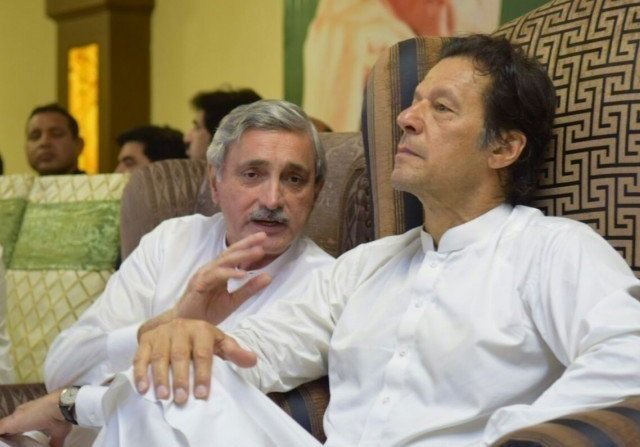
    Former Pakistan Tehreek-e-Insaf (PTI) secretary general Jahangir Khan Tareen was reportedly spied on by two government-controlled departments — neither linked to any defence organisation or the armed forces — after being tasked by his own party to monitor his activities and businesses as well as those of his family.

    While Geo, citing sources, has reported that the departments monitored the same over several weeks, the claims have been categorically denied by the government.  

    Tareen’s residences in Islamabad and Lodhran were allegedly bugged, as were his sugar mills and other business interests. His activities, including meetings with politicians, businessmen and friends, were monitored and phone calls taped, the report said, adding that phone calls of all the members of his family were also allegedly recorded.

    Three weeks ago, a team from the Competition Commission of Pakistan (CCP) had raided the head office of Tareen’s sugar mill and seized office records. It is not clear whether the raid was linked to the bugging operation or not.

    Advisor to the Prime Minister (PM) on Accountability and Interior Shahzad Akbar has, however, rejected the allegations, describing them as “fiction”.

    He said that the allegation that Tareen and his family were spied on was “news” for him. “All concerns of those who were subject of the Sugar Commission inquiry [including Tareen] were raised by them in multiple cases before various high courts as well as the Supreme Court of Pakistan.”

  • ‘Disband NAB,’ ex-PM Abbasi demands

    ‘Disband NAB,’ ex-PM Abbasi demands

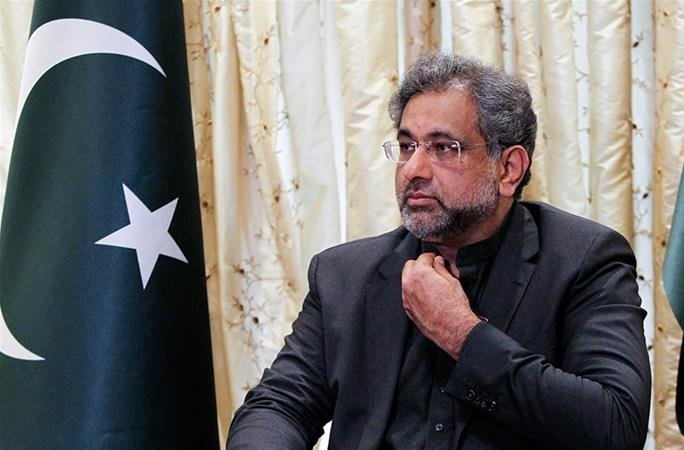
    Former prime minister Shahid Khaqan Abbasi has demanded that the National Accountability Bureau (NAB) should be disbanded.

    He addressed the media after appearing before the court in connection with the liquefied natural gas (LNG) case on Thursday.

    Earlier, the hearing of the LNG case against Abbasi was adjourned without any proceedings till September 7 due to the unavailability of Accountability Court Judge Azam Khan.

    The Pakistan Muslim League-Nawaz (PML-N) stalwart told the media that despite the passage of 13 months, he has not been provided with a copy of the reference. Abbasi also thanked NAB for inducting him to the list of billionaires.

    Replying to a question, the former prime minister ruled out allegations of money laundering and stated that he and his son paid all the taxes, and money in their accounts is legitimate.

    Abbasi, Miftah Ismail, ex-PSO MD Imranul Haq, and others are facing charges of corruption over awarding a LNG import contract allegedly at exorbitant rates in 2015, which caused a big loss to the national exchequer.

    According to NAB, in 2013 Abbasi had awarded a LNG import and distribution contract to the Elengy Terminal in violation of the Public Procurement Regulatory Authority (PPRA) rules and relevant laws.