Tag: cotton

  • Report links H&M, Zara to environmental destruction in Brazil

    Report links H&M, Zara to environmental destruction in Brazil

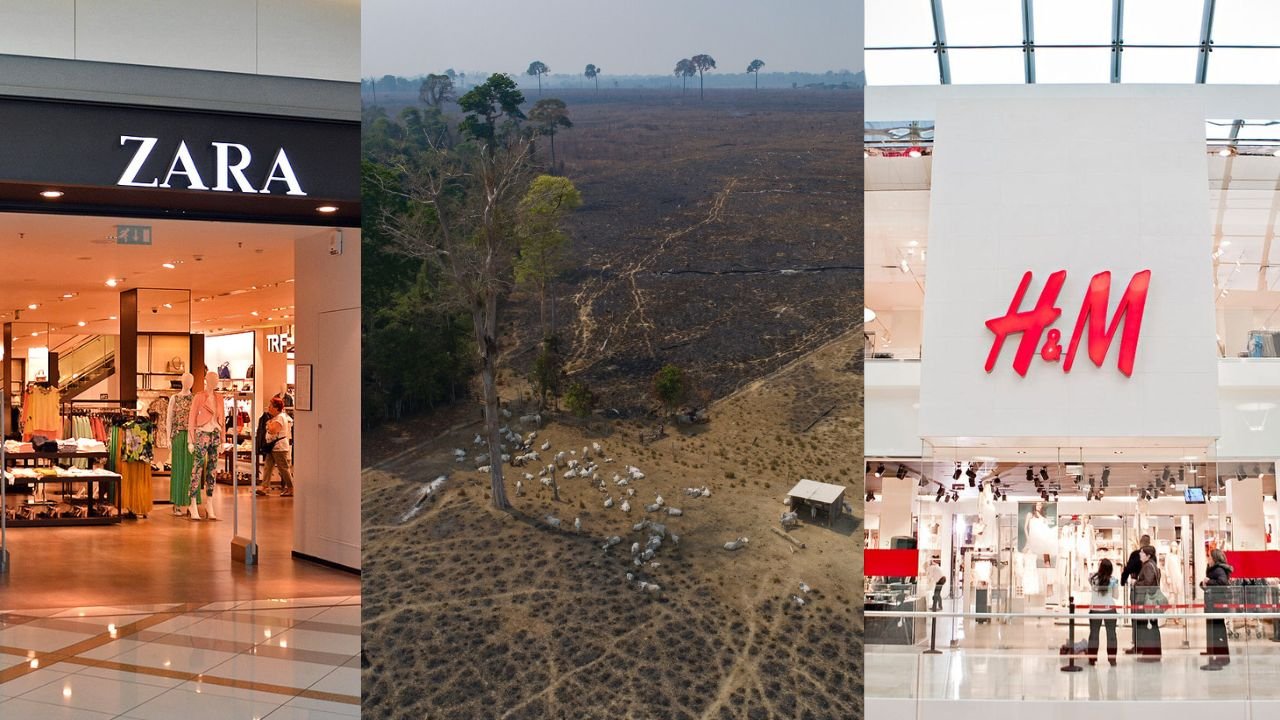
    Fast fashion giants H&M and Zara have used cotton from farms linked to massive deforestation, land-grabbing, corruption and violence in Brazil, a report by the environmental group Earthsight said Thursday.

    Based on satellite images, court rulings, shipment records and an undercover investigation, the report, titled “Fashion Crimes,” found the companies sourced “tainted cotton” farmed in the fragile Cerrado savanna by two of Brazil’s biggest agribusiness firms, SLC Agricola and the Horita Group.

    Despite abuses linked to its production, the cotton had been labeled as ethical by leading certification scheme Better Cotton, exposing “deep flaws” in the oversight program, said the British environmental group.

    The Cerrado, the most biodiverse savanna on Earth, has been disappearing at an accelerating rate as Brazil’s massive agribusiness industry has increasingly turned to the region in recent decades.

    Earthsight traced at least 816,000 tonnes of cotton exported from 2014 to 2023 to farms run by SLC and Horita, which “have a long record of court injunctions, corruption rulings and millions of dollars in fines related to clearances of around 100,000 hectares of Cerrado wilderness,” it said.

    The cotton in question was farmed in the northeastern state of Bahia and shipped to eight Asian clothing manufacturers whose clients include Sweden-based H&M and Spain-based Zara, the report said.

    Brazil, the world’s top exporter of beef and soybeans, has also emerged as a major cotton producer in recent years, now second only to the United States.

    But that has contributed to environmental destruction in the Cerrado, where “a ruinous mix of corruption, greed, violence and impunity has led to the blatant theft of public lands and dispossession of local communities,” Earthsight said.

    Better Cotton said in a statement it had conducted an independent audit of the “highly concerning issues raised” in the report, and that it would provide a summary of the findings.

    Zara parent company Inditex and H&M said they took the allegations seriously, and urged Better Cotton to release the auditors’ findings.

    The Brazilian Cotton Producers’ Association (ABRAPA) said it had worked with the growers in question to provide records and evidence countering the report’s allegations.

    “Unfortunately, these were largely disregarded,” it said in a statement.

    “ABRAPA unequivocally condemns any practices that undermine environmental conservation, violate human rights or harm local communities.”

  • Pakistan’s cotton production surge offers hope for forex reserves 

    Pakistan’s cotton production surge offers hope for forex reserves 

    Cotton production this year is proving to be a silver lining for Pakistan’s foreign exchange reserves, with an impressive 83 per cent increase in production for the 2023-24 season, totalling 6.79 million bales. 

    According to an estimate by the Pakistan Cotton Ginners’ Forum, cumulative production in the current season may reach around 9 to 9.5 million bales, a significant improvement from the previous year’s production of 5 million bales. This can be attributed to favourable weather conditions. 

    However, it’s worth noting that the production is still below the government’s target of 11.5 million bales. 

    According to Express Tribune, the recent 193 per cent increase in gas prices has exacerbated challenges faced by textile manufacturers and exporters, reducing the country’s competitiveness among regional textile exporters. 

    Another discouraging factor is for the farmers, as the market is offering them Rs7,000 per 40 kilogrammes, falling short of the government’s announced support price of Rs8,500 per 40 kilogrammes.

    The government has yet to fulfil its promise of purchasing cotton to stabilise market prices.  

    The Caretaker Prime Minister has urged the activation of the Trading Corporation of Pakistan, but this action is contingent on approval from the Economic Coordination Committee of the Cabinet, which has not yet occurred. 

    Ginners has mentioned that the increase in cotton production will save the country approximately $1 billion in import costs. 

  • Pakistan’s GDP likely to decrease to 2% in FY23 as flood damage may cost $30 billion

    Pakistan’s GDP likely to decrease to 2% in FY23 as flood damage may cost $30 billion

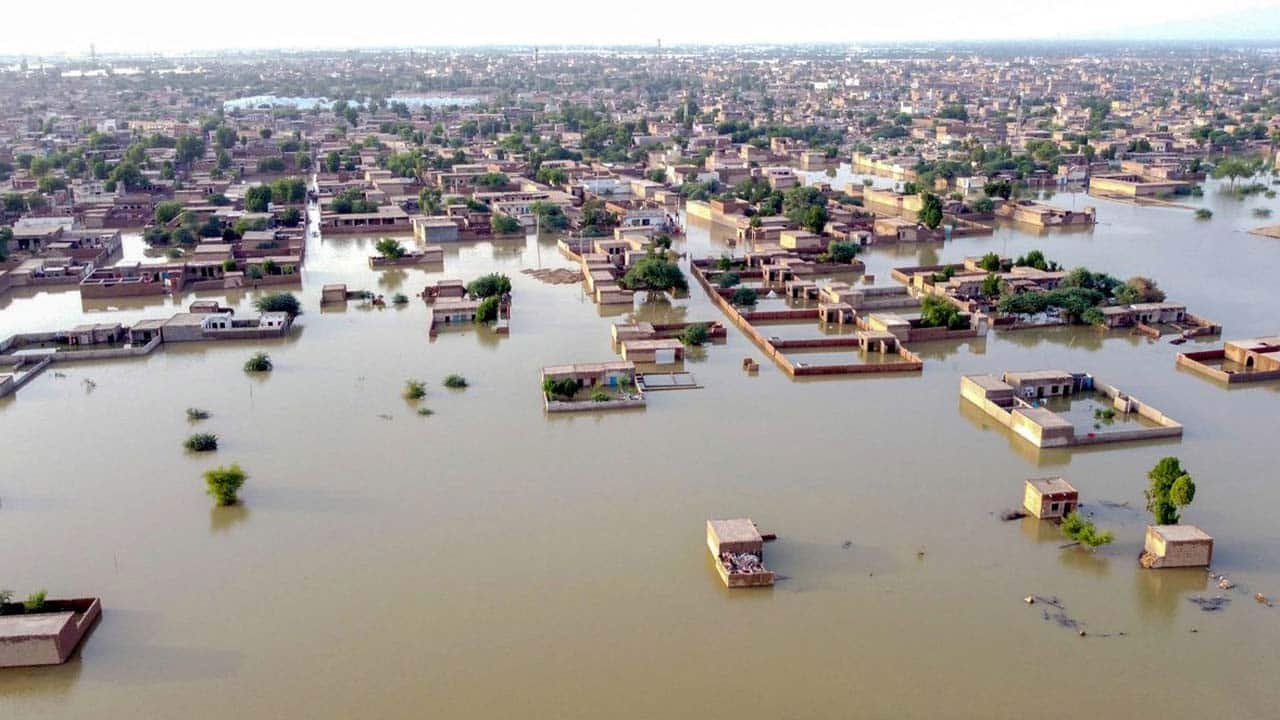
    Syed Zafar Ali Shah, Secretary of the Ministry of Planning, Development, and Special Initiatives, stated on Thursday that a preliminary estimate indicated that the GDP growth rate may remain at two percent in the current fiscal year and that the estimated cost of damage repair, including reconstruction, may be $30 billion as a result of the nation’s floods.

    He stated that we are gathering damage assessment data for a preliminary report and that the preliminary report and verification procedure would both be finished by October 15.

    According to The Nation, teams from the government and ten international development organisations, such as the World Bank (WB), the Asian Development Bank (ADB), the United Nations (UN), and others, are working together to prepare the preliminary report for the damage assessment of the country’s floods.

    In order to prepare early estimates on damage and reconstruction, he claimed that 100 specialists from development partners, such as the World Bank, the ADB, the UN, the EU, Turkey, etc., are currently working in 12 to 17 sectors.

    According to him, the Pakistani government would take the initiative in relief operations, and technical skills will be provided by professionals to evaluate the field damage and the cost of rehabilitation. The administration will solicit donations for reconstruction after making the final determination.

    In relation to the evaluation of the damage to the railways, Zafar Ali stated that it has been initially predicted that $2.3 billion will be needed for the reconstruction of the railroad tracks, bridges, and other associated facilities that have been harmed by floods. In total, 113 districts in Pakistan have been damaged by flooding, but 83 of those areas are catastrophe hit and require complete repair and rehabilitation work, according to him.

    He claimed that the cost to rebuild homes is projected to be $3 billion. However, he said that the provinces are consistently reassessing damage. When the water recedes, he said, the Sindh government will begin work on reassessing those places. He claimed that water covers the majority of Sindh’s railroad rails.

    He claimed that the Sindh flood had a significant negative impact on cotton, rice, and other crops. According to him, three million cotton bales are thought to have been lost. However, it appears that things are improving and the loss may only total 2.7 million bales, the secretary said, adding that it is still too early to provide a precise estimate of the cotton crop’s losses. He predicted that future wheat crop farming in Sindh and Khyber-Pakhtunkhwa would also be impacted.

    He claimed that the nation’s severe flooding has had an impact on 4.3 million families. He stated that more than 0.3 million people in Balochistan had been impacted by the floods. According to him, the ADB has authorised a $3 million grant to boost the Pakistani government’s emergency relief efforts in the wake of massive flooding around the nation.

    The planning secretary also mentioned that a Dutch expert would be working with NESPAK to update the flood prevention strategy for 2017. He said that the administration has so far used $303 million in donor funding that was intended for disaster relief. According to him, this sum consists of $3 million from the ADB and $300 million from the World Bank.

    Despite the $160 million in pledges made so far by the world community, he claimed that much more money will be needed to complete the reconstruction and rehabilitation.

    The planning secretary responded to a question concerning diverting PSDP-2022–23 monies for flood victims by saying that work is still being done on this issue, but no decisions have been made as of yet. He stated that the Benazir Income Support Program is now supporting the flood-affected population with Rs70 billion from the government.

  • Pakistan’s textile exports surge by 30 per cent

    Pakistan’s textile exports surge by 30 per cent

    Pakistan Bureau of Statistics (PBS) reported that Pakistan’s textile group exports in July-April 2021-2022 reached a new high of $15.981 billion, up from $12.688 billion in the same period last year, a 25.96 per cent rise.

    Exports of the textile group climbed by 7.01 per cent month over month to $1.739 billion in April 2022, compared to $1.625 billion in March 2022. Textile group exports increased by 30.50 per cent year over year in April 2022, compared to $1.332 billion in April 2021.

    Cotton yarn exports increased by 22.11 per cent from July to April 2021-22 to $1.006 billion, compared to $823.952 million in the same period the previous year, and declined by 4.95 per cent in April 2022 to $97.655 million, compared to $102.736 million in the same month the previous year.

    The country’s overall exports from July to April 2021-22 were $26.247 billion, up from $20.905 billion in the same time last year, a 25.55 per cent rise. Pakistan’s exports in the last month (April 2022) were $2.897 billion, up 4.32 per cent from $2.777 billion in March 2022 and up 30.61 per cent from $2.218 billion in April 2021.

    Major export goods

    Knitwear: Rs90,096 million

    Readymade garments: Rs64,669 million

    Bed wear: Rs51,398 million

    Cotton cloth: Rs38,763 million

    Towels: Rs19,974 million

    Cotton yarn: Rs18,016 million

    Made-up articles: Rs15,277 million (excluding towels and bedwear)

  • Pakistan’s cotton fabric trade climbed by 28.23 per cent

    Pakistan’s cotton fabric trade climbed by 28.23 per cent

    In the first eight months of the fiscal year 2021-22, Pakistan’s textile and garment exports grew to $1.65 billion. The Pakistan Bureau of Statistics (PBS) estimates that the textile and apparel sector brought in $12.607 billion this time, compared to $ 9.999 billion in exports from July to February 2020-21.

    Knitwear exports surged by 33.86 per cent to $3.302 billion on a year-over-year (YoY) basis, while non-knit readymade clothes trade increased by 25.11 per cent to $2.516 billion. Additionally, cotton yarn exports increased by 34.40 per cent to $815.375 million, up from $606.690 million the previous year.

    Cotton fabric trade climbed by 28.23 per cent in 2022, reaching $1.584 billion in value. Also, over the eight months of 2021-22, the distribution of bed clothing jumped by 20.34 per cent.

    The industry has engaged in synthetic fiber imports, which increased by 31.65 per cent from July to February 2021-22, and the cost of artificial silk yarn soared by $ 569.256 million.

    Consequently, the value of textile machinery in Pakistan has climbed dramatically over the last eight months, reaching $577.249 million.

    Read more: SBP determined to curb inflation, improve foreign exchange reserves

    For those unaware, Pakistan’s textile sector has the capacity to generate $30 billion in annual revenue. The country’s leaders and economic experts should assess the existing economic situation and devise an effective economic strategy to boost textile exports.

    To summarise, the industry has tremendous potential and can significantly contribute to the country’s economic success by providing job opportunities. Which could help the country’s GDP and GNP grow even more.

  • Cabinet rubbishes ECC approval to resume cotton, sugar import from India: report

    Cabinet rubbishes ECC approval to resume cotton, sugar import from India: report

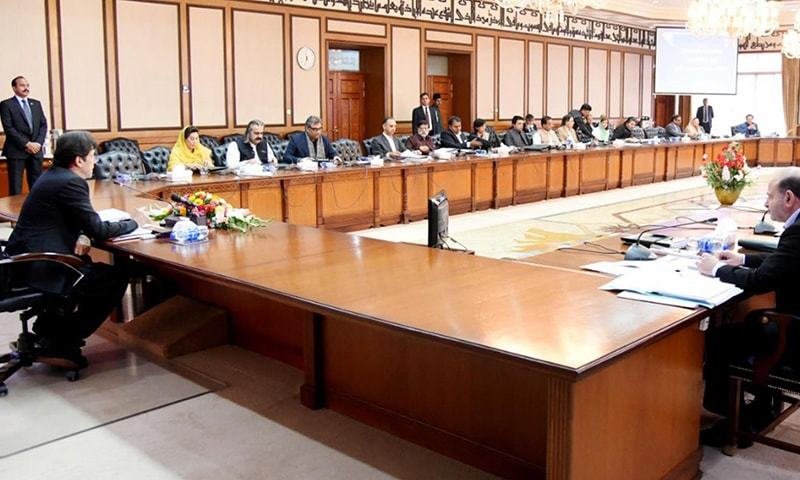
    A meeting of the federal cabinet chaired by Prime Minister (PM) Imran Khan has rejected the Economic Coordination Committee (ECC) approval to import cotton yarn and white sugar from India, reports quoted sources as saying.

    A day earlier, the ECC had approved two summaries of the commerce and textile ministry to lift ban on import of cotton and white sugar from India.

    According to reports, there were 21 items on the agenda of the ECC meeting to be chaired by newly appointed Finance Minister Hammad Azhar. Commerce and Textile divisions had submitted five crucial summaries for approval besides others.

    At the agenda no. 16, the Textile Division summary sought permission from the ECC to lift ban on import of cotton and cotton yarn from India in a bid to bridge raw material shortfall for the value-added textile sector.

    In addition to this, another summary of the commerce ministry at agenda no. 20 also sought permission to allow import of white sugar from India through the Trading Corporation of Pakistan and commercial importers.

    The resumption of import of these goods was expected to lead to partial revival of trade relations. On Aug 9, 2019 Pakistan downgraded trade relations with India in reaction to the latter’s decision to revoke Article 370 of its Constitution that granted occupied Kashmir a special status.

    In May 2020, Pakistan lifted the ban on import of medicines and raw material from India to ensure there is no shortage of essential drugs amid the COVID-19 pandemic. This was the first step of reversing of complete suspension of trade with India.

    However, Indian premier’s letter to Prime Minister (PM) Imran Khan on Pakistan Day was the first step in the right direction amid reports of UAE Royals brokering peace.

    On Tuesday, PM Imran replied to Modi’s letter, saying Pakistan also desired peaceful relations with India.

    “The people of Pakistan also desire peaceful, cooperative relations with all neighbours, including India,” he said in his reply.

    “I thank you for your letter conveying greetings on Pakistan Day.”