Tag: Council of Islamic Ideology

  • Council of Islamic Ideology deems declaring anyone wajib-ul-qatl as ‘illegal’

    Council of Islamic Ideology deems declaring anyone wajib-ul-qatl as ‘illegal’

    Chairman of the Council of Islamic Ideology (CII), Dr. Raghib Hussain Naeemi, has stated that declaring a person liable for death (wajib-ul-qatl) is unlawful and unjust.

    Dr. Naeemi declared in a statement that such emotional actions undermine the purpose of protecting Prophethood. No individual, group, or organisation is permitted to execute anyone through a judicial process, issue fatwas, or give orders.

    A statement from the office of the Chairman of CII emphasised that Pakistan, as an Islamic state, maintains a legal system with permanent penalties for all types of crimes, administered by courts following prescribed procedures.

    The Council has repeatedly stressed that incitement, issuing fatwas of takfir, and making threats against government officials, the state, or ordinary citizens contradict the clear teachings of the Quran and Sunnah.

    The statement further asserts that in a unified declaration by Pakistan’s esteemed scholars and muftis from all schools, it is affirmed that religious scholars and muftis have an official duty to impart religious knowledge and address moral issues, providing Shariah-based solutions. However, the determination of whether someone has committed blasphemy or uttered blasphemous statements falls within the jurisdiction of the state, its government, and the judiciary.

    The recent Supreme Court ruling is also said to permit scholarly discourse in case of disagreements. The Islamic Ideological Council itself has expressed its dissent in a scholarly and reasoned manner regarding this issue. Additionally, no individual is authorised to pass judgement on others’ faith or issue fatwas based on arbitrary interpretations.
  • CII grants conditional permission to women performing Hajj without a mehram

    CII grants conditional permission to women performing Hajj without a mehram

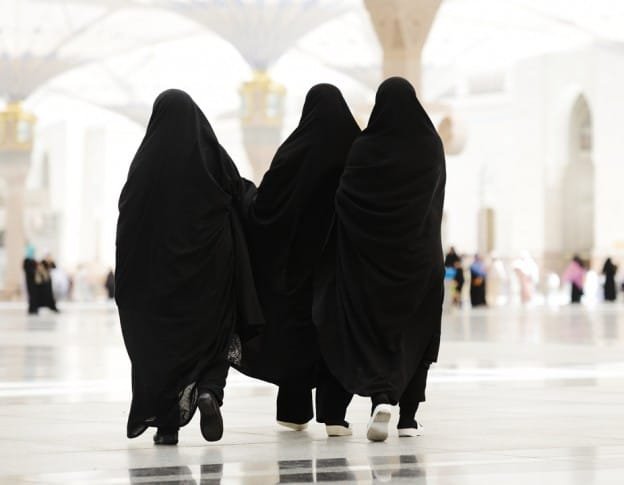
    The Council of Islamic Ideology (CII) on Wednesday gave conditional permission to women to perform Hajj without a mehram under certain conditions, a spokesperson for the body confirmed.

    Pakistan’s Ministry of Religious Affairs had sought the views of CII to determine whether or not women would be allowed to perform Hajj without a mehram (close-male relative) or male guardian.  

    In October 2022, Kingdom of Saudi Arabia’s Minister of Hajj and Umrah, Dr. Tawfiq Al-Rabiah, announced that women all over the world would be able to perform Hajj and Umrah without a mehram or male guardian. The Ministry of Religious Affairs sought clarity on the matter from the CII.

    A CII spokesperson stated it is acceptable, citing the Islamic Jafri, Maliki and Shafi’i schools of thought, which state that women are permitted to perform Hajj without a mehram under Sharia law.

    The Council clarified that according to Hanafi and Hanbali fiqh, a woman is not obligated to perform Hajj if she does not have a mehram.

    However, the CII stressed the permission is dependent on certain conditions.

    What are the conditions?

    Firstly, a woman can only travel sans mehram if granted explicit permission by either her parents or husband. Secondly, if a group of women are to travel for Hajj together, the religious ministry is entitled to a thorough investigation to ensure the group is fit to embark on the pilgrimage.

    The CII spokesperson did note that if a woman wanted to solo travel for Hajj and Umrah, and she did not feel insecure while traveling, she had the right to go (of course dependent on her parents’/husband’s permission).

    Writer and former advisor to the Minister of Hajj, Faten Ibrahim Hussein, praised the new ruling. According to him, allowing women to perform Umrah without a mehram makes the pilgrimage more attainable, as many come from difficult social situations and may not find a mehram.

  • Violence after blasphemy accusation is against Islam: Council of Islamic Ideology

    Violence after blasphemy accusation is against Islam: Council of Islamic Ideology

    The Council of Islamic Ideology (CII) has stated that violence against any person on a blasphemy accusation contradicts Shariah, humanity, and the constitution. CII made an official statement in the Wednesday session presided by Chairperson of CII, Dr Qibla Ayaz.

    The council also advised the constitution of a national commission to formulate recommendations to prevent such incidents.

    The statement said, “again declared that subjecting any person to violence on allegations of dishonouring religion, desecration of the Holy Quran and Namoos-i-Risalat was against Shariah, inhumane and contrary to Islamic principles.”

    The statement added, “This meeting once again staunchly condemns such incidents and expresses deep sorrow over them. Such brutal torture by a violent mob is neither logical nor in line with the injunctions of the religion.”

    CII members also recommended that hadiths and verses related to humanity and protection of lives and property need to be displayed with translation in mosques, imambargahs, monasteries, and educational institutions.

    CII members also suggested that there should be a discussion on TV programmes on such verses of the Holy Quran and hadiths.

    “This special meeting suggests to the government that a national commission be formed, with psychologists and experts of sociology, law, and religion as its members, that will make short-term and long-term recommendations for the prevention of such incidents (that involve violence over blasphemy allegations) so as to end them,” the statement said.

    In a press conference after the meeting, Chairperson of CII condemned the incidents referring to Sialkot and Khanewal in which a violent mob took the law into their hands over alleged blasphemy charges.

    He said the delay in punishment for people involved in insulting Holy Prophet (PBUH) give rise to the lynching incidents of Sialkot and Khanewal.

    He also emphasised that the culprits of the Sialkot incident should be penalised at the earliest.

  • Absence of a woman member in the Council of Islamic Ideology questioned by the court

    Absence of a woman member in the Council of Islamic Ideology questioned by the court

    The Islamabad High Court (IHC) has raised questions over the absence of a woman member in the Council of Islamic Ideology (CII), reports Samaa.

    A petition was filed by a citizen named Maham Ali Khan in this regard. The IHC has ordered the Law secretary and the CII chairman to submit a response to the petition.

    The lack of inclusion of women in the constitutional body that advises the legislature whether or not a certain law is in accordance to the Quran and Sunnah is against Article 228 of the Constitution of Pakistan, Maham’s counsel Zainab Janjua told IHC judge Amir Farooq during a hearing on Tuesday.

    The CII can’t have more than 20 or less than eight members. The counselor said that currently there are 12 members in the body but none of them is a woman.

    The petitioner has requested that a woman member be included in the council.

  • Send domestic violence bill to Islamic council, suggests PM’s aide

    Send domestic violence bill to Islamic council, suggests PM’s aide

    Adviser to the Prime Minister on Parliamentary Affairs Babar Awan has written a letter to Speaker National Assembly Asad Qaiser suggesting that the Domestic Violence (Prevention and Protection) Bill 2021 should be sent to the Council of Islamic Ideology to check if the proposed law is or is not “repugnant to the Injunctions of Islam”.

    Journalist Ansar Abbasi shared the news on Twitter and congratulated Prime Minister Imran Khan for this step.

    Speaking on Geo News programme ‘Naya Pakistan’, Human Rights Minister Shireen Mazari had asked, “Can someone tell me which clause in the bill is against our religion?”

    “This law is not only for women but men can also file a case using it,” Mazari added.

    Senate passed two key government bills related to human rights last month, which include the Domestic Violence (Prevention and Protection) Bill 2021 and the Islamabad Capital Territory Senior Citizens Bill 2021.

    Analyst Ansar Abbasi took to his Twitter account to oppose the bill.

  • ‘Corona se darna nahi, larrna hai’ declared un-Islamic as top religious body says virus is Allah’s will

    ‘Corona se darna nahi, larrna hai’ declared un-Islamic as top religious body says virus is Allah’s will

    The popular anti-coronavirus slogan “Corona se darna nahi, larna hai [we have to fight, not fear corona]” has been declared un-Islamic by the Council of Islamic Ideology (CII) that says the virus outbreak is Allah’s will.

    According to Dawn, the Lahore High Court (LHC), while hearing a petition filed by a lawyer against the use of these words in national print and electronic media and official sources of communication, was on Wednesday informed that the top religious body has advised the government against using the slogan.

    The petitioner-lawyer, Salman Idrees, had argued that no one could fight against God’s will but the national media and government communication sources had been using “un-Islamic” and “immoral” words challenging the supremacy of God. He asked the court to ban the use of the words “corona se darna nahi, larrna hai”.

    In the last hearing, LHC Chief Justice Muhammad Qasim Khan had directed the CII to give its opinion on the choice of words in the anti-COVID-19 slogan.

    On Wednesday, a government lawyer informed the court that the CII after considering the slogan had stopped the government from using it.

    The council had advised the government to refer the matter to the federal cabinet to come up with a new anti-virus slogan, Deputy Attorney General Asad Ali Bajwa said.

    An official at the CII told the English daily that the reason the council had opposed the slogan was that in its view, humans could not fight God’s will and the term “fighting corona” should be replaced with “protecting against corona”.

    The hearing has been adjourned until next week.

  • Islamic body to decide if minorities in Pakistan can hold liquor licenses

    Islamic body to decide if minorities in Pakistan can hold liquor licenses

    The Islamabad High Court (IHC) has given the Council of Islamic Ideology (CII) the authority to decide whether minorities in Pakistan can hold liquor licences.

    According to reports, this was announced in a verdict by the IHC as it heard a petition against the issuance of these licences.

    The court said that the CII the authority to decide this as licences are being granted on the basis of religion. The petition was disposed of after it was forward to the CII.

    The Pakistan United Christian Movement and Centre of Rule of Law had filed the petition in the Islamabad High Court. The petitioners said alcohol is also prohibited in Christianity but licenses are being given in its name.

    The petitioners also presented a list of 340 liquor licence holders to the court.