Tag: court judgement

  • ‘They do love marriages, then become a problem for court’: Chief Justice

    ‘They do love marriages, then become a problem for court’: Chief Justice

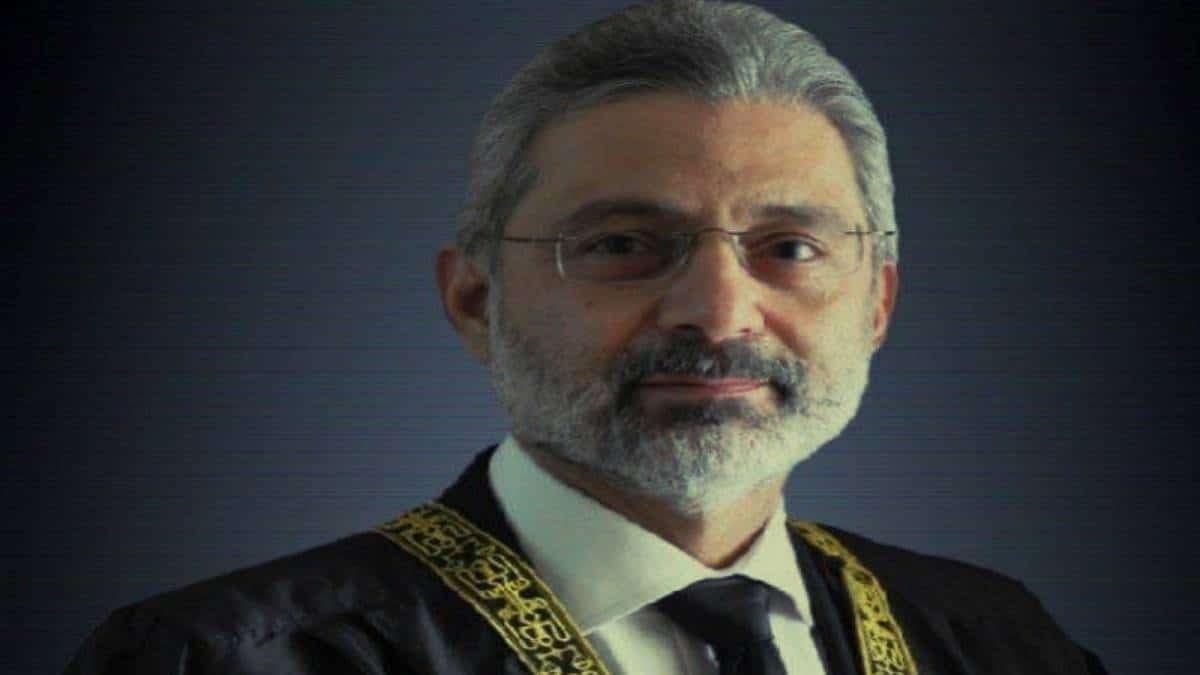
    Chief Justice Qazi Faiz Isa has remarked that having a beard does not make a person a Muslim, people themselves marry for love and then it becomes an issue for the court as per Aaj news.

    The case of the extradition of two minor girls was heard in the Supreme Court by a three-member bench headed by Chief Justice Qazi Faez Isa.

    The court ordered the two girls to be handed over to their mother, ordering that the father of the girls will be able to visit the girls on Sundays from 10 am to 5 pm, and if the father violated the court order, contempt of court action will be taken against him.

    The lawyer of the father pleaded with the court that the girls should be with the father, as their mother works at night, and does not have time to take care of them.

    Chief Justice Qazi Faiz Isa expressed his anger and asked whether the lawyer has read the principle of extradition in Islam or not, stressing that according to Shariat, children stay with their mothers.

    The Chief Justice remarked that we are Muslims in name only, our work is not that of Muslims, just having a beard does not make a person a Muslim, action must also be taken. Prayer, fasting, and Hajj are not enough, he observed, adding that humanity and morals are also necessary. If the parents are not divorced, their mutual resentment will spoil the future of the children.

    The Chief Justice asked the children’s father whether he had a love marriage or an arranged marriage.
    Taimur, the father of the children, said that it was a love marriage.

    The Chief Justice remarked that people themselves marry for love, and then they become an issue for the court.

    The Supreme Court disposed of the case with the consent of the parents.

  • SHC allows children of single parents to get CNIC without father’s information

    SHC allows children of single parents to get CNIC without father’s information

    In a ruling, the Sindh High Court (SHC) has ordered the National Database Registration Authority (NADRA) to issue Computerised National Identity Card (CNIC) to a woman who didn’t know about her father’s whereabouts, reports Samaa.

    Rubina was brought up by a single mother as her father had left the family many years ago. The local court ordered NADRA to issue CNIC to Rubina based on her mother’s citizenship record. Her mother works in the Education Department.

    When Rubina, who is specially-abled, turned 18 and went to a local NADRA office to obtain her CNIC, she was told that the card would not be issued unless she provides the record of both her parents.

    “When I went to the NADRA office, they refused to issue me CNIC and asked to bring my father or any other guardian. Where could I have found my father, who left me and my mother when I was young?”

    She filed a petition with the court, which resulted in a landmark verdict. In the past, many orphans in Pakistan have faced this problem regarding the issuance of CNIC.

    Advocate Usman Farooq stated that the ruling would apply to similar cases and now the children with single parents would be able to get their CNICs after producing the record of only a single parent.

  • Justice Ayesha not elevated to the Supreme Court

    The Judicial Commission of Pakistan (JCP) has not approved the nomination of Justice Ayesha Malik as a Supreme Court (SC) judge.

    “As a lawyer, I feel that the JCP needed to set a transparent criteria for appointment, failing which has resulted in what we have seen today. And I feel that the more unstructured this becomes, more transparency is lost within the judicial system,” lawyer Noor Ejaz told The Current.

    “As a woman, I am disappointed. Women in law have rarely been given high ranks without being under strict scrutiny. I hope Justice Ayesha serves as the CJ of the Lahore High Court and is elevated to the Supreme Court soon and I hope the JCP implements a structure so that other women can aspire towards higher office without fearing how discretion might treat them,” added Noor Ejaz

    “It is a dark day because first-time nominee of a woman judge’s elevation to the Supreme Court could not be approved,” senior journalist Hasnaat Malik told The Current.

    He also added that if Justice Ayesha is not elevated to the SC, then she will become Chief Justice of the Lahore High Court. “Justice Ayesha’s name can be initiated anytime for the SC,” said Hasnaat.

    Read more- In-depth analysis: Everything you need to know about Justice Ayesha Malik’s SC appointment

    Human Rights Watch (HRW) welcomed the nomination of Justice Ayesha Malik to the Supreme Court of Pakistan. However, lawyers across the country recorded their protest today.

    As per the Lahore High Court website, Justice Ayesha Malik completed her education from Paris and New York and did her Senior Cambridge from the Karachi Grammar School in Karachi. She did her A-Levels from the Francis Holland School for Girls in London. She assumed office in March 2012

  • Father sentenced to 14 years jail for raping eight-year-old daughter

    Father sentenced to 14 years jail for raping eight-year-old daughter

    Recently, a session court in Karachi has sentenced a man to 14 years in jail after he was found guilty of raping his eight-year-old daughter three years ago, reports Zubair Ashraf for The News.

    On March 7, 2019, the rapist Shahid’s wife, a young maid, was at work. Her three children came back home from their school in the evening. Their father, Shahid, was at home to greet them. He sent his two younger sons to play outside and raped his daughter at his house.

    The victim told her mother when she returned home from the work. The mother after finding the truth fought with Shahid but he denied the allegations. The mother with her daughter went to Jinnah Postgraduate Medical Centre (JPMC) for the medical examination.

    The medical reports showed that the girl was subjected to vaginal and anal intercourse. The police took a week to register an FIR against Shahid on the complaint of his wife.

    An investigation was started and the officials questioned the accused and the complainant collected swabs for DNA and chemical analysis and held the clothes of the victim.

    After the investigation, the police charged-sheeted the husband for rape and unnatural offence. When the suspect was charged, he did not confess alleging his wife of infidelity. He said that he was falsely accused in the case by his wife because he had caught her cheating on him with another man in their house.

    A lawyer, Asiya Munir represented Zakiya and Gulshan in the case. Speaking to The News, she said, “First of all, nobody in our society tends to believe incest cases, not even the judges. They think that these all are made-up stories. In this hostile and harassing environment, proving your case becomes a tremendously difficult job.” The worst part of it, she added, was standing to the leering looks and shameful questions during the arguments in the courtroom.

    “I have seen these mother and daughter sitting together like glued in a corner of the courtroom getting humiliated by staffers and taunted by the defence lawyers,” Asiya said, explaining the reason behind her request for an in-camera hearing to record the statement of the victim.

    The examination-in-chief of the victim took place inside the chamber of the judge. Except for the victim, judge, and complainant’s and defence lawyers, no one was there in the room.

    After the victim stated what had happened, the defence lawyer was allowed to cross-examine her. “You [the victim] are lying because your mother has told you to,” the lawyer representing her father asked her. She responded, “My mother has not taught me to lie.”

    “Your mother had an affair with someone,” the lawyer asked another question. Her attorney objected to it but the victim said, “No, my mother cleans the washrooms of others for us. She is not lying nor am I.”

    The defence lawyer questions before the judge were: In the case of rape, why is there no violence mark or injury found on the victim? Why was the FIR filed a week later? Why were the clothes of the victim handed to the police 19 days after the incident? Why didn’t the complainant get a letter from the concerned police station before going to the JPMC? The complainant is having an extramarital affair and the person should also be summoned by the court.

    In the judgment issued on July 17, the East Additional District and Sessions Judge, Javed Ahmed Phulpoto, observed that as far as the allegation of the affair was concerned, the accused had not been able to produce even his own relatives to support his stance. The judge termed this allegation an attempt by the accused “to malign the complainant and gain sympathy from society to get away from his crime.”

    The judge remarked that the absence of torture marks was not enough proof to suggest that the crime did not take place.

    “The statement of the victim is straightforward and [she] narrated the entire incident in a very innocent and natural manner and the defence failed to establish that there was any exaggeration in her statement,” the judge observed, adding that the victim’s, the complainant’s and the investigators’ testimonies were not questionable and so was the medical proof which showed the offence on the accused.
  • Hamza Ali Abbasi takes his words back about not accusing judges of being anti-Army

    Hamza Ali Abbasi takes his words back about not accusing judges of being anti-Army

    Ever since a special court on Tuesday awarded death penalty to former president General (retd) Pervez Musharraf for high treason, there is pretty much nothing else anyone can talk about.

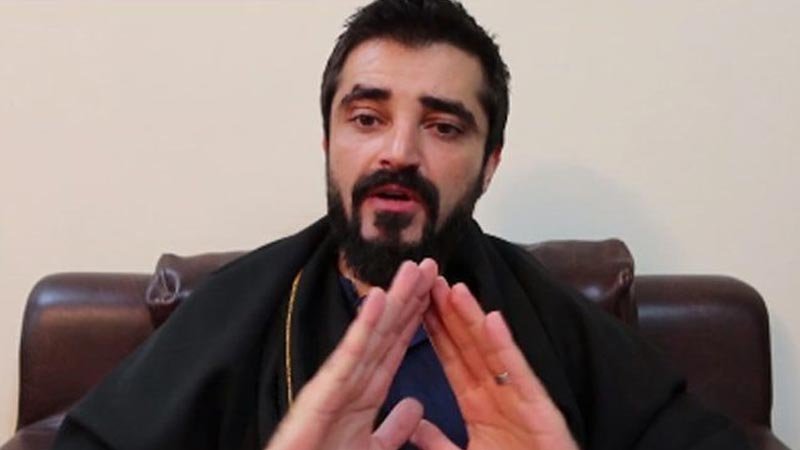
    Hamza Ali Abbasi, who is one of Pakistan’s most vocal actors, has been tweeting furiously on the matter. Earlier in the day Hamza had requested people who support Musharraf to express their views without accusing judges of being anti-Army or pro-Nawaz Sharif.

    However, after the special court issued its detailed verdict, an excerpt of it went viral on social media, Hamza remarked that he takes his “words back about not accusing judges of being anti-Army or anti-Pakistan.”

    “We direct the Law Enforcement Agencies to strive their level best to apprehend the fugitive/convict [Musharraf] and to ensure that the punishment is inflicted as per law and if found dead, his corpse be dragged to the D-Chowk, Islamabad and hanged for three days,” read the excerpt.

    Earlier, he had tweeted that PML-N and others need to apologise for their allegations on the judiciary, during the cases against the Sharifs.

    He also added that the courts should apply the same procedure to Ishaq Dar others who are not present in the country.