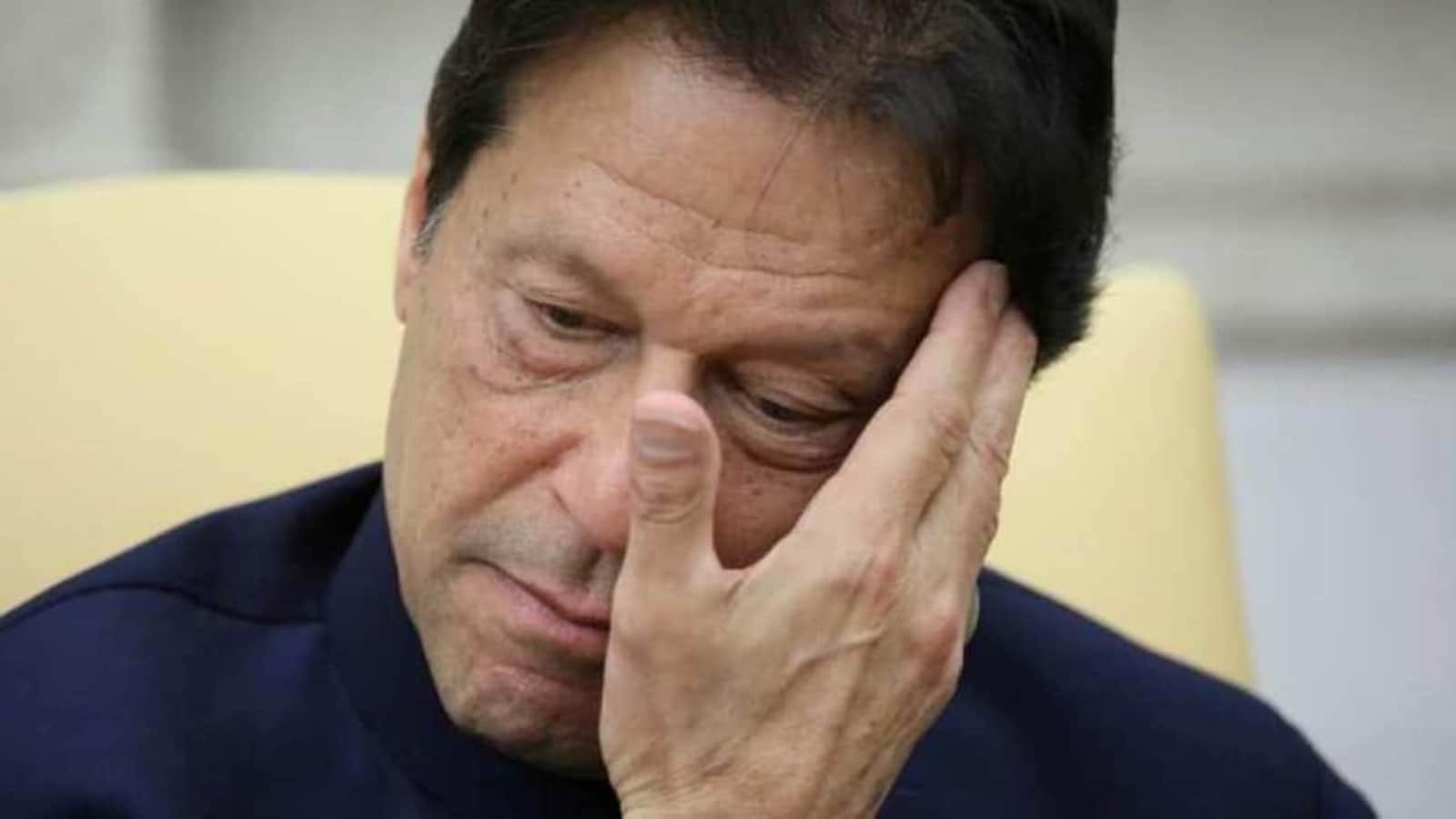
An accountability court in Islamabad has instructed former Prime Minister Imran Khan and his wife Bushra Bibi, to avoid making negative comments about the military and the judiciary. The court also directed the media not to highlight “political or inflammatory” statements made by the couple.
Judge Rana Nasir Javed barred the Pakistan Tehreek-e-Insaf (PTI) founder and his wife from speaking against state institutions while he disposed of a petition seeking a fair trial in the Al-Qadir Trust case.
According to the court order, the former prime minister made a proactive statement against senior officials of state institutions, including the army and judiciary. The statements not only disturbed the court’s decorum but were also an obstacle to providing justice.
The court directed the prosecution, the accused, and their defence counsel to avoid statements that disrupt the decorum of the court.
Doctor Asim, Bushra Bibi’s physician, has said that she’s not being poisoned, contrary to her recent allegations.
Former First Lady Bushra Bibi had earlier alleged that her food was poisoned due to which she was in poor health. She is currently incarcerated in a sub-jail at her husband Imran Khan’s Bani Gala residence where she had passed the remarks.
On Wednesday, Pakistan Tehreek-e-Insaf (PTI) leadership demanded that a full medical checkup of Bibi should be conducted. Even Imran Khan, former Prime Minister, told the court that his wife was being poisoned and that she had marks on her skin and tongue.
He also requested in court that Dr Asim Yunus of Shaukat Khanum Memorial Cancer Hospital and Research Centre should medically examine Bushra Bibi.
Today, her physician Dr Asim examined her and briefed the media that there were no symptoms of food poisoning at the moment.
He stated that Bushra Bibi’s health was not 100 per cent fine and detailed tests should be done. “If there was anything two months ago, I did not see it but her health is better now,” Dr Asim declared.
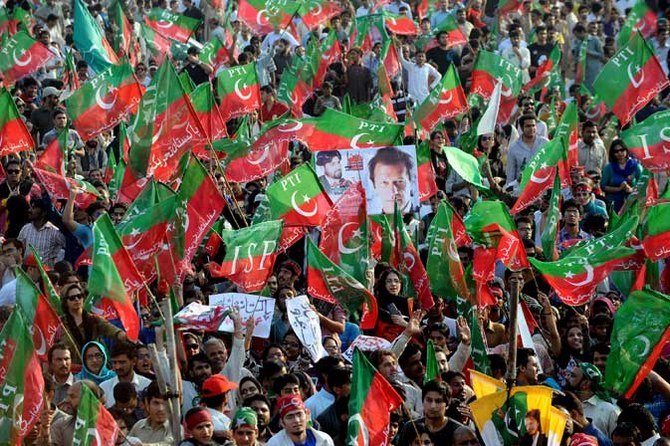
The Pakistan Tehreek-e-Insaf (PTI) has announced to stage a protest against the alleged rigging in the 2024 general elections. The incarcerated founder of the party Imran Khan believes that the mandate was stolen from people and post-poll rigging was rampant.
According to them, election results were changed in the Form 47s compared to Form 45s to benefit the current ruling party Pakistan Muslim League-Nawaz (PML-N) and the Pakistan Peoples Party (PPP). PTI member and the Chief Minister of Khyber Pakhtunkhwa (KPK) also said “The incumbent government at the Centre has been formed after stealing PTI’s 180 seats.”
Previously, the party had sought permission from the Deputy Commissioner of Islamabad to lawfully stage a protest in the capital city but received no reply. After this, they reached the Islamabad High Court (IHC) to be allowed to hold a rally. It is believed that they wanted to stage the protest on Pakistan Day but later decided against it and set the date to March 30.
Imran Khan’s party is also set to hold a press briefing on the impacts of upcoming International Monetary Fund (IMF) package on the general public on March 25.
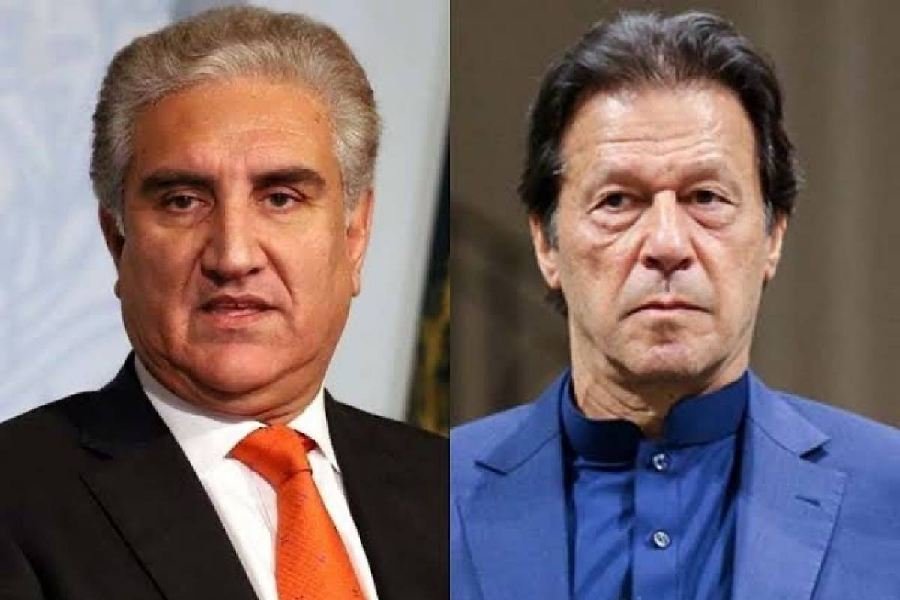
A district and sessions court approved a request on Friday to bring Pakistan Tehreek-e-Insaf (PTI) founder Imran Khan and party leader Shah Mahmood Qureshi to court. The court directed authorities to make sure that the politicians appear in court on April 20th.
Judicial Magistrate Mureed Abbas heard the petition for the production of evidence in the Parliament attack case involving Imran Khan and others. During the hearing, Naeem Panjotha, the lawyer representing the former prime minister, presented his arguments.
The lawyer argued that the Superintendent of Adiala jail does not obey the order of any court. He insisted the court ensure that jail officials adhere to the orders and produce Khan.
He also said that jail authorities come up with excuses and don’t even arrange for a video link hearing for the PTI founder.
The judicial magistrate, following Panjotha’s arguments, said Khan is in Adiala jail and the situation is different, and while the option of video link is there, the attendance takes place in the e-court.
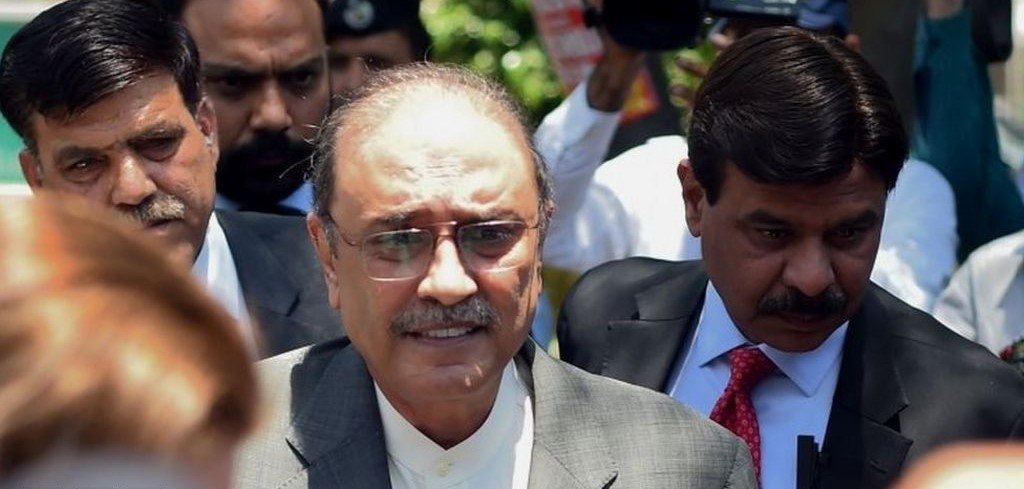
President Asif Ali Zardari has filed for Presidential immunity under Article 248 of the Constitution in two National Accountability Bureau (NAB) cases. The clause provides protection to high-ranking state officials from all legal proceedings in court for any action taken by them during their terms in office.
In the Park Lane Case, Mr Zardari is accused of allegedly using his influence to extract loans from the state exchequer for dummy corporations during his term as the President from 2008 to 2013. It is important to note that Mr Zardari, along with his sister and several other business associates, are accused in this case as well. However, the Presidential immunity only protects Mr Zardari.
The other NAB case is known as the Thatta Water Supply reference in which Asif Ali Zardari and others are accused of illegally awarding different contracts to private contractors. Zardari’s counsel emphasized that President Zardari’s status as the country’s elected head granted him immunity from legal action, thus rendering the continuation of the case against him untenable.
The accountability court has since issued a notice to the NAB, seeking a response to Mr Zardari’s application for immunity by April 22.
President Asif Ali Zardari has filed for Presidential immunity under Article 248 of the Constitution in two National Accountability Bureau (NAB) cases. The clause provides protection to high-ranking state officials from all legal proceedings in court for any action taken by them during their terms in office.
In the Park Lane Case, Mr Zardari is accused of allegedly using his influence to extract loans from the state exchequer for dummy corporations during his term as the President from 2008 to 2013. It is important to note that Mr Zardari, along with his sister and several other business associates, are accused in this case as well. However, the Presidential immunity only protects Mr Zardari.
The other NAB case is known as the Thatta Water Supply reference in which Asif Ali Zardari and others are accused of illegally awarding different contracts to private contractors. Zardari’s counsel emphasized that President Zardari’s status as the country’s elected head granted him immunity from legal action, thus rendering the continuation of the case against him untenable.
The accountability court has since issued a notice to the NAB, seeking a response to Mr Zardari’s application for immunity by April 22.
The Lahore High Court has approved the opening of restaurants in Punjab from iftar till sehr.
The court has also ordered schools to introduce one period a week on the environment, including practical activities, as the goal for the court is to inculcate environmental awareness in the population from a young age.
The court has asked for a detailed report on the revised curriculum to be tendered in the next hearing.
It has also sought a plan from Lahore Waste Management Company (LWMC) for a cleanliness campaign which must include students so that they contribute in countering pollution and uncleanliness in the city.
Moreover, the Court has also instructed Lahore Electric Supply Company (LESCO) officials to put an end to tree-cutting and to brief the Parks and Horticulture Authority (PHA) beforehand.
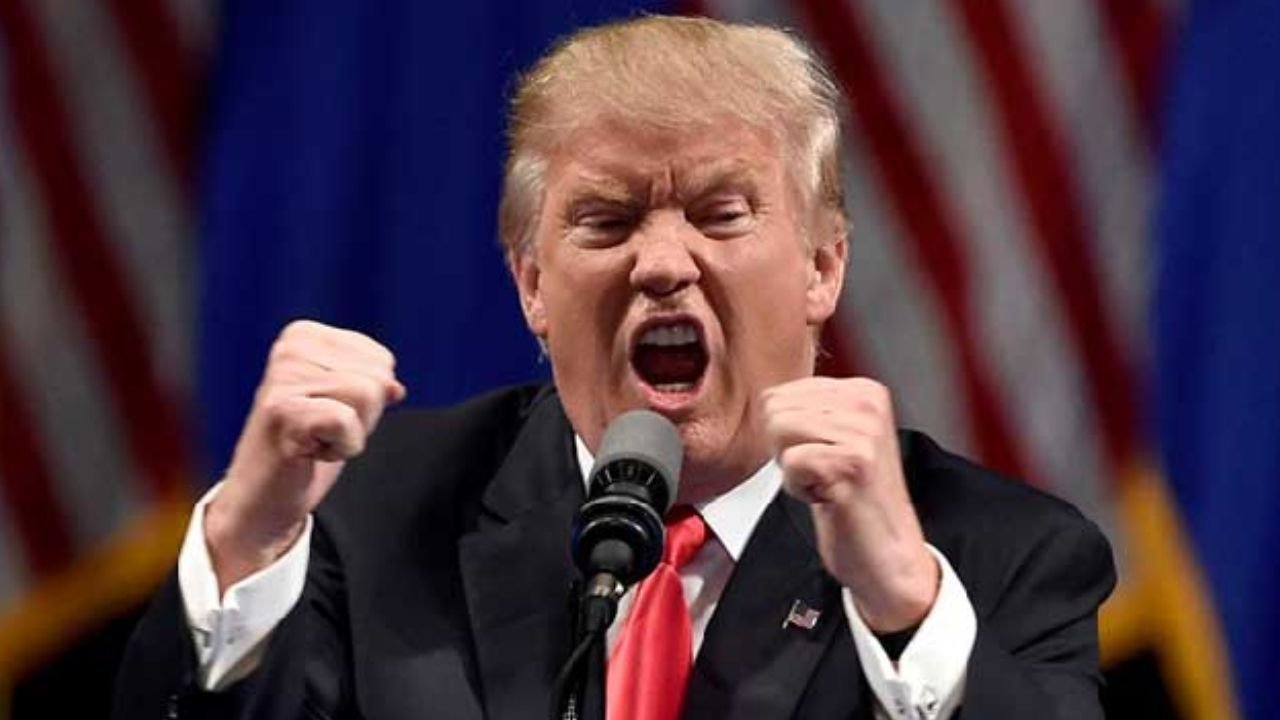
A New York judge ordered Donald Trump to pay $355 million over fraud allegations and banned him from running companies in the state for three years Friday in a major blow to his business empire and financial standing.
Trump — almost certain to be the Republican presidential nominee this November — was found liable for unlawfully inflating his wealth and manipulating the value of properties to obtain favorable bank loans or insurance terms.
Trump lashed out on social media calling the ruling a “Total SHAM,” the judge in the case “crooked” and the prosecutor who brought it “totally corrupt.” His legal team said he would “of course” appeal.
As the case was civil, not criminal, there was no threat of imprisonment. But Trump said ahead of the ruling that a ban on conducting business in New York state would be akin to a “corporate death penalty.”
Trump, facing 91 criminal counts in other cases, has seized on his legal woes to fire up supporters and denounce his likely opponent, President Joe Biden, claiming that court cases are “just a way of hurting me in the election.”
However, Judge Arthur Engoron said the financially shattering penalties are justified by Trump’s behavior.
“Their complete lack of contrition and remorse borders on pathological,” Engoron said of Trump and his two sons, who were also defendants, in his scathing ruling.
“They are accused only of inflating asset values to make more money… Donald Trump is not Bernard Madoff. Yet, defendants are incapable of admitting the error of their ways,” he added, referring to the perpetrator of a massive Ponzi scheme.
Trump’s sons Eric and Donald Trump Jr. were also found liable in the case and ordered to pay more than $4 million each, prompting Don Jr. to claim on social media that “political beliefs” had determined the outcome.
Engoron also extended the mandate of retired judge Barbara Jones as an independent monitor of Trump’s business affairs, as well as ordering the appointment of an independent director of compliance to the Trump Organization, with candidates to be nominated by Jones.
“Conditions that Judge Engoron imposed, such as having Judge Jones monitor the Trump companies, may be onerous. I do expect an appeal,” said Richmond University law professor Carl Tobias.
It was as a property developer and businessman in New York that Trump built his public profile which he used as a springboard into the entertainment industry and ultimately the presidency.
The judge’s order was a victory for New York state Attorney General Letitia James. She had sought $370 million from Trump to remedy the advantage he is alleged to have wrongfully obtained, as well as having him barred from conducting business in the state.
On January 11-12, the International Court of Justice (ICJ) heard the genocide case filed against Israel by South Africa.
On Day 1, South Africa’s legal team put forward its case, pointing at the atrocities being committed against Palestinians in Gaza by Israel.
Israel is accused of committing genocidal acts during their military operations which included mass killings of Palestinians, bodily and mental harm, forced displacement and food blockade, destruction of the healthcare system, and preventing Palestinian births.
On Day 2, Israel defended itself against the charges, arguing that South Africa “ignored” the incident of October 7 and that Israel had the right to defend itself, adding that the court should put provisional measures against South Africa, accusing it of having ties with Hamas. Israel did not submit any evidence to support its claims that Hamas was the cause of the attacks in Gaza whereas South Africa submitted video evidence of Israeli atrocities in Gaza.
They also blamed Hamas for the high civilian death toll in Gaza, claiming that Israel did not bomb hospitals and that they enabled humanitarian aid.
What’s next?
Al Jazeera explains that even though South Africa’s case against Israel can take years, an “interim measure” intended to halt Israel’s attack in Gaza can be taken “within weeks”.
If the interim measure is implemented, Israel will be legally obligated to put an end to its offences. And while the “court’s rulings are final”, it has no authority to impose them, nonetheless.
On the other hand, if the court does not implement an interim measure, “it could still decide it has jurisdiction and proceed with the case”, adds Al Jazeera’s explainer.
Judges in England and Wales have been allowed to use artificial intelligence (AI) tool, Chat GPT, to write judgments.
The permission has been granted despite concerns that artificial intelligence could write references to cases that never happened.
The Judicial Office has issued guidelines for the use of AI Chat GPT for thousands of judges in England and Wales, saying that artificial intelligence can help summarise long texts.
Master of the Rolls Sir Geoffrey Voss has described artificial intelligence as a better, faster and cost-effective digital assistant for the justice system.
Only earlier this year, two American lawyers were fined for citing fake cases created by ChatGPT.
The Islamabad High Court (IHC) on Wednesday rejected the plea of former prime minister Imran Khan to withdraw his petition challenging the Election Commission of Pakistan’s (ECP) decision on his disqualification in the Toshakhana case.
On October 28, 2022, the former Pakistan. Tehreek-e-Insaf (PTI) chief filed a plea against his disqualification by the electoral body. He filed another petition on January 18, 2023, to withdraw his appeal against ECP.
Imran Khan requested the withdrawal of his plea from IHC as the matter is pending before Lahore High Court (LHC).
Justice Aamer Farooq announced the verdict, reserved on September 13, today, after hearing the arguments of all parties.
The ECP disqualified Imran Khan on October 21, 2022, under Article 63(1)(p). The electoral watchdog said in its verdict that the PTI founder is not a member of the National Assembly anymore, and he is disqualified for making “false statements and incorrect declaration”.
The decision of Khan’s disqualification was taken by the five members’ bench, and the ECP stated that Imran was found involved in corrupt practices, including submitting a false affidavit.