Tag: court

  • Chief Justice Qazi Faez Isa nay Mercedes neelami pay lagga dee

    Chief Justice Qazi Faez Isa nay Mercedes neelami pay lagga dee

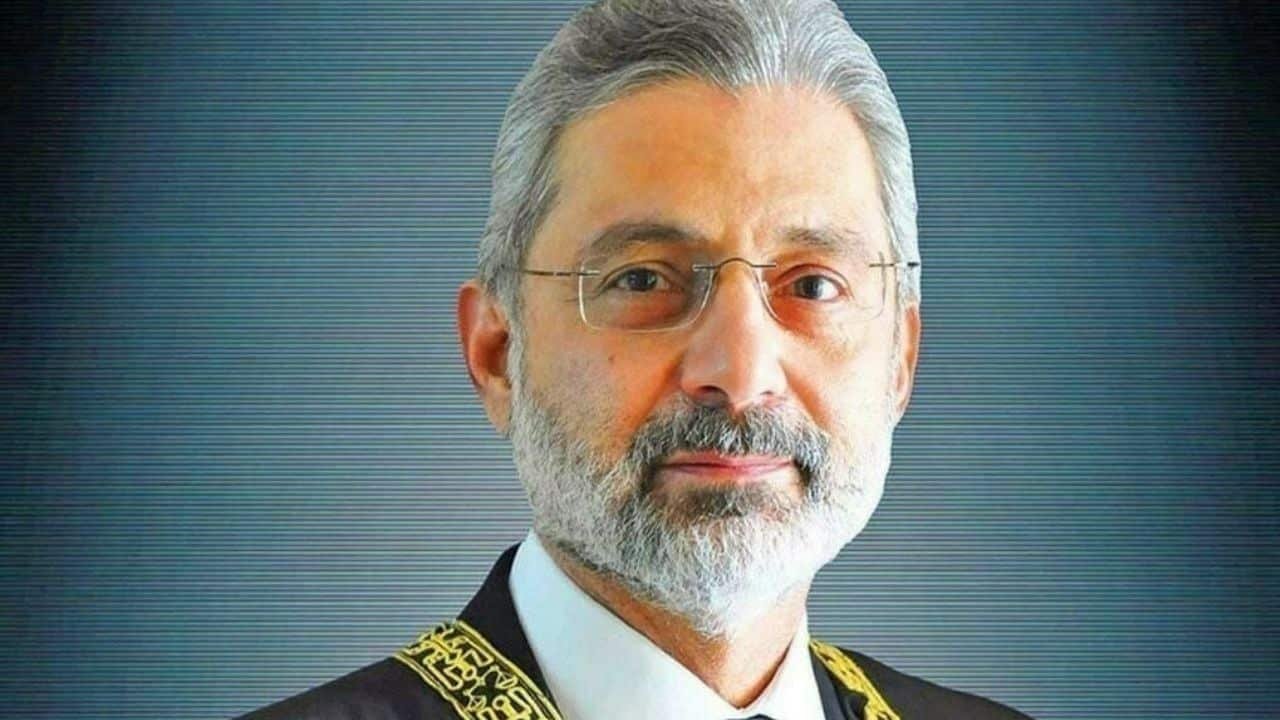
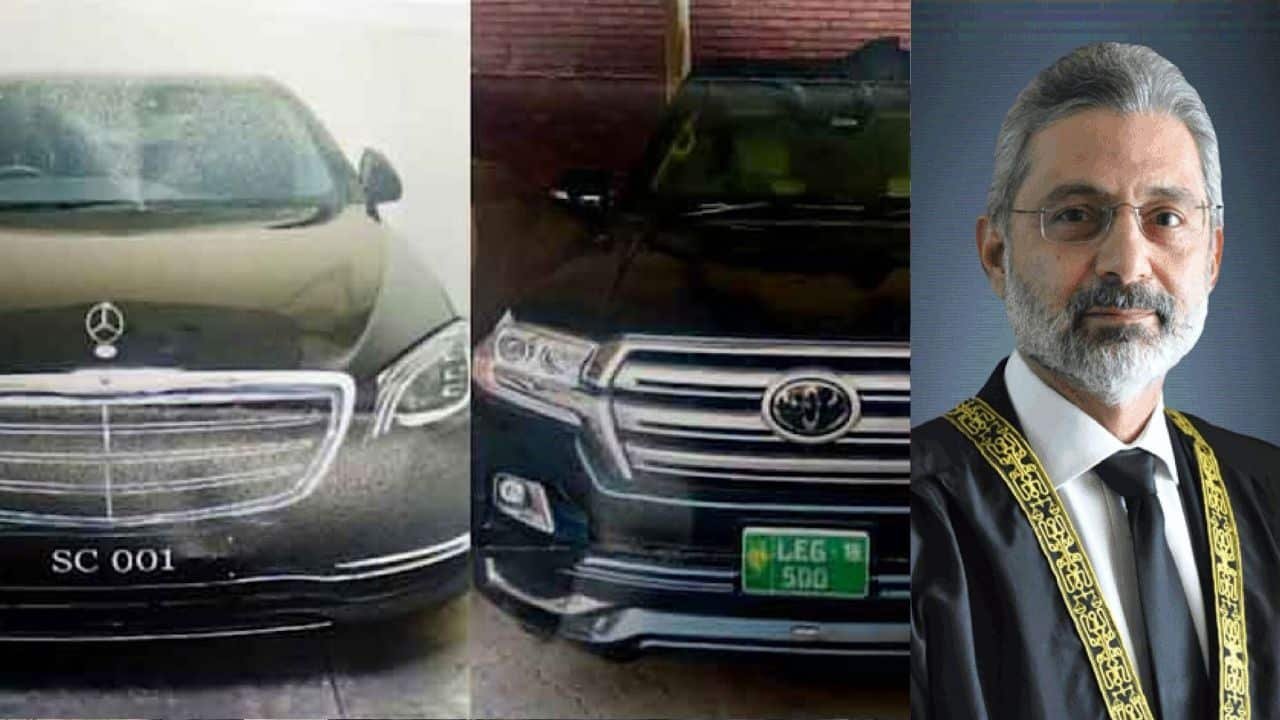
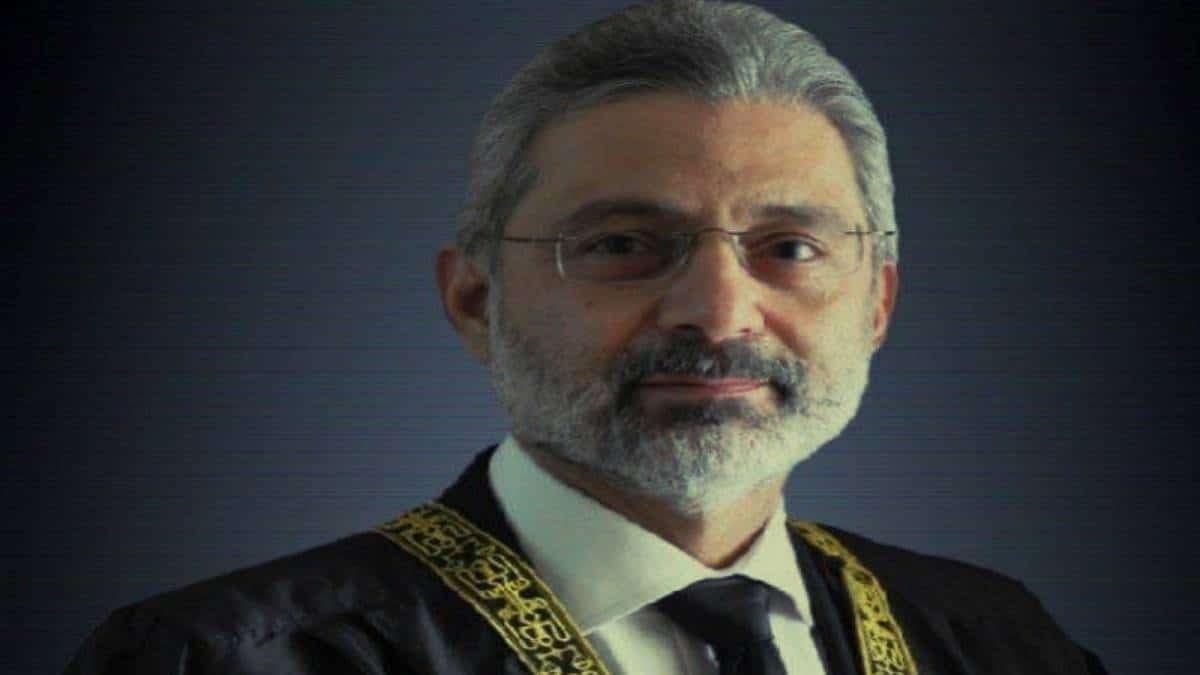
    Chief Justice of Pakistan Qazi Faez Isa, has ordered that two luxury vehicles, allocated for his use by both the federal and Punjab governments, should be auctioned, as per Geo News.

    The decision comes as Chief Justice Isa deems the allocation an “inappropriate splurge of scarce public resources.”

    The Supreme Court registrar communicated the Chief Justice’s decision through a letter addressed to the federal government, cabinet secretary and Punjab chief secretary.

    The letter revealed that in September 2020, the apex court purchased a new Mercedes Benz, 2996 CC sedan for the Chief Justice at the cost of Rs61 million.

    Furthermore, the Government of Punjab provided a brand new bullet-proof Toyota Land Cruiser with registration number LEG-S00 for the use of the Chief Justice of Pakistan.

    The vehicle is currently stationed at the Supreme Court Rest House in the Government Officers Residence (GOR), Lahore.

    The communication emphasized that, by established rules, every judge of the apex court is entitled to two vehicles.

    “Justice Isa has not used the said Mercedes sedan nor the Toyota Land Cruiser,” said the letter. It further stated that it is an “inappropriate splurge of scarce public resources to buy imported luxury vehicles for the use of constitutional and public office holders”.

    “Therefore, these vehicles may be collected and auctioned and the money realised from the sale be spent on much needed public transport,” said the letter.

    Justice Isa took oath as the 29th CJP in September of this year after his predecessor Umar Ata Bandial hung up his robes.

    Justice Isa’s tenure as the country’s chief justice, however, will be quite brief, as he is set to retire from the position on October 25, 2024.

    He took oath as the apex court’s judge on September 5, 2014.

  • ‘They do love marriages, then become a problem for court’: Chief Justice

    ‘They do love marriages, then become a problem for court’: Chief Justice

    Chief Justice Qazi Faiz Isa has remarked that having a beard does not make a person a Muslim, people themselves marry for love and then it becomes an issue for the court as per Aaj news.

    The case of the extradition of two minor girls was heard in the Supreme Court by a three-member bench headed by Chief Justice Qazi Faez Isa.

    The court ordered the two girls to be handed over to their mother, ordering that the father of the girls will be able to visit the girls on Sundays from 10 am to 5 pm, and if the father violated the court order, contempt of court action will be taken against him.

    The lawyer of the father pleaded with the court that the girls should be with the father, as their mother works at night, and does not have time to take care of them.

    Chief Justice Qazi Faiz Isa expressed his anger and asked whether the lawyer has read the principle of extradition in Islam or not, stressing that according to Shariat, children stay with their mothers.

    The Chief Justice remarked that we are Muslims in name only, our work is not that of Muslims, just having a beard does not make a person a Muslim, action must also be taken. Prayer, fasting, and Hajj are not enough, he observed, adding that humanity and morals are also necessary. If the parents are not divorced, their mutual resentment will spoil the future of the children.

    The Chief Justice asked the children’s father whether he had a love marriage or an arranged marriage.
    Taimur, the father of the children, said that it was a love marriage.

    The Chief Justice remarked that people themselves marry for love, and then they become an issue for the court.

    The Supreme Court disposed of the case with the consent of the parents.

  • Lawyer fined by Qazi Faez Isa for ‘wasting’ court’s time

    Lawyer fined by Qazi Faez Isa for ‘wasting’ court’s time

    Chief Justice of Pakistan (CJP) Qazi Faez Isa imposed a fine on a lawyer on Thursday for what he considered a clear wastage of the court’s valuable time. According to reports, the Chief Justice levied a penalty of Rs5,000 on the lawyer for consuming the court’s time during proceedings related to a property case.

    Justice Isa pointed out that the attorney had failed to appropriately draw the court’s attention to pertinent documents, instead attempting to misguide the court. Expressing his disappointment with the petitioner’s legal representative, the Chief Justice remarked that their actions had undermined the court’s trust.

    He addressed the lawyer directly, saying, “The court has lost faith in you with this act of yours”.

    Chief Justice Isa further instructed the lawyer to donate the fine amount to a charity of their choice and provide the court with proof of the donation receipt. The case in question revolved around a property dispute, with court proceedings having extended over several weeks.

  • Nobel laureate Maria Ressa acquitted in Philippines tax evasion case

    Nobel laureate Maria Ressa acquitted in Philippines tax evasion case

    Maria Ressa, Nobel prize winner and co-founder of the online news platform Rappler, has been acquitted of a tax evasion charge in the Philippines on Monday.

    This is another feat in her legal fight against a number of charges that were filed under the government of former president Rodrigo Duterte.

    “You gotta have faith,” she said outside the court.

    Ressa and Rappler have been hindered by five government charges of tax evasion after the sale of Philippine depositary receipts in 2015 — a route for companies to raise money from foreign investors.

    In January, they were acquitted on the other four charges.

    However, Maria Ressa and Rappler have two more court cases to fight.

    Ressa and Rey Santos Jr, a former colleague, have appealed for a cyber-libel conviction that carries a nearly seven-year jail sentence.

    Similarly, Rappler is challenging a Philippine Securities and Exchange Commission order to close for allegedly violating a ban on foreign ownership in media. Under the country’s constitution, investment in the media is reserved for Philippine citizens or entities controlled by citizens.

    “It shows that the court system works and we hope to see the remaining charges dismissed,” she said.
    Ressa won the Nobel Peace Prize in 2021 alongside Russian journalist Dmitry Muratov in recognition of their efforts to “safeguard freedom of expression“.

    Ressa is also an American national but has remained in the Philippines and is currently on bail pending the appeal against the cyber-libel conviction.

    Maria Ressa was awarded the 2021 Nobel Peace Prize along with Dmitry Muratov for “their efforts to safeguard freedom of expression, which is a precondition for democracy and lasting peace.”

  • Punishments of military officers behind overthrowing Benazir Bhutto’s government upheld

    Punishments of military officers behind overthrowing Benazir Bhutto’s government upheld

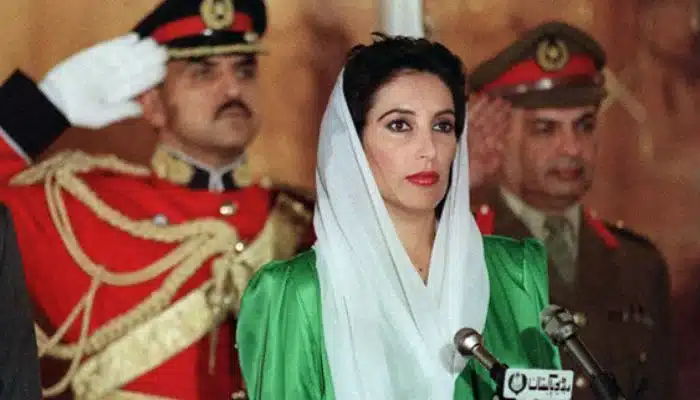
    The Supreme Court of Pakistan has upheld the sentences of military officers involved in the conspiracy to overthrow the government of former Prime Minister Benazir Bhutto.

    A hearing was held in the Supreme Court against the punishment of the officers involved in the conspiracy to overthrow Benazir Bhutto’s government.

    Supreme Court judge Muneeb Akhtar read out the reserved judgment on February 15.

    The court dismissed the appeals against the sentences of Colonel (retd) Azad Minhas and Colonel (retd) Inayatullah.

    It should be noted that after the petitions were rejected by the Lahore High Court, the petitioners approached the Supreme Court in 2016.

    A Field Court Martial had sentenced Azad Minhas to two years, Inayatullah to four years imprisonment with hard labor and dismissal from service. 

    Both former army officers were prosecuted in 1995 for plotting to overthrow Benazir Bhutto’s government.

    The two officers, alongside retired Maj Gen Zaheerul Islam Abbasi, now deceased, and Brig Mustansir Billah, were arrested on September 26, 1995 on charges of “plotting to storm a meeting of corps commanders scheduled to be held on September 30 that year at the General Headquarters in Rawalpindi”.

  • Blasphemy: what happened to the man who falsely accused 14-year-old Rimsha?

    In August 2012, Rimsha Masih was arrested on blasphemy charges. At the time, Masih was only 14 years old. She had allegedly desecrated the pages of Holy Quran by burning them.

    But what really went down?

    A local Muslim boy, Hammad, had asked Rimsha Masih to hand over the trash bag she was carrying. He inspected it and took the bag to the cleric of the local mosque named Hafiz Mohammed Khalid Chishti. As evidence against the girl, Chishti showed a few burned pages of the Holy Scripture to the police. As this incident came to light, there was a collective outrage from the local Muslims. And as narrated by Mohammad Hanif in an article for The Guardian, 300 local Christian families were forced to escape their residence and seek refuge in a forest in Islamabad.

    Chishti told AFP News that he thought Rimsha had ‘“deliberately” burnt the pages as part of a Christian “conspiracy” to insult Muslims and that action against such activities should have been taken “sooner”.

    Resultantly, minor Rimshah Masih was arrested. She spent more than three weeks on remand in an adult jail. During her trial, her age was evaluated through medical reports that concluded it to be 14 but with a “mental age younger than that”. This supported the claims of Masih being a child with Down’s Syndrome that the accuser’s lawyer rejected stating that the doctors are “favouring the victim and the state is also supporting her”.

    Rimsha was released on bail the following month of September after the police clarified in court that she was not guilty of the accusations made against her and that it was, in fact, the cleric himself who allegedly conspired against the young girl.

    But did Rimsha Masih get justice in the face of a false blasphemy case?

    Following Rimsha Masih’s acquittal, Hafiz Mohammed Khalid Chishti was arrested. Several witnesses against him were taken into record. It was claimed that Chishti had included the Holy Scriptures in the trash bag himself in order to portray Rimsha as the desecrator. The witnesses also claimed that Chishti believed that this was the only way to drive out Christians from their community.

    This meant that Chishti himself was now guilty of desecrating the Holy Scripture. The-then Investigation Officer (IO) Munir Jafferi, while talking to The Express Tribune, said that Chishti could be sentenced to life imprisonment if convicted of desecrating the Holy Book.

    He was sent on 14-day judicial remand under Section 295-B of the Pakistan Penal Code.

    By 2013, Rimsha Masih and her family escaped to Canada because even in her innocence, she was not safe in Pakistan. They were given permanent Canadian residency on “humanitarian and compassionate grounds”.

    All the while, that same year, all witnesses against Chishti withdrew their claims, and thus, the court dismissed all charges against him.

    History of Blasphemy Laws in Pakistan

    In 1860, the British colonisers introduced the Indian Penal Code. It consisted of a chapter that criminalised offences relating to religion in order to counter Muslim-Hindu-Sikh conflict in the Indian Subcontinent:
    Section 295, Injuring or defiling place of worship, with intent to insult the religion of any class
    Section 296, Disturbing religious assembly
    Section 297, Trespassing on burial places, etc.–Whoever, with the intention of wounding the feelings of any person (Section 297)
    Section 298, Uttering words, etc., with deliberate intent to wound religious feelings

    But in 1927, the laws buoyed out as vague clauses were added in the Penal Code, further deregulating the conflicts. As per 295 A, “Deliberate and malicious acts intended to outrage religious feelings of any class by insulting its religion or religious beliefs” was also a punishable offence.

    It is to note that the maximum punishment under these laws was from one year to a maximum of 10 years in jail, with or without a fine.

    In some instances, people took the law into their own hands. A case often recounted from the pre-partitioned India is of an objectionable book on Islam. It was written by a man named Pandat Chamupatt but anonymously published. The publisher was a journalist, Mahashe Rajpal, who owned a publishing house called ‘Rajpal & Sons’.

    The book was deemed as blasphemous by Muslims. Lawsuit against the publisher was filed under section 153 A: “Promoting enmity between different groups on ground of religion, race, place of birth, residence, language, etc.” Punjab High Court in Lahore, however, acquitted the publisher of the charges on “technical grounds” since the law did not highlight ‘adverse discussions of the life and character of a deceased religious leader’.

    The British Raj then made amendments to the law and included section 295-A to punish “deliberate acts intended to outrage religious feelings of any community… by words, either spoken or written”.

    The acquittal, nonetheless, led to protests, criticism, and threats; and after several failed attempts, the editor of the publishing house was assassinated in 1929.

    The next reported case was in Karachi in 1934. Nathu Ram, an active member of Arya Samaj, too, had allegedly written an objectionable book on the history of Islam.

    This, once again, prompted an angry reaction by the Muslims. After a trial, he was imprisoned for a year and fined for his offence. Ram had filed an appeal in the court but during one of his hearings in March 1936, he was attacked and killed.

    His killer was a man named Abdul Qayum from Hazara from the North West Frontier Province (now Khyber Pakhtunkhwa). Muslims back then gave him the status of Ghazi and a shrine was built after his death.

    Even then, however, killings over blasphemy were comparatively a rarity.

    Post-1947, with Muslims and Hindus officially divided, the anti-blasphemy laws remained intact in Pakistan.

    These laws were cemented under the dictatorship of General Zia-ul-Haq.

    General Zia made changes to the Penal Code and added five new clauses between 1980 to 1986, including:
    295 B, which criminalises the desecration of the Quran.
    295 C, which criminalises with life imprisonment or the death penalty any direct or indirect desecration of Prophet Muhammad (PBUH).
    298 A, which criminalises direct or indirect desecration of wives and relatives of Prophet Muhammad (PBUH).

    At first, section 295-C only contained life imprisonment as the punishment for blasphemy but it was replaced with death penalty as the parliamentarians pushed it on the basis of ijma (consensus of Islamic scholars). The Federal Shariat Court (FSC), too, defended the death penalty for blasphemy even though four out of seven ulemas that were consulted by the FSC opposed the ruling. The opponents of the death penalty included Jamaat-e-Islami’s founder, Maulana Maududi; head of the Barelvi sect, Ahmad Raza Khan; and the head of the Deobandi sect, Mahmood Deobandi.

    They all agreed that blasphemy was a pardonable offence and that “death penalty cannot be given for single offences”.

    In 2010, Dawn published an article tracing the qualitative results of the anti-blasphemy laws. While less than 10 cases of blasphemy were reported between 1927 and 1986; post-1986, as many as 4,000 cases were recorded. Then, between 1988 and 2005, 647 people were charged out of which 50 percent were non-Muslim. More than 20 people have been murdered for alleged blasphemy.

    49 per cent of 361 cases of blasphemy offences registered between 1986 and 2007 were against non-Muslims even though non-Muslims make less than four per cent of the total population.

    The situation began to worsen in 2011 with the murder of former governor of Punjab, Salmaan Taseer, who was vocal against the anti-blasphemy laws and supported Asia Bibi who was then given death penalty for committing blasphemy (but acquitted in 2019). Taseer’s killer, Mumtaz Qadri, was arrested and was later hanged but he became a hero to many who hailed him for his deed. More than 100,000 people attended his funeral and his shrine is still visited by hundreds.

    Lawyer Asad Jamal recalls the day after Salmaan Taseer’s death. He was on Mall Road, Lahore, where he spoke with sepoys regarding Taseer’s murder. “No one wanted to condemn the act”, he still remembers. “It was very telling of the direction the country was heading towards.”

    Since 2011, the number in cases, accusations, and killings have increased. In a report by Centre for Research and Security Studies (CRSS), as of 2021, 43 people have been extrajudicially killed since 2011 and 1,185 accused.

    When it comes to the role of lawyers and judges in blasphemy cases, Jamal believes that it is simply reflective of the socio-political situation of Pakistan. The state of affairs have worsened over the past 20 years. Apart from frail economy and political rifts, there is a major element of fundamentalism that comes in the shape of parties like TLP and their massive support.

    “Such an environment doesn’t encourage a lot of lawyers to take up blasphemy cases.”

    He also adds that very few lawyers have “worthwhile legal skills” to take up blasphemy cases. Many simply do not want to deal with these issues. People like Asma Jahangir and Abid Hasan Minto were not mainstream but exceptions. Apart from being courageous, they were competent. “But now, the times have changed,” he adds.

    Peter Jacob, a human rights activist and the director of Centre for Social Justice (CSJ), says that while some politicians condemn violence against the minorities like the recent Jaranwala case, it, nonetheless, always has a cost one has to bear due to the sensitivity of the matter.

    While talking about the youth belonging to religious minorities, Jacob has noticed a segment within Christians and Hindus who are actively participating in political discussions on- and offline. The examples are the recent protests held in various cities across Pakistan, including Karachi, Lahore, Swat, Kurram district, and Rawalpindi against the Jaranwala incident.

    “I am quite impressed by their sense of belonging and their affiliation with the case of a better Pakistan, their respect for human rights and democracy. Civil liberty will play a role of a natural healer — healing of the society and articulation of the way forward out of these troubled times,” he added.

    Jacob, however, believes that there has to be resolve at the national level by powerful quarters to understand the height of radicalisation that has taken place in order to control the lethality of the problem. “While there is political fragmentation, a free and fair atmosphere must be created where political forces can play their role and come up with people-centric solutions that will entail the process of self-healing and accountability.”
  • TW: Father beats daughter with metal bar for wearing makeup to school in UK, daughter saves him from jail sentence

    TW: Father beats daughter with metal bar for wearing makeup to school in UK, daughter saves him from jail sentence

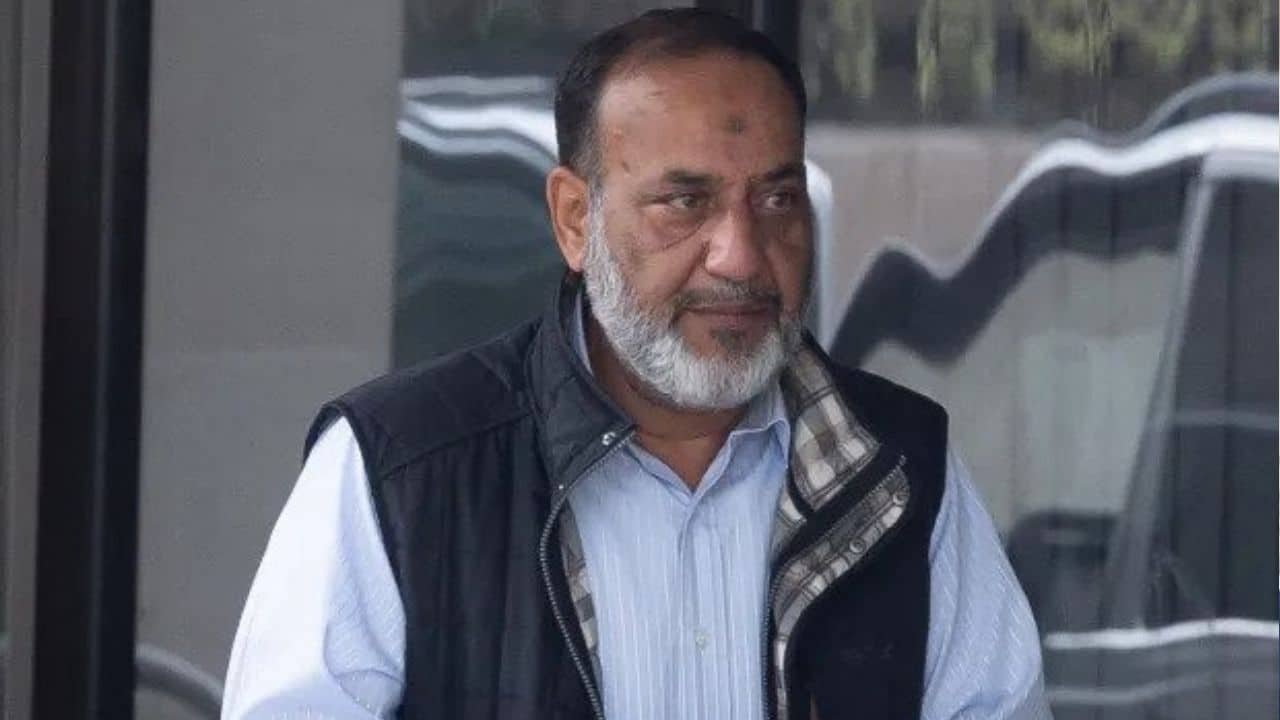
    Hussein Alinzi, 59, was arrested in the United Kingdom last year on charges of battering his 15-year-old daughter on the morning she was to take a GCSE English exam.

    Alinzi accused his daughter of deceiving him to secretly meet a boy, and of wearing makeup. The girl has reportedly put on makeup to hide the bruises the father inflicted on her the night before.

    Alinzi was charged with beating his daughter with a metal bar right up to the point where she lost consciousness. However, she later tried to sit for the exam but was immediately taken to the A&E after she complained of dizziness and nauseau.

    The teenager reported to her teachers and the police that her father subjected her, on numerous occasions, to beatings and threats, reportedly saying, “I will run you over”, “I will kill you,” and “I hope you die.”

    Medics reported there were 14 injuries on the girl’s body along with a bite mark on her left temple.

    However, Alinzi, who works as a delivery driver, has avoided jail time after an eight month prison sentence was suspended for 18 months after the girl gave an emotional plea in court. He is also required to complete 80 hours of unpaid work and 25 days of rehabilitation activity days.

    “I initially didn’t want to provide a statement or evidence as I did not want to cause further pain to my family,” the girl said in a statement.

    “When my father was arrested, I felt safe that he was not here, but sad that he was not home.”

    ”My Mum struggles to look after my younger brother and I felt guilty that I bought shame on my family. I love my Dad and I can see that his attitude has now changed. This has made me realise how people can actually change.

    ”Since he has not been living with us, I have become more independent. My brother needs to live with his Dad, and he needs him back.

    “I actually feel happy as all this has changed him, it has made him realise what can and can’t do.”

    During the sentencing, Judge Mr Recorder Peter Wright KC spoke to Alinzi, reminding him to be kinder towards his children:

    “You’re the father of a big family of which there ought to be pride rather than shame, but that shame has been bought on your family by your conduct.

    “You have not behaved like a father should to his children, you behaved like a monster to them.

    “She should have been expected to be loved and protected by you, not assaulted and abused. She lived her life in fear of you, enduring your physical conduct towards her. You are a bully, and what you did was not protecting your child.

    “Your conduct was unforgivable and indicates your will for a combination of fear and violence. This is not acceptable, it is inexcusable and shameful.

    “She is now left with the emotional scar of now being the cause of you becoming separated from the family. This is a feeling that is natural for a child, but she is blameless.”

  • Rizwana torture case: Judge’s wife claims Rizwana never worked for her, says she wants to commit suicide

    Rizwana torture case: Judge’s wife claims Rizwana never worked for her, says she wants to commit suicide

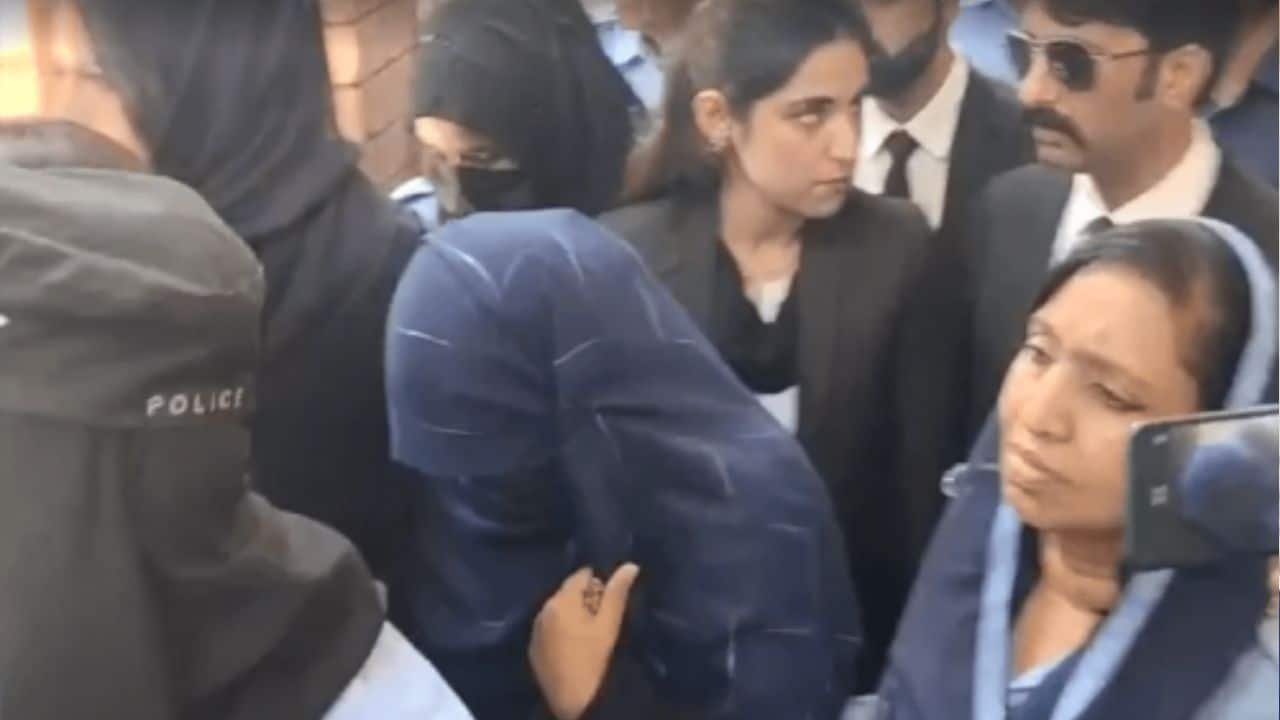
    An Islamabad court has on Tuesday reserved verdict on appeal to grant physical remand of Somia Asim, the wife of a civil Judge accused of torturing Rizwana.

    During the hearing, the police requested the court for the suspect’s physical remand for further investigation. The defense lawyer argued that the police have been investigating since Somia Asim got arrested, and emphasizing that she has nothing to do with it.

    Furthermore, Somia while giving her statement to the court, shared that she has been facing a lot of criticism and pressure, even though she has not been proven guilty yet. She said that she’s a mother of three and with the current circumstances she feels like committing suicide.

    Stating that she is being given a “media trial”, Somia also complained about media coverage while she is being brought to the court, to which the judge replied that it doesn’t matter because she is fully covered and no one could see her face.

    The judge also inquired about the victim’s health. Rizwana’s sister apprised the court that she is doing better and has been shifted out of the ICU.

    Later, the court reserved the verdict.

    On Monday, the main suspect Somia Asim was arrested from the court after her bail plea was rejected.

    The court went on to issue an arrest warrant against Somia Asim, the wife of a civil judge, after she presented herself in the court of Additional Sessions Judge Farrukh Farid.

    During the court hearing, Asim’s lawyer claimed that she had appeared before the JIT and proclaimed her innocence. He stated that police records did not indicate any instances of violence committed by Asim. In addition, the defense attorney maintained that Somia had tried to send the minor girl back multiple times and had eventually handed her over to her mother.

    However, the plaintiff’s lawyer contested the claims, stating that Rizwana, aged between 13 and 14, had been repeatedly subjected to torture. According to him, employing a minor is an illegal act in itself. He pointed out that the civil judge and his wife should have been aware of this illegality. He further claimed that there were allegations of blackmail against the girl’s parents.

    He questioned how parents could cause such severe injuries to their own daughter and pointed out that the medical report of the girl had not been challenged by defense lawyers.

    The plaintiff’s lawyer questioned the basis on which the accused was seeking an extension of her bail. He argued that if women are granted bail in such grave cases, it would lead to societal decay.

    The shocking incident of severe torture on a teenage maid allegedly perpetrated by the wife of a civil judge in Islamabad has sparked widespread outrage and condemnation. The victim, a resident of Sargodha, was shifted to Lahore General Hospital, prompting an investigation into accusations against the judge’s wife.

  • Baby monkey gives hard time to wildlife team after it escapes KHI court

    Baby monkey gives hard time to wildlife team after it escapes KHI court

    A dramatic incident unfolded at the city court in Karachi when a baby monkey managed to escape while being brought alongside 13 other monkeys by the Sindh Wildlife Department, reported Geo News.

    Two individuals responsible for transporting the monkeys were arrested by the authorities for violating provincial wildlife laws. The suspects were brought before the district and sessions court on Thursday, which fined them Rs100,000 and ordered to hand over the baby monkeys to the zoo.

    The monkeys were being kept in wooden mango crates, and one clever little monkey managed to escape the confines of its container. The baby monkey sought refuge on a tree, proving to be quite elusive due to its small size and agility, making it challenging for the rescue team to catch. The Sindh Wildlife Department stated that they would continue their rescue operation the next day (Friday), which is today, in an effort to capture the baby monkey still at large in the city court area.

    The department had recovered them during a search of a passenger bus arriving in Karachi from Charsadda. The monkeys were suspected to have been illegally captured from the forests in Charsadda.

    Authorities are working diligently to ensure the safety and welfare of these rescued monkeys, aiming to return them to their natural habitats or appropriate care facilities.

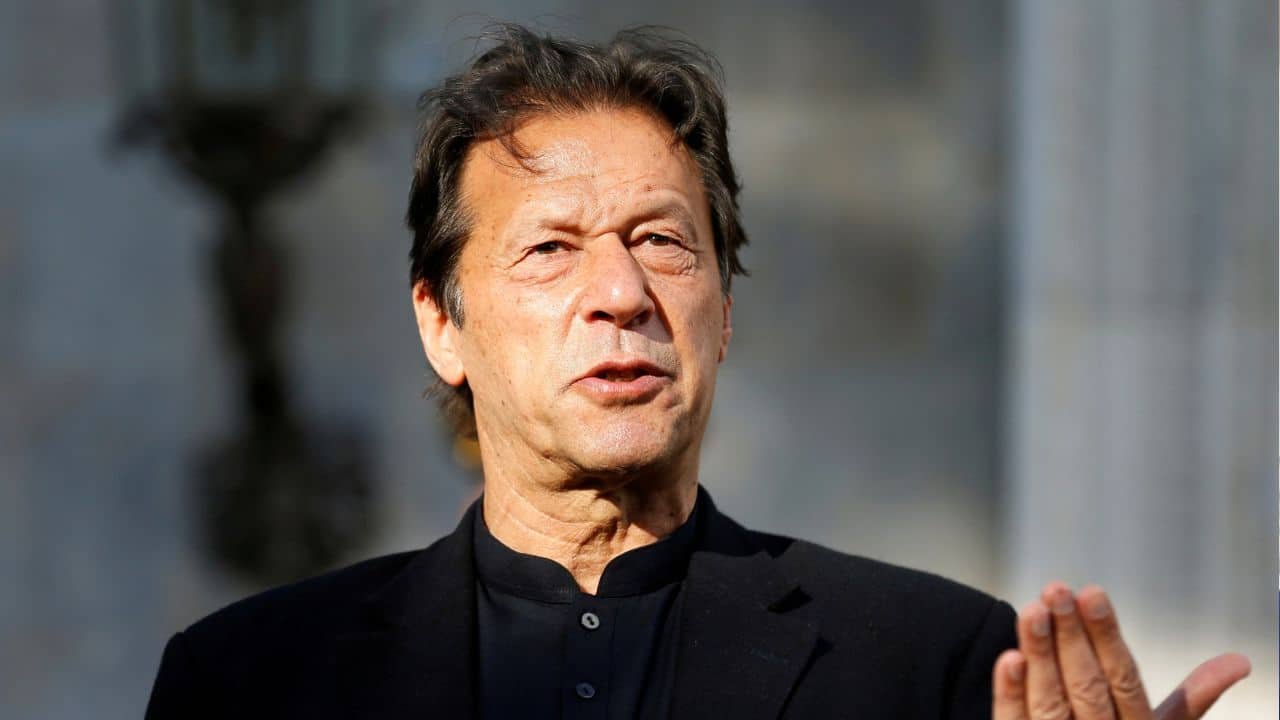
  • Imran apologises to court for threatening Judge Zeba

    Imran apologises to court for threatening Judge Zeba

    Former Prime Minister Imran Khan has apologised to the court for threatening Additional Sessions Judge Zeba Chaudhry in 2022 during a rally, Capital TV has reported.

    “If I have crossed a line, then I apologise,” the Chairman of Pakistan Tehreek-e-Insaf (PTI) said in the court where he was present in person for the hearing.

    Recalling that he went to Zeba Chaudhary’s court to apologise, Imran Khan said, “I got carried away during the speech and talked of initiating legal proceedings. I told the court that if my comments have hurt anyone, then I apologise.”