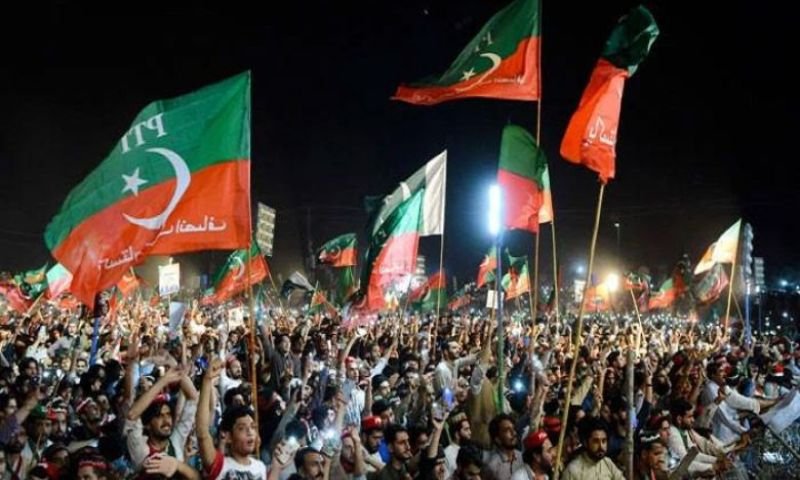
The Islamabad High Court on Wednesday directed the administration authorities of the capital city to allow Pakistan Tehreek-e-Insaf (PTI) to conduct a rally.
Previously, district authorities denied permission to PTI for staging a protest against alleged poll-rigging in the general elections 2024 in Islamabad citing security risks.
“One’s right of assembly cannot be taken away,” IHC Chief Justice Aamer Farooq said while hearing PTI’s petition seeking the court’s permission for staging the rally. The justice emphasized that public gatherings are for everyone and it should not come under any restrictions.
The Inspector General of Police (IGP) Islamabad had warned PTI to avoid public gathering without getting a formal approval from relevant authorities.
Furthermore, according to PTI leader Sher Afzal Marwat, the party has moved up the date for holding the rally to April 6.
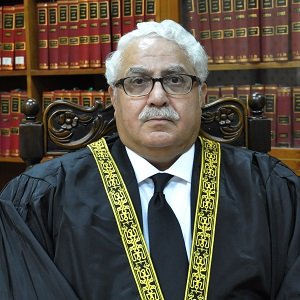
A five-judge bench of the Supreme Judicial Council (SJC) has released a 33-page detailed opinion on Friday, stating that former judge of the apex court, Sayyed Mazahar Ali Akbar Naqvi, has committed misconduct. The council recommended his removal from office and advised against using the titles ‘Justice’ or ‘Judge’ with his name in the future.
The SJC discovered that the judge committed several instances of misconduct, which harmed the reputation of the judiciary.
While Mr Naqvi had resigned a day before the SJC began proceedings on nine complaints against him under Article 209(6), the council decided to continue with its proceedings, with Chief Justice of Pakistan (CJP) Qazi Faez Isa saying it was “necessary to remove the misperception that the institution of judiciary is above the law”. The Supreme Judicial Council, led by the Chief Justice of Pakistan, praised the Pakistan Bar Council (which oversees lawyers) and Advocate Mian Dawood for filing complaints to support the rule of law and accountability.
The council found Naqvi guilty of violating his oath of office and the Code of Conduct for judges after at least five allegations made by the complainants were proven true.
The council explained that it could not be stated that Mr Naqvi was “untouched by greed”, “was above reproach”, his conduct was “free from impropriety expected of a judge” in his official and private affairs and thus he violated Article II and III of the Code of Conduct. According to the SJC opinion, it was clear that he violated Article IV as his actions were swayed by consideration of “personal advantage”.
The Pakistan People’s Party (PPP) has lifted up concerns about speculation that former prime minister and Pakistan Muslim League-Nawaz (PML-N) leader Nawaz Sharif will get “special relief” on his return to Pakistan on October 21.
PPP’s Secretary General, Syed Nayyer Husain Bukhari, said in his statement on Monday that the PML-N supremo had been legally convicted by courts, stressing that Nawaz Sharif will have to face the law after his return to the country.
“It is surprising [for PML-N] to hope that the judiciary will set a precedent of special relief for Nawaz Sharif,” he added.
The PPP leader also said that the election is necessary for the prolongation of the parliamentary system in the country, demanding that the Election Commission of Pakistan (ECP) announce a polling date as soon as possible.
“The PPP demands a level playing field for all,” he maintained.
Pakistan Tehreek-e-Insaf (PTI) Chairman Imran Khan has been granted pre-arrest bail till July 6 by the court of a district and sessions judge in Islamabad today (Friday). He got bail in 10 cases related to vandalism during his party’s Azadi March in the federal capital which happened on May 25.
He is booked on charges involving interference in state affairs and damaging public property.
Khan appeared in court with strict security arrangements. The court directed Khan to submit Rs5,000 as surety in each of the cases and directed the police to submit a record of cases in the next hearing which is on July 6.
Prior to this development, the Peshawar High Court (PHC) granted transit bail to PTI Chairman till June 25 in different cases registered against him in connection with his party march.
Bail to PTI leaders:
Earlier, police had booked around 11 PTI leaders including Imran Khan, Asad Umar, Shah Mahmood Qureshi, Fawad Chaudhry and others in a case pertaining to violence at the Kohsar police station. However, an Islamabad court granted interim bail to them in this case on June 20.
Similarly, last week, an anti-terrorism court (ATC) granted interim bail till June 28 to more than a dozen PTI leaders for vandalism in the case pertaining to violence at the Bhatti Gate police station, Lahore. The bail was granted to Hammad Azhar, PTI Central Punjab President Dr Yasmin Rashid, Mian Aslam Iqbal and others.
The government has started preparing a high treason case against the former and the current PTI government officials on the basis of Article 6 for violating the Constitution, confirmed Deputy Secretary General PML-N Attaullah Tarar.
According to Geo News’ sources, the people who are being named are President of Pakistan Dr Arif Alvi, Former Prime Minister (PM) Imran Khan, Former National Assembly (NA) Deputy Speaker Qasim Suri and Punjab Governor Omar Sarfraz Cheema.
As per the news outlet, currently, the government is consulting legal experts. The current ministries of interior and law have started gathering evidence related to the case.
Article 6 of Constitution of Pakistan, says any person who “abrogates or subverts or suspends or holds in abeyance the Constitution shall be guilty of high treason”.
On April 3rd, Deputy Speaker Suri “dismissed” the no-confidence motion against Imran Khan, terming it against Article 5 of the Constitution. Then, Khan addressed the nation, saying he had advised President Alvi to dissolve NA, which the President approved.
A couple of weeks ago, PML-N Hamza Shehbaz was elected as the new CM of Punjab. However, his oath-taking ceremony is still hanging as the Governor of Punjab Omar Sarfraz Cheema declined to administer the ceremony multiple times. Despite Lahore High Court’s (LHC) order to do the ceremony, it is yet to take place.
Many legal experts have argued that Punjab’s governor cannot decline to administer the oath to the chief minister-elect under any circumstances and termed it illegal.
Khadija Siddiqi, a young lawyer who was stabbed 23 times by Shah Hussain in 2016, questioned the Punjab government for the early release of her attacker.
Shah Hussain was released from jail on 17 July without completing his five years in jail term. He got a 1.5 year remission.
“Many people raising questions on the order of the High Court, given by Justice Shan Gul, just to clarify, they approached the court for 1 month of further remission which was NOT granted by the court,” said Khadija in a tweet, adding: “The @GovtofPunjabPK had already granted extraordinary REMISSION of 1.5 years! State to be blamed.”
“Dear State, will you break the silence and hold jail authorities accountable?” she asked.
Justice Shan Gul passed no perverse order. Please do not malign the Honourable Justice, he had no role in release of my culprit.
Dear State, will you break the silence and hold jail authorities accountable?
In another tweet, Khadija tagged Punjab Prisons Minister Fayyaz-ul-Hassan Chohan and wrote: “You are responsible for allowing early release of my attacker.”
I waited, waited and waited for them to reach out! Zero response.
I want answers from IG jail and Minister for prisons, @Fayazchohanpti
Your silence reeks of complicity
You are responsible for allowing early release of my attacker!
Speaking on Geo News programme AAj Shahzeb Khanzada Kay Sath’, Khadija said that she has no idea on what basis Shah Hussain got a remission of one and a half years. “It is evident that influence has been used in this case.” She said that when she came to know about the release of Hussain through unofficial sources, she wrote to CCPO Lahore that she needs security because her life is in danger as her attacker will be out but she did not get any response.
خدیجہ صدیقی پر خنجر کے 23 وار کرنے والا شاہ حسین 5 سال کی سزا پر رعایت ملنے پر ساڑھے 3 سال میں ہی رہا۔پنجاب حکومت سوالات پوچھنے پر خاموش۔
نہ خدیجہ صدیقی کو قانون کے مطابق اطلاع دی گئی نہ سیکیورٹی اور نہ ہی حکومت انکے سوالات کا جواب دے رہی ہے۔۔۔ دیکھئے
Karachi-based lawyer Jibran Nasir, while talking exclusively to The Current, said that the government needs to explain how and why Shah Hussain has been released without completing his five year sentence.
Siddiqi was stabbed 23 times on a busy Lahore street while she was picking her six-year-old sister from school on May 3, 2016.
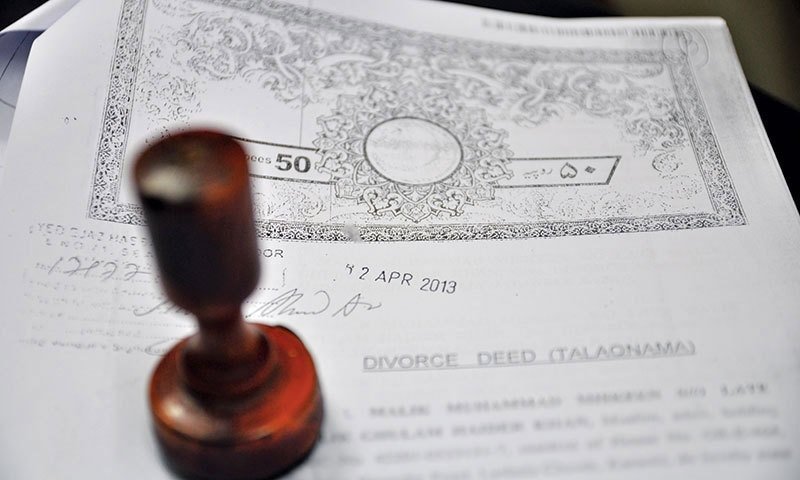
A noticeable surge in divorce cases has been reported in Rawalpindi. As per reports, as many as 550 couples parted ways, sought a divorce and received couples effectiveness certificates from the district court. In addition to that, over 250 couples have filed applications in MCR for issuance of khula certificates.
As per details, over 2,900 divorce cases are still pending in Rawalpindi’s district courts.
Talking to a local media outlet MCR Council Officer (CO) Noshia Afzal said: “The divorce ratio is increasing to an alarming level”. She further said that “it is unfortunate over 95 per cent of couples do not agree to live together insisting on the issuance of divorce effectiveness certificates.”
Stating the reasons behind the increase in divorce cases, Afzal remarked that “poverty was not the reason for divorce, but a poor family structure, unacceptance, and misunderstandings.” She said that even highly educated couples were opting for divorce frequently, adding that people were not taking their marriages seriously.
Meanwhile, 6,000 marriages were registered during this period.
The lockdown period has seen a sharp rise in divorce cases worldwide. Here are some tips from renowned psychotherapist Omar Tauseef on how to keep your marriage intact in these testing times.
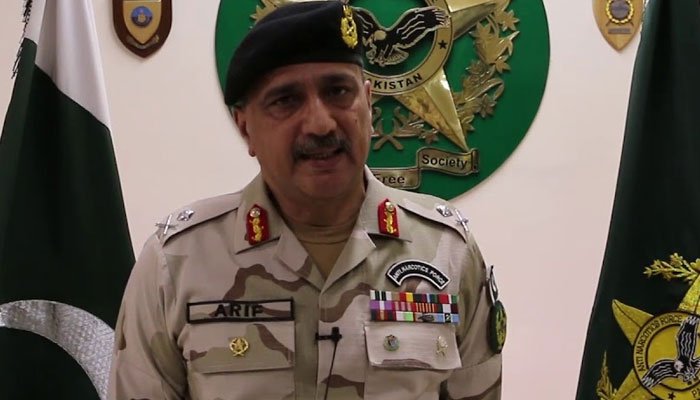
Anti-Narcotics Force (ANF) Director General (DG) Major General Muhammad Arif Malik has said that courts should be closed if cases “are to be decided through taking oath”, The News reported.
The ANF chief’s statement came as Pakistan Muslim League-Nawaz (PML-N) leader Rana Sanaullah, who was granted bail in the drugs trafficking case against him, continues to swear over the Quran that he is innocent and the case is bogus.
The ANF has challenged the bail of the former Punjab law minister Sanaullah before the Supreme Court, filing a petition against the verdict of the Lahore High Court (LHC). It has argued that there was sufficient evidence against Sanaullah for being involved in the drugs case.
The ANF alleged the PML-N leader was carrying around 15 kilograms of heroin with him when he was arrested from Sukheki in July last year. The force asked the court to set aside the verdict of the LHC wherein he was allowed bail.
Later, talking to the reporters, the ANF DG asked if any murderer ever admitted in court or in public that he/she killed a person. He said Rana Sanaullah’s case was being heard by the court and he should provide evidence of his innocence there.
Major General Arif Malik said Rana Sanaullah and Minister of State for Narcotics Control Shaharyar Afridi both took oath and therefore, a draw should be held to figure out who is the culprit.
Responding to a journalist who asked the ANF DG that if he could swear about the veracity of the case, he said courts should be closed if things were to be settled that way.
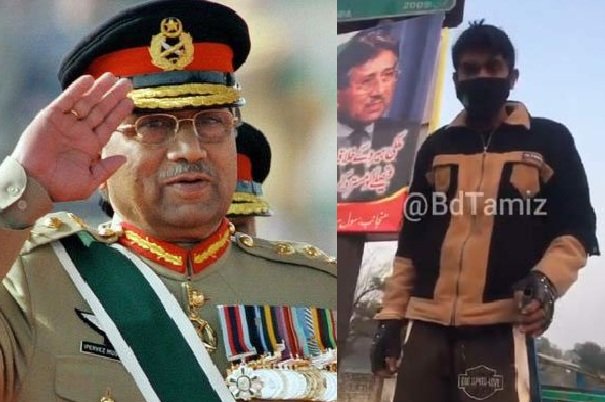
At least two masked men on an unregistered vehicle have been spotted in Sialkot, putting up banners seeking dismissal of judges who convicted former military ruler Gen (r) Pervez Musharraf last week.
A special court trying the ex-preisdent had last week sentenced him to death for treason. While analysts had hinted at a possible rift among institutions over the death penalty for former army chief Musharraf, the detailed verdict of the case had drawn ire of many after one of the judges proposed public hanging.
A week later, a video going viral over the internet has shown masked men putting up on Sialkot’s Khawaja Safdar Road some banners demanding dismissal of the judges who sentenced Musharraf.
“We’ve been told to do so,” they can be heard as saying when asked about the person or organisation behind the banners, and do not specify who were the orders from.
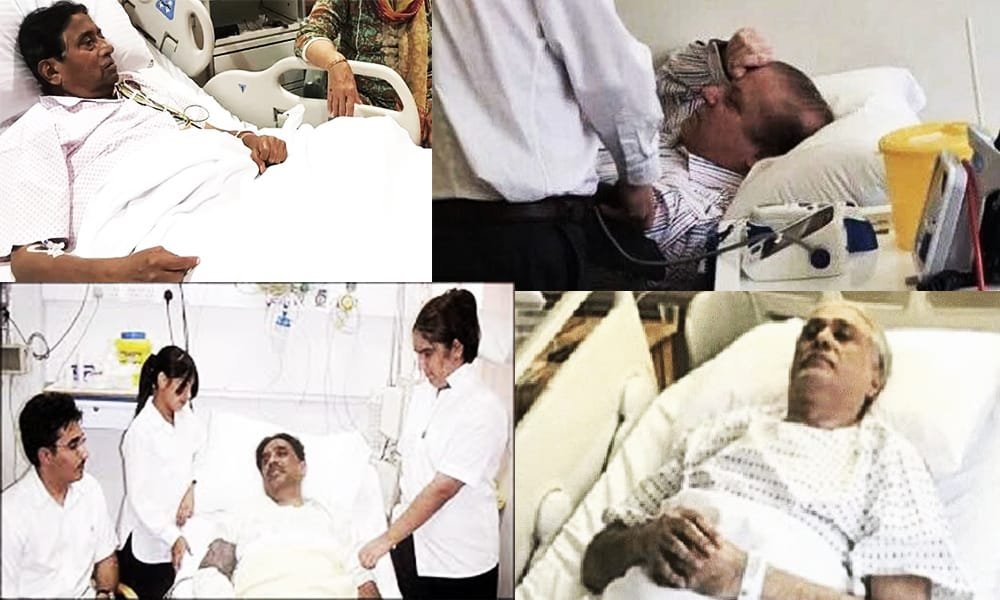
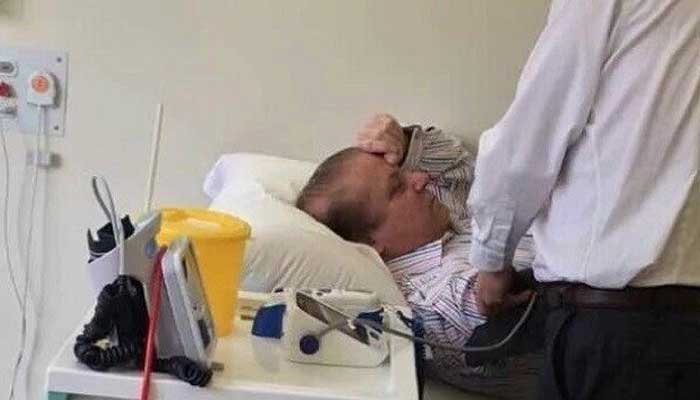
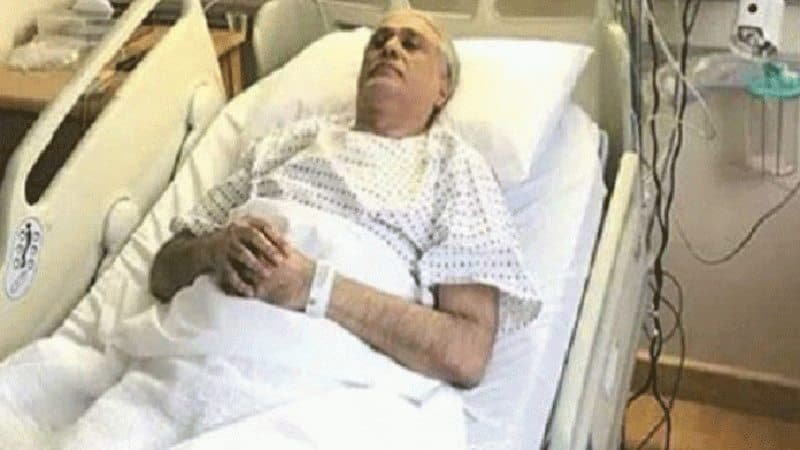
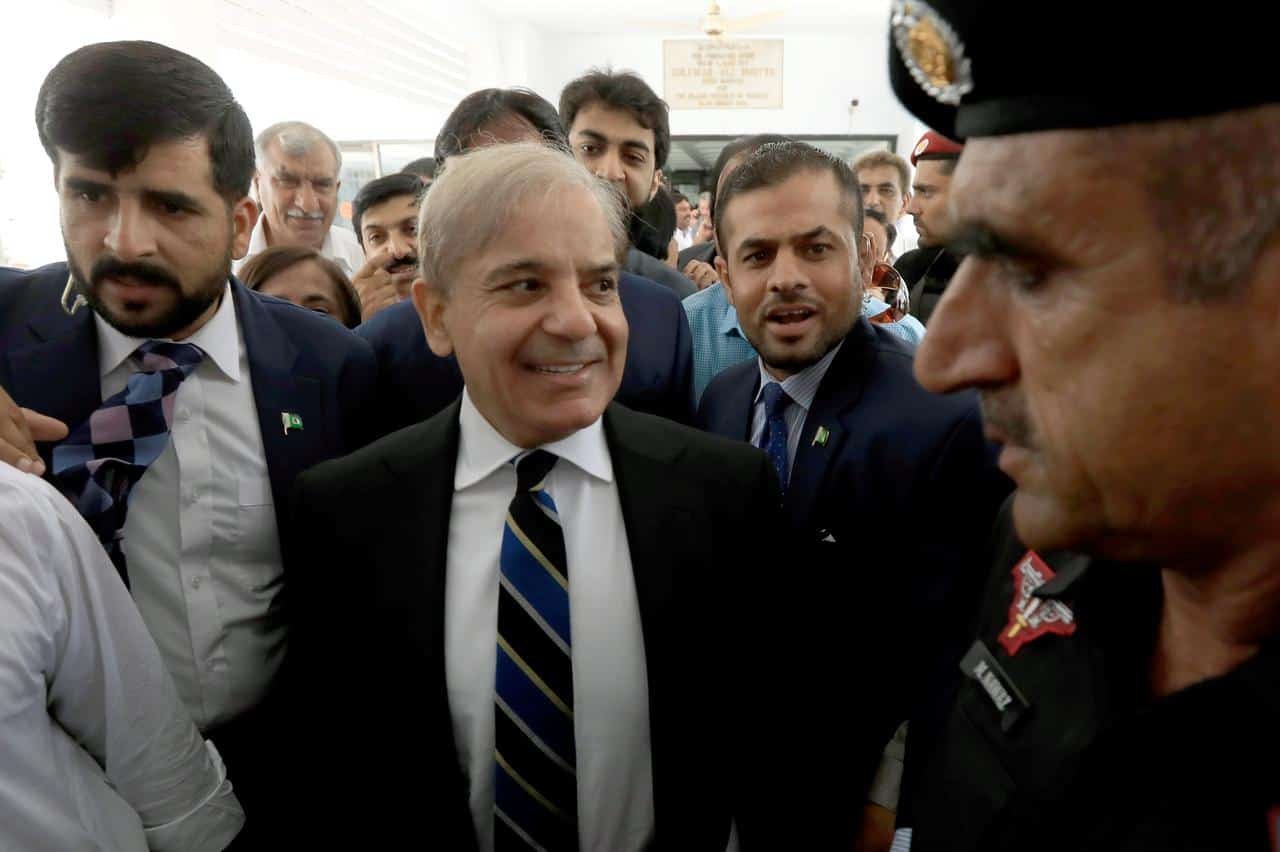
Pakistani politicians are rather infamous for falling sick right
after they are sentenced to imprisonment, taken into custody for investigation or
even if summoned by a court.
While some think of the sudden ailment as “nothing but an
easy way out of the ordeal that could follow”, several others believe otherwise.
Here are five politicians who fell prey to an untimely, or
perhaps timely, sickness.
1. Pervez Musharraf
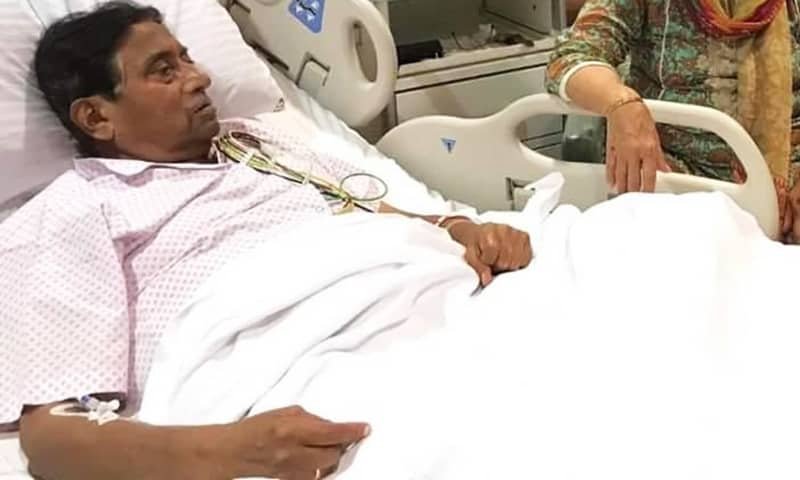
Soon after All Pakistan Muslim League (APML) chief and former
military ruler Pervez Musharraf was charged with treason, he underwent chest
and back pain. He was shifted to Combined Military Hospital (CMH), where he
spent months and failed to appear before the court.
Even though Musharraf’s name was put on the Exit Control List
(ECL), the Interior Ministry allowed him to leave the country for treatment
back in 2016 and he hasn’t returned since.
2. Nawaz Sharif
Former prime minister Nawaz Sharif was advised to undergo a
heart surgery soon after the emergence of Panama Papers in April 2016 amid
calls for a probe into his offshore assets by the opposition.
Since the case started and his subsequent imprisonment last year, the ex-PM has time and again sought bail on medical grounds, even the permission to travel abroad for treatment, and has taken multiple trips to the hospital from jail.
3. Ishaq Dar
The former PML-N lawmaker tendered his resignation as the country’s finance minister after the National Accountability Bureau (NAB) initiated an inquiry into his assets back in 2017.
Dar fell ill, with his counsel requesting an exemption from the court. He later traveled to the United Kingdom (UK) and hasn’t returned since. The politician’s medical reports say he is severely ill; however, he has been spotted walking upright on London streets time and again.
4. Asif Ali Zardari
The former president’s little visit to the hospital after he
was taken into NAB custody last week, wasn’t the first of its kind. Earlier, he
had used his medical reports to fight a corruption case filed against him in a
British court.
Zardari had pleaded that he was diagnosed with a range of
psychiatric illnesses during his detention in jail. He, however, went on to
become the president of Pakistan in 2008.
The list doesn’t end here as several other political figures, including ex-petroleum minister Dr Asim Hussain and ex-information minister Sharjeel Memon, have also sought medical attention in times of trouble.
The Current asked people about what they think of all these untimely ailments and here is what they had to say: