Tag: covid 19

  • AstraZeneca admits in court that vaccine had rare side effects

    AstraZeneca admits in court that vaccine had rare side effects

    AstraZeneca has admitted in court that its vaccine can cause rare side effects, including blood clots and low platelet count.

    The vaccine, which was developed with the University of Oxford, was sued over claims that it caused death and serious injury in dozens of cases.

    The lawsuit was spearheaded by Jamie Scott, whose life took a tragic turn after receiving the AstraZeneca vaccine in April 2021. Scott suffered a permanent brain injury, prompting legal action against this pharmaceutical giant.

    “We need an apology, fair compensation for our family and other families who have been affected. We have the truth on our side, and we are not going to give up” said Kate Scott, the wife of the victim.

    In total, 51 cases have now been lodged in Britain and victims and relatives are seeking damages worth £100 million.

    “It is admitted that the AZ vaccine can, in very rare cases, cause TTS (Thrombosis with Thrombocytopenia Syndrome). The causal mechanism is not known,” the company said in court documents, quotes Dawn.

    While the company has contested the claims of Scott, the court submission marks the first time it has admitted that the vaccine can cause side-effects that are characterised by blood clots and a low blood platelet count in humans.

    “Further, TTS can also occur in the absence of the AZ vaccine (or any vaccine). Causation in any individual case will be a matter for expert evidence,” the admission in court added.

    The UK government has indemnified Astra­Zeneca against any legal action but has so far refused to intervene.

    According to the Council for International Organisat­ions of Medical Sciences, “very rare” side effects are those reported in less than 1 in 10,000 cases.

    AstraZeneca vaccine was developed by the British-Swedish company in collaboration with Oxford University, and produced by the Serum Institute of India. It was widely administered in over 150 countries.

    Some studies conducted during the pandemic found the vaccine was 60 to 80 per cent effective in protecting against the covid-19.

  • Agha Shiraz had a spiritual experience with a mysterious stranger

    Agha Shiraz had a spiritual experience with a mysterious stranger

    Agha Shiraz is a well-known face in television, also famous for his magic tricks to entertain his colleagues. While occasionally making awareness videos and appearing on talk shows, Agha Shiraz is currently not working on any acting projects.
    Recently, he made an appearance on PTV Home’s Ramadan transmission. During the show, he shared a supernatural experience that he experienced which positively impacted his life.

    He shared details of an incident that occurred in 2019, while he was offering Namaz E Asar in a mosque near Karachi Sea View. He said, “While I was praying, someone tapped my shoulder and asked me to offer the Salah again. They also told me that my prayers would not be accepted until I seek Allah’s love and guidance. Even though I didn’t pay attention to their advice and completed my Darood and Dua. When I turned to look at the person, they were nowhere to be found. I then asked the Imam Masjid, who said, ‘I observed you talking to someone invisible. Let me tell you something important, the spiritual beings (Jinn) pray here after Asar. I think you should follow the guidance you received just now.”

    He also said, “I was praying, asking for blessings for the person who ran away with my 1.5 million. His phone had been off for 1.5 years. When I raised my hands to pray after Namaz, I received a call from that person asking, ‘Agha brother, where are you?’ He said he would arrive within 15 minutes. I came outside, and in 2019, when COVID started, he handed me 1.5 million cash. He asked for forgiveness, saying he had left the country due to some problems.”

  • Minor improvement in human development ranking for Pakistan: Report

    Minor improvement in human development ranking for Pakistan: Report

    Pakistan has been ranked 161st out of 191 countries on the UN Human Development Index, scoring 0.544 points. This marks a slight improvement from 2023, when Pakistan was ranked 164th with 0.540 points, three places below its 2022 ranking.

    The report also highlights that Pakistan’s HDI rank remained steady at 161st globally from 2019 to 2021. The index comprises health, education, and income indicators, each ranging from 0 to 1.

    In South Asia, Sri Lanka leads at 73rd place with 0.782 points, followed by Bangladesh at 129th with 0.661 points, and India at 132nd with 0.633 points. Nepal ranks 143rd, while Afghanistan trails at 180th with 0.478 points, although it’s slightly above the bottom 10.

    Globally, South Sudan ranks last at 191st with 0.385 points, while Switzerland tops the list at 0.962 points, followed by Norway at 0.961 points.

    The report observes that while global development has returned to pre-pandemic levels, a growing gap between rich and poor countries persists. This rebound follows two years of decline, primarily due to the COVID-19 crisis which reversed five years of progress.

    Despite overall positive trends, inequality persists, with the poorest nations falling behind, exacerbating global polarisation.

    “The result is a dangerous gridlock that must be urgently tackled through collective action,” the United Nations warned in a post on social media.

    The report also recognizes that “rich countries experienced unprecedented development, yet half of the world’s poorest nations continue to languish.”

    The United Nations’ Human Development Index (HDI) combines economic and non-economic factors to measure a country’s prosperity, including life expectancy, educational attainment, and gross national income per capita.

    The report underscores a reversal in the trend of reducing inequalities between wealthy and poor nations, emphasising the need for collective action to address shared challenges and ensure people’s aspirations are met.

    Additionally, the report identifies a “democracy paradox,” wherein support for democracy coexists with endorsement of leaders who may sabotage democratic principles, increasing political polarisation and inward-looking policy approaches.

  • JN.1 : New Covid variant spreading in Pakistan

    JN.1 : New Covid variant spreading in Pakistan

    The emergence of a new coronavirus variant, JN1, a subvariant of Omicron, has raised concerns as four cases were confirmed on Sunday in Pakistan.

    A spokesperson for the Ministry of Health confirmed that all four patients had recovered without encountering any complications, reports the Express Tribune.

    Amid global attention on the new strain, the World Health Organization (WHO) has classified JN1 as a “variant of interest.” Presently, WHO assesses the risk to public health from this strain as low based on existing evidence.

    Dr Nadeem Jan, the caretaker health minister, has said that authorities are closely monitoring the situation, adding that approximately 90 per cent of Pakistan’s population has received vaccination against Covid-19, a critical measure in combatting the spread of such variants.

    As winter brings its challenges, Dr Jan reiterated the importance of preventive measures, urging the public to continue wearing masks, maintaining social distancing, and following health guidelines to curb the spread of COVID-19 and other infectious diseases.

    A few days ago, the federal government decided to secure 500,000 doses of a COVID-19 vaccine in response to the potential resurgence of the new variant observed in multiple countries.

    The procurement strategy for Pfizer vaccines from the US was devised based on recommendations from the Emergency Operation Centre’s (EOC) technical advisory group.

    Previously, the Sindh Health Department confirmed the presence of a new variant of COVID-19 in two passengers arriving from overseas at Karachi Airport. However, it had clarified that no cases of the variant have been reported within the Sindh province.

  • Covid testing of foreign arrivals starts again in Pakistan

    Covid testing of foreign arrivals starts again in Pakistan

    The National Institute of Health (NIH) has provided COVID-19 testing kits to the Border Health Services Department in Islamabad, reports Geo.

    According to the officials of the Federal Ministry of Health, 40,000 rapid diagnostic kits have been given to the Border Health Services Department.
    The authorities told Geo that COVID testing of those coming from abroad has started at many airports including Islamabad. Two percent of the passengers coming from abroad will be subjected to mandatory Covid testing.

    Officials said that genome sequencing of a few detected Covid cases is also being carried out.

    Testing kits have not yet arrived at Multan and Faisalabad International Airports.

    Meanwhile, a new sub-variant of the Omicron strain of coronavirus named JN.1 has health experts on alert, as it has been classified as a “variant of interest” by the World Health Organisation (WHO) due to its fast-growing spread. A staggering fifty percent increase in COVID-19 infections has been observed worldwide.

  • JN.1: World Health Organization warns about fastest growing variant of Covid-19

    JN.1: World Health Organization warns about fastest growing variant of Covid-19

    A new sub-variant of the Omicron strain of coronavirus named JN.1 has alerted experts across the global health industry, as it has been classified as a “variant of interest” by the World Health Organisation (WHO) due to its fast-growing spread.

    COVID-19 cases involving the JN.1 variant have been found in many countries across the world, including India, China, the United Kingdom, and the United States.

    Although WHO has stated that the risk to the public is currently low, it warns that COVID-19 and other infections could rise this winter.

    The virus behind COVID-19 is constantly evolving, with new variants arising, Omicron being the globally dominant one.

    Meanwhile, WHO is closely monitoring several variants linked to Omicron, including JN.1, but none are considered concerning at the moment.
    However, JN.1 is the fastest-growing variant of COVID-19, accounting for 15-29 percent of infections in the US, according to the US Centres for Disease Control and Prevention.

    It is also the fastest-growing in the UK, accounting for around 7 percent of positive coronavirus tests, according to the UK Health Security Agency.
    Therefore, it is important to continue monitoring all available data on this and other variants to ensure that appropriate measures are taken to control the spread of the virus.

    “It is anticipated that this variant may cause an increase in Sars-Cov-2 [coronavirus] cases amid a surge of infections of other viral and bacterial infections, especially in countries entering the winter season,” the WHO’s risk assessment says.

    There is still limited evidence on how capable JN.1 is of getting around the immunity offered by vaccines, the WHO says.

    WHO reports no increased illness rates with this variant compared to previous ones, but more studies are needed to understand its health impact due to a decrease in countries reporting COVID-19 data.

    Meanwhile, WHO has advised people to take precautionary measures to prevent infections and severe disease by wearing a mask in crowded areas, covering up coughs and sneezes, cleaning their hands regularly, and staying up to date with coronavirus and flu vaccinations, especially if vulnerable.
    Additionally, WHO advises people to stay home if they are ill and get tested if they have symptoms.

  • ‘I think your clothes don’t define you as a good or a bad person’; Ushna Shah on wearing hijab

    ‘I think your clothes don’t define you as a good or a bad person’; Ushna Shah on wearing hijab

    Actress and model Ushna Shah shared her thoughts on wearing a hijab in a recent interview. The superstar pointed out that some people believe that wearing a hijab automatically makes someone a good person. However, she emphasized that one’s clothing choices do not determine whether they are a good or bad person.

    Ushna Shah highlighted that wearing a hijab is a personal choice, and during the interview.

    Reminiscing about her Umrah experience two years ago, during the COVID-19 pandemic, she explained that there’s a misconception in society that if you wear a hijab or cover yourself, you are automatically considered a good person. She presented these views to highlight the contrasting perspectives that exist in society: “If you wear lehenga choli or sleeveless in your marriage then you are the opposite of good.”

    “I know many of those who cover themselves but I don’t believe them as good human beings. I think your clothes don’t define you as a good or a bad person,” she said.

    Ushna Shah shared that choosing to wear a hijab is a personal decision, and it’s something between an individual and God, so others shouldn’t interfere.

    She also expressed her belief that modest clothing is both comfortable and stylish. According to her, opting for modest clothes has its advantages, such as freeing us from worries about weight gain and complicated hairstyling.
    She added: “I enjoy wearing hijab and I understand why so many women enjoy this. It freed us from so many problems and in such clothing, you represent your religion.”

  • Mysterious pneumonia outbreak: WHO asks China for more data on respiratory illness

    Mysterious pneumonia outbreak: WHO asks China for more data on respiratory illness

    Beijing (AFP) – The World Health Organization has asked China for more data on a respiratory illness spreading in the north of the country, urging people to take steps to reduce the risk of infection.

    Northern China has reported an increase in “influenza-like illness” since mid-October when compared to the same period in the previous three years, the WHO said.

    “WHO has made an official request to China for detailed information on an increase in respiratory illnesses and reported clusters of pneumonia in children,” the UN health body said in a statement on Wednesday.

    China’s National Health Commission told reporters last week that the respiratory illness spike was due to the lifting of Covid-19 restrictions and the circulation of known pathogens, namely influenza and common bacterial infections that affect children, including mycoplasma pneumonia.

    The Chinese capital of Beijing, located in the north of the country, is currently experiencing a cold snap, with temperatures expected to plummet to well below zero by Friday, state media said.

    Temperatures plummeted as the city “entered a high incidence season of respiratory infectious diseases”, Wang Quanyi, deputy director and chief epidemiological expert at the Beijing Center for Disease Control and Prevention, told state media on Wednesday.

    Beijing “is currently showing a trend of multiple pathogens coexisting”, he added.

    Calls for transparency

    Over the course of the Covid-19 pandemic, the WHO repeatedly criticised Chinese authorities for their lack of transparency and cooperation.

    More than three years after cases were first detected in Wuhan, heated debate still rages around the origins of Covid-19.

    Scientists are divided between two main theories of the cause: an escape from a laboratory in the city where such viruses were being studied and an intermediate animal that infected people at a local market.

    Earlier this year, WHO experts said they were sure that Beijing had far more data that could shed light on the origins of Covid, and called it a moral imperative for the information to be shared.

    A team of specialists led by the WHO and accompanied by Chinese colleagues investigated China in early 2021, but there has not been a team able to return since and WHO officials have repeatedly asked for additional data.

    WHO chief Tedros Adhanom Ghebreyesus has stressed that getting to the bottom of the mystery could help avert future pandemics.

  • UK’s Rishi Sunak said Britain should ‘let people die’ during Covid

    UK’s Rishi Sunak said Britain should ‘let people die’ during Covid

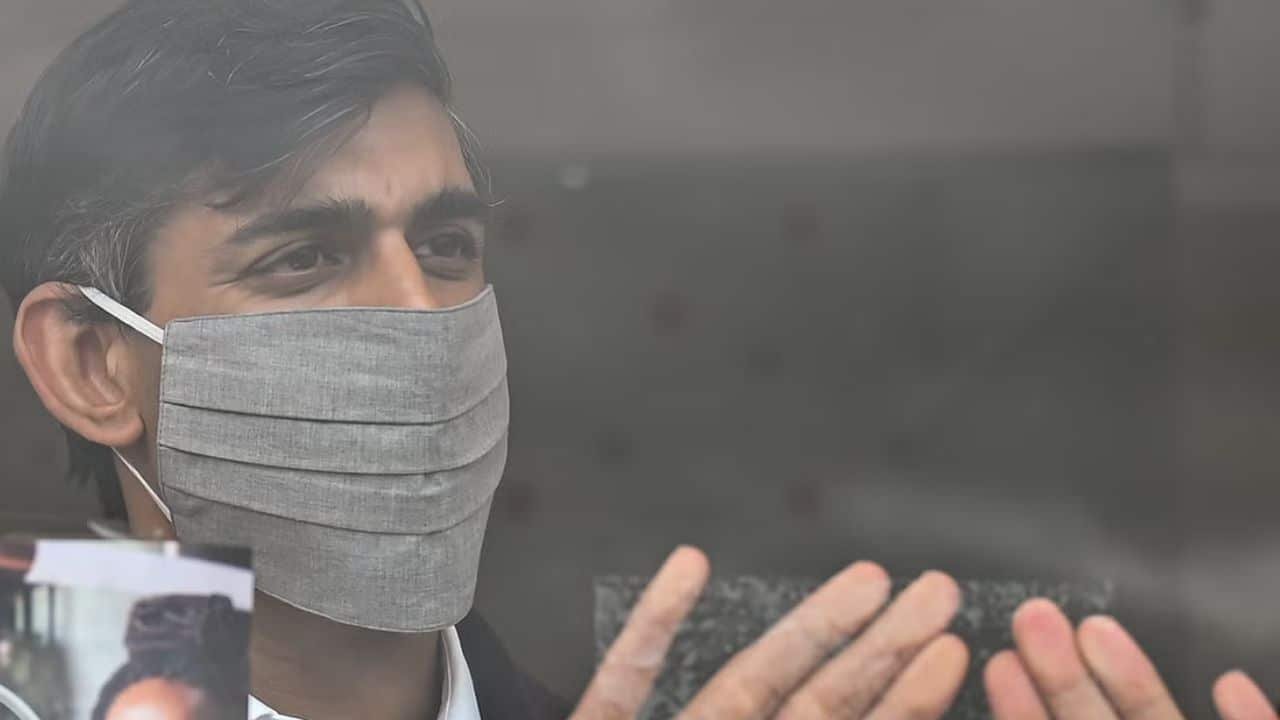
    A recent inquiry into Britain’s handling of the Covid-19 pandemic has revealed that Rishi Sunak believed that the government should “just let people die” rather than impose a second national lockdown.

    The concerning statement by Rishi Sunak was quoted in a hearing on Monday about UK’s handling of the Covid-19 pandemic that shut down large sections of the economy and killed more than 220,000. The explosive claim was made by Patrick Vallance, the former chief scientific adviser to the government. He claimed that the then-finance minister Sunak said during a meeting with then-prime minister Boris Johnson, that the government should “just let people die” rather than impose a second national lockdown.

    Vallance noted this down in a meeting in his diary on October 25, 2020, which was presented to the inquiry on Monday. The incident was relayed to him by Dominic Cummings, Johnson’s most senior adviser during the pandemic, relayed to Vallance what he had heard at the meeting.
    Vallance quoted Cummings in his diary as saying: “Rishi thinks just let people die and that’s okay. This all feels like a complete lack of leadership.”
    According to a spokesperson for Sunak, the prime minister would set out his position when he gives evidence to the inquiry “rather than respond to each one in piecemeal”

  • Geniuses behind mRNA covid vaccines to receive Nobel Prize

    Geniuses behind mRNA covid vaccines to receive Nobel Prize

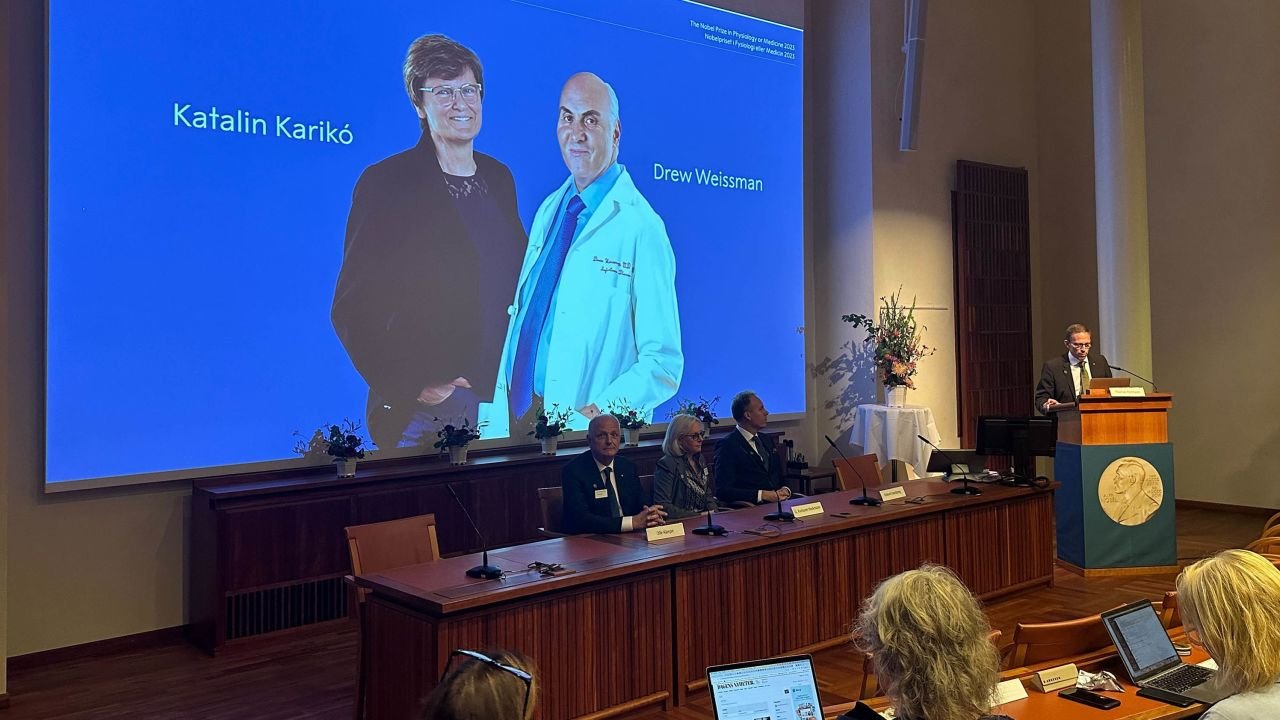
    Katalin Kariko from Hungary and American-born Drew Weissman have won the 2023 Nobel Prize in Physiology or Medicine for their research that paved the way for the first mRNA vaccines against COVID-19, made by Pfizer and Moderna.

    The Nobel Prize committee announced the winners in Sweden on Monday.

    “The laureates contributed to the unprecedented rate of vaccine development during one of the greatest threats to human health in modern times,” the jury said in Sweden’s capital Stockholm on Monday.

    Professor at Sagan’s University in Hungary and an adjunct professor at the University of Pennsylvania, Katalin Kariko researched mRNA along with Drew Weissman at the University of Pennsylvania.

    Their prize will include a diploma, a gold medal and a $1 million cheque on December 10 in Stockholm. That day will also mark the death anniversary of Alfred Nobel, the scientist who created the prize in his last will and testament.