Tag: COVID-19 pandemic

  • Detection of COVID-19 in students adds to second wave fears

    Detection of COVID-19 in students adds to second wave fears

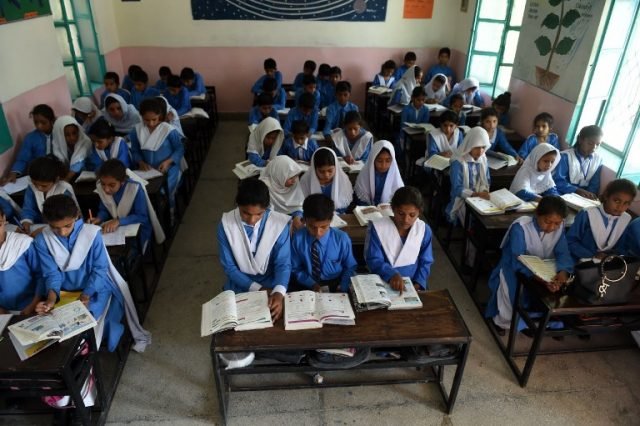
    Two more educational institutions in Islamabad have been sealed by the district health administration after the detection of COVID-19 cases among five students, fueling the outbreak’s second wave fears.

    In August, the government lifted most lockdown restrictions, which had come following a significant drop in new coronavirus cases. Federal Education for Minister Shafqat Mahmood had announced the re-opening of educational institutions on September 4, since when, at least 29 schools, colleges and universities have been sealed in the federal capital alone.

    The cases were reported despite the authorities concerned ensuring that necessary measures were taken ahead of the much-awaited re-opening of educational institutions.

    While it was earlier speculated that coronavirus has ended in Pakistan due to either an effective strategy of the government or multiple other reasons such as herd immunity being achieved, a sudden spike in the number of cases has left experts scratching their heads.

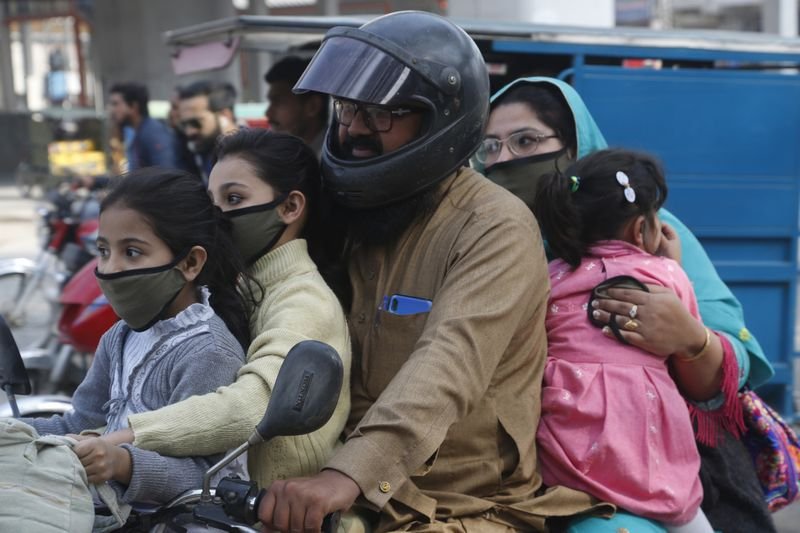
    Amid the rising positivity rate in the country which crossed 2% in September, the Pakistan Medical Association (PMA) has expressed concerns over the looming second wave of coronavirus, highlighting the carelessness in the implementation of standard operating procedures (SOPs) in schools and other public spaces.

    Taking to Twitter, Minister for Planning Development and Special Initiatives Asad Umar, who also chairs the National Command and Operations Centre (NCOC) to deal with COVID-19 in the country, has highlighted the rise in the number of infections as well.

    An analysis of previous data shows that since the easing of lockdown restrictions and reopening of education institutions in Pakistan, there has been a steady increase in the number of new COVID-19 cases.

    However, evidence from around the world has shown there is no correlation between students returning to institutions after coronavirus lockdowns and a rise or fall in new infections.

    According to Insights for Education, 52 countries, including France and Spain, actually saw infection rates rise during the holidays. Some, such as Croatia, have seen cases fall after reopening schools.

    Others, like Hungary and Great Britain, have seen a rise since reopening schools, according to the data — based on UNESCO and World Bank figures alongside rigorous daily media scans over the last six months — although the United Kingdom (UK) infection rate was already trending upwards before schools reopened.

    Overall, the picture is so varied that a link between schools and coronavirus transmission cannot be proved, the report suggested. Other factors, including the country’s health system capacity and economic openness and the robustness of its testing and tracing system, must be considered. 

    By the time this report was filed, Sindh had the highest number of infections and deaths in Pakistan — 140,997 and 2,566, respectively — followed by Punjab with 101,237 positive cases and 2,277 deaths.

    The total number of cases in the country stood at 321,218 with 305,395 recoveries.
  • COVID-19: Five more educational institutions sealed in Islamabad

    Five more educational institutions have been shut down in Islamabad after cases of coronavirus emerged there, as experts have already warned of a second wave of the virus during winter.

    As per reports, the notification to seal educational institutions was issued by the district health officer and a circular has also been released to seal the concerned departments of Namal University due to a surge in coronavirus cases.

    The circular stated that two virus cases have been reported in Islamabad Model School in G-6/1-3 and two cases were also reported in a private school in the city’s G-11/4 area.

    Two cases each have been reported in two private colleges at H-8/1 and H-8/4, as per the circular.

    Furthermore, 15 coronavirus cases have also been reported in a private school in I-9/3.

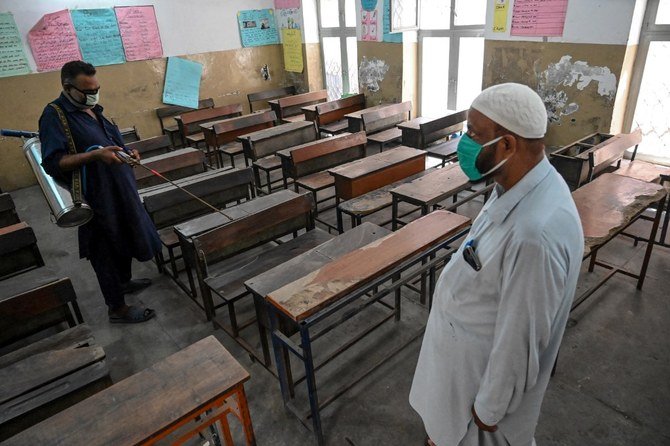
    The affected educational institutes have been directed to disinfect their buildings after closing their locality.

    Federal Minister for Science and Technology, Fawad Chaudhry, also suggested that political parties should postpone rallies and processions for three months amid fears of a second Covid-19 wave in the country.

    Earlier today, the National Command and Operations Centre (NCOC) issued standard operating procedures (SOPs) for marriage halls as cases of the pandemic continue to increase across the country.

  • British-Pakistani millionaire and owner of 61 Papa John’s franchises involved in fraud?

    British-Pakistani millionaire and owner of 61 Papa John’s franchises involved in fraud?

    A multi-millionaire British-Pakistani owner of the Papa John’s restaurants in the United Kingdom (UK) has denied allegations that he took more than £250,000 of taxpayers’ money in cash by claiming fake ‘Eat Out to Help Out’ meals during the British government scheme that lasted for five weeks from August to September.

    Eat Out to Help Out aimed to help protect the jobs of 1.8 million employees in the hospitality industry by encouraging people to return to local eateries in times of COVID-19.

    A British daily, the Daily Mail, had alleged that Raheel Choudhary, who owns 61 Papa John’s franchise restaurants across the UK, instructed staff to record thousands of fake ‘Eat Out to Help Out’ entries while the government scheme — funded by the taxpayers — was running.

    Originally from Lahore, the self-made millionaire is the largest UK franchisee of the United States’ (US) pizza giant. He has been hailed as a success story and the poster boy of the famous pizza chain for his hard work that took him from working with his dad in a laundrette to becoming a franchisee giant.

    Choudhary currently employs above 800 people in his business and didn’t lay off any staff member during the COVID-19 pandemic.

    Papa John’s said it has launched a probe into the franchise owner over allegations regarding the Eat To Help Out discount deal. It has been alleged that Choudhary’s most restaurants were takeaway or delivery only, hence there were no seatings available.

    The paper alleged that most of Choudhary’s restaurants were not eligible for the offer – which required diners to eat in – because they were collection and delivery joints only, and that Choudhary promised his managers bonuses for putting in large numbers of fake orders, Geo reported.

    “Like so many industries this year, hospitality has been hit hard by coronavirus restrictions. Of my 61 franchises, 40 have seating capacity and we implemented the ‘Eat Out to Help Out’ scheme in all of those 40 stores from Monday to Wednesday throughout August. All customers who benefited from the scheme ate in stores and we are confident that we were fully compliant with the criteria set by the UK government. Total sales from the scheme accounted for 6% of our August turnover,” the report quoted Choudhary as saying.

    “When the government’s scheme ended, we followed up with our discount offer in September. We are pleased that customers have been able to take advantage of these opportunities to make savings at a difficult time, and we are determined to continue offering customers the best deals possible”.

    He said that the claims published in some right-wing press were not true as additional seating was added to 10 of the venues throughout August to support demand for the ‘Eat Out’ scheme.

    He explained that the paper published false information as the value of the Eat Out claim vouchers was £185,015, not £250,000 equating to 32 claims per day for each of the participating stores, and added that the paper focused on his Tunbridge Wells restaurant where the total claim for 13 days was £6,825.00 (daily average value of £525.00) with additional seating placed in an adjacent unit in addition to the waiting bench in the 1,500 sq feet main store.

    Choudhary, who continues to deny the allegations that he misused the scheme, says that Papa John’s was investigating the allegations and “we are cooperating fully with the investigators”.

  • Restaurants, marriage halls majorly contributing to coronavirus spread

    Restaurants, marriage halls majorly contributing to coronavirus spread

    Six marriage halls and 103 restaurants were sealed in Karachi for violating coronavirus SOPs. 

    According to the National Command and Operation Centre (NCOC), six marriage halls and 103 restaurants were sealed in the port city over neglecting coronavirus SOPs.

    Federal Minister for Planning and Development and Chairman NCOC, Asad Umar said indoor restaurants and marriage halls appear to be majorly contributing to the COVID-19 spread.

    “NCOC today has directed all provinces and federating units to crack down on SOPs violations in these places, the minister said in his tweet. We must not allow the irresponsible behavior of some to put the health of everyone at risk,” he said further. 

    On Thursday, authorities in Karachi had also announced a micro smart lockdown in various parts for two weeks after cases of COVID-19 increased in the city.

  • Educational institute in Islamabad sealed after coronavirus cases emerge

    Educational institute in Islamabad sealed after coronavirus cases emerge

    An educational institute in Islamabad has been sealed after the emergence of the coronavirus cases, confirmed the National Command and Operation Centre (NCOC) on Tuesday.

    As per details, the institution was sealed after 16 coronavirus cases were reported. Meanwhile, contact tracing is currently underway to contain the spread of the deadly virus.

    Educational institutes across Pakistan have reopened today (Sept 15) after nearly a six-month-long break due to the pandemic.

    Earlier in the day, Federal Minister for Education Shafqat Mahmood welcomed the students and advised them to follow all the SOPs (standard operating procedure) 

  • Is coronavirus ending in Pakistan?

    Is coronavirus ending in Pakistan?

    The first three weeks of June saw not only a rapid spread of the new coronavirus but deaths attributed to the COVID-19 also stood at around a daily average of 100.

    While the country, since the last week of June, has witnessed a significant decrease in the number of coronavirus infections amid conflicting claims regarding what has led to the drop, Pakistan has an optimistic recovery rate as 67.5% of people who had contracted the virus have so far recovered.

    While it is still unclear if the virus has already peaked in Pakistan or not, testing, active cases and the recovery rate are the major factors proving helpful in estimating not only the spread of the virus but also the pandemic situation.

    So far, July hasn’t been as bad as last month as government statistics from the first two weeks show there has been an increase in COVID-19 recoveries while the number of new cases has also dropped significantly.

    While the reason behind the sudden drop still remains unclear as government boasts of its successful strategy and experts attribute the decline to Pakistanis’ better immunity due to exposure to various vaccinations, it cannot be denied that the drop has been led to also because of lower testing as compared to the month of June.

    People are realising that they would recover if they have mild symptoms and only need to isolate themselves without actually heading out to get tested, surveys suggest.

    Special Assistant to Prime Minister (SAPM) on Heath Dr Zafar Mirza has also confirmed that not many people are voluntarily showing up to get tested anymore. “We are unable to conduct as many tests as we were earlier, despite having a daily capacity 60,000. Pakistan has set up more than 125 labs for COVID-19 testing but we need human resources to run those labs as the testing capacity needs to continuously be enhanced.”

    Meanwhile, a majority of people are also making use of telehealth services by consulting their doctors over the phone or contacting the government’s coronavirus helpline (1166). According to a doctor working at a COVID-19 helpline centre, she alone receives around 40 calls a day for medical advice.