Tag: COVID-19 pandemic

  • Fourth wave of coronavirus ‘could emerge in Pakistan in July’, warns Asad Umar

    Minister for Planning, Development and Special Initiatives Asad Umar has warned that a fourth wave of coronavirus could emerge in Pakistan in the month of July.

    “Reviewed the artificial intelligence based disease modeling analysis today in NCOC,” wrote the minister in a tweet.

    “In the absence of strong SOP enforcement and continued strong vaccination program, the 4th wave could emerge in Pakistan in July,” he added.

    The minister concluded by advising people to follow Covid-related SOPs, “Please adhere to sop’s and vaccinate as soon as possible.”

    As per the national tally on Thursday, Pakistan recorded 1,052 new cases of Covid-19 , while 44 people lost their life to the deadly virus.

  • PM Khan asks Bill Gates to set up a Microsoft incubation lab in Pakistan

    PM Khan asks Bill Gates to set up a Microsoft incubation lab in Pakistan

    Prime Minister Imran Khan (PM) encouraged Microsoft to expand its footprint in Pakistan and set up a Microsoft incubation lab in the country.

    PM spoke with Bill Gates, co-chair of the Bill & Melinda Gates Foundation (BMGF), in a telephonic conversation on Thursday.

    During the phone call, views were exchanged on the ongoing polio eradication campaign in the country as well as on Pakistan’s response to the public health challenges arising from the Covid-19 pandemic.

    PM Khan reaffirmed that polio eradication remained a key national priority for the government and earnest efforts were afoot to further intensify the anti-polio campaign across the country, despite the challenges imposed by the Covid-19 crisis, in order to achieve a polio-free Pakistan.

    Bill Gates expressed his appreciation for PM Khan’s leadership for this national cause. He added that while progress is encouraging, keeping up pressure will be the key to ending transmission for good.

  • Study shows AstraZeneca, Pfizer vaccines effective against Delta Covid-19 variants

    Study shows AstraZeneca, Pfizer vaccines effective against Delta Covid-19 variants

    COVID-19 vaccines made by AstraZeneca and the Pfizer-BioNTech alliance remain broadly effective against Delta and Kappa variants of the COVID-19 which were first identified in India, according to a scientific study.

    According to the details, the study by Oxford University researchers, published in the journal Cell, examined the ability of antibodies in the blood from people, who were vaccinated with the two-shot regimens, to neutralize the highly contagious Delta and Kappa variants, a statement said.

    “There is no evidence of widespread escape suggesting that the current generation of vaccines will provide protection against the B.1.617 lineage,” the paper said, referring to the Delta and Kappa variants by a commonly used code.

    However, the concentration of neutralising antibodies in the blood was somewhat reduced, which may lead to some breakthrough infections, they warned.

    Last week, an analysis by the Public Health England (PHE) showed that vaccines made by Pfizer Inc (PFE.N) and AstraZeneca offer high protection of more than 90% against hospitalization from the Delta variant. 

    “We are encouraged to see the non-clinical results published from Oxford and these data, alongside the recent early real-world analysis from Public Health England, provide us with a positive indication that our vaccine can have significant impact against the Delta variant,” AstraZeneca executive Mene Pangalos said in a separate statement.

    The Delta variant is becoming the globally dominant version of the disease, the World Health Organization’s chief scientist said on Friday.

    The Oxford researchers also analysed reinfection patterns in people who had previously had COVID-19. The risk of reinfection with the Delta variant appeared particularly high in individuals previously infected by the Beta and Gamma lineages that emerged in South Africa and Brazil, respectively.

    By contrast, previous infection with the Alpha, or B117, variant first detected in Britain, conferred “reasonable” cross-protection against all variants of concern, lending itself as a template that next-generation vaccines could be molded on.

    “B117 might be a candidate for new variant vaccines to provide the broadest protection,” the researchers said.

  • Karachiites ignore Covid-19 protocols, as people head to beaches to beat the heat

    Karachiites ignore Covid-19 protocols, as people head to beaches to beat the heat

    Pakistan has shown great progress in its fight against the coronavirus pandemic.

    However, Karachiites seemed to have completely ignored the government’s call for maintaining precautions during the third wave. Videos on social media show how crowded the beaches were on the weekend.

    People gathered at the beach to beat the heat. Temperatures regularly hover around 40 degrees and the humidity only makes it worse.

    Pakistan has only fully vaccinated 3.4 million people. The government has asked citizens to avoid crowds and maintain social distancing.

    The total number of Covid-19 cases in the country are 949,175 with positivity rate of 2.6 per cent.

  • Pakistan reports lowest Covid-19 positivity rate in 2021

    Pakistan reports lowest Covid-19 positivity rate in 2021

    Pakistan has reported the lowest Covid-19 positivity rate so far this year. During the last 24 hours, the positivity rate was recorded as 1.9 per cent.

    According to the National Command and Operation Centre (NCOC), 54,647 tests were conducted during this period of which 1,043 samples came back positive.

    Earlier this week, for the first time since February 15, Pakistan reported less than 1,000 cases.

  • Covid-19 vaccine shortage is temporary, says Dr Faisal Sultan

    Special Assistant to the Prime Minister (SAPM) on Health Dr Faisal Sultan while addressing a press conferences said that the government has secured sufficient vaccine doses in the month of June to ramp up the vaccination drive in the country, Associated Press of Pakistan has reported.

    “There are more than 2,000 vaccination centres in the country and the number of visitors varies. So there may be a shortage of vaccines in some centres,” he said, adding that the shortage of vaccine in some centres is only temporary.

    Dr Faisal further said, “We have two million doses available and vaccination will continue to protect citizens from carrying coronavirus.” He assured that the vaccine situation would improve after June 20 as more vaccines would reach Pakistan by then.

    As per the national tally on Wednesday, total active Covid-19 cases were 39,905, while 1,038 more people tested positive for the deadly virus and 2,016 people recovered from the disease during the last 24 hours.

  • Expats protest, demand Pfizer vaccines ‘only’

    Expats protest, demand Pfizer vaccines ‘only’

    Several overseas Pakistanis protested outside the Mass Vaccination Centre at F-9 Park in Islamabad, on Monday. The expats demanded that they should only be administered the vaccine manufactured by Pfizer, reports The Express Tribune.

    The staff present at the vaccination centre stated that they could only administer the vaccine provided by the government which was not what the expats were demanding.

    As a result of this, expats protested by holding placards and demanded that the prime minister should ensure the availability of Pfizer vaccine for them.

    They maintained that Overseas Pakistanis are a source of billions of dollars coming into the country yet they are being humiliated over a vaccine. They demanded a date be announced for them so that they could get vaccinated.

    Earlier, it had issued guidelines that only a limited amount of Pfizer vaccine was available in Pakistan, therefore, only Haj pilgrims and student and work visa holders for foreign countries would be immunised with it.

  • Saudi Arabia to ban unvaccinated individuals from entering malls

    People who have not been vaccinated will not be allowed to enter malls in Saudi Arabia, Ministry of Commerce Spokesman Abdulrahman Al-Hussein said on Sunday. The decision will come into effect from August 1, ARY News has reported.

    Hussein added that the dressing rooms have reopened and touchscreens are now allowed to be used in shops, malls and commercial centres while ensuring continuous disinfection and social distancing.

    Saudi Arabia announced on Saturday it will allow 60,000 vaccinated residents of the kingdom to perform the annual Hajj.

    The Saudi Hajj Ministry said this year’s pilgrimage would be “open for nationals and residents of the kingdom, limited to 60,000 pilgrims,” according to the official Saudi Press Agency.

  • Why some people get side effects after COVID-19 vaccines?

    Why some people get side effects after COVID-19 vaccines?

    Temporary side effects including headache, fatigue and fever are signs the immune system is revving up. These side effects are a normal response to vaccines.

    Dr. Peter Marks, the U.S. Food and Drug Administration’s vaccine chief said,  “The day after getting these vaccines, I wouldn’t plan anything that was strenuous physical activity,” Peter experienced fatigue after his first dose.

    As per details, the immune system has two main arms, and the first kicks in as soon as the body detects an outsider. White blood cells crowd themselves to the site, provoking inflammation that’s responsible for chills, soreness, fatigue and other side effects.

    This rapid-response step of your immune system tends to fade with age, one reason younger people report side effects more often than older adults. Also, some vaccines simply cause more reactions than others.

    Read More: Lahore gets its first drive-through vaccination centre

    Everyone reacts differently. If you didn’t feel anything a day or two after either dose, that doesn’t mean the vaccine isn’t working.

    The jabs also set in motion the second part of your immune system that will give the real protection from the virus by producing antibodies.

    Another nuisance side effect: As the immune system activates, it also sometimes causes temporary swelling in lymph nodes, such as those under the arm.

    Women are encouraged to schedule routine mammograms ahead of COVID-19 vaccination to avoid a swollen node being mistaken for cancer.

    After hundreds of millions of vaccine doses administered around the world and intense safety monitoring, a few serious risks have been reported.

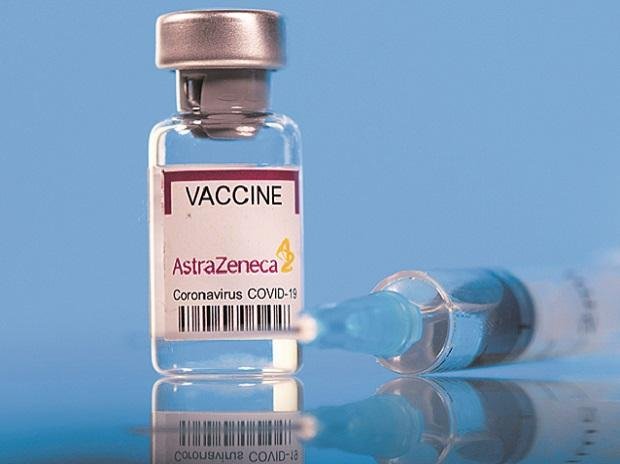
     A tiny percentage of people who got vaccines made by AstraZeneca and Johnson & Johnson reported an unusual type of blood clot. Some countries reserved those shots for older adults but regulatory authorities say the benefits of offering them still outweigh the risks.

    People also rarely have serious allergic reactions. That’s why you’re asked to stay at the site for about 15 minutes after getting any type of COVID-19 vaccine so that any reaction can be promptly treated.

    Finally, authorities are trying to determine whether temporary heart inflammation that can occur with many types of infections also might be a rare side effect after the mRNA vaccines, the kind made by Pfizer and Moderna. U.S. health officials can’t yet tell if there’s a link but say they’re monitoring a small number of reports, mostly male teens or young adults.

  • Punjab considers blocking SIM cards of unvaccinated citizens

    In a meeting chaired by Punjab Health Minister Dr Yasmin Rashid regarding the Covid-19 situation in the province, several recommendations were given by officials to speed up the vaccination process, SAMAA has reported.

    During the meeting, the option to block the SIM cards of citizens who refuse to get themselves vaccinated against the coronavirus was also considered. Health officials also recommended in the meeting to ban the entry of unvaccinated citizens to shopping malls and restaurants.

    “It is difficult to get rid of the coronavirus pandemic without vaccination,” said Dr Yamin Rashid during the meeting.

    Meanwhile, National Command and Operation Centre (NCOC) chief Asad Umar on Wednesday announced that 10 million doses of coronavirus vaccines have been administered in Pakistan so far.