The Sindh government has suspended a senior health official over out-of-turn vaccination of Pakistan Muslim League-Nawaz (PML-N) leader and former Sindh governor Muhammad Zubair’s daughter and son-in-law against COVID-19.
As per the details, Sindh Health Minister Dr Azra Pechuho took notice of the incident after the couple posted on social media pictures of them receiving the vaccination shots.
Reports quoted provincial government sources as saying that Karachi East Deputy District Health Officer Dr Anila was suspended as coronavirus vaccines were administered to acquaintances at other centres as well.
A three-member committee has been formed to report its findings to the Sindh health minister within 72 hours.
“If Mohammad Zubair had his family administered the vaccines privately then there is nothing wrong in it,” Information Minister Shibli Faraz told SAMAA TV.
“But if it were the government-procured vaccines, then this was not the right thing to do,” he added.
Earlier, a team of the National Command and Operation Centre (NCOC) led by Dr Faisal Sultan also met Sindh health officials and Planning Minister Asad Umar on Sunday.
It directed the Sindh government to only vaccinate frontline health workers for now.
The Sindh government on Friday had announced launching COVID-19 vaccination programme in 10 districts of the province and unveiled a detailed phase-wise plan to inoculate people, beginning with 170,000 frontline health workers.
According to Dawn, In addition to the 82,359 doses to be received from the Centre, the provincial government also shared its plan for the procurement of the vaccine on its own though federal authorities are yet to respond to its request for permission for the procurement.
“We are starting the vaccination from Wednesday [next],” Sindh Information Minister Syed Nasir Hussain Shah at a press conference. He was accompanied by a member of the Sindh vaccination taskforce and provincial lawmaker Qasim Soomro.
Shah said 10 districts had been identified in Sindh where COVID-19 jabs would be provided. “This programme will be initiated in all the seven districts of Karachi along with Hyderabad, Jamshoro and Shaheed Benazirabad.
Pakistani-Russian scientist Prof Dr Jan Alam has introduced the media to a mineral-based medicine invented by him for the treatment of coronavirus.
According to reports, based on nanotechnology, Minerolytevir is a 5th generation medicine that has been registered by the Drug Regulation Authority of Pakistan (DRAP).
Addressing a press conference at the National Press Club, Dr Jan claimed that the medicine has no side-effects, is completely safe for human beings, and can even be used by a day-old child.
“A patient diagnosed with COVID-19 can be cured within 10 days by using this medicine. Patients on ventilatory support can be saved by using it through nebulisation. Just one mist of spray on the face and other body parts saves a person for 3-4 hours in these crucial days of the pandemic,” he claimed.
The Russian professor said he was the first scientist in the world to have invented a medicine for the treatment of coronavirus and claimed that numerous patients who had used his medicine had been cured, both in Pakistan as well as in Russia. He also requested the government to introduce his medicine in government hospitals to save precious lives, saying he has also invented 20 medicines, including that for the treatment of cancer.
Dr Jan Alam has been given top national awards by the Russian government for his services and inventions in the field of medicine. He won the award for the Best Scientist in Pharmacology in Geneva in 2018, in Paris in 2019 Paris, and for his Minerolytevir in 2020, again in Paris.
The Human Rights Commission of Pakistan (HRCP) has expressed serious concern over the federal government’s decision to ask provinces and the private sector to import the coronavirus vaccine.
As per the details, with the Cabinet Committee on Procurement of COVID-19 Vaccine briefing Prime Minister (PM) Imran Khan on efforts being made to engage more pharmaceutical companies for procurement, HRCP has said that the government’s decision in this regard was not the right step.
“It is the responsibility of the federal government to provide vaccines at heavily subsidised rates to the poor masses which form a majority of the country’s population,” read a statement by the rights watchdog.
“The people of lower-income groups are struggling hard to survive the unprecedented economic crisis unleashed by misplaced priorities and pro-rich policies of the federal government. The foreign aid received and funding allocated for fighting the pandemic must be used transparently and spent on vaccinating the citizens,” the HRCP said.
It also expressed concern after reports appearing in the electronic and social media that some of the agents in Karachi had started pre-booking of AstraZeneca vaccine for Rs 20,000 per dose.
Earlier, the PM was informed that two vaccines had been registered for emergency use and efforts for fast-track registration of more vaccines were under way.
He was also told that that the vaccine would be available within the first quarter of the current year.
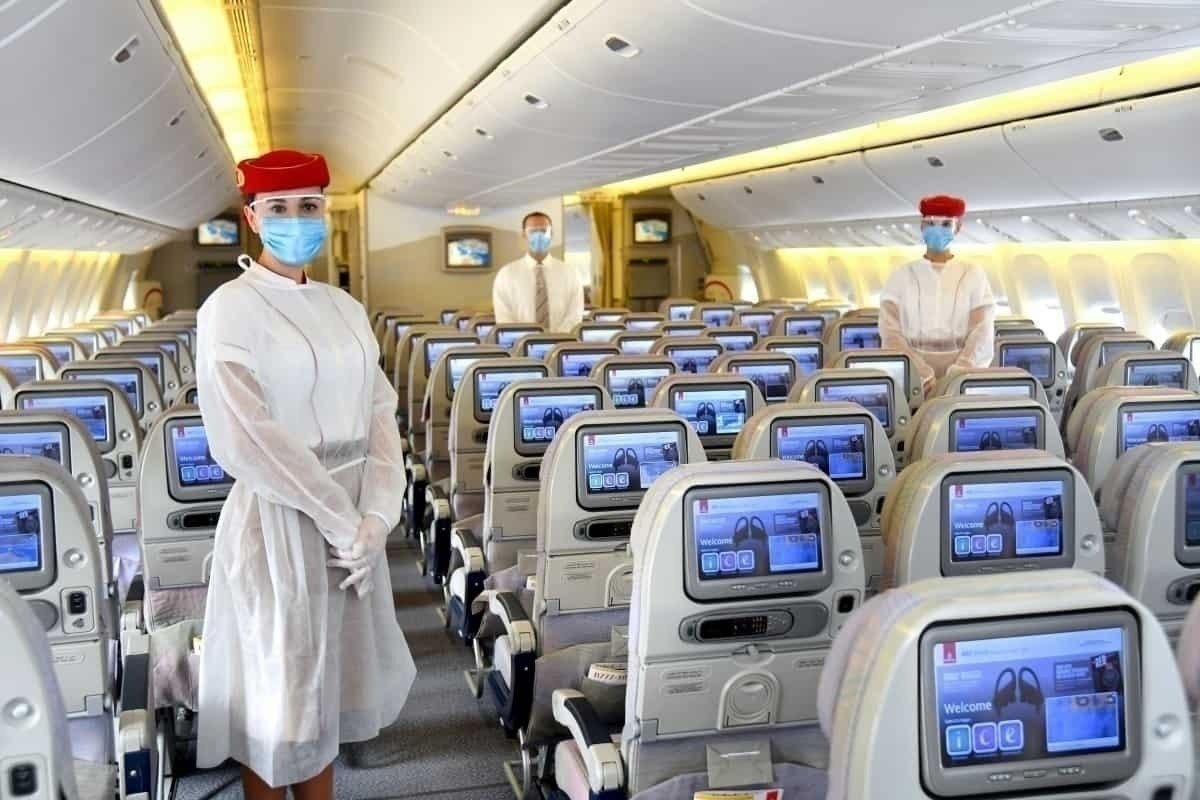
An Indonesian man booked an entire flight to keep himself and his wife safe from COVID-19.
Richard Muljadi, a Jakarta-based socialist and his wife shared pictures of themselves sitting in an empty aircraft on social media. The couple was travelling from Jakarta to Bali on a Batik Air flight.
Though Muljadi did not reveal how much he paid for the private flight, he said that it was “still cheaper” than a private plane.
“After I’d booked as many seats as possible, it was still cheaper than chartering a private jet,” read the caption of one the photos.
Richard said that he and his wife, Shalvynne Chang, were “super paranoid” about getting infected with the virus.
“Had to make sure no one else (was on) this flight. We ain’t flying unless it’s just us,” he said in another caption.
Lion Air Group, which operates Batik Air, confirmed Richard and his wife were the only passengers on the flight. However, the company added that Richard had only booked two tickets in his name, contradicting his claim.
Pakistan has decided to purchase 1.2million doses of a Chinese vaccine, developed by China’s state-owned company Sinopharm, amid a worsening coronavirus outbreak across the world.
According to Science and Technology Minister Fawad Chaudhry, the vaccine will be available in the first quarter of 2021 and it will be administered to frontline health workers in the first phase.
“The Cabinet Committee has decided to initially purchase 1.2 million doses of the vaccine from the Chinese company Sinopharm, which will be provided free of cost to frontline workers in the first quarter of 2021,” the federal minister wrote on Twitter.
Meanwhile, China has approved its first homegrown coronavirus vaccine, developed by state-owned pharmaceutical giant Sinopharm.
CNN reported that the vaccine is 79.34% effective as per the interim analysis of Phase 3 clinical trials. China has drastically scaled up its vaccine emergency use program in recent weeks.
Since December 15, the Chinese government has administered more than 3 million vaccine doses on “key groups” in the population, Zeng Yixin, vice-minister of China’s National Health Commission, said at a news conference.
According to the report, fewer than 0.1 per cent developed a light fever, and about two people per million developed “relative serious adverse reactions” such as allergies.
Beijing Biological Products Institute Co., a Sinopharm subsidiary, has said that interim results show the Sinopharm vaccine is safe and people who received two doses produced high-level antibodies.
The National Command and Operations Centre (NCOC) announced on Monday that the highest COVID-19 occurrence has been recorded in Khyber Pakhtunkhwa’s city of Abbottabad and the city of lights Karachi for the month of December.
The positivity rate is obtained by dividing the number of people who test positive for the coronavirus with the total number of tests conducted in 24 hours.
As per reports, Abbottabad’s positivity rate on Sunday was 25.5% and Karachi has been reporting positivity rate of above 12% in the last 10 days.
The NCOC said the national positivity rate, however, has decreased in the past few days. The month’s highest coronavirus ratio was recorded at 9.71% on December 6 while the number stood at 6.13% on Sunday.
The country has reported 1,974 cases in the past 24 hours while 55 people lost their lives and 1,760 recovered. Pakistan has reported 473,309 cases so far.
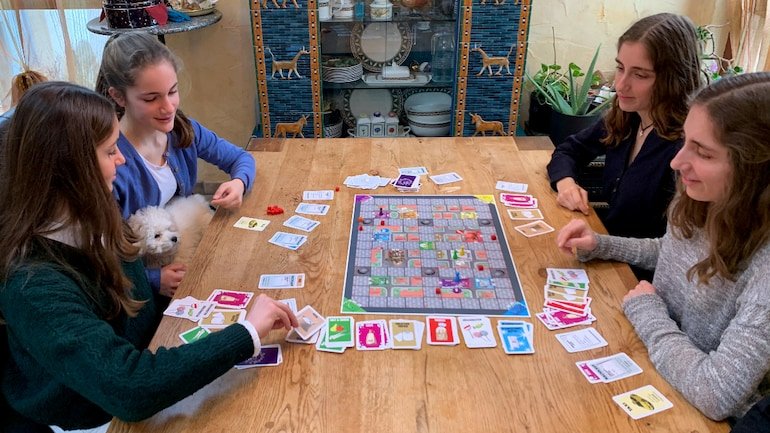
Four sisters in Germany invented a coronavirus-themed board game during the first lockdown in the country. Corona is the name of the board game that can be played by four players at one time.
The players compete to purchase all the groceries on a shopping list for an elderly neighbour who is shielding against the virus.
The players collect and swap game cards. The winner is the one who delivers all the items first. The obstacles along the way include bump into the virus that would send you into quarantine, or finding that hoarders have already snapped up all the pasta or toilet rolls.
“The basic principle is one of solidarity. But each of the players can decide to cooperate with the others or make thing harder for them by blocking their path with viruses,” Sarah told Reuters TV from their family home in the western city of Wiesbaden, Germany.
The news of new coronavirus strain came to light when a stricter level of lockdown was imposed in different parts of south-east England to curb the rapid spike in infections.
Amid fears of the new strain of the coronavirus spreading quickly in the UK, many countries have imposed a temporary ban on all flights to and from the UK. Pakistan has also banned flights from England.
The news of new strain of COVID-19 is causing panic and fear and everyone is searching for answers.
Here’s what you should know:
Why do we have a new strain of coronavirus?
The short answer to this question is that because viruses “evolve”. Just like cell-based life, we get new strains of viruses because of some genetic changes caused due to the evolution of the virus.
What is the new COVID-19 strain?
The new coronavirus strain has been labelled “B.1.1.7”. Reportedly, the new strain of the virus can lead to a “quicker spread” (scientists are still looking for more evidence) of COVID-19.
Scientists say it is about 40%-70% more transmissible. However, there is no evidence that this new strain of the virus is “more lethal”. B.1.1.7 has far more mutations than in any previous variant of the Sars-Cov-2 virus analysed since the pandemic started, but scientists are also wondering how it evolved so fast.
According to some experts, it is entirely too early to make a definitive conclusion.
Will vaccine work against the new strain?
Scientists are hopeful that the vaccines will work against this new strain. This is because the parts that Pfizer/BioNtech, Moderna and Oxford/Astrazeneca shots target has not changed much.
While COVID-19 has been creating havoc, unfortunately, in all parts of the world, it has had a massive impact in most developing countries, choking up the already shaking health and welfare systems.
In Pakistan, the outbreak has caused an economic stoppage that amounts to a great loss, where the graph for unemployment shot up high from the very beginning of this pandemic. Not to forget, the worst-hit out of the country’s total population are the daily wage earners and those who inhabit unfortunately in the urban slums. Moreover, while the major parts of the city and larger groups were attended to and received help, the disabled were marginalised a great deal.
For years, Pakistan as a nation has marked itself in the top three charitable countries around the globe. Local charities have been playing a key role in curtailing the economic burden on the government by providing meals, medical assistance and other key services to low-income groups.
In order to assist and form a chain reaction with the said cause during these unreasonably trying times, PepsiCo Foundation — the philanthropic wing of the organisation — declared and extended support for the unemployed people and partnered up with the best charitable organisations under the umbrella of the ‘Millions of Meals’ initiative. The campaign was envisioned on such a large scale and designed to complete the aim of distributing an astonishing number of 13 million meals with over 500 volunteers and countless supporters, to the communities most affected by the COVID-19 outbreak.
In order to assist the poor survive the harshness of lockdowns, unemployment and hunger caused due to economic and financial challenges, Pepsi joined hands with nine distinct charities. Among several others, targeting the lesson of ‘inclusivity’ is where NOWPDP was collaborated with, that caters to the differently-abled people in the society.
The idea was to empower millions of dreams, despite the odds and reach out all corners of the country, with a vision of providing immediate emergency disaster relief for the many vulnerable, neglected parts of Pakistan. NOWPDP helped in taking forward the initiative and making sure no one gets left behind specially those who are limited in their physical ability.
NOWPDP operates in the development sector with a focus on inclusion through empowerment of persons with disabilities. As mentioned above, with the pandemic spreading its shadow all over, the most affected were the differently-abled who were now absolutely clueless and helpless in terms of taking care of their needs.
Their agenda is to help people with disabilities and for them to be an important stakeholder in the bigger picture, whether it is in regard to education or employment, as they emphasise on their big idea, “A Part. Not Apart”. In addition, what fuels the members of this organisation, include; empathy, action and social justice. Persons with disabilities (PWDs) have equal access to opportunities and are an integral part of society. Their aim is to promote an inclusive society through holistic and sustainable endeavors in the areas of education and economic empowerment.
Supported by PepsiCo, NOWPDP took on the responsibility of reaching out to thousands of vulnerable households. They reached out to the differently-abled residing in Hyderabad, Sujawal, Tando Allah Yar, Tando Muhammad Khan, Kot Ghulam Muhammad, Nawabshah, Sukkur, Larkana and distributed 171,675 meals altogether. For this, a group of people was specially brought together to form a call centre at NOWPDP during pandemic times to address and facilitate those in need. This effort was catering specially to the differently-abled and the deserving, where employees were to get the database together of those residing in various cities of Pakistan.
Babar Iqbal, a call centre agent at NOWPDP said, “Upon calling the differently-abled person, we are asked if they will be getting ration. When they are told all that it entails, the response and most importantly the happiness in their voice along with prayers is something that can’t be explained in words.”
In addition, while the big cities of Pakistan are catered to by multiple organisations, the ones that get left behind are the differently-abled residing in interior Sindh.
NOWPDP Executive Director Omair Ahmad said, “To achieve economic empowerment for disenfranchised communities, particularly persons with disabilities, it is incumbent on us to take the first step and show a desire, willingness and empathy to ensure that they have access to basic necessities like food and water. Without welfare, empowerment becomes a distant reality, a facade, an unachievable goal, and a dream. Thus, we are grateful to Pepsi for this initiative and understanding the urgency of this need for thousands of persons with disabilities across the country, and promptly extending their support. We hope that this journey on the path of hope will allow millions to achieve their dream of empowerment.
This nation is full of people with a big heart who are ever ready to help those in need. We take great pride in it and this collaboration of PEPSICO and NOWPDP, which has shown us how inclusivity holds sheer importance and how endearing it is to cater to the disabled, is providing them with employment opportunities and assisting them to grow and know there are lots to look after them leaving no man behind when the entire world is at a halt owing to the pandemic. Here’s to more successful collaborations and a wish for phase 2 to take place.