Tag: covid 19

  • 103yo Pakistani becomes one of world’s oldest coronavirus survivors

    103yo Pakistani becomes one of world’s oldest coronavirus survivors

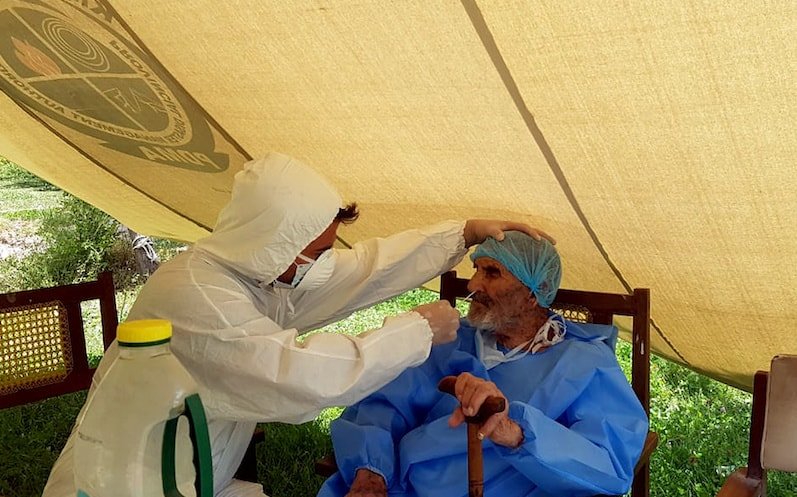
    A 103-year-old man has recovered from COVID-19 in Pakistan to become one of the oldest survivors of the disease in the world, beating the odds in a country with a weak healthcare system, his relatives and doctors said.

    Aziz Abdul Alim, a resident of a village in the mountainous northern district of Chitral, was released last week from an emergency response centre after testing positive in early July.

    “We were worried for him given his age, but he wasn’t worried at all,” Alim’s son Sohail Ahmed told Reuters on the phone from his village, close to the border with China and Afghanistan.

    Ahmed quoted his father as saying that he had been through a lot in life and the coronavirus did not scare him. He did however, not like being in isolation.

    READ: Pakistan’s secret to ‘flattening the curve’

    A carpenter until his 70s, Alim has outlived three wives and nine sons and daughters, said Ahmed, who is himself in his 50s, adding that his father had separated from his fourth wife and is currently married to his fifth.

    Alim also had to be provided with moral and psychological support during his isolation and treatment, Dr Sardar Nawaz, a senior medical officer at the Aga Khan Health Service emergency centre told Reuters on Friday.

    The makeshift centre was set up in a girls’ hostel just weeks before Alim was brought in and is the only one equipped to deal with COVID-19 patients for miles.

    Pakistan has registered more than 270,000 cases of the disease and 5,778 deaths. While the number of people testing positive has dropped over the last month, government officials fear there could be another rise during the Eidul Azha holidays and Muharram.
  • Coronavirus: Pakistan’s secret to ‘flattening the curve’

    According to a report published by The Washington Post on July 19, “Pakistan has flattened its coronavirus curve” as the past several days have seen fewer than 1,500 cases and 40 deaths on an average.

    So far, 5,677 people have succumbed to COVID-19 in Pakistan, which is 2.1% of the total infected population while almost 79% (210,468) patients have recovered.

    The initial estimate of the World Health Organization (WHO) was that the infection fatality rate (IFR) for COVID-19 would be 3.4%, which means that for every hundred cases at three or four people would lose their lives. But as per the Centre for Disease Control and Prevention, the IFR has turned out to be much lower — at a mere 0.65%

    READ: Did COVID-19 peak in Pakistan in June?

    Pakistan’s total number of deaths from COVID-19 in June was 2,835. Since the second week of June, an average of 80 to 100 people had been dying on a daily basis and the same trend continued till June 30. The highest single-day death toll was 153 on June 19.

    So far in July, the highest number of deaths was recorded on the fourth day while the daily death toll within the first week stood at around 80. The trend came down to 60 to 70 deaths a day in the second week and the latest trend suggests up to 30 or 40 COVID-19 fatalities a day.

    Punjab Health Minister Dr Yasmin Rashid says that due to the strict quarantine policy of the provincial government, the virus has not spread as expected. She also says most fatalities are of those who are older than 60 years of age or are suffering from certain other diseases.

    READ: Is coronavirus ending in Pakistan?

    The rate of COVID-19 infections and deaths seems to have dropped significantly in Pakistan but it is an open secret that the number of cases and deaths is also being grossly misreported.

    “I am aware of a few cases in which patients with COVID-19 symptoms were never taken to hospitals and in case of death were laid to rest at large funeral gatherings,” said Love for Data Chief Executive Officer (CEO) Syed Tajamul Hussain. He added that the country hadn’t had a mortality census in a while and it was highly likely that cases were being under-reported amid limited testing capacity.

  • Saudi Arabia honours Pakistani doctor for his work as ‘captain’ of COVID-19 team

    Saudi Arabia honours Pakistani doctor for his work as ‘captain’ of COVID-19 team

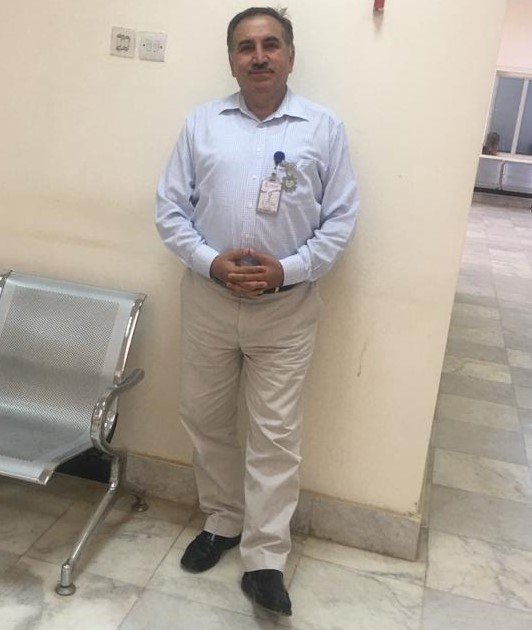
    Saudi Arabia’s Ministry of Health has awarded Pakistani doctor Zia Ullah Khan Dawar a medal to acknowledge his work as one of the ‘captains’ of the country’s COVID-19 team.

    Dawar, a public health specialist, has been residing in Saudi Arabia for the past four years. He worked on programs to stem tuberculosis, dengue fever and malaria. He is now working with the country’s health ministry in Jeddah with a COVID-19 surveillance and data analysis team.

    Speaking to Arab News, Dawar said that it was proud moment for him and the country.

    “Saudi Ministry of Health gave awards to doctors and health professionals in recognition of 100 days of their services in fighting against the virus and I am one of the foreign doctors [awarded]. I am feeling so proud to get the recognition of my services. I come from North Waziristan so it is not only an honour for me but [also for] my area and for Pakistan.”

    “We were working in a mobile team which is a challenging and risky job,” Dawar added. “Whenever any positive case was reported, we immediately had to go to the site and do the needful.”

    Saudi Arabia has reported over 235,000 COVID-19 cases so far.

  • Did COVID-19 peak in Pakistan in June?

    Special Assistant to the Prime Minister (PM) on Health Dr Zafar Mirza on July 1 said that the number of coronavirus cases was rapidly increasing by mid-June but the country was now in a better position than it was two weeks ago in the continuing battle against COVID-19.

    “The ratio of confirmed infections has gone down from 22% to 15% while the number of suspected cases has also decreased,” the premier’s aide said in an interview, adding that the rate of fatalities was also lower than before.

    READ: Govt is grossly under-reporting coronavirus deaths and infections: PM’s task force head

    Dr Mirza maintained that the government was to now determine over the next couple of days if Pakistan had passed the peak of the COVID-19 outbreak or was still only heading towards it. “If the situation remains stable in the coming days and the number of coronavirus cases continues to decrease, it would be good news for us.”    

    While the number of coronavirus cases in Pakistan is steadily declining amid selective lockdowns across the country and an increase in the number of recovered patients, it is not necessarily due to a decline in the rate of infections and an alleged lower testing rate could be the actual reason.

    However, according to official numbers, in June, a total of 140,726 confirmed cases of coronavirus were reported in Pakistan with at least 2,804 deaths.

    The second week of the said month proved to be the worst in terms of infections as 40,604 were reported. The third week was the most deadly as at least 856 people lost their lives to the virus.

    The last week of June saw 24,324 infections while the number of fatalities stood at 591 — 40 more than those recorded in the first week of the same month.

    It merits a mention that while PM Imran Khan and some members of his team, including senior doctors and other health experts, seem to believe that the virus peaked in Pakistan, especially in Punjab, during the second week of June and the curve has now started to flatten, Pakistan on Friday overtook Italy to become the 11th worst affected country from COVID-19.

  • Indian woman delivers baby while standing in queue for COVID -19 test

    Indian woman delivers baby while standing in queue for COVID -19 test

    A 22-year-old pregnant woman in India delivered her baby while standing in the queue for a coronavirus test. According to reports, she was refused admission to the hospital till she cleared the virus test 

    The woman, Palak, was in labour when she arrived at the hospital but was asked to go to the area where tests are done. She could hardly stand and later collapsed delivering the baby on the spot.

    The incident created panic and the medical staff shifted the woman and the newborn to a ward.

    An investigation into the incident has been ordered by the institute while a faculty member, two senior and two junior residents of the obstetrics and gynaecology department have been asked to go off duty.

    The woman’s husband, Raman Dixit, a daily wager, told reporters that Palak was nine months pregnant and labour pains started after which he took her to the hospital.

    “However, staff in the emergency ward of gynaecology did not admit her and told them that she first needed to undergo a COVID-19 test, as per protocol. The test costs Rs1,500 (around PKR 3,000). I was not carrying much cash. I made my wife stand along with a relative in the queue for the COVID-19 test and went home to bring the money. When I returned, I found that my wife had already given birth and was admitted to the ward,” said Raman.

    Dr Srikesh Singh, the spokesperson of the hospital, said that the woman and her baby are doing fine.

    Officiating Director, Prof Nuzhat Hussain, said: “A three-member committee will submit its report on the incident in three days. Till then, the five staff members will remain off duty. The head of obstetrics and gynaecology has been asked to explain why instead of providing emergency care when the woman was in labour pain, she was sent for COVID-19 testing.”


  • 105-year-old Pakistani man recovers from COVID-19

    105-year-old Pakistani man recovers from COVID-19

    A 105-year-old man in Punjab has been discharged from hospital after successfully fighting against COVID-19.

    According to reports, the recovered man has served in the Pakistan Army. Fazal Rauf was tested positive and had been isolated in the hospital since then.

    Rauf was tested for the virus again on Thursday and test results came out negative. He was shifted back to his home on Friday and his condition is stable.

    The number of confirmed COVID-19 cases are 234,482 so far in the country.

  • Employment opportunities for Pakistani doctors, nurses and paramedics in Kuwait under new agreement

    Kuwait has signed a government-to-government bilateral framework agreement with Pakistan to hire its healthcare professionals on a regular basis, Special Assistant to the Prime Minister (SAPM) on Overseas Pakistanis and Human Resource Development (OP&HRD) Sayed Zulfikar Abbas Bukhari has said.

    “We [have] signed an agreement with the government of Kuwait to send an increased number of Pakistani doctors, nurses and paramedics to work there,” Bukhari tweeted.

    He also expressed gratitude to the government of Kuwait for recruiting Pakistani medical professionals on a priority basis. “I thank our Kuwaiti brothers for preferring Pakistani healthcare professionals. This is a big step towards bringing our two great countries further closer,” the SAPM said.

    He also shared the news release of Pakistan’s Embassy in Kuwait, which confirmed the development.

    According to the release, the agreement was signed by Kuwaiti Undersecretary Ministry of Health Dr Mustafa Ridha and Pakistani Ambassador Syed Sajjad Haider on behalf of Overseas Employment Corporation (OEC) at the Ministry of Health of Kuwait.

    The cooperation agreement would institutionalise the recruitment of healthcare professionals from Pakistan for Kuwait on a regular basis as per the requirements of Kuwait’s Ministry of Health.

    Meanwhile, Kuwait’s International Health Relations Department Director Dr Rehab Al Watyan was quoted by Kuwait’s state news agency as saying that the agreement would enhance cooperation between the medical community of Pakistan and Kuwait and “would provide an opportunity to benefit from their experiences in dealing with disasters and epidemics, and to address the COVID-19 epidemic”.

  • Low testing rate bigger a reason for drop in coronavirus cases than govt efforts

    Low testing rate bigger a reason for drop in coronavirus cases than govt efforts

    Federal Minister for Planning, Development, Reforms and Special Initiatives Asad Umar has said that the coronavirus situation in the country is improving as the number of COVID-19 cases “decrease owing to effective measures taken by the government and a majority of people following social distancing guidelines”.

    But the statement the minister made while addressing a press conference at the National Command and Operation Centre (NCOC) last Friday, has been contradicted by the government itself as its data suggests that COVID-19 cases have declined over the past one week because of low testing rate.

    READ: Govt is grossly under-reporting coronavirus deaths and infections: PM’s task force head

    As many as 5,000 to 6,000 cases were being reported on a daily basis in Pakistan by mid-June, which had prompted the government to impose selective lockdowns in different parts of the country, especially Punjab and Sindh, and the number of daily infections has now dropped to 3,000 to 4,000.

    While data from June 15 to June 29 shows that the number of cases reported in the country after June 19 has comparatively been lower, contrary to Umar’s claims, a major reason behind the drop has been that the number of tests performed to diagnose COVID-19 across the country also dropped significantly during the said period.

    The rate of testing came down from 31,000 to 20,000 while the target set by the government to achieve in July was the enhancement of Pakistan’s testing capacity to 100,000.

    LIVE BLOG: COVID-19 pandemic

    If you look at the statistics, it is clear that Pakistan has conducted 1,327,638 (1.3 million) tests so far, while according to Worldometers, Pakistan ranks 32nd out of 49 Asian countries in terms of testing capacity. Countries including Iraq, Bhutan, Iran and Maldives have a higher testing capacity than that of Pakistan.

    According to Punjab health officials, the government is continuing to enhance testing capacity in the country but the testing rate has dropped because patients are less exposed to the virus amid lockdowns.

    “A test is conducted when a suspected patient comes forward after complaining of symptoms or as part of a random testing drive in hotspots,” they said, adding that both instances had seen a significant drop amid lockdown restrictions

  • Reports saying ‘Pakistan exported COVID-19’ upset Imran’s aide

    Reports saying ‘Pakistan exported COVID-19’ upset Imran’s aide

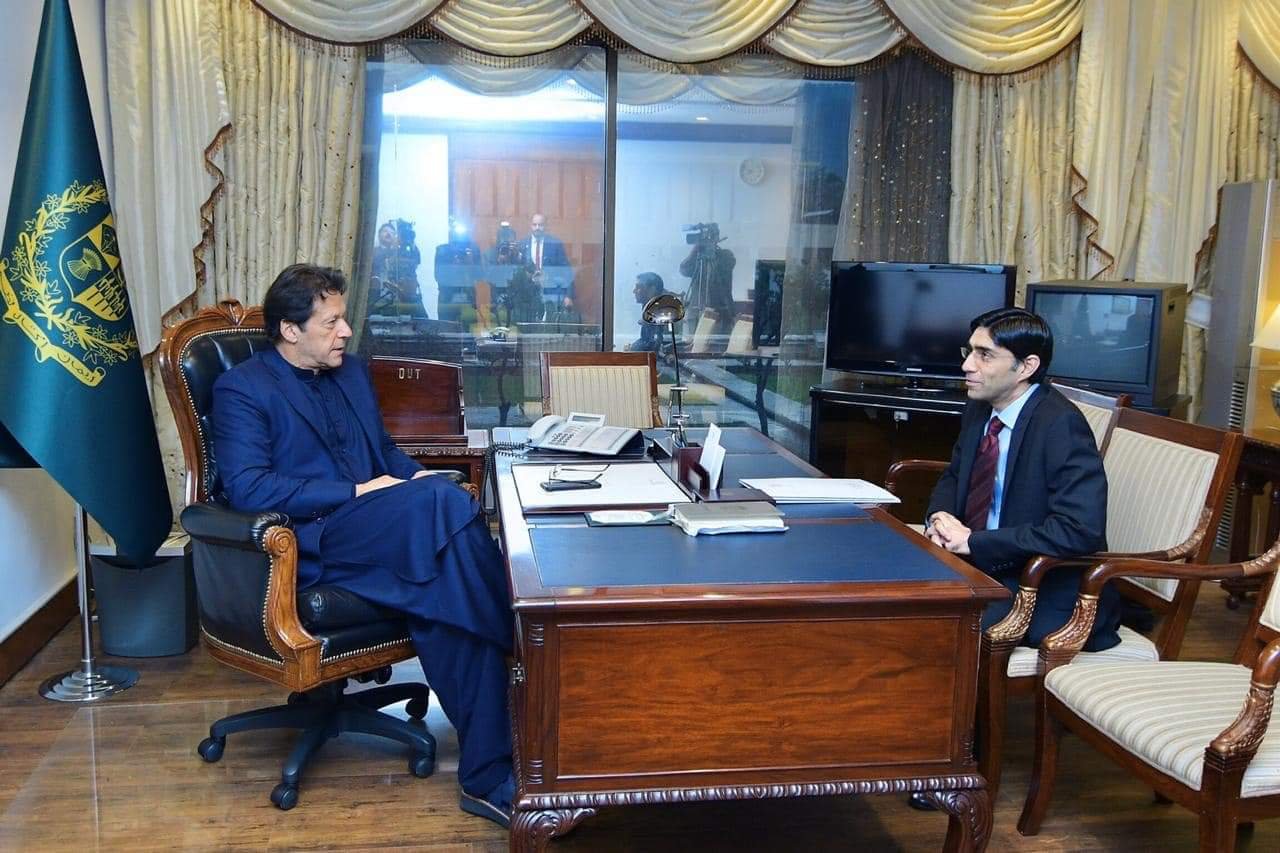
    Dr Moeed Yusuf, special assistant to the prime minister (SAPM) on national security, has denied the impression that Pakistan has been a source of the coronavirus in other countries, saying that the country has “been the most responsible” in the world.

    Last week, the United Arab Emirates (UAE) temporarily stopped receiving passengers on flights coming from Pakistan. The suspension, the UAE civil aviation authority said, will last until a special laboratory to conduct coronavirus tests is established. The decision was taken after as many as 30 passengers aboard an Emirates flight tested positive for coronavirus.

    “Over the past three months, Pakistan conducted tests and quarantined several people so that they won’t be the source of spread. No one appreciated us for that […] We will not allow Pakistan to be singled out,” Yusuf said while addressing a press conference in Islamabad on Thursday.

    He said that Pakistan’s government had also contacted the British High Commission and the latter’s officials had assured that this was not the position of the United Kingdom’s government.

    Yusuf told reporters that only 30 people who had travelled from Pakistan had tested positive. “This [impression to ‘export’ coronavirus] is absolutely false,” he said.

    Yusuf also urged people to avoid unnecessary travel as the government “cannot guarantee that the airspace will remain open three weeks from now”.

    He said that Pakistan has been “the most responsible among all developing countries in repatriating people as well as sending them away”.

    According to him, any passenger who is showing symptoms will not be allowed to leave the country. The SAPM told people to follow the guidelines set by the airlines they are travelling from and their destination countries as it would be a source of embarrassment for the country if the rules were violated.

  • The Current data: Are Lahoris actually ‘weird creatures’ not taking coronavirus seriously?

    The Current data: Are Lahoris actually ‘weird creatures’ not taking coronavirus seriously?

    Punjab government has finally once again sealed worst-hit areas of Lahore for at least two weeks despite which the number of coronavirus infections in Punjab rose to 71,987 on Friday.

    The development came days after Punjab Health Minister Dr Yasmin Rashid slammed the people of Lahore for not taking precautionary measures against COVID-19 and held them responsible for the surge in the number of infections in the country’s most populous province.

    “Lahoris are weird creatures. For them, everything is a joke. They are so ignorant… they do not listen and don’t care. No other nation is more ignorant and stupid than Pakistanis,” she had said.

    WATCH VIDEO:

    Seven COVID-19-affected areas have been sealed in Lahore over the past week. These include Gulberg, Model Town, Faisal Town, Garden Town, Defence Housing Authority (DHA), Gulshane Ravi and the Walled City.

    A complete ban has been imposed on transportation and businesses in the sealed areas where 3,606 cases have so far been reported. The actual number of cases is likely to be way more than official figures that are as follows:

    DHA Gulberg Model Town Faisal Town Garden Town Gulshan-e- Ravi Walled city
    1,403 736 659 188 238 212 170

    Government guidelines were issued before re-opening business ahead of Eidul Fitr, under which shopkeepers were told not to let people gather at their stores, social distancing was stressed, availability of sanitisers for general public’s use was to be ensured and wearing gloves with masks was made necessary in most spaces.

    However, none of the SOPs [standard operating procedures] were followed by most Lahoris, resulting in the provincial capital of Punjab becoming the epicenter of COVID-19 in the province.

    At present, there are 71,191 coronavirus cases in Punjab while 35,582 cases (about 49.98 per cent of the total number of infections) are in Lahore alone with the local spread in the city standing at 69.4 per cent.

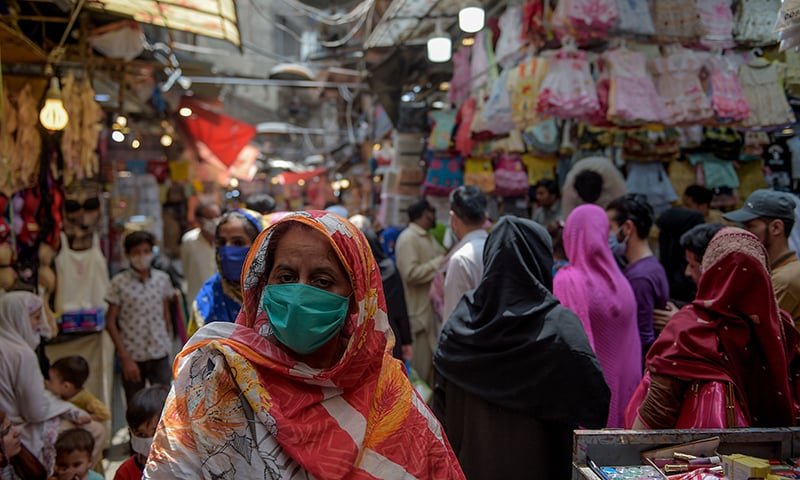
    Despite a lockdown being put in place again, government SOPs are still not being followed by people as many believe that coronavirus “does not even exist”, and throng to markets, destroying social distancing among other guidelines.

    A look at stats of police actions against violators of SOPs amid the government’s “smart” lockdown, also proves the same.

    According to Lahore police stats from June 16 to June 24, almost 238,400 citizens violating coronavirus guidelines were warned and sent back home. As many as 8,251 motorcycles and vehicles were confiscated while 4,599 citizens submitted surety bonds for not unnecessarily leave their homes again.

    During the ongoing lockdown, 8,927 cases have been registered and 1,888 shops have also been sealed for violating SOPs in Lahore.