Tag: covid 19

  • Selective lockdown

    Selective lockdown

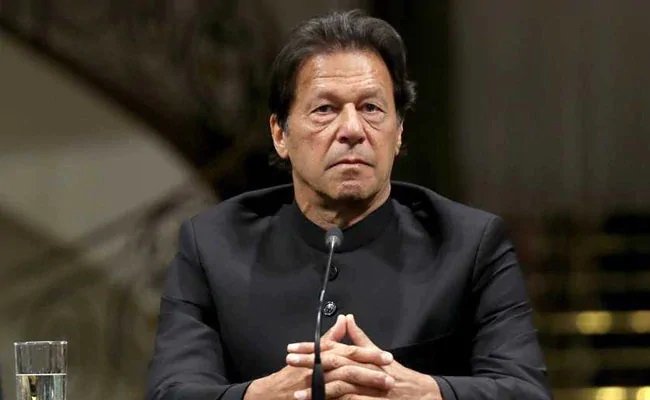
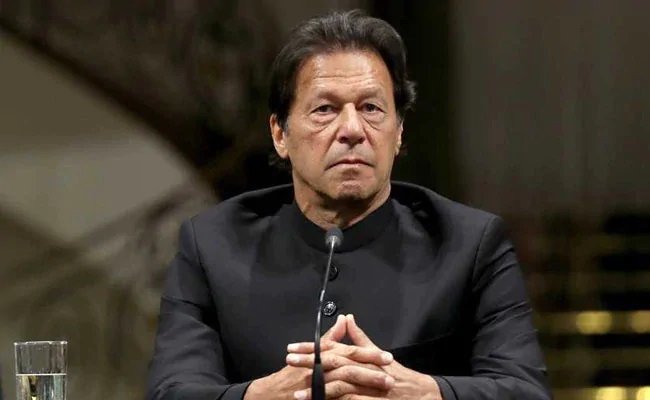
    Prime Minister (PM) Imran Khan has reiterated that there will not be another lockdown. “It is tantamount to shutting down the entire economy to contain the spread of coronavirus. My views have been quite clear on this from the first day.”

    He said that Pakistan is not like Singapore or New Zealand or Taiwan with smaller populations and is also not a rich country to afford a lockdown. PM Imran said smart lockdown will be imposed after identifying hotspots and blamed the people of Pakistan for not following SOPs.

    Pakistan’s coronavirus cases are more than 141,000 while deaths are 2,647. The number of cases keeps rising rapidly each day, which hospitals seem unable to deal with. Oxygen cylinders are unavailable in most cities or are available at exorbitant prices while prices of oximeters, medicines and other supplies have also shot up. Pakistan’s health sector will not be able to deal with such a huge crisis in the coming days.

    “I have been saying this repetitively that you must take precautions… I am disappointed to see that our people have been very careless,” said PM Imran who had once likened COVID-19 to flu.

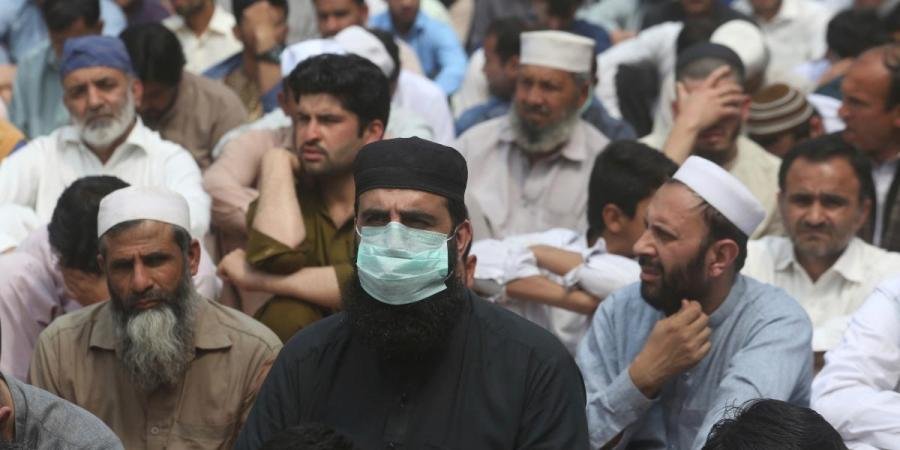
    He said that masks are now mandatory and both the administration and volunteers of the Tiger Force will ensure this.

    It is easy for the government to ask people to follow the SOPs and take precautions while not taking responsibility for its policy failure. When lockdown was first imposed in the country, it should have been extremely strict followed by aggressive testing. Lockdown should not have been lifted for Eid when cases were on the rise. The government not just lifted the lockdown but also kept downplaying the virus despite warnings from health workers and senior doctors. No wonder then that people are not taking coronavirus seriously. It is the government’s responsibility to implement rules; people all over the world are not responsible unless rules and laws are strictly implemented. The government should consider temporary lockdown in cities where administration finds it difficult to control the spread of coronavirus, increase the number of tests, create more awareness by telling people how serious this virus is.

    Countries that locked down early and strictly have been able to return to normal much faster and are open to a large extent. In Pakistan, we have been busy in comparisons or criticism of other countries’ strategies while no effective policy has been in place here.

    Reports indicated that the Punjab government was considering imposing a strict two-week lockdown in Lahore at the recommendation of the World Health Organization (WHO) due to the rising number of cases but PM Imran rejected the proposal.

    Selective lockdown is not a solution because its implementation will be extremely difficult. It seems as if the government has adopted the policy of ‘to each his/her own’ when it comes to dealing with the coronavirus. Let’s not forget that countries that have gone down this road have not been able to save their economy either. We should act before it is too late.
  • 10 million Pakistanis to fall below poverty line

    10 million Pakistanis to fall below poverty line

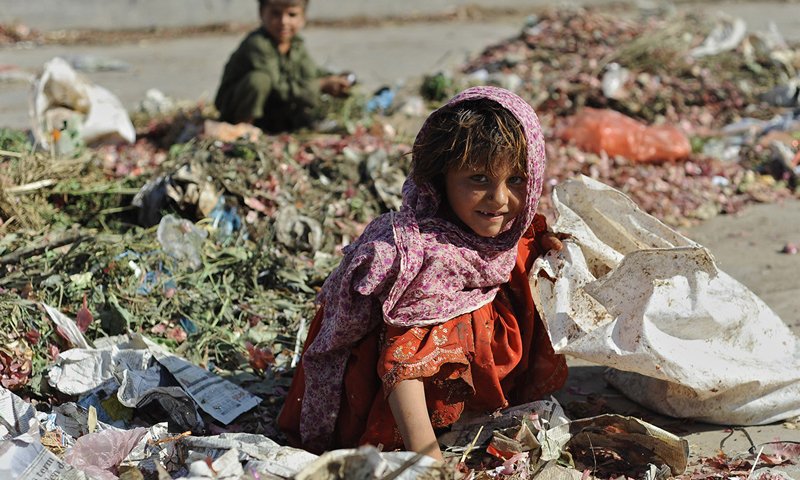
    At least 10 million more Pakistanis will drop below the poverty line because of the toll of the COVID-19 pandemic, the government’s new economic survey estimates.

    Around one in four Pakistanis are currently too poor to meet basic needs, but the figure is predicted to rise closer to 30 per cent of the world’s sixth most populous nation.

    “The COVID-19 outbreak is expected to have a negative impact on Pakistan’s economy, and the number of people living below the poverty line may rise from the existing figure of 50 to 60 million,” the survey says.

    The government’s annual Economic Survey also warned that the economy would contract for the first time in 68 years.

    “The country’s provisional gross domestic product (GDP) growth rate will likely contract 0.4 per cent instead of growing 3.3 per cent as previously forecast,” Adviser to Prime Minister (PM) on Finance Abdul Hafeez Shaikh told a news conference.

    The adviser said the International Monetary Fund (IMF) and World Bank (WB) were making bleaker assumptions keeping in view the severity and duration of the coronavirus pandemic. “In my view, we will have a better estimation when this year ends on June 30.”

    He highlighted the government’s swift and decisive policy actions since the start of the current fiscal year, including resource mobilisation, completion of the IMF programme, austerity measures and monetary policies helping stabilise the economy.

    The adviser stated that these measures helped the economy to reverse large external and internal imbalances. He said that significant improvement in external accounts was made as the current account and trade deficit witnessed a substantial contraction.

    “Foreign reserves steadily improved. There was an increase in foreign direct investment (FDI). The credit rating profile also improved. Fiscal performance remained strong during the first three quarters of the outgoing fiscal year, on the back of consolidation efforts and targeted reforms.”

    “To mitigate the socio-economic impact of the pandemic, the government announced a stimulus package of Rs1.24 trillion and offered further relief measures through the State Bank of Pakistan (SBP). The policy rate was also cut by 5.25pc to 8.0pc,” he said, adding that monetary and fiscal policy interventions had been made to restore economic activity in this difficult time and to reduce negative effects on poverty and unemployment.

  • READ: PTI govt’s ‘corona budget’ for FY2020-21

    The Pakistan Tehreek-e-Insaf (PTI) government has presented its second federal budget in the National Assembly.

    According to Industries Minister Hammad Azhar, who delivered the budget speech on the floor of the house, the Federal Board of Revenue (FBR) revenue target for next year has been kept at Rs4.95 trillion, while defence allocations amount to around Rs1.3 trillion.

    The federal development programme has been budgeted at Rs650 billion to support growth prospects.

    The budget for fiscal year (FY) 2020-21 comes at a time when the country is battling the COVID-19 pandemic that has served a severe blow to the economy. According to reports, it has been formulated considering the impact of the virus and to give relief to the citizens, as part of which no new taxes have been imposed.

    Here’s the complete Rs7.13 trillion budget:

  • ‘Our relief package is as large as your country’s GDP,’ India reacts to Imran’s offer to share Ehsaas project

    ‘Our relief package is as large as your country’s GDP,’ India reacts to Imran’s offer to share Ehsaas project

    — Islamabad regrets negative remarks by New Delhi regarding goodwill suggestion by PM Imran

    In a stinging reply to Prime Minister (PM) Imran Khan’s offer of sharing with India his government’s cash transfer project technology to help the poor amid the coronavirus crisis, New Delhi has said that the size of its economic relief package during the pandemic is as large as Pakistan’s Gross Domestic Product (GDP).

    “Pakistan would do well to recall that they have a debt problem which covers 90% of their GDP. As far as India goes, our stimulus package is as large as the GDP of Pakistan,” said Anurag Srivastava, a spokesperson for India’s Ministry of External Affairs (MEA), on Thursday.

    Imran had earlier in the day tweeted a news report published in an Indian daily highlighting the suffering of a section among the poor in India due to the economic challenges posed by the COVID-19 outbreak, saying that his government was willing to help with its successful cash transfer programme, which he boasted was recognised internationally.

    “I am ready to offer help and share our successful cash transfer programme, lauded internationally for its reach and transparency, with India,” the premier had said while sharing the report as per which 34 per cent households across India will not be able to survive for more than a week without assistance.

    He had said his government successfully transferred Rs120 billion in nine weeks to over 10 million families in a transparent manner to deal with the economic fallout of the virus.

    ISLAMABAD REACTS TO NEW DELHI’S RESPONSE:

    In response to New Delhi’s reaction to the premier’s offer, the Foreign Office (FO) regretted “negative remarks by the MEA spokesperson regarding a goodwill suggestion by the PM to share Pakistan’s successful experience in ameliorating the impact of COVID-19 on the poorest sections of the society”.

    “Remarks by the MEA spokesperson reflect an unprofessional attempt at point-scoring over a serious issue that involves the lives of millions of poor people in the subcontinent, worst affected by the COVID-19 pandemic,” read a statement issued by the FO on Friday.

    THE REPORT:

    A study titled “How are Indian households coping under the COVID-19 lockdown? Eight key findings”, carried out by experts at the University of Pennsylvania, the University of Chicago and the Mumbai-based Centre for Monitoring the Indian Economy (CMIE) reveals that nearly 84 per cent of Indian households are seeing decreases in income since the lockdown began. Nearly a third of all households will not be able to survive beyond a week without additional assistance.

    “Direct and immediate transfers of food and cash are a very high priority,” said Heather Schofield, assistant professor of medical ethics and health policy at the Perelman School of Medicine and a Wharton professor of business economics and public policy.

    When a nationwide lockdown began in late March, India’s Ministry of Labour and Employment asked private and public organisations not to terminate jobs on the pretext of prevailing conditions. But these pleas hardly made any difference and large-scale retrenchments that took place as cope with the contagion.

    However, the study found a “sharp and broad negative impact on household income” as the pandemic diminished their staying capacity, adding that the unemployment rate in the country had crossed 27 percent in early May, up nearly four-fold from levels in January-February.

    The fall in incomes affected people in the lower and middle segments of the income distribution most severely, the study found. “Households in the lowest of the five income groups had average monthly per-capital earnings of less than Rs3,800 (about $50), while those at the high end made between Rs12,374 and upwards of Rs100,000 ($167 to $1,370 and more).”

    Households in the middle-income groups are hurt disproportionately more perhaps because they are most likely to be dependent on sources of income that are hit due to the lockdown, the study’s authors stated.

    Rural households have seen disproportionately more distress than those in urban India during the lockdowns. Incomes have fallen at some 88% of rural households, compared to 75% of urban households, the study found.

    Only 30% of households are able to survive one month or more without additional assistance. “Crucially, 14% of the sample is already out of funds and risks immediate and severe deprivation if they are unable to borrow or receive additional benefits,” the report warned.

    “Rapid distribution of in-kind or cash transfers is needed to prevent a sharp increase in malnutrition and severe deprivation. Such transfers will also likely promote a more robust recovery as the country is able to reopen.”

    The need for additional resources is also affected by where the household is located. “The urban poor have the least time before their resources are depleted,” the study said.

    Nearly two-thirds of urban households that earn less than median income households will run out of resources in two weeks. Rural households in similar income groups have relatively more resilience, the study found, as 54% of them have sufficient resources for the same period of time.

  • TikTokers make COVID-19 awareness videos

    TikTokers make COVID-19 awareness videos

    Following an ease in lockdown, cases of coronavirus have reached an all-time high in Pakistan. Despite the government asking the public to follow the standard operating procedures (SOPs), which include wearing a mask and glove, the public continues to ignore their appeals.

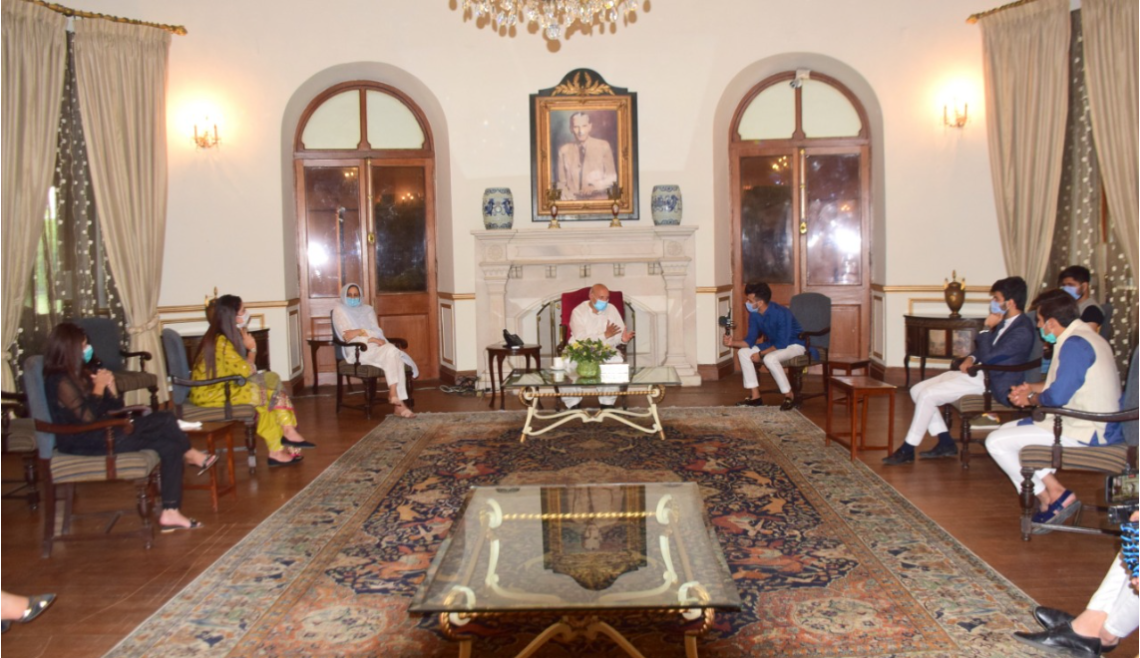
    To create awareness Punjab Governor, Chaudhry Mohammad Sarwar, invited TikTokers to discuss the widespread virus and how they can help by making awareness videos. Among the TikTok stars who attended the meeting were Kanwal Aftab, Zulqurnain Sikandar, Sehar Hayyat, Warda Javaid, Daniya Sohail, and Haider Ali.

    Read more – Punjab govt’s decision to create coronavirus awareness through Tiktok has the internet divided

    Here are a few videos that some of the TikTokers made for spreading awareness about the dangers of COVID-19 so far.

    https://www.instagram.com/p/CA6tbLXgUfn/?utm_source=ig_web_copy_link
    https://twitter.com/Shehzad89/status/1242380885711900673?s=20
    https://www.instagram.com/p/CBLIe9UhYIu/?utm_source=ig_web_copy_link
  • Pakistan ready to share Ehsaas project with India: PM

    Pakistan ready to share Ehsaas project with India: PM

    Prime Minister (PM) Imran Khan has offered sharing his government’s cash transfer flagship programme that successfully dealt with the negative fallout of COVID-19 on vulnerable communities, with India.

    “I am ready to offer help and share our successful cash transfer programme, lauded internationally for its reach and transparency, with India,” the premier said in a tweet while sharing a report that 34 per cent households across India will not be able to survive for more than a week without assistance.

    He said his government successfully transferred Rs120 billion in nine weeks to over 10 million families in a transparent manner to deal with the economic fallout of the virus.

    A study titled “How are Indian households coping under the COVID-19 lockdown? Eight key findings”, carried out by experts at the University of Pennsylvania, the University of Chicago and the Mumbai-based Centre for Monitoring the Indian Economy (CMIE) reveals that nearly 84 per cent of Indian households are seeing decreases in income since the lockdown began. Nearly a third of all households will not be able to survive beyond a week without additional assistance.

    “Direct and immediate transfers of food and cash are a very high priority,” said Heather Schofield, assistant professor of medical ethics and health policy at the Perelman School of Medicine and a Wharton professor of business economics and public policy.

    When a nationwide lockdown began in late March, India’s Ministry of Labour and Employment asked private and public organisations not to terminate jobs on the pretext of prevailing conditions. But these pleas hardly made any difference and large-scale retrenchments that took place as cope with the contagion.

    However, the study found a “sharp and broad negative impact on household income” as the pandemic diminished their staying capacity, adding that the unemployment rate in the country had crossed 27 percent in early May, up nearly four-fold from levels in January-February.

    The fall in incomes affected people in the lower and middle segments of the income distribution most severely, the study found. “Households in the lowest of the five income groups had average monthly per-capital earnings of less than Rs3,800 (about $50), while those at the high end made between Rs12,374 and upwards of Rs100,000 ($167 to $1,370 and more).”

    Households in the middle-income groups are hurt disproportionately more perhaps because they are most likely to be dependent on sources of income that are hit due to the lockdown, the study’s authors stated.

    Rural households have seen disproportionately more distress than those in urban India during the lockdowns. Incomes have fallen at some 88% of rural households, compared to 75% of urban households, the study found.

    Only 30% of households are able to survive one month or more without additional assistance. “Crucially, 14% of the sample is already out of funds and risks immediate and severe deprivation if they are unable to borrow or receive additional benefits,” the report warned.

    “Rapid distribution of in-kind or cash transfers is needed to prevent a sharp increase in malnutrition and severe deprivation. Such transfers will also likely promote a more robust recovery as the country is able to reopen.”

    The need for additional resources is also affected by where the household is located. “The urban poor have the least time before their resources are depleted,” the study said.

    Nearly two-thirds of urban households that earn less than median income households will run out of resources in two weeks. Rural households in similar income groups have relatively more resilience, the study found, as 54% of them have sufficient resources for the same period of time.

  • Sale banned as Punjab govt mulls using Actemra to treat COVID-19

    Sale banned as Punjab govt mulls using Actemra to treat COVID-19

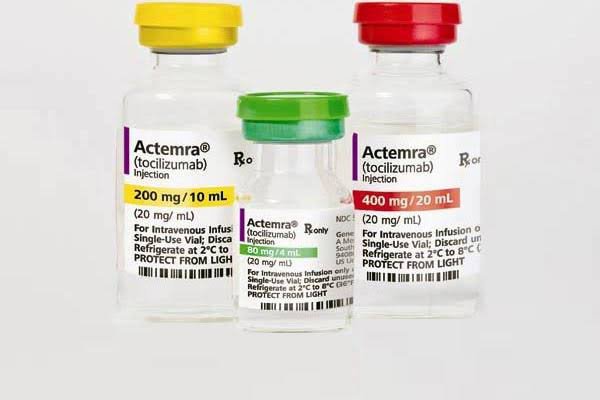
    The provincial authorities in Punjab have imposed a complete ban on the sale of Actemra injection in the open market as they mull treating critical COVID-19 patients with it.

    The Corona Experts Advisory Group has issued standard operating procedures (SOPs) with regard to the use of the Actemra injection.

    According to the SOPs, Actemra injection will be used on trial basis at some hospitals, initially for 500 critically ill patients admitted in ICUs.

    The experts advisory group will approve the hospitals that will treat patients with Actemra injection. The group will witness the trial of the injection in government hospitals.

    The Punjab Healthcare Commission will monitor the use of the injection at private hospitals and a committee of the hospital will approve the use of Actemra injection.

    A private company will issue this injection after approval of a specific profarma, sources said. The needy patients will be issued this injection 24 hours. The hospital and the company will keep the record of the use of injection.

    The data of recoveries and deaths after use of Actemra injection will also be compiled, sources said.

    The Punjab Healthcare Commission will be competent authority to audit the company and the hospital over usage of the injection. And this record will be submitted to the experts advisory group.

    The Punjab government has recently approved the use of Actemra, a life-saving drug, for treating critically ill Covid-19 patients in the wake of a sudden rise in the death rate reported by state-run hospitals across the province.

    The 400mg injectable drug — an interleukin-6 inhibitor which goes by the generic name of tocilizumab — will be prescribed to patients who develop lung complications and an abnormal level of IL-6 in the blood. The IL-6 is an endogenous chemical which causes inflammation.

    Actemra injections had reportedly given encouraging results in highly critical coronavirus patients.

  • Coronavirus: Pakistan out of list of 100 safest countries, Switzerland on top, India 56th safest, worst-hit US 58th

    Coronavirus: Pakistan out of list of 100 safest countries, Switzerland on top, India 56th safest, worst-hit US 58th

    In a detailed study of 200 countries, Switzerland has been found to be the safest place on earth to escape the ongoing coronavirus pandemic while Pakistan is no longer among the 100 safest places, falling down to the 148th rank — amongst the riskiest group of countries.

    India ranks 56th in the COVID-19 ranking by Deep Knowledge Group. The first tier comprises a list of 20 most safe countries while those in the fourth tier are amongst the riskiest lot.

    The study focuses on nations and their safety capability against the pandemic.

    Top 10 safest countries from coronavirus:

    1) Switzerland

    2) Germany

    3) Israel

    4) Singapore

    5) Japan

    6) Austria

    7) China

    8) Australia

    9) New Zealand

    10) South Korea

    The United States (US), which has the highest number of coronavirus cases in the world, was ranked 58th on the list.

    By the time this report was filed, Pakistan had a total number of 113,702 COVID-19 cases with at least 2,255 deaths.

    Punjab had the most number of infections (43,460) with Sindh trailing behind at 41,303 cases. The number of infections in Khyber Pakhtunkhwa (KP), Balochistan and Islamabad stood at 14,527, 7,031 and 5,963, respectively. Gilgit-Baltistan (GB) had a total 974 cases while the number in Azad Jammu & Kashmir (AJK) stood at 444.

  • Husband accuses wife of infidelity after both test positive for COVID-19

    Husband accuses wife of infidelity after both test positive for COVID-19

    A man in Vijayapura, India accused his wife of infidelity after he tested positive for coronavirus.

    As per reports, the husband suspected that the woman in her thirties had cheated on him, as he was not away from home for at least two weeks before testing positive.

    When the woman was shifted to the same isolation ward where her husband was being treated, he started crying and shouting at her.

    Read more – Indian man spends two days in jungle after entry to quarantine centre denied

    The man claimed, “Before I got infected, I was not in contact with my wife for over two weeks. She got infected with the virus because of an illicit relationship.”

    After doctors explained to him the nature of the virus, he accepted his mistake and apologised to his wife, which resulted in a happy ending.

  • VIDEO: Peshawar doctor celebrates 71-year-old coronavirus patient’s birthday

    VIDEO: Peshawar doctor celebrates 71-year-old coronavirus patient’s birthday

    A doctor working at the coronavirus ward brought a cake to celebrate the birthday of a 71-year-old patient to fulfill his wish as he is away from his family.

    A video, doing rounds on social media, shows a patient in Abbottabad Medical Complex, clapping and cutting his birthday cake with the health professional standing by his side.

    Finance and Health Minister Khyber Pakhtunkhwa (KP) Taimur Jhagra also shared the video with a caption: “Something to make everyone smile.”

    Doctors and other healthcare professionals have been praised across Pakistan and all over the world for the sacrifice and commitment they have shown by treating the virus patients while putting their lives at risk.

    Pakistan has reported 108,317 cases of COVID-19 so far.