Tag: covid 19

  • Bilawal seeks Imran’s voluntary resignation over ‘coronavirus failures’

    Bilawal seeks Imran’s voluntary resignation over ‘coronavirus failures’

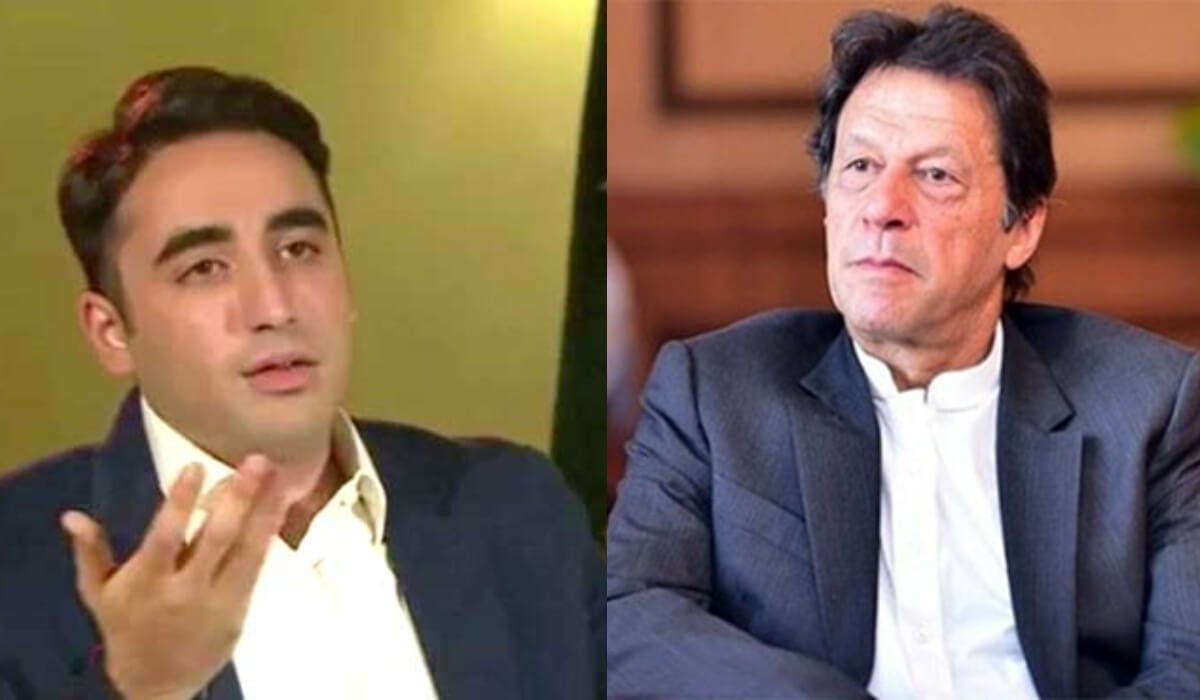
    Pakistan People’s Party (PPP) Chairman Bilawal Bhutto-Zardari has said that Prime Minister (PM) Imran Khan should voluntarily resign and appoint someone else in his stead, as tensions between the Centre and Sindh government continue to rise as COVID-19 cases continue to spike across the country.

    Talking to Sindhi language news channels, Bilawal slammed the premier for a lack of consensus in the country on how to tackle the persisting coronavirus situation.

    “We [PPP] have been demanding the prime minister to step down since day one,” said the PPP chief. “Keeping in mind the coronavirus situation, I am not asking for his resignation. But Imran Khan should start working as a prime minister. He should play his role in uniting provinces in this crisis.”

    Bilawal urged PM Imran to voluntarily resign under these difficult circumstances and appoint someone else in his stead. The PPP chairman said that a national consensus was necessary to win the fight against the coronavirus. “The whole state should be on the same page against the coronavirus,” he said, adding that the prime minister was responsible for the absence of it. “The federal government is responsible for ensuring a consensus is reached.”

    Bilawal praised the Sindh government for providing relief to the masses as cases in the province continue to surge. “Sindh government is taking brilliant steps to provide relief to people,” he said. “CM Sindh has also joined hands with welfare organisations. People are being provided relief today due to the initiatives taken by the PPP,” he added.

    He said that Sindh government was about to kick off “phase two” of its plan to ward off the coronavirus. “We are providing relief to the people despite facing a shortage of resources,” he said.

    Referring to criticism over his statement on Karachi and Sindh a few days ago, Bilawal said that some people were presenting his remarks in a negative light and taking them out of context. “I consider it an insult to answer these [accusations],” he said, adding that those who were criticising him were working on their agenda to break up Sindh.

    The remarks came a few days after the PPP chairman hit out at the federal government in a fiery presser, slamming it for neglecting doctors and medical officers throughout the country.

    “Can you imagine Pakistan declaring war and sending its army without guns, bullets, and a uniform?” he had said.

    The PPP chairman had lamented that the doctors were only demanding two things — protective gear and a reduced burden on hospitals so that they may carry out their jobs more effectively.

    “The prime minister has failed to deliver […] He mentioned daily wagers in all of his addresses, but sadly none of them has received a single dime yet,” he had regretted.

    It is our responsibility to provide for them like we would provide for our armed forces, he said, adding: “We are trying to provide for our doctors who are in contact with COVID-19 patients, I know that all provincial governments are playing their due role as well.”

    “But the Centre should also play its role in supporting the provinces in the war against coronavirus,” he had said.

  • Flight from UAE carries 104 coronavirus patients to Pakistan

    Flight from UAE carries 104 coronavirus patients to Pakistan

    The Rawalpindi district administration on Monday said that 104 passengers who were flown in from Abu Dhabi have tested positive for coronavirus.

    “Out of 209 passengers, 104 tested positive for COVID-19,” the district administration said, adding that the flight carrying the passengers had arrived in Islamabad on April 28.

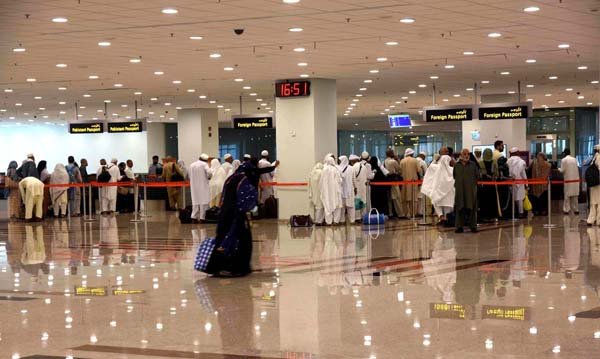
    Following the SOPs prepared by the government, all the passengers were screened at the airport and were shifted to the quarantine centre at Fatima Jinnah Women University.

    With the country having blocked all international commercial flights since mid-March — a ban that’s now set to continue for an indefinite period of time — many of the country’s residents have struggled to find a path back to their homeland, making government repatriation flights a necessity.

    On the other hand, Pakistan has reported 22 more fatalities from novel coronavirus as the death toll in the country has reached 471. The nationwide tally of COVID-19 patients jumped to 20,725 while over a thousand cases were reported in 24 hours.

    According to the latest figures by the National Command and Operation Center, Sindh remains the worst-hit province by the pandemic followed by Punjab, Khyber Pakhtunkhwa (KP) and Balochistan.

    Till now 7,882 coronavirus cases have been confirmed in Sindh, 7,646 in Punjab, 3,129 in KP, 1,218 in Balochistan, 415 in Islamabad, 364 in Gilgit-Baltistan and 71 in Azad Jammu & Kashmir (AJK).

    Earlier in the day, it was reported that three crew members of a special PIA flight from Australia had also tested positive for COVID-19.

    The PIA staffers had performed duties on the flight from Melbourne to Lahore.

  • Rethinking a post-COVID-19 future

    Rethinking a post-COVID-19 future

    “We should not go back to the old ways.”

    We are living through a global pandemic and life as we knew it will perhaps never be the same again, That’s the hope anyway. Because there are a lot of things about the way life was before that need rethinking — and COVID-19 has given us an opportunity to do this.

    In the 21st century, there was life before the virus, there is now lockdown and life during the virus and, at some point, there will be life after the virus — but will the latter be the same as our old way of living? There is much discussion now of ‘getting the economy going’ again, of getting things back to ‘normal’ again but is our plan just to restore the same economic model and the same old systems?

    Or is now the time to rethink the way we live?

    Several falsehoods about our lives have been exposed by the lockdown. Key among these is the myth that the old way of working and studying was the only way: fixed hours of attendance at sites you had to physically travel to. It turns out that this ‘hazri’ culture is not actually essential, and many of these ways of working were just constructs whose aim was to strengthen a type of corporate or darbari culture. Not allowing people to work from home stemmed perhaps from a reluctance to lose control of staff. The institutions that would hire expensive consultants to help them ‘save money’ and work efficiently told us that it was too expensive to have individual desks for staff and subjected them to the horrors of hotdesking. This apparently ‘saved’ some money yet these same organisations would be reluctant to allow staff to work from home routinely even though that would have saved even more money. The permission for ‘working from home’ was given not as the norm, but as some kind of great favour or concession which involved HR, applications and a degree of workplace politics.

    Well now nearly everybody’s working from home and we realise this has actually been possible for many, many years and that perhaps the workplace would have caught up with technology long ago if there weren’t so many dubious management practices and vested interests involved. Apart from the workplace, there is the question of the classroom and what it is — is it a physical reality or an intellectual one? In Britain, university education was once state-funded and all about education rather than businesses.

    “We’ll have to rethink education completely — especially university education.”

    But in the last decade universities have been turned into businesses which are less about education and more about profits. The students are called ‘clients’ and since university fees are now more than three times what they were ten years ago, they are saddled with crippling student debt (student loans are given by a private profit-seeking company). Students invest so much that they are afraid to challenge intellectual views of question anything professors say because they know that they need to get good grades because of their investment. Instead of concentrating on the wellbeing of their students, universities seem to have become more focused on marketing their brand in order to attract a maximum number of ‘customers’ or ‘clients’. But even when the riches poured in, it never seemed to be the academic staff who’d benefit but rather the ‘managers.’

    We’ll have to rethink education completely — especially university education. In Argentina, most young people get their first degree while working full time. Work by day and take evening classes. It might take longer but it definitely seems to be a more productive way to live. Oh, and state universities are free.  Of course, education can not all be virtually based but perhaps a large part of it does need to be.

    Then there’s the question of how society values work. Of how bankers are more highly paid and valued than ‘unskilled’ workers. How financial managers are much better paid than medical professionals. Now we realise who are the professionals that society really needs when in times of trouble: they are the medical professionals, the cleaners, the garbage collectors, the bus drivers, the police, the fire brigade, the people who run food shops and stack shelves. These are essential, these are the people we should value, these are the jobs we need to pay people well to do.

    We need to think of new businesses too. Instead of having an endless number of restaurants and coffee shops to ‘provide employment’ perhaps we should have more businesses whose goal is to contribute to community welfare employing people. We need more cooperative models of working and more localised businesses. Instead of manufacturing fast fashion and throwaway clothes which encourage frivolous spending and whose plastic fibres are clogging up the oceans and rivers, we perhaps should concentrate on businesses that produce food.

    “And guess who governments need to fund now? Not bigshot entrepreneurs and investment bankers, they need to support medical professionals, health workers and research scientists.”

    The virus and subsequent lockdown exposed a number of vulnerabilities in life as we were living it, and one of these was the matter of food production and supply. Perhaps now we need to have a national policy of localised production: local dairy farming, local livestock, locally grown fruit and vegetables. Apart from the fact that this will avoid the issue of complicated supply chains, many people in the health, economic and development sectors have long argued that this is a healthier and more sustainable way to live. This way food production would be organic and fresh – not shipped from the other side of the world. And in terms of food, we need to unlearn the mantra that endless choice is good. The illusion that the more choice you have in choosing, for example, a brand of chocolate shows how ‘free’ you are as people needs to be dispelled. And we need to move back to the idea of quality not quantity in the way we live.

    And new initiatives need to be set up to care for the environment. The enforced detox brought on by the lockdown has shown us bluer skies, clearer air and cleaner waters. We need to have a policy of setting up local initiatives to support this which are goal-oriented and not just motivated by a profit motive.

    And guess who governments need to fund now? Not bigshot entrepreneurs and investment bankers, they need to support medical professionals, health workers and research scientists. And they need to provide free broadband and digital access to all citizens because when push comes to shove this is something that will benefit the whole of society. We need more government spending, new frameworks and new initiatives based on a clear vision of what our priorities are now.

    People and governments need to come together and come up with a new way to live and a new model of economics, We can make a whole new sort of world; a world minus dodgy ‘outsourcing’, privatisation, unsound financial instruments, economic disparity and unbridled greed. But what’s needed is a lot of imaginative ideas and a bold new way of thinking. We need to be creative.
  • Did Sindh governor pass on coronavirus to an assistant commissioner?

    An assistant commissioner of Sindh’s Matiari district has tested positive for the coronavirus, according to lab reports.

    Saeedabad AC Ammar Hussain Rizvi was among the officials who had performed duties during the visit of Sindh Governor Imran Ismail, who tested positive for the virus earlier this week, to Matiari on April 22, Dawn reported.

    Rizvi, who is originally a resident of Hyderabad, has been quarantined in a facility located in his own office, an administration official said.

    Unconfirmed reports said he had come into contact with some pilgrims as well aside from being a part of the governor’s visit.

    Earlier, Governor Ismail confirmed on his Twitter account that he had tested positive for COVID-19.

    “I have just been tested Covid 19 positive, Allah Kareem inshallah will fight it out. @ImranKhanPTI taught us to fight out the most difficult in life and I believe this is nothing against what we are prepared for. May Allah give strength to fight this Pandemic inshallah,” he tweeted.

    The tweet was followed by Prime Minister (PM) Imran Khan wishing hi a speedy recovery.

    “Praying for Governor Imran Ismail’s speedy recovery from COVID19. May Allah grant him the strength to fight this,” the premier had tweeted.

  • Myth Buster: Can sitting in the sun save you from COVID-19?

    Myth Buster: Can sitting in the sun save you from COVID-19?

    Myths and misinformation related to COVID-19 are abundantly available on social media. This means that every piece of information you read regarding the virus may or may not be true. The best is to go to a trusted source like the World Health Organisation (WHO) to check any remedy or cure that might come up these days.

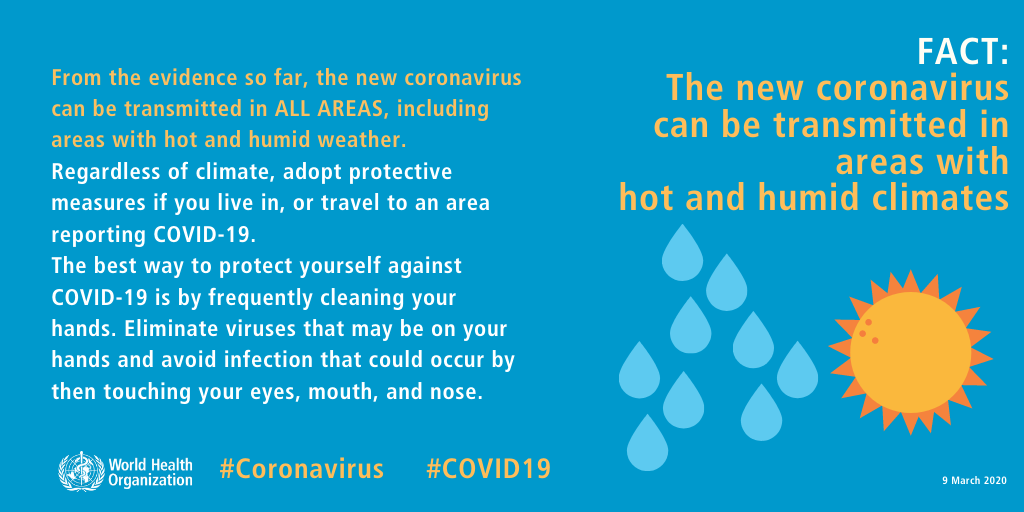
    Fact 1: Exposing yourself to the sun or temperature higher than 25C degrees does not prevent nor cure coronavirus.

    Fact 2: COVID-19 is not transmitted through houseflies.

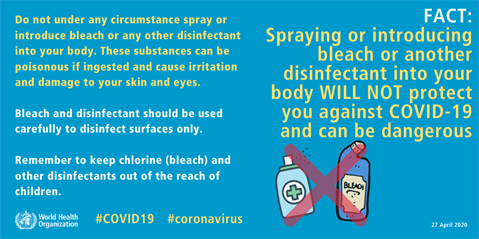
    Fact 3: Spraying or introducing bleach or another disinfectant into your body will not protect you against COVID-19 and can be dangerous.

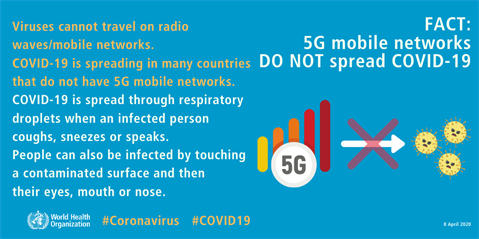
    Fact 4: 5G mobile networks do not spread COVID-19.

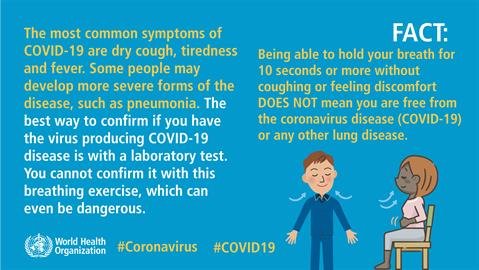
    Fact 5: Being able to hold your breath for 10 seconds or more without coughing or feeling discomfort DOES NOT mean you are free from the infection.

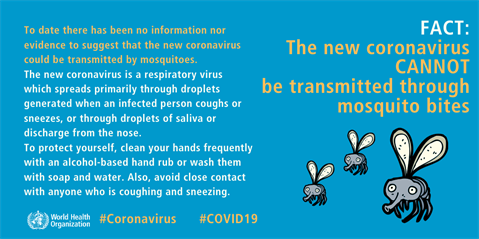
    Fact 6: The new coronavirus cannot be transmitted through mosquito bites.

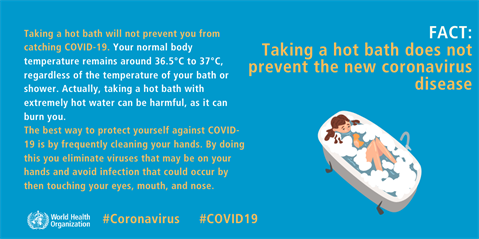
    Fact 7: Taking a hot bath does not prevent the new coronavirus disease.

  • Punjab unable to locate 1,012 suspected COVID-19 patients in Lahore, Sialkot and Multan

    The Punjab government is trying to trace 1,012 suspected carriers of the deadly COVID-19 in various areas of the province, a private media outlet has reported.

    Quoting officials, the report said these suspected carriers, who are scattered mainly in Lahore, Sialkot and Multan, have been included in the final tally of the confirmed cases until they test negative for the virus. Of these 1,012 suspected carriers, 691 are in Lahore, 87 in Sialkot and 72 in Multan.

    The report also quoted Punjab Specialised Healthcare and Medical Education Department Deputy Secretary Mudasir Ahmed as saying that the suspected patients are contacts of confirmed coronavirus patients. The official said that they are gathering their phone numbers and addresses of these suspected patients and there is a “big and successful mechanism” in place for contract-tracing in the province.

    Provincial Disaster Management Authority (PDMA) Director Operations Nisar Ahmed told the news outlet that they already know where all the positive cases are, so the people they came into contact with must also be carriers of the virus. He added that they were currently trying to trace these suspected carriers.

    Punjab has over 6,200 confirmed cases of the deadly virus, the highest in the country.

  • Resting the food panic amid COVID-19

    Resting the food panic amid COVID-19

    The global coronavirus pandemic has resulted in either a partial or full closure of most industries, wreaking havoc on the country’s economy. Though food scarcity is not a problem yet, during Ramzan, the closures can spell misery for people despite the government’s assurance of consistent supply. In order to simmer down the current food panic and hoarding of goods, it is to be ensured that the production and availability of essential goods are not halted by the arrival of COVID-19 in Pakistan.

    There are two sources of concern in this situation.

    First, despite growth in livestock, which contributes to almost 2/3 of the agricultural output in Pakistan and accelerated slightly to 4.0% in fiscal year (FY) 2019; agricultural production as a whole expanded by only 0.8%. Second, with COVID-19 escalating, Pakistan has recently suspended its trade and closed its borders, leaving many distressed and worrying about the shortage of essential Iftar items.

    In order to address the first concern, it is imperative to note that an overall decline in all sectors was already being witnessed before COVID-19. The slowdown in the agriculture industry was exacerbated by weaker demand and higher costs until the disease arrived. As for the shortage of essentials food items, Punjab alone is a mass producer of many food essentials that will be easily available during Ramzan. An analysis by the Urban Unit states the availability of most essential items from April to June 2020:

    • Tomatoes: Punjab’s production was recorded 1,38,397 tons during 2018-19
    • Potatoes: Punjab has 96.94% share in the total domestic production of potato and the total arrival in local wholesale markets was recorded at 510 to 515 trucks/day on an average
    • Garlic: Domestic production was recorded at 72,598 tons in 2018/2019.
    • Chilies: Production of chilies in Punjab is 11,698 tons
    • Onions: 20% in total domestic production
    • In addition to these, all forms of meat and dairy will be available as 3.7 million litres of milk are supplied per day and the daily supply of beef and mutton is 518,861 tonnes and 130,000 tonnes per day, respectively.

    Under essential items, rice is the only commodity that is expected to suffer a blow by the pandemic, but it is harvested in September. All vegetables and fruits such as capsicum, cabbage, cauliflower, bittergourd, cucumber, turnip, guava, melons and strawberries will be available in an abundant amount.

    While no serious panic has been witnessed in consumer behavior in Pakistan unlike in Europe or the United States (US), the government must exercise extreme vigilance on supply-demand trends during Ramzan. There should be no hoarding, and a robust price control mechanism must be put in place at the grass-root level by respective provincial and district administrations.

    For example, the Food Department of the Punjab government has taken effective and strict measures and warned of a crackdown on unnecessary stock holdings.

    So far, collective efforts by the Food Department along with the Deputy Commissioner’s Office and the Industries Department have led to the collection of fines worth Rs2,883.71 million from accumulators of food items, out of which Rs882.03 million was collected within just 40 days i.e. from March 1 to April 9.

    In an attempt to reduce the current wheat prices, the department is further identifying and disqualifying ghost mills from the official quota and borders are also being sealed, barring wheat transportation outside the province and ensuring food security.

  • President Alvi endorses video removed by YouTube for spreading coronavirus misinformation

    President Alvi endorses video removed by YouTube for spreading coronavirus misinformation

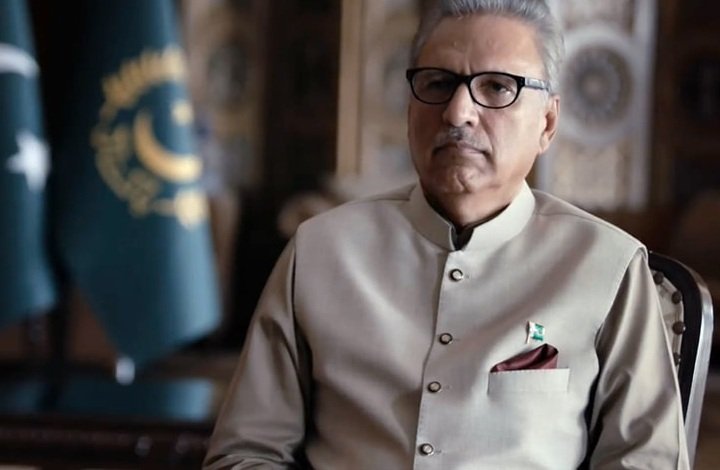
    President Arif Alvi retweeted a tweet by his son, Awab Alvi, on April 26, and said: “Lockdown or No Lockdown? Coronavirus is new so there is a major difference of opinion in the world & in Pakistan on how to handle it. As data comes in, opinions change. So please keep an open mind. This is long but a must-watch for all our opinion-makers including politicians.”

    The tweet was a video by doctors who were arguing that people should develop resistance to COVID-19.

    In a Twitter thread, President Alvi’s son Dr Awab Alvi goes on to say: “Historically of the human race and medical outbreak We’ve always “quarantined the sick” NEVER have we “quarantined the healthy” In the panic of the unknown we are reacting (may have been right earlier) but now we know this better and we need the population to develop resistance. [sic]”

    But if you click on the YouTube video shared by Dr Awab Alvi, it says the video has been removed. Link here: https://www.youtube.com/watch?v=xfLVxx_lBLU&feature=youtu.be

    The video has been taken down by YouTube for violating YouTube’s Community Guidelines. YouTube has recently been taking down videos spreading misinformation about the novel coronavirus.

    Twitter recently also updated its guidelines on misinformation regarding COVID-19. Last month, Twitter and Facebook removed posts shared by Brazilian President Jair Bolsonaro for including coronavirus misinformation that violates the social media companies’ rules against posting harmful content.

    Facebook said it took down a video that had been shared on both Facebook and Instagram, in which Bolsonaro said the anti-malaria prescription drug hydroxychloroquine was an effective treatment for COVID-19.

    Twitter earlier had removed two videos that also showed Bolsonaro praising hydroxychloroquine and encouraging the end of social distancing. It is rare for Facebook to take down a post from a head of state, but the coronavirus pandemic has led tech companies to move aggressively to filter out unfounded medical advice, hoaxes and other false information that they say could risk public health.

    Facebook has a policy against sharing posts that could cause users physical harm, a spokesperson said.  “We remove content on Facebook and Instagram that violates our Community Standards, which do not allow misinformation that could lead to physical harm,” the company said in a statement. Twitter, too, has a policy that requires people to remove tweets that recommend cures or advice that goes against the recommendations of public health authorities.

    As coronavirus cases continue to increase in Pakistan and across the globe, the World Health Organization (WHO) recently warned that COVID-19 cases in Pakistan can rise to 200,000 by July.

  • Over 700 dead after consuming poison to cure COVID-19

    Over 700 dead after consuming poison to cure COVID-19

    More than 700 people have died after ingesting toxic methanol, thinking it can cure the new coronavirus — COVID-19.

    According to Al Jazeera, the incident took place in Iran where the national coroner’s authority says that alcohol poisoning has killed 728 Iranians between February 20 and April 7 amid the coronavirus outbreak as compared to last year’s 66 fatalities from the same.

    An adviser to the Iranian Health Ministry, Hossein Hassanian, said that the difference in death tallies is because some alcohol poisoning victims died outside of hospital.

    Some 200 people died outside of hospitals, Hassanian was quoted as saying.

    Iran is facing the worst coronavirus outbreak in the Middle East with 5,806 deaths and more than 91,000 confirmed case.

    Methanol cannot be smelled or tasted in drinks. It causes delayed organ and brain damage. Symptoms include chest pain, nausea, hyperventilation, blindness and even coma.

    In Iran, the government mandates that manufacturers of toxic methanol add an artificial color to their products so the public can tell it apart from ethanol, the kind of alcohol that can be used in cleaning wounds. Ethanol is found in alcoholic beverages, though its production is illegal in Iran.

    READ: Britain, France, Germany bypass US sanctions to send medical aid to virus-hit Iran

    Some bootleggers in Iran use methanol, adding a splash of bleach to mask the added color before selling it as drinkable. Methanol also can contaminate traditionally fermented alcohol.

    The consumption of alcohol is generally prohibited in Iran. However, minority Christians, Jews and Zoroastrians can drink alcoholic beverages in private.

    Following the coronavirus outbreak, Iran’s government announced it would issue permission for new alcohol factories quickly.

    Iran has currently some 40 alcohol factory that have been allocated for pharmaceutical and sanitising items.

    The report comes days after United States (US) President Donald Trump raised the possibility of injecting disinfectant into patients, causing an international uproar with manufacturers, doctors and government agencies rushing out warnings against consuming disinfectants like bleach.

  • 21 cops on Sunday, 92 health professionals in two days test positive for coronavirus

    21 cops on Sunday, 92 health professionals in two days test positive for coronavirus

    At least 21 Punjab Police officials on Sunday and 92 health professionals within the last two days have tested positive for the new coronavirus. The sudden spike in the number of health professionals contracting the virus has increased the national tally of infected doctors, nurses, paramedics and support staff to 345.

    As per the details of the infected cops, additional inspector general (AIG) operations has said that over 60 police personnel were tested for the virus, out of which 21 tested positive. One of the cops was deployed at the Central Police Office (CPO) whereas the results of many others are awaited.

    While cops dealing with masses are at a greater risk to contract COVID-19 and incidents of them falling sick have been reported from various parts of the country, health professionals remain on the frontline in the battle against the global pandemic.

    According to a Ministry of National Health Services, Regulation and Coordination official, the number of health professionals contracting the virus increased to 345 from 253 after new cases were detected among the medical community.

    The official said that doctors are the most-affected among healthcare professionals with over 165 of them now undergoing treatment across the country. As many as 131 members of paramedical and support staff, as well as 41 nurses, have also contracted the virus.

    Apart from the confirmed cases, more than 1,500 doctors, nurses, paramedics and those with whom they came into contact, are in quarantine. Many are waiting for their test results after coming into contact with health professionals who have already tested positive, the official said.

    They added that most of the cases of coronavirus among health professionals had been reported in Balochistan, Khyber Pakhtunkhwa (KP) and Punjab, while a few cases had also been reported in Sindh and the federal capital.