Tag: covid 19

  • KP public health director tests positive for COVID-19

    Khyber Pakhtunkhwa (KP) Public Health Director Dr Ikramullah Khan has tested positive for the new coronavirus — COVID-19 –, provincial Health Minister Taimur Khan Jhagra revealed on Monday.

    The minister paid tribute to Dr Ikramullah, thanking him for his service and calling him an asset everyone was proud of. He also lauded the efforts of “thousands of other frontline workers” fighting the virus in the province and all across Pakistan.

    The minister was of the view that the next few months would be difficult on many fronts but he and his team members were committed to beat the virus with “resolve, discipline and unity”.

    KP’s focal person on coronavirus, Zain Raza, also wished Dr Ikramullah “speedy recovery and health”, acknowledging his role as being on the frontline of the province’s coronavirus response team.

    https://twitter.com/smzrz/status/1249608325085396992?s=20

    The number of infections in Pakistan, by the time this report was filed, stood at 5,478, of which 744 cases were from KP.

  • Religious, cultural misconceptions of COVID-19 in Pakistan

    IPSOS is an international firm that produces data on the global market and public opinion across the world. From April 4 to 7, they polled 1,000 people across Pakistan to evaluate how Pakistanis treated myths and misconceptions regarding COVID-19.

    The sample size is from all the provinces and territories of Pakistan: Punjab, 57%, Sindh, 22%, Balochistan, 6%, KP, 10% and AJK, 5%. The age bracket is from 18 to 50 plus, and social-economic status is from higher to lower income holders, as shown in the picture below.

    COVID-19 MYTHS IPSOS SNAP POLL

    The results are overwhelming. As per the report, only “2 people out of 5 can correctly recall the official helpline (1166) to report COVID-19 cases, rest are either unaware or cannot recall correctly.”

    COVID-19 MYTHS IPSOS SNAP POLL

    RELIGIOUS AND SCIENTIFIC MISCONCEPTIONS

    Moreover, Pakistanis have alarming religious and scientific misconceptions on COVID-19. According to the data: 82% believe that “they can remain protected if they do wudu 5 times a day. “67% believe that “Allah has control over all viruses so congregation prayer in the mosque (jamaat) cannot infect anyone with the virus. 58% think that if “once the summer hear starts, the coronavirus will disappear.” 48% says that “shaking hands is Sunnah, so they cannot infect anyone with COVID-19 by doing so.”

    Other majors misconceptions are mentioned below in the slide.

    COVID-19 MYTHS IPSOS SNAP POLL

    CONSPIRACY THEORIES

    Apart from religious and scientific misconceptions, a large number of Pakistanis have controversial misconceptions on COVID-19. 43% in Pakistan see COVID-19 as a “foreign conspiracy by America and Israel to weaken us (Pakistan).” 43% believe that they “should avoid people from certain sects or faiths, as they are more prone to coronavirus.” 39% think “Women who breastfeed should be in ablution/wudu all the time, so they don’t transfer COVID-19 to the baby. 30% is off the view that “only sweepers and domestic workers can contract the virus because they’re not clean.”

  • VIDEO: ‘Pakistan trying to send infected spies to spread coronavirus,’ India claims

    In yet another ridiculous attempt by Indian authorities to malign Pakistan, media outlets from across the border have quoted Bihar Police as saying that the country is at threat by men infected by the new coronavirus — COVID-19 — whom Islamabad is trying to send to India via Nepal.

    According to reports, the Sashatra Seema Bal (SSB) — one of India’s Central Armed Police Forces — manning the Indo-Nepal border, has written a letter to authorities in Bihar’s Champaran district, apprising them of a “racket being operated from Nepal to spread coronavirus in India”.

    WATCH VIDEO:

    As per the letter sent by SSB, a resident in Nepal is trying to send positive coronavirus Indian Muslims to India through the Bihar border with the ulterior motive of disseminating the virus in India. The letter also states that Pakistani men already infected by COVID-19 may also be infiltrated to India via the Indo-Nepal border.

    “All top police officials of the districts bordering Nepal have been alerted of possible infiltration attempts,” Indian media reports quoted authorities in Patna as saying.

    Both Pakistan and India are suffering in the global battle against COVID-19 that has so far claimed 72 lives in Pakistan and at least 239 in India. The number of infections in Pakistan and India stands at 4,788 and 7,447, respectively.

    By the time this report was filed, nearly 1.7 million global infections had been reported with over 102,000 deaths.

  • This is when experts are saying the coronavirus pandemic might end

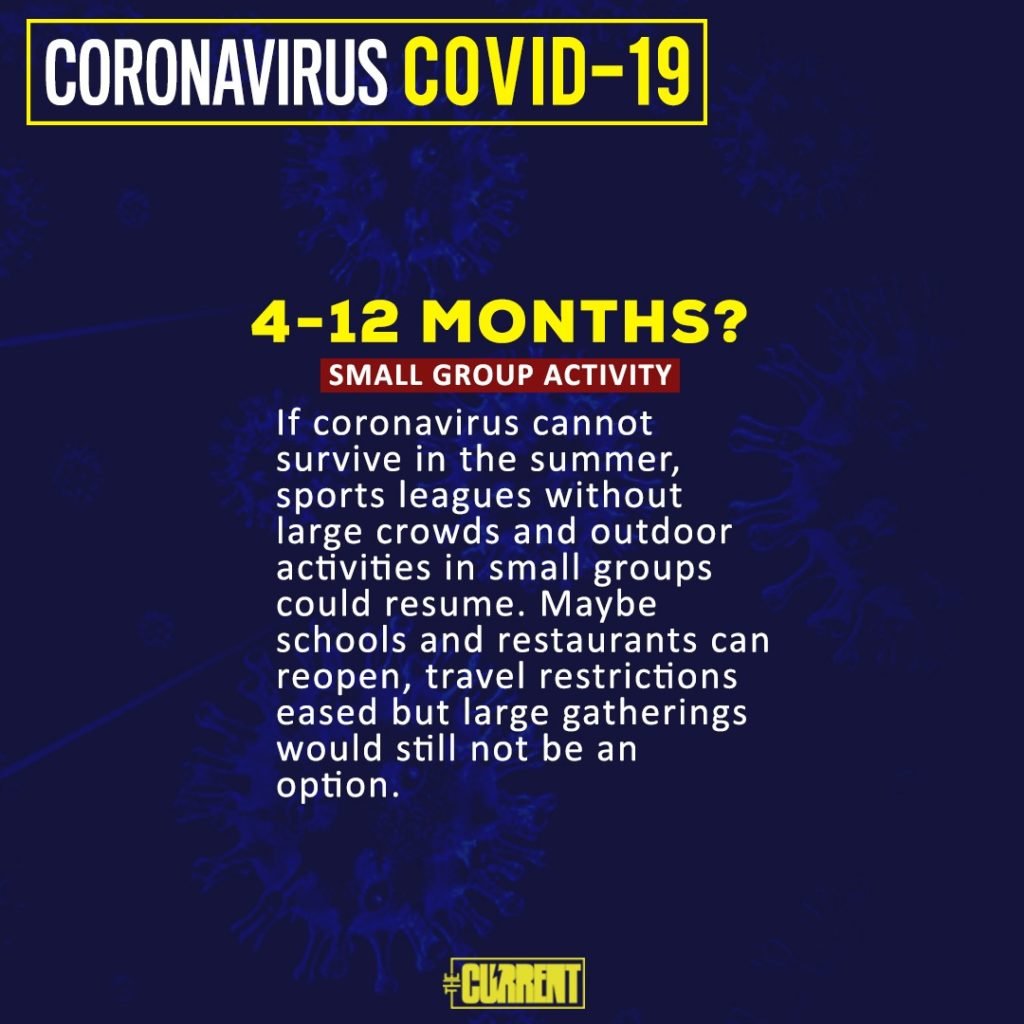
    This is when experts are saying the coronavirus pandemic might end

    Experts in the United States, in an article published in The Atlantic, are putting a tentative timeline to how long the coronavirus pandemic will last. According to them, the following are the scenarios we might be facing in the coming months.

  • Time for kindness

    Time for kindness

    With at least 1.2 million confirmed cases and 64,000 deaths across the globe, the new coronavirus aka COVID-19 pandemic is continuing to take a toll on the world. The economic impact is so huge that it is being compared to the Great Depression.

    Managing Director of the International Monetary Fund (IMF) Kristalina Georgieva says this is an economic crisis like no other. “Never in the history of the IMF have we witnessed the global economy coming to a standstill. It is way worse than the global financial crisis.”

    Countries are fast realising that the impact of this virus is so huge — and unpredictable at the same time — that whatever they do may not be enough.

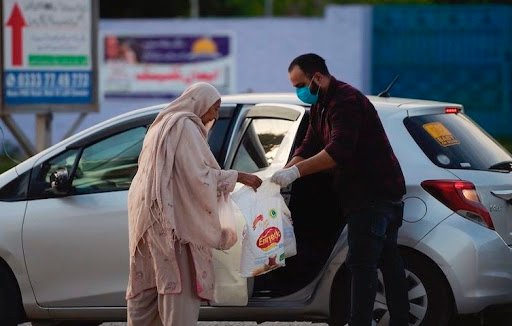
    First, it was about creating and spreading awareness as not many were taking it seriously. Then came the lockdowns, partial or complete, in many countries. Now there are some other stark realities that people are facing; financial woes being one of them. Social-distancing is a privilege. Not everyone can afford it. Lockdowns have helped contain the spread to a certain extent but the economic impact on daily wagers, the lower middle class and many others will be quite harsh. Thus, governments and private citizens must step in to help. 

    A Facebook post doing the rounds about a university van driver in Pakistan is heartbreaking. According to the post, the driver has been calling up students asking for his monthly charges but not many are responding to his calls/texts. We need to understand that in these tough times, we must help those who are less privileged than us. Those who have given leave to their domestic staff must pay their salaries — and if possible, an advance salary as well. Help those around you who you think need it. Buy rations or donate to charities and organisations like the Edhi Foundation that are doing credible work and helping people in these troubling times. 

    Another tragic aspect is that those who fall victim to corona have to deal with the illness alone — away from family and friends — in order to keep others safe from the virus. Burying those who die of coronavirus has also become an ordeal. Family members and friends can only say goodbye from a distance. Funerals in the time of coronavirus are quite different. Coronavirus has changed the world so drastically that people cannot even grieve together anymore. These are the new realities until a cure is found. 

    We will keep learning new things with each passing day. We will see the world change. People will be hungry, frustrated, desperate, scared, depressed, angry and much more. But we must be kind and understanding for this is what humanitarianism is all about. Be human! Be safe.

    FOLLOW THIS LINK FOR LATEST CORONAVIRUS UPDATES FROM PAKISTAN

  • ‘Corona cake’ in Gaza is keeping spirits up

    Palestinian baker Eyad Abu Rezqa cooked up an idea and created a ‘Corona Cake’ which is spreading fast in Gaza.

    The head of the Al-Nada bakery in Khan Yunis in southern Gaza has made a ‘corona cake’ showing a woman wearing a blue face mask, aiming to remind people of the importance of social distancing.

    As per reports, he first shared the design on social media and now a lot of people are ordering them each day in the impoverished Palestinian enclave.

    “Straight away it got great interest, customers starting saying ‘I want that cake’,” Abu Rezqa told AFP.

    “Every day our clients’ demand for the mask cake is increasing.”

    He stressed he was not depreciating the risk of the deadly disease which has killed more than 50,000 people but trying to keep spirits up while promoting awareness.

    The staff making the cakes are wearing protective clothing, Abu Rezqa pointed out.

    According to health authorities in the Hamas-run strip., Gaza has 12 confirmed cases of COVID-19 so far and all of them are in isolation.

    Like much of the world, authorities have urged to practice social distancing to try to prevent the spread but have not yet closed non-essential businesses.

  • ‘They made it harder to breathe’: Coronavirus patient from Lahore shares horrifying experience

    ‘They made it harder to breathe’: Coronavirus patient from Lahore shares horrifying experience

    With the country struggling to contain the outbreak of the new coronavirus, horrifying experiences of both suspected and confirmed patients of the COVID-19 have started pouring in as people narrate their ordeals amid the global health crisis.

    In this regard, I reached out to a “recovered” coronavirus patient, who remained admitted to Lahore’s Mayo Hospital for three long weeks.

    Not only did I ask them what it was like to stay away from their family at such a critical time, fearing never getting to see them again, but also about their experience at a rather infamous government facility.

    “Nothing you have heard is untrue. The deplorable condition of the hospital, the initial inattention of the government and slackness of the hospital staff… all these things made headlines because they were true,” said the patient, who asked not to be named.

    They said they had travelled from Abbottabad to Islamabad in the last week of February and later to Lahore following a two-week stay in the federal capital. “I fell sick two days after arriving in Lahore, my hometown. At first, I ignored the symptoms… a mild fever, after all, is quite common when you’ve been travelling back and forth.”

    “But then I started developing other symptoms. I couldn’t stop coughing and [my] fever just didn’t go away,” the patient said, adding that they had already isolated themself as a precautionary measure after returning from Islamabad where the virus was rumoured to be spreading.

    They said they got themself tested from a government facility but the results turned out to be negative and a second test from a different facility proved that they actually had contracted the virus.

    “One suspected patient, two different facilities, two different tests, two different results in two days. Doesn’t make sense, does it?”

    It merits a mention here that the patient hasn’t been the only one to receive two different test results from two different facilities in Lahore. Last month, the wife of a political bigwig had reportedly tested positive at a private facility and later negative at a government facility. Fashion designer Maria B’s cook had also tested negative for coronavirus on March 26, a few days after testing positive at a private laboratory and being admitted to a Lahore hospital.

    According to reports, the federal government is also sceptical of Punjab’s coronavirus testing data. “So far, 13,380 people have been tested for [COVID-19] in Punjab,” Chief Minister (CM) Usman Buzdar tweeted on March 28.

    While according to statistics of the provincial government, the figure jumped to 14,890 on March 30 in Punjab, it doesn’t tally with the data maintained by the National Institute of Health (NIH) that coordinates with all provinces to update it on a daily basis. According to NIH data, only 13,321 tests had been conducted in Punjab till March 28.

    “Mayo [Hospital] was not an option for me, owing to the poor condition it is known to be in for the past several decades. But I had to go there because a doctor in the family advised me to seek treatment at Mayo,” the patient said.

    They added that they had no other option but to listen to their “doctor-friend” since the government had been keeping people in the dark. “I had no idea where else to go or what else to do.”

    The patient then started narrating their experiences from the hospital and shared what their family had to go through due to the Punjab government’s policy of “criminalising patients”.

    “Not only was I admitted after a group of men in hazmat suits picked me up from my residence, but my house was also guarded by police as other family members were home-quarantined.”

    Although Punjab government officials say that such policing is required to arrest the pandemic, many believe such dealings have led to creating panic among citizens.

    “At the hospital, nobody came to check my temperature within the first 24 hours. Hygienic conditions were pathetic at the hospital, there were bloodstains on the floor and walls, clean drinking water was not available and the bedsheets we were being forced to lie on were pitiful.”

    They said given how disgusting the washroom was, going there was like a punishment and it felt like they would get sicker if they stayed at that hospital any more.

    “While things did start getting better with the number of cases in Punjab increasing and media bringing patients’ ordeal to the notice of authorities concerned, there still was a long way to go. Those around me at the hospital and no escape from my dreadful reality made it harder to breathe with infected lungs,” they said.

    “Every passing second added to my anticipation to recover and get back home, or just lose my battle against coronavirus instead of being forced to live in that depressing environment.”

    Internet, they added, “is always a sweet relief”, but the ages-old structure of the hospital with limited access made it nearly impossible to get any signals.

    “I thought things would get better for me and nothing could be as hard as the first week, but it only got worse when people I had seen being brought in, started to get very sick. One of them, a really old patient, even passed due to the staffers’ [alleged] negligence.”

    The patient in question was a 73-year-old, who was seen tied helplessly to his bed in a video on social media. In the hospital’s isolation ward, the patient could be heard asking for medical staff to tend to him, but his hands and feet were tied to the bed.

    The patient was allegedly not given medication, oxygen or adequate attention by the staff, following which he reportedly passed away. Subsequently, Punjab CM Buzdar ordered an investigation into his death.

    “But you cannot put the blame entirely on doctors and other staff members. They too are humans who are being forced to work under extremely poor conditions. Until my second-last day at the hospital, which was last Friday, I had not seen all staffers in the coronavirus ward with proper protective equipment.”

    To a question, the patient said they were extremely grateful to the doctors performing their duties on the frontline in the war on the pandemic, “and to Allah for finally making the provincial government authorities take the matter seriously”.

    “I don’t know how I survived both the infection and my stay at Mayo Hospital. But what matters is that I did,” the patient said while also urging people to stay at home “if not for themselves, for their loved ones who might not be able to survive such an ordeal”.

    At least 2,079 people had contracted the illness by the time this report was filed on Wednesday. The number of infections in Punjab stood at 748 with Sindh trailing behind at 676 cases, 253 infections in Khyber Pakhtunkhwa (KP), 184 in Gilgit-Baltistan (GB), 158 in Balochistan, 54 in Islamabad and six in Azad Jammu & Kashmir (AJK).

    The number of fatalities stood at 27 while 82 recoveries had been reported.

  • Here’s what you can do in quarantine, courtesy Maya Ali and Saba Qamar

    Here’s what you can do in quarantine, courtesy Maya Ali and Saba Qamar

    The coronavirus outbreak has confined us to the four walls of our house, something that our fast-paced, jet setting lifestyles are not used to. We all now have all this free time on our hands and no idea what to do with it.

    Our favourite celebrities are also in the same situation and they decided to help their fans and followers by sharing some positive advice about what they can do. Here’s what Maya Ali and Saba Qamar suggest:

    https://www.instagram.com/p/B-W3Eu4n31S/
    https://www.instagram.com/p/B99J_tCB_s1/

    Earlier, Maya also encouraged those in a position of privilege to do charity and help those in need.

    https://www.instagram.com/p/B-KGnBYHihv/
  • Coronavirus: ‘Military sidelined PM Imran to enforce countrywide lockdown,’ NYT claims

    A report in The New York Times has claimed that the military “sidelined Prime Minister (PM) Imran Khan to enforce a countrywide lockdown” last week as the coronavirus pandemic in Pakistan worsened while the premier rejected calls from healthcare workers and provincial officials to enforce the same, saying it would ruin the economy.

    “[Imran] Khan rejected calls from healthcare workers and provincial officials to enforce a lockdown, saying it would ruin the economy. Instead, he urged citizens to practice social distancing and ordered everyone back to work, many returning to the sweltering, cramped factories that are the backbone of the economy,” the report said.

    It added, “Finally, the military stepped in on Sunday and sidelined Khan, working with provincial governments to deploy across the country and enforce a lockdown. They erected a maze of military checkpoints in cities like Karachi and sent baton-wielding police officers to violently disperse crowds.”

    While the report suggested that the action might be too late, it is pertinent to note that governments of Balochistan, Khyber Pakhtunkhwa (KP) and Punjab had last Sunday sought the army’s help in dealing with the coronavirus pandemic, asking it to assist civil institutions as the number of confirmed cases in the country crossed 600. The requests had come a day after the Sindh government’s decision to impose a complete lockdown and seek military help under Article 245 of the Constitution.

    The 18th Amendment provides the provinces with significant decision-making autonomy. While Sindh imposed a lockdown on March 23 and requisitioned the army to help carry it out, other provinces followed with varying levels of the halt.

    The Interior Ministry had approved the deployment of the army across the provinces and Inter-Services Public Relations (ISPR) Director General (DG) Major General Babar Iftikhar had on Monday confirmed Chief of Army Staff (COAS) General Qamar Javed Bajwa’s directions for troops and medical resources to be deployed “as per need” in order to contain the spread of the new coronavirus.

    Addressing a press briefing, the military spokesperson had said that the government summoned army for assistance in accordance with the constitution. “This is the time to take tough and difficult decisions on an individual, familial and societal basis.”

    Click here for latest COVID-19 updates from Pakistan and around the world

  • COVID-19: Colony in Lahore under lockdown after massive increase in cases?

    Residents of Lahore’s Imamia Colony claim that the area has been sealed off by the police amid “a massive increase in the COVID-19 cases” as authorities told them to not leave their houses; however, both the government and police deny doing so.

    Reports quoted locals as saying that amid an increasing number of coronavirus cases in Punjab, especially Lahore, the government had put the residential area in the provincial capital under lockdown. They claimed that a fatality was also reported in the locality and the health department was “downplaying the situation”.

    The government, they said, had failed to screen people returning from Iran which led to the outbreak in the colony.

    “The health department is hiding the actual number of the cases,” the residents claimed, urging higher-ups to take notice of the cases.

    According to an audio clip viral on social media, a purported sub-inspector stationed at Shahdara Police Station could be heard telling someone to stay away from Imamia Colony due to a higher number of cases there. As per the clip, a patient also died of the virus and at least 80 per cent were infected in the colony.

    Shahdara Police denied this and said they didn’t seal the area, whereas the health secretary and his spokesperson remained unavailable despite many calls.

    Punjab government spokesperson Mussarat Jamsheed said it was all rumours. “All the areas are under observation and we are not hiding anything from the public,” the official said while asking people not to panic.