Tag: Covid impact

  • What can the govt do, will have to go to IMF again if exports don’t increase, says PM Khan

    What can the govt do, will have to go to IMF again if exports don’t increase, says PM Khan

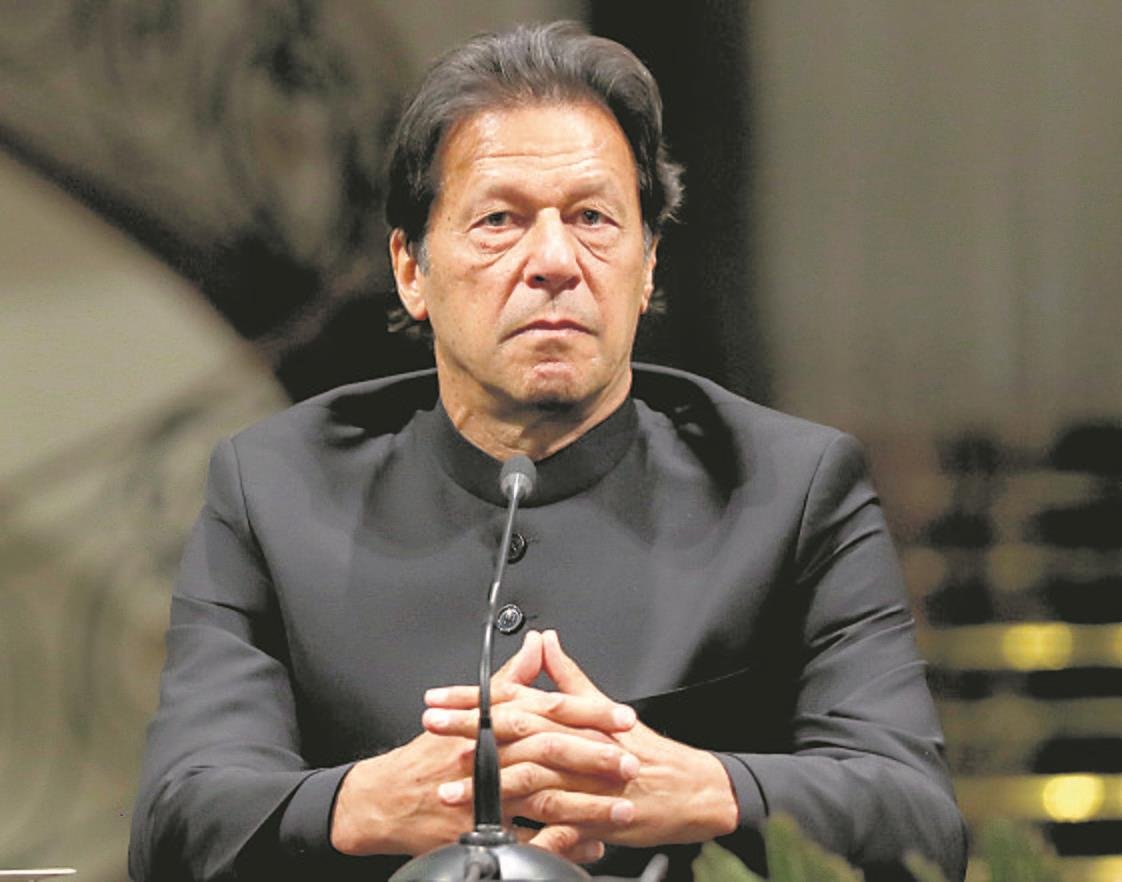
    Prime Minister (PM) Imran Khan while addressing the inaugural ceremony of the 14th International Chambers Summit 2022 organised by the Rawalpindi Chamber of Commerce and Industry said that tax collection and exports are the main drivers of boosting the economy.

    Saying that Pakistan has an “improving economy”, PM Khan said that all economic indicators were showing upward trends despite inherited economic crunch and the impact of Covid-19.

    “Will have to go to the International Monetary Fund (IMF) again if we do not enhance our exports,” said PM Khan.

    “In the past, no attention was paid to these sectors of the economy which are vital for wealth creation. The exports sector was stagnant in the past, but the incumbent government is providing all facilitation to the exporters,” he said.

    “We realise that people are worried, there is imported inflation in our country, dollar rate has gone up due to smuggling of dollar to Afghanistan, still Pakistan is a cheap country, US President Joe Biden has also been criticised by Donald Trump on inflation in the country.”

    PM Khan said commodity prices have increased all over the world and Pakistan also imported inflation which hurt its people badly but asked what the government could do in the circumstances.

    Claiming that the steps taken by his government to combat coronavirus and keep businesses open were being followed by United Kingdom’s Prime Minister Boris Johnson. “We did not let people die due to Covid-19 and lockdowns,” he added.

    The prime minister said corruption would assume the role of cancer. “Corruption is a symptom of lack of rule of law in society. Our fight is for the rule of law in Pakistan. It is a difficult one because of different cartels and mafias which do not want the rule of law,” he said, terming it a jihad against the mafias to secure the future of the country.

    Contrary to the claims, Pakistan lost $250m worth of textile exports in December 2021 when the gas supply was suspended for 15 days in the Punjab textile sector. Executive Director of All Pakistan Textile Mills Association (APTMA), Shahid Sattar also confirmed the loss of millions of dollars by saying that it will “never be recovered.”
  • Modi, Bilawal, Tariq Jamil among others wish PM Khan a swift recovery

    Prime Minister Imran Khan on March 20 tested positive for COVID-19. According to details, the premier is suffering from ‘mild symptoms’ and is self-isolating at home. PM Khan’s wife Bushra Bibi has also tested positive for the virus.

    Special Assistant to the Prime Minister on Health Dr Faisal Sultan, while talking to the media, said that they “are monitoring his clinical parameters, and medical treatment will be given to him if required.”

    “Right now, there is no need for any treatment, as such,” added Dr Sultan.

    Soon after the news of PM Imran testing positive spread, prayers started pouring in for his speedy recovery. Among those who sent him good wishes include Prime Minister of India Narendra Modi, Prime Minister of Sri Lanka, Mahinda Rajapaksa, Maulana Tariq Jamil, PPP co-chairperson Bilawal Bhutto-Zardari and PML-N’s Ahsan Iqbal.

    “Best wishes to PM Imran for a speedy recovery from COVID-19,” said PM Modi.

    “Our thoughts and prayers are with him during this time of difficulty,” said PM Rajapaksa.

    “May Allah grant him full and speedy recovery,” said Maulana Tariq Jamil.

    PPP’s BBZ and Sherry Rehman and PML-N’s Ahsan Iqbal also prayed for the PM’s swift recovery.

    PM Khan’s former teammates Wasim Akram, Ramiz Raja and Waqar Younis also prayed for his swift recovery.

  • Surge in COVID cases: Educational institutions to close down in at least 7 cities

    Special Assistant to the Prime Minister on Health Dr Faisal Sultan and Federal Minister for Education Shafqat Mahmood, in a press conference, have announced that educational institutes in Punjab will remain closed from March 15 to 28. The decision was taken after a meeting of the National Command and Operation Center (NCOC) to review the situation of coronavirus in the country.

    The government officials said that educational institutes in Punjab will remain closed from March 15 to March 28 to contain the spread of Covid-19, adding that spring break will begin in seven districts of Punjab, including Faisalabad, Gujranwala, Lahore, Gujrat, Multan, Rawalpindi and Sialkot. Mahmood said the same decision will also apply to educational institutions in Islamabad, Muzaffarabad and Peshawar.

    However, the decision of the closure of the schools will not be applicable to schools that are already conducting examinations.

    Educational institutions in Sindh and Balochistan would continue with 50 percent attendance every day.

    Earlier today, Minister for Planning, Development and Special Initiatives Asad Umar presided over the NCOC meeting. To contain the spread of the virus the in the country, the following decisions have been taken:

    • Strict compliance of Mask Wearing will continue across the board.
    • SLDs / Micro SLDs will continue to be imposed based on the disease prevalence / hotspots.
    • 50% work from home policy will be implemented on the discretion of federating units. However, it will be enforced in ICT with immediate effect.
    • Time limit of 10:00 PM on all commercial activities will be re-enforced with immediate effect, less essential services.
    • Amusement Parks across the country will be closed at 6:00 PM..
    • Earlier decision of allowing indoor weddings, indoor dining and opening of cinemas and shrines with effect from March 15, 2021 has been withdrawn. However, outdoor dining / take away will continue to remain open as per previous practice.
    • Outdoor gatherings will continue to remain limited to a maximum of 300 individuals with strict enforcement of COVID -19 SOPs.
    • Review of all enforced  non-pharmaceutical interventions (NPIs) will be carried out on April 12, 2021.

    The above-mentioned decisions regarding non-pharmaceutical interventions (NPIs) are the baseline decisions. Federating units are at liberty to impose stricter NPIs in selected cities/districts keeping in view the local disease trend/ spread.

  • Massive growth: 50,000 closed power looms now operational

    Massive growth: 50,000 closed power looms now operational

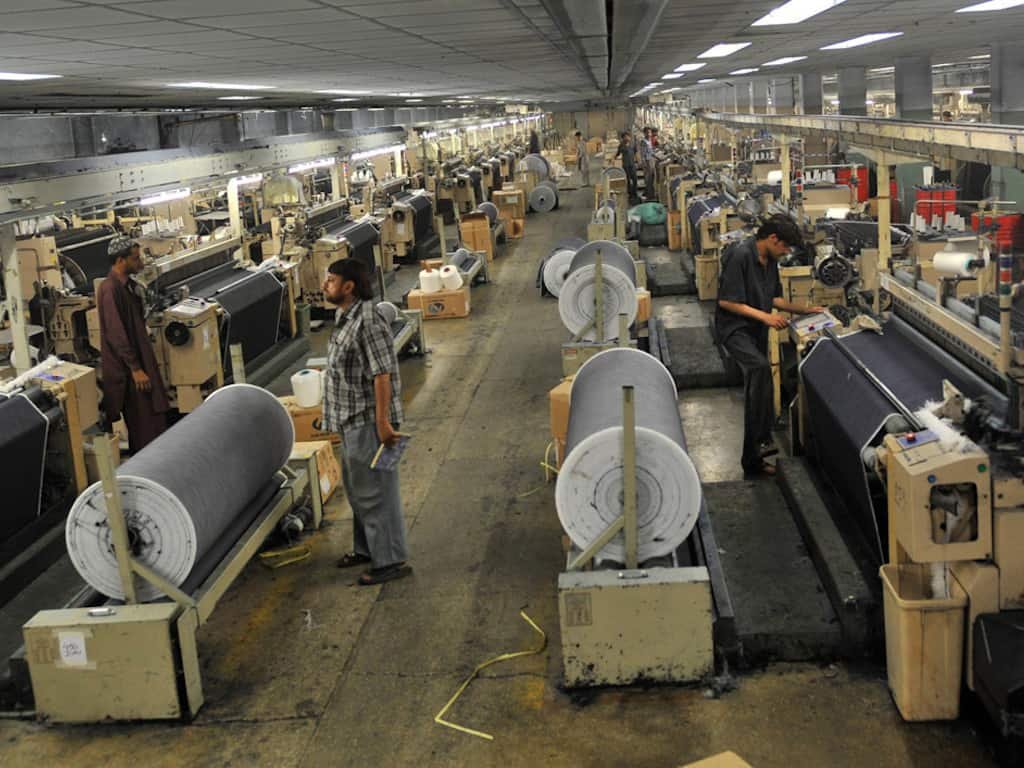
    Faisalabad is witnessing an upward trend in the textile sector because 50,000 closed power looms have been turned operational.

    As per the details, experts have forecasted that another 30,000 looms will be installed as the textile industry witnesses massive economic growth following the high demand for export times.

    The recently-announced incentive of electricity supply for the industrial sector at subsidised prices by the government has also played a vital role in this development.

    On Thursday, Prime Minister (PM) Imran Khan shared a television news report on Twitter regarding the revival of the textile industry.

    The report highlighted the rise in economic activity in Faisalabad and the shortage of 0.2 million labourers that are required to meet the high demand of orders in the sector.

    The textile sector had been adversely affected by the power crisis and neglect of the previous governments. However, due to the incumbent government’s effective smart lockdown policies during the coronavirus pandemic, numerous countries have diverted their orders to Pakistan’s textile sector.

    According to the news report, the textile industry in Faisalabad has 1.3 million workers with 1 million native workers. In its recent report titled “Opening Early helped Pakistan Boost Exports during the Pandemic”, Bloomberg also underlined a major surge in Pakistan’s textile exports.”

    Bloomberg’s report also quoted Shahid Sattar, the Secretary-General of the All Pakistan Textile Mills Association, as saying, “Pakistan has seen orders shifting from multiple nations including China, India, and Bangladesh”.

    He added, “Garment manufacturers are operating near-maximum capacity and many can’t take any orders for the next six months”.

    The report also mentioned that the outbound textile shipments of Pakistan grew at a faster pace than those of Bangladesh and India, and accounted for half of the total export. Islamabad saw total shipments grow 7 per cent in September, compared with New Delhi’s 6 per cent and Dhaka’s 3.5 per cent, the report stated.