Tag: covid in india

  • India world’s top source of misinformation on Covid-19: Study

    India world’s top source of misinformation on Covid-19: Study

    India disseminated the largest amount of Coronavirus misinformation on social media due to the country’s higher internet penetration rate, increasing social media usage and users’ lack of internet literacy, according to a new study.

    The study titled ‘Prevalence and Source Analysis of COVID-19 Misinformation in 138 Countries’ was published in Sage’s International Federation of Library Associations and Institutions journal.

    As per details, the study examined 9,657 pieces of misinformation made in 138 countries. They were fact-checked by 94 organisations to understand the prevalence and sources of misinformation in different countries.

    “Of all the countries, India (18.07 per cent) produced the largest amount of social media misinformation, perhaps thanks to the country’s higher internet penetration rate, increasing social media consumption and users’ lack of internet literacy,” the study stated.
    The results also showed that India (15.94 per cent), the US (9.74 per cent), Brazil (8.57 per cent) and Spain (8.03 per cent) are the four most misinformation-affected countries.

    Read More: Study reveals Pakistanis prayed for India during Covid-19 crisis

    Based on these results, the study stated that it is presumed that the prevalence of Covid-19 misinformation can have a positive association with the pandemic situation.

    “Social media (84.94 per cent) produces the largest amount of misinformation, and the internet (90.5 per cent) as a whole is responsible for most of the Covid-19 misinformation. Moreover, Facebook alone produces 66.87 per cent of the misinformation among all social media platforms,” it added.

    Earlier, the World Health Organisation (WHO) had also cautioned that false information on the virus is spreading and putting people in danger. WHO had advised people to make sure to double-check everything they hear with trusted sources before believing or sharing them with others.

  • Study reveals Pakistanis prayed for India during Covid-19 crisis

    Study reveals Pakistanis prayed for India during Covid-19 crisis

    Most Pakistanis prayed for their Indian neighbours when India was going thorough a severe second Covid-19 wave, said an artificial intelligence (AI)-driven study.

    The research focused on tweets expressing kindness, empathy and solidarity showed that most tweets that were posted by Pakistani citizens between 21 April and 4 May were positive.

    Led by Ashique KhudaBukhsh, the team of researchers at Carnegie Mellon University (CMU) based their study on 300,000 tweets. The team considered only the tweets with the three biggest trending hashtags: #IndiaNeedsOxygen, #PakistanStandsWithIndia and #EndiaSaySorryToKashmir. Of them, 55,712 tweets came from Pakistan, 46,651 from India and the remaining were posted from the other countries of the world.

    With the help of an artificial intelligence tool, “hope speech classifier”, they found Pakistani tweets containing supportive hashtags were by far more than those containing non-supportive hashtags. The study found that these tweets received more likes and retweets as well.

    More than 85% of the tweets posted about the Covid crisis in India from Pakistan were supportive, the research found.

    “Our research showed that there’s a universality in how people express emotions. If you search randomly, you’ll find positive tweets a little over 44% of the time. Our method throws up positive tweets 83% of the time,” KhudaBukhsh said.

    At a time when Indians were panicked about the raging COVID-19 wave, they received support and solidarity from across the border. Some people justified Pakistan’s helpful outpouring as the country itself was also faced with an infectious outbreak.

    Read More: Indian couple gets married on plane to avoid Covid restrictions

    “The situation here was pretty bad too. Our hope was getting thinner and thinner. Our enemy was the same, our borders are so close and we get impacted by whatever happens,” said Prof Arifa Zehra, who teaches history in Lahore.

    “A pandemic doesn’t recognise borders, whether they are geographical or ideological. And when the dark cloud is sneering at you, there’s no harm in sharing a prayer.”

    Prof Zehra also termed these positive tweets as “the greatest reassurance that we are still human”.

    KhudaBukhsh hoped for better relations between communities and countries if this method of identifying and amplifying positive messages is used. “When a country is going through a national health crisis like a pandemic, words of hope can be a welcome medicine and the last thing you want to see is negativity,” he highlighted.

    “There are several studies that show that if you’re exposed to too much hate speech or negative content, you get influenced by it.”

    KhudaBukhsh suggested using this AI-driven method to curb hate speech. “When there’s a negative situation, such as in times of war or a health crisis, instead of blocking the content, an alternative approach can be to highlight the positive content,” he underscored.

    “It will help reinforce the belief that people on the other side of the aisle are kinder.”

    KhudaBukhsh also suggested building up a healthy system that highlights kindness in others before an opposite system is deployed that may censor empathetic content. 

  • Man arrested for eating a snake, claims ‘kept COVID-19 at bay’

    Man arrested for eating a snake, claims ‘kept COVID-19 at bay’

    A man from India’s Tamil Nadu ate a dead snake to “protect” himself from contracting the COVID-19.

    The  50-year-old Vadivel was arrested and charged with a fine of Rs 7,000 after he posted a video of him eating a poisonous snake on social media.

    He claimed that snakes are good antidotes to Covid-19 and keep the deadly virus at bay.

    As per reports, the man caught the reptile in a field and killed it before eating it.

    ‘Mouse plague’ in Australia: Mice crawl into beds and bite residents

    A forest officer in Madurai district said the agriculture worker had been prompted to eat the snake by other people. He had been drunk at the time of the incident.

    Fortunately, the man didn’t bite into the venom glands of the snake, identified as a common krait, a species of highly venomous reptiles native to the Indian subcontinent.

    Its venom consists of powerful neurotoxins that can even be fatal for humans if not treated. The reptile had been found dead in a drain, the forest officer said.

    Warning: This video contains graphic content.

  • ‘Safer in jail’: 21 Indian prisoners don’t want parole amid COVID-19

    ‘Safer in jail’: 21 Indian prisoners don’t want parole amid COVID-19

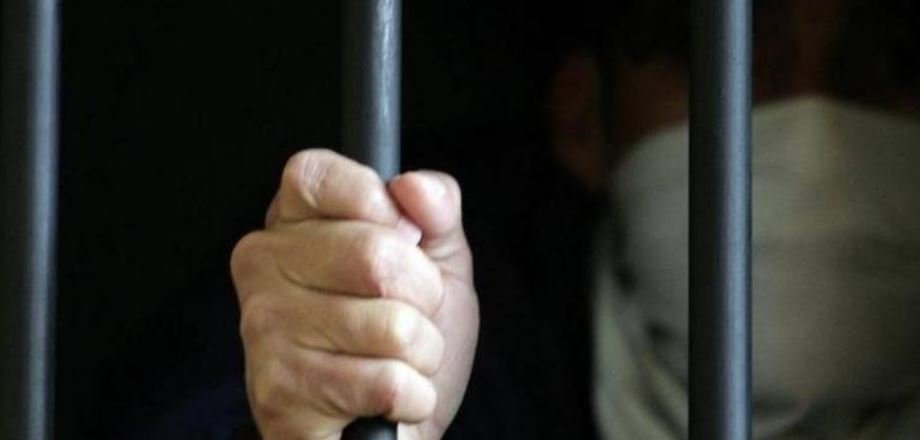
    21 prisoners in Uttar Pradesh, India do not want parole to stay safe and healthy during the Covid pandemic. Parole is a temporary hold-up of the sentence.

    As per reports, the Director-General of Jail Administration Anand Kumar said that the prisoners who have requested that to the authorities are kept in nine prisons of Uttar Pradesh.

    He said that the reason is that when they get three months of parole then these days will be added to the sentence period later.

    Read More: Indian couple gets married on plane to avoid COVID restrictions

    The second main reason is that the prisoners feel that the kind of food and the healthcare services they are getting in jails will not be possible once they are out on parole for 90 days.

    They said that medical facilities are available and daily health checkups are done in jails. They also get food on time so they are safe and healthy in prison and not when they are out trying to make money and living.

    Four requests from Lucknow jail, two from Maharajganj jail and three from Ghaziabad jail have been reported.

    Kumar said that the prisoners have written their requests clearly so they have to agree to take their viewpoint and respect it.

    Due to the extraordinary gush of Covid-19 cases in the country, the Supreme Court on May 8 ordered for decongestion of jails with immediate release of all the inmates who were approved for bail or parole last year.

    The top court had taken suo motu cognizance of the congestion of prisons all over the country on March 16, 2020, saying that it is hard for the prisoners to keep social distancing to avoid the spread of coronavirus.

  • Indian couple gets married on plane to avoid COVID restrictions

    Indian couple gets married on plane to avoid COVID restrictions

    Following a drastic increase in COVID-19 cases in recent weeks, India has imposed a strict lockdown to curb the virus spread hindering the plans of those who had organised traditional and fancy Indian weddings.

    A couple hailing from Tamil Nadu did not bother even for a raging pandemic and seems to have decided nothing would stand in the way of their special day.

    Rakesh and Dakshina bucked restrictions in their home state to charter a SpiceJet flight from Madurai to Bangalore, along with over a hundred guests, so they could get married in mid-air with all their relatives and friends.

    The couple reportedly waited until the aircraft was flying over the Madurai Meenakshi Amman Temple to bless their union.

    India Today reported that the couple had actually tied the knot in a private ceremony held earlier, but decided to host a ceremony onboard an aircraft to make their big day ‘memorable’.

    Read more – Bride marries wedding guest after groom-to-be ‘disappears’

    The couple claimed that all passengers on board were their relatives who had taken the COVID-19 test and presented negative test results.

    An airport director confirmed to ANI that a SpiceJet chartered flight had been booked from Madurai but said officials were unaware of the mid-air marriage ceremony.

  • China’s current COVID-19 vaccines can tackle Indian variants, says expert

    China’s current COVID-19 vaccines can tackle Indian variants, says expert

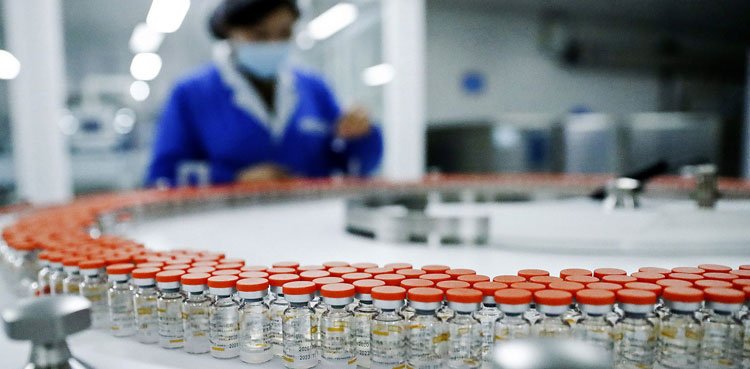
    China’s current COVID-19 vaccines can fight new coronavirus variants spreading in India and can provide protection “to a certain extent”, based on preliminary research results, a disease control expert claimed on Thursday.

    Speaking at a news briefing, Shao Yiming, a researcher at the Chinese Centre for Disease Control and Prevention, did not elaborate on the specific vaccines or variants he referred to.

    Read more – Arjun Kapoor praises Pakistanis for offering help to India

    The World Health Organisation (WHO) said the predominant lineage of B.1.617 was first identified in India last December, although an earlier version was spotted in October 2020.

    The B.1.617 variant found contains two key mutations to the outer “spike” portion of the virus that attaches to human cells, said senior Indian virologist Shahid Jameel.

    The WHO has described it as a “variant of interest”, suggesting it may have mutations that would make the virus more transmissible, cause more severe disease or evade vaccine immunity. Other strains with known risks, such as those first detected in the United Kingdom, Brazil and South Africa, have been categorized as “variants of concern,” a higher threat level.

  • Indian couple exchange wedding garlands using bamboo sticks to maintain social distancing

    Indian couple exchange wedding garlands using bamboo sticks to maintain social distancing

    An Indian couple from Chhattisgrah recently got married while maintaining a distance of six feet between themselves. The viral video shows the couple exchanging wedding garlands using bamboo sticks to practice social distancing.

    The video was shared on Twitter by the additional transport commissioner of Chhattisgarh Dipanshu Kabra.

    Meanwhile, this is not the only wedding to take place in India as COVID-19 ravages the country. Earlier, a couple also tied the knot in PPE after the groom tested positive for the virus.

    Read more – Indian man turns rickshaw into oxygen-equipped ambulance, serves people for free

    India is currently battling with second wave of COVID 19 reporting total 2,14,85,285 and 2,34,071 deaths so far.

  • Man walks into govt office wearing birds’ nest as he couldn’t afford a mask

    Man walks into govt office wearing birds’ nest as he couldn’t afford a mask

    As the deadly second wave of COVID-19 ravages India, authorities have made the use of face masks in public mandatory and announced that violators will be fined Rs 1,000.

    Read more – Mattress factory sealed for stuffing used face masks instead of cotton

    A shepherd hailing from Telangana, India who could not afford a face mask came up with an innovative solution to avoid getting fined.

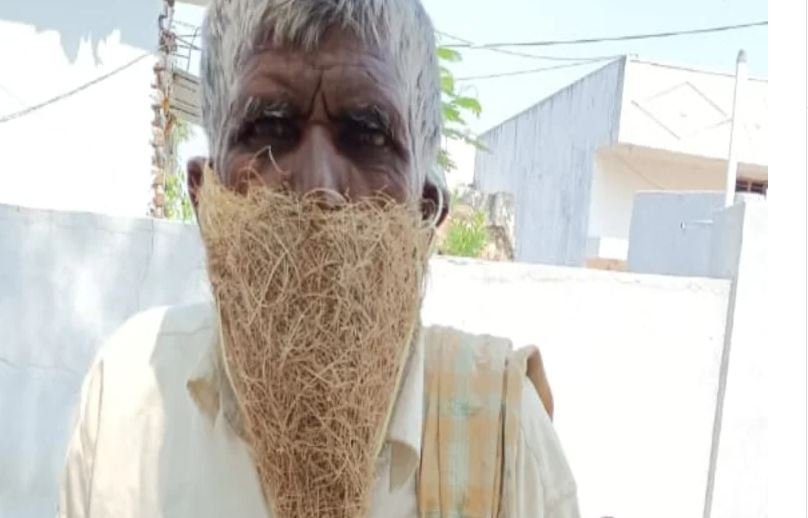
    According to details, Mekala Kurmayya had to visit the government office to collect his pension but could not afford a face mask. Knowing he wouldn’t be allowed to enter the office without a face mask, the Telangana shepherd made a face mask from a bird’s nest and wore it on his his face before stepping into the office.

    While that doesn’t look very comfortable, it appears to have gotten the job done.

    India has reported 19,925,500  cases so far. As of Monday morning, 218,959 people had died in the country.