Tag: COVID vaccine

  • Russia’s Sputnik V to be available privately in Pakistan

    The first shipment of the Russian Sputnik-V has arrived in Pakistan becoming the first privately-imported vaccine available in the country. Pakistan is the 22nd country to approve the Sputnik V vaccine.

    “Sputnik has received EUA (emergency use authorisation),” Special Assistant to the Prime Minister on Health Services Dr Faisal Sultan said while talking about the vaccine.

    As per details, Sputnik V is to be administered in two shots, three weeks apart, has a six-month shelf life and is stored at -18 Celsius.

    While a price has not yet been announced, Dr Omer Chughtai of Chughtai Labs said the “government will hopefully decide and announce the price soon.”

    “We are in process of getting our vaccination centers registered,” he added.

    COVID-19 vaccination for seniors aged 70 and above began on March 10. According to the National Command Operation Center (NCOC) registered senior citizens aged 70 and above can get vaccinated from any health centre. Meanwhile, NCOC head Asad Umar on Wednesday announced that over 41 thousand people were vaccinated the previous day marking the highest daily vaccination rate.

    Pakistan launched its vaccination drive in early February with 500,000 doses of Sinopharm donated by longtime ally China, giving shots to frontline health workers as a priority.

  • COVID-19: Walk-in vaccination for seniors aged 70 and above begins

    Walk-in vaccination for seniors aged 70 and above will be available in Pakistan from today.

    According to the National Command Operation Center (NCOC) registered senior citizens aged 70 and above can get vaccinated from any health centre. However, the walk-in corona vaccination facility will only be available for registered senior citizens.

    Punjab Minister for Health Dr Yasmin Rashid has urged all citizens to register themselves before heading to the facility to avoid inconvenience.

    Vaccination of people over 60 years and above commenced on March 10. Among those who received their shot is President Arif Alvi and Samina Peerzada, who also praised the government for the facility.

    Meanwhile, 2511, people tested positive in last 24 hours in Pakistan and the positivity rate has jumped to 7.21 %. Whereas, 58 people have lost their lives to the virus.

    Amid the sharp increase in COVID-19 cases, various corona related restrictions have been re-imposed in different cities of country. The Sindh Government has imposed smart lockdown across the province until April 15 to fight against the third wave. The Punjab Government has also issued a notice and urged people to follow strict SOPs in the province.

    Meanwhile, Dr Yasmin has also said that administrative officers and police staff will be vaccinated in the next phase.

  • President Dr Arif Alvi, First Lady receive COVID-19 vaccine

    President Dr Arif Alvi, First Lady receive COVID-19 vaccine

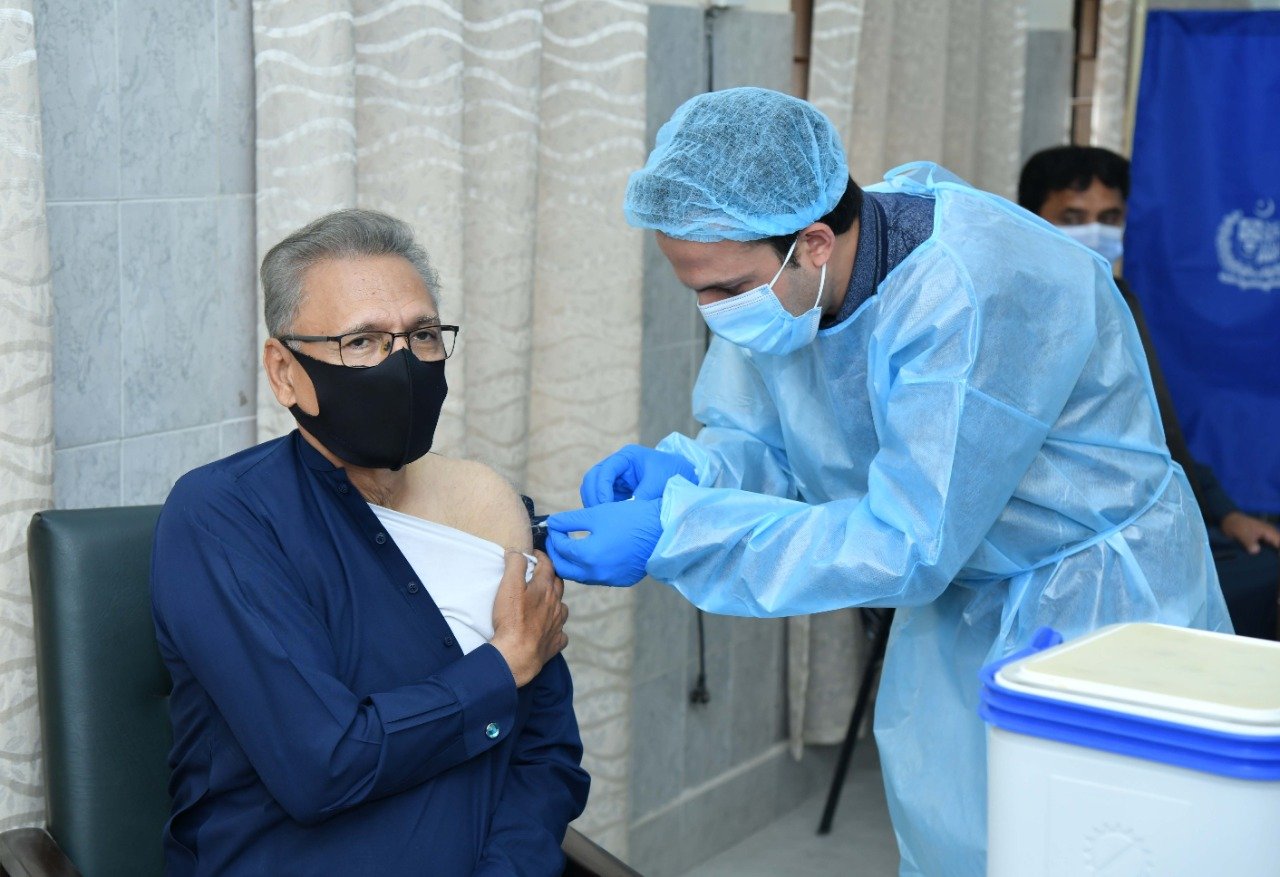
    President of Pakistan Dr Arif Alvi and his wife Samina Arif Alvi have received their first dose of COVID-19 vaccine at a vaccination center in Islamabad on Monday.

    As per details, President Alvi and Mrs Samina Alvi got their COVID-19 vaccination administered after they registered themselves for the vaccine. They received the confirmation message on Sunday along with the designated vaccination centre.

    Speaking to the media after getting vaccinated, Dr Alvi said: “Elites around the world broke the line for the vaccination. The vaccine is being administered to senior citizens in Pakistan as per age categories.”

    The President added that he registered himself on the 1166 helpline and got the shots “as per my turn”.

    Dr Alvi further said: “The government has introduced an easy and the best mechanism to avoid long queues.”

    The President also advised those who have received the vaccine to exercise precaution and follow the SOPs even after getting the shot.

    Read more – Samina Peerzada gets vaccinated, praises government

    “In wake of third wave of the COVID-19 pandemic, people should continue wearing face masks, wash their hand frequently and maintain social distancing.”

    He also lauded the PTI regime’s efforts and strategies in light of the pandemic, saying the government’s smart lockdown policy “reduced economic losses”.

  • Vaccination of people 60 and above to begin on March 10

    Vaccination of people 60 and above to begin on March 10

    Minister for Planning, Development and Special Initiatives Asad Umar has announced that vaccination of people over 60 years would start from March 10.

    Read more – ‘Govt does not plan to buy vaccines anytime soon’

    “Vaccination of people 60 years and older will be starting from Wednesday March 10,” announced the Minister, adding: “Vaccinations will be done in reverse order by age – which means the oldest person who has registered will be vaccinated first.”

    Read more: Here’s how you can register for COVID-19 vaccine in Pakistan

    As per reports, Pakistan’s positivity ratio has risen from 3.21% to 4.57% in one month. Pakistan has reported 592,100  virus cases and 13,227 deaths so far. 1,592 cases and 22 deaths have been reported in the last 24 hours in the country.

  • ‘Govt does not plan to buy vaccines anytime soon’

    ‘Govt does not plan to buy vaccines anytime soon’

    “The government aims to handle the COVID-19 health challenge through herd immunity and donated vaccines as currently; it has no strategy to buy more vaccines,” National Health Service (NHS) Secretary Amir Ashraf Khawaja has told the Public Accounts Committee (PAC).

    According to reports, National Institute of Health Executive Director Maj Gen Aamir Ikram has informed that a single dose of Chinese vaccine CanSino costs $13 which is why Pakistan was depending on international donors and friendly countries, like China to fulfil its vaccine requirement.

    Read more – Govt announces free vaccine for all citizens

    The NHS secretary further told PAC that Chinese pharmaceutical company Sinopharm had committed to give one million doses of the virus vaccine [to Pakistan], adding that 0.5m doses had already been handed over. Out of those 0.5 million doses,  around 275,000 doses had been administered to healthcare workers fighting against COVID-19 on the frontlines.

    He said the second phase would include the health officials working in hospitals and other health facilities, adding that people aged 65 and above could also register themselves for vaccination via a text message to 1166. According to him, the process of vaccination to aged people was due to start by March 5 but was delayed because the consignment was delayed.

    Khawaja also said that Pakistan plans to vaccinate 70 million people this year.

    Read more – Will Pakistan get enough COVID-19 vaccines?

    According to the NHS secretary, Pakistan will also get 16m free doses of Indian-made Oxford-AstraZeneca’s Covid-19 vaccine through Gavi that would cover upto 20% of the population of Pakistan. The Global Alliance for Vaccines and Immunisation (Gavi) is a public-private global health partnership with the goal of increasing access to immunisation in poor countries.

    In response to a question by the PAC chairman, the secretary said Pakistan would receive the first batch of AstraZeneca vaccine made by Serum Institute of India by the mid of March and the rest was expected to arrive in the country by June.

    He said that another Chinese company had conducted the phase-three trial of CanSino vaccine in Pakistan, adding that a total of 18,000 people were inoculated and the vaccine’s efficacy stood at 85pc.

    The PAC chairman highlighted that some people had some concerns regarding the side effects of the vaccine and suggested that the top leadership of the country should get vaccinated first to remove doubts in the general public’s mind.

    In response to a question by Hina Rabbani Khar, the NHS secretary said that despite the government’s offer to the private sector to buy the vaccine, no serious buyers had so far shown interest. The government had earlier allowed the private sector to import vaccine to cater to the needs of those people who could afford its price.

    According to him, the Drug Regulatory Authority of Pakistan has so far received applications only from three companies for the import of vaccines, but their applications were rejected because they did not give any detail and specification of the vaccines they intended to import.

  • Canadian man celebrates COVID-19 vaccination with bhangra

    Canadian man celebrates COVID-19 vaccination with bhangra

    Canadian dancer Gurdeep Pandher celebrated his COVID-19 vaccine jab by dancing on a frozen lake.

    Sharing a video of himself dancing, Gurdeep told his followers that he received his COVID vaccine on March 2 and headed straight to the frozen lake in Yukon, Canada and did the bhangra to spread positivity and joy.

    A 55-second video clip shows Pandher performing upbeat bhangra steps on the frozen lake as he celebrated his vaccination.

    “Yesterday evening I received my Covid-19 vaccine. After that, I went to a frozen lake to dance bhangra on it for joy, hope and positivity, which I’m forwarding across Canada and beyond for everyone’s health and wellbeing,” wrote Gurdeep in the caption.

    Pandher’s video has gone viral on social media with over one million views on Twitter with users lauding the dancer for spreading smiles amid the pandemic.

    https://twitter.com/Christo75118472/status/1366782645879910406?s=20

  • Saudi Arabia says COVID-19 vaccination is ‘must’ for 2021 Hajj

    Saudi Arabia says COVID-19 vaccination is ‘must’ for 2021 Hajj

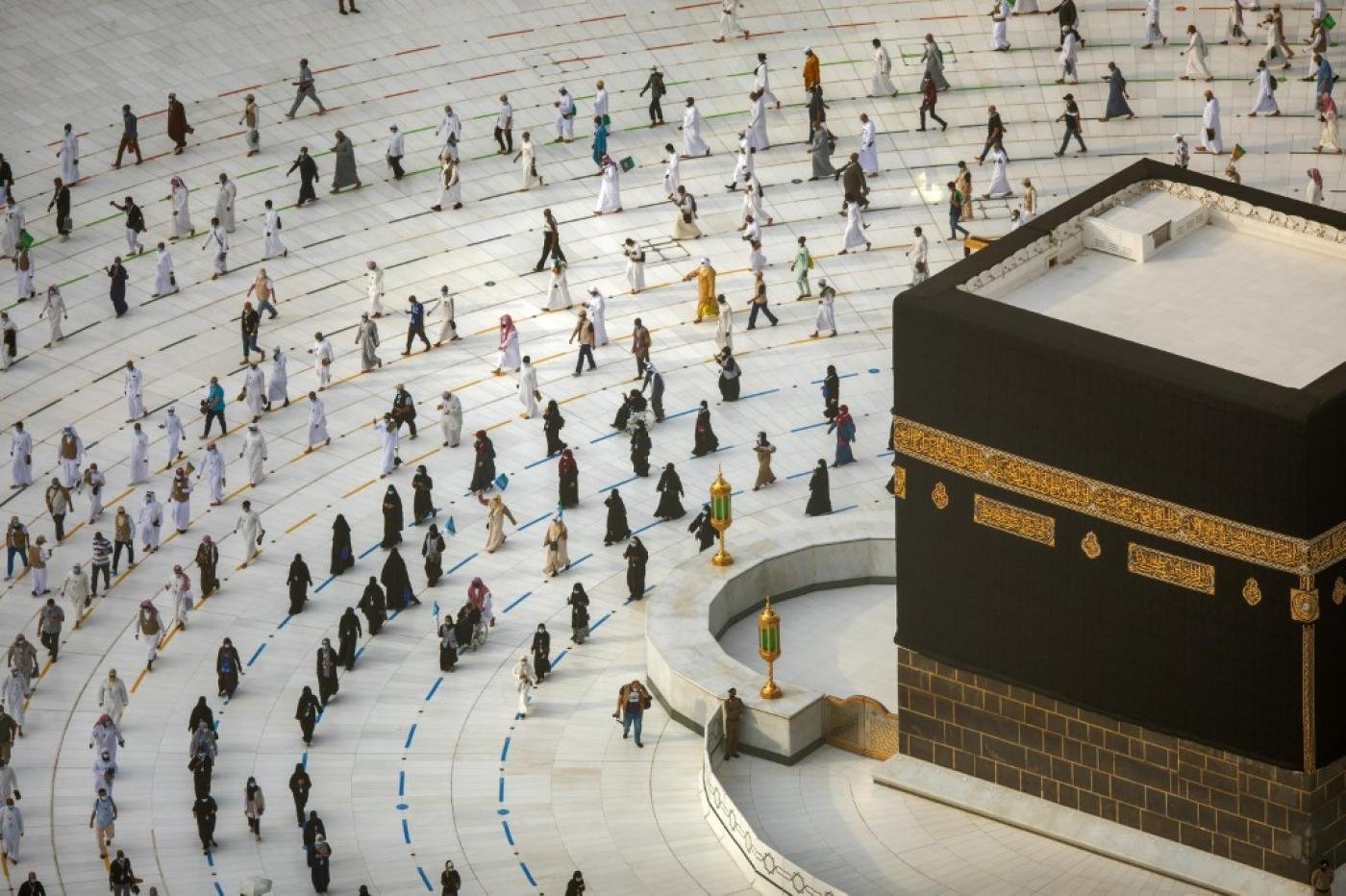
    Saudi Arabia’s Ministry of Health has said that only people who have been vaccinated against COVID-19 will be allowed to attend Hajj this year.

    “The COVID-19 vaccine is mandatory for those willing to come to Hajj and will be one of the main conditions [for receiving a permit],” read a statement signed by the Minister of Health.

    In 2020, the Kingdom reduced the number of pilgrims to around 1,000 to avoid the spread of the coronavirus barring Muslims from around the world from the rite for the first time in modern times.

    In the same notification, Saudi Minister of Health Dr Tawfiq al-Rabiah said the government must be prepared to “secure the manpower required to operate the health facilities in Mecca and Medina”.

    These facilities will be stationed at entry points for pilgrims, he said, in addition to a formation of a vaccination committee for pilgrims within Saudi Arabia.

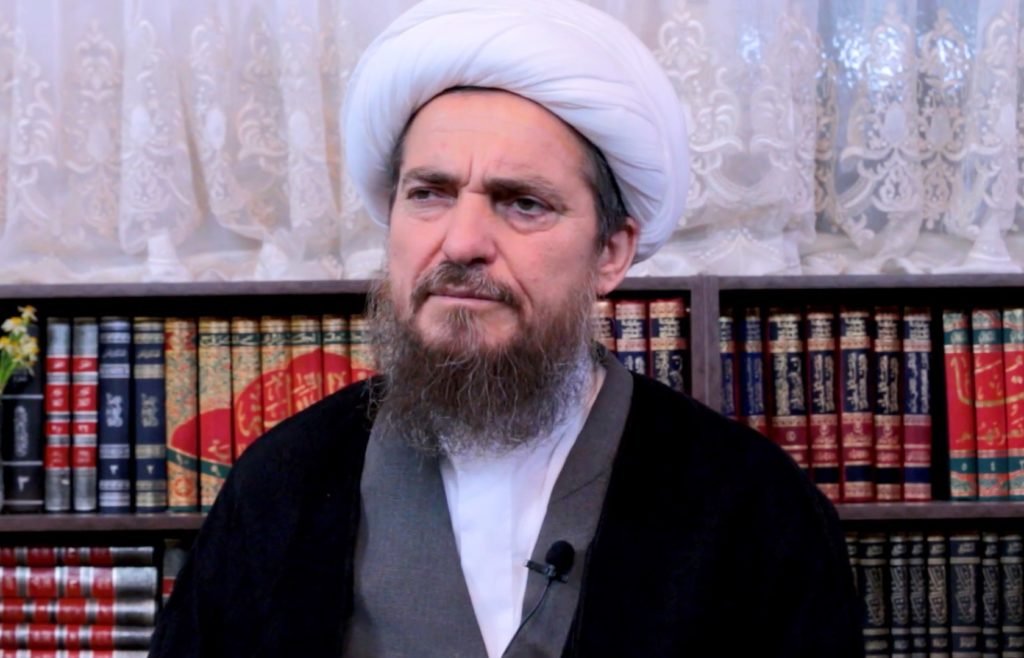
  • Cleric believes COVID vaccine makes people ‘gay’

    Cleric believes COVID vaccine makes people ‘gay’

    Amid an increase in conspiracy theories about coronavirus vaccine, an Iranian cleric has come forward with another absurd claim about the vaccine turning people into homosexuals, reported Arab News.

    In a rant on Telegram, Ayatollah Abbas Tabrizian, who is known for his vitriol against Western medicine, said that the people who have received COVID vaccine have become “gays”. “These jabs have made the individuals gay,” he claimed, asking people to keep their distance from these individuals.

    The so-called father of Islamic medicine claimed that in the presence of Islamic knowledge, Western medical practices have become “irrelevant”.

    Last year, there was a viral video of him burning a copy of Harrison’s Manual of Medicine – considered an authority and the most trusted brand in medical content.

    Iran’s regime has executed 4,000-6,000 gays and lesbians since its 1979 Islamic revolution, according to a 2008 WikiLeaks cable.

    Iran is the Middle East region’s hotspot for the coronavirus’ worst outbreak with almost 1.5 million cases. The country’s vaccination program begins Tuesday for the population groups most at risk: frontline healthcare doctors and nurses working in contact with COVID-19 patients at intensive care units.

    Iran earlier launched a COVID-19 vaccine developed by Iran’s Razi Vaccine and Serum Research Institute.

  • VIDEO: Frontline workers receive their COVID-19 vaccines across Pakistan

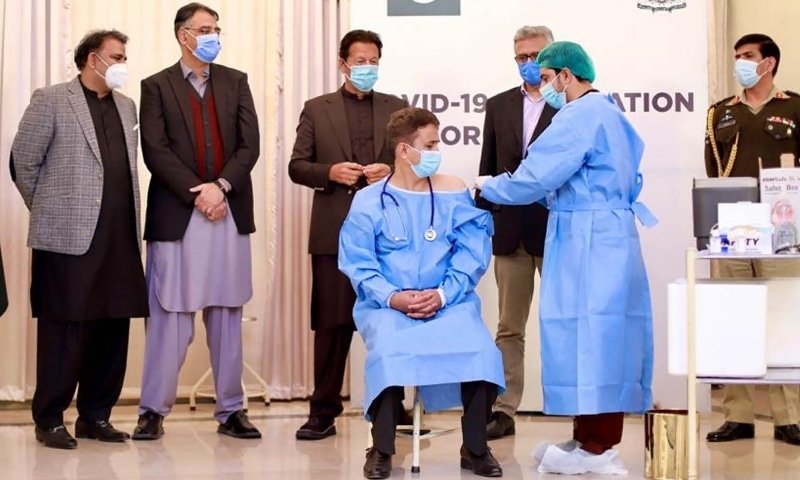
    The National Immunisation Drive against COVID-19 formally commenced on Tuesday with a ceremony at the National Command and Control Centre (NCOC) in Islamabad. Prime Minister Imran Khan, Asad Umar, Fawad Chaudhry, Dr Faisal Sultan and Dr Sania Nishtar were among those present at the event.

    According to Umar, Dr Rana Imran Sikander, who heads the COVID ward at PIMS Hospital in Islamabad, was the first person to receive the vaccination in the country.

    Speaking on the occasion, Minister for Planning and Development Asad Umar lauded the sacrifices and services of frontline healthcare workers for serving the nation during the pandemic.

    “Frontline healthcare workers are our real heroes,” said the minister. “No doubt they have put their lives at risk in their fight against COVID-19 and we pay tribute to all of them.”

    He also thanked the Government of China for supporting Pakistan during the pandemic and donating vaccine to the country. Umar also paid tribute to the NCOC team and provincial authorities working in close liaison in the fight against the virus.

    The next day on Wednesday, separate ceremonies were held in all the provinces and federating units at the same time, where healthcare workers received their first dose of the vaccine. Healthcare workers are being inoculated with the Sinopharm COVID-19 vaccine imported from China.

    Meanwhile, addressing a press conference on Wednesday, Special Assistant to Prime Minister (SAPM) on National Health Services Dr Faisal Sultan said an effective mechanism has been developed to ensure the administration of the COVID vaccine to the people.

    Dr Faisal said adult vaccine centres have been established across the country which currently have the capacity to administer the vaccine to forty thousand people on daily basis. He said this capacity will be further enhanced in the coming days.

    The SAPM added that the government aims to inoculate seventy percent population by the end of this year.

  • Will Pakistan get enough COVID-19 vaccines?

    Will Pakistan get enough COVID-19 vaccines?

    “If we are lucky to find a vaccine at $6-10 per dose, we would need a total of $540 to 900 million to acquire 90 million doses. Notwithstanding the existing allocation of $150 million and some vaccines as aid, it means that we are going to need much more money.”

    Will Pakistan get enough COVID-19 vaccines?

    Before we answer this question, we need to know how many vaccines we need. Pakistan has set a target to vaccinate 70 million people, out of its population of more than 220 million, to achieve “herd immunity”. Most of the COVID-19 vaccines in the market require two doses to be administered to each person. This means that we need at least 140 million doses, not taking into account any wastage.

    The next question we should ask is how many different vaccines there are in the market. So far, at least seven vaccines have been approved, out of which five have been approved for use outside their country of approval, including those by Pfizer, Moderna, Oxford-AstraZeneca, Sinopharm and Sputnik V. A number of other vaccines are in advanced stages of approval, including those by Johnson & Johnson, Novovax, CanSino and Bharat Biotech.

    Pakistan’s choice of vaccine will depend on three factors: price, storage and transportation requirement, and availability.

    The approximate per-dose price for Pfizer is $20, Moderna $10-50 (depending upon the quantity ordered), for Sputnik V less than $10, and for AstraZeneca $3-4. The price of Sinopharm’s vaccine is unknown but news reports suggest around $145 for two doses (or roughly $72.5 per dose). The price of Sinopharm seems excessive and it is not clear if Pakistan can get a discounted rate.

    The vaccines by Pfizer and Moderna need ultra-low temperatures to be stored. For instance, Pfizer’s vaccine needs to be stored at -75˚C, whereas that of Moderna needs -20˚C. This poses a serious challenge for developing countries like Pakistan, which have unreliable or mostly absent cold chains. Therefore, this handicap would prevent the wide usage of these vaccines in Pakistan. On the other hand, the Russian and Chinese vaccines as well as the one by AstraZeneca can be stored at standard refrigerator temperatures, making them much more suitable for us.

    The availability of vaccine, however, poses the most significant challenge. The manufacturers of all these vaccines have mostly booked their entire capacity for 2021 already. Some of them are now planning to further ramp up their capacity very quickly. Even the companies that are still in the final stage of vaccine trials have started to book orders from customers around the world.

    Looking at price and storage requirements, the Oxford-AstraZeneca vaccine seems to be the most suitable choice for Pakistan. However, AstraZeneca has gone into a partnership with Serum Institute of India for the supply of this vaccine to our entire region – South Asia. There is no reason to believe that Serum Institute would not prioritise Indian requirements over export orders. The rivalry between India and Pakistan is not going to help either. Sources suggest that while Serum Institute has indicated availability of the vaccine for exports by the third quarter of 2021, the volume that it would be able to provide to Pakistan remains unclear. There is also a chance that this stipulated timeline is not followed.

    This leaves Pakistan with the Chinese and Russian vaccines only.

    Incidentally, this is not a Pakistan-specific problem and instead a challenge faced by all low-income countries, which are struggling to acquire sufficient quantities of vaccine. Out of a total of 7.2 billion doses booked so far, 5.2 billion have been booked by high or upper middle-income countries, whereas 2 billion doses have been booked by lower middle-income countries, including 1.5 billion by India alone. So far, the low-income countries have booked no significant volumes of the vaccine.

    Nevertheless, it does not absolve the state of its responsibility to provide enough vaccines for its citizens and that too in a timely fashion.

    What has Pakistan done so far in this regard?

    We have so far adopted a three-pronged strategy. Firstly, we have joined the COVAX alliance, which is aimed at facilitating equitable access to COVID-19 vaccine. Secondly, the government is developing its own plan to acquire the vaccine and administer it through the public sector healthcare system. And lastly, the government has allowed the private sector to import the vaccine so that they can also provide them to those who can afford.

    COVAX is an alliance formed through efforts of the UN, WHO and GAVI. The Alliance is planning to make 2 billion doses available by the end of 2021 for high-risk and vulnerable populations. Out of this, 1.3 billion doses will be financed by donors and provided to 92 low and lower-middle income countries including Pakistan, targeting up to 20 per cent of their population, while the rest of 700 million doses will be made available to 80 wealthier nations that have joined COVAX, on a self-financed basis. Although COVAX, owing to its sheer size, has been able to secure some sizeable contracts for vaccine supply, it is not clear if it will be able to meet its ambitious target within the stipulated time. So far, COVAX has committed 50 million doses to Pakistan, which still leaves us with another 90 million doses to procure to meet the target of 140 million vaccine doses.

    For government’s own vaccine procurement, Pakistan has so far allocated $150 million to provide vaccines for the most vulnerable 5 per cent of the population. Reportedly, the government is also negotiating with development partners to get another $100 million. So far, the government has only confirmed booking for one million doses of the Sinopharm vaccine. In addition, China has also announced providing 0.5 million doses to Pakistan free of cost. These 1.5 million doses would be enough only for 750,000 people or 1 per cent of the targeted population.

    The price of the Chinese contract is unknown but if it’s anywhere close to $72.5 for a dose, then it would have taken $72.5 million or almost half the allocated amount. If, however, the Chinese have given the vaccine on a discount, it might have left us with more money.

    Although the government’s permission to allow private sector import of the vaccine is a good step, it is unlikely that the private sector would get a significant vaccine supply in 2021.

    If we are lucky to find a vaccine at $6-10 per dose, we would need a total of $540 to 900 million to acquire 90 million doses. Notwithstanding the existing allocation of $150 million and some vaccines as aid, it means that we are going to need much more money.

    Pakistan needs to act fast, mobilise financing and secure supply contracts from Chinese, Russians and those manufacturers that are in advanced stage of trials to get a timely supply of the vaccine. Then comes the challenge of vaccinating the massive target of 70 million people.

    In short, Pakistan may get enough vaccine, but it is likely to take more than a year. Given the current situation, it seems that Pakistan is not likely to meet its vaccination target before the second half of 2022.