Tag: CPEC Authority

  • Pak-China relations to restrengthen pledges Chinese delegation leader

    Pak-China relations to restrengthen pledges Chinese delegation leader

    Pak-China relations to re-strengthen, pledges Chinese delegation leader
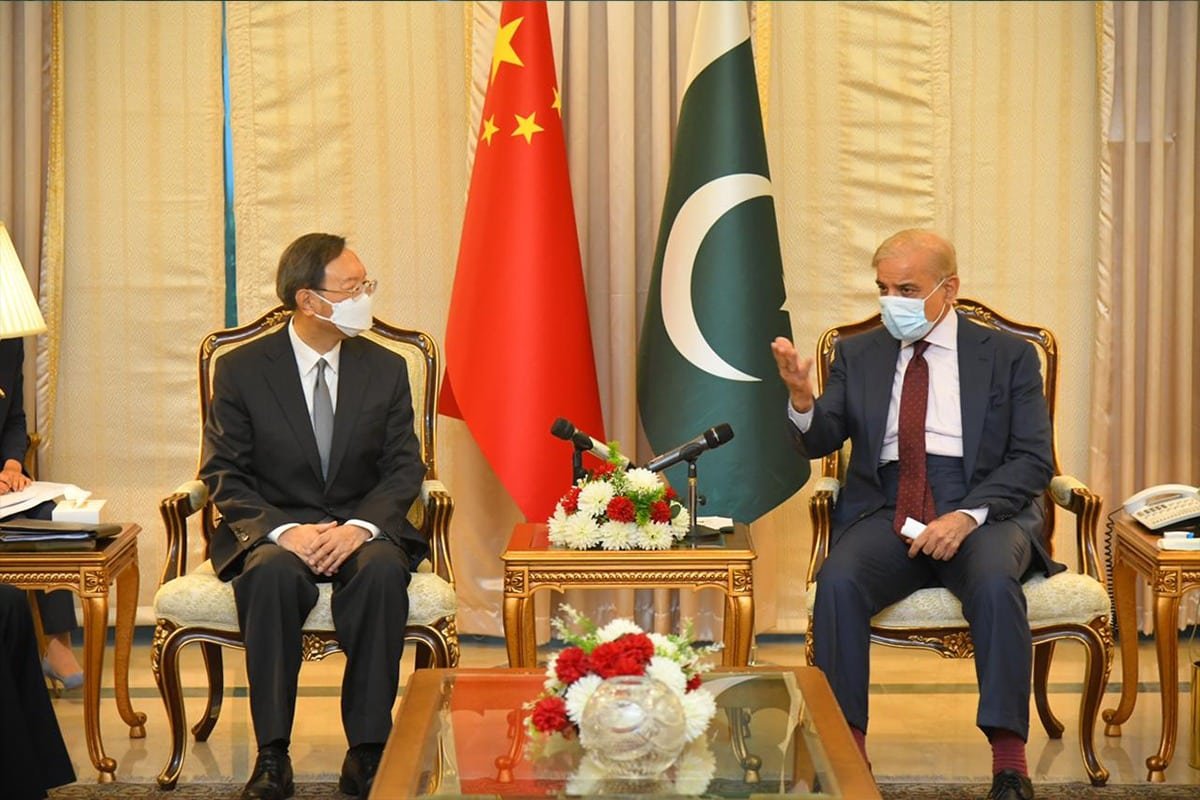
    Chinese politician and Director of China’s Central Foreign Affairs Commission Yang Jiechi pledged to help re-strengthen Pakistan-China relations as he kickstarted his two-day trip to Islamabad with a meeting with Army Chief General Qamar Javed Bajwa on Wednesday.

    “He assured to play his role for further improvement in diplomatic cooperation with Pakistan at all levels,” said the Inter-services Public Relations (ISPR) Director-General (DG) Major-General Babar Iftikhar after the meeting with the army chief at the General Headquarters.

    Yang had a meeting with Prime Minister (PM) Shehbaz Sharif on Wednesday as well. The PM highlighted the significance of Director Yang’s visit in furthering the bilateral relations between the two countries across all domains. In particular, the China-Pakistan Economic Corridor (CPEC) has strengthened the ties between China and Pakistan. The relationship between the two countries would continue to grow and prosper, bringing peace and stability to the region, noted Sharif.

    Yang also met Foreign Minister Bilawal Bhutto-Zardari.

    “The two sides discussed the entire spectrum of bilateral relations and exchanged views on regional and global issues of mutual interest,” the Foreign Office said in a statement.

    The meetings come at a sensitive time as the Pakistan-China relationship seems to be under strain after the April 26 attacks on three Chinese language teachers in Karachi.
  • 90 per cent institutions, including PM Khan’s office, decline RTI requests

    The majority of government institutions and departments have declined to respond to hundreds of queries by Geo News, which were sent to them under the Right To Information (RTI) laws, Investigative Reporter Zahid Gishkori reports for The News.

    According to the Punjab Information Commission, RTI is the right that you have, as a citizen, to access information from your government and private bodies that receive public funds. It is based on the principle that information belongs to the people. Under Article 19-A of the Constitution, RTI is a fundamental right in Pakistan.

    The media outlet reportedly sent approximately 400 different queries to 36 key institutions in the last nine months but 90 per cent of them didn’t respond or simply declined. Only 10 per cent of queries were partially responded to by the institutions, providing either very little or patchy information.

    According to the report, a few of the institutions provided factually incorrect and cooked-up information.

    Over 100 queries were sent to the governments of Khyber Pakhtunkhwa (KPK) and Punjab, both have not responded. Similarly, Sindh and Balochistan did not receive the correspondent’s queries.

    The departments that simply refused to share any information includes the offices of the Prime Minister, President, Chief Ministers, Cabinet Members, Supreme and High Courts, Federal Board of Revenue (FBR), China–Pakistan Economic Corridor (CPEC) Authority, National Accountability Bureau (NAB), Assets Recovery Unit (ARU), Parliament, Pakistan International Airlines (PIA) and Financial Action Task Force (FATF), the report states.

    The Cabinet Division (CD) refused to share any information regarding gifts and the use of helicopters by PM Khan. The ARU and NAB refused to share information on the Broadsheet scandal, as per the report.

    Furthermore, it says that the Ministry of Interior even shared false information by saying no official is facing inquiry in issuing bogus visas to Chinese nationals. despite the fact that the interior ministry itself referred an inquiry against its own officials allegedly involved in a visa scam to the FIA for probe.

    During the process, Gishkori was approached by four cabinet members and half a dozen senior civil servants to withdraw the requests.

  • CPEC Authority chief Gen Asim Bajwa resigns

    CPEC Authority chief Gen Asim Bajwa resigns

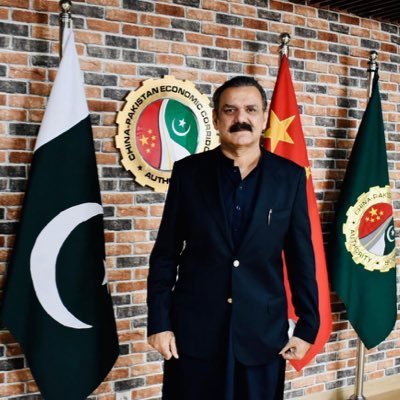
    Lieutenant General (retired) Asim Saleem Bajwa on Tuesday resigned from his position as the China-Pakistan Economic Corridor (CPEC) Authority’s chief, as he thanked the government and Prime Minister Imran Khan for their support.

    Bajwa took to Twitter and said, “I bow my head before Allah Almighty for giving me an opportunity to raise and steer the important institution of CPEC Authority as one window for all CPEC projects, charting the future direction.”

    Bajwa further tweeted that he wished the best for Khalid Mansoor, who has replaced him as the special assistant to the prime minister (SAPM) on CPEC Affairs.

    He said Mansoor was fully equipped to take CPEC forward. “CPEC is a lifeline for Pakistan; it will transform us into a progressive and fully developed country.”

    Meanwhile, Federal Minister for Planning, Development, and Special Initiatives Asad Umar thanked Bajwa for his services in moving CPEC forward and playing a vital role in broadening the project’s scope.

    The federal minister welcomed Mansoor to the team as SAPM for CPEC Affairs.

    According to Engro website, Khalid Mansoor was the Chief Executive of The Hub Power Company Limited (Hubco) since May 20, 2013.

    He holds a Degree in Chemical Engineering with Distinction and honors. Mansoor is also the Chairman of Laraib Energy Limited, a subsidiary of (Hubco).

    He has over 32 years of experience and expertise in the Energy & Petrochemical Sectors in leading roles for mega-size Projects Development, Execution, Management and Operations.

  • You can now join CPEC as an intern, here’s how

    China-Pakistan Economic Corridor (CPEC) Authority Chairperson Lt Gen (r) Asim Saleem Bajwa has announced the launch of a three-month internship aimed at human and social development.

    In a series of tweets, Bajwa said in the spirit of youth empowerment, CPEC has offered the youth an opportunity to develop skills and experiences that would allow the country to grow and prosper in the future.

    With 60 per cent of the population falling under the youth category, a tremendous opportunity exists to develop young leaders with maximum productivity vis-à-vis other regional economies, he said.

    The initiative has been well-received by Twitterati.