Tag: CPEC

  • ‘Rubbish,’ General Bajwa speaks out against claim made by journalist about him

    ‘Rubbish,’ General Bajwa speaks out against claim made by journalist about him

    “Rubbish, totally rubbish,” said General Bajwa in response to an ARY News anchorperson’s claim about China Pakistan Economic Corridor (CPEC) that was attributed to the army chief, reports Ansar Abbasi for The News and Jang.

    ARY News anchorperson Chaudhry Ghulam Hussain claimed that he was told by the army chief, in the presence of a couple of other people, that out of the initial Chinese investment of $19 billion for CPEC projects during the PML-N government, $10 billion were spent on the ground while $9 billion was stolen by contractors, government officials and political governments at the Centre and in Punjab. Ghulam Hussain said that when he asked why no action was taken, he was told by the army chief that the Chinese said they “don’t want to agitate these things in public” and that they will take action against their own people privately after investigating.

    Abbasi reports that whenThe News shared the video clip of the anchor’s claim with a defence source close to army chief General Bajwa, the source said Bajwa responded to ARY’s claim by saying, “Rubbish, totally rubbish.”

  • Lahore continues to face gas and power outage in Ramzan

    Lahore continues to face gas and power outage in Ramzan

    People in several localities of Lahore have complained of substantial pressure reduction as well as unannounced power cuts, bringing the natural gas and power shortages back in the holy month of Ramzan.

    On Friday, customers reported that natural gas load shedding had resumed in the city, making cooking at home difficult. Natural gas pressure only improved to a limited extent during Sehri and Iftari hours due to micromanagement by Sui Northern Gas Pipelines Ltd (SNGPL).

    As per the gas load management plan, gas supply to Compressed Natural Gas (CNG) filling stations has been a concern in the country, which has yet to be updated to accommodate this sector.

    Shortages, according to experts, are due to a gap in the import of Liquefied Natural Gas (LNG) shipments. After long-term sellers were unable to deliver, the government attempted to negotiate cargoes of spot LNG as a backup plan. Such attempts, however, have yet to show positive outcomes. The same goes for power load shedding.

    Read more: Another hike of Rs4.9 per unit approved in power tariff

    Gas disruptions and load shedding have become the norm, according to residents. Affected locations include Canal Bank Housing Scheme, Bedian Road, Taj Bagh, Mughalpura, Saddar, Johar Town, and many more Lahore neighbourhoods.

  • US becomes friendly when in need, later abandons Pakistan: PM Khan

    US becomes friendly when in need, later abandons Pakistan: PM Khan

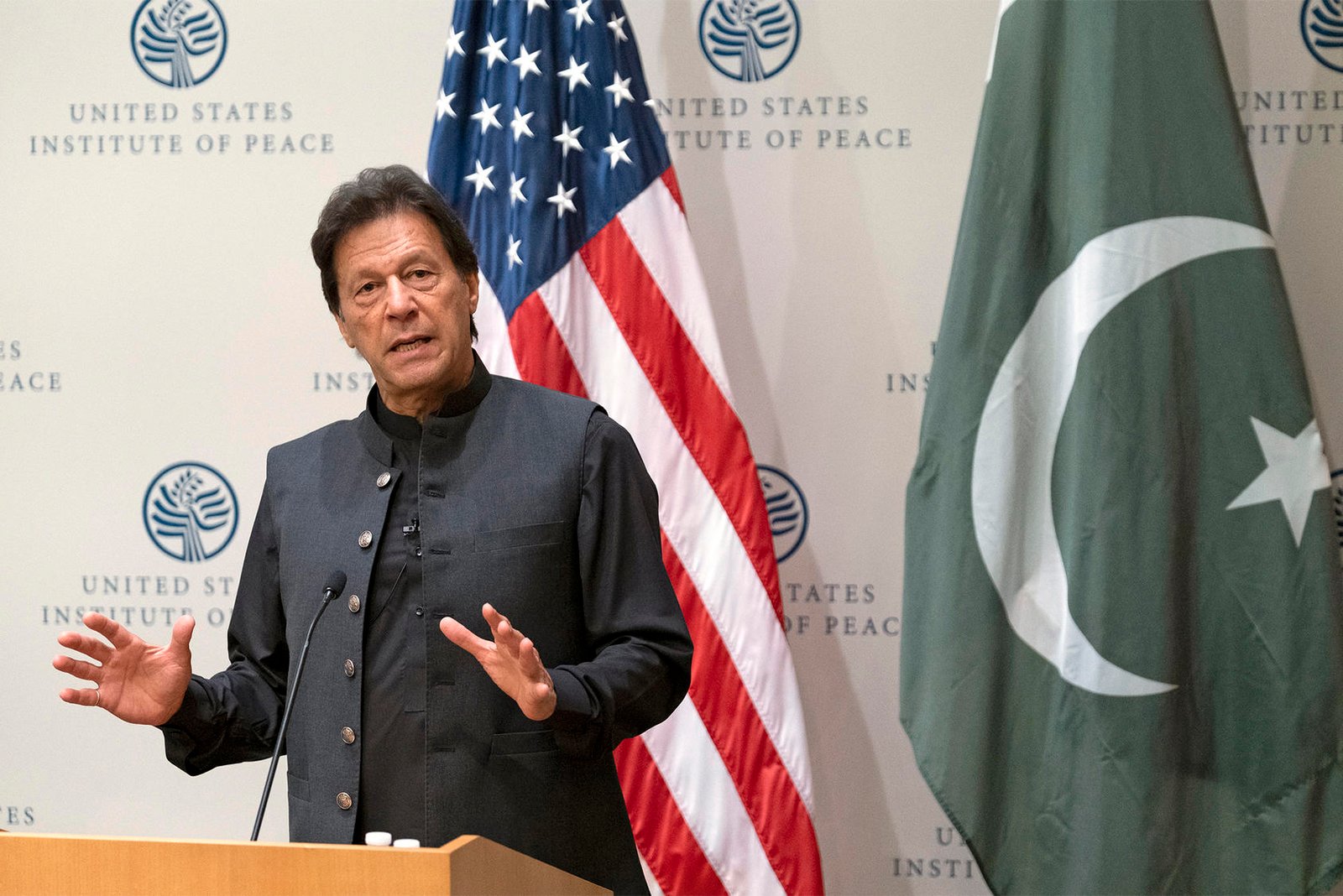
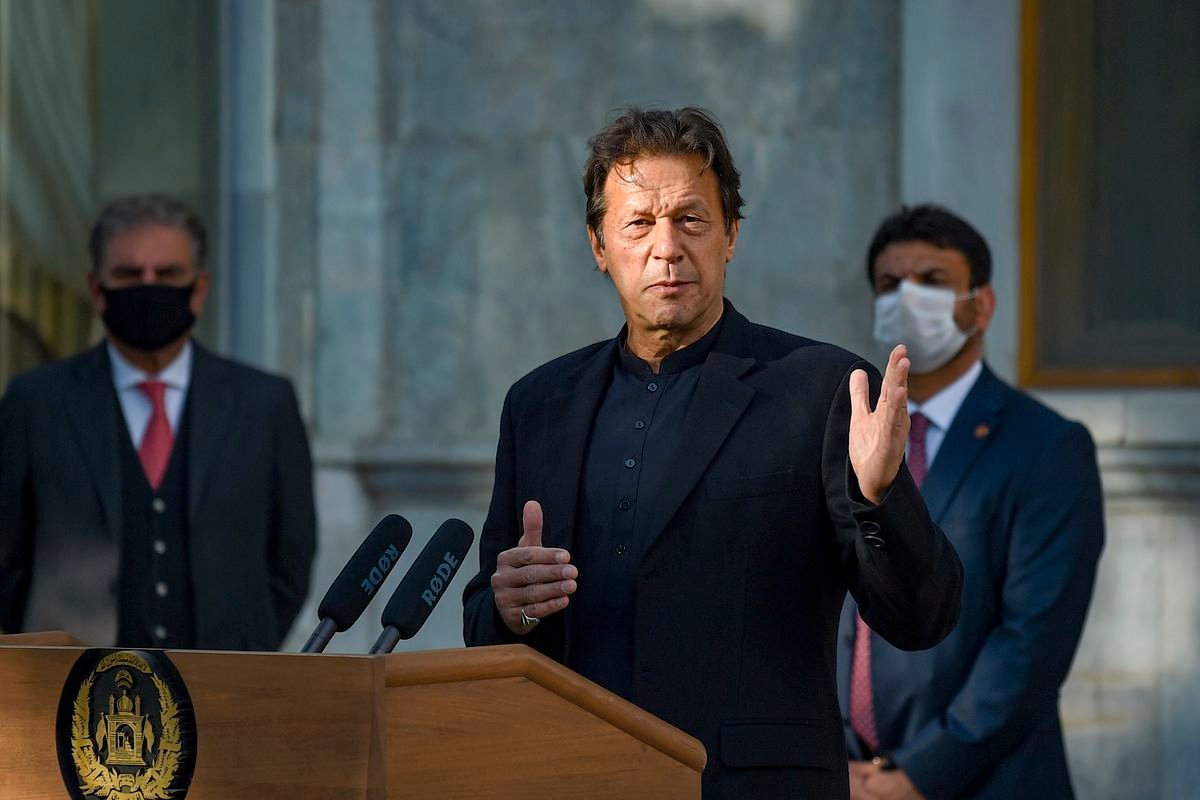
    Prime Minister (PM) Imran Khan said that the United States (US) has also been “a good friend of Pakistan” but it hasn’t been an “all-weather friend” like China.

    In an interview with Dr Eric Li, Director of the Advisory Committee of the China Institute of Fudan University, PM Khan said: “There have been times when the US has been very friendly but then when they think Pakistan is not of use to them, then we get abandoned. Then they again sort of become friendly.” PM said that Pakistan became a frontline state against the Soviets in Afghanistan, Pakistan became a friend of the US, and “they even helped us and they were good to us”. He added that the moment the Soviets left, “they slapped sanctions on Pakistan”.

    “Ten years later when 9/11 happened, they [the US] again became very good to us but then when they could not win against Afghanistan, then we [Pakistan] were blamed for this debacle,” said PM Khan.

    PM Imran Khan said that with China, our relationship has been consistent for seven decades regardless of the government in power. “It’s a people-to-people friendship.”

    “When you have no clear aims why you invaded a country, it is going to be a failure. Anyone who thinks of controlling the Afghan people has not read their history,” said PM Khan when asked about the situation after the withdrawal of US troops from Afghanistan. He added that the whole mission of the US in Afghanistan was “based on a false premise”.

    On Afghanistan’s humanitarian crisis, PM said, “If Afghanistan descends into chaos because of the sanctions, as its 75 percent economy depends on foreign aid, this will be the biggest manmade human disaster.”

    https://twitter.com/appcsocialmedia/status/1491987521630355456
  • ‘World should pay attention to the ongoing atrocities of India’: PM Khan

    ‘World should pay attention to the ongoing atrocities of India’: PM Khan

    Prime Minister (PM) Imran Khan, who is on a four-day visit to China, cited India’s aggressive behaviour and the prevailing Hindutva ideology as a threat to regional peace and a cause of lingering instability of the region.

    The premier’s remarks came in an exclusive session with the heads and representatives of leading Chinese think tanks, universities, and the Pakistan Study Centre in Beijing.

    “The atrocities of India are continuing in Indian-Occupied Kashmir (IoK). The world should pay attention to the ongoing atrocities of India against Kashmiris,” said PM Khan.

    Referring to India’s aggressive behaviour and the prevailing Hindutva ideology, PM Khan said that the country was a threat to regional peace and a cause of lingering instability of the region.

    “In view of myriad global challenges, the world did not need another Cold War. Divisions could result in mounting suffering and prevent common benefits. Pakistan was, therefore, of the belief that the key driver in international politics should be cooperation, rather than confrontation,” said PM Khan.

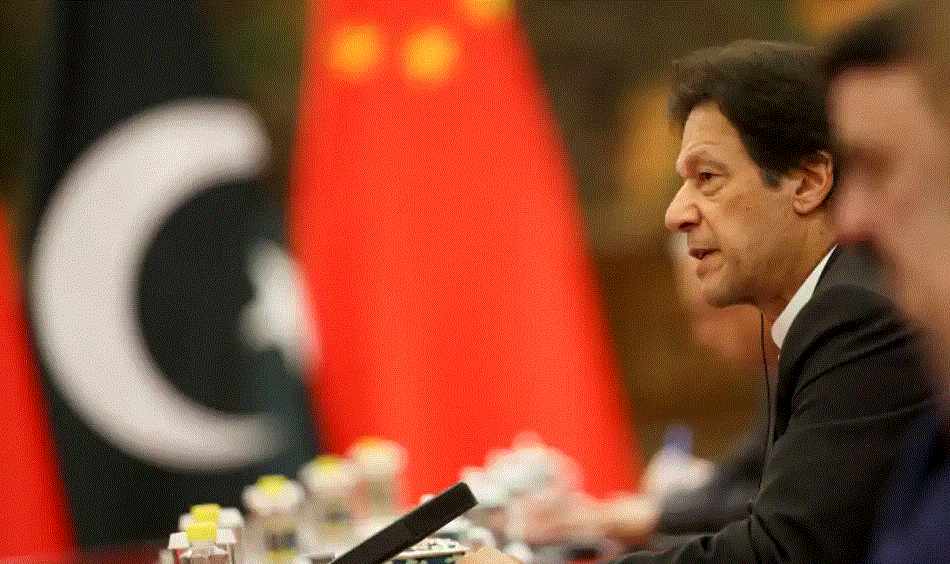
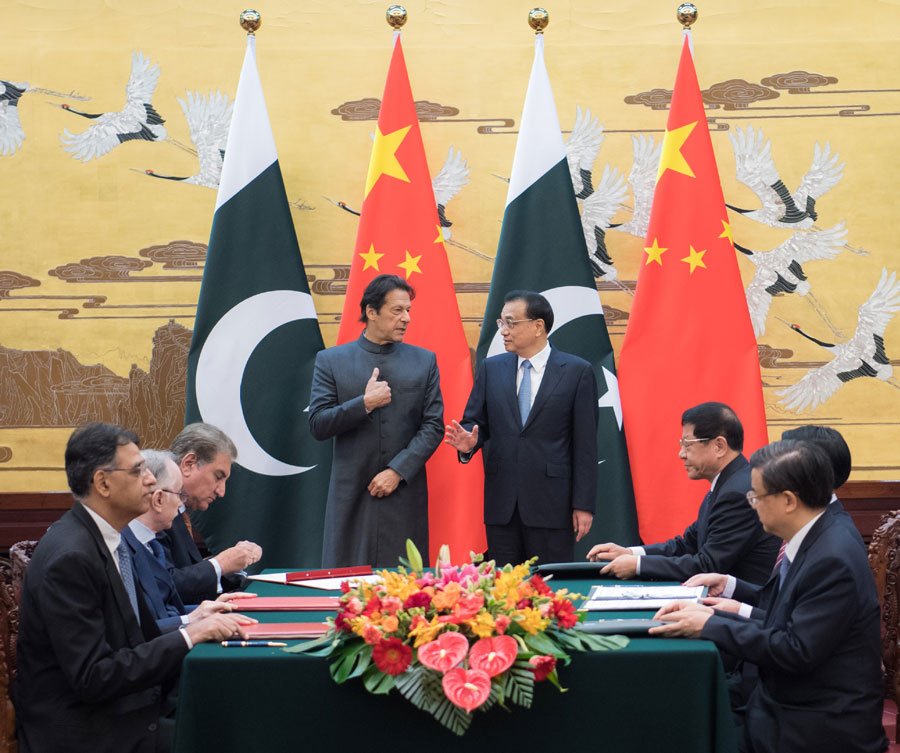
    In his meeting with NDRC chairman and Chinese Peoples Political Consultative Conference vice-chairman, the prime minister said the China–Pakistan Economic Corridor (CPEC) has a strategic significance for both countries and was delivering tangible benefits. PM Khan noted with satisfaction that CPEC’s early-harvest projects had transformed Pakistan’s economic landscape, thus laying a solid foundation for sustainable economic growth.

    Reaffirming the commitment of two sides to timely completion of CPEC and its high-quality development, the premier said both sides would continue to expedite efforts to achieve Gwadar’s potential as a hub of regional commerce and industry while also prioritising preparatory work on the railway’s Main Line-1 (ML-1) and key energy projects.

    Prime Minister Imran Khan also attended the inauguration of the Beijing Winter Olympics 2022 at the national stadium.

    Chinese President Xi Jinping inaugurated the sports event that brought together around 3,000 athletes from 91 nations to compete across 109 medal games.

  • PM Khan visits China, ‘pitch book’ prepared to convince China to invest in Pak

    PM Khan visits China, ‘pitch book’ prepared to convince China to invest in Pak

    Prime Minister (PM) Imran Khan has left for China on a four-day official on Thursday to attend the ceremony of the Olympic Games Beijing 2022 where he will meet Chinese President Xi Jinping and Premier Li Keqiang. PM Khan is accompanied by a high delegation including China Pakistan Economic Corridor (CPEC) Special Assistant Khalid Mansoor.

    Prime Minister Office (PMO), in a tweet, said, “The visit would mark the culmination of celebrations commemorating the 70th anniversary of the establishment of diplomatic relations between and with more than 140 events organized to showcase the resilience of the All-Weather Strategic Cooperative Partnership.”

    This visit would be PM Khan’s fourth visit to China. Previously, he went on a two day (October 8-9) visit to China in 2019, before the Covid pandemic.

    Prior to the premier’s departure, cabinet members who are accompanying him termed this visit to China of great significance.

    Foreign Minister (FM) Shah Mahmood Qureshi revealed that many Chinese companies are “desirous” of investing in Pakistan. According to him, the visit will further expand bilateral relations and promote high-level exchanges.

    Finance Minister Shaukat Tarin stated that it is a “very important” trip politically and economically. He added that China would be asked to relocate some of its required industry needs to Pakistan.

    Meanwhile, National Security Adviser (NSA) Moeed Yusuf stressed that the trip is important in regards to solving the Afghan crisis. He said that the issue will be discussed during the visit as well.

    Federal Minister for Information and Broadcasting Chaudhry Fawad Hussain, while highlighting the years of friendship between both countries, said “Pak-China relations are deeper than the oceans and higher than the Himalayas.”

    Planning Minister Asad Umar said the trip has come at a “very important time”. A special book has been prepared which will explain why Pakistan is a prime destination for investment and will be presented to the Chinese leadership, Umar shared via Twitter.

  • PM Khan says treatment of Uighurs not true on ground

    PM Khan says treatment of Uighurs not true on ground

    Prime Minister (PM) Imran Khan, prior to his upcoming trip to China from February 3 to February 5, during which the premier will attend the opening ceremony of the Winter Olympics and meet Chinese leaders. He also spoke to journalists on various issues concerning both Pakistan and China.

    The premier reinforced that his visit will reinforce a strategic cooperative partnership between the two countries, and further advance the objective of building a closer China-Pakistan community with a shared future in the new era.

    Appreciating China for how it developed over the years, PM Khan said the world should see how China helped the poor develop and eradicate poverty.

    Talking on China–Pakistan Economic Corridor (CPEC) PM Khan said that the first phase of CPEC was connectivity and power generation. “Now the CPEC has moved into the next stage where it’s about the relocation of industry. We want to develop our industrial zones, our special economic zones. Then we want special help in agriculture to increase our productivity. In China, productivity is very high as compared to Pakistan. “

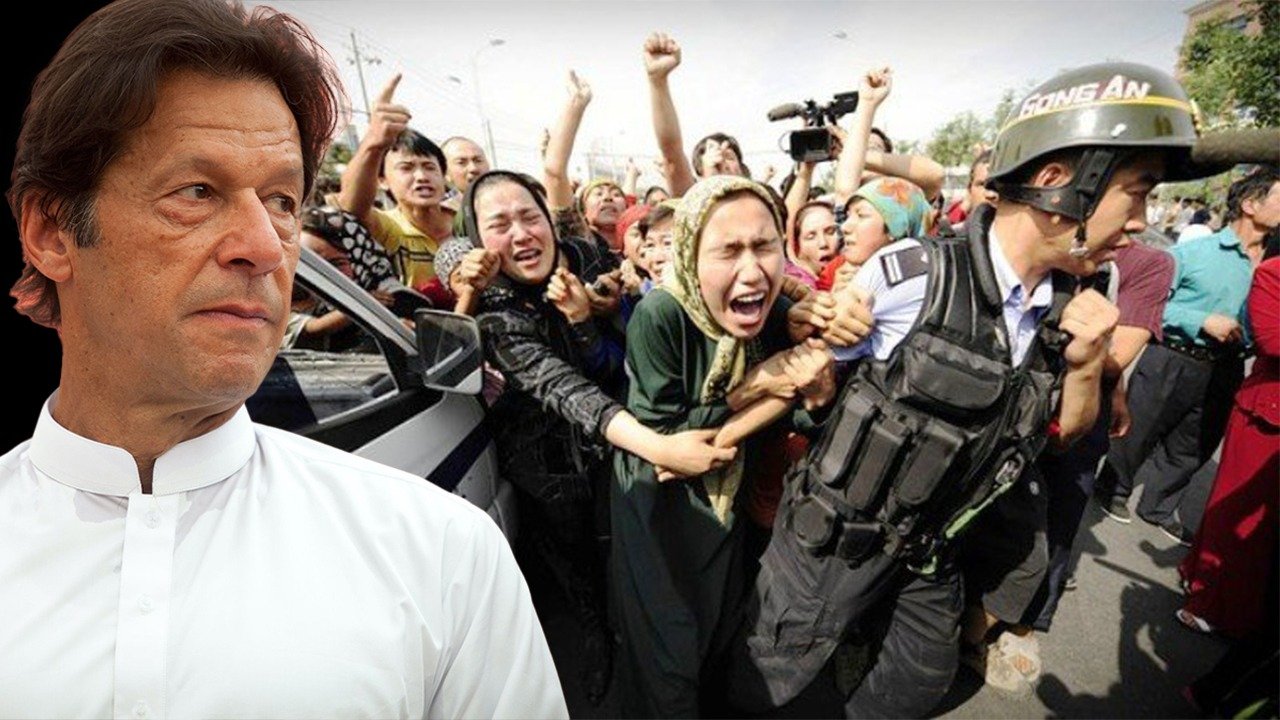
    When asked about how the West presented the picture of Chinese Muslims suffering in Uighur, PM Khan said, “There is a lot of criticism about the treatment of Uighur’s by China in the West. Our ambassador went there, Moin-ul-Haq, our ambassador in China went there. We had asked him, he went there and he sent us information and said this is actually not true on the ground.”

    “What we in Pakistan find it very difficult to swallow is that while they talk about Uighurs, they do not talk much in the West about Kashmir. Because in Kashmir the worst violations of human rights have taken place by India. And somehow there is selective silence about human rights in Kashmir,” said PM Khan.

    The premier further said, “Where there is something like nine million people, who are basically living in the worst conditions in almost open prison by these 800,000 Indian troops. So we find it very difficult that while on one side they talk about Xinjiang but on the other hand the silence about Kashmir is demeaning for us. And that double standard is what we in Pakistan find difficult.”

    The premier, talking about Afghanistan, said that is the foreign countries who turned have Afghanistan into a battleground and for 40 years the people have suffered. He further said that the people of Afghanistan have gotten a chance after 40 years to live in peace.

  • PM Khan likely to attend Beijing Olympics 2022 in China next month

    PM Khan likely to attend Beijing Olympics 2022 in China next month

    Prime Minister (PM) Imran Khan could well be one of the leading dignitaries watching the Winter Olympics, which start in Beijing on February 4.

     The government of China and China Sports Authority are looking forward to Pakistan’s PM Khan’s attending the opening or the closing ceremony or attending during the event. The invite was sent to the Pakistan Cricket Board, reports The News.

     “Yes, we are in contact with the Chinese authorities and have received a communication. We have forwarded that to the foreign ministry through the official channel,” said Pakistan Cricket Board (PCB) official.

    The United States, Britain, Australia, and Canada have announced a diplomatic boycott of the event, while North Korea was the latest country to pull out, citing the pandemic.

    Special Assistant to the Prime Minister on China Pakistan Economic Corridor (CPEC) Khalid Mansoor, a couple of days back, had revealed the prime minister’s plan to visit Beijing early next month.

  • ‘Govt is going to ensure Pakistani citizens are safe without blood being spilt on either side’: Moeed Yusuf on BBC HARDtalk

    ‘Govt is going to ensure Pakistani citizens are safe without blood being spilt on either side’: Moeed Yusuf on BBC HARDtalk

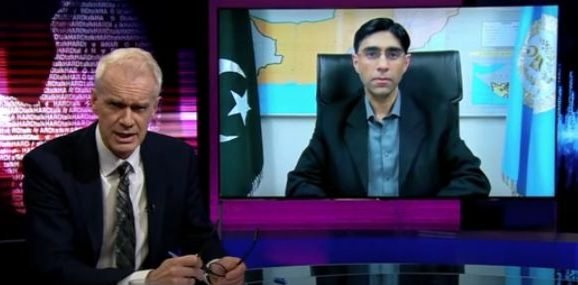
    National Security Adviser (NSA) to the Prime Minister, Dr Moeed Yusuf, while giving an interview to BBC host Stephen John Sackur on BBC HARDtalk said that the state’s job is not to kill another Pakistani.

    “We are going to try our level best to ensure that Pakistani citizens are safe without any more blood being spilt on either side.” The NSA’s comments come in reference to the Pakistan government’s talks with the Tehreek-i-Taliban Pakistan (TTP).

    “How secure is Pakistan after the Taliban are back in power in Afghanistan?”: Sackur

    Sackur questioned Yusuf on how secure Pakistan is after the Taliban are back in power in Afghanistan.

    “Frankly it depends on how responsibly the international community plays the future. Pakistan was not behind anything. There was a policy employed by the United States (US) and others who are in Afghanistan. That was always a failing policy. The only country that kept saying that you will not find a military solution to this problem was Pakistan and our advice was not heeded.”

    “We kept saying negotiate from a position of strength, we weren’t listened to, we were blamed and scape-goated and the result is in front of you,” added Yusuf.

    “We heard the worried voices of the Supreme Court when they were grilling PM Khan,” Sackur

    “Pakistanis are very worried. We heard the worried voices of the Supreme Court when they were grilling PM Khan on what was going on under these negotiations with the Taliban,” responded Sackur and further added that during the grilling of the premier, one of the judges alluded to the 2014 terrible atrocity where the TTP attacked the Army Public School (APS) in Peshawar and killed more than 130 children and questioned PM Khan whether the government was about to sign a documented defeat with those who killed these children, and are we going to surrender once again.

    “You should recognise the state of democracy in this country that the judge calls in the prime minister who goes gets grilled and now Stephen Sackur has the opportunity to ask me. That’s the state of democracy and I am proud of that,” responded Yusuf.

    “We have a consistent policy as a state to say that negotiation must happen from a position of strength and this is what we told the Americans and United Kingdom (UK).”

    “No military bases of China in Balochistan”: Yusuf

    Yusuf said there were no military bases of China in Balochistan, rather there were economic bases there where any country could invest.

    “Let me clarify that there are no military bases offered to China in Balochistan, including Gwadar. Yes, there are economic bases and the same was also offered to the United States, Russia, and the Middle East and we are open to all the countries,” the NSA said, adding, “CPEC is what, it is road infrastructure and energy infrastructure and anybody can come and invest there, we are not closed to anybody.”

    “Is Pakistan developing relations with China at the cost of its principles of supporting the rights of Muslims in the world?” Sackur

    Sackur asked whether Pakistan was developing relations with China at the cost of its principles of supporting the rights of Muslims in the world. “You raise your voice for Kashmiri Muslims but refuse to condemn the violation of human rights in a Chinese province,” the interviewer asked.

    Moeed said that Pakistan did not accept the Western version of human rights violations in Xinjiang province and if they have any concerns, they should talk to China. “We have relations of trust with China and our ambassador and other delegations from here also visited the Xinjiang province,” he said.


  • ‘Taliban will legally qualify for recognition once they take over the entire country,’ PM Khan

    ‘Taliban will legally qualify for recognition once they take over the entire country,’ PM Khan

    American Magazine ‘Newsweek’ has published an exclusive interview with Pakistani Prime Minister (PM) Imran Khan, conducted by its Senior Foreign Policy Writer Tom O’Connor.

    PM Khan talked about the troubles occurring in Afghanistan, China–Pakistan Economic Corridor (CPEC), the US emerging close relations with Pakistan’s top rival India and shed some light on Sino-US rivalry.

    In reply to a question by Tom about recognising the new Islamic Emirate of Afghanistan, PM Khan said, “Pakistan is obliged to engage with the de-facto authorities in Afghanistan to prevent an economic and humanitarian collapse.”

    “Once a government in Kabul establishes control over the entire country, it would legally qualify for recognition. However, Pakistan would prefer to reach a decision regarding recognition of the new government together with other neighbors of Afghanistan,” he added.

    He stressed that the authorities in Kabul [Taliban] need to neutralise terrorist groups present in Afghanistan, particularly the Tehreek-i-Taliban Pakistan (TTP) and said, “Pakistan will work with the authorities in Afghanistan to halt TTP and other terrorism from there.”

    While answering the question about the US and China’s influence in South Asia after Washington’s withdrawal from Afghanistan, Khan stated, “The US can work with a new government in Afghanistan to promote common interests and regional stability and can play an important and positive role in Afghanistan by providing humanitarian assistance.”

    “But if China offers economic support to Afghanistan, it’s natural that the Afghans will accept it. The Taliban have welcomed the prospects of being incorporated in the CPEC and establishing close relations with China,” he added.

    Talking about the close ties between the US and India, PM Khan stated, “We understand that the U.S. military support to India is designed to contain China. However India will never confront China, especially not to serve U.S. strategic objectives. India’s purpose in arming itself so massively is to establish its hegemony in South Asia and especially to threaten and coerce Pakistan.”

    “We believe that the current US-China rivalry is unnecessary and contrary to the interests of both these global powers,” he said while hoping that both countries will reach the same conclusion in the near future.

    He concluded by saying that Afghanistan will only be stabilized through help and that the U.S., China and Russia and all other countries must “contribute” to reconstructing the country.

  • CPEC Authority chief Gen Asim Bajwa resigns

    CPEC Authority chief Gen Asim Bajwa resigns

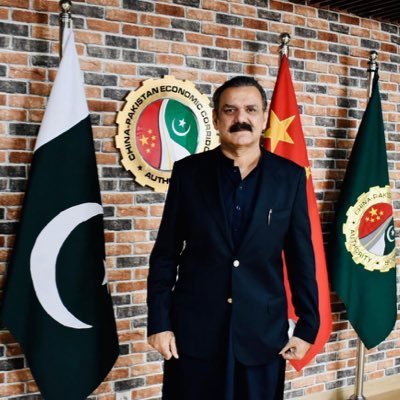
    Lieutenant General (retired) Asim Saleem Bajwa on Tuesday resigned from his position as the China-Pakistan Economic Corridor (CPEC) Authority’s chief, as he thanked the government and Prime Minister Imran Khan for their support.

    Bajwa took to Twitter and said, “I bow my head before Allah Almighty for giving me an opportunity to raise and steer the important institution of CPEC Authority as one window for all CPEC projects, charting the future direction.”

    Bajwa further tweeted that he wished the best for Khalid Mansoor, who has replaced him as the special assistant to the prime minister (SAPM) on CPEC Affairs.

    He said Mansoor was fully equipped to take CPEC forward. “CPEC is a lifeline for Pakistan; it will transform us into a progressive and fully developed country.”

    Meanwhile, Federal Minister for Planning, Development, and Special Initiatives Asad Umar thanked Bajwa for his services in moving CPEC forward and playing a vital role in broadening the project’s scope.

    The federal minister welcomed Mansoor to the team as SAPM for CPEC Affairs.

    According to Engro website, Khalid Mansoor was the Chief Executive of The Hub Power Company Limited (Hubco) since May 20, 2013.

    He holds a Degree in Chemical Engineering with Distinction and honors. Mansoor is also the Chairman of Laraib Energy Limited, a subsidiary of (Hubco).

    He has over 32 years of experience and expertise in the Energy & Petrochemical Sectors in leading roles for mega-size Projects Development, Execution, Management and Operations.