Tag: CPEC

  • Pakistan economic security on the rise, ranks top 10 in business environment

    Pakistan economic security on the rise, ranks top 10 in business environment

    Pakistan has reformed to simplify initiating a company and obtaining a construction permit, applying a series of preferential policies in the latest years, says the Annual Report on Investment Security of China’s Belt and Road Construction (2021), jointly released by China Belt and Road Think Tank Cooperation Alliance, Beijing International Studies University, and other institutions.

    The report puts forward the results of researches on the political, economic, social, cultural, and ecological investment security in countries along the Belt and Road Initiative (BRI).

    According to the report, these steps upgraded Pakistan’s ability to attract foreign investment and strengthened the ease of doing business year by year, making Pakistan one of the world’s top 10 economies with the most improved business environment, China Economic Net (CEN) reported.

    In terms of political security, the report stated that South Asia as a whole is greatly affected by the superpower game.

    China, the United States, Russia, Japan, and other countries outside the region have historical ties and practical cooperation here, which makes the geopolitical environment of South Asia complicated.

    The conflict between India and Pakistan has also increased pressure on political security in the region, under which the dispute over Kashmir poses a long-standing risk of war.

    From the perspective of economic security, Pakistan’s economic security scored up by 220% in 2019 compared to 2010, showing an overall trend of growth.

    The China-Pakistan Economic Corridor (CPEC) construction has greatly boosted public confidence, stimulated domestic demand, and driven production.

    However, it is worth noting that since 2019, the accelerated marketisation of the domestic exchange rate in Pakistan has led to market fluctuations, currency devaluation, sustained inflation, forcing the government to raise the benchmark interest rate. Besides, the debt burden increased and the international sovereign rating lowered.

  • 15 Chinese officials to investigate Dasu bus tragedy: Sheikh Rasheed

    15 Chinese officials to investigate Dasu bus tragedy: Sheikh Rasheed

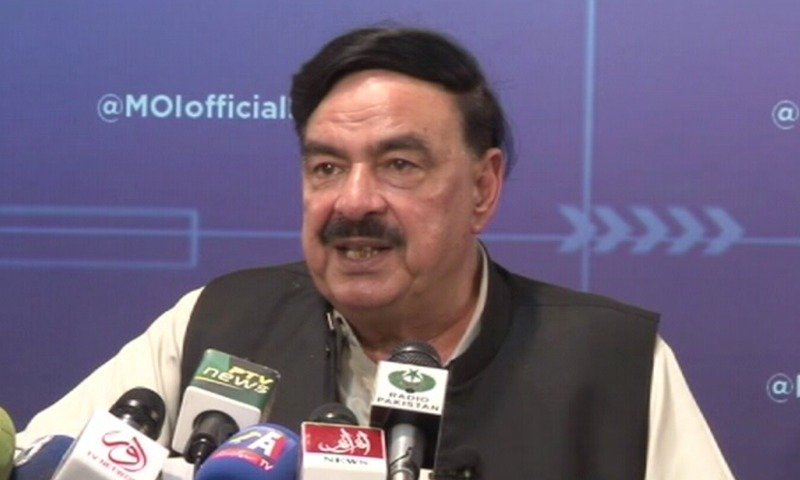
    Interior Minister Sheikh Rashid said that 15 Chinese officials have been included in the ongoing investigation of the Dasu bus tragedy in which 13 people, including nine Chinese nationals, were killed, reports Dawn.

    Addressing a press conference, Rasheed said, “The investigation of the event is at its final stages and the highest institutions of Pakistan are investigating it. Fifteen individuals from China have been included [in the investigation] as well.”

    “We completely reassure the Chinese government that these culprits, hidden hands and enemies of CPEC (China-Pakistan Economic Corridor) and China-Pakistan friendship will never be forgiven at any cost,” he added.

    Nine Chinese nationals and three Pakistanis lost their lives on Wednesday. Chinese workers and accompanying Pakistani staff were proceeding to their workplace for an ongoing project, as per a statement from the Ministry of Foreign Affairs (MoFA). 

    China had announced that it was sending a team to Pakistan to deal with the aftermath of the incident. “Today China will send a cross-departmental joint working group to Pakistan to help with relevant work,” Chinese foreign ministry spokesman Zhao Lijian had said at a media briefing in Beijing.

    A team comprising of 15 Chinese officials has reached Pakistan to probe into the Dasu bus tragedy.

    Chinese ambassador to Pakistan has visited the site of the shuttle bus explosion near the Dasu Hydropower plant to investigate the cause, together with the Pakistani military and a Chinese team.

  • PM Imran Khan to inaugurate important projects in  Gwadar today

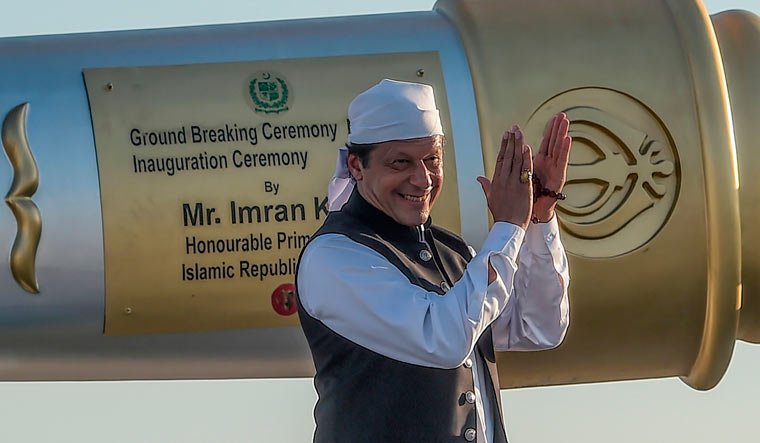
    PM Imran Khan to inaugurate important projects in Gwadar today

    Prime Minister (PM) Imran Khan will be on a day-long visit to Gwadar today, accompanied by his federal ministers.

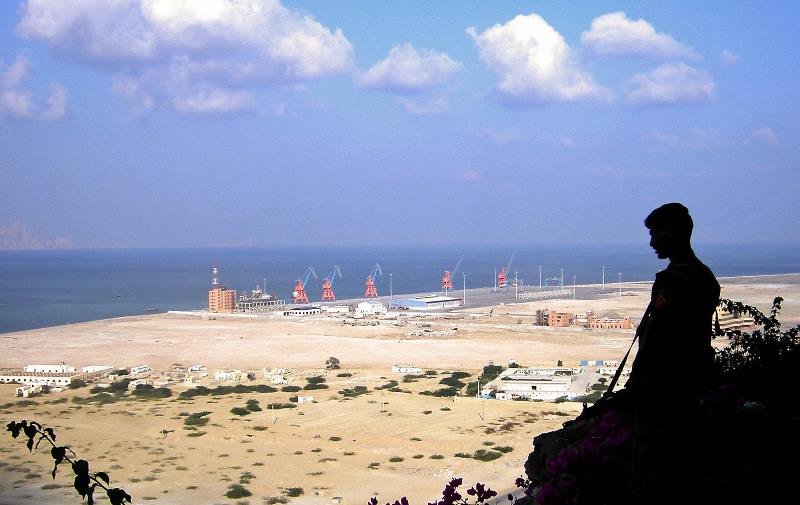
    As per reports, PM Khan will inaugurate Gwadar Free Zone, the Expo Centre, Agricultural Industrial Park as well as three factories to boost economic activity in the region.

    Focal Person to the Chief Minister of Punjab on Digital Media, Azhar Mashwani, tweeted that PM is also expected to lay the foundation stone for multiple development projects in the city, which includes water supply projects and a desalination plant. that would solve the problems of Gwadar residents related to water and electricity.

    PM will interact with China-Pakistan Economic Corridor (CPEC) workforce.

    Through video link, major expressions of investment by the Chinese investors and the ambassadors of Kuwait, Oman, Egypt, Kenya, and Qatar are also expected, according to sources.

    PM’s last visit to Balochistan was in April.

  • TLP ban: federal cabinet approves formation of a review committee

    TLP ban: federal cabinet approves formation of a review committee

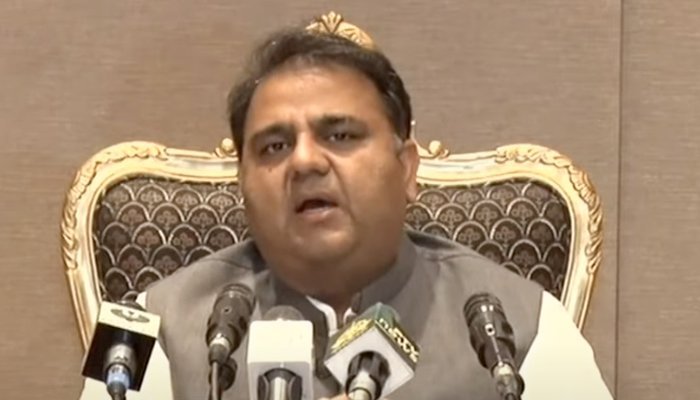
    Information Minister Fawad Chaudhry said in a press conference that a committee has been formed in line with the Anti-Terrorism Act (ATA). It will hear the appeal by Tehreek-e-Labbaik Pakistan (TLP) and send its recommendations to the cabinet.

    CPEC visas, electronic voting, Palestine issue, and economy were some of the few agendas discussed during the federal cabinet meeting.

    The use of electronic voting machines has been approved by the cabinet. Chaudhry said that members of Bar associations and press clubs told him they want to use this technology for their elections. He said the government will help them.

    https://twitter.com/FawadPTIUpdates/status/1397142494803070976

    A special procedure has been approved for visas for Chinese citizens who want to invest in CPEC projects. These work visas will be valid for two years and will be issued within 48 hours. Separate immigration counters will be established for their facilitation.

    https://twitter.com/FawadPTIUpdates/status/1397150396074930176
  • Pakistan set to export beef to China

    For the first time ever, Pakistan will be exporting beef to China in the near future.

    Organic Meat is a local public listed company that got approval and registration by Chinese customs authorities to export heat-treated beef to the People’s Republic of China.

    According to Pakistan Stock Exchange (PSX), the Organic Meat company has new heat machines that kill bacteria and root out the virus from the meat, which is a mandatory process for meat products.

    The export of meat and meat products by Pakistani companies is gradually increasing due to their adoption of new technologies.

    Due to the adoption of new technologies, several Pakistani companies have started exports to different regions, including Gulf countries (GCC) like the UAE, Saudi Arabia, Kuwait, and Bahrain.

    Last year, two Pakistani companies had received approval from the concerned Malaysian authorities to export meat and meat products to Malaysia.

    According to the Pakistan Bureau of Statistics (PBS), meat exports have maintained a growth of 12 per cent year-on-year. The exports surged to $216 million from July to February during the financial year 2020-21, in comparison to $210 million recorded in the previous financial year.

    The consistent growth of exports to both the traditional and new emerging markets will also attract new investments in the local companies and the area of livestock.

    Organic Meat won an export deal of supplying meat to markets in Saudi Arabia. The company also claims that their new system will enable them to export.

    The company was listed with the PSX last year for raising of funds, which resulted in the expansion of its operations and businesses.

  • Army chief cites unresolved disputes as reasons behind regional debt, poverty

    Army chief cites unresolved disputes as reasons behind regional debt, poverty

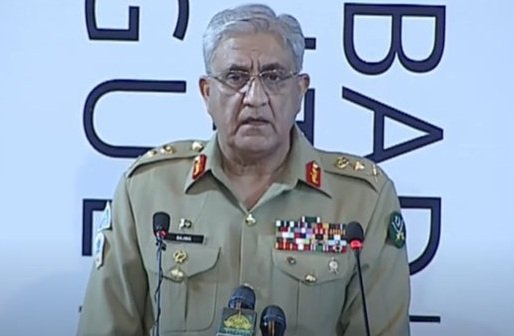
    Chief of Army Staff (COAS) General Qamar Javed Bajwa on Thursday said unresolved disputes in South Asia were dragging the entire region into debt and poverty, in a veiled reference to the Kashmir issue.

    Addressing a gathering on the final day of the Islamabad Security Dialogue, COAS Bajwa said the national security encompassed more than just matters and affairs related to strengthening the country’s security forces.

    “It included development and human security as well,” he said.

    “We feel it is time to bury the past and move forward,” he said, adding that the onus for meaningful dialogue rested with India.

    “Our neighbour will have to create a conducive environment, particularly in occupied Kashmir.”

    “The world has seen the ravages of the world wars and the Cold War, wherein polarisation and neglect of virtues blighted the future and brought catastrophic consequences for humanity,” he said.

    “Today the leading drivers of change in the world are demography, economy and technology. However, one issue that remains central to this concept is economic security and cooperation. Frayed relations between various powers centres of the globe and boomeranging of competing alliances can bring nothing but another stint of Cold War.”

    Congratulating the National Security Division on organising the dialogue, Gen Bajwa stated that the contemporary concept of national security was not just about protecting countries from an external and internal threat.

    It is also about providing a conducive environment for ensuring human security, national progress and development, he said.

    The army chief’s comments come a a day after Prime Minister Imran Khan said that India would have to make the first move to normalise ties with Pakistan.

    “We are trying, but India would have to take the first step and unless it does that we cannot move ahead,” the prime minister had said while inaugurating the Islamabad Security Dialogue.

  • Pakistan wants China to ease terms on debt repayment, says report

    Pakistan has approached China with an informal request to ease terms on the repayment of debt on about a dozen power plants set up under the China-Pakistan Economic Corridor over the past eight years, Bloomberg reported.

    “The parties have canvassed Beijing’s willingness to stagger debt payments, as opposed to lowering equity returns,” the report said, adding that Pakistan has yet to make a formal offer. The report claimed that “Pakistan will formally make the request…after it concludes deals with those local power producers to reduce electricity tariffs”.

    A spokesperson at China’s Ministry of Foreign Affairs said they aren’t aware of Pakistan’s plan to seek debt relief.

    “Energy projects have provided Pakistan with a large amount of stable and low-priced electricity, effectively reducing the overall price of electricity in Pakistan,” the spokesperson told Bloomberg. “China-Pakistan energy cooperation has progressed smoothly and brought about real economic and social benefits,” it quoted the official as saying.

    Pakistan’s power division didn’t respond to the US-based business media outlet for comments.

    According to Bloomberg, an enormous build-out of Chinese-financed power plants in Pakistan, which was originally intended to solve its electricity shortages, has resulted in a surplus that Islamabad isn’t able to afford.

    While Chinese financing has helped Pakistan diversify fuel supplies, it has also resulted in a surplus of electricity, which is problematic for the government in Islamabad because it is the sole buyer and pays producers even when they don’t generate. To help tackle the issue, the government has negotiated with power plants, which produce roughly half of its electricity, to lower rates.

    After these negotiations, the government will approach the Chinese government for debt relief, it added.

  • CPEC to come down crashing? Foreign media report claims ‘most serious disagreement’ between Pakistan, China

    Pakistan and China are embroiled in their most serious disagreement relating to the Belt and Road Initiative, causing the annual bilateral summit of the China-Pakistan Economic Corridor (CPEC) to be delayed, the world’s largest financial newspaper has claimed.

    The Joint Cooperation Committee (JCC) is CPEC’s principal decision-making body. It is jointly chaired by Pakistan’s minister for planning, development and special initiatives and the vice chairman of China’s National Development and Reform Commission.

    The first JCC meeting was held in August 2013 and the last in November 2019. The 10th JCC was scheduled for early 2020, but remains postponed.

    Initially, the COVID-19 pandemic was the reason, but later disagreements between the two countries over the Main Line 1 (ML-1) railway project and special economic zones became the main points of disagreement, Nikkei Asia has learned from informed sources.

    Asad Umar, Pakistan’s minister for planning, development and special initiatives, told local media in November that the 10th JCC would be held the following month. However, officials in the Planning Commission of Pakistan, who asked not to be named, recently told Nikkei that the meeting will not take place for at least three months — by far the longest JCC gap to date.

    ML-1 is the largest CPEC project and worth $6.8 billion. China is expected to lend $6 billion of this, which Pakistan wants to borrow at a concessional interest rate of less than 3%.

    China offers a mixture of concessionary and commercial loans for such projects. This could significantly increase the aggregate interest rate Islamabad will face, according to the planning commission officials.

    “China is reluctant to lend money for ML-1 because Pakistan has already sought debt relief to meet G-20 lending conditions and it is not in a position to give sovereign guarantees,” Nasir Jamal, a senior journalist in Lahore covering business and the economy, told Nikkei. He said Beijing’s appetite for lending money for large infrastructure projects has diminished because these projects are vulnerable to local politics that delay returns on investment for China. That has hindered agreement on the finance framework for ML-1.

    Andrew Small, a senior trans-Atlantic fellow with the Asia program at the German Marshall Fund, a U.S. think tank, said China tends to base its decisions about interest rates for loans to Pakistan on a couple of criteria. Firstly, do low-interest rates encourage projects that do not make sense financially? Secondly, what precedents are set for other countries looking for similar concessions?

    “China is much more comfortable deferring payments or providing new financing than it is offering concessional rates in the first place,” Small told Nikkei. He said this approach provides Beijing with greater leverage and control even if they are willing to be very flexible at the back-end.

    With host countries under pressure to repay at higher rates, China trades payment deferments in return for influence, which helps it get more favorable arrangements.

    The delayed JCC meeting and unsettled ML-1 financial framework is complicating matters for Pakistan. Early this month, Pakistan Railways asked the government for 11 billion rupees ($69 million) to provide ML-1 security. Without the Chinese financing framework being agreed by the JCC, it is hard for Islamabad to come up with such a large amount given the state of the economy and severe budgetary constraints.

    The other major disagreement between Beijing and Islamabad delaying the JCC meeting relates to SEZs. In the second phase of CPEC scheduled for 2020 to 2025, Chinese companies are due to start producing goods in Pakistan and exporting from there.

    Currently, the industrial cooperation framework for the SEZs is limited to a memorandum of understanding without detailed modalities. Matters such as tax exemptions and requirements for employing local labor have not been finalized. These need to be agreed by China for confirmation at the JCC. The Board of Investment of Pakistan submitted the draft agreement for the industrial cooperation framework to the Chinese government last month and is still awaiting a response.

    In December 2020, during a meeting of the Joint Working Group on Industrial Cooperation under CPEC, Asim Ayub, the project director for industrial cooperation at the Board of Investment, pressed for early signing of the industrial cooperation framework agreement.

    The seriousness of the delay is clear from China’s unprecedented reluctance to schedule a JCC meeting. In the past, JCCs were always held in time, and China agreed to Islamabad’s requests most of the time. Some experts believe the delay is evidence that CPEC is derailing.

    According to Small, there were plenty of announcements about CPEC last year, but actually setting deals in motion was another matter. “The optics do matter to China so I still expect them to figure out terms in the end, and certainly to keep some narrative of continued progress alive,” Small told Nikkei. “But that doesn’t mean they’re willing to agree on something that doesn’t make sense for other reasons just to speed things up a little.”

    Pakistan is currently renegotiating its $6 billion extended fund facility with the International Monetary Fund (IMF), which was suspended in April 2020. The IMF reportedly will only resume the program if Pakistan does not take out any new commercial loans, and that is one of the reasons it is looking for concessions on loans for the ML-1 project.

    An important long-term implication of this case for other BRI countries could be that China will be more wary of lending to countries that have entered loan agreements with global lenders such as the IMF.

    Hasaan Khawar, an Islamabad-based public policy analyst, views the situation from a different perspective. “The back-and-forth with China by Pakistan on the interest rate and additional guarantees for the ML-1 project is a good sign,” he told Nikkei. “The Pakistani side is appraising the terms carefully and trying to negotiate a better deal.”

    The report originally appeared on Nikkei Asia
  • Balochistan govt halts Gwadar fencing after backlash

    Balochistan govt halts Gwadar fencing after backlash

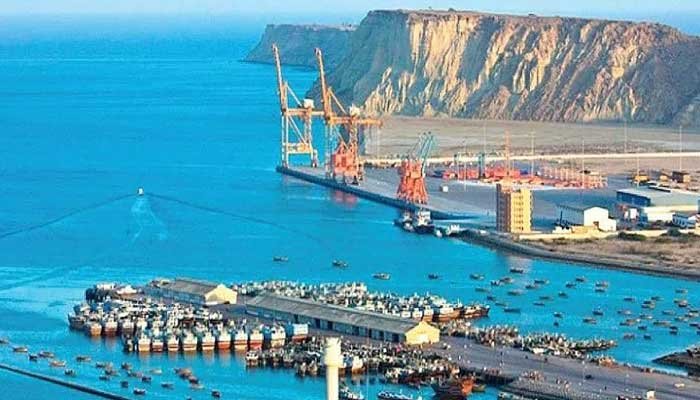
    After backlash, the Balochistan government has decided to halt work on the fencing of Gwadar until a consensus is reached on the issue.

    Home Minister Mir Zia Lango said that Chief Minister Jam Kamal has ordered the authorities to stop the process amid criticism by the locals. He said that a parliamentary delegation would give its recommendation to the chief minister and the government would address the concerns of the locals first and then move ahead with the project.

    The process will move forward after the consultation with the people of Gwadar, he said, adding that the apprehensions of the public were of foremost importance. “The provincial government headed by CM Kamal is working for the betterment of people,” he added.

    The fencing of the city was criticised by local and national politicians, who termed the process discriminatory.

    Pakistan People’s Party leader Raza Rabbani had likened it to the Berlin Wall. “In an era when the Berlin Wall fell, and here the city is being divided in the name of security. It has raised serious concern among people of the area,” he had added.

  • Pakistan takes money from China to pay back $1bn Saudi loan

    Pakistan takes money from China to pay back $1bn Saudi loan

    Pakistan will return $1 billion to Saudi Arabia this week with the help from China that agreed to lend Islamabad $1-1.5bn on a short notice to pay back the Saudi loan.

    It may be noted here that Saudi Arabia had provided Pakistan a financial package, originally estimated at $6.2 billion, to help the government of Prime Minister Imran Khan to avoid looming default on international debt obligations two years ago.

    However, due to apparent strain in ties, the Saudis have already suspended the oil facility and taken a billion back. Pakistan paid it back as a first tranche in May this year. Pakistan returned $1 billion to Saudi Arabia after taking an equal amount of loan from China. Reports claim that the next tranche will be paid by the coming month to clear the remaining Saudi dues.

    The government has also not been able to get the suspended $6 billion IMF programme restored, which is making it difficult for it to continue uninterrupted foreign inflows.

    By Sept last year, Prime Minister Imran Khan-led government had admitted to taking $10.37 billion debt from different countries and international lenders.

    In a written reply to a question in the National Assembly, Minister for Economic Affairs Hammad Azhar had said the Pakistan Tehreek-e-Insaf (PTI) government secured $10.37 billion from various governments and international institutions from August 14, 2018, to September 30, 2019.

    The government, during this period, received $1.54 billion from China, $151.79 million from Saudi Arabia, $68.6 million from France, $0.4 million from Germany, $62.48 million from Japan, and $0.01 million from Kuwait.