Tag: CPEC

  • Locals want share of Chinese investment boom as GB heads to polls tomorrow

    As night falls on a remote mountain road in Gilgit-Baltistan, Ijazul Haq, 22, is keeping his grocery store open longer than usual, hoping to cash in on a frenzied electoral campaign that has brought the nation’s interest upon this otherwise neglected region.

    Political parties are trying to sway voters in GB, an impoverished, remote and rugged mountainous part of the larger Kashmir region that is also claimed by India. The country’s top politicians have turned up here to stump, vowing to build multibillion-dollar infrastructure projects, and end decades of disenfranchisement.

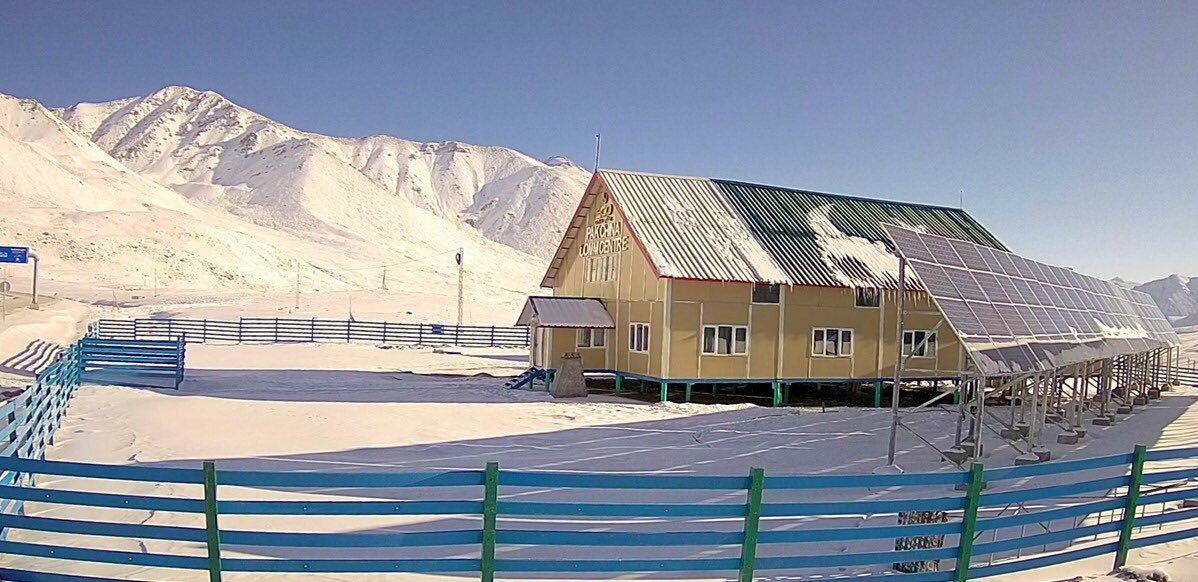
    Gilgit-Baltistan, which borders Afghanistan and China, is the gateway of the $65 billion China-Pakistan Economic Corridor (CPEC) infrastructure plan. But the region has so far reaped few rewards.

    “Look at this road we have, it takes 4.5 hours to get to a decent hospital from here. If they fixed the road it would take 1.5 hours,” said Haq, who lives in Thawoos, a tiny hamlet in the district of Ghizer.

    Locals fought pro-India forces and opted to join Pakistan in 1948. But since then Gilgit-Baltistan has not been granted full inclusion by the Pakistan constitution, over fears doing so would jeopardise Islamabad’s international stance that all of Kashmir is disputed territory.

    The local assembly, for which the November 15 elections are being held, has few powers. National Assembly and Senate have no representation from Gilgit-Baltistan, and the region receives only a fraction of the national budget.

    This month Prime Minister Imran Khan said he would provide provisional provincial status to Gilgit-Baltistan, giving it greater political representation, but no timeline has been given.

    The announcement came a year after India changed the status of the portion of occupied Kashmir, taking away some of the region’s privileges. India rejects Khan’s plan to change Gilgit-Baltistan’s status, and it calls the election there an exercise to cover up Pakistan’s occupation of the region.

    Imran’s plan is not the first time locals have heard promises of being granted constitutional rights: in 2016 then Prime Minister Nawaz Sharif proposed to make Gilgit-Baltistan a province as well but shelved plans after pro-Pakistan leaders in Indian-occupied Kashmir denounced the decision.

    “We’ve long said we want to be part of Pakistan, but they push us away,” said Yawar Abbas, a local leader with the Gilgit-Baltistan Awareness Forum, which seeks to alter the region’s constitutional status.

    Abbas says locals are in limbo, unable to enjoy the same rights as other Pakistanis, but also unable to enjoy autonomy.

    Graves of fallen soldiers marked by Pakistani flags dot the Ghizer district, which has the country’s highest per-capita rate of military recruitment.

    “There is rampant poverty here, and for many of us there is no other way to earn a living than joining the military,” said Haq, whose brother serves in the navy.

    In the winter, when the glacial melt that powers the small hydroelectric dams dotting the region slows, locals often have no power for 20 hours a day.

    The CPEC project was supposed to bring development to the region, but that has not happened, residents believe, because of the lack of local representation at national levels.

    New roads, two hydroelectric power plants, a fiber-optic internet line, and a special economic zone to boost industrial activities have all been proposed as part of the CPEC project, but none have been materialised so far.

    The only substantial project from the much-touted China-Pakistan partnership has been the construction of the Karakoram Highway, completed decades ago.

    Like most other candidates, Jamil Ahmed, has promised voters he would seek to draw more investment from China.

    “CPEC is going through here, we are the gateway, we are the door to China. So if someone opens the door for you, you should put something at the doorstep as well,” said Ahmed, a candidate with the Pakistan Peoples Party.
  • CPEC Authority chief Lt Gen (r) Asim Bajwa rubbishes report on family’s assets, resigns as Imran’s aide

    CPEC Authority chief Lt Gen (r) Asim Bajwa rubbishes report on family’s assets, resigns as Imran’s aide

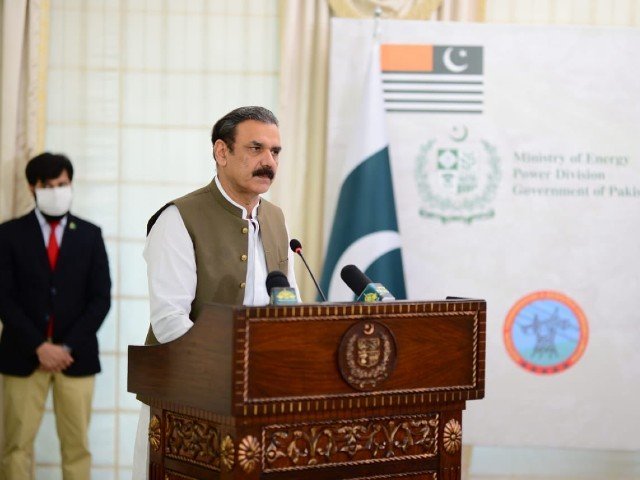
    Lieutenant General (r) Asim Saleem Bajwa has categorically rebutted all corruption allegations levelled against him and resigned from the post of special assistant to prime minister on information and broadcasting, however, he will continue to remain the chairman of China-Pakistan Economic Corridor (CPEC) Authority.

    Defending the businesses and enterprises owned by his brothers in countries abroad, he said that shameless allegations were levelled against him to tarnish his image.

    Lt Gen Bajwa, in rejoinder to a story published on an “unknown website”, lamented that the allegations were “false and incorrect”. He insisted that on the date of filing of his declaration, i.e. June 22, 2020, his spouse was no longer an investor or shareholder in any business of his brothers.

    “My wife had disinvested all her interests as at 01.06.2020 in any entity abroad and such fact has been duly documented in the official records in the USA. It may be pointed out that the company registered in the SECP [Securities and Exchange Commission of Pakistan] in Pakistan was Liaison Office of the companies in the USA,” he maintained.

    About the investments abroad, Lt Gen Bajwa said that since 2002 till June 1, 2020 his wife had only invested $19,492 in his brothers’ companies. He said that all investments came from his savings over the last 18 years, and no regulations of the State Bank of Pakistan (SBP) have been broken.

    Concerning the alleged investment of businesses in the pizza chain Papa John’s in the US and DQ, UAE, Lt Gen Bajwa said that facts and figures were fully documented.

    He insisted that Bajco Global Management, LLC did not have any ownership interest in any Papa John’s in the USA, DQ, UAE or any real estate.

    READ: ‘Who is this Mr Bajwa you are talking about?’ NAB DG on alleged assets of Lt Gen (r) Asim Bajwa’s family

    “The author further makes a false claim that Bajco owns 99 companies. The author has listed many companies multiple times on his list. There is a total of 27 active companies in the US and two in the UAE,” he said.

    “For eighteen years, the actual out of pocket cash investment into the said businesses by my brothers and wife has been about US$73,950/-. It is further pointed out that out of US $73,950/-, my wife’s contribution, as stated aforesaid, is US$19,492/-. Thus, the total out of pocket cash contribution of my five brothers, for eighteen years, has been US$54,458/-,” Lt Gen Bajwa added.

    He added that the cash contributions of $54,458 by his five brothers were fully accounted for and traceable to their sources. He further said that apart from his five brothers and his wife, the businesses have at least 50 other investors. He maintained that any further investments were a result of profits generated from the business, while also mentioning the various qualifications of his five brothers as a source of income.

    “One question that may be underscored is whether three persons who have worked in the US up to the positions of a Vice President in a US Bank, a Controller in a restaurant operating company, and as an operating partner of a restaurant; and two persons having worked as doctors, would not be able to save US$54,458/-,” argued Lt Gen Bajwa.

    Responding to the allegations made about businesses of his children, he said that the company Scion Builders and Estates (Pvt.) Ltd owned by his sons and registered in the SECP had never done any business and same is dormant since inception. He said the same about other businesses owned by his sons, namely Advance Marketing (Pvt.) Ltd, Scion Natura LLC, and Mochi Cordwainers.

    READ: ‘Lt Gen (r) Asim Bajwa to issue clarification on report linking military career to family’s businesses’

    Regarding an allegation about a house owned by his son’s Scion Management Group LLC, he asserted that the house was only 31,000 and had been bought by his sons through their independent resources in “cheap foreclosure proceedings”.

    “Baseless allegations have been levelled that a business entity of my two brothers by the name of Silkline Enterprises (Pvt.) Ltd has been formed to acquire CPEC contracts. It may be stated that this company has never acquired any CPEC contract. This company is in Rahim Yar Khan and has only provided labour/human resources to industries in Rahim Yar Khan region,” he added.

    He said that one of his sons owns a house in the USA but it has been acquired through a mortgage in the manner that 80 per cent of loan/mortgage remains unpaid.

    “This again is a small time-house. All my sons are above 18 years and none are my dependents. Masha’Allah their ages are 33, 32 and 27 years respectively. It shall be noted that my sons completed their business degrees from reputable universities in the United States and have had well-paying jobs,” concluded the retired general.

    On August 27, a website known as Fact Focus published a story, claiming that Lt Gen Bajwa’s family had set up 99 companies in four countries, including a pizza franchise with 133 restaurants.

    The website further claimed that Lt Gen (r) Bajwa’s wife was a “shareholder” in at least 86 companies. Of them, 71 were set up in the US, seven in the UAE and four in Canada.

    The rebuttal followed the statement of Federal Minister for Information and Broadcasting Shibli Faraz, who had earlier this week said that Bajwa will soon be issuing a clarification on the news report.

    Bajwa had earlier called the report a “malicious propaganda story”.

    The story had been called an attack on CPEC by the ruling Pakistan Tehreek-e-Insaf (PTI).

  • Enjoy high-speed internet while travelling along Makran Coastal Highway, NH 10

    The Universal Service Fund (USF) has announced that high-speed internet is installed at National Highway-10 (NH 10) Makran Coastal Highway and National Highway-25 (NH 25) Uthal to Quetta Highway.

    USF Pakistan tweeted that: ” USF in partnership with Ufone continues to make progress in National Highway-10 (NH 10) Makran Coastal Highway and NH 25 Uthal to Quetta Highway. Computers are now reaping benefit from high-speed broadband over 640 Kilometre of road segment covering areas of Kech, Awaran, Gwadar, and Lasbella district.”

    Makran Coastal Highway stretches to 653 Kilometres (Km). The road also covers the Arabian sea coast of Pakistan from Karachi in Sindhi to Gawadar in Balochistan and passes through Omara and Pasni.

    Along with the Ministry of Information and Technology (MoIT) and Pakistan Telecommunications Limited (PTCL), the USF Pakistan has installed 85 kilometres of optic Fiber cable to connect nine unserved Tehsils in North Waziristan and South Waziristan.

    The Optical Fiber cable is going to provide high-speed broadband connectivity to regions like Spinwam, Wana, ToiKhulla, Jandola, Sarwakai, Sararogha, and Barwand Tehsil.

    Last week, The board approved contracts to Jazz — Pakistan Mobile Communications Limited (PMCL), Zong — China Mobile Pakistan (CMPAK), and Ufone — Pakistan Telecom Mobile Limited (PTML), for the provision of next-generation internet.

  • Power plants installed during PML-N’s tenure helped end power crisis, says Razak Dawood

    Abdul Razaq Dawood, advisor to Prime Minister (PM) for Commerce, Textile, Industry, Production and Investment gave credit to former prime minister (PM) Nawaz Sharif for ending power crisis in the country.

    He said that the power plants that had been set up during PML-N’s previous tenure under the China-Pakistan Economic Corridor (CPEC) have reduced power shortage.

    The adviser said that work on CPEC is going on in full swing adding that CPEC remains one of the top priorities of the Pakistan Tehreek-e-Insaf (PTI) government.

    He said that the next phase of CPEC will focus on the development of industries and agriculture in the country.

    “The IPPs which were set up under the 2002 Power Policy has now agreed to alter their existing contractual agreements and to ink new power purchase agreements,” says media reports.

    Earlier on Friday, to bring down the cost of electricity production and reduce circular debt, Prime Minister (PM) Imran Khan has signed a new agreement with the independent power producers (IPPs). A memorandum of understanding (MoU) containing 13 points was signed between the two parties.

    “I congratulate the nation because we are fixing the damaged structure we inherited in our power sector.”
    said Dawood.

    The prime minister promised that he would soon introduce a package that will focus on improving the distribution system by tackling line losses and theft.

    According to the MoU, the two parties have, in the larger national interest, voluntarily agreed to provide concessions.

    It was agreed that all projects will convert their contracts to a take-and-pay basis and until then, the existing take-or-pay will continue.

  • You can now join CPEC as an intern, here’s how

    China-Pakistan Economic Corridor (CPEC) Authority Chairperson Lt Gen (r) Asim Saleem Bajwa has announced the launch of a three-month internship aimed at human and social development.

    In a series of tweets, Bajwa said in the spirit of youth empowerment, CPEC has offered the youth an opportunity to develop skills and experiences that would allow the country to grow and prosper in the future.

    With 60 per cent of the population falling under the youth category, a tremendous opportunity exists to develop young leaders with maximum productivity vis-à-vis other regional economies, he said.

    The initiative has been well-received by Twitterati.

  • Naya Pakistan: Optical fiber operationalised from Khunjerab to Islamabad

    Naya Pakistan: Optical fiber operationalised from Khunjerab to Islamabad

    China-Pakistan Economic Corridor (CPEC) Authority chairman and Special Assistant to the Prime Minister (SAPM) on Information and Broadcasting Lt Gen (r) Asim Saleem Bajwa has said that new optical fiber cable has been operationalised from Khunjerab to Islamabad.

    An optical fiber is a flexible, transparent fiber made by drawing glass or plastic to a diameter slightly thicker than that of a human hair. It is used most often as a means to transmit light between the two ends of the fiber and find wide usage in fiber-optic communications, where they permit transmission over longer distances and at higher bandwidths (data transfer rates) than electrical cables.

    In a tweet on Sunday, Bajwa said that in the next phase it will be laid from Islamabad to Karachi and Islamabad to Gwadar as part of the digital highway plan.

    He also said that foundation for the digital revolution project was being processed in conjunction with China.

    Earlier on Friday, the CPEC Authority chief said that the Kohala and Azad Pattan power projects would generate 8,000 jobs and an investment of $4 billion over the years.

    Pakistan and China have signed an agreement for the construction of these two projects as part of the CPEC project. With an investment of $1.5 billion, the Azad Pattan project will involve no fuel import, enabling the country to move towards cheaper and greener power generation while creating local job opportunities.

  • The inconvenient truth about Pakistan’s economy

    Battle of narratives confuses ordinary citizens who are less interested in politics and are more keen to know where the economy is actually heading, what they should expect in terms of growth and whether Pakistan can offer them a prosperous future.

    Economy is the hottest subject these days. Political zealots from opposing sides pick and choose data snippets of their choice, build an argument and relentlessly attack the other party.  On one hand, the Pakistan Tehreek-e-Insaf (PTI) social media machine keeps focusing on massive current account deficit and export decline during Pakistan Muslim League-Nawaz’s (PML-N) tenure, while the PML-N social media warriors rely on abundant ammunition provided by high inflation and slowing down economy.

    This battle of narratives, however, confuses ordinary citizens who are less interested in politics and are more keen to know where the economy is actually heading, what they should expect in terms of growth and whether Pakistan can offer them a prosperous future.

    Let’s first understand the origin of the present economic crisis.

    For years, Pakistan’s foreign exchange inflows — earned through exports, foreign direct investment, remittances and official development assistance — have been lagging behind its forex outflows required to pay for its imports. But this gap increased considerably in recent years, thereby forcing the country to excessively rely on external borrowing. The problem was further compounded by the overvalued exchange rate that was held artificially high during the last government’s term. This overpricing made imports cheaper and exports expensive, further enhancing the trade deficit. As a result, the current account deficit went as high as about $1.5 to 2 billion a month, which became unsustainable. The PTI government sought help from friendly countries like Saudi Arabia and China and managed to get more than $6 billion in loans or deferred payments. But without working on reducing the current account deficit, even this didn’t last long.

    The situation was no better on the fiscal front. Pakistan has been generating far less revenue than what it was spending, leading to huge fiscal deficits, which were again financed through borrowing. The state-owned enterprises kept on draining the exchequer and the circular debt kept on piling up, crippling the government. This unsustainable financial situation compelled Pakistan to knock at the doors of the International Monetary Fund (IMF).

    IMF is considered the lender of last resort and provides a bailout to a country to avoid an economic crisis when no other lender is willing to step in. But in return, it puts down certain conditions for the borrower, to put its house in order. The same happened with Pakistan.

    Pakistan has a resilient economy on the back of its 200+ million-strong population, abundant natural resources and a vibrant private sector. About two-thirds of the Pakistani population is youth, making it the youngest country in South Asia and skilling this workforce can do wonders for the country.

    To immediately curtail the current account deficit, Pakistan had to significantly devalue its exchange rate to bring it in line with its market value. But this sudden devaluation overnight made imports expensive, including petrol, leading to a round of imported inflation. Along with consumer goods, industrial goods and raw materials also became expensive. Many industries such as automotive had to pass this increase on to consumers, putting their products out of reach of many, slowing down the consumer demand for them.

    The government also had to raise prices of gas and electricity to reduce the fiscal deficit, fueling inflation. Mismanagement leading to food supply disruptions, such as wheat and flour crisis, also played its part in further pushing the inflation higher. In anticipation of the inflationary pressure, the government had already increased the interest rates. But these high interest rates, while curbing inflation, made borrowing expensive for the businesses, thus taking a further toll on their growth.

    Factories had to cut down production. Unemployment rose. And the economy started to slow down. It was as if an over-heated engine was suddenly sprayed with a splash of cold water.

    The tight fiscal and monetary policies, which were unavoidable to reign in out of control current account and budget deficits, also brought in inadvertent consequences making life hard for the people. And this is how the government ended up where it is right now. The inflation is still rising, growth is nowhere in sight and the government keeps on mulling over ways to cut corners to meet stringent IMF conditions.

    The dark night of economic hardship will be over soon. But what matters is if we can take some hard decisions during this time, correct the imbalance between our public sector spending and income, develop our export base and pull Pakistan out of its perpetual reliance on foreign and domestic borrowing.

    But all is not doom and gloom. Pakistan has a resilient economy on the back of its 200+ million-strong population, abundant natural resources and a vibrant private sector. About two-thirds of the Pakistani population is youth, making it the youngest country in South Asia and skilling this workforce can do wonders for the country. Not only does the country have 10+ million expats, forming the sixth-largest diaspora in the world, but their remittances have also been growing. Since the year 2000, remittance inflows to Pakistan have grown by 19-20 times in real terms. Moreover, in recent years, China has pumped in billions of dollars, as part of the China-Pakistan Economic Corridor (CPEC), improving Pakistan’s infrastructure and putting it on the Belt Road Initiative (BRI) map. The improved connectivity can yield sizeable trade and investment dividends for Pakistan.

    Given this tremendous economic potential, it is quite likely that as soon as the government will ease out the fiscal and monetary policies, the economy will rebound. But that growth can only be sustained if our trade deficit does not go out of control, our manufacturing sector has the capacity to expand and we can generate enough investments to sustain the growth momentum. And for this to happen, our public sector needs to be more efficient and give more space to the private sector to grow. It also requires that the government should reduce its non-productive expenditure and increase public investments, broaden the tax base and use the tax money effectively to stimulate the economy and stop using state-owned enterprises like Pakistan International Airlines (PIA) and Pakistan Railways (PR) for patronage and instead make them self-sustainable and profitable entities.

    The dark night of economic hardship will be over soon. But what matters is if we can take some hard decisions during this time, correct the imbalance between our public sector spending and income, develop our export base and pull Pakistan out of its perpetual reliance on foreign and domestic borrowing.

  • Pakistan’s first manmade island to be built in Gwadar at a cost of $10 billion

    Pakistan’s first manmade island to be built in Gwadar at a cost of $10 billion

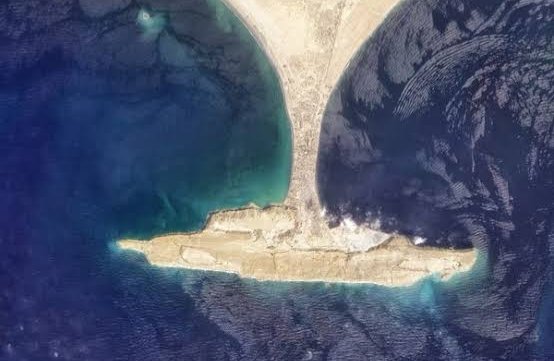
    Pakistan’s first manmade island — ‘Chaand Taara’ — will be built in Gwadar at a cost of over $10 billion. Shaped like a moon and star to represent Pakistan’s flag, it will form the cities of the Central Business District in the port city on the southwestern coast of Balochistan opposite Oman.

    According to Daily Times, located on Marine Drive and stretching towards Zero Point on the Coastal Highway, the Central Business District is to include a state-of-the-art amusement park, art and culture museum, grand theatre, concert hall, international expo centre, 5-star hotels and resorts, multiple shopping malls and waterfront walk, and a shopping promenade to name a few.

    The mega-development project that will be built around Gwadar Tower — expected to be Pakistan’s tallest building — has been detailed in the Gwadar Smart City Masterplan. The 75-page detailed report has been under development by a Chinese state-owned enterprise with assets of over $132 billion, China Communications Construction Company, and the Pakistani government as a joint-venture.

    The master plan document, prepared in conjunction with Pakistan’s Minister of Planning, Development & Reform and Gwadar Development Authority, chalks out an elaborate road map and plan on how Gwadar is to become the trade and economic hub of South Asia with a GDP per capita of $15,000 — 10 times that of Pakistan’s average.

    In line with Pakistan and China’s grand development plans for Gwadar, it will be Pakistan’s first weapon-free city. The city is being developed under the highest of international standards to be an economic hub not only for Pakistan but for the region and for this reason a robust security environment will be developed to ensure security for foreigners and expats visiting it. The security plans include the highest levels of urban security mechanisms through CCTV, vehicle management, urban video and alarm networks, and police management programmes.

    The report also quoted Balochistan Governor Amanullah Khan Yasinzai as saying that the project will be a game-changer for the people of the region.

  • Mengal wants DG Khan, Rajanpur back in Balochistan

    Mengal wants DG Khan, Rajanpur back in Balochistan

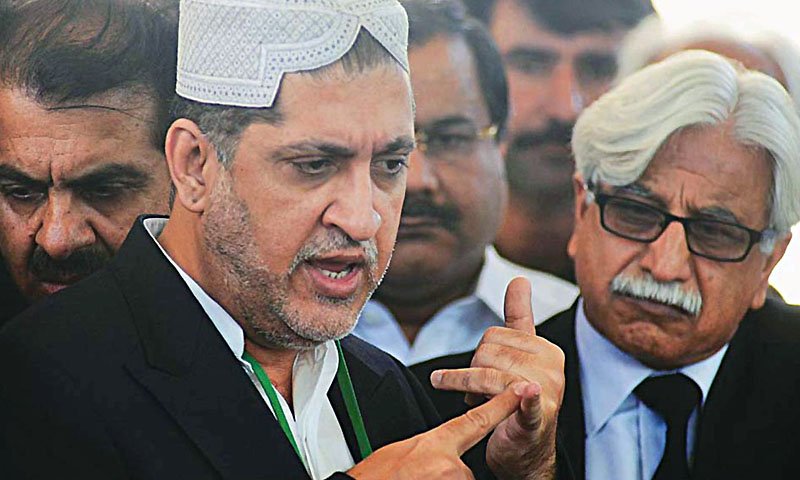
    Balochistan National Party-Mengal (BNP-M) chief Sardar Akhtar Mengal has demanded the inclusion of Dera Ghazi (DG) Khan and Rajanpur into Balochistan, The Express Tribune reported.

    According to the details, BNP-M chief while addressing a gathering held at Kalama Chowk of Taunsa tehsil in honour of the martyrs of Koh-e-Sulaiman said that Balochistan had the lowest population in Pakistan despite having an area of 43% of the country.

    “Both these regions should be included in Balochistan to balance the population,” Mengal said, adding that they were part of the province at the time of partition.

    While criticising the the government for launching mega projects such as metro trains under the China-Pakistan Economic Corridor (CPEC) in other cities of the country, he said that no welfare projects were being introduced in Balochistan.

    Akhtar Mengal also accused the government of “selling” the entire country, including Balochistan province under CPEC.

    Akhtar said that he is only supporting the government for the implementation of his six-point agenda.

    “I am not supporting them in greed for any post,” he added, saying that he was striving for the rights of his people within the framework of the Constitution.

    He further demanded of the Punjab chief minister to conduct an inquiry into the killing of two persons in DG Khan two months back in police encounter.

  • VIDEO: British journalist destroys Shireen Mazari on silence over China’s repression of Uighur Muslims

    British journalist Mehdi Hasan has called out the Prime Minsiter (PM) Imran Khan-led Pakistan government for voicing concerns over repression being faced by Muslims across the globe expect the Chinese persecution of Uighur Muslims in Xinjiang.

    Speaking to Federal Minister for Human Rights Shireen Mazari on his show, Al Jazeera’s Hasan asked as to why had Pakistan not publicly criticised China on its detention of millions of Uighur Muslims.

    “There’s a quote on your Twitter profile page from the great Muslim leader and the grandson of the prophet, Imam Hussain, that reads ‘those who are silent when others are oppressed, are guilty of oppression themselves’,” he said, adding that in China, millions of Uighur Muslims were being detained against their will in “concentration camps” and yet the Pakistani government had said nothing.

    “In fact, PM Imran Khan has said that he will not criticise China on this publically. Couldn’t the Uighurs say that your silence, Pakistan’s silence, means that you’re guilty of oppressing them too?”

    Responding to the question, Mazari said that the link established by Hasan was “absurd” since her government had talked to China. “When we have evidence, we take it up. But China is an ally of ours, and we will not go screaming on the streets about it.”

    When asked if Pakistan had condemned Chinese actions privately, the minister said that Islamabad had been speaking to the Chinese and “hearing their point of view”.

    WATCH VIDEO:

    “You haven’t stood up and spoken about the Uighurs… that’s the problem,” the journalist maintained as Mazari said repression must be called out regardless of who was behind it when asked if she would condemn the Chinese actions.

    PAKISTAN, CHINA & UIGHURS:

    The Chinese government has reportedly detained more than a million Muslims in reeducation camps. Most of the people who have been arbitrarily detained are Uighur, a predominantly Turkic-speaking ethnic group primarily from China’s northwestern region of Xinjiang.

    Human rights organisations, United Nations (UN) officials and many foreign governments are urging China to stop the crackdown; however, officials maintain that what they call “vocational training centres” do not infringe on Uighurs’ rights.

    While the Chinese government has refused to share information about the detention centres and prevented journalists and foreign investigators from examining them, internal documents leaked in late 2019 have provided important details on how officials launched and maintain the camps.

    As part of a campaign seeking relief for Uighurs in China, Islamabad has time and again been called out for raising its voice for Muslims facing Indian oppression in held Kashmir as well as helpless Palestinians, but not for those in China where lie Pakistan’s economic interests — such as the construction of China–Pakistan Economic Corridor (CPEC).

    CPEC is a collection of infrastructure projects that are currently under construction throughout Pakistan. Originally valued at $46 billion, the value of CPEC projects is worth $62 billion as of 2017.

    It is expected to not only benefit Pakistan and China, but also to have a positive impact on Iran, Afghanistan and India with the enhancement of geographical links through improved road, rail and air transportation system with frequent and free exchanges of growth and people to people contact.