Tag: CPI

  • Here’s how Pakistan’s inflation is impacting consumer buying pattern

    Here’s how Pakistan’s inflation is impacting consumer buying pattern

    In Pakistan, the real value of income has been undermined by inflation, while high interest rates have raised the cost of borrowing.

    Record inflation rates have dominated news for the past year, coupled with supply chain problems, material shortages, elevated fuel prices, and vegetable prices that increased by 500 per cent in September.

    According to a poll by Pulse Consultant, which was conducted in August 2022, 78 per cent of Pakistanis think that their country’s economy is going on the wrong path. Inflation has affected 66 per cent of people hard, and 12 per cent of people say their expenses aren’t keeping up.

    Pulse Consultant asked an open-ended question in a nationwide computer-assisted telephonic study in which more than 1,600 people across the country responded and revealed how they are dealing with the current wave of inflation.

    The following are the areas where customers lowered their spending:

    • Reduced Grocery Purchasing – 24 per cent
    • Avoid Going Out – 18 per cent
    • Stop Unnecessary Shopping – 16 per cent
    • Reduced Fast Food – 10 per cent
    • Reduced Overall Expenses -9 per cent
    • Save Petrol – 7 per cent
    • Reduced Children Expenses – 5 per cent
    • Avoid Beauty Parlor / Salon – 3 per cent
    • Save Electricity – 3 per cent
    • Avoid Family Gatherings – 3 per cent
    • Reduced Meat Consumption – 2 per cent

    In Pakistan, CPI inflation increased to 27.3 per cent in August 2022 from 12.1 per cent in January 2022. There are a number of causes for the sudden rise in inflation, despite the fact that core inflation (excluding oil and food costs) is at 18 per cent. The incidence of imported inflation has increased as a result of the rupee’s depreciation. From April through August 2022, the rupee’s value against the US dollar decreased by around 23 per cent.

    Pakistani currency is presently strengthening as a result of the restoration of the IMF package following its derailment last winter. Additionally, even though the oil bill still accounts for around 26–30 per cent of all imports, import reduction has improved the current account situation. The administration has promised to pass along any decrease in oil prices to the public.

    The lag effect of the significant budget deficit experienced in the previous year is one of the other primary causes of the high level of inflation. In contrast to the 4.2 per cent agreed upon with the IMF, the budget deficit during the FY ending on June 30, 2022, reached as high as Rs6,900 billion, or about 9 per cent of GDP.

    In addition, $20 billion in debt, as opposed to $53 billion between 2008 and 2018, was committed over the past four years. As a result, more money is being spent in pursuit of fewer commodities.

    The challenges of recession and skyrocketing inflation are pretty much universal. Despite having low inflation rates, China and Japan’s economies are expected to slow down. Inflation is being fueled by earlier Covid and current high oil, gas, and commodity costs in the wake of the Ukraine war, which is slowing growth.
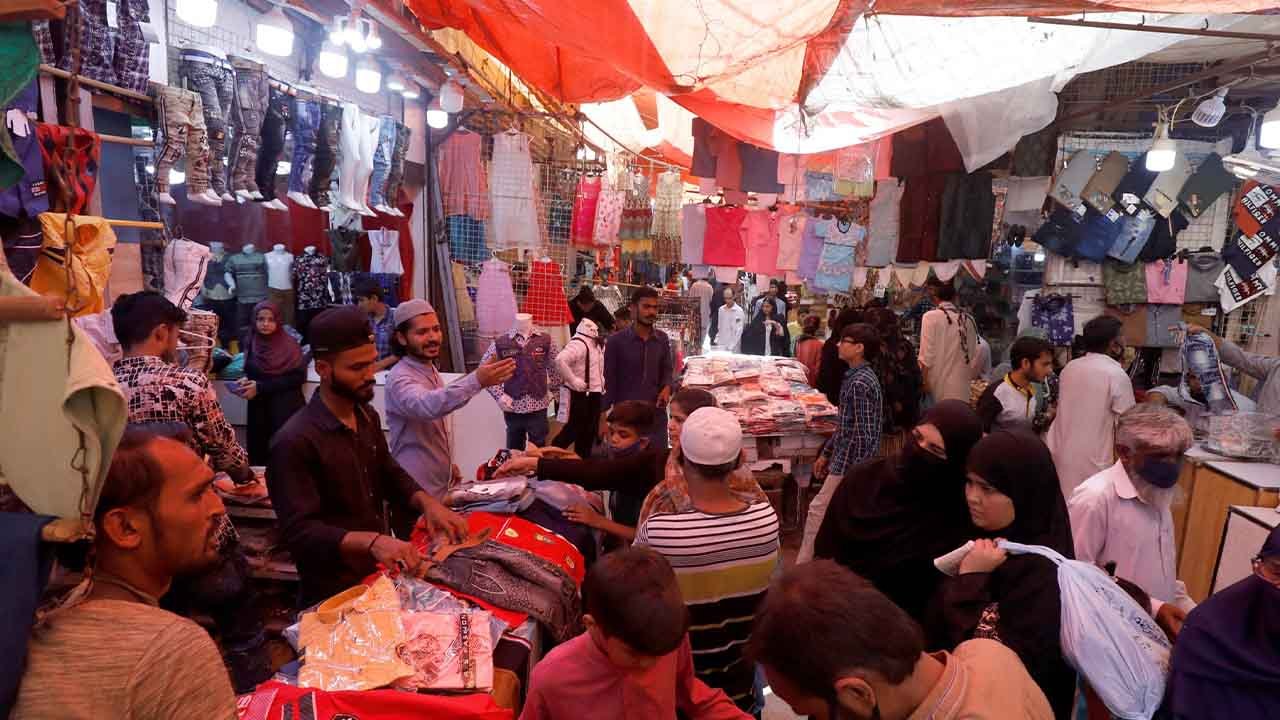
  • Pakistan inflation hits highest level since 1973

    Pakistan inflation hits highest level since 1973

    According to the Pakistan Bureau of Statistics (PBS), Pakistan’s Consumer Price Index-based inflation (CPI) climbed by 27.3 per cent on a year-over-year basis in August 2022 as opposed to an increase of 24.9 per cent the previous month and 8.4 per cent in August 2021.

    Inflation has increased by an average of 26.1 per cent in the first two months of the current fiscal year 2023 compared to 8.36 per cent in 2022. August’s inflation rate was the highest since November 1973.

    According to brokerage house Arif Habib Limited (AHL) the Consumer Price Index (CPI) for the month of Aug’22 clocked in at 27.26 per cent YoY (+2.45 per cent MoM). This takes 2MFY23 average inflation to 26.1 per cent compared to 8.36 per cent in 2MFY22.

    CPI inflation

    Urban

    In August 2022, urban CPI inflation was 26.2 per cent on an annual basis, up from 8.3 per cent in August 2021 and 23.6 per cent the month before.

    It climbed by 2.6 per cent month over month in 2022, compared to 4.5 per cent the month before and 0.5 per cent in August 2021.

    Rural

    In addition, rural CPI inflation reached 28.8 per cent on an annual basis in August 2022, up from 8.4 per cent in August 2021 and 26.9 per cent in the preceding month.

    In August 2022, it climbed by 2.2 per cent month over month, compared to 4.2 per cent the month before and 0.7 per cent in August 2021.

    Further increase expected

    Rising inflation has become a major worry for Pakistan’s economy, which is already experiencing a loss of foreign exchange reserves.

    In the midst of severe flash floods that have resulted in at least 1,100 fatalities, extensive destruction, and millions of displaced people, experts have cautioned that the country will experience additional increases in food costs.

  • Pakistan’s inflation hits 21.32 per cent in June 2022

    Pakistan’s inflation hits 21.32 per cent in June 2022

    In June 2022, Pakistan’s yearly inflation rate reached a 13-year high of 21.3 per cent, up from 9.7 per cent in June 2021 and 13.8 per cent in May 2022, according to the most recent data made public recently by the Pakistan Bureau of Statistics (PBS).

    According to PBS, monthly CPI-based inflation rose by 6.3 per cent in June 2022 as opposed to a 0.4 per cent increase the month before and a 0.3 per cent decrease in June 2021.

    Compared to increases of 14.1 per cent a month prior and 17.6 per cent a year prior, the Sensitive Price Index (SPI) inflation on a YoY basis increased by 21.7 per cent in June 2022. On a month-over-month basis, it increased by 6.2 per cent in June 2022 compared to a 0.6 per cent increase the previous month and a (-)0.4 per cent decrease in June 2021.

    The Consumer Price Index (CPI) reached 21.3 per cent on a year-over-year (YoY) basis as Pakistan’s economy battles a widening current account deficit brought on by a high import bill, rising inflation has become a major concern.

    In an effort to combat economic headwinds, the State Bank of Pakistan (SBP) increased the key interest rate by 150 basis points to 13.75 per cent earlier in May. At the time, the central bank predicted that as electricity and fuel subsidies are eliminated, inflation is likely to spike briefly, remain high through FY23, and then drop precipitously in FY24, according to Brecorder.

    The SBP is currently scheduled to decide the key interest rate at its upcoming Monetary Policy Committee meeting on July 7.

    On the other hand, the current administration increased the price of petroleum products in an effort to resurrect the International Monetary Fund (IMF) programme, which is anticipated to drive up inflation even further.

    The government announced a late-night price increase for petroleum products on Thursday, raising the ex-depot price of gasoline to Rs248.74 per liter (after an increase of Rs14.85) and diesel to Rs276.54 (after a hike of Rs13.23).

    CPI inflation in urban areas

    In contrast, year-over-year CPI inflation in urban areas increased by 19.8 per cent in June 2022 as opposed to increases of 12.4 per cent in May 2022 and 9.6 per cent in June 2021.

    In June 2022, it increased by 6.2 per cent month over month, compared to a 0.3 per cent increase the month before and a 0.4 per cent decline in June 2021.

    CPI inflation in rural areas

    In contrast to the previous month’s increase of 15.9 per cent and the increase of 9.7 per cent in June 2021, the CPI inflation rate in rural areas increased by 23.6 per cent on an annual basis in June 2022.

    Comparing June 2022 to June 2021, it increased by 6.6 per cent month over month, compared to increases of 0.6 per cent and 0.1 per cent, respectively.

  • PM Khan says Pak corruption getting better but corruption index says Pak is getting more corrupt

    PM Khan says Pak corruption getting better but corruption index says Pak is getting more corrupt

    Prime Minister (PM) Imran Khan said that the Pakistan Tehreek-e-Insaf (PTI) government has taken the most steps against corruption in the country’s history.

    The premier, while chairing a session of the federal cabinet on Tuesday, discussed the report released by Transparency International according to which Pakistan has been ranked 140 out of 180 countries, slipping further down to 16 spots over the last year, on the Corruption Perceptions Index (CPI) 2021.

    Federal Minister for Information and Broadcasting Fawad Chaudhry, commenting on Pakistan’s low ranking on Transparency International’s CPI, said that it was because of the absence of rule of law in the country and state capture as opposed to financial corruption.

    State capture is a type of systemic political corruption in which private interests significantly influence a state’s decision-making processes to their own advantage.

    The minister said all the international institutions that helped determine country rankings had Pakistan maintaining its previous ranking — except the Economist Intelligence Unit (EIU), which dropped the country’s ranking.

    “If you ascertain that who is heading the Economist in Pakistan, you will find that why Pakistan’s ranking was dropped,” he added.

  • Inflation hike up to 11.5pc, highest in 20 months

    An increase in consumer prices continued as inflation rises up to 11.5 per cent from 9.2 per cent in November, the highest increase in the past 20 months due to a record hike in fuel prices last month, reports Dawn. This has been revealed by Pakistan Bureau of Statistics (PBS) data.

    Inflation measured by the Consumer Price Index (CPI) increased to its highest level in 20 months.

    Prices of fresh vegetables, fruits, and meat have also shown a significant increase in major urban and rural centres.

    The average inflation during the July-November period rose to 9.32 per cent on a yearly basis.

    Currently, the government aims to increase agriculture productivity for food security and self-sufficiency to counter food inflation by offering Agri-loans.

    The finance division in its recent report claimed that taking into account new price impulses in November and the low base effect, inflation would remain between 8.5 and 9.5 per cent, but the November inflation has already surpassed the projected figure.

  • Inflation at seven-month low in March

    Inflation at seven-month low in March

    Pakistan’s Consumer Price Index (CPI)-based monthly inflation slowed to 10.24 per cent in March 2020 as compared to the previous month, Pakistan Bureau of Statistics (PBS) reported.

    This is the second month in a row that the CPI reading has eased by more than 2 per cent. The bureau had recorded CPI inflation at 12.4 per cent in February. Inflation at 10.2 per cent is the lowest reading in the past seven months.

    According to PBS data, commodity prices remained largely unchanged and markets functioned normally in March despite partial lockdown of the country to control the spread of coronavirus.

    In addition to fuel charges, the prices of food items, including pulses, fresh vegetables and wheat, which have been the main drivers of inflation, also saw a significant downtrend, the bureau said.

    However, it added, the real impact of slash in demand or short supply of commodities due to the shutdown of the market is yet to come.

    “The government’s move to keep the trade of groceries unaffected may support the fall of inflation even in the coming months.”

    The average inflation in the first nine months (July-March) of fiscal year 2020 stood at 11.53 per cent, which in the same period of the last year was 6.3 per cent.

    As per the data, the rate of inflation during the month under review slowed down both in urban and rural areas. Food inflation in urban areas that stood at 15.2 per cent in the preceding month eased to 13 per cent in March. Similarly, in rural areas, the food inflation pace slowed down from 19.7 per cent in February to 15.5 per cent last month.