Tag: crisis

  • What to expect from the upcoming budget 2022-23

    What to expect from the upcoming budget 2022-23

    Pakistan is escalating efforts in order to revive the stalled loan from International Monetary Fund (IMF) programme, as the prerequisites are steadily being completed.

    The revival of the bailout will provide much-needed relief in order to keep Pakistan’s economy afloat and avoid default as Pakistani currency has plummeted 9 per cent in the last month, recording the poorest performance among Asian currencies.

    According to Geo, the key policy rate was recently raised by 150 basis points to 13.75 per cent, while the price of fuel has now risen by Rs60 a litre in less than a month and is being sold at from Rs209 to Rs212 (depending on the area).

    In an interview with a private channel, the finance minister discussed the government’s decision to raise petroleum product pricing, saying that despite the difficult decision, the government is still losing money on gasoline and diesel.

    These moves are highly affecting the masses, but they are essential as the IMF programme is crucial to fix the country’s economy. Also, petroleum prices are projected to continue to rise along with power tariff.

    Increase in income tax

    An increase in income tax is a major policy recommendation from the international lender in the approaching budget for the fiscal year 2022-23.

    All suggestions are expected to enhance Pakistan’s tax income.

    The IMF issued the following rules for Personal Income Tax (PIT) in its February conditions:

    1. Lower the number of tax bands.
    2. Cut tax credits and allowances (excluding disabled and old persons, as well as Zakat receipts).
    3. Implement special tax processes for very small taxpayers.
    4. Increase the number of people who pay taxes. As the change maintains the present PIT threshold, low-income households will be safeguarded (almost three times income per capita).

    If these policy recommendations for the forthcoming budget are enacted, the tax system will be simplified and the income tax regime will be more progressive.

    These recommendations are anticipated to increase the country’s tax revenue. It will also make the system more progressive, as people with higher incomes will be required to pay more.

    Salaried class

    The burden on the salaried class, which is already heavily under pressure, may be increased. It will make working less appealing because a large portion of the wage will be devoted to direct personal income tax.

    The IMF proposed taxing the upper-middle class and wealthy individuals with monthly incomes ranging from Rs104,000 to Rs1 million at a uniform rate of 30 per cent.

    The idea demonstrates inequality in taxation, and if approved, it might leave the majority of salaried workers worse off in the face of double-digit inflation.

    On the other hand, Federal Minister for Finance and Revenues Miftah Ismail categorically stated last month that the government would not add to the burden on the salaried class and pensioners in the coming budget. 

    According to sources, the maximum rate of 30 to 35 per cent for salaried and business class individuals earning Rs20 million per year could be increased.

    Special tax proposal for small taxpayers

    Imposing a tax on small taxpayers can overcome the long-term structural problems and correct internal and external imbalances. Our tax-to-GDP ratio has remained below 11 per cent, which is lower than regional standards.

    Two-thirds of our overall taxation is made up of indirect taxation. This level of indirect taxation is not only excessive, but it also makes the system less progressive.

    Currently, a labourer pays the same amount of GST as the country’s richest man.

    Agriculturalists and real estate barons are the most important import consumers. As a result, the lack of taxation in agricultural and real estate contributes to the underlying imbalances in the external sector.

    Low-income households

    Low-income households are expected to be protected from policy interventions after the government publishes the upcoming budget, as the Personal Income Tax (PIT) threshold of three times per capita income would stay in place.

    Genuine taxpayers can also decrease their tax payments by clever investments under the Income Tax Ordinance 2001, taking into account all of the foregoing.

    In the fiscal year 2022-23, policymakers must aim to increase the tax net and the tax-to-GDP ratio as there is no chance for the country to progress without it.

    Pakistan must pay $21 billion in foreign debt payments by next year, according to the Finance Minister, while the current account deficit is $10-12 billion.

    He said, “We will also try to tilt away from the wealthy elite towards to low incoming masses, I will impose more taxes on the wealthy, but no taxes will be levied on the salaried class”.

    The wealthy and capable must prepare to pay their fair share of taxes, or the country will soon be back on the IMF’s doorstep.
  • Govt considering gas import contract with countries including Russia

    Govt considering gas import contract with countries including Russia

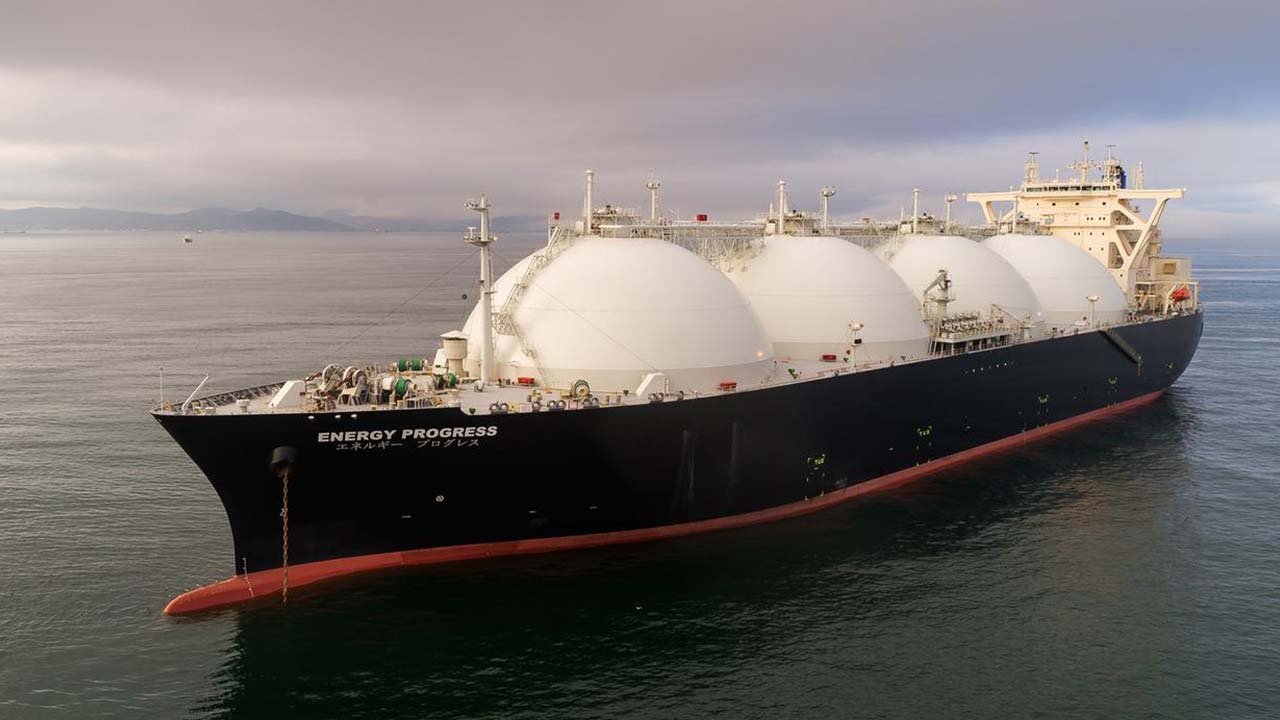
    Pakistan is in talks with multiple countries, including Russia, to sign a liquefied natural gas (LNG) import agreement in order to alleviate the country’s ongoing energy supply crisis.

    According to Bloomberg, the Ministry of Energy will go for the ‘most favourable deal’ and is considering government-to-government contracts for importing the gas.

    This action came as Pakistan battles blackouts caused by a fuel crisis caused by long-term suppliers’ failure to deliver shipments. To keep the lights on, the government previously resorted to purchasing LNG on the spot market, incurring debt that endangers worsening inflation on a massive scale.

    The government of Prime Minister (PM) Shehbaz Sharif, which took office on April 11, hopes to capture a new long-term LNG contract to help reduce fuel costs. Long agreements are remarkably affordable than existing spot pricing, while market participants also anticipate that this will provide some relaxation to the government.

  • Govt bans import of ‘luxury items’ to fight economic crisis

    Govt bans import of ‘luxury items’ to fight economic crisis

    For the first time in Pakistan, luxury or non-essential commodities have been completely banned in the country to help the nation emerge from its financial crisis. Minister of Information Marriyum Aurangzeb confirmed the economic strategy established by the federal government on Thursday.

    The Information Minister stated that this is an emergency situation and Pakistanis will have to make sacrifices under the economic plan. This will have a quick impact on foreign reserves. The ban will have an impact of $6 billion.

    Aurangzeb went on to say that the government’s priority was to cut imports, thus it was going to implement an export-oriented policy that would help local industry and producers.

    Prime Minister (PM) Shehbaz Sharif is working “day and night” to stabilise the economy, according to the information minister, and has decided to ban the import of all commodities that are not in common use.

    Food, decorating, and luxury automobiles were among the imports, according to Aurangzeb, who emphasised that the country was in a “difficult economic condition” as a result of the previous government’s policies.

    Here’s a detailed list of banned goods:

    1. Cars
    2. Mobile phones
    3. Home appliances
    4. Private weapons and ammunition
    5. Fruits and dry fruits (except Afghanistan)
    6. Crockery
    7. Shoes
    8. Chandeliers and lighting (except energy savers)
    9. Headphones and loudspeakers
    10. Sauces, ketchup etc.
    11. Doors and window frames
    12. Travelling bags and suitcases
    13. Sanitary ware
    14. Fish and frozen fish
    15. Carpets (except Afghanistan)
    16. Preserved fruits
    17. Tissue paper
    18. Furniture
    19. Shampoos
    20. Confectionary
    21. Luxury mattresses and sleeping bags
    22. Jams and jelly
    23. Cornflakes
    24. Bathroom ware/toiletries
    25. Heaters/blowers
    26. Sunglasses
    27. Kitchenware
    28. Aerated water
    29. Frozen meat
    30. Juices
    31. Pasta etc
    32. Ice cream
    33. Cigarettes
    34. Shaving goods
    35. Luxury leather apparel
    36. Musical instruments
    37. Saloon items like hairdryers etc.
    38. Chocolates

    The declaration, according to the information minister, is part of the present government’s fiscal plan to combat the PTI’s incompetent policies.

    Aurangzeb chastised the PTI for criticising the incumbent administration over the country’s economic woes, claiming that the Imran Khan-led government had raised inflation, taken historic debts, committed “economic terrorism,” and manipulated the economy by subsidising gasoline prices.

    By subsidising the price of petroleum goods, the PTI administration broke its agreement with the International Monetary Fund (IMF), according to the Information Minister.

    Via: Geo

  • SBP determined to curb inflation, improve foreign exchange reserves

    SBP determined to curb inflation, improve foreign exchange reserves

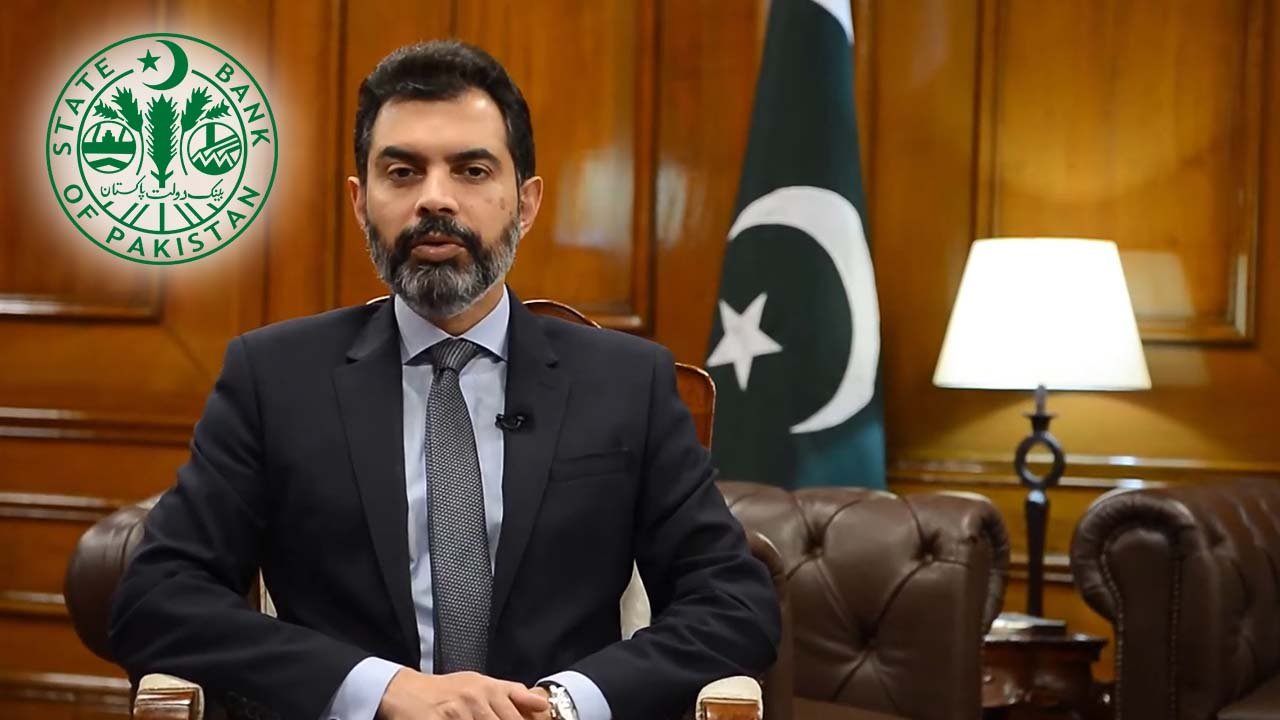
    In a recent interview, the Governor of the State Bank of Pakistan (SBP), Dr. Reza Baqir expressed concern over the continuous deterioration in foreign exchange reserves but remained optimistic that a renewal of loans will be witnessed in the near future, which, coupled with SBP’s initiatives, will enhance market confidence.

    He claimed that the decline in reserves is “clearly alarming, but we are convinced that the central bank’s initiatives will prevent further deterioration”.

    According to data issued by the central bank on April 7, the reserves massively declined by $728 million to $11.32 billion as of April 1.

    The decline, according to SBP, is primarily attributable to debt repayment and government payments linked to the settling of an arbitration judgment.

    In addition to this, the currency even hit new lows in the week, forcing the SBP to intervene by boosting the policy rate, declaring a 100 per cent cash margin on 177 commodities with instant effect, and hiking the markup percentage by 2.5 per cent for borrowing under the Export Finance Scheme (EFS).

    In response to the Monetary Policy Committee’s (MPC) recent rate hike, Baqir stated that the move was made to tackle growing inflation and lessen external pressures. “The foreign exchange market has been under a lot of pressure for more than a month. A number of factors contributed to it: first, there was political uncertainty; second, our reserves were drained due to debt payments”.

    Consequently, the Pakistani rupee ended its devaluation run on April 8, and the KSE-100 Index witnessed positive sentiment, ending the day with an impressive gain of 658 points.

    The SBP Governor also discussed the skyrocketing petrol prices, which remain elevated because of the Russia-Ukraine conflict, adding more pressure on the local currency.

    The central bank made a determined decision after analyzing the statistics to lower inflation, improve foreign exchange reserves, and boost business confidence.

  • VIDEO: Reporter asks Biden’s spokesperson to show ‘evidence’ that Russia is starting a war in Ukraine

    VIDEO: Reporter asks Biden’s spokesperson to show ‘evidence’ that Russia is starting a war in Ukraine

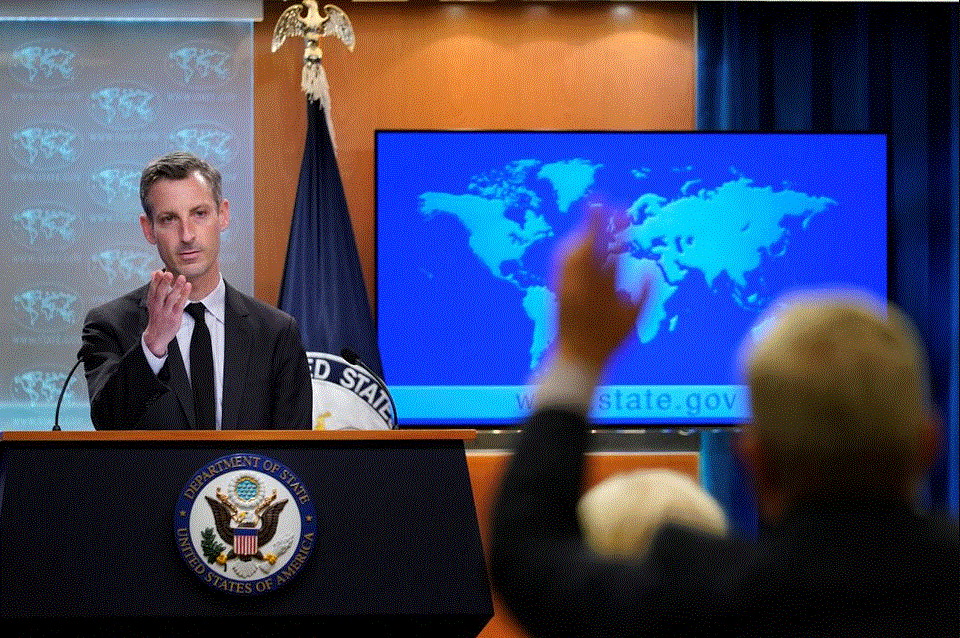
    United States (US) State Department Spokesperson Ned Price was questioned by Associated Press (AP) reporter Matt Lee about the evidence behind US officials’ belief that Russia intended to release an elaborate propaganda video on Ukraine in order to justify beginning a war.

    A heated argument between the two [Price and Lee] can be heard in a video. Lee demanded Price to show the evidence to which he responded by saying that the information came from US intelligence, thus is classified.

    “Okay, well, where is it? Where is this information?” Lee asked. Price responded by asking Lee if he would want a printed-out transcript of the briefing.

    “That’s not evidence, that’s you saying it. I would like to see some proof that shows that the Russians are doing that,” Lee continued the argument.

    Following the press briefing, Price said that he and Lee have had their fair share of sparring sessions. “Nothing but respect for him, which I underscored in a call to him after the briefing,” he added.

    Russia has long resisted Ukraine’s move towards European institutions, and the North Atlantic Treaty Organisation (NATO) as it shares a border with Ukraine.

    Russian President Vladimir Putin and Ukraine’s Volodymyr Zelensky have denied the news of an invasion. However, the US argued that Russia has no explanation for the troops posted close to Ukraine.

  • VIDEO: ‘PM Imran’s killer smile is enough for any doubts in crises,’ says Zartaj Gul

    VIDEO: ‘PM Imran’s killer smile is enough for any doubts in crises,’ says Zartaj Gul

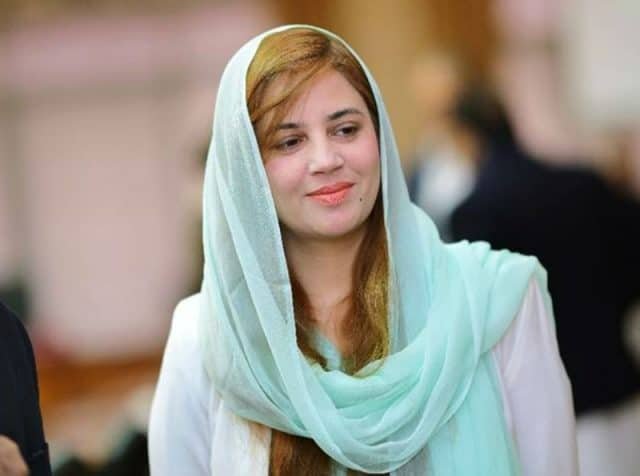
    Minister of State for Climate Change Zartaj Gul Wazir, who is known for making statements that leave people in fits, has showered praise on Prime Minister (PM) Imran Khan for having a charismatic personality and killer smile.

    “If we talk about the body language of PM Imran Khan, I think he is the finest charismatic man,” she can be heard as saying a video doing rounds over the internet.

    “The manner in which the premier walks, which can be seen in various videos, he comes with so much confidence and authority, which removes all doubts from our minds amid crises,” she adds.

    WATCH VIDEO:

    This is not the first time the minister has expressed how starstruck does the premier leave her.

    Believe it or not, she had once said that the reason Pakistan was getting an abundance of rain and snowfall was because an honest man like Imran Khan was the country’s PM.