Tag: Crown Prince Mohammad Bin Salman

  • Saudi Arabia to give citizenship to foreign professionals

    Saudi Arabia to give citizenship to foreign professionals

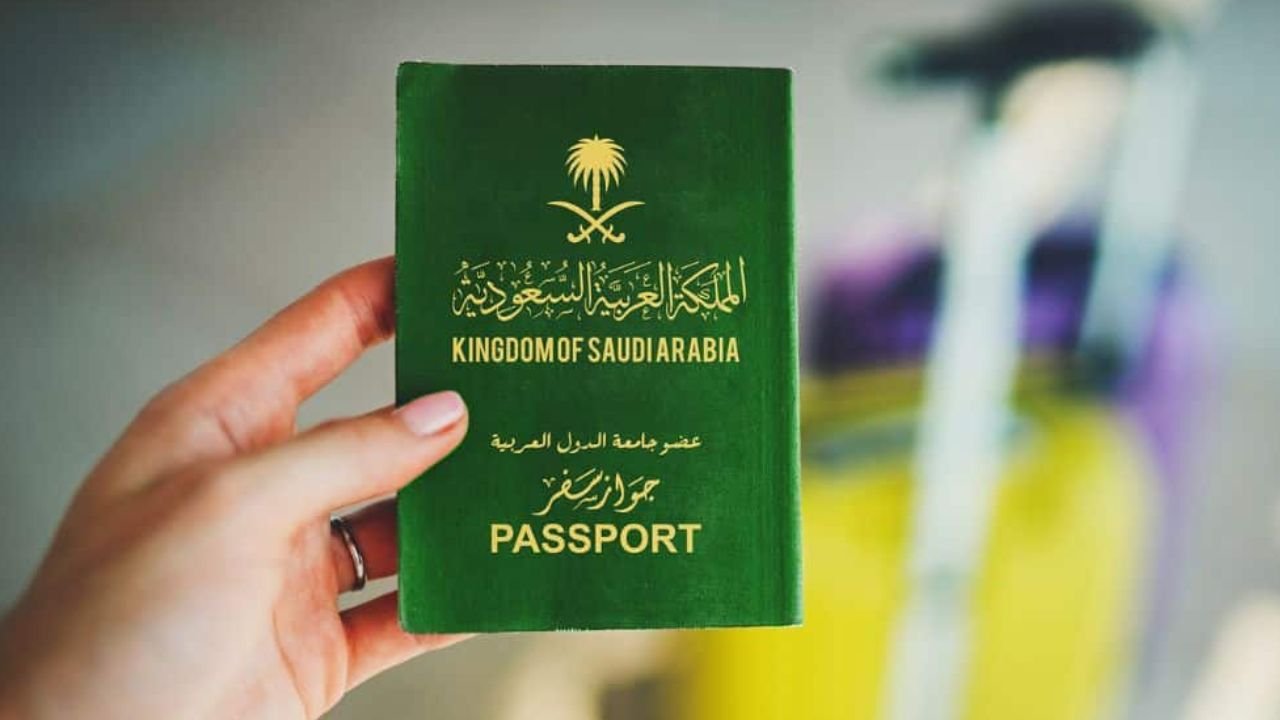
    The Kingdom of Saudi Arabia has issued a royal decree to grant citizenships to scientists, medical doctors, researchers, innovators, entrepreneurs, and distinguished talents with unique expertise and specialisation in their respective fields.

    The announcement was made on Thursday, according to the Saudi Press Agency.

    The desert Kingdom, in the midst of modernising the vast country, wants to attract people with unique talents and expertise in their fields that can contribute to the development of various sectors throughout the Kingdom to achieve its Vision 2030 goal.

    Vision 2030, which highlights Saudi Arabia’s keen interest in attracting, investing in and retaining exceptional creative minds, was launched in 2016 under the directive of King Salman bin Abdulaziz and Crown Prince Mohammed bin Salman, according to a report by Al Arabiya News earlier this year.

    It aims at creating a “diversified, innovative and world-leading nation,” through the Kingdom’s deeply rooted cultural heritage and strategic advantages, according to the official webpage of the initiative.

    The present announcement follows a similar royal decree which was previously issued in 2021 to grant Saudi citizenships to the first group of select distinguished talent in these fields.
  • Saudi Arabia to set up $12 billion refinery, petrochemical complex in Pakistan

    Saudi Arabia to set up $12 billion refinery, petrochemical complex in Pakistan

    The government has convinced Saudi Arabia to resume a significant project to build a cutting-edge deep conversion refinery and petrochemical complex in Pakistan.

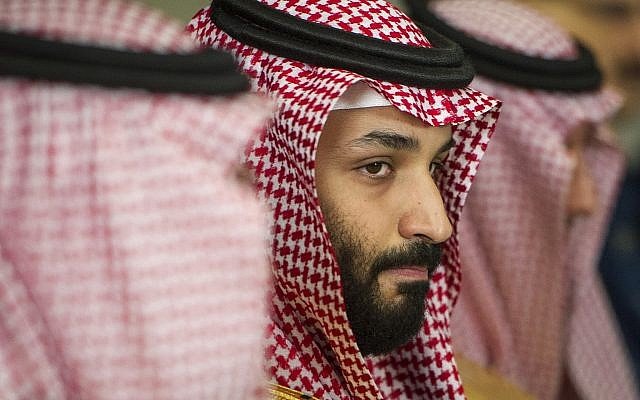
    A high-ranking team from the kingdom led by Crown Prince Mohammad Bin Salman will visit Pakistan in the final week of November, when a formal announcement is anticipated in this regard, according to a top official at the Energy Ministry.

    According to Geo, the Pakistani government reportedly made a tremendous effort to convince the kingdom to uphold the memoranda of understanding and invest in Pakistan. Riyadh and Washington are at odds over a reduction in the supply of oil on the world market, and Islamabad has thrown its support behind Riyadh in this dispute.

    Saudi Arabia signed MoUs in February 2019 during Mohammad Bin Salman’s visit to Pakistan for an investment of $21 billion in a number of economic sectors, including the $12 billion deep conversion refinery and petrochemical complex project.

    At this regard, the Saudi oil tycoon Aramco also carried out research, which concluded that building a refinery in Gwadar was not practical. However, the official claimed that it may be erected in Hub, Balochistan, or close to Karachi.

    Later, the insider claimed, when relations between Imran Khan’s administration and Saudi Arabia became tense, the kingdom’s top leaders essentially put $21 billion in MoUs on hold that had been inked in February 2019.

    According to the source, the Ministry of Petroleum is currently updating the draught for the refining policy in order to attract investment for the construction of new refineries.

    In addition to broadening the tax holiday’s application, the government is considering offering investors profitability at 14–15% instead of the 9% that was previously promised in the PTI administration’s plan for policy refinement.

  • Joe Biden to visit Saudi Arabia after calling Kingdom ‘isolated’

    United States (US) President Joe Biden will make his first Presidential trip to the Kingdom of Saudi Arabia (KSA), Israel and the Palestinian West Bank next month from July 13-16, confirmed by the White House, reports Associated Press (AP).

    During this visit, Biden will meet Saudi King Salman bin Abdulaziz and Crown Prince Mohammed bin Salman in KSA, Israeli Prime Minister (PM) Naftali Bennett in Jerusalem and Palestinian Authority leaders, including Mahmoud Abbas in the West Bank.

    Announcing the Middle East trip, White House press secretary Karine Jean-Pierre said, “King Salman invited Biden to visit the kingdom during a gathering in the port city of Jeddah of the six Gulf Cooperation Council nations.”

    The Saudi Embassy has said that Biden’s visit is “to strengthen the historical bilateral relations and the distinguished strategic partnership between” the two countries.

    In a statement, the Saudi Embassy stated: “The kingdom of Saudi Arabia looks forward to welcoming President Biden and defining the next chapters of our partnership. At a time of global challenges related to the global economy, health, climate and international conflict, the partnership between our two countries are as critical as ever to the promotion of peace, prosperity and stability around the world.”

    As a presidential candidate, Biden said the murder of journalist Jamal Khashoggi — a Saudi-born US resident who wrote critical articles about Saudi rulers in The Washington Post — had made KSA a “pariah.” When Biden took charge of the presidency, his administration made clear the president would avoid direct engagement with the crown prince and instead focus on his engagements with King Salman.

  • Nawaz free to fly back to Pakistan, name removed from ECL

    Nawaz free to fly back to Pakistan, name removed from ECL

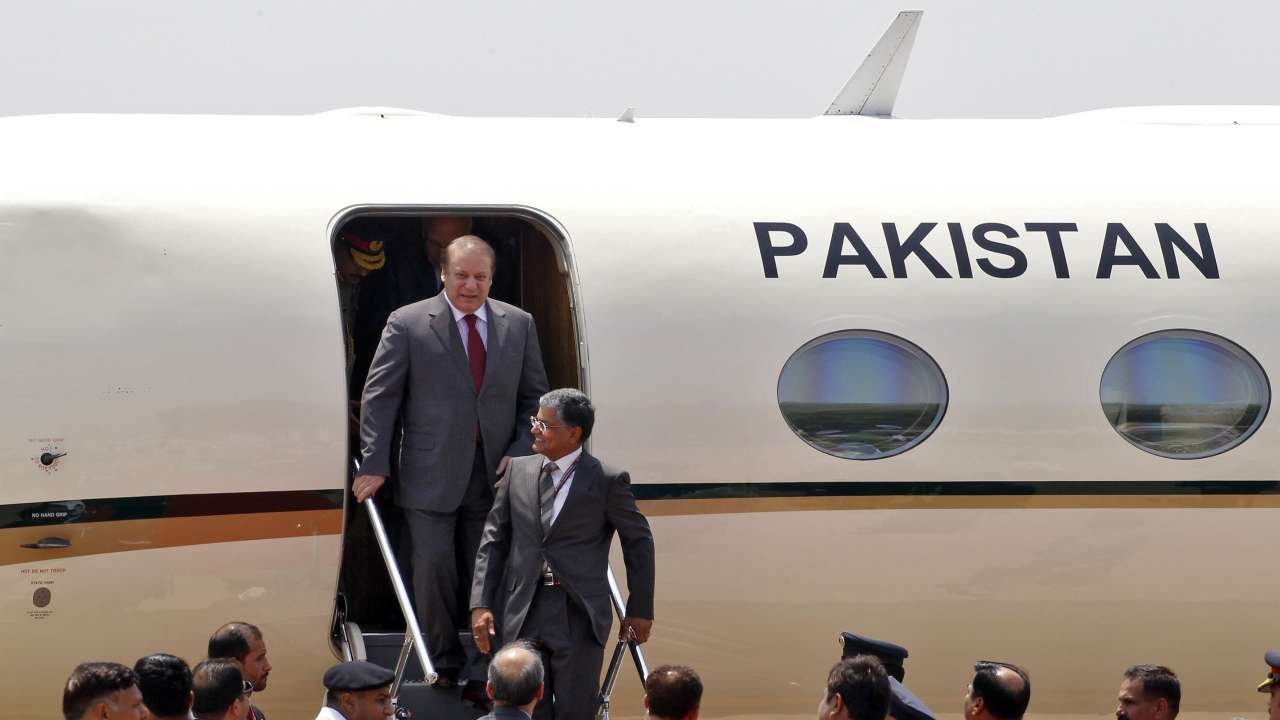
    Prime Minister Shehbaz Sharif will go on his first foreign trip to Saudi Arabia on April 27. He will be accompanied by Pakistan Muslim League-Nawaz (PML-N) Vice President Maryam Nawaz and Pakistan Democratic Movement (PDM) chief Maulana Fazlur Rehman.

    PM Shehbaz will call upon Saudi Prince Muhammad Bin Salman. The Pakistani delegation will also perform Umrah during the trip, reports The News.

    Member National Assembly Mohsin Dawar was supposed to accompany PM Sharif on his trip to Saudi but will most likely miss the trip as his name is on the Exit Control List (ECL). For being in the ‘anti-state category’, the names of Mohsin Dawar and Ali Wazir were not removed from the ECL as per the new policy.

    The new government removed the names of PM Shehbaz Sharif, Punjab Chief Minister-elect Hamza Shehbaz, PML-N head Mian Nawaz Sharif and Maryam Nawaz from the Exit Control List (ECL) under a new policy, reported Azaz Syed for Geo News.

    Senior anchorperson Saleem Safi asked federal Law Minister Azam Nazeer Tarar why Dawar’s name has not been removed from the ECL when the Sharif family removed their own names. Tarar said that it is due to two categories of cases: one that deals with anti-terrorism, anti-state cases and narcotics while the other category is banking offences, misuse of authority, loans, etc. He added that now they will have to amend the Act and also take rules to the cabinet again.

    “I believe that when someone is an elected member of parliament and represents millions of people, there should be no travel ban for him/her. As a firm believer in human rights, I think this law is wrong and only should be applicable on extreme cases. But nobody should be placed on ECP indefinitely,” said Law Minister Azam Tarar.

    READ MORE: Maryam Nawaz moves court to get her passport back to travel

    Last week, Maryam Nawaz filed a plea before the Lahore High Court (LHC) to get her passport back in order to travel travel to Saudi Arabia to perform Umrah in Ramzan. She also said that she wants to travel to London to visit her ailing father, Mian Nawaz Sharif.

    “I want to go to Saudi Arabia to perform Umrah but cannot because my passport is surrendered at the LHC,” read Maryam’s plea.

  • ‘We don’t look at Israel as an enemy’: Saudi Crown prince reveals in rare interview

    ‘We don’t look at Israel as an enemy’: Saudi Crown prince reveals in rare interview

    Saudi Crown Prince Mohammed bin Salman called Israel a “potential ally” of Riyadh, in an interview with a United States (US) monthly magazine, The Atlantic.

    “But we have to solve some issues before we get to that,” he added.

    “We don’t look at Israel as an enemy, we look to them as a potential ally, with many interests that we can pursue together,” the prince said. Talking about the Palestine-Israel issue, he said that Riyadh hopes that the conflict between them is solved.

    Interestingly, the prince also opened up about Iran, he said, “They are neighbours. Neighbours forever. We cannot get rid of them, and they can’t get rid of us.”

    “Hopefully, we can reach a position that’s good for both countries and is going to create a brighter future for them and Iran,” he added.

    About the assassination of Saudi journalist, Jamal Khashoggi, the prince said that he was unfairly blamed for it.

    “Why would I do it?” he asked, saying that accusations that he ordered the killing “hurt me a lot”. He claimed that he never read a Khashoggi article in his life.

    “In any case, if that’s the way we did things, Khashoggi would not even be among the top 1,000 people on the list,” added the prince.

    The Kingdom does not have diplomatic relations with Israel but the two countries are believed to have ties. In 2020, Israel’s then-prime minister Benjamin Netanyahu’s secret visit to Saudi Arabia raised speculations.

    Under Mohammed bin Salman, a series of progressive developments have been made in Saudi Arabia, women were allowed to drive for the first time in 2018 in the Kingdom.

    In 2020, two Gulf countries— Bahrain and the United Arab Emirates normalised ties with Israel.

  • In Saudi Arabia, women riders debut in camel beauty contest

    In Saudi Arabia, women riders debut in camel beauty contest

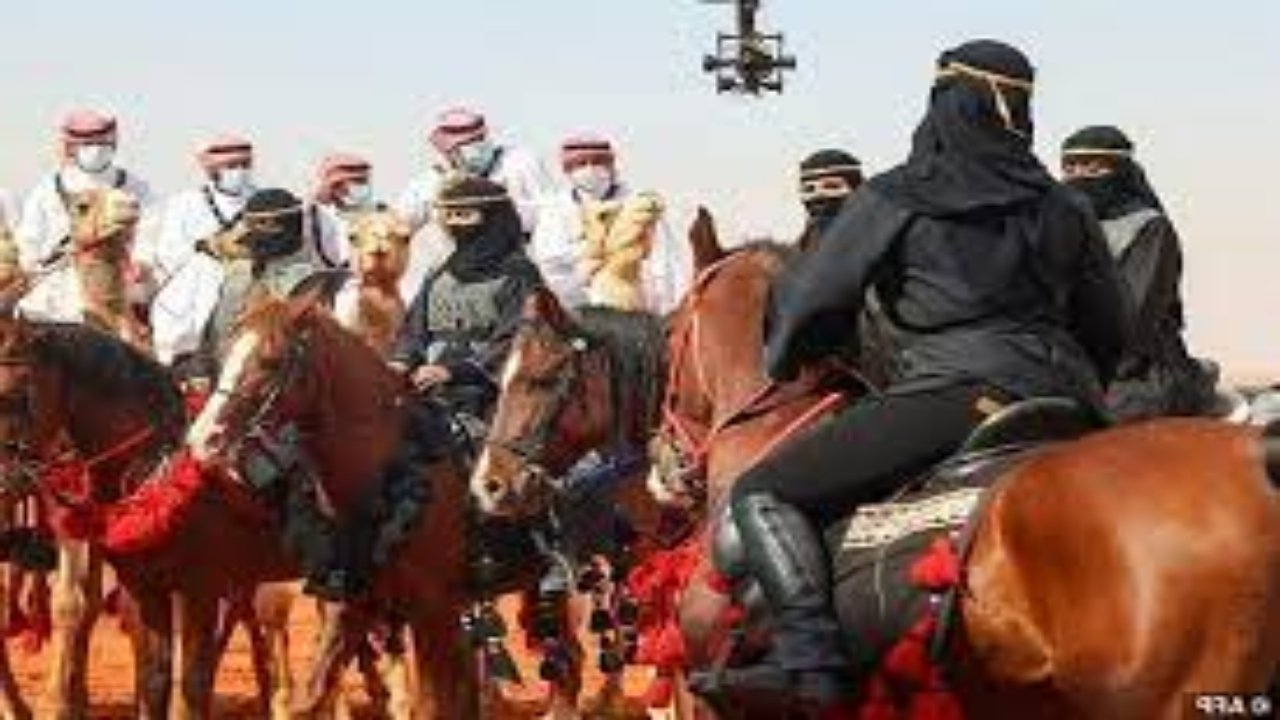
    For the first time in the kingdom, Saudi women paraded camels in a beauty pageant for the “desert ship”.

    “I hope today to reach a certain social standing, InshaAllah (God willing),” said Lamia al-Rashidi, 27, who participated at the weekend contest in the Rumah desert northeast of the capital Riyadh.

    Part of the famous King Abdul Aziz Festival, this event was previously a men-only event.

    “I’ve been interested in camels ever since I was little,” said Rashidi, whose family owns 40 camels.

    “Once this event was opened to women, I decided to participate,” said the young woman, wearing a black face covering and with a colourful shawl over her shoulders.

    The top five in the field of about 40 participants in the women’s event returned home with a total prize pool of one million riyals (about $ 260,000).

    The beauty of a camel is judged by several criteria, but the shape and size of the lips, neck and hump are the main attributes.

    Since Crown Prince Mohammad bin Salman came to power in 2017, Gulf countries have lifted some restrictions on women as the country is opened up with radical reforms.

    This shift allows women to grab the steering wheel and participate in a mixed gender environment.

    “Women have always been an integral part of Bedouin society. They owned and looked after camels,” said Mohammed al-Harbi, a manager of the festival.

    Women´s participation was in keeping with “the historical heritage” of Saudi Arabia, he told AFP.

    Munira al-Mishkhas, another participant, chimed in: “Camels have been a part of us for a long time, but staging a contest for us (women) is a big step forward.”

    At just seven years old, Maras Binto Enad was the youngest contestant and her animal finished third. Her proud father, a 35-year-old camel dealer who said he had more than 200 beasts, was very pleased with the admission of the female.

    “This will increase enthusiasm for the festival and increase the value of the camels,” said Enad bin Sultan, clad in traditional costume and red-and-white keffiyeh headdress.

    The 40-day festival, which kicked off last month, is an annual Bedouin event that lures breeders from across the Gulf with total prize money of up to $66 million.

  • PM Imran, First Lady land barefoot in Madina

    PM Imran, First Lady land barefoot in Madina

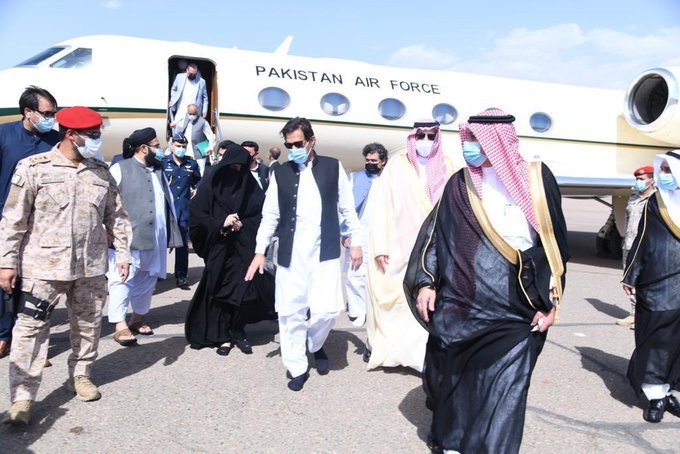
    Prime Minister Imran Khan and First Lady Bushra Bibi landed in Madina wearing no shoes in order to pay their respects to the Holy City.

    Minister for Information and Broadcasting Fawad Chaudhry appreciated PM Khan’s gesture of not wearing shoes, saying: “This is the level of respect, that [PM Imran] opts not to step on the holy soil of Madina with shoes on.”

    “Respect is the first source of love,” added Chaudhry.

    Meanwhile, this is not the first time that PM Khan was seen without his shoes. During his previous visits to the Holy City, the PM opted to walk barefoot.

    2018:PM Imran Khan arrives in Madina on official tour to Saudi Arabia

    PM Khan has carried all his activities barefoot, which happens to be a usual norm for the premier whenever he is in Madina.

    Imran Khan in Madina meeting with officials

    During this vist, PM Khan also visited Masjid al Nabawi as part of his tour activities and was photographed sitting within the premises of Roza-e-Rasool (PBUH).

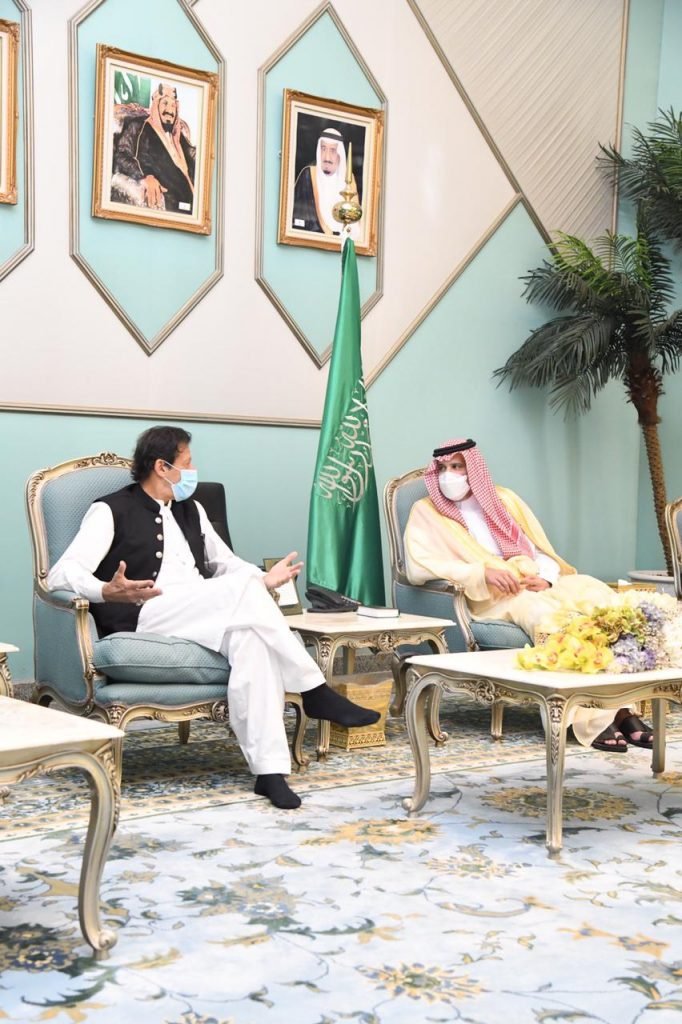
    PM Imran is currently in Saudi Arabia for a three-day visit. The PM is visiting the Kingdom upon the invitation of Crown Prince Mohammed bin Salman bin Abdulaziz.

  • Ultimatum for Saudi Arabia: Trump tells MBS to cut oil supply if Kingdom wants US military support

    Ultimatum for Saudi Arabia: Trump tells MBS to cut oil supply if Kingdom wants US military support

    With the United States (US) continuing to press Saudi Arabia to end its oil price war with Russia, President Donald Trump has given the Kingdom an ultimatum.

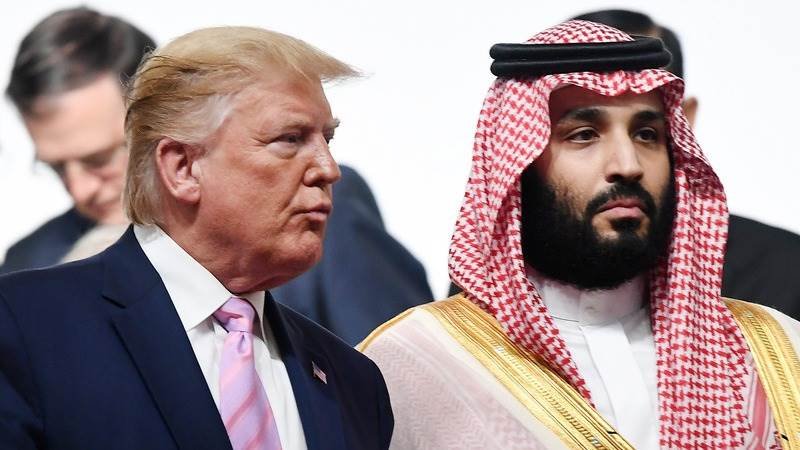
    According to Reuters, in an April 2 phone call, Trump told Saudi Crown Prince Mohammed bin Salman that unless the Organisation of the Petroleum Exporting Countries (OPEC) started cutting oil production, he would be powerless to stop lawmakers from passing legislation to withdraw US troops from the Kingdom.

    The threat to upend a 75-year strategic alliance, which has not been previously reported, was central to the US pressure campaign that led to a landmark global deal to slash oil supply as demand collapsed in the coronavirus pandemic — scoring a diplomatic victory for the White House.

    Trump delivered the message to the crown prince 10 days before the announcement of production cuts. The kingdom’s de facto leader was so taken aback by the threat that he ordered his aides out of the room so he could continue the discussion in private, according to a US source who was briefed on the discussion by senior administration officials.

    The effort illustrated Trump’s strong desire to protect the US oil industry from a historic price meltdown as governments shut down economies worldwide to fight the virus. It also reflected a telling reversal of Trump’s longstanding criticism of the oil cartel, which he has blasted for raising energy costs for Americans with supply cuts that usually lead to higher gasoline prices.

    Now, Trump was asking OPEC to slash output.

    A senior US official told Reuters that the administration notified Saudi leaders that, without production cuts, “there would be no way to stop the US Congress from imposing restrictions that could lead to a withdrawal of US forces”. The official summed up the argument, made through various diplomatic channels, as telling Saudi leaders: “We are defending your industry while you’re destroying ours.”

  • ‘Pakistan, the friend in need’: Millions of COVID-19 drugs to be exported to US, UK, KSA, others

    ‘Pakistan, the friend in need’: Millions of COVID-19 drugs to be exported to US, UK, KSA, others

    Special Assistant to the Prime Minister (SAPM) on Information and Broadcasting Dr Firdous Ashiq Awan has announced the federal cabinet’s decision to send chloroquine tablets — an anti-malarial medicine that some studies found has a strong antiviral effect on COVID-19 — to “friendly nations” to help them in their time of need.

    Addressing a press conference after the weekly cabinet meeting, she said that one million chloroquine tablets will be sent to Saudi Arabia and the United States each, 500,000 to Turkey and Italy each, five million to the United Kingdom, 700,000 to Kazakhstan and 300,000 to Qatar.

    Firdous revealed that leaders of some countries had called Prime Minister Imran Khan and expressed a desire to import the tablets from Pakistan following some encouraging results in treating the coronavirus.

    “Pakistan has always been asking these countries for something or the other. So, for the sake of humanity and to improve Pakistan’s credibility and face value, this is a good chance to help them in this time of need,” she said.

    She also said that Pakistan had some 40 million tablets in stock and possessed the raw material to make even more.

  • Saudi Arabia observes first legal Valentine’s Day

    After decades of marking the practice as forbidden, the Kingdom of Saudi Arabia is observing its first legal Valentine’s Day by selling and buying gifts, flowers and chocolates, which was not thought possible until a few years ago due to the strict laws deeming the same un-Islamic.

    According to Middle East Monitor, the once-feared religious police used to ensure that the laws forbidding the celebration were strongly enforced, but that was before they were disbanded and their powers of arrest were stripped from them. Store owners were previously obligated to hide red roses and chocolates on the day, and restaurant owners were pressured to ban birthday and anniversary celebrations on February 14.

    The main turning point in the kingdom’s decision came in 2018, when the former president of Makkah’s Commission for the Promotion of Virtue and the Prevention of Vice (CPVPV) Sheikh Ahmed Qasim Al-Ghamdi declared that the celebration of Valentine’s Day did not actually contradict Islamic teachings. According to him, the celebration of love was a universal phenomenon and not limited to the non-Muslim world.

    The legalisation of the public celebration of Valentine’s Day – rooted in the Roman pagan festival celebrating and honouring fertility – comes amid the recent liberalisation of traditional social conventions within the kingdom and the reforms being carried out by Crown Prince Mohammed Bin Salman in order to “modernise” the country.

    While bin Salman has made headlines across the world after promising the kingdom will return to a “moderate” form of Islam, he also guarantees a brighter future for his people as he promotes modernisation plans to wean the country off oil, attract foreign investment and diversify the economy.

    2017’s royal decree allowing women to drive was an equally eye-catching element of bin Salman’s national makeover. It certainly makes sense economically, as it boosts female participation in the workforce, and women can now also go to sports stadiums.