Tag: crude

  • Russian oil imports expected to reduce fuel prices slowly, says Musadik Malik

    Russian oil imports expected to reduce fuel prices slowly, says Musadik Malik

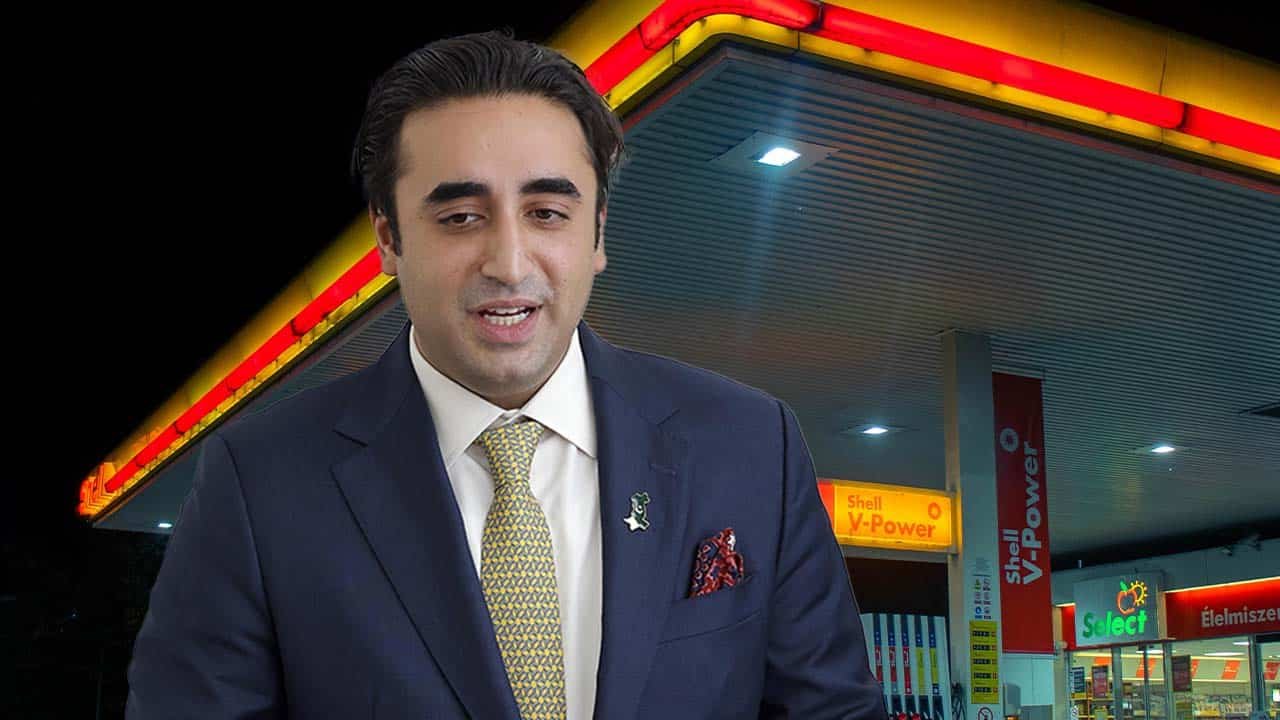
    At the Pakistan Energy Conference 2023, Minister of State for Petroleum, Musadik Malik, reassured the nation that the arrival of cheap oil from Russia would eventually lead to a decline in fuel prices. However, he cautioned that an immediate decrease should not be expected until a continuous supply of oil from Moscow is established.

    Minister Malik said that the import of Russian oil was not merely a promise or rhetoric. He confirmed that ships carrying the much-anticipated oil had already reached Oman and would commence supply to Pakistan within a week. While acknowledging that a single shipment would not significantly impact fuel costs, Malik expressed confidence that once a persistent supply was established, the price of fuel would gradually decrease.

    The government’s ambitious objective is to fulfill one-third of Pakistan’s crude oil requirements with affordable oil sources, including imports from Russia. The aim is to address the chronic energy shortages that Pakistan, the world’s fifth most populous country, has been grappling with. Currently, Pakistan imports 84 per cent of its petroleum products, primarily from Gulf Arab allies Saudi Arabia and the United Arab Emirates.

    The import of cheap Russian oil represents one of Pakistan’s strategies to alleviate its energy crisis, as global efforts are underway to restrict Russia’s oil exports due to its invasion of Ukraine. During a visit to the United States earlier this month, Minister Malik confirmed that Pakistan had placed its first order for Russian oil, which is expected to arrive within a month. Upon evaluating the impact of this initial shipment, Pakistan will decide on the extent of future imports.

    When asked about the possibility of pursuing more Russian imports, Malik responded that Pakistan would prioritise cheaper energy sources to meet its energy requirements. The minister further emphasised that the government’s objective was to ensure a sustainable and affordable supply of low-cost energy, highlighting accessibility, sustainability, and affordability as the key pillars of this vision.

    In addition to the import of Russian oil, Malik mentioned the Iran-Pakistan Gas Pipeline project as another avenue to address the country’s energy needs. The government has conveyed to Iran its intention to access energy through the pipeline while remaining responsible and avoiding potential sanctions. Talks are underway with both sanctioning countries and Iran to find a creative solution to this matter.

    With Pakistan eagerly awaiting the arrival of cheap Russian oil, the government remains committed to securing a sustainable and affordable energy supply to meet the needs of its citizens. The gradual decline in fuel prices is expected to provide much-needed relief to the nation, addressing its chronic energy shortages and boosting economic growth in the process.
  • International petrol, diesel prices drop, but no relief for Pakistanis

    The government has decided not to reduce the prices of diesel and petrol for local consumers, despite a significant decrease in their international prices. This decision is intended to offset previous exchange losses and raise taxation.

    On February 28, 2023, the average fortnightly prices of petrol and diesel in the global market will be used for the next price revision. According to industry sources, the average price of diesel for the next fortnightly review has dropped by $7 per barrel, which equates to a reduction of Rs30 per litre for domestic diesel prices.

    The global average price of diesel has fallen to approximately $100 per barrel compared to $107 per barrel in the previous fortnight. Similarly, the average price of petrol has dropped to $90 per barrel for the next review of prices compared to $93 per barrel in the last fortnightly review, which translates into a reduction of Rs10 per litre for consumers in the local market.

    According to Geo, the appreciation of the Pakistani rupee against the dollar in the last two weeks has also contributed to the reduction in import prices of diesel and petrol. However, industry sources do not expect any significant reduction in the prices of diesel and petrol for domestic consumers.

    The government is expected to adjust the exchange losses, which were not passed on fully to the oil sector in the last several reviews. For example, an exchange loss adjustment of Rs88 per litre was due on diesel, but the government only transferred Rs12 per litre on this head, leaving the remaining amount to be adjusted. The same is true for petrol, with an exchange loss adjustment of Rs34 per litre due, but only Rs12 per litre being given to the oil industry.

    Under the conditions set by the International Monetary Fund (IMF), the government may increase the petroleum levy (PL) on diesel to Rs50 per litre, as it now has room to do so. Currently, the PL on diesel is Rs40 per litre.

    If the government does not impose GST, sources expect a cut of Rs10 per litre in diesel prices, which would otherwise deprive local consumers of the drop in diesel prices in the global market.

    However, official industry sources do not anticipate any reduction in the price of petrol for local consumers, which would otherwise have been down by Rs10, as per the trends of its price in the global market.

  • Russia agrees to supply blended crude oil to Pakistan, rates to be finalised next month

    Russia agrees to supply blended crude oil to Pakistan, rates to be finalised next month

    A delegation from Moscow will visit Islamabad in January 2023 to talk about the potential sale of Russian oil.

    Officials from Russia and Pakistan met via video link to discuss purchasing crude oil and petroleum products from Moscow, according to government sources.

    Musadik Malik, Pakistan’s State Minister for Petroleum, and the Secretary for Petroleum took part in the online meeting.

    Due to Pakistan’s inability to refine crude oil of a single specification, Russia has offered to supply Pakistan with blended crude oil. The offer represents a portion of the daily supply of 100,000 barrels of crude oil.

    Senior officials from the Petroleum Division and representatives from the oil industry made up the Pakistani side, which was chaired by State Minister for Petroleum Dr Musadik Malik, while senior officials from the Russian energy ministry and relevant departments constituted the Russian side.

    The Pakistani government informed its Russian counterparts that their nation needs crude oil, petroleum products, gas, and infrastructure investment, according to sources with knowledge of the meeting’s activities.

    According to The News, when a delegation from Russia visits Pakistan, the Russian side stated that they will further consider their intentions to collaborate with the Pakistani authorities.

  • Pakistan to get 20,000 tonnes of additional gas from Azerbaijan

    Pakistan to get 20,000 tonnes of additional gas from Azerbaijan

    In order to meet domestic demand, Pakistan will import an additional 20,000 tonnes of gas from Azerbaijan in the next two months, according to Minister of State for Petroleum Musadik Malik.

    The Russian Petroleum Minister will visit Pakistan next month to strike a deal for the purchase of Russian crude oil, the minister said in a statement. The state minister was confident that Russia will deliver discounted crude oil to Pakistan.

    According to him, the government is working on the Turkmenistan-Afghanistan-Pakistan-India (TAPI) gas pipeline project to import 1,300 billion MF of gas from Azerbaijan per year to address the country’s gas shortfall.

    Malik had before claimed that Russia will give Pakistan a discount on the purchase of its crude oil.

    Musadiq Malik stated during a news briefing in Islamabad on Friday that Russian authorities had made it clear they will offer Pakistan cheap crude oil.

    The State for Petroleum Musadik Malik stated, “We are taking talks [with Russia on crude oil] forward,” noting that two of Russia’s eight sorts of crude oil might be utilised in Pakistani refineries.

    He continued by saying that Pakistan was also developing a framework for an LNG cargo arrangement with Azerbaijan.

  • Pakistan is not ‘pursuing or receiving’ any discounted energy from Russia: FM Bilawal Bhutto

    Pakistan is not ‘pursuing or receiving’ any discounted energy from Russia: FM Bilawal Bhutto

    Pakistan is not “pursuing or receiving” any discounted energy from Russia, according to Foreign Minister Bilawal Bhutto Zardari, who is in the US for a seven-day visit.

    Earlier, State Minister for Petroleum Musadik Malik had announced that Russia had decided to provide crude oil, petrol, and diesel to Pakistan at lesser rates.

    He had stated that specific terms and conditions of the discounted oil commodities will be decided upon during the upcoming visit of the Russian energy minister to Islamabad by mid-January, but that prices would be on par with or even lower than those being offered to other nations, according to Geo.

    Before that meeting, Malik had stated, the two parties would refine their ideas to the point at which an executive summary or an agreement could be signed and supplies would begin to flow.

    As winter approaches, Pakistan struggles to meet domestic gas supply needs while also trying to control a current account deficit that has been swollen by energy purchases, largely for oil.

    Because spot prices are still out of reach for the nation and shipments under long-term contracts are still insufficient to meet the expanding demand, the nation has been unable to purchase liquefied natural gas from the international market.

    In an interview, the PPP chairman said: “As far as Russia is concerned, we aren’t pursuing or receiving any discounted energy, but we are facing an extremely difficult economic situation, inflation, pump prices.”

    However, he acknowledged Pakistan’s energy insecurity. “We are exploring various avenues to expand our areas where we can get our energy from,” FM Bilawal said, adding that “any energy from Russia will take a long time for us to develop.”

  • Govt slashes petrol price by Rs10 to Rs214.80 per litre

    Govt slashes petrol price by Rs10 to Rs214.80 per litre

    The federal government on Thursday announced a reduction in the price of petroleum products by up to Rs10.

    Finance Minister Ishaq Dar said that the price of high-speed diesel (HSD) will be decreased by Rs7.5, petrol by Rs10, kerosene oil by Rs10, and light diesel oil (LDO) by Rs10.

    After the reduction, the new price of HSD would be Rs227.80 per litre, petrol Rs214.80 per litre, kerosene oil Rs171.83 per liter, and LDO Rs169 per litre.

    According to the details, new prices would be implemented at midnight tonight.

    The reduction follows a decline in global oil prices. Brent crude prices were down 33 cents or 0.4 per cent at $82.37 a barrel as of December 15 at 1453 GMT, while US crude futures were down 43 cents or 0.6 per cent at $76.85.

    After a Pakistani delegation visited Moscow earlier this week, sources indicated that Russia had confirmed the availability of 100,000 barrels of crude oil per day to Pakistan.

    They also stated that a delegation from Moscow would travel to Islamabad in January to negotiate the terms of a deal, including prices and the method of payment.

  • Experts predict reduction in prices of petrol, diesel

    Experts predict reduction in prices of petrol, diesel

    According to oil price forecasts from energy experts, the price of petrol is likely to go down by Rs7.50 per litre, while the price of High-Speed Diesel (HSD) may be reduced by Rs12.37 per litre for the rest of this month.

    However, there won’t be a reduction in the price of petrol and high-speed diesel if the government increases the petroleum levy (PL) and corrects the backlog of exchange loss on a free-on-board (FOB) basis, according to Brecorder.

    Sources said that the price of petrol is likely to go down by Rs7.50, from Rs224.80 to Rs217.30 per litre, while the price of HSD is expected to slide by Rs12.37, from Rs235.30 to Rs222.93 per litre.

    The government is also poised to raise the tax on HSD, Superior Kerosene Oil (SKO), and Light Diesel Oil, according to sources in the Petroleum Division (LDO).

    It is also possible that the exchange loss arrears in fuel prices would be adjusted.

    There are lower prospects of the price of gasoline and HSD decreasing if the government raises the PL and corrects the exchange loss arrears. When petroleum goods reach the maximum level for PL, which is Rs50 per litre on each petroleum product, the government has promised the International Monetary Fund (IMF) that it will apply general sale tax (GST).

    Currently, the government is charging a petroleum levy of Rs50 per litre on petrol, Rs25 per litre on HSD, Rs7.01 per litre on SKO and Rs15.39 per litre on LDO.

    The government, however, has promised the international lender that it will hike the levy on diesel to Rs50 by April 2023.

  • Russia agrees to provide petrol and diesel to Pakistan at discounted rates

    Russia agrees to provide petrol and diesel to Pakistan at discounted rates

    State Minister for Petroleum Musadik Malik announced on Monday that Russia has agreed to supply Pakistan with cheap petrol, diesel, and crude oil.

    Malik said he wanted to congratulate the public for a fruitful trip to Russia, calling it “more successful than our expectations,” during a news conference in Islamabad.

    According to The News, the state minister for petroleum, the secretary for petroleum Capt. (retd) Muhammad Mahmood, the joint secretary, and representatives of the petroleum division made up the delegation from Pakistan that travelled to Moscow to look into the possibility of obtaining Russian crude oil and other petroleum products at a lower price.

    Malik said that Russia lacked liquefied natural gas (LNG). The import of LNG is the subject of ongoing discussions with Russian private companies, and Malik added that state-run LNG producers in Russia have also been contacted.

    The state minister claims that negotiations with Moscow about the pipeline projects have advanced significantly.

    The News last week stated, citing sources, that during negotiations in Moscow, the Pakistani team requested a 30–40 per cent discount on Russian crude oil; however, the Russians refused, stating that all volumes had already been promised.

  • Russia refuses to give Pakistan 30–40% discount on crude oil

    Russia refuses to give Pakistan 30–40% discount on crude oil

    It appears that talks with Russia came to an end without any conclusion since Moscow has refused to offer Pakistan a 30–40 per cent discount on crude oil, claiming that all volumes were committed.

    During the negotiations, the Pakistani group, which included State Minister for Petroleum Musadik Malik, the joint secretary, and representatives of the Pakistani Embassy in Moscow, sought a reduction.

    However, Russia has pledged to take Pakistan’s request into consideration and to later communicate its opinion through diplomatic channels.

    Nevertheless, according to sources, Russia can provide oil at the rates it is currently offering to its major client countries, which are stable and solid economies, at an appropriate time. All quantities are currently contracted with significant purchasers, they claimed.

    The Russian side urged Pakistan to start by keeping its word over the Pakistan Stream Gas Pipeline, which will be built from Karachi to Lahore, Punjab.

    During the negotiations, the Pakistani side expressed a desire to alter the PSGP project’s model. The Russian side claimed that only a few provisions of the shareholding agreement needed to be finalised and that the model of the project under the GtG arrangement had already been established.

    According to Geo, the official delegation from Pakistan travelled to Moscow on November 29 for a three-day meeting with Russian officials to discuss the possibility of importing crude oil at a reduced price, as well as the mode of payment and shipping costs.

    Russian crude oil may be processed in Pakistan’s refineries, and one private refinery has previously used Russian crude oil to provide completed goods, according to sources in the industry ministry.

  • Pakistan seeks to import 1.5 million tonnes of petrol from UAE at a negotiated price

    Pakistan seeks to import 1.5 million tonnes of petrol from UAE at a negotiated price

    In an attempt to begin the process of signing an intergovernmental agreement (IGA), Pakistan will write to the United Arab Emirates this week. The country is looking for a government-to-government contract to import 1.5 million tonnes of gasoline annually.

    According to The News, Pakistan would import 1.5 million tonnes of motor spirit (Mogas) over a five to eight-year period, or 30 cargoes. The nation would receive two to three shipments from the gulf nation each month.

    The IGA with Oman, Qatar, Saudi Arabia, and some other nations has already been signed by the energy ministry. UAE will receive the same contract. Both nations will begin negotiating the GtG deal for the import of petrol, crude oil, and jet fuel once the agreement is finalised.

    Leading representatives from both sides agreed to sign a GtG agreement for the import of petrol, crude oil, and jet fuel at the Abu Dhabi negotiations held in the first week of the current month.

    This will enable Pakistan to have a sufficient supply of petroleum products.

    ADNOC (Abu Dhabi National Oil Company), on behalf of the UAE, and Pakistan State Oil (PSO), on behalf of Pakistan, will begin negotiations for a commercial deal on a going-to-market basis after the IGA has been finalised and signed.

    Before December 31, 2022, Pakistan wants both IGAs and business agreements signed so that beginning in January 2023, oil imports from the UAE could begin on a GtG basis.

    Under the terms of the GtG agreement, PSO obtains diesel from KPC (Kuwait Petroleum Company) and pays significant premiums for gasoline purchased on the open market, which is determined by the costs of goods on the global market.

    Now, as part of the GtG agreement, PSO would purchase gasoline from ADNOC at a negotiated rate. Additionally, because the nation’s refineries typically meet jet fuel needs, PSO would also import it as needed.