Tag: crude oil

  • Pakistan’s exports surge by 22.45% in FY23-24’s first two months, crossing Rs1.27 trillion mark

    Pakistan’s export sector has demonstrated remarkable growth, achieving a substantial 22.45 per cent increase, reaching the noteworthy milestone of Rs1.27 trillion during the initial two months of the fiscal year 2023-24 (FY23-24).

    According to data released by the Pakistan Bureau of Statistics (PBS), exports from July to August 2023 stood at Rs1.27 trillion, marking a remarkable 22.45 per cent surge compared to the Rs1.04 trillion recorded during the corresponding period the previous year.

    In a year-on-year analysis, exports in August 2023 surged by an impressive 26.75 per cent, reaching Rs695.1 billion, as opposed to the Rs548.4 billion recorded in August 2022. Furthermore, on a month-to-month basis, exports surged by 19.62 per cent when juxtaposed with the Rs581.1 billion recorded in July 2023. The textile and knitwear sector emerged as the most substantial export contributor, accounting for an impressive Rs117.8 billion.

    In contrast, imports during July and August of the fiscal year 2023-24 experienced a modest decline of 2.42 per cent, totaling Rs2.3 trillion. This is in contrast to the imports recorded at Rs2.4 trillion during the corresponding period the previous year. Of note, Pakistan’s imports in August 2023 included Rs180.6 billion worth of petroleum products, followed by crude oil and liquefied natural gas (LNG) valued at Rs119.4 billion and Rs89.8 billion, respectively.

    When analyzed on a year-on-year basis, imports into Pakistan in August 2023 displayed a marginal 0.5 per cent decrease when compared to August 2022. On a month-on-month basis, imports into the country saw a significant uptick of 27.79 per cent in August 2023 when compared to the Rs1.04 trillion worth of imports in July 2023.

    According to Geo, this surge in exports is indeed promising as it holds the potential to bolster Pakistan’s diminishing foreign exchange reserves, a much-needed development in light of the challenging economic situation stemming from the depreciation of the Pakistani rupee
  • Petrol price likely to increase by Rs15 per litre after August 16

    Petrol price likely to increase by Rs15 per litre after August 16

    Starting August 16, petroleum products are expected to undergo a notable price hike. In particular, the price of petrol is projected to rise by Rs15 per litre, while diesel will likely see a steeper increase of Rs20 per litre.

    This surge in prices is attributed to a rise in global commodity rates. Recent reports indicate that the cost of crude oil has climbed by $5 per barrel, going from $86 to $91 per barrel. This increase is largely due to the elevated prices of petroleum products on the global market. Additionally, a separate premium charge of $2 per barrel has been applied to crude oil.

    Simultaneously, the international prices for both diesel and gasoline have also experienced a $5 surge, climbing from $97 per barrel to $102 per barrel.

    Should these prices remain unchanged, the anticipated effect on Pakistan’s fuel market would translate to a Rs15 per litre hike for petrol and a more substantial Rs20 per litre increase for diesel.

    In the context of the previous fortnightly review conducted by the outgoing government, a significant Rs19 per litre escalation in petrol and diesel prices had been announced. This decision was justified as being in alignment with the demands of the International Monetary Fund.

  • Finance Minister Dar assures no global sanctions for Russian oil purchase

    Finance Minister Dar assures no global sanctions for Russian oil purchase

    Pakistan’s Finance Minister, Senator Ishaq Dar, has provided reassurances that Pakistan will not be subjected to global sanctions for its purchase of Russian oil. Dar made these remarks during a briefing to the Senate’s Standing Committee on Finance, highlighting that both India and China continue to purchase crude oil from Russia despite existing global sanctions.

    Dar emphasised that significant progress had been made in November of the previous year regarding the procurement of Russian oil, and the government had diligently completed all necessary preparations before proceeding with the purchase. He further explained that Pakistan adhered to an approved procedure established by a committee comprising G7 countries for oil production from Russia.

    Dar acknowledged the instrumental role played by Foreign Minister Bilawal Bhutto Zardari in consulting and obtaining approval from the G7 countries prior to the procurement of Russian oil.

    In terms of payment, the finance minister disclosed that the Chinese currency Yuan would be used for settling the payment for the Russian crude oil. He expressed Russia’s satisfaction with this arrangement, noting that it would not only reduce shipping costs but also lead to a decline in crude oil prices.

    When questioned about border trade with Iran, Dar confirmed that the government intended to enhance such trade but clarified that petroleum products were not included in these border trade activities.

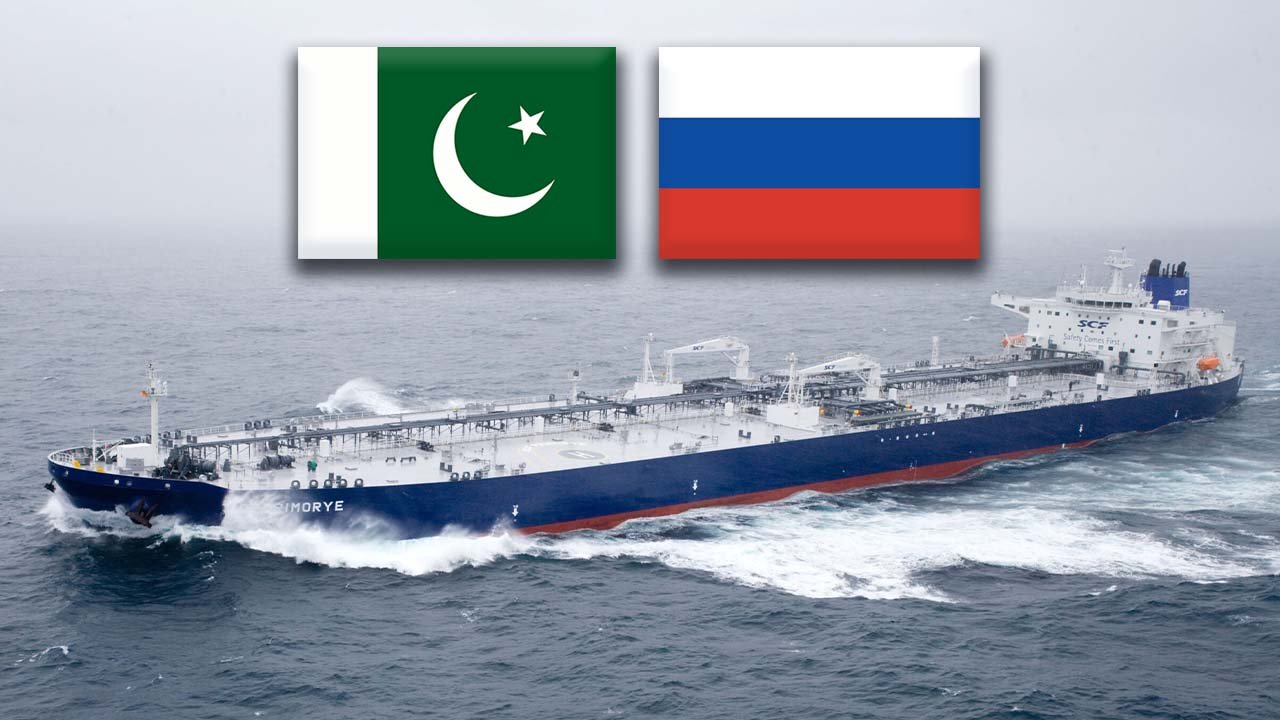
    On Sunday, Pakistan successfully unloaded over 45,000 metric tons of oil from a Russian vessel that arrived at the Karachi port. Another Russian oil carrier is expected to reach the port of Karachi in the coming week.

    It is worth mentioning that earlier this week, the first ship carrying Russian oil had already docked at the Karachi port.

    During a press briefing on June 15, US State Department spokesperson Matthew Miller highlighted that every country has the right to make decisions based on its energy requirements. He further acknowledged that Russian oil was being sold at significantly lower prices compared to global market rates.

    Miller attributed this decrease in price to the limitations imposed by the US and its allies, resulting in Russia losing an estimated $100 billion in revenue that could have been used in the Ukraine conflict. Miller clarified that the US had not imposed any restrictions on Russian oil exports.

  • Massive reduction in petrol price expected as Pakistan aims for one-third crude oil import from Russia

    Massive reduction in petrol price expected as Pakistan aims for one-third crude oil import from Russia

    Minister of State for Petroleum, Musadik Malik, has announced that the prices of petroleum products will witness a decrease once a continuous supply of oil from Russia is ensured.

    Speaking to a private news channel, Malik highlighted the substantial difference in prices that will benefit the masses once Pakistan starts fulfilling one-third of its domestic oil needs through imported Russian oil. He stated, “Our target is to obtain one-third of crude oil from Russia at a discounted rate. When we achieve this objective, petroleum products will be available at a cheaper price.”

    In response to a question about the expected decrease in fuel prices, Malik said, “I am unable to divulge the precise pricing details at this moment. However, it will lead to a significant difference.”

    While the state minister refrained from disclosing the current price, he emphasised that a substantial reduction in price would occur. He also mentioned that the first oil cargo has already arrived in Karachi, and the government is focused on maintaining a steady supply of Russian oil.

    The current deal involves 100,000 metric tonnes of oil, with the second consignment scheduled to arrive at the port next week.

    When asked about the possible effects of buying Russian oil and any potential issues at the global level, Malik expressed confidence that adhering to agreements and maintaining transparency would prevent any complications. He underscored the importance of responsible international engagement.

    Previously, Prime Minister Shehbaz Sharif expressed his fulfillment of another promise made to the nation, stating that the arrival of the first-ever Russian oil cargo marks the beginning of a new relationship between Pakistan and the Russian Federation. He described the day as transformative and emphasised the country’s commitment to achieving prosperity, economic growth, and energy security.

    Following its docking at the port, the authorities have commenced the process of transferring the Russian crude from the oil tanker to the Pakistan Refinery Limited for further processing and extraction of various final products. The transportation of crude oil to the facility is expected to be completed within the next 24 to 36 hours.

    It is worth noting that this is the first time Russian crude oil is being treated in Pakistan. The determination of the actual price of petroleum products in Pakistan will be possible only after the completion of the processing of this imported oil.

  • Pakistan to pay for Russian oil in Chinese yuan, shipping expected in June

    Pakistan to pay for Russian oil in Chinese yuan, shipping expected in June

    According to a senior official from Pakistan’s Ministry of Energy, the country is expected to pay for a test cargo of 750,000 barrels of Russian oil in Chinese Yuan. The cargo is set to dock in Pakistan in June, with a possibility of arrival by the end of May.

    It has been suggested that the Bank of China will play a role in the transactions. However, the exact mode of payment and discount offered have not been made public to avoid backlash from other countries purchasing Russian oil directly from Moscow.

    The test cargo will likely contain URAL crude, which will be refined by Pakistan Refinery Limited. Commercial analysis of Russian crude has been conducted in favour of Pakistan’s economy, but will be further assessed after refining. The estimated shipping cost of the Russian oil is around $15 per barrel, which will be confirmed upon arrival at the Pakistani port.

    Pakistan has reportedly settled on a per barrel price of $50-52, lower than the cap price of G7 countries at $60 per barrel. Pakistani refineries currently import 80 per cent of crude under long-term agreements with ADNOC and Saudi Aramco. However, the remaining 20 per cent provides a cushion to purchase Russian oil under GtG on a long-term agreement to some extent. The government plans to keep some cushion for purchasing crude from the international market, as crude prices can fluctuate.

    Pakistan had initially hoped to obtain Russian crude at a discount close to $50 per barrel, $10 per barrel below the cap price imposed by G7 countries in response to the Ukraine conflict. However, a top official from the coalition government has expressed concern that importing Russian crude at a 30 per cent discount under the GtG agreement may not provide sufficient relief.

  • Pakistan places first order for discounted Russian crude oil

    Pakistan places first order for discounted Russian crude oil

    Pakistan has placed its first order for discounted Russian crude oil under a new deal negotiated between Pakistan and Russia, following months of discussions.

    State Minister for Petroleum, Musadik Malik, confirmed that one cargo will dock at Karachi port in May.

    Pakistan will only purchase crude oil, not refined oil, and imports are expected to reach 100,000 barrels per day if the initial transaction goes smoothly. Pakistan’s Refinery Limited (PRL) will initially refine the Russian crude, with other refineries to be included after a trial run.

    A delegation from Russia arrived in Pakistan earlier this month to discuss the payment mode. During these talks, the Russian side requested that the deal with Moscow be kept secret as they do not want the disclosure to other Russian crude buyer countries.

    Consequently, Pakistan’s top officials decided not to disclose the mode of payment and the exact discount. Russian Energy Minister Nikolay Shulginov led a delegation to Islamabad in January to hold talks on the deal, after which he said oil exports to Pakistan could begin after March.

  • Pakistan moves closer to finalising oil deal with Russia as team arrives in Karachi

    Pakistan has taken a step forward in its efforts to secure a loan deal with Russia, as a delegation has arrived in Karachi to finalise a crude oil deal with Pakistan State Oil (PSO). However, the Energy Ministry has not yet revealed the payment method or the discount rate for the crude oil prices, keeping it confidential for now.

    Technical teams from the Operational Services Centre held talks with the PSO team last month, but progress was not made on the constitution of a Special Purpose Vehicle responsible for importing crude and making payments. The Russian delegation is now in Pakistan to finalise the government-to-government agreement, including the mode of payment. Pakistan wants to pay in rupee, while Russia is asking for payment in China’s Yuan or Ruble. Once the deal is done, Pakistan will place an order with Russia for crude oil purchase.

    According to sources, the Russian ship will arrive in mid-May, and the current Brent price in the international market is $85.16 per barrel, while Russian oil is available at $47-48 per barrel. The State Bank of Pakistan (SBP) is asking local banks to open letters of credit for importing Russian oil, but they are hesitant to do so mainly because of the G7 countries’ regulations of following the price cap of $60 per barrel or below it and making payments under Society for Worldwide Interbank Financial Telecommunications (SWIFT) arrangement.

    PSO has never imported crude oil before, and refineries have been importing crude under long-term agreements from ADNOC and Saudi Aramco. However, in the case of Russian crude, refineries will not be involved in the import, but it will be an SPV with representatives from PSO and PSC. Pakistan may get Russian crude price with a discount close to $50 per barrel, $10 per barrel below the cap price imposed by G7 countries on Russian oil in the wake of the war on Ukraine.

    One of the top officials in the coalition government suggests that the decision to import Russian crude under the government-to-government agreement at a 30 per cent discount may not provide the required relief as shipping and refining costs will erode the maximum discount. Additionally, Pakistan refineries will only be able to extract 10 per cent MS out of Ural crude and 50 per cent furnace oil.

    The government needs to conduct a commercial analysis to determine if importing Russian oil will benefit Pakistan’s economy and to what extent. Industrial sources suggest that the government should evaluate the economic benefits of importing Russian oil carefully.

  • Pakistan’s Petroleum Division eyes discounted Russian crude oil amid high global prices

    Pakistan’s Petroleum Division eyes discounted Russian crude oil amid high global prices

    Petroleum Division is attempting to purchase Russian crude oil for approximately $50/barrel, which is at least $10/barrel below the price ceiling imposed by G7 countries on this valuable commodity originating from Russia because of its conflict with Ukraine. Presently, crude oil is being sold internationally for $82.78/barrel.

    Officials participating in the virtual negotiations with Russia have disclosed that Moscow is primarily focused on fulfilling all prerequisites, such as deciding on the method of payment, shipping costs with premium, and insurance expenses, before entering into an agreement with Pakistan. These officials, who requested anonymity, revealed that Russia will respond regarding the discount on the base price after the prerequisites are finalized. They also stated that shipping the crude oil from Russian ports will take 30 days, resulting in a $10-15/barrel increase due to transportation costs.

    The talks between Moscow and Islamabad are progressing positively, with the expectation that a government-to-government deal on Russian crude oil imports will be finalized by the end of March. When asked, officials stated that the government has decided not to disclose the payment method to Russia for crude oil imports, but authorities are considering using Pakistan National Shipping Corporation (PNSC) ships or Russian tankers for transportation.

    An official cautioned that the landed cost of Russian crude must be considered because the crude vessel will arrive in 30 days, leading to a per barrel shipping cost of $10-15. They added that Moscow has not agreed on the discount yet, and the maximum discount may be offset by the crude oil’s shipping costs.

    State Minister Musadik Malik had previously claimed that Pakistan would receive a 30% discount on Russian crude oil during a press conference. The government plans to import one Russian crude oil ship to test the landed cost compared to the existing cost of crude being imported from Abu Dhabi National Oil Company (ADNOC) of the United Arab Emirates and Saudi Aramco.

    According to Geo, the Petroleum Division secretary is currently in Karachi to further discuss the import of Russian crude oil to process it for finished products with the top management of Pak-Arab Refinery Company Limited (PARCO), Pakistan State Oil (PSO), Pakistan Refinery Limited (PRL), and other refineries. If the test ship’s cost is low enough to bring down the prices of petroleum, oil, and lubricants, Pakistan will approve Russian oil cargos within a month.

    Due to a US dollar liquidity crunch, Pakistan will pay Russia in the currencies of friendly countries such as China, Saudi Arabia, and the UAE. The officials revealed that the ship carrying Russian crude will be insured by the National Insurance Company Limited (NICL) and Pakistan Reinsurance Company Limited (PakRE). The State Bank of Pakistan (SBP), which was previously hesitant about transactions with Russian banks due to G7 restrictions, has now expressed a willingness to communicate with the Russian counterpart bank regarding a payment mechanism for oil imports in three currencies other than dollars.

  • Pakistan’s oil industry on the brink of collapse, calls for urgent government intervention

    Pakistan’s oil industry on the brink of collapse, calls for urgent government intervention

    According to recent reports, the oil industry in the country is facing serious challenges in obtaining crude oil and petroleum products due to foreign exchange constraints and current product pricing. These challenges have been exacerbated by the recent depreciation of the currency and an increase in the central bank’s policy rate.

    The Oil Companies Advisory Council (OCAC), which comprises over three dozen major oil marketing companies (OMCs) and refineries, has expressed concern to the government about the possibility of a major disruption to the already fragile supply chain.

    In a communication to the ministers for finance and energy, the governor of the State Bank of Pakistan (SBP), and the chairman of the Oil and Gas Regulatory Authority (Ogra), the OCAC has urged for urgent engagement to address the “severe impact of the recent depreciation of the rupee.”

    The association has also requested the development and immediate implementation of a transparent mechanism for the recovery of foreign exchange losses in product pricing. If immediate revision of prices based on the current exchange rate is not feasible, the government should at least put a system in place immediately.

    The recent steep depreciation has rendered the existing letter of credit (LC) lines inadequate for the industry, which could lead to import disruption of crude and refined products. The industry has also expressed concern about the cost of opening confirmed LCs, which has gone up many times and adversely impacted profitability.

    Moreover, maintaining the 20 days’ mandatory stock cover as per OMCs license requirement at the current rupee-dollar parity and after the recent increase in the SBP policy rates has resulted in borrowing costs of more than 50 per cent of regulated margins. Additional working capital burdens can raise significant concerns around OMCs’ ability to sustain operations.

    The association has reported that its members have been doubly hit due to the erosion of equity from foreign exchange losses and a reduction in working capital lines due to an increase in the rupee-dollar parity coupled with a rise in international oil prices, particularly high-speed diesel. The OMCs have already reported about Rs35 billion cumulative losses in POL pricing in recent months.

    The international price of petrol has increased by 3 per cent ($2.8 per barrel) to $94.84 per barrel between Jan 1, 2022, and March 2, while HSD prices surged by $15.48 or 18 per cent to $103.53 per barrel. During the same period, the rupee depreciated by over 61 per cent or Rs108.38 against the US dollar. This means that oil prices and exchange rate changes require an increase in the oil industry’s needs by 90 per cent than LC limits in local currency compared with last year to produce the same quantity of HSD.

    Therefore, the oil industry has called upon the government to ensure that the banking sector enhances limits for oil companies and refineries, enabling them to manage the impact of increased oil prices and rupee depreciation that are critical for the survival of the sector and the integrity of the POL supply chain.

    According to Dawn, the OCAC has warned that the industry is on the brink of collapse, as fuel shortages in certain areas earlier this year highlight the fragile condition of the industry. Urgent government intervention is necessary to ensure uninterrupted supplies.

  • Pakistan will start importing crude oil from Russia in March

    Pakistan will start importing crude oil from Russia in March

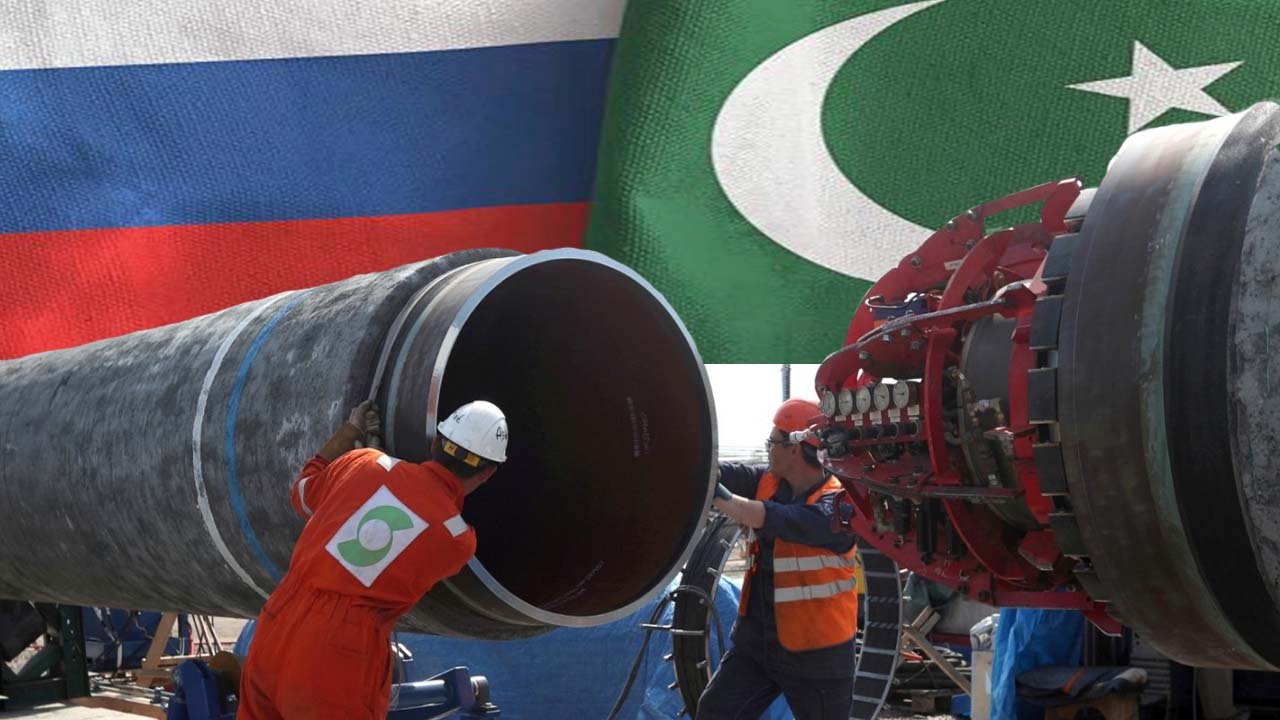
    Pakistan and Russia have decided on the deadline for crude oil exports in late March after the conclusion of the annual inter-governmental commission between the two countries concluded.

    The Minister of State for Petroleum, Musadik Malik, said that Pakistan intends to import 35 per cent of its entire crude oil needs from Russia. He added that Russia does not have liquefied natural gas (LNG) for Pakistan currently.

    Russian Energy Minister Nikolay Shulginov also stated that Pakistan will pay for its energy purchases from Russia in the currencies of friendly nations when they begin in late March.

    Last year, the government of Pakistan sent representatives to Russia, and as a result, the state minister for petroleum of Pakistan announced that Russia would supply crude oil at a reduced price.

    Russian oil and gas have not historically been widely imported by Pakistan.

    Islamabad and Moscow agreed during the negotiations that the oil and gas trading transaction will be set up such that both nations can profit economically after reaching an agreement on the technical details.

    The leaders also decided to expand energy infrastructure investment, improve energy trade, and strengthen energy cooperation under advantageous strategic and commercial circumstances.

    A “Comprehensive Plan for Energy Cooperation” that will serve as the framework for future work and be completed in 2023 has been agreed to by both parties.

    The federal and provincial governments of Pakistan welcomed the Russian side to consider prospective initiatives, including those involving public-private partnerships and asked the Russian businesses to investigate these options.

    “Both sides have resolved the pending issues related to the exchange of information on certificates of origin of goods with the use of an electronic verification system and shall endeavour to finalise the above-mentioned protocols by the end of May 2023,” the joint statement issued in this regard read.

    In order to improve their mutual collaboration and talk about issues pertaining to connectivity and logistics in Central and South Asia, the authorities decided to designate focus points for each side.

    It was also resolved at the talks held over the last three days that creative business practises, such as bartering, would be used. They also agreed to further investigate the possibility.

    “In the context of the desire of both parties to promote regional integration and Eurasian connectivity, the two sides agreed to share information towards developing and improving rail and road infrastructure,” the statement read.

    The documents signed during the session included an “Agreement regarding cooperation and mutual assistance in customs matters,” a “Protocol on the Exchange of Documents and Data on the Customs Value of Goods Transported,”  and a “Working Agreement on the Airworthiness of Aeronautical Products.”

    The seventh IGC’s debates and choices served as the foundation for the eighth session, which moved the process ahead and looked at new possibilities for collaboration.

    Additionally, Pakistan and Russia decided to extend their cooperation in the areas of commerce and investment, energy, communication, transportation, higher education, industry, railroads, banking, finance, customs, agriculture, science, and technology.