Tag: css

  • More than 50 per cent of candidates failed in Urdu CSS exam in last three years

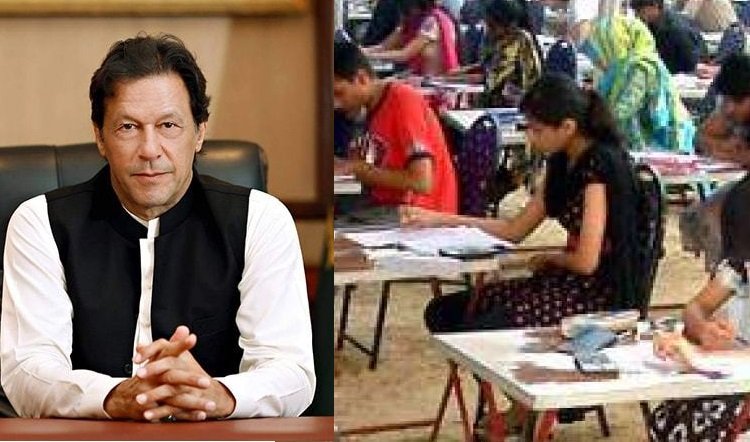
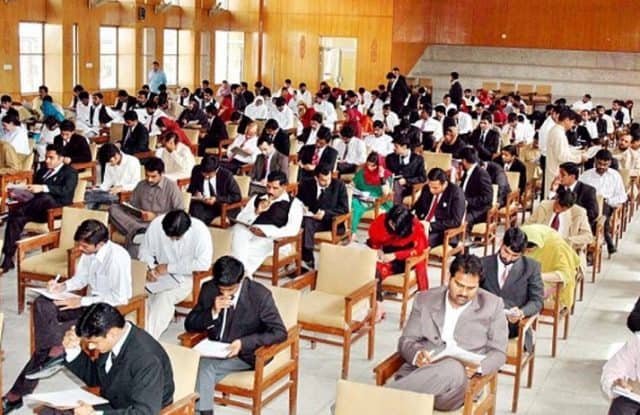
    In a surprising statistic, in the three last years at least 54.53 per cent of candidates, who appeared for the Central Superior Services (CSS) Examination failed Pakistan’s national language Urdu subject.

    In 2019, 30 per cent of candidates failed in Urdu, while in 2020 and 2021, the rate of failure shot up to 59 per cent and 73 per cent.

    Regarding the success rate in English, 35,000 out of 49,500 candidates failed in the subject in 2019 with a rate of failure of 73 per cent, which got better in 2020 when only 39 per cent got failed. However, in 2021, 92 per cent failed the subject.

    The details of the candidates were presented in the National Assembly (NA) on Friday.

  • How to apply for government jobs in Pakistan

    How to apply for government jobs in Pakistan

    Many Pakistanis prefer working for the government over the private sector since a government job not only offers job stability but also other incentives that encourage people to work for the government.

    People from middle-class households typically favour working in the government. We have addressed the benefits that favour government jobs for career advancement because there are some benefits that the private sector does not provide.

    Here are some advantages of government jobs:

    Working hours

    The benefit of choosing government employment over the private sector is the flexible work schedule. In contrast to positions in the private sector, when employees are occasionally required to work a little bit extra, occupations in the public sector have set working hours. However, in some government agencies, working overtime is required without compensation.

    Job security

    The biggest benefit of working for the government is job stability. And there is no job security in the private sector. In contrast, there is very little chance that any government official will lose his or her job.

    Employees in the private sector are displaced like houseflies because this perk is only available to those working in government sectors.

    Promotions

    Another crucial element in the public sector is the promotional benefit. Promotion in government positions is always contingent on how well and how long you work. However, this can occasionally be both a benefit and a drawback because someone who is above average may not be able to develop as quickly as his typical counterparts.

    Benefits and perks

    Next in the government sector are the perks and rewards. As a result, the government sector offers a wide range of benefits, including pension plans, retirement benefits, health care, housing loans, and childcare, among others. However, several significant private sector enterprises do provide such advantages.

    In the government sector, however, retirement becomes crucial since it guarantees the longevity of a person’s career.

    Read more: Here’s how to use a SIM in a non-PTA approved phone

    Lesser stress

    The government sector, as we’ve seen above, has set working hours. Therefore, these hours will result in reduced work-related stress. The best time frame to finish the work on time and in the best way is offered by government jobs, which is not available in the private sector.

    Respect

    Along with all these advantages, working for the government increases respect. Everyone will treat you with respect if you work for the government because of your authority and position.

    Salary increments

    The other best perk of working for the government is, of course, wage increases. As a result, your compensation will rise without regard to how well you perform. So this is fantastic if you are an average performer.

    These multiple advantages provided by government employment may provide you a competitive advantage over the private sector. A government career is the ideal option, though, if you are considering doing something exceptional in the future and need job fulfilment.

    Where to apply?

    There are currently hundreds of job vacancies on the websites below:

    National Job Portal

    Punjab Jobs Online

    These websites allow interested applicants to submit applications for several Pakistani government job positions. Numerous openings, from entry-level to senior-level ones, are listed on these websites.

    Applying for posts in the following categories is possible: BPS-01, BPS-04, BPS-05, BPS-09, BPS-11, BPS-14, BPS-15, EVP/SEVP, G-1, G-2, G-3, G-4, Grade-10, Grade-11, Grade-12, MP-I, MS-VIII, PPS-10 and PPS-12.

    People who live in Punjab can apply for the most recent positions that the Punjab Government has posted, including those in the departments of planning and development, energy, and health care, by visiting Punjab Jobs Online.

  • CSS aspirant commits suicide

    CSS aspirant commits suicide

    A young woman who had moved to Lahore to study for the Central Superior Services (CSS) exam died by suicide, the police said Friday according to The News.

    The woman was a resident of Multan. The police said the 25-year-old left a note in her room where her body was found hanging from a ceiling fan.

    She left a letter in her room dated July 13, stating that she was losing her life and that her existence was nothing but a burden and failure, the police said. The letter said she would miss her father.

    According to the police, a forensic team has collected samples from the victim’s flat. Her family has refused to have an autopsy conducted.

    The Central Superior Service exam is conducted by the Federal Public Service Commission (FPSC) Islamabad for recruitment into the federal government. The demanding exam has often been heavily criticised for its poor passing percentage ratio seen for years.

  • What’s wrong with CSS Exams?

    What’s wrong with CSS Exams?

    Do you know the meaning of the words ‘deracinated’, ‘bericloge’ and ‘hegiographic’? Probably not. I don’t either. And it doesn’t matter. (One of them perhaps is not even a word.)

    But it does matter to Federal Public Service Commission, as evident from a recently leaked question on social media, taken from the CSS 2021 English paper.

    CSS is the sought-after competitive exam, a gateway to the central superior services of Pakistan. A good result can potentially land you into a socially lucrative civil service job, while a bad result can waste years of hard work.

    Thousands appear for the exam every year and about 300 lucky individuals get through and get allocated across twelve service groups. These thousands of candidates often spend years preparing for the exam. While it is understandable that an exam of this level should be difficult, it doesn’t necessarily have to be unreasonable.

    I also appeared for CSS about 22 years ago and landed amongst top ten positions. Yet I’m not embarrassed to admit that had I been given this question, I would have failed. Probably many deserving candidates did this year.

    And for what? The answer to this question is by no means a measure to assess someone’s competence. But one unreasonable question can play havoc with years of hard work and it probably did.

    Why FPSC would do that is best known to them but one can speculate that it’s either the result of poor-quality control or manifestation of a decades-old mindset. The latter seems more plausible as indicated by many other leaked papers and questions.

    After seeing these baffling questions, I picked up the phone and called a retired federal secretary. I asked him about his own experience when he appeared for the competitive exam 53 years ago. What he told me was not very different from what I had experienced in my own exam. And when I looked at more recent CSS question papers, it dawned on me that they have hardly evolved.

    But these unreasonable question papers are only one of the things wrong with how CSS exams are conducted. There are many others.

    Firstly, they are inefficient. About 18,000 candidates appear for a total of 12 papers, out of which only 300-400 clear this written exam.

    Secondly, besides the outdated and complex structure, the pattern of exams is such that candidates can often game the system or get an undue advantage based on disparity in how different subjects are scored.

    Thirdly, these exams, even including a psychological test, do not sufficiently reveal the personalities of these candidates.

    With all the developments in technology and recruitment practices, why has the government failed to reform the CSS exams? And more importantly, how should these be reformed?

    Let’s first look across the border at Indian civil service, which like Pakistani civil service, was inherited from a British system. About 1.1 million candidates apply for superior services in India. They take about 500,000 to an initial screening test called ‘prelims’. Most of the candidates are left behind at this stage and approximately 1 out of every 50 candidates taking prelims is taken to the full-scale competitive exam called ‘mains’ comprising nine papers. The last stage is the interview, after which about 750 candidates are selected for various services.

    Although Indian system is better than us, since they have a much more efficient screening system, it is also not ideal. But for starters, it does indicate that Pakistan should also embrace screening to save costs and make the whole process much more efficient. Similar to a standardized test like SAT or GMAT, the results can remain valid for three to five years.

    But let’s also look for a better system. UK perhaps is a good example to see, since we have essentially inherited this system from them. But they did not remain frozen in the 1940’s and have moved on.

    The UK civil service follows a four-stage recruitment process. The first stage is the ‘application sift’ to screen the applicants. UK civil service requires writing a personal statement, a standard practice for international undergraduate and graduate admissions, unlike the CSS application that is limited to biographical and academic information.

    The second stage consists of standardized tests taken to narrow down the applicants’ pool to about 20 per cent of the candidates, through a simple, efficient, automated and low-cost process. The test includes questions on functional knowledge of contemporary issues or on standard IQ.

    The third and the most critical stage in the UK civil service recruitment is a two-day assessment center. The assessment center method has gained immense popularity in recent years and has been widely adopted by public and private sectors. The method includes a standardized evaluation of behavior based on simulations, interviews, group activities, etc. to help in revealing various aspects of a candidate’s personality. Since this is a resource-intensive method, very few candidates are taken to this stage.

    Pakistan’s CSS recruitment excludes this most important stage altogether and instead relies on a primitive psychological evaluation that leads to suitability restrictions on a handful of candidates.

    The fourth stage is the panel interview, which is very similar to the final CSS interview, but by then it can hardly compensate for the critical weaknesses in the first three stages of the CSS exam.

    Why are we living in the past? Why are we making it difficult for people to qualify for the competitive exams? And why are we employing arbitrary measures to narrow down the pool? It’s time to answer these questions and change the way CSS exams are conducted.

    Note: A shorter and partially different version of this article originally appeared in Express Tribune on 23rd February, 2021.


  • PM Imran approves special CSS exam to fill 188 vacancies

    PM Imran approves special CSS exam to fill 188 vacancies

    Prime Minister (PM) Imran Khan has approved the special Central Superior Service (CSS) exam to fill 188 vacancies.

    “Balochistan 49, Rural Sind 41, Urban Sind 19, KP 22, ex Fata/GB 16 & AJK 2. We truly believe in giving equal opportunities to all federating units [sic],” tweeted Special Assistant to Prime Minister (SAPM) on Establishment Shehzad Arbab.

    Speaking to a private media outlet, Arbab said the exam is likely to be conducted by year-end.

    Annual CSS examinations are held to recruit candidates to the permanent elite bureaucratic authority, and the civil service that is responsible for running the civilian bureaucratic operations and government secretariats and directorates of the Cabinet of Pakistan. The premier is the final authority on all matters regarding the civil service.

  • CSS exams to be held in Urdu

    CSS exams to be held in Urdu

    The Senate has passed a resolution to allow aspirants of Central Superior Services (CSS) to take their examinations in Urdu alongside English.

    The resolution, passed on Monday with majority, was moved by
    Jamaate Islami (JI) Senator Sirajul Haq.

    In defence of his resolution, the JI chief said that Article 251 of the Constitution clearly directed to implement Urdu as the official language, however, it could not have been executed even after 45 years.

    Taking the floor, State Minister for Parliamentary Affairs Ali Muhammad Khan said if the decision was implemented in haste, the drop out percentage in the exams would increase.

    “Students should be given an option to attempt the exams in their
    preferred language,” he added while assuring the upper house of implementation.

    Pakistan People’s Party (PPP) Senator Sassui Palijo, on the
    other hand, opposed the resolution and said English was an international
    language.

    “Countries like China, France and Germany, who were so concerned about their languages, are also promoting English to prepare their people to compete at the international level,” she added.

    Palijo further said that it would not be wise to “confine talents
    to Urdu language”.