Tag: culture

  • Ikigai: A Japanese technique helping Pakistani children ‘find true purpose in life’

    Hasan Ikhlaqi and his team at Umungi, a career centre, are training Pakistani students with a Japanese technique called Ikigai. Umungi offers training to children by conducting different activities in schools. Parents of the children are also involved in the training process.

    The Japanese technique Ikigai is used to find the purpose of life. The origin of the word ikigai goes back to the Heian period (794 to 1185). The word ikigai consists of two Japanese words: iki, meaning “life” and kai, meaning “effect/result/worth or benefit.”

    Explaining the technique to BBC Urdu, Ikhlaqi, creative coach at Umungi, said: “We use Japanese technique to find the true purpose in life, and to find the true purpose you need answers to the following questions: Profession, Passion, Mission, and Vocation.”

    The Umunji creative team has been conducting creative festivals in different schools for the past three years.

  • Dowry culture

    According to a recent survey conducted by Pulse Consultants, more than 50 per cent Pakistanis believe that a girl’s family should give dowry when she is getting married. Around 61 per cent respondents were of the view that dowry should be allowed in the Pakistani system while 36 per cent were against it. Almost 73 per cent women believed that dowry should be allowed whereas 24 per cent were against it.

    This survey’s results should not be surprising given that dowry has become an unfortunate reality in our region.

    Dowry is used as a measure of worth for the bride; it is used as a bargaining tool or as a price tag when marrying off girls. This is rooted in the patriarchal and misogynist belief that daughters are a burden when they are born and so to marry them off, a price must be attached to them to ‘lure’ a groom. Despite laws against dowry in the country, this ‘tradition’ continues. Underage girls are often married so that the family gives less dowry in comparison to an adult bride. Many women are left unmarried because their families cannot afford to give a sizeable dowry. This tradition is one that perpetuates violence against women. Pakistan has a high rate of dowry-related deaths. Many women are tortured and even killed for not meeting the dowry requirements of their in-laws. Laws can only do so much. Not many people would report that the other party is demanding dowry for their daughter’s hand in marriage. Dowry transcends all classes. A lot of people would say what they are giving to their daughter is a ‘gift’ when actually it is more like ‘ransom’. Sometimes it is also used to deny a woman her inheritance rights – once dowry is given, the family says they have no rights in their inheritance any more. In a patriarchal society, women are treated like a property or objects instead of human beings with any rights. Dowry is a custom that encourages such thinking.

    The need of the hour is a public awareness campaign against dowry and why this cultural tradition must end. Both the government and the media need to do their part to educate the masses that there are laws against dowry in the country and also why this custom is a social evil. The acceptability of dowry will not end overnight. It will take years of education and awareness for the masses to eradicate this menace.

  • Celebrating culture

    The eighth edition of the Lahore Literary Festival (LLF) is taking place this weekend. It is refreshing to see cultural events like the LLF take place in the country because we are fast becoming a society that doesn’t celebrate culture and critical thinking anymore.

    From Orhan Pamuk to William Dalrymple, from Audrey Truschke to Fatima Bhutto, from Omar Shahid Hamid to Vali Nasr, the line-up at the LLF is brilliant. It was good to see on the first day sessions discussing journalist integrity and the poetry of Pashtun poet Rehman Baba.

    Pakistanis boast generosity, kindness and hospitality. Yet there is something we are slowly but surely losing – tolerance. When movies like Zindagi Tamasha cannot be screened and Urdu translations of fictional books are not allowed, we should know that there’s something wrong. Neither do we entertain critical thinking nor do we tolerate difference of opinion. Also, we are quite a judgemental lot. 

    Last month, Fahad Mirza posted a picture of his European holiday with his wife Sarwat Gilani. They were kissing in the picture. Comments on social media under that picture were mostly so negative and vile that Gilani had to ask haters to unfollow her if they hated her so much. Imagine that a picture displaying affection between a husband and wife on social media could lead to such negativity, little wonder then that victims of sexual harassment get the sort of abuse that they do online and offline.

    Recently, we saw our parliamentary debates turn rowdy. The level of debates was not just low but downright personal. From Abdul Qadir Patel’s innuendo-laden speech targeting Murad Saeed to Saeed’s own abusive speech about “dogs” ruling Sindh, the level of discourse in parliament was quite disgraceful. If the people’s representatives can stoop so low, what kind of message are we giving to our citizens? No wonder then that peaceful protestors are booked under sedition charges and the prime minister thinks Maulana Fazlur Rehman should be tried for high treason under Article 6 of the constitution.

    FIA issued a statement saying that columnist Gul Bukhari will be charged with terrorism and her property confiscated if she doesn’t appear before the agency in Pakistan within 30 days. And this is because the government doesn’t like Bukhari’s tweets. One doesn’t have to agree with Bukhari’s tweets, but since when has criticism become terrorism? This is a country where terrorist Ehsanullah Ehsan escapes and flees to Turkey while the government remains silent except for interior minister’s confirmation – after over a week – but the same wants to regulate social media by asking tech companies to open their offices in Pakistan and share data of users the government thinks are making anti-state state?

    Intolerance on social media is at another level. If you support ‘ABC’ party, ‘XYZ’ party’s supporters will call you names we can only hope they never take in front of their families. Difference of opinion is not tolerated anymore – both online and offline. Thus to have literary festivals like the LLF, which celebrate critical thinking and have discussions on culture, arts, poetry and literature, is a blow of fresh air.


  • Who has more following in US, Kate Middleton or Meghan Markle

    Who has more following in US, Kate Middleton or Meghan Markle

    According to the reports, the Duchess of Cambridge, Kate Middleton is more famous than the Duchess of Sussex, Meghan Markle in the United States of America.

    YouGov recently conducted a poll, 61 percent of the US participants of the survey voted for kate Middleton while 48 percent praised Meghan. Prince Harry’s wife grew up in united States and she also worked there as a successful actress in Hollywood before getting married.

    The survey was conducted from November 24 to 26 and 1500 royal fans participated in the voting.

    In the Survey options, Queen Elizabeth II got 69 percent votes.

    Prince Harry, William and their mother Diana got 63 percent votes.

  • Rain damages ancient Buddhist heritage site in Taxila

    Rain damages ancient Buddhist heritage site in Taxila

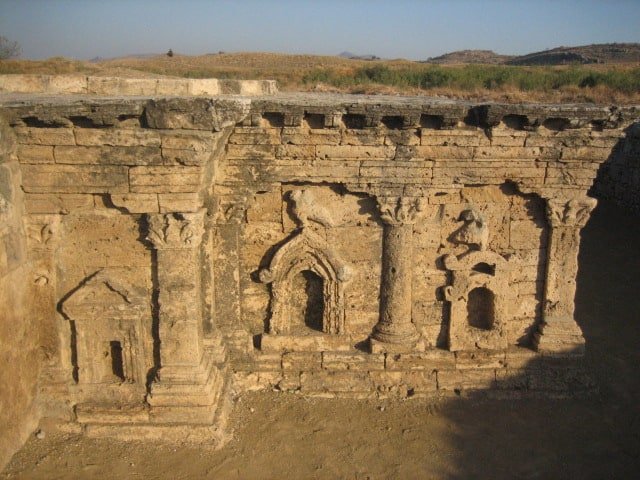
    Recent rains in the country have not only created hurdles for human life, but old heritage sites are also being affected by the storms. First, the small wooden entrance gate to the Shahi Qila in Lahore was damaged due to the rain and now the rains have damaged an ancient Buddhist heritage site in Taxila.

    As per details, the double-headed eagle Stupa located at Sirkap is crumbling fast. An architectural marvel, the double-headed eagle Stupa is made of Kanjur stone and was originally plastered with lime.

    The second city of ancient Taxila, Sirkap is significant in the archaeological history of Pakistan as it is among three of the 18 Buddhist sites of the Taxila valley with intact sculptures. The site which has relics dating back to the Achaemenid, Greek and Kushan periods has been classified as World Heritage Site by the Unesco.

    According to the curator of Taxila Museum, Sirkap was founded by the Bactrian King Demetrius, who conquered the region in the 180s BCE. The city was expanded by Gondophares who also built the famous double-headed eagle Stupa and the Temple of the Sun.

    Apart from the double-headed eagle Stupa, the recent torrential rains have also caused severe damages to scores of priceless stucco sculptures of the Buddhist period (2–5th century AD).

    The government and others responsible have not taken the necessary measures to preserve and protect these heritage sites, which these sites may soon cease to exist if things continue to be like this.

    Irshad Hussain, the deputy director of the archaeology department, said the department was facing a shortage of staff from the last 15 years as no recruitment has been made and employees were retiring every year after reaching their age limits. He said after the 18th amendment the site had been handed over to the provincial government. However, he added that the department had planned to erect a protective roof over such endangered stupas to save them from natural elements such as rain.