Tag: Currency Crisis

  • Concerns rise over circulation of fake Rs5,000 banknotes

    Concerns rise over circulation of fake Rs5,000 banknotes

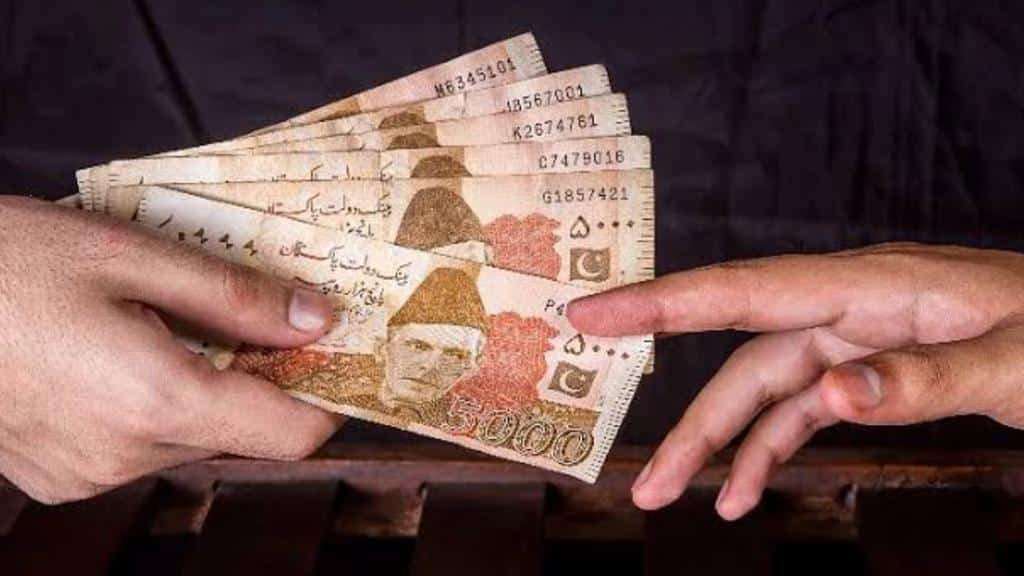
    In a recent meeting, the Senate Standing Committee on Finance convened to address the escalating circulation of counterfeit Rs5,000 banknotes, a matter that has raised serious apprehensions among officials, including those from the State Bank of Pakistan (SBP).

    Chaired by Senator Salim Mandviwala, the committee delved into the severity of the issue as it showcased a bundle of forged Rs5,000 notes.

    Senator Mandviwala, underscoring the gravity of the situation, asserted that even parliamentarians are susceptible to falling victim to this fraudulent activity.

    During the proceedings, Senator Mandviwala directed a challenge to SBP’s Deputy Governor, Dr. Inayat Hussain, urging him to identify the counterfeit notes.

    However, the attempt was met with a purported failure on the part of the Deputy Governor.

    Expressing the need for immediate and decisive action, the committee chairman called upon the central bank to take robust measures to combat the widespread dissemination of counterfeit currency.

    Mandviwala suggested that the infiltration of fake notes into circulation might be occurring through banks.

    A noteworthy proposal from Senator Mandviwala involved the exchange of counterfeit currency for genuine notes, an idea promptly dismissed by Deputy Governor Inayat Hussain.

    The latter cited concerns about potential misuse and abuse as the basis for the refusal.

    During the discussion, Hussain acknowledged the absence of a concrete system to prevent the printing of fake currency within the country.

    He further elaborated that while counterfeit dollars are a global issue, efforts are underway to enhance regulations to control the production and circulation of fake currency, specifically within Pakistan.

    According to ARY News, Mandviwala, highlighting the urgency of the situation, called for immediate relief measures. The committee, in unanimous agreement, advocated for the formulation of a comprehensive policy to combat the growing use of counterfeit currency, particularly within the banking system.

    The committee stressed the necessity of proactive measures to safeguard the financial integrity of the nation.
  • Nomura warns seven countries including Pakistan are at high risk of currency crisis

    Nomura warns seven countries including Pakistan are at high risk of currency crisis

    The biggest brokerage and investment bank in Japan, Nomura Holdings, has issued a warning that seven nations, including Egypt, Romania, Sri Lanka, Turkey, the Czech Republic, Pakistan, and Hungary, are now at high risk of experiencing currency crisis.

    According to Reuters, the Japanese bank reported that 22 of the 32 nations covered by its internal “Damocles” warning system had witnessed an increase in risk since its last update in May, with the Czech Republic and Brazil experiencing the biggest rises.

    It indicates that since May, the total of the model’s scores for all 32 grew significantly from 1,744 to 2,234 points.

    “This is the highest total score since July 1999 and not too far from the peak of 2,692 during the height of the Asian crisis,” Nomura economists said, calling it “an ominous warning sign of the growing broad-based risk in EM currencies”.

    The model computes an overall score based on eight important variables, including a nation’s foreign currency reserves, exchange rate, financial soundness, and interest rates.

    Nomura calculates that a score above 100 implies a 64 per cent likelihood of a currency crisis in the next 12 months based on data from 61 prior EM currency crises that have occurred since 1996.

    Egypt currently has the lowest score at 165 after devaluing its currency significantly twice already this year and applying for an IMF programme.

    Romania, which has been using interventions to support its currency, is listed next on page 145. Both Turkey and Sri Lanka, which frequently has currency crises due to default, have ratings of 138, while the Czech Republic, Pakistan, and Hungary receive scores of 126, 120, and 100, respectively.

    The Damocles model was also applied by Nomura to the G7 group of advanced countries. The results showed that all but Japan now had Damocles scores over the 100-point barrier, with the United States and Britain leading the way.

    EM economies continue to be increasingly fragile. Due to their incomplete recovery from the COVID-19 epidemic, the majority of countries are currently dealing with high inflation, a finite amount of fiscal room, negative real interest rates, a weakened balance of payments, and reduced FX reserve cover.

    “It is somewhat surprising that there have not been more full-blown EM currency crises this year,” Nomura added.

    “Then again, EM challenges are far from over… The late Professor Rudiger Dornbusch once said, A crisis takes a much longer time coming than you think, and then it happens much faster than you would have thought”.