Tag: currency depreciation

  • JPMorgan warns of temporary PKR depreciation despite strong economic conditions

    JPMorgan warns of temporary PKR depreciation despite strong economic conditions

    Despite a robust Balance of Payments (BoP) position, Pakistan may experience a depreciation of the Pakistani rupee (PKR) in the near term due to the finalisation of outstanding dividend payments, according to a recent report from JPMorgan analysts.

    The report suggests that while the PKR is not perceived as overly expensive, analysts are anticipating more favourable foreign exchange (FX) entry points.

    They also noted that although the International Monetary Fund (IMF) has declared the removal of all FX restrictions, there could still be informal barriers affecting the repatriation of dividends.

    Should these informal restrictions be fully addressed at the commencement of the Extended Fund Facility (EFF), it might lead to a moderate increase in the USD/PKR exchange rate over the coming months. However, analysts expect any such increase to be short-lived due to positive BoP conditions.

    The current environment is seen as a promising opportunity for bullish trades in T-bills and bonds, especially with the anticipated large-scale interest rate cuts by the State Bank of Pakistan (SBP).

    Since the beginning of the year, the PKR’s Nominal Effective Exchange Rate (NEER) has strengthened, reflecting improvements in the BoP, such as higher export revenues, stable remittance flows, and a gradual return of financial inflows.

    Although some concerns persist over foreign currency restrictions that might have artificially dampened FX volatility, the IMF’s latest report from May confirms the removal of remaining FX controls as of late January. This has resulted in a stable PKR with no significant premium in the informal or parallel market.

    Moreover, the import bill has increased only gradually, indicating limited pent-up demand. While the Real Effective Exchange Rate (REER) shows signs of potential overvaluation, it remains far from historical extremes and is expected to adjust downwards as inflation moderates.

    Overall, JPMorgan believes that any negative FX adjustments are likely to be minor, provided there is no significant worsening of the current account balance.
  • More imports, less exports: Pakistan’s trade gap grows in October

    More imports, less exports: Pakistan’s trade gap grows in October

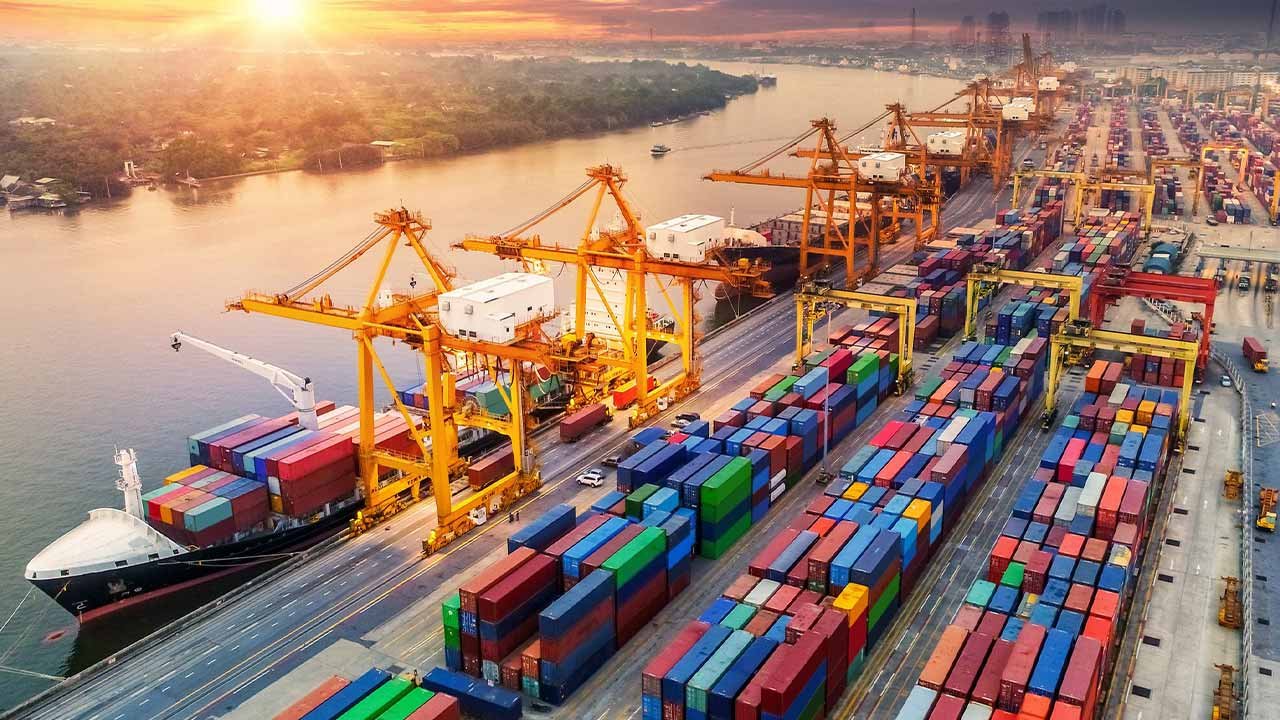
    Recent trade data for Pakistan reveals a monthly trade deficit increase of $0.6 billion, primarily driven by an $0.8 billion surge in imports.

    However, on an annual basis, the trade deficit is gradually shrinking at a modest rate of 4 per cent.

    This is not necessarily negative news, as import restrictions have been lifted as part of the İnternational Monetary Fund (IMF) programme while the economy is experiencing an uptick in demand.

    The encouraging aspect lies in the positive signs displayed by the export sector. The Pakistani rupee (PKR) has depreciated by approximately 35 per cent year-on-year, falling from PKR 220/USD to PKR 280/USD.

    Last year, exporters faced challenges in importing raw materials, machinery, and intermediate goods.

    Consequently, the 14 per cent year-on-year growth in exports, rising from $2.4 billion to $2.7 billion, is a heartening development, provided this trajectory continues.

    Recent measures by the State Bank of Pakistan (SBP) aimed at promoting exports, including competitive gas rates for exporters, reflect a positive intent.

    While industries reliant on gas may require more regionally competitive energy rates, the direction is favorable.

    Moreover, the alignment of open market and interbank exchange rates may encourage a shift from official channels.

    To address Pakistan’s economic challenges, two key corrections are imperative, among many others: increasing tax revenues and enhancing value-added exports.

    Depreciation of the currency alone cannot serve as the sole remedy for stimulating growth.

    To achieve a comprehensive economic framework, it is essential to boost the exports-to-GDP ratio beyond the current 8 per cent.

    This should encourage capitalists to prioritise exports and foreign direct investment (FDI) over property, fixed income, currency, and trading, ensuring sustained double-digit growth over the next five years.

  • Pakistani rupee declines by 48 paisa, closing at Rs280.57 against US dollar

    Pakistani rupee declines by 48 paisa, closing at Rs280.57 against US dollar

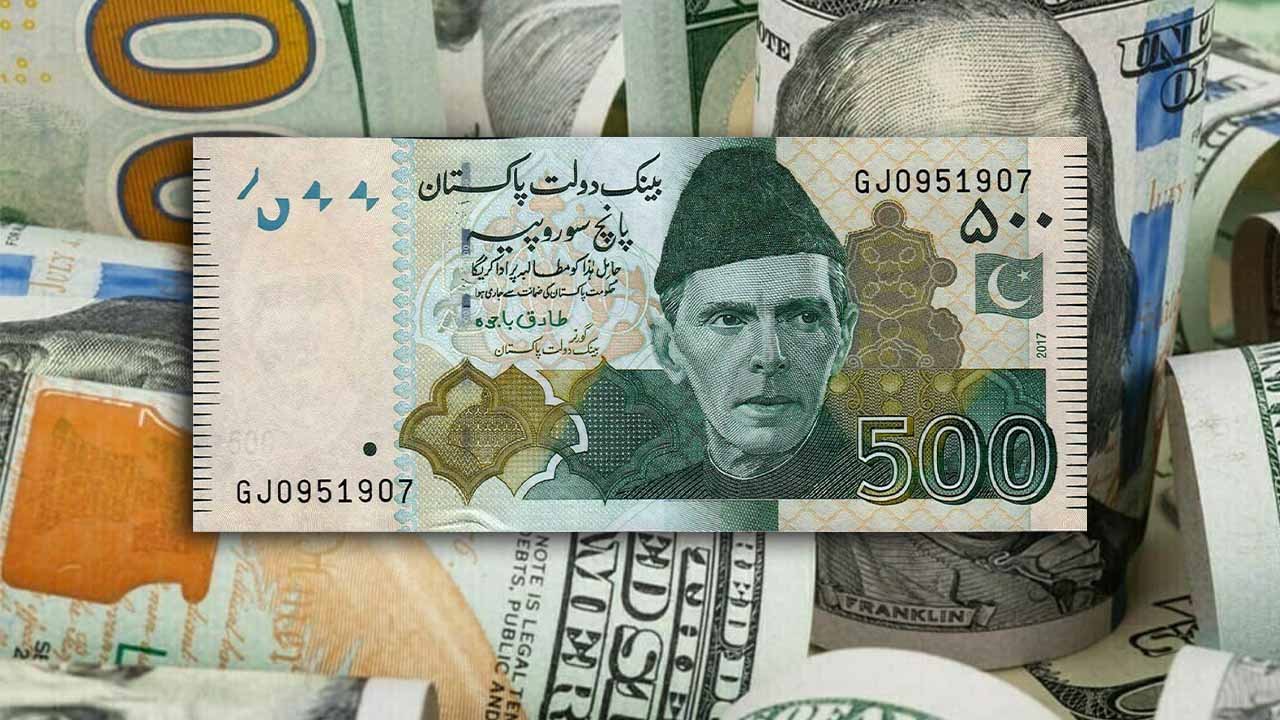
    In the financial markets this week, the Pakistani rupee (PKR) experienced a depreciation of 1.78 rupees against the US dollar (USD), closing the week’s trade at PKR 280.57.

    This marks a significant shift from the previous week’s closing rate of PKR 278.8 per USD.

    During today’s trading session, the local currency saw a decline of 48.1 paisa. The intraday high (bid) was recorded at Rs280.5, while the low (ask) reached Rs280.15 against the US dollar.

    In the open market, exchange companies quoted the US dollar at Rs279.5 for buying and Rs292.8 for selling, indicating a loss of 50 paisa compared to the previous closing rates of Rs279 for buying and Rs282 for selling.

    This decline against the US dollar signifies the second consecutive weekly decrease for the Pakistani rupee. In comparison to other major currencies, the PKR experienced fluctuations as well.

    Against the Euro, the PKR depreciated by 64.78 paisa, closing at Rs296.17 compared to the previous value of Rs295.53.

    The British Pound became more expensive by 1.21 rupees, closing at Rs339.94 in contrast to Rs338.73 from the previous day.

    PKR lost 0.69 paisa against the Japanese yen, closing at Rs1.869 versus Rs1.862 the previous day.

    The UAE dirham also increased in value by 12.89 paisa from Rs76.257 to Rs76.386.

    It’s noteworthy that during the current financial year, the PKR has appreciated against the dollar by Rs5.42, or 1.93 per cent.

    However, in the current calendar year, PKR has depreciated by 54.14 rupees, or 19.3 per cent.

    This dynamic market movement reflects the ongoing economic fluctuations in the country.

  • Pakistan’s imports drop sharply, leading to 42% reduction in trade deficit

    Pakistan’s imports drop sharply, leading to 42% reduction in trade deficit

    Pakistan’s trade deficit for the first three months of the fiscal year 2023–24 has notably contracted by 42.25 per cent to reach $5.29 billion. This remarkable reduction is primarily attributed to a significant decrease in imports, a direct consequence of carefully administered measures.

    Data released by the Pakistan Bureau of Statistics (PBS) reveals that the trade balance, which represents the difference between exports and imports, stood at a deficit of $5.29 billion for the period spanning July to September 2023–24. This is in stark contrast to the $9.16 billion deficit recorded during the same period in the preceding year.

    Both exports and imports experienced declines in this timeframe, with imports showing a more substantial decrease compared to exports, effectively narrowing the trade deficit. During these three months of 2023–24, Pakistan’s exports contracted by 3.8 per cent to $6.9 billion, despite facing significant currency depreciation when compared to the corresponding period in the previous year.

    Conversely, imports registered a notable decline of 25.4 per cent, totaling $12.19 billion in the July–September period, down from the $16.33 billion recorded in the same period of the previous fiscal year.

    For a more granular view, the PBS reported that in September 2023, Pakistan’s trade deficit further shrank by nearly 48 per cent to $1.489 billion, compared to $2.856 billion during the same month in the previous year. 

    Exports experienced a slight improvement of 1.1 per cent, reaching $2.47 billion in September 2023 compared to $2.44 billion in the same month the previous year, while imports significantly decreased by 25.5 per cent to $3.95 billion from $5.29 billion in the corresponding month last year.

    From a monthly perspective, the trade deficit contracted by 31.5 per cent compared to August 2023, with exports increasing by 4.2 per cent to $2.47 billion in September from $2.37 billion in the preceding month of August. Simultaneously, imports decreased by 12.9 per cent, amounting to $3.95 billion from $4.53 billion in the last month.

  • SBP expected to hike interest rates by at least 150 bps to control inflation

    SBP expected to hike interest rates by at least 150 bps to control inflation

    The State Bank of Pakistan (SBP) is expected to hike interest rates by at least 150 basis points (bps) on Thursday in an effort to curb sky-high inflation and bolster diminished foreign exchange reserves. 

    The central bankas already raised its benchmark rate by 12.25 per cent points to 22 per cent since April 2022, but inflation remains in double digits, at 27.4 per cent in August. The rupee has also depreciated sharply in recent months, reaching an all-time low of 200 rupees per dollar. 

    A Reuters poll of 17 analysts shows that 15 are forecasting a rate hike, with nine predicting an increase of at least 150 bps. The other two analysts expect the rate to remain unchanged. 

    The SBP is under pressure to raise rates in order to cool inflation and attract foreign investment. However, a rate hike could also dampen economic growth, which is already slowing. 

    The central bank is also facing challenges from the International Monetary Fund (IMF), which has set conditions for the release of further tranches of its $3 billion bailout package. One of these conditions is that the SBP must raise interest rates. 

    The SBP is likely to balance these competing considerations when it makes its decision on Thursday. However, it is clear that the bank is under pressure to take action to address the country’s economic challenges. 

    Here are some additional details about the factors that are likely to influence the SBP’s decision: 

    • Inflation: Inflation remains a major concern for the SBP. The latest data shows that inflation fell slightly in August, but it remains in double digits. The SBP has said that it expects inflation to decline over the next 12 months, but it is unclear whether this will happen without further monetary tightening.  
    • Foreign exchange reserves: The SBP’s foreign exchange reserves have been declining in recent months, reaching a critical level of $10.3 billion in August. The SBP needs to bolster its reserves in order to meet its import obligations and avoid a sovereign debt default. A rate hike could help to attract foreign investment and slow the decline in reserves.  
    • IMF conditions: The IMF has set conditions for the release of further tranches of its bailout package. One of these conditions is that the SBP must raise interest rates. The SBP is likely to comply with this condition in order to secure the IMF’s support. 

    The SBP’s decision on Thursday will be closely watched by markets and investors. A rate hike is likely to be welcomed by those who are concerned about inflation, but it could also dampen economic growth. The SBP is facing a difficult balancing act, and its decision will have a significant impact on the country’s economic outlook. 

  • Gold price reaches Rs234,000 per tola, nearing new record high

    Gold price reaches Rs234,000 per tola, nearing new record high

    Gold prices in Pakistan continued to rise on Tuesday, influenced by the Pakistani rupee’s decline against the US dollar and an uptick in global prices. 

    According to the All Pakistan Gems and Jewellers Sarafa Association, the cost of 24-carat gold settled at Rs234,500 per tola, marking a substantial increase of Rs4,600. Similarly, the price of 10 grammes of gold rose by Rs3,944 to reach Rs201,046.

    It is expected that the price of gold might reach unprecedented levels due to the relentless and rapid decline of local currency against the greenback.

    The movement of gold prices in Pakistan closely follows the path of the US dollar due to the country’s reliance on gold imports. 

    The Pakistani rupee saw a notable decrease, falling to a new all-time low against the US dollar. It ended at Rs299.01 rupees per dollar, reflecting a decline of Rs1.88, as reported by the State Bank of Pakistan.

    Currency experts attribute the surge in gold prices to the recent depreciation of the rupee. 

    With growing concerns about the country’s economic situation, investors are turning to gold as a safe-haven asset. This shift has resulted in a significant increase of Rs12,700 per tola in just one week.

    Read more: PKR to USD rate

    Notably, the hike in gold prices coincided with political turmoil and a decrease in the local currency’s value, leading to an all-time high valuation of Rs240,000 per tola on May 10, 2023. On the international front, the price of gold saw a $10 increase, reaching $1,901 per ounce on Tuesday.