Tag: Currency Strength

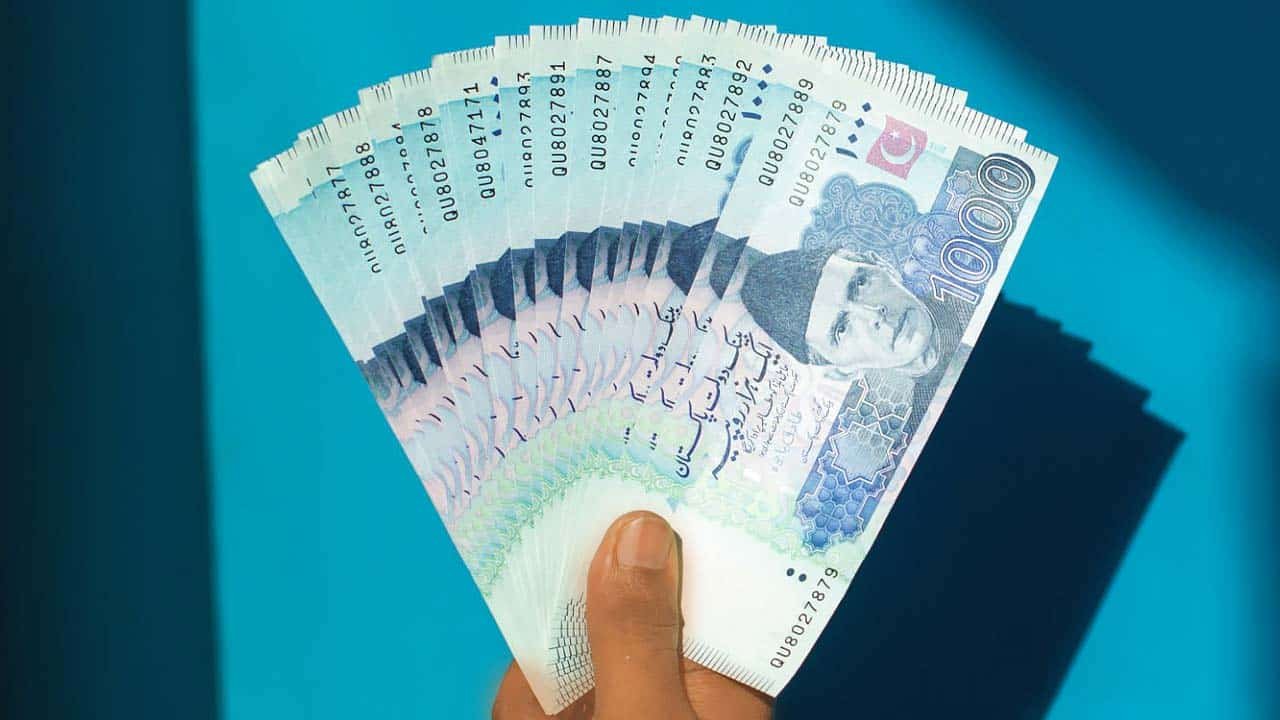
  • Pakistani rupee continues to gain ground against major currencies

    Pakistani rupee continues to gain ground against major currencies

    In Tuesday’s interbank session, the Pakistani rupee (PKR) demonstrated resilience against the US dollar (USD), settling the trade at PKR 280.25 per USD.

    This maintained a stable position compared to the previous session’s closing rate of PKR 280.24 per USD.

    Throughout the day, the currency experienced an intraday high (bid) of Rs280.6 and a low (ask) of Rs280.1.

    In the open market, Exchange Companies quoted the US dollar at Rs279 for buying and Rs281 for selling.

    Notably, the PKR celebrated its 9th consecutive weekly victory, appreciating by 1.04 rupees against the US dollar last week.

    This positive trend can be attributed to various factors, including increased liquidity in the foreign exchange market, tighter enforcement of regulations, a reduction in the money supply, a balance of payments surplus due to low import demand, and a moratorium on Chinese debt repayments.

    In comparison to major currencies, the PKR exhibited strength by gaining 1.17 rupees against the Euro, closing at Rs305.92 in contrast to the previous value of Rs307.09.

    The British Pound became more affordable by Rs2.15, concluding at Rs355.06 compared to Rs357.21 from the previous day.

    The Swiss franc experienced losses of 2.48 rupees, closing at Rs326.23 as opposed to Rs328.71 in the previous session.

    Against the Japanese Yen, the PKR gained 0.96 paisa, closing at Rs1.9181 versus Rs1.9277 a day ago.

    Meanwhile, the Chinese Yuan saw a slight decline, losing 6 paisa and closing at Rs39.01 against Rs39.07 from the previous session.

  • Here are the latest prices of all Honda cars in Pakistan after reduction

    Here are the latest prices of all Honda cars in Pakistan after reduction

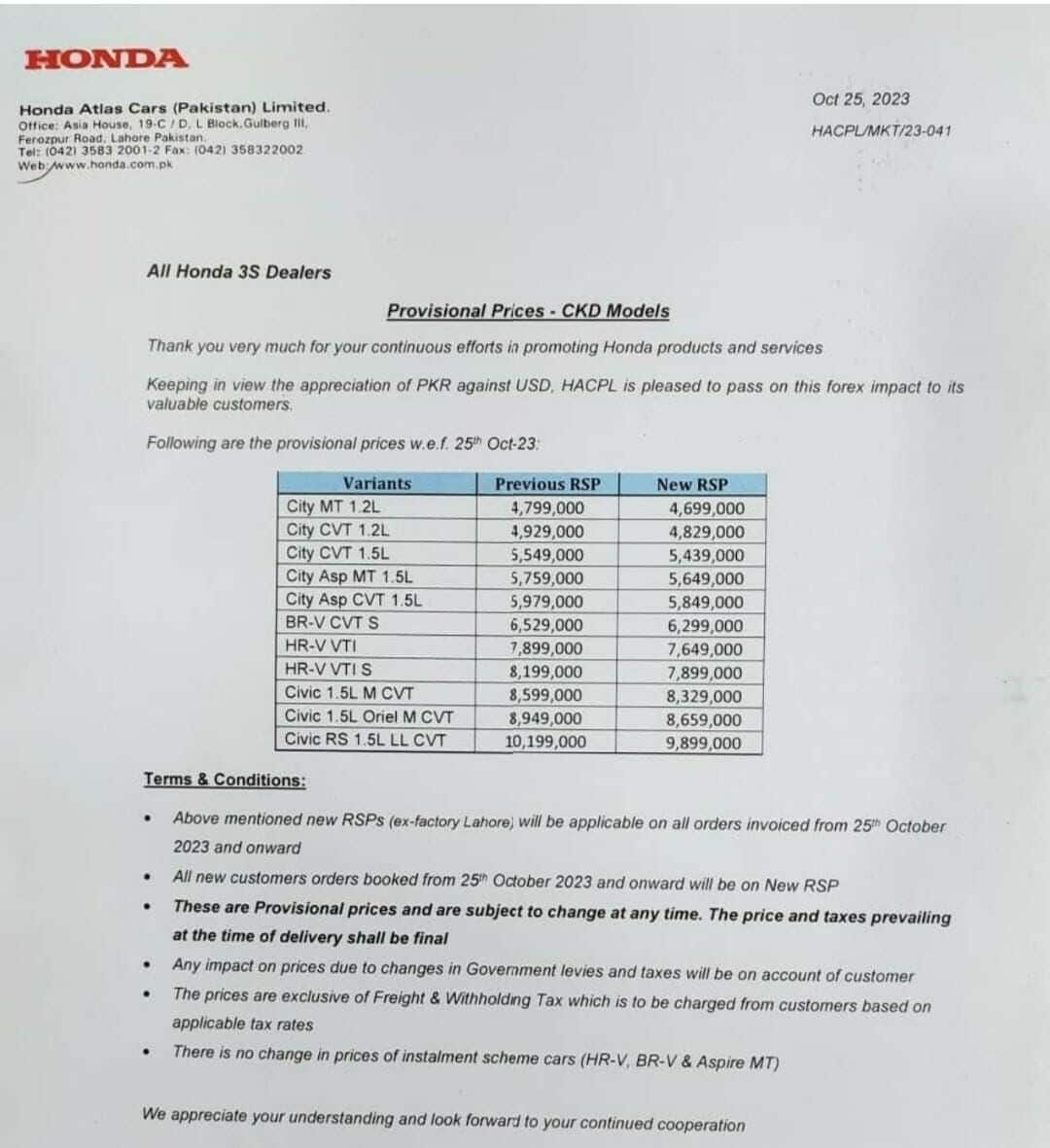
    In a move similar to what Toyota did earlier, Honda Atlas Cars (Pakistan) Limited announced on Wednesday that it is reducing the prices of its vehicles, especially the popular Honda City lineup.

    This decision was made due to the significant strengthening of the Pakistani rupee (PKR) against the US dollar.

    Through an official circular, Honda Pakistan disclosed the updated ex-factory prices for all its car models, reflecting reductions of up to PKR 300,000.

    This substantial price drop is expected to make Honda vehicles more affordable for a broader consumer base.

    After these adjustments, the price of the most budget-friendly Honda car in Pakistan, the City MT 1.2L, now stands at Rs4.699 million following a reduction of Rs100,000.

    Moreover, the top variant, the Aspire CVT 1.5L, is now available for Rs5.849 million after a cut of Rs130,000.

    The most significant price changes have been applied to the popular Honda City lineup, generating excitement among potential buyers.

    Here are the new prices for all Honda cars:

  • Pakistani rupee claims top spot as best-performing currency worldwide 

    Pakistani rupee claims top spot as best-performing currency worldwide 

    Amidst a determined crackdown on smuggling and illegal financial activities, the Pakistani rupee has emerged as the world’s top-performing currency for September. During this remarkable month, the rupee’s value surged from Rs305.54 against the US dollar on August 31st to Rs287.74 on September 28th, a notable increase of Rs17.8 or 6.2 per cent.

    Impressively, this positive trend persisted for 17 consecutive trading sessions, resulting in an overall gain of nearly 7 per cent since hitting its lowest point at 307.1 on September 5th. 

    It’s essential to note that the currency market was closed on Friday, September 29th. In terms of global currency performance, the Mauritian rupee secured the second position with a modest appreciation of 0.7 per cent, while the Hong Kong dollar claimed third place, showing a slight improvement of 0.2 per cent throughout September. These figures are based on data from the brokerage house Arif Habib Limited (AHL), reported on a recent Friday. 

    Financial experts attribute this remarkable rupee surge to a series of government measures aimed at curbing dollar smuggling and currency hoarding. Additionally, during the same month, the State Bank of Pakistan (SBP) introduced structural reforms targeting the Exchange Companies (ECs) sector. These reforms included a directive for commercial banks to establish their own ECs as wholly-owned subsidiaries and an increase in the minimum capital requirement for ECs from Rs200 million to Rs500 million. 

    Notably, the Pakistani rupee recorded substantial gains in the inter-bank market, appreciating by 6-9 per cent against three major currencies – the US dollar, UK Pound, and Euro – over the past few weeks. Even in the open market, the rupee showed a significant upswing of 11-13 per cent, effectively eliminating the premium associated with the open-market rate. This is particularly impressive given that the US Dollar index reached a 10-month high. 

    This strengthening of the rupee aligns with the commitment made by Pakistani authorities in July when they entered into a vital $3 billion Stand-By Arrangement (SBA) with the International Monetary Fund (IMF). This agreement was pivotal in averting a potential sovereign default and required the adoption of a market-based exchange rate, which has now proven to be a pivotal factor in the rupee’s impressive resurgence. 

  • Afghani emerges as top-performing currency against US dollar 

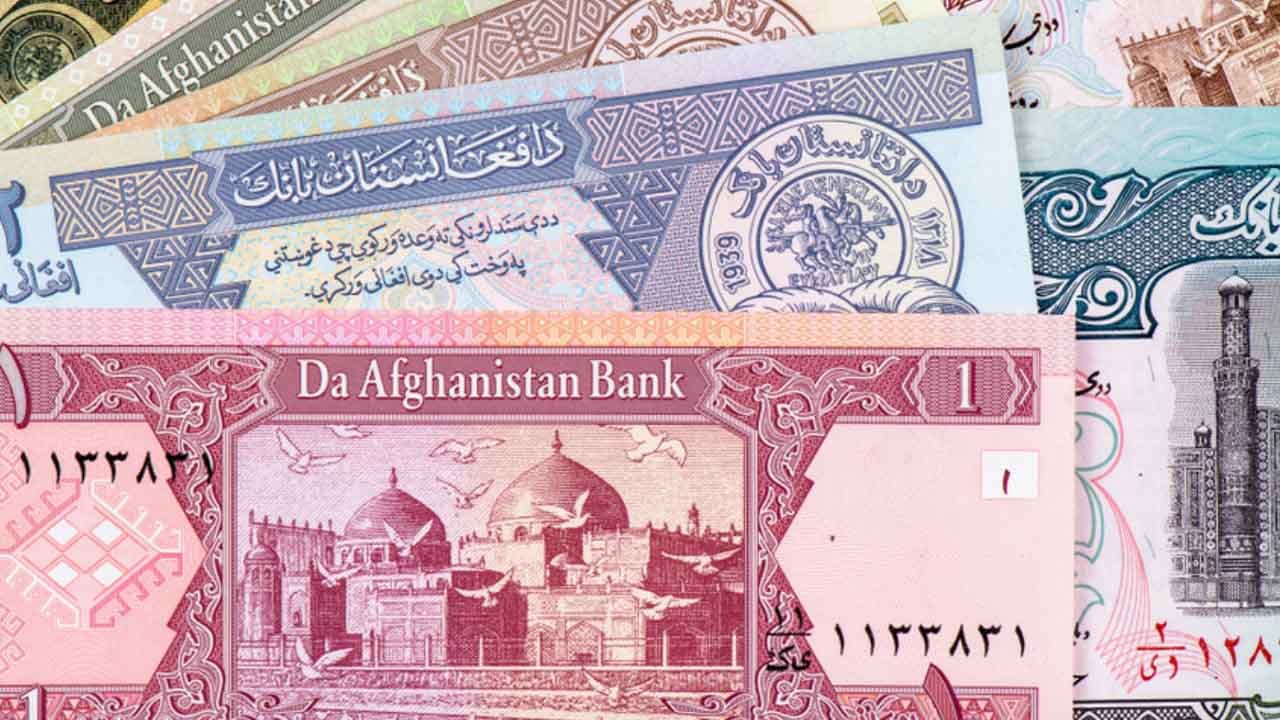
    Afghani emerges as top-performing currency against US dollar 

    In the third quarter of 2023, the Afghani, the official currency of Afghanistan, has exhibited exceptional performance, marking itself as the standout currency in the global financial landscape. Its remarkable ascent against the US dollar, with a substantial 9 per cent surge since the commencement of July, stands as a testament to its resilience and strength. 

    This impressive trajectory positions the Afghani as the third-strongest performer among global currencies in 2023, trailing only behind the Colombian peso and the Sri Lankan rupee. This distinction underscores the Afghani’s resilience amid challenging economic circumstances. 

    In Afghanistan, the pivotal role of facilitating foreign currency transactions falls upon the numerous money exchange establishments known as “sarrafs.” These sarrafs are ubiquitous, dotting the landscapes of both urban centres and rural villages alike, serving as the lifeblood of currency exchange activities. 

    Among these financial hubs, the Sarai Shahzada market in Kabul takes centre stage as Afghanistan’s premier financial epicenter. It serves as a bustling hub where substantial sums of currency are traded daily, exemplifying the nation’s financial vitality. Remarkably, the central bank places no restrictions on these exchange transactions. 

    Due to stringent financial sanctions, a significant portion of funds flowing into Afghanistan from foreign nations now traverse through the age-old money transfer system known as Hawala. This venerable system plays a pivotal role in the operations of sarrafs, further cementing their significance in Afghanistan’s financial ecosystem. 

    It is noteworthy that the United Nations (UN) has identified Afghanistan’s dire need for approximately $3.2 billion in aid for the current year, with roughly $1.1 billion already disbursed. This underscores the critical importance of international assistance in alleviating the nation’s pressing humanitarian challenges. 

    A sombre backdrop to these financial dynamics is the fact that, just last year, the UN disbursed nearly $4 billion in aid as Afghanistan grappled with a dire famine that affected half of its 41 million citizens. This staggering statistic underscores the profound challenges faced by the Afghan population. 

    Since the Taliban’s resurgence in Kabul in August 2021, stringent currency controls have been imposed, disallowing the use of the US dollar and Pakistani rupee by locals and restricting online trading activities. While these measures have seemingly contributed to Afghanistan’s stability, the broader Afghan economy has suffered, with soaring unemployment rates exacerbating the nation’s humanitarian crisis. 

    Regrettably, a staggering 79 per cent of the population now languishes in poverty, with a distressing 44 per cent of the people unable to secure adequate nourishment. The plight of Afghanistan’s populace remains a pressing global concern, necessitating concerted efforts to address both immediate humanitarian needs and long-term economic stability.