Tag: cyclone Biparjoy

  • Keti Bandar: the recession of an ancient life along the Indus Delta

    Keti Bandar: the recession of an ancient life along the Indus Delta

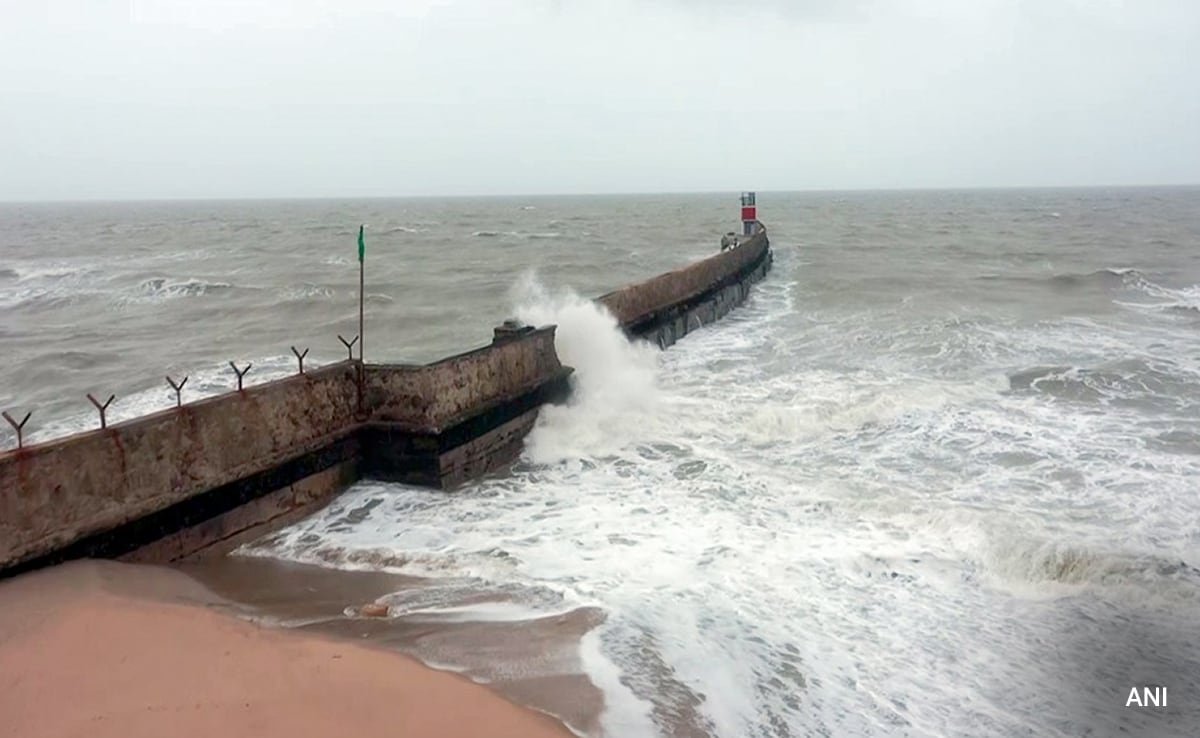
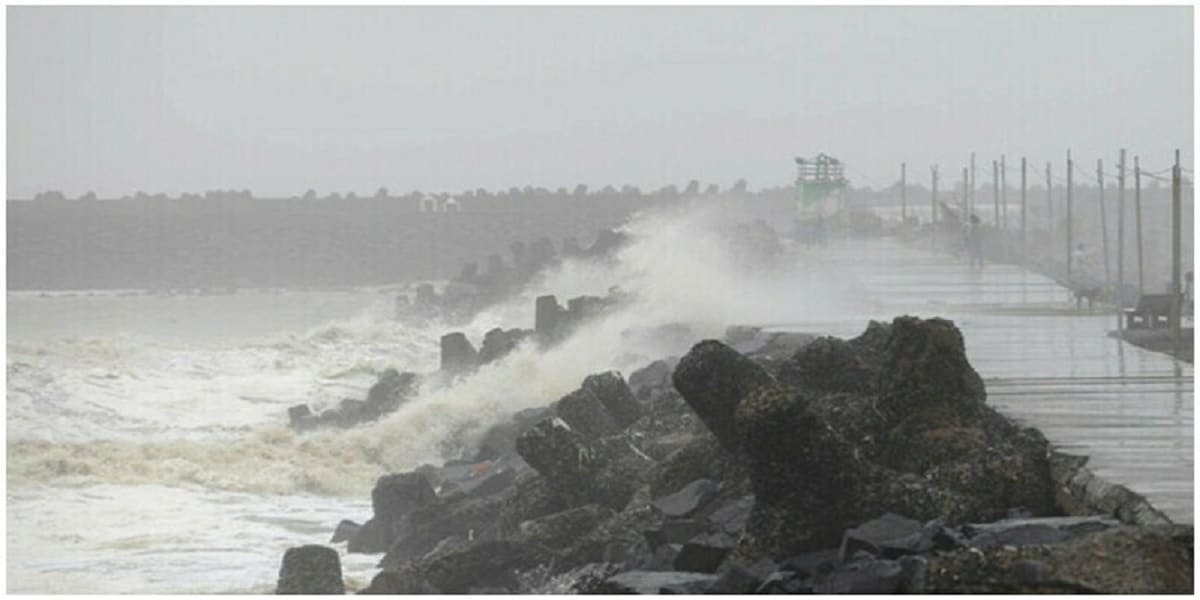
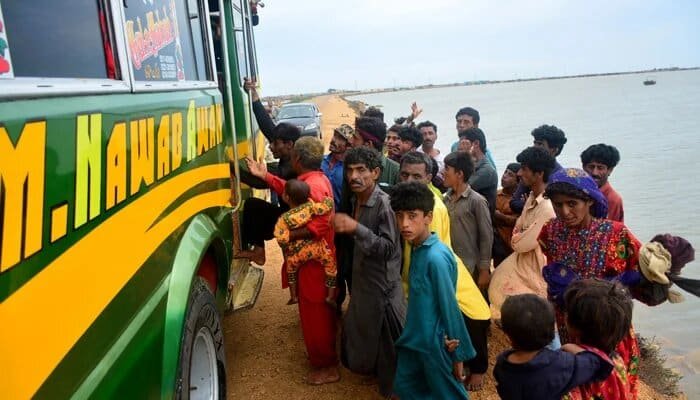
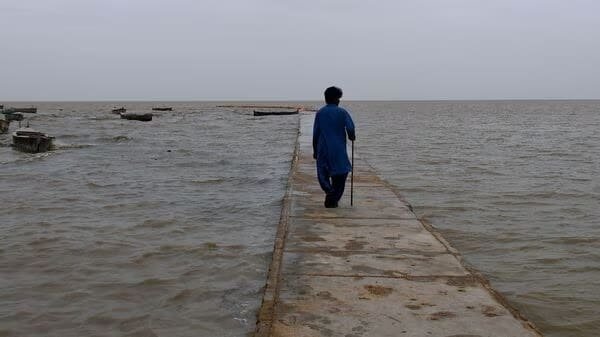
    When Cyclone Biparjoy was hurtling towards the Sindhi coastline, many heard the name ‘Keti Bandar’ repeatedly on television, as well as talk of the existential threat the port-town faced due to the tropical storm. Many only recognised Keti Bandar as the part of coastal Sindh that Biparjoy was initially predicted to make landfall on. 

    Yet Keti Bandar is the remnant of a practically ancient community that has long suffered the systematic destruction of the Indus delta. What many don’t realise is that, before Biparjoy even began stirring in the Indian Ocean, Keti Bandar had sank under the Arabian sea and reemerged three times.

    This is the story of a community that is fighting against a disappearing delta. A community that still stands after being swallowed by the sea. A community that may not survive another submergence. 

    The lords of the sea

    The residents of Keti Bandar are part of the Mohana tribe, descendants of the first inhabitants of the Indus valley. The remains of the original Mohana settlement can still be seen at the archeological site of Mohenjo-daro, which once stood on the banks of the Indus before the mighty river changed its course.

    The Mohana refer to themselves as ‘Mir Bhar’, an Arabian word which means ‘kings of the sea’. They are historically a boat and river folk, engaged in the business of fishing and transport along the sea and river. The Mir Bhar are one of the oldest castes that have existed in Sindh. It is one of the few cultures dating back to the ancient Indus Valley Civilization that has remained continuous in the region. 

    Much of lower Sindh lay beneath the Arabian Sea 3000 years ago. Part of a rivers’ natural process is the deposit of silt. A river is as much mud as it is water, a fact that is often forgotten. Over time, the Indus deposited so much silt that the sea water receded, creating the mud flats that comprise much of lower Sindh. The mudflats that house communities such as Keti Bandar.
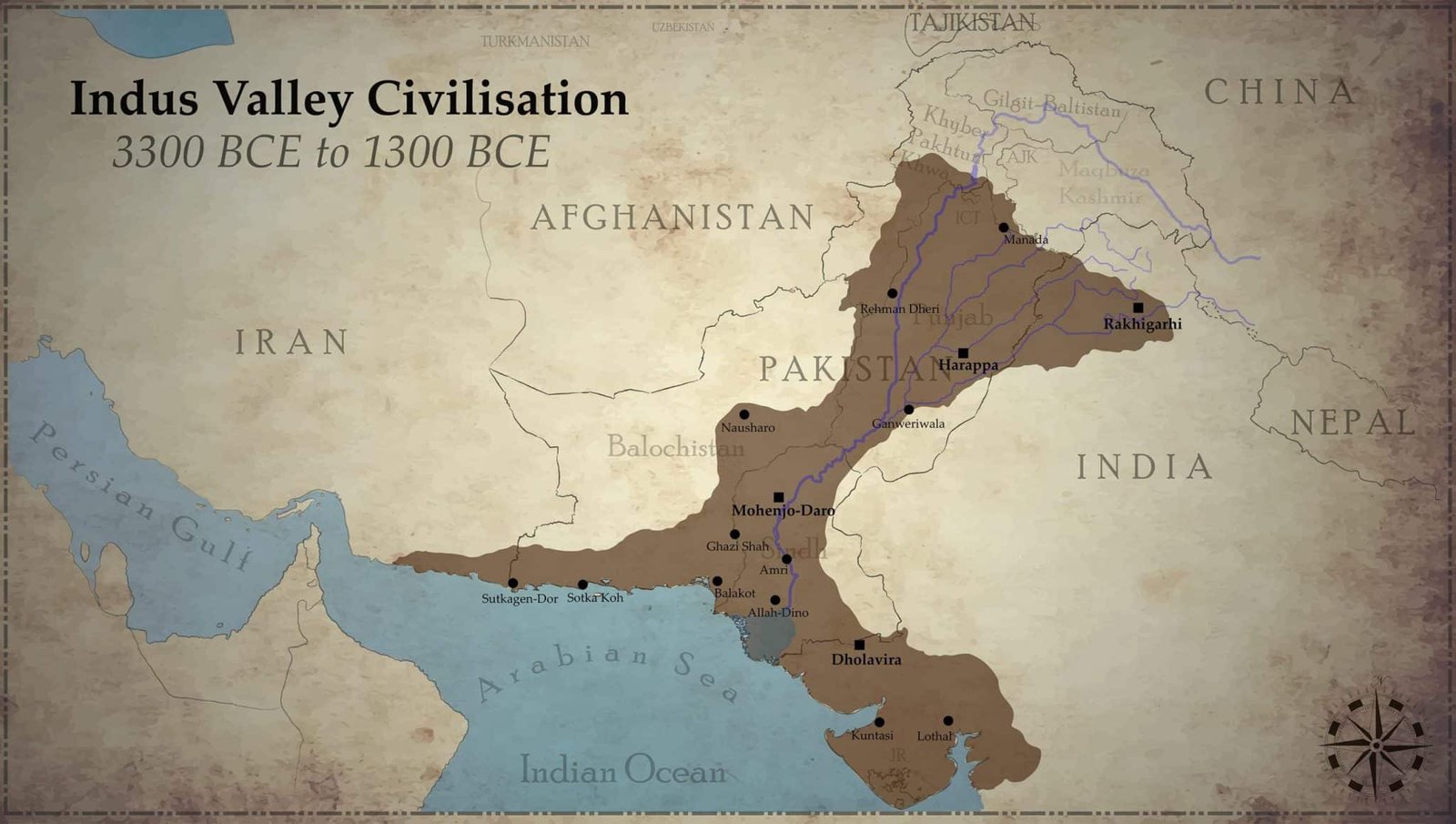
    Keti Bandar exists solely because of its connection to the river. There are so many subtribes of the Mohana fishermen community that live across lower Sindh, which shows the crucial part the Indus played in its creation and livelihood. 

    It was a thriving port once – in fact, the inhabitants of Keti Bandar were once far more affluent than those of Karachi. Rich fishermen and farmers that cultivated red rice would lend money to aspiring businessmen in the bustling city. The fresh river water of the delta allowed the Mir Bhar to live well and prosper.

    Keti Bandar sank three times due to hurricanes and sea advances: once in 1857, then in 1877, and the last known submergence was in 1910. When Cyclone Biparjoy came around, the sea swallowed many homes along Keti Bandar again, but the water receded fairly quickly as the storm moved along its course.

    Yet the persisting Mohanas were damned long before Cyclone Biparjoy, long before the current throes of climate change. The deposit of silt, that was so instrumental to the creation and preservation of Keti Bandar, was halted when the Kotri Barrage was finished in 1955. 

    The Gradual Death of the Delta

    The construction of the Kotri Barrage began during the British Raj in 1932. Environmental activist Zulfikar Ali Bhutto Jr. reflected on his visit to Keti Bandar in 2015. He shared how Kotri Barrage (also known as the Ghulam Muhammad Barrage), as well as other barrage systems built by The World Bank and IMF post partition, were the ‘final nail in the coffin’ on what we knew once as the mighty Indus delta. 

    “It’s as though Keti Bandar has suffered 15 – 16 years of dehydration,” Zulfikar said. Indeed, there can be no development with no fresh water. The excessive damming and redirecting of the Indus has drastically decreased the water flow from the river to the mudflats of lower Sindh. As a result of resource degradation, the Indus delta has seen a mass exodus. 

    According to a study by Altaf Memom published in 2005, an estimated 90, 000 had been displaced and about 120 villages depopulated. One can only imagine the state of things now: the lack of fresh water and the encroaching Arabian Sea has rendered Keti Bandar practically unlivable. And yet, the community persists. While we are hearing the term ‘climate refugees’ now more than ever – especially considering the devastation of the 2022 floods – Pakistan has technically had climate refugees since the 50s.

    Due to the various irrigation systems along the Indus, 43% of land in Northern Sindh has been left saline. Because of this, the entire delta system has seen catastrophic changes. The locals of Keti Bandar primarily complain of ‘kaala paani’: no fresh water. Without fresh water, there can be no development. And with the now obstructed deposition of silt, Keti Bandar and other coastal regions that lie atop mud flats are facing the existential threat of being swallowed by the sea. 

    When asked about the recent floods and their potential benefit to the arid region, Zulfikar said, “Even if there is a good summer monsoon, so much of it is still drained out. Whatever’s left behind after crossing through Sukkur Barrage is just seepage and not enough silt.”

    The Decline of Keti Bandar

    The Mohanas, once one of the oldest and wealthiest tribes of Sindh, has now become one of the poorest. The entire province of Sindh is part of the Indus delta, and because of it shrinking, the locals of Keti Bandar have gone from living in the abundance of the rich river to living in sheer poverty. 

    As lords of the sea, Keti Bandar’s community is mostly comprised of fishermen. They rely solely on fishing for sustenance. However, this stream of income is not only threatened by extreme weather events such as Cyclone Biparjoy. The fishermen of Keti Bandar have been ruined by loans with astronomical interest rates, endowed on them by Middlemen that orchestrate business between the fishermen of Keti Bandar and the fish markets of Karachi.

    They buy the catch at low prices, and sell them to traders in Karachi and other cities for a 200-500 percent profit. Since the poor fishermen owe them money, they have no choice but to sell their catch to these people, otherwise risking the seizure of their boats and fishing nets.

    The locals are very cognizant of the decline of wealth and prosperity in Keti Bandar. Some of the oldest members of the community were still alive when Keti Bandar’s municipality was loaning to the growing metropolis of Karachi. Since its steady decline, the government has made empty promises to provide for the community, but to no avail. 

    On a visit to Keti Bandar in 2011, Moin Khwaja shared the frustration of a local fisherman: “The government is literally pushing us into the sea. Loan sharks visit us every single day while the politicians come to us once in five years to beg for our votes”.

    While the climate crisis worsens, communities such as the Mohanas along Keti Bandar have already been facing the brunt of drastic environmental changes and lack of governmental support. One can only imagine the magnitude of the threat they face now, as extreme weather events such as Biparjoy will only increase in frequency. 

    Special thanks to Zulfikar Ali Bhutto Jr. for giving The Current his insights regarding the environmental degradation of the Indus Delta and Keti Bandar.

    Altaf A. Memon (May 14–19, 2005). “Devastation of the Indus River Delta”. World Water & Environmental Resources Congress 2005. Anchorage, Alaska: American Society of Civil Engineers. World Wildlife Fund.

  • ‘Pakistan was prepared but largely spared the full force of Cyclone Biparjoy’: Senator Sherry Rehman

    ‘Pakistan was prepared but largely spared the full force of Cyclone Biparjoy’: Senator Sherry Rehman

    Cyclone Biparjoy made landfall in India’s Gujarat on Thursday, largely sparing the coastal areas of Sindh in Pakistan. Due to swift evacuations ordered by Senator Sherry Rehman and executed by army forces, the inundated areas saw no loss of human lives.

    Forecasted to be hit hardest by the storm was the fishing port of Keti Bandar. According to an official from the Sindh provincial irrigation department, Keti Bandar suffered “zero damage”. Some shops have reopened in the city as intruding seawater has started receding. Fishermen have gradually started returning to Keti Bandar, anxious to make up for the several days of lost income.

    Biparjoy made landfall as a Category 1 cyclone, after weakening from its initial Category 3 status while it was in the Arabian Sea. Biparjoy further weakened into a cyclonic storm and was expected to become a depression by Friday evening, according to the Pakistan Meteorological Department.

    Life in Sindh is returning to normal, said Sindh Chief Minister Murad Ali Shah. Shops and markets have gradually reopened in Thatta and Karachi Commissioner ordered the resumption of examinations and other education-related activities from June 17.

    The authorities also lifted the ban on going out into the sea.

    However, fishermen were advised to refrain from venturing out into the open sea until the system ends on Saturday (today).

  • Indian mother names child ‘Biparjoy’ after cyclone

    Indian mother names child ‘Biparjoy’ after cyclone

    A woman in Gujarat India has named her one-month-old daughter ‘Biparjoy’.

    The family of the baby girl was in a shelter house in Jakhau in Kutch district, when she named the child after the cyclone. They are among thousands of Indians evacuated to safer locations due to the storm.

    The name ‘Biparjoy’ was coined by Bangladesh. It means disaster or calamity in Bengali.

    The reasoning behind naming cyclones is pretty simple. The storm is either given a code or a name, and it’s simpler to remember a name than a string of letters, numbers, or technical terminology.

  • Cyclone Biparjoy makes landfall in Gujarat, 125km from Keti Bandar

    Cyclone Biparjoy makes landfall in Gujarat, 125km from Keti Bandar

    The National Disaster Management Authority (NDMA) has said that Cyclone Biparjoy made landfall at 7pm on Thursday evening along the coast of western Indian state Gujarat, 125km southwest of Sindhi port Keti Bandar.

    According to the Joint Typhoon Warning Center, Biparjoy was equivalent to a strong tropical storm with winds of 100 kph at landfall.

    However the storm has weakened from a ‘very severe’ category to ‘severe’ as it moved northward in the early hours of Friday. The dangers of winds and storm surge are expected to diminish.

    Experts worry flooding will become the most significant factor for millions of people over the next 48 hours. The Pakistani meteorological department warned of widespread dust storms and thunderstorms in the southern Sindh province, with some very heavy rain and winds of 80-100 kph.

    The Impact of Biparjoy:

    India and Pakistan evacuated more than 170, 000 people along the coast in fear of Biparjoy. No cyclone-related deaths have been reported as yet.

    However, there has been a trail of destruction left behind in the wake of heavy wind and rain. In Gujarat, more than 500 trees have been uprooted and nearly 3500 electric poles collapsed due to Biparjoy.

    The storm is expected to weaken first to a cyclonic storm and then to a depression over Southern Rajasthan by today’s evening.

  • Cyclone Biporjoy: Everything you need to know about its name

    Cyclone Biporjoy: Everything you need to know about its name

    Cyclone Biporjoy is expected to make landfall on the Arabian Sea coastal belt today (Thursday). Authorities in both Pakistan and India are on high alert to avoid any disaster.

    The name of the cyclone has left many curious. The name ‘Biparjoy’ was coined by Bangladesh. It means disaster or calamity in Bengali.

    Why is it important to name cyclones?

    The reasoning behind naming cyclones is pretty simple. The storm is either given a code or a name, and it’s simpler to remember a name than a string of letters, numbers, or technical terminology.

    Who decides the name of the cyclones?

    The World Meteorological Organisation (WMO) maintains rotating lists of names, which are appropriate for each tropical cyclone basin.
    As a common rule, cyclones formed in different ocean basins across the world are named by those areas, regional specialised meteorological centres (RSMCs) and Tropical Cyclone Warning Centres (TCWCs).

  • Beware, Biparjoy: our celebs are armed with safety tips and they’re not afraid to use them

    Reports are coming in that 62,000 people have been evacuated from the country’s coastal line, according to Climate Change Minister Sherry Rehman, and 75 relief camps have been set up at schools and colleges, according to Samaa.

    Celebrities and public figures are taking to social media to send helpful advice and prayers to those who could be affected by the natural disaster, as well as encouraging followers on social media to not listen to misinformation while stocking up on all the necessary things they need incase of emergency.

    Veteran actress Bushra Ansari shared a video of the sea outside her apartment to disseminate the misinformation that the storm had already reached Karachi, and sent her prayers to the resident’s of this city

    Philanthropist and actress Shaniera Akram urged her followers to help the ones living along the coast and whose lifestyle could be harmed due to the floods.

    Founder of ‘Something Haute’ Amina Haider Isani encouraged all her followers to bring their pets inside to a safer enclosure

    Actor Adnan Siddiqui sent well wishes to the people of both Pakistan and India, and prayed that the cyclone passes away soon.

    Actress Mishi Khan urged her followers to keep an emergency bag with them which included medicines, valuables, and cash etc, and to also remain in contact with friends and family members.

    There is no harm in finding some humor in dark times, like actress Ushna Shah can as she makes a funny quip about boarding a plane while a cyclone looms over Karachi

    “My flight to Karachi is taking off and there is a Cyclone warning there. I just want my husband to know that God forbid if the plane crashes & I don’t make it, I hope he finds happiness with someone new one day.. and I hope he knows she will never be as awesome as me. He will have settled. (It’s really sad that I have to give this disclaimer but I do: this is a joke).”

  • Cyclone Biparjoy: Karachi spared, Keti Bandar on high alert

    Cyclone Biparjoy: Karachi spared, Keti Bandar on high alert

    Karachi may be spared from the worst of Cyclone Biparjoy, the latest trajectories of the tropical storm seem to suggest.

    “The very severe cyclonic system (VSCS) Biparjoy will not directly hit Karachi; however, it will certainly hit Keti Bandar,” Minister of Climate Change Sherry Rehman said on Tuesday.

    Senator Sherry Rehman warned on a private TV show that there is no other option but evacuation for the residents of Keti Bandar.

    She added that Karachi may experience light rainfall today, but heavy rainfall is expected on Thursday and Friday. Karachi is likely to receive 110mm of rainfall, while Thatta, Badin, and Sajawal are expected to receive 330mm of rain.

    Sherry Rehman said panic is natural, pointing out that it is human psychology to panic when danger is near. However, following safety precautions can help us avoid danger.

    The Ministry of Climate Change has issued a High Alert for the residents of Keti Bandar and initiated the evacuation process.

    The senator urged locals to cooperate with the government and emphasized that the government did not want to resort to force, but if residents did not follow the SOPs (Standard Operating Procedures), necessary action would be taken.

    “We have a red alert in place until June 18 and will issue a new advisory at 11 or 12 o’clock on the day the storm is expected to make landfall,” she added.

    In a separate tweet, she stated: “Panic is understandable, human nature; but it’s important to move with caution and calm.”

    “Evacuations are painful, stressful, and hard to embark on, but we must insist on them in areas where we see #CycloneBiparjoy making landfall. For coastal areas like Keti Bandar, evacuations are not optional.”

    During the same appearance on Geo News’ ‘Aj Shahzeb Khanzada Ke Saath,’ Pakistan Meteorologist Department (PMD) Sindh Chief Meteorologist Sardar Sarfaraz said the storm’s intensity had somewhat decreased.

    “There is no dangerous situation in Karachi; the cyclone will exit from the city’s south,” he said.

    He further added that the storm was heading toward the north.

    “It will then move northeast, where it will hit or pass Keti Bandar and Indian Gujarat,” he said, commenting on the cyclone’s trajectory.

  • Gold price in Pakistan drops by more than Rs5,700 per tola in two days

    Gold price in Pakistan drops by more than Rs5,700 per tola in two days

    On Tuesday, the price of gold in Pakistan continued its downward trend, influenced by post-budget concerns and the impending cyclone Biparjoy, resulting in a deserted market. The All Pakistan Sarafa Gems and Jewellers Association (APSGJA) provided data indicating a decrease in the price of gold (24 carats) by Rs4,000 per tola and Rs3,430 per 10 grams, reaching Rs221,500 and Rs189,900, respectively.

    Internationally, the price of gold experienced a $2 decline, settling at $1,961 per ounce. Over the past two sessions, the cumulative decline in the prices of this precious commodity amounted to Rs5,750. Moreover, it is worth noting that gold is priced Rs4,000 per tola lower in Pakistan compared to the Dubai market.

    The fluctuating gold rates in Pakistan can be attributed to ongoing political and economic uncertainty, high inflation, and currency depreciation. During such times, individuals tend to consider gold as a safe investment and a hedge. Tuesday’s market witnessed a significant decline due to various factors, including international rates, dollar depreciation, cyclone Biparjoy, and unfavorable weather conditions that deterred buyers from venturing out.

    Data from the association indicated that the price of silver remained unchanged at Rs2,650 per tola and Rs2,271.94 per 10 grams. Furthermore, the local currency experienced a decrease of Rs0.34 or 0.12 per cent against the US dollar, concluding the day at Rs287.97 in the interbank market.