Tag: data privacy

  • Privacy concerns mount as X reveals intent to employ user data for AI training

    Privacy concerns mount as X reveals intent to employ user data for AI training

    The social media platform formerly known as Twitter has recently faced scrutiny following reports by Bloomberg, revealing plans to gather biometric data, job information, and educational backgrounds from its users. A newly-released privacy policy confirms that ‘X’ intends to utilise this data, along with other personal information it collects, for the purpose of training machine learning algorithms, as first observed by Alex Ivanovs at Stackdiary.

    The privacy policy explicitly states that the company will employ the information it gathers, in combination with publicly accessible data, to support the training of its machine learning and artificial intelligence models. Elon Musk has acknowledged this change but has assured users that only publicly available information will be collected, excluding private messages.

    Notably, ‘X’ doesn’t have any publicly declared AI ambitions, but its owner, Elon Musk, does. He recently launched a company called ‘xAI,’ which aims to explore the fundamental aspects of the universe. This suggests a potential link between users’ biometric data and Musk’s ambitious scientific pursuits, as indicated on the xAI homepage, which mentions collaboration with ‘X’ to advance their shared mission.

    Another plausible scenario is Musk’s expressed desire to challenge LinkedIn, a platform he has criticised as “cringe.” ‘X’ appears to be collecting job and education histories from its user base, aligning with Musk’s vision for a more appealing professional networking platform.

    Lastly, there is the possibility that ‘X’ might consider selling user data to boost its revenue, given its limited advertising income. However, it’s essential to note that there is currently no concrete evidence to support this theory, and historically, Twitter primarily used collected user data for its own benefit rather than sharing it with third parties.

  • New laws to fight cybercrime in Pakistan: Cabinet passes e-safety and data protection bills

    New laws to fight cybercrime in Pakistan: Cabinet passes e-safety and data protection bills

    In a significant development, the federal cabinet of Pakistan granted principle approval to two crucial pieces of legislation on Wednesday, which are expected to have a far-reaching impact on digital rights, e-commerce, and the digital economy of the country.

    The first bill, named the E-Safety Bill 2023, aims to tackle and prevent online crimes such as cyberbullying, online harassment, and blackmailing. To enforce the provisions of this bill, the cabinet also greenlit the establishment of a regulatory authority known as ‘The E-Safety Authority.’ This authority will be responsible for registering and monitoring websites, web channels, YouTube channels, and existing media houses’ websites. The main objective behind this initiative is to safeguard the rights of citizens, businesses, as well as public and private institutions from online harassment and blackmail.

    Presently, the Pakistan Telecommunication Authority (PTA) has the authority to monitor content and enforce relevant laws online, while the Federal Investigation Agency (FIA) handles cybercrime-related cases. However, the proposed E-Safety Authority will take charge of the front-end monitoring of all websites, promptly addressing violations and imposing penalties. This measure is deemed necessary due to the rapid pace at which cybercrime incidents occur, often exceeding the FIA’s investigative capacity, while the PTA’s role is primarily limited to regulatory functions for internet and telecom service providers.

    According to Dawn, the second bill, titled the Personal Data Protection Bill 2023, focuses on protecting user data and preventing the unauthorised use of information systems. The bill will apply to all types of online services, including online shopping platforms, various companies, and social networking websites operating in Pakistan. It aims to safeguard consumers’ data and ensure that it is not misused or illegally accessed.

    As per the official statement, “personal data” under the proposed legislation refers to any information directly or indirectly related to an identifiable individual, encompassing sensitive or critical personal data. The bill mandates all entities collecting or maintaining data, digitally or non-digitally operational in Pakistan, to register themselves locally and appoint a data protection officer. The National Commission for Personal Data Protection (NCPDP) will oversee the registration process and will establish sub-offices in provincial capitals and other necessary locations within six months of the bill’s passage.

    However, the approval of the Personal Data Protection Bill 2023 has raised concerns among international bodies representing internet-based platforms. The Asia Internet Coalition (AIC), through its Managing Director Jeff Paine, highlighted that the bill’s current form falls short of international data protection standards and imposes unnecessary complexities that may increase the cost of doing business and hinder foreign investment. The requirement for “critical” data to be stored locally and the restriction on cross-border transfer of other personal data could potentially limit access to global digital services for Pakistanis.

    In response to these concerns, the AIC has called for more transparent stakeholder consultations by the government. Digital rights campaigner and Meta board member, Nighat Dad, expressed similar sentiments, stating that while the bill addresses important issues, the lack of consultations is undemocratic.

    Despite concerns from international bodies, an official from the IT ministry defended the legislation, emphasising that the government’s primary responsibility is to protect Pakistan’s interests and its citizens. He asserted that commercial entities’ apprehensions are primarily driven by their business concerns.

    The approval of these significant bills marks a crucial step towards enhancing digital rights and data protection in Pakistan. As the nation progresses into a more digitally interconnected era, finding a balanced approach that addresses concerns from both local and international stakeholders will be crucial for the country’s digital economy and growth.


  • ‘Sexist’: NADRA slammed for declaring men head of family

    ‘Sexist’: NADRA slammed for declaring men head of family

    Twitter users have slammed a sexist policy authorized by The National Database and Registration Authority (NADRA) after a user shared a screenshot of the message she received from the government organization that informed her that the husband was designated as the head of the household.

    The user went on to criticize NADRA as she had not nominated her husband as the head of the household, per the message stated.

    https://twitter.com/yougoglencocco/status/1640997625821380608?s=20

    The user further went on to question how this policy would become a threat for women trying to escape abusive marriages, because their private information is being sent to their spouses without their consent.

    Other women also slammed NADRA for refusing to recognize female agency, and pointed out how this policy alienates single parent households, especially with women who had escaped abusive relationships.

    Sharing their experiences of being turned away from offices while applying for their CNIC card, female tweeps blamed the policy that demands that a male guardian verify themselves as the head of their household.

    NADRA responded to the tweet by sharing that this policy was designed to guard family data from unauthorized access, because of which they had decided to inform the family head about procedures related to family data.

    “It is one of the security features to guard family data from unauthorised access. In order to maintain the integrity of family data, @NadraPak informs every family head about any processing through which someone becomes part of his family.”

    This tweet was bashed by Twitter users are regressive for refusing to recognize women as the head of their households, as activist and researcher Ammar Rashid tweeted that the government body should not have violated the privacy of women by leaking their data this way.

    “Maybe @NadraPak should try to institute measures to confirm identities that don’t openly violate the constitutional right to privacy of adult female citizens? Other countries seem to be managing data security just fine without such archaic rules.”

    Another user said: “A married woman is usually above the age of 18 and that makes her legally a citizen. She must have access to her OWN security features without having man govern her changes to the card.”

    https://twitter.com/dcfaiqalethal/status/1641077646548148227?s=20

    The Chairman of NADRA, Tariq Malik addressed the controversy in a tweet on Thursday, sharing that the policy did not discriminate against women from becoming the head of the household, and shared statistics that showed more women were nominated for this position than men.

    @NadraPak policy of declaring head of family is not gender specific. See thru lens of #realdata 28 million citizens declared their mother, 291,039 declared their sisters, 116,800 men declared their wife as head of family. And, 3.69 million females who are self head of family.”

    Malik further went on to reveal that the backlash to this policy has encouraged the department to reform it in order to prevent discrimination of any kind:

    “Declaring head of family is self reported event. I have directed our Public Engagement Department to sit down with social scientists and subject matter experts to bring reform in policies and SoPs. Suggestions welcomed. We have revamped quite a few since a year.”

  • Feroze Khan sends public apology to fellow actors for leaking confidential information

    Feroze Khan sends public apology to fellow actors for leaking confidential information

    Feroze Khan has issued a public apology to the ten celebrities whose personal information was leaked to the internet when he posted their personal phone numbers and home addresses on Twitter in a screenshot.

    Khan had written in a statement: “As an actor, I know the importance of privacy and value it the most. I never intended that anyone’s peace be disturbed. If any one of my colleagues had to go through any inconvenience I’m deeply sorry for that.”

    Actor Muneeb Butt and his wife, Aiman, along with her sister Minal, were among the celebrities whose private info was leaked, but yesterday Butt shared a picture of him and Khan together, and revealed that they had settled their differences and decided to drop the charges against the “Habs” actor.

    His statement read:

    “..To give us pain and mental distress wasn’t FK’s intention it was a mistake I announce to drop all of the charges.”

    Butt had previously filed a stalking report with the cyber crime department against Khan for leaking his and his family’s personal information.

    “Whoever is suggesting this to you has thrown you into deep trouble my friend I feel bad for you now you will have to face all of this… Initially I thought it’s a stupid mistake waited for 24 hours but no apology or excuse proved that it was a deliberate move, I thought you were better than that seriously. Complaint registration/ verification process has been completed FIA cyber circle has intiated the inquiry. The process has started, you will have to taste your own medicine now wait for the call,” he had written.

    Celebrities like Yasir Hussain had slammed Khan for being ‘stupid’ for first beating up his wife, and then leaking his number to the world.

    Actor Sarwat Gilani had shared a screenshot on her Instagram page of the numerous phone calls she had received since her number was leaked by Khan, and publicly announced that she was suing him along with the other celebrities.

    Gilani had written: “It is bizarre and despicable that private information, including phone numbers, of various famous individuals has been publicly shared on the absurd pretext of issuing legal notice to them by @ferozekhan Not only are such actions clearly illegal but also demonstrates the total lack of maturity to handle matters in a civilized way.”

  • Facebook will now ask iOS users to allow data tracking for ‘better ads experience’

    Facebook will now ask iOS users to allow data tracking for ‘better ads experience’

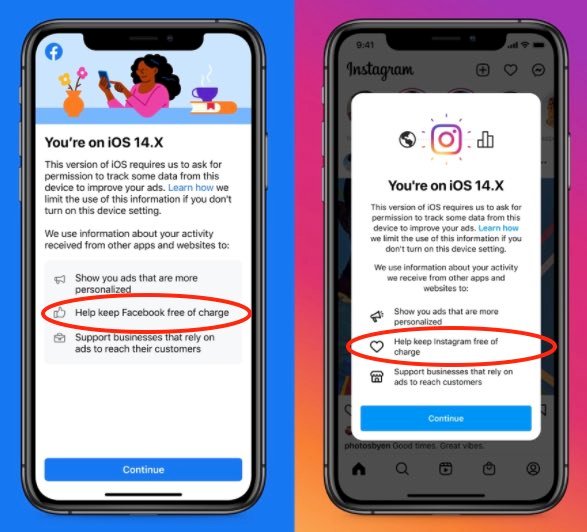
    As per details, Facebook has started urging iPhone and iPad users to allow data tracking. The social media giant said that users should allow this for a better and personalized ads experience.

    Apple recently decided to ramp up privacy of its users, and gave users an option if they want to allow social media applications to track their data.

    Both companies are in some sort of war with each other, a war that has been raging for more than one decade now.

    The founder and CEO of Facebook Mark Zuckerberg recently termed Apple Inc. as the biggest competitor, and he said that the new privacy policy of Apple will cause “damage to the business of millions of users.”

    The very next day CEO of Apple Tim Cook, during a data privacy conference in Brussels, said: “If a business is built on misleading users, on data exploitation, on choices that are no choices at all, it does not deserve our praise. It deserves reforms.”

    The battle focuses on a unique device identifier on every iPhone and iPad called the Identifier for Advertisers (IDFA). Companies that sell mobile advertisements, including Facebook, use this ID to help target ads and estimate their effectiveness.

    With the latest iOS 14 update, each app that wants to use the tracker will have to seek permission from the user. Consequently, it will make the mobiles ads less effective.

    Facebook has already started warning investors that these changes will affect the business, and now the company is testing the effects of the new updates.

    Besides, form today when users will open the app, they will see a message box that will tell users why they must allow Facebook to track their data.

    “Allow Facebook to use your app and website activity?” and claims that Facebook uses that information to “provide a better ads experience.” It will then offer users a choice between “Don’t Allow” and “Allow.”

    No matter which selection users make on the Facebook prompt, if they choose not to allow tracking on the Apple pop-up, that choice will be final, and Facebook will honour it.

  • Frieha Altaf recovers hacked WhatsApp account after 24 hours

    Frieha Altaf has managed to recovered her WhatsApp account, which was hacked on Monday, after almost 24 hours.

    “Got the WhatsApp back,” wrote the PR mogul on social media.

    “These hackers need to be taken to task for their mischief,” she added.

    Frieha, on Monday, had shared that her Whatsapp account has been hacked.

    “Seriously upset! My WhatsApp got hacked and the person is messaging my friends!”, said Frieha, warning her friends to “watch out”.

    “If someone, even a friend’s number, asks you for codes, call your friend to verify if it’s them,” said Altaf. “They just want data. It happened to my buddy in Dubai and I got hacked.”

    WhatsApp has recently been under fire for announcing new terms asking users to agree to let owner Facebook Inc and its subsidiaries collect user data, including their phone number and location. After WhatsApp’s new terms sparked debate on social media, other messaging apps like Telegram and Signal are witnessing a surge in demand.

    In response to the backlash, WhatsApp released an official statement clearing all speculations surrounding the new terms of service and policies.

  • Signal, Telegram see spike in demand after WhatsApp policy change

    Signal, Telegram see spike in demand after WhatsApp policy change

    After WhatsApp’s new terms sparked debate on social media, other messaging apps like Telegram and Signal are witnessing a surge in demand.

    WhatsApp, which uses Signal’s encryption technology, laid out fresh terms on Wednesday, asking users to agree to let owner Facebook Inc and its subsidiaries collect user data, including their phone number and location.

    Some privacy activists questioned the “accept our data grab or get out” move on Twitter, and suggested users to switch to apps like Signal and Telegram.

    Signal’s popularity shot up further on Thursday after it was endorsed by Elon Musk, who has one of the most-followed accounts on Twitter and by the micro-blogging site’s top boss Jack Dorsey.

    More than 100,000 users installed Signal across the app stores of Apple and Google in the last two days, while Telegram picked up nearly 2.2 million downloads, according to data analytics firm Sensor Tower.

    New installs of WhatsApp fell 11% in the first seven days of 2021 compared with the prior week, but that still amounted to an estimated 10.5 million downloads globally, Sensor Tower said.

  • WhatsApp will delete accounts if user data not shared with Facebook

    WhatsApp has decided to share more user data with other Facebook companies to provide a more coherent experience to users across its services.

    It will share account registration information, phone numbers, transaction data, service-related information, interactions on the platform, mobile device information, IP address, and other data collected based on users’ consent, a new update says.

    This data sharing policy with Facebook and its other services doesn’t apply to EU states. The update is expected to go into effect next month.

    The “key updates” concern how it processes user data, “how businesses can use Facebook hosted services to store and manage their WhatsApp chats,” and “how we partner with Facebook to offer integrations across the Facebook Company Products.”

    In a notification quoted by a tech website, Whastapp said it will delete the accounts after “120 days of inactivity .i.e. not connected to the app.”

    “This effectively means that, while the profiles will remain inactive, WhatsApp will eventually end up deleting the accounts after 120 days of inactivity (i.e. not connected to the app) as part of its efforts to “maintain security, limit data retention, and protect the privacy of our users.”

    Facebook Company Products refers to the flagship Facebook app, Messenger, and Instagram, Boomerang among others.

  • ‘Can locate users even if they opt-out of tracking,’ reveals Facebook

    The social media giant, Facebook has revealed that it can determine where users are even if they choose-out of having their whereabouts tracked, The Express Tribune reported.

    According to the details, Facebook in its letter sent to United States (US) senators explained the ways it can use to figure out where people are after they have selected not to share precise location data with the company.

    The social media network, contended that knowing a user’s location has benefits ranging from showing ads for nearby shops to fighting hackers and battling misinformation.

    Republican Senator Josh Hawley in a tweet said, “There is no opting out. No control over your personal information,” adding that, “That’s Big Tech. And that’s why Congress needs to take action.”

    Facebook said that the clues for figuring out someone’s location include being tagged in a photo at a specific place or a check-in at a location such as at a restaurant during a dinner with friends or a hotel.

    Along with location information shared in posts by users, their whereabouts can be noted with the help of devices connecting to the internet, which are given IP addresses. Those IP addresses include locations, although they are a a bit imprecise when it comes to mobile devices linking through telecom services that might only note a town or city.

    The tech giant had recently said that it is ready for a data privacy law which will go into effect in its home state of California at the start of next year.

    The California Consumer Privacy Act (CCPA) will give internet users the right to see what data is being collected by the big tech companies and with whom it is shared.