Tag: Death Penalty

  • CM Gandapur wants death penalty for Ice drug peddlers

    CM Gandapur wants death penalty for Ice drug peddlers

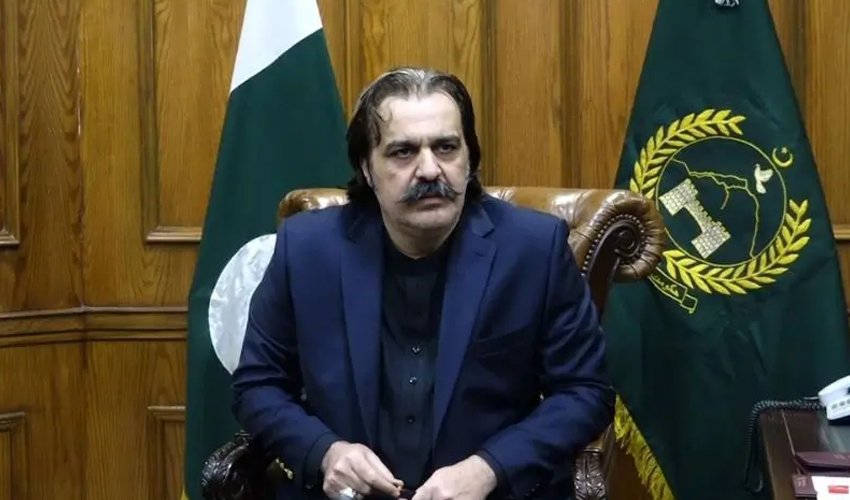
    Chief Minister of KP Ali Amin Gandapur appeared in an interview with journalist Hamid Mir and spoke against the dangers of the drug ice, aka crystal meth, mostly used by young students.

    The KP CM said that he would soon “introduce the death penalty for this drug.”

    Gandapur remarked, “This drug is destroying our nation and our youth.”

    “I will start the process of drug testing all the students in my province so their parents and I know what is happening,” he promised.

    The Chief Minister said that the process of drug tests is going to start very soon under his administration.

    Ice is the street name for the drug Methamphetamine or Crystal Meth which is a highly addictive and dangerous chemical concoction.

  • Iran executed ‘staggering total’ of 834 people last year, say rights groups

    Iran executed ‘staggering total’ of 834 people last year, say rights groups

    Iran executed a “staggering” total of at least 834 people last year, the highest number since 2015 as capital punishment surged in the Islamic Republic, two rights groups said Tuesday.

    The number of executions, which Iran has carried out by hanging in recent years, was up some 43 percent on 2022.

    It marked only the second time in two decades that over 800 executions were recorded in a year, after 972 executions in 2015, Norway-based Iran Human Rights (IHR) and Paris-based Together Against the Death Penalty said in the joint report.

    The groups accused Iran of using the death penalty to spread fear throughout society in the wake of the protests sparked by the September 2022 death in police custody of Mahsa Amini that shook the authorities.

    “Instilling societal fear is the regime’s only way to hold on to power, and the death penalty is its most important instrument,” said IHR director Mahmood Amiry-Moghaddam in the report, which described the figure of 834 as a “staggering total”.

    Iran has executed nine men in cases linked to attacks on security forces during the 2022 protests –- two in 2022, six in 2023 and one so far in 2024 -– according to the rights groups.

    But executions have been stepped up on other charges, notably in drug-related cases, which had until recent years seen a fall.

    “Of particular concern is the dramatic escalation in the number of drug-related executions in 2023, which rose to 471 people, more than 18 times higher than the figures recorded in 2020,” said the report.

    Members of ethnic minorities, notably the Sunni Baluch from the southeast of Iran, are “grossly overrepresented amongst those executed” on drug-related charges, it said.

    At least 167 members of the Baluch minority were executed in total, accounting for 20 percent of the total executions in 2023, even though the minority accounts for only around five percent of Iran’s population.

    Wrong Signal

    ECPM director Raphael Chenuil-Hazan said the “lack of reaction” by the United Nations Office on Drugs and Crime (UNODC) was sending “the wrong signal to the Iranian authorities”.

    Most hangings in Iran are carried out within the confines of prison but the report said that in 2023 the number of hangings carried out in public in Iran tripled from 2022, with seven people hanged in public spaces.

    At least 22 women were executed, marking the highest number in the past decade, the report said.

    Fifteen of them were hanged on murder charges and NGOs have long warned that women who kill an abusive partner or relative risk being hanged.

    In 2023, only 15 percent of the recorded executions were announced by official Iranian media, with IHR confirming the other executions with its own sources.

    Amiry-Moghaddam expressed concern that a lack of international outrage at the executions, in particular with attention focused on the Gaza war between Israel and Hamas, was only encouraging the Islamic republic to carry out more hangings.

    “The inconsistency in the international community’s reaction to the executions in Iran is unfortunate and sends the wrong signal to the authorities,” he said.
  • Shahnawaz given death penalty for murdering Sarah Inam

    Shahnawaz given death penalty for murdering Sarah Inam

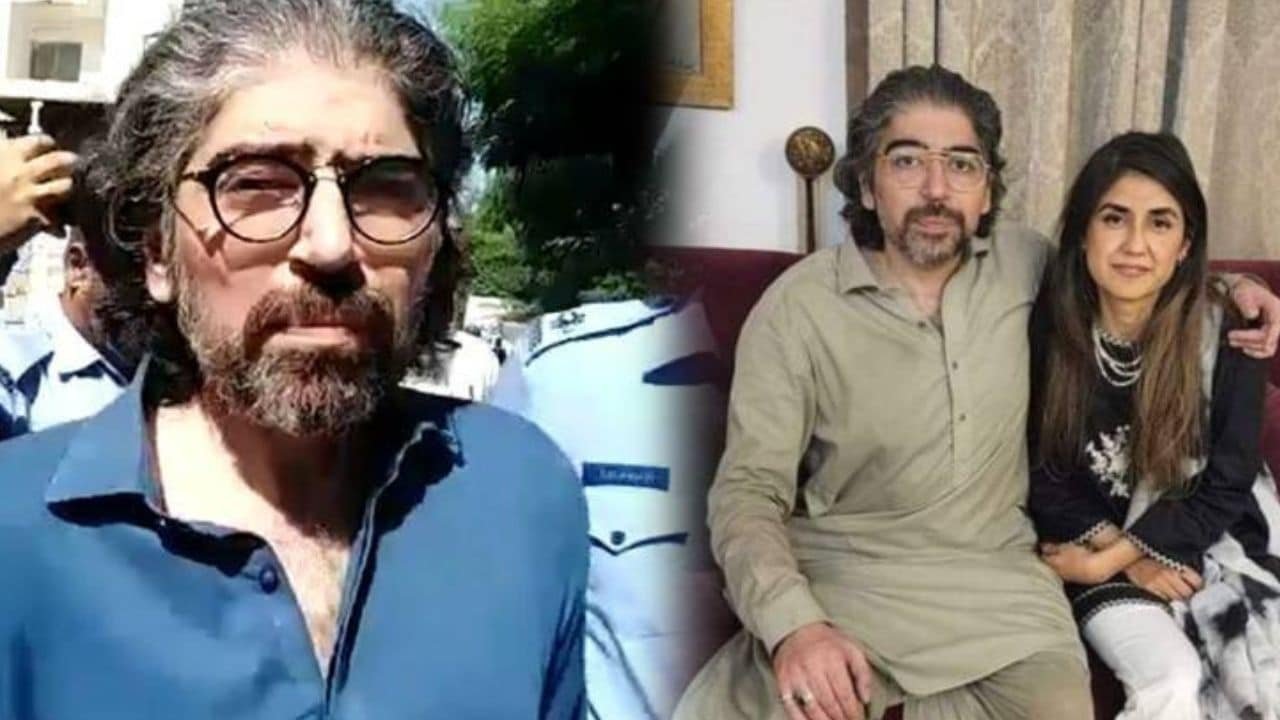
    Sarah Inam’s husband Shahnawaz Amir, son of renowned journalist Ayyaz Amir has been sentenced to death for murdering his wife.

    Session Judge Nasir Javed announced the verdict, fining the convict Rs10 lac as well. Shahnawaz’s mother Samina Shah has been acquitted for lack of proof as compliant to the murder, reports Geo.

    Sarah’s lawyer demanded the death penalty during the November 16 hearing.

    Sarah Inam’s father talked to the media after the verdict was announced and expressed his satisfaction with the death penalty but showed his concern over his mother getting off Scott-free.

    The father was accompanied by Shaukat Mukadam, Noor Mukadam’s father and the two appealed to the Supreme Court for a logical conclusion of Noor’s case.

    Shahnawaz was arrested in September last year from his farmhouse in Islamabad. Sarah was reportedly murdered just a day after she arrived in the country from Dubai where she had been working. Her husband was initially remanded to police custody a day after his arrest and the period of his physical remand was extended several times.

    Shahnawaz’s father, Ayyaz Amir was discharged from the case and his mother Samina Shah, nominated as co-accused in the case, was granted post-arrest bail in November last year.

    The postmortem revealed that Sarah had suffered multiple head fractures leading to her death, after having been hit on the head with a dumbbell.

  • Senate approves bill for public hanging of rapists despite opposition

    Senate approves bill for public hanging of rapists despite opposition

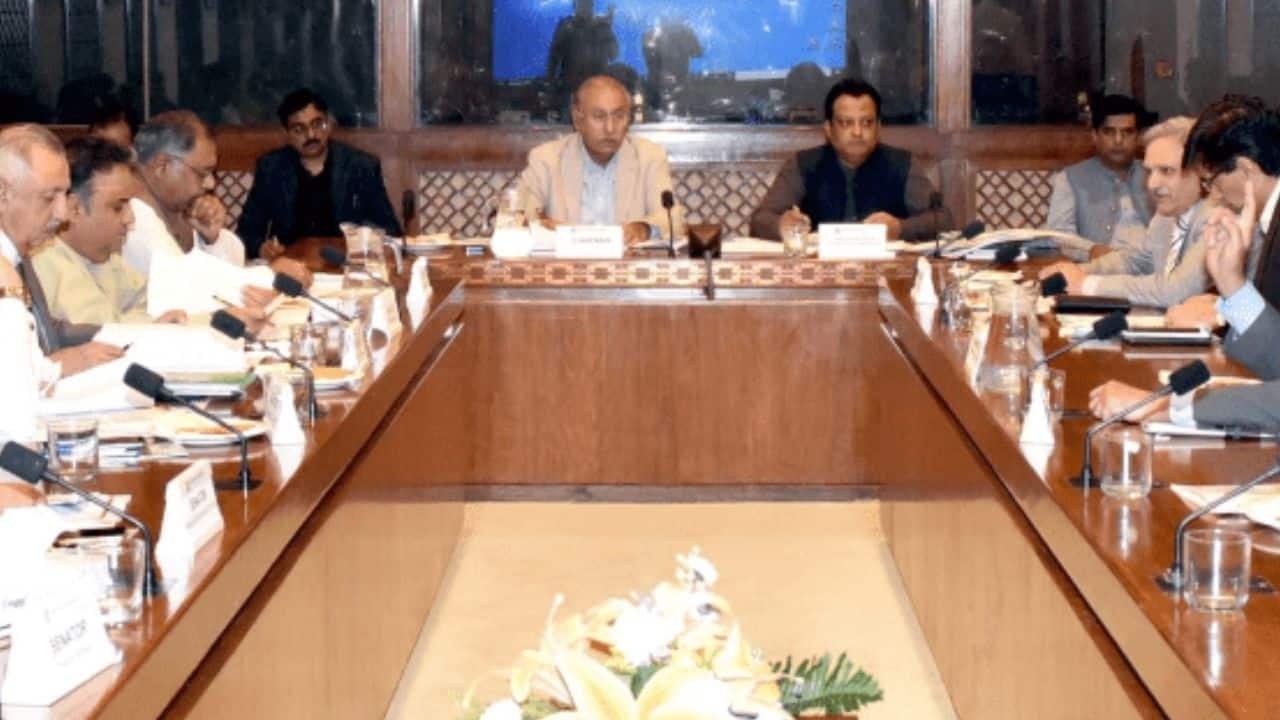
    A Senate committee has passed an amended bill for the public hanging of rapists despite strong opposition from Pakistan Peoples Party (PPP), interior and foreign affairs ministries.

    The bill, proposed by Senator Mushtaq Ahmed of Jamaat-i-Islami, aims to amend sections 375, 375A, and 376 of the Pakistan Penal Code (PPC) and Schedule II of the Criminal Procedure Code (CrCP).

    The Senate Standing Committee on Interior, chaired by Senator Mohsin Aziz, discussed the amendments to remove section D and introduce public hangings for rapists. The demand for public hangings gained momentum following the gang-rape incident on the Lahore-Sialkot motorway in September 2020

    Senator Sherry Rehman of PPP strongly opposed public hangings. She also took to X (former Twitter) to express her disapproval.

    “I strongly opposed public hangings being introduced in a bill in Senate Interior Committee by JI colleague Sen Mushtaq. There is no proven link between deterrence & public executions, let alone death penalty. Quite the contrary. Sorry to see others arguing for a further brutalisation of society. Ziaul Haq introduced public punishments, what did that do? Rape and human rights crimes went up and have been going up ever since. The PPP opposes such laws.”

    The committee also approved the “Criminal Laws (Amendment) Bill, 2023”, which focuses on proper treatment and medical examination reports for rape victims through public and private hospitals. The bill was moved by Senator Mumtaz Zehri.

    They addressed the issue of private jails and passed the “Criminal Laws (Amendment) Bill, 2023”, co-sponsored by Senators Mushtaq Ahmed and Samina Mumtaz Zehri to deter false imprisonment within residences.

    Other bills were discussed during the session, including one temporarily rejected due to its sub judice status, and another was rejected.

    The committee also passed the “Rain Water Harvesting Facility in Urban Areas, Bill 2023,” to efficiently utilize rainwater, supported by CDA representatives.

    Senator Irfan Siddiqui raised concerns about a missing bill for almost 15 months and decided to request a detailed report on the matter from relevant officials.The meeting was attended by various senators, including Saifullah Abro, Samina Mumtaz Zehri, and Sherry Rehman, as well as bill movers Senator Mushtaq Ahmed and Palwasha Khan, along with government representatives.

  • Hafizabad Court sentenced a father for raping her daughter

    Hafizabad Court sentenced a father for raping her daughter

    The district and sessions court in Hafizabad, Punjab, announced the death penalty to a father for raping his daughter, along with a fine of 0.5 million,, reports Daily Pakistan.

    According to details, the man was proven guilty on Wednesday by the court, after the paternal grandfather of the victim approached law enforcement personnel and registered the heinous crime against his own son for raping his granddaughter in April.

    Meanwhile, the culprit Nasir Ali denied all the accusations and alleged that his father was framing him to get his cattle in possession.

    However, during the trial, the prosecution argued that the grandfather was informed by his granddaughter about the sexual assault subjected on her by her father multiple times. Furthermore, the medical reports prove the sexual abuse of the daughter.

    The judge also stated in his written verdict that the perpetrator does not deserve any leniency for this horrible crime.

  • VIDEO: Musharraf terms death penalty verdict as ‘personal vendetta’

    VIDEO: Musharraf terms death penalty verdict as ‘personal vendetta’

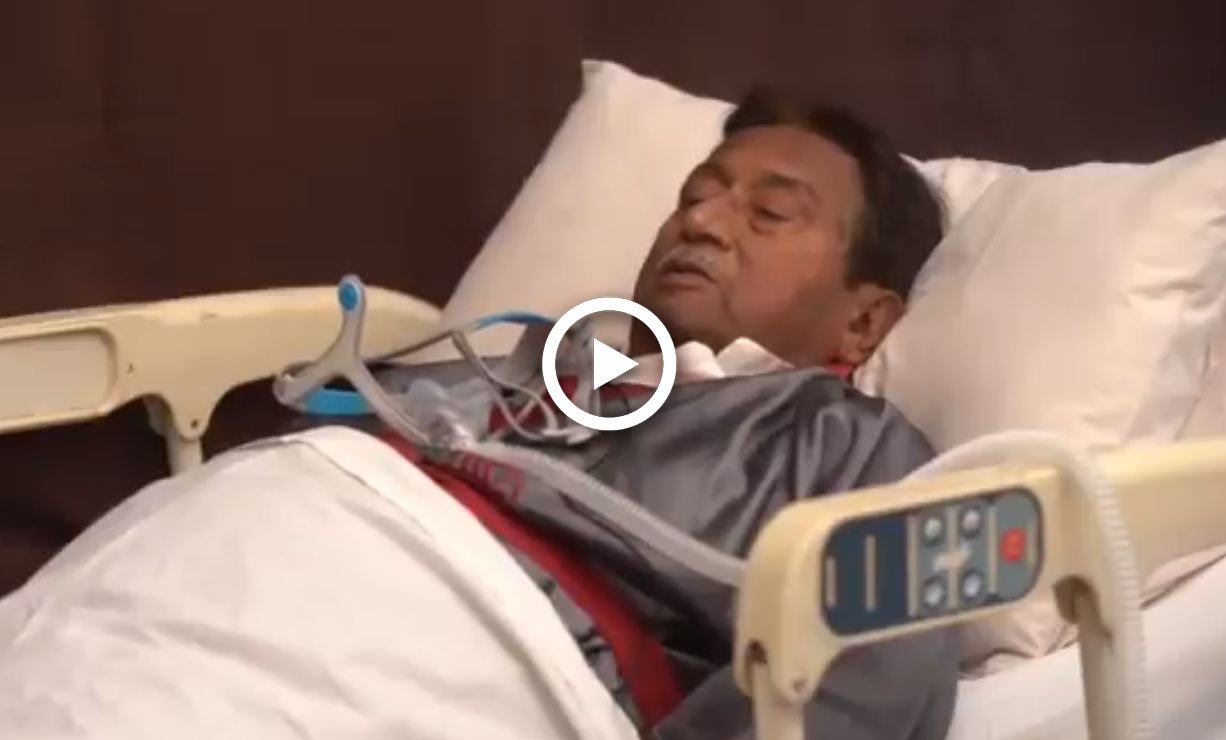
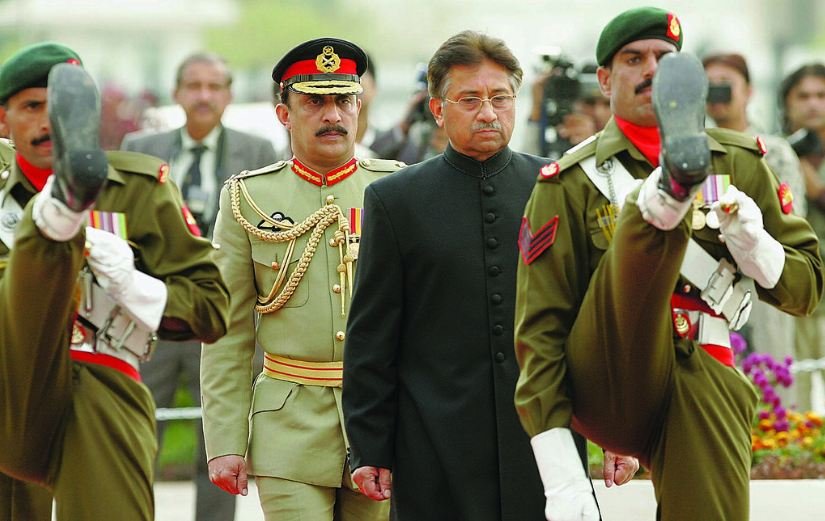
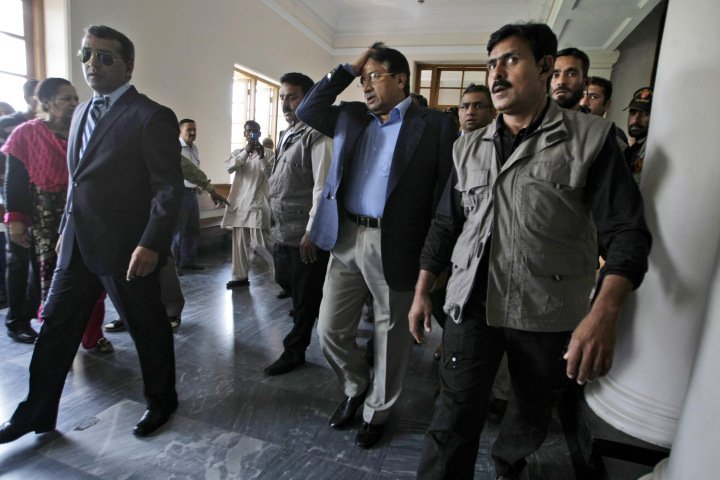
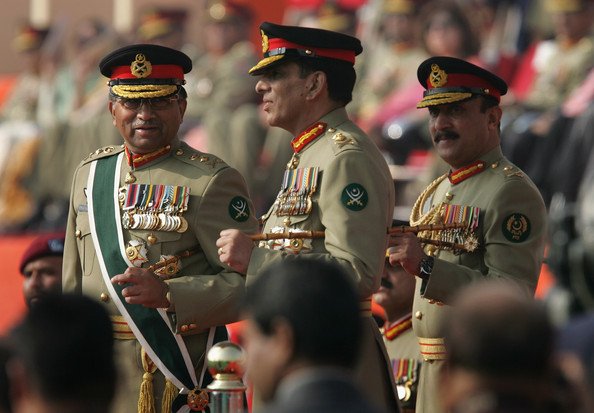
    Former military ruler General (r) Pervez Musharraf has said that the special court’s death sentence verdict against him was based on “personal vendetta”.

    Musharraf in a recent video message released on Wednesday said, “I heard the special court’s verdict against me on television,” adding that “There is no example of such a verdict in the past where neither the defendant nor his lawyers were given permission to speak in his defence.”

    Former dictator said that he had earlier offered to give his statement to a special commission if they visit him in Dubai, where Musharraf is currently undergoing medical treatment adding that “his request was ignored”.

    Musharraf said that he respected the Pakistani judiciary and that, similar to Chief Justice Asif Saeed Khosa, he also believed that everyone was equal before the law.

    “I call this verdict suspicious because supremacy of the law was ignored from the start to the end during the hearings of this case,” he added.

    Musharraf said, “However, in my opinion, CJ Khosa showed his intentions and his determination to the public himself by saying that he ensured a speedy verdict in this case. How can the judges who gained personal benefits during my tenure issue a judgement against me?”

    He thanked the Pakistani citizens and the country’s Armed Forces for remembering his services for the country.

    “This is the biggest honour for me, which I will take to my grave,” he said, adding that he will announce his plan of action regarding the case after consulting his legal team.

  • Death Penalty: Timeline of Musharraf’s high treason case

    Death Penalty: Timeline of Musharraf’s high treason case

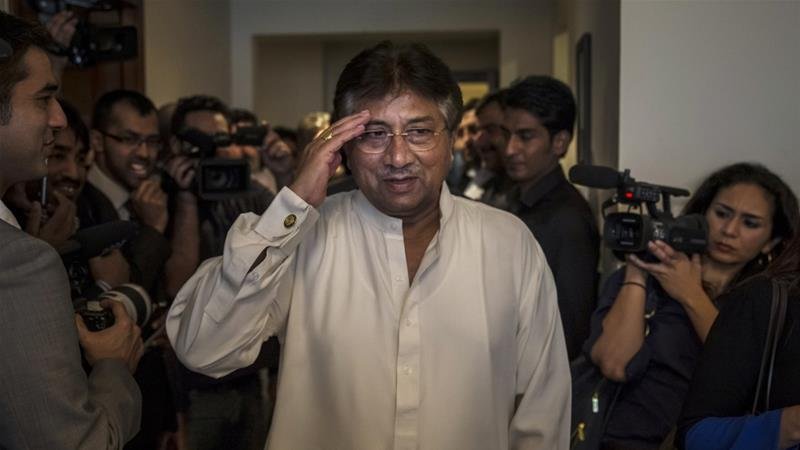
    The special court on Tuesday handed over the death sentence to the former military dictator General (r) Pervez Musharraf after analysing the complaints, records, arguments and facts in the case for three months.

    The court ruled that it found Musharraf guilty of high treason according to Article 6 of the constitution.

    The special bench hearing the high treason comprised of Peshawar High Court (PHC) Chief Justice (CJ) Waqar Ahmad Seth Akbar and Justice Shahid Karim of the Lahore High Court (LHC). The bench was formed on the orders of the Supreme Court (SC).

    EXPLAINED: MUSHARRAF’S CRIMES, PUNISHMENT

    The Pakistan Muslim League-Nawaz (PML-N) government had in 2013 filed the treason case against Musharraf over the president’s imposition of extra-constitutional emergency in November 2007.

    Here is the timeline of the high treason case

    • July 22, 2009: The Supreme Court (SC) in an unprecedented move, calls Gen (r) Musharraf to defend his actions on November 3, 2007, following the president’s resignation after a nine-year rule on the country.
    • July 31, 2009: The SC rules that Musharraf’s decision to impose an emergency on November 3, 2007, as well as his PCO [Provisional Constitutional Order] were illegal and unconstitutional. The court gives him seven days to respond.
    • August 6, 2009: Musharraf refuses to answer the charges against him and leaves Pakistan for the United Kingdom (UK).
    • March 22, 2013: Musharraf plans to return to Pakistan after exile and gets a protective bail for 10 days in three high-profile cases against him.
    • March 27, 2013: Senior counsel A.K. Dogar, during a hearing pertaining to strict adherence to articles 62 and 63 during elections, refers to SC’s ruling on Musharraf’s actions on November 3, 2007. A.K Dogar argues that in overthrowing the constitution, Musharraf had committed the offence of high treason.
    • March 29, 2013: Sindh High Court (HC) grants an extension in bail for Musharraf, but rules that he cannot leave Pakistan without permission.
    • April 5, 2013: SC agrees to hear a petition seeking to prosecute the former military dictator under sections 2 and 3 of the High Treason (Punishment) Act 1973.
    • April 7, 2013: Chief Justice (CJ) Iftikhar Mohammad Chaudhry withdraws himself from the three-member bench formed to hear the treason case against Musharraf.
    • April 8, 2013: Supreme Court summons Musharraf in the treason case against him. The court also instructs the interior ministry to add his name to the Exit Control List (ECL).
    • April 18, 2013: Musharraf after the cancellation of his bail application flees from the premises of the Islamabad High Court (IHC).
    • April 19, 2013: The former president surrenders in a magistrate’s court in the judges’ detention case and his farmhouse residence at Chak Shahzad, Islamabad, is declared a sub-jail.
    • April 30, 2013: Peshawar High Court (PHC) bars Musharraf from ever contesting elections for either the National Assembly (NA) or the Senate.
    • June 5, 2013: IHC judge Shaukat Aziz Siddiqui recuses himself from hearing former president’s post-arrest bail plea in the judges’ detention case.
    • June 14, 2013: Minister for Law and Justice Zahid Hamid distances himself from the 2007 emergency. Zahid says there was no question of him having allegedly abetted Musharraf as the proclamation of emergency came from the former dictator’s person. The minister also denies having had any contact with Musharraf.
    • June 24, 2013: Prime Minister (PM) Nawaz Sharif tells the NA that his government will request the SC to try Musharraf under Article 6 of the Constitution.
    • November 18, 2013: SC, headed by CJP Iftikhar Chaudhry, agrees to set up a special board to try Musharraf for high treason.
    • November 19, 2013: The PML-N government submits five charges of high treason against the former military ruler in a special court. A three-member bench to hear the treason case is also formed.
    • December 12, 2013: Special bench summons Musharraf to face treason charges.
    • December 20, 2013: Musharraf, in an interview, seeks “forgiveness” for any wrongs he may have committed during his rule on the country for nine-years.
    • January 2, 2014: Musharraf is shifted to hospital after suffering a “heart problem” while on his way to a special court hearing of the treason case. His arrest warrant is not issued on medical grounds.
    • January 7, 2014: The Armed Forces Institute of Cardiology (AFIC) submits former army chief’s medical report to special court, detailing that Musharraf is suffering from “triple-vessel coronary artery disease and eight other diseases”.
    • January 16, 2014: Special court orders AFIC to constitute a medical board to assess Musharraf’s health and to submit a detailed report. The medical board subsequently declares Musharraf to be in a “critical state” and recommends his treatment at a place of his choice.
    • January 28, 2014: Prosecution expresses lack of confidence in former army chief’s medical report and requests court to summon the AFIC head for cross-examination.
    • February 7, 2014: Special court once again orders Musharraf to appear in the treason case.
    • February 18, 2014: Musharraf after avoiding 22 consecutive hearings, finally appears in special court, but no charges are framed against him as the defence argues that the case should be heard in a military court.
    • February 21, 2014: Special court rules that Musharraf is not to be tried in a military court.
    • March 30, 2014: The former army chief is indicted for treason and pleads not guilty to all charges.
    • April 1, 2014: The PML-N government offers to fly former president’s ailing mother to Pakistan from Sharjah.
    • April 2, 2014: The PML-N government rejects Musharraf’s petition seeking the removal of his name from the no-fly list.
    • April 3, 2014: Musharraf petitions SC for the removal of his name from the ECL so he may travel abroad to visit his ailing mother.
    • May 14, 2014: Federal Investigation Agency (FIA) declares it has “irrefutable proof” that former army chief illegally imposed emergency in 2007.
    • June 12, 2014: SHC strikes down the government’s order barring Musharraf from overseas travel, ruling that “not a single ground was mentioned in the memorandum placing the former president’s name on the ECL”.
    • June 13, 2014: Special court rejects former president’s plea for details of “abettors” who had suggested, endorsed or implemented the 2007 emergency.
    • June 14, 2014: The government moves SC against the SHC ruling allowing Musharraf to travel abroad.
    • June 23, 2014: The apex court suspends the SHC judgment allowing former military ruler to travel abroad until it decides the pending appeal.
    • September 8, 2014: Musharraf’s legal team gets hold of crucial evidence pointing towards then prime minister (PM) Shaukat Aziz’s role in the imposition of the November 3 emergency.
    • October 15, 2014: Musharraf’s defence team asks the special court for a collective trial of all his accomplices.
    • November 21, 2014: Special court directs the federal government to resubmit its complaint in the high treason case, this time including the names of former PM Shaukat Aziz, former law minister Zahid Hamid and former CJ Abdul Hameed Dogar to the charge-sheet.
    • December 22, 2015: The former president says he invoked emergency after consulting Gen Ashfaq Parvez Kayani among other civilian and military leaders.
    • March 14, 2016: Musharraf seeks one-time permission to go abroad on medical grounds.
    • March 16, 2016: SC orders the fovernemnt to remove Musharraf’s name from the no-fly list, allowing him to travel abroad on medical grounds.
    • March 18, 2016: The former president leaves for Dubai to seek medical treatment, promising to come back to his “beloved homeland” in a few weeks.
    • May 11, 2016: Special bench declares former army chief an absconder in the treason case.
    • March 29, 2018: Special court dissolves after Justice Yahya Afridi recuses himself from hearing the high treason case against Musharraf.
    • April 7, 2018: CJ Mian Saqib Nisar reconstitutes special bench hearing Musharraf high treason case.
    • May 31, 2018: Interior ministry, complying with the special court’s orders, asks the National Database and Registration Authority (NADRA) and the Directorate General of Immigration & Passports to suspend former army chief’s national identity card and passport.
    • June 7, 2018: SC allows Musharraf to run for polls on the condition that he appear in person before the court.
    • June 20, 2018: Former president says he was set to return to the country but SC’s orders barring authorities from arresting him made him change his mind.
    • July 30, 2018: Prosecution head in the high treason case against Musharraf quits.
    • August 3, 2018: Special court decides to resume the trial which was delayed due to Musharraf’s departure from Pakistan — beginning August 20.
    • August 20, 2018: Musharraf citing threats to his life, seeks presidential security to appear before the special court in the high treason case.
    • August 29, 2018: Special court is told that Interpol refuses to issue red warrants for former army chief’s repatriation from the United Arab Emirates (UAE) where he has been living since 2016.
    • October 2, 2018: CJ Saqib Nisar grills Musharraf’s councel on the “brave commando’s” overdue return to the country.
    • October 24, 2018: APML discloses that former president is suffering from amyloidosis and has difficulty standing and walking.
    • November 19, 2018: Court tells Musharraf’s lawyer to convince former president to return and provide his itinerary so the high treason case could proceed.
    • March 31, 2019: Supreme Court orders Musharraf to appear before the special court in the treason case on May 2 or lose his right of defence.
    • April 1, 2019: SC, under CJ Asif Saeed Khosa, issues a decree telling the special bench to proceed in the high treason case without Musharraf’s statement if he fails to appear the following month.
    • June 11, 2019: SC orders NADRA to unblock former dictators’s CNIC and passport.
    • July 30, 2019: Prosecution head in high treason case against Musharraf quits.
    • October 8, 2019: Special court decides to hear the high treason trial on a daily basis from October 24.
    • October 24, 2019: The Pakistan Terhreeke Insaf (PTI) government sacks the prosecution team in the high treason case.
    • November 19, 2019: The special court concludes its proceedings in the treason case against Musharraf, saying that a verdict will be pronounced on November 28.
    • November 23, 2019: Former army chief petitions the Lahore High Court (LHC) to challenge the reservation of the judgment in the treason case.
    • November 25, 2019: The case takes a new turn as interior ministry files a petition in the IHC requesting it to set aside the special court’s decision to reserve a judgement in the case without hearing from the prosecution.
    • November 26, 2019: LHC accepts for hearing former president’s petition challenging the special court’s decision.
    • November 27, 2019: IHC stops special court from announcing verdict in Musharraf high treason case.
    • December 2019: Special court says it will announce the verdict in the case on Dec 17. Former army chief moves the LHC to stay the trial at the special court until his earlier petition pending adjudication by the high court is decided.
    • December 17, 2019: Special court hands Musharraf death sentence in the long-drawn high treason case against him.