Tag: debt

  • Inflation hits Pakistanis hard as they prepare for Eid-ul-Fitr festivities

    Inflation hits Pakistanis hard as they prepare for Eid-ul-Fitr festivities

    Eid-ul-Fitr is an important religious holiday celebrated by Muslims around the world, marking the end of the holy month of Ramadan.

    During Ramadan, Muslims fast from dawn until sunset and abstain from food, drink, and vices like gossip and lying. It is a period of self-reflection and a reminder to be charitable to the less fortunate.

    Observed first day of Shawwal, the tenth month of the Islamic calendar, Eid-ul-Fitr is a time for Muslims to come together with family and friends to offer prayers, exchange gifts, and share meals. It is also a way for Muslims to show their gratitude to Allah for giving them the strength to fast and to seek forgiveness for any sins committed during the year.

    However, in Pakistan, small shops and businesses are struggling to make ends meet during this year’s Eid-ul-Fitr celebrations. The high levels of inflation, which have hit their highest levels in decades, have left many businesses unable to make enough money to cover their monthly expenses, including rent and utility bills.

    For many small shops and businesses in Pakistan, the last days of Ramadan or before Eid-ul-Fitr used to be a guaranteed earner—a big-spending week that could match the take from the rest of the year. However, this year, many worry they will not even make enough to pay for their monthly expenses.

    A tailor in Canal Bank, Lahore, stated that each year, he was fully booked and had so many orders that he couldn’t take orders after the middle of the month of Ramzan. However, this year, he said, “For the first time, we are accepting orders in the last week of Ramzan as there is not much work.”

    Tailors in Lahore who used to charge Rs1,500 are now charging Rs2,500 or Rs2,200. Even well-known brands or shops are charging more, which is leaving consumers with no option but to go for cheap ready-made clothes or clothes that are available on sale.

    The South Asian country of more than 220 million people saw year-on-year inflation hit 35.4 per cent in March. Food prices surged more than 47 per cent in 12 months, with transport costs rising by 55 per cent.

    Pakistan is deeply in debt and needs to introduce tough reforms to unlock a tranche of a $6.5 billion bailout from the International Monetary Fund in order to avoid default. The economy has been wrecked by years of financial mismanagement and political instability—a situation exacerbated by a global energy crisis and devastating floods that left a third of the country under water last year.

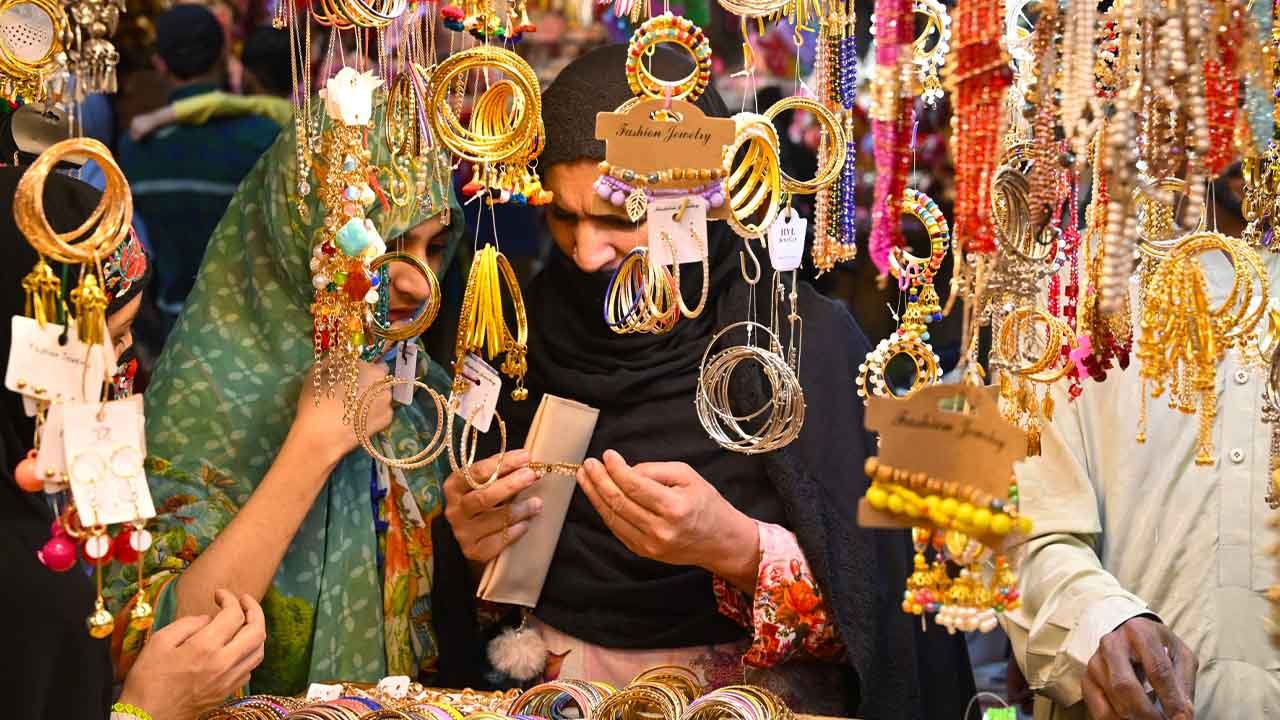
    An artificial jewelry shop owner in Anarkali, Lahore, Zaryab, said, “There is a significant difference between last year’s sales and this year’s. People come to our stall, see 3-4 necklaces or bangles, ask the price, and then leave.”

    The high inflation has significantly reduced the purchasing power of Pakistanis, and people are mostly focusing on fulfilling their essential needs. Noman Khan, an electrical engineer at ACE Pakistan, stated that this Eid, he has not been able to buy clothes for himself as he had to buy clothes for his two kids and wife. He added that “From artificial jewelry to kids’ clothes, everything is so expensive this year that I have no option but to wear old clothes. Although, I made sure that my kids and wife at least get what they want to wear this Eid.”

    In conclusion, the struggle for small businesses in Pakistan during Eid-ul-Fitr celebrations is a stark reminder of the country’s economic challenges. While many Pakistanis are still managing to celebrate the holiday, the high levels of inflation have made it difficult for many to enjoy the festivities.

  • SBP-held forex reserves increase by $66 million as Pakistan seeks critical IMF loan tranche

    SBP-held forex reserves increase by $66 million as Pakistan seeks critical IMF loan tranche

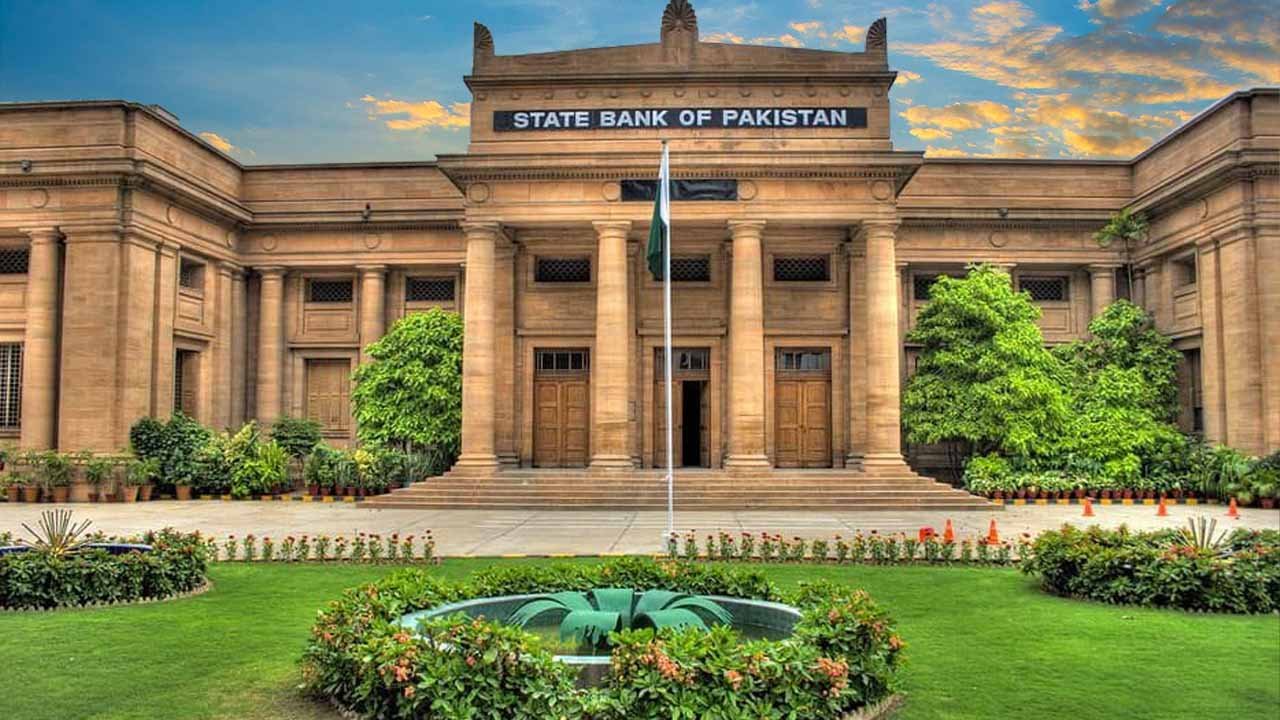
    The State Bank of Pakistan (SBP) has reported a minor increase in its foreign exchange reserves, as the nation desperately seeks to unlock a critical tranche of funding from the International Monetary Fund (IMF).

    The central bank stated that its reserves had risen by $66 million to $3,258.5 million as of the week ended February 17, providing an import cover of around three weeks. The net foreign reserves held by commercial banks were reported to stand at $5,468.0 million, $2,209.5 million more than the SBP, taking the total liquid foreign reserves to $8,726.5 million.

    China development bank approves $700 million facility for Pakistan

    Finance Minister Ishaq Dar has announced that the forex reserves are expected to receive a significant boost in the coming week, as the Board of China Development Bank has approved a $700 million facility for Pakistan. The funds could be deposited into the SBP’s account this week.

    Pakistan takes austerity measures in a bid to resume IMF programme

    In a bid to resume the delayed IMF programme and avoid default, the Pakistani government has taken a series of steps in the past two months. These measures include adding new taxes, increasing energy prices, and loosening its control on the rupee.

    Parliament approved a supplementary finance bill that increases sales tax from 17 per cent to 25 per cent on imports ranging from cars and household appliances to chocolates and cosmetics. People will also have to pay more for business-class air travel, wedding halls, mobile phones, and sunglasses. A general sales tax was raised from 17 per cent to 18 per cent.

    Prime Minister Shehbaz Sharif also unveiled cost-cutting measures to save $764 million annually, stating that austerity, simplicity, and sacrifice are the need of the hour.

    Concerns over Pakistan’s debt and dollar crunch

    Fitch Ratings, a global credit ratings agency, has downgraded Pakistan’s $350 billion economy twice in four months, citing dwindling foreign reserves. Bloomberg data shows that Pakistan has coupon repayments of $542.5 million this year.

    In all, the country has $8 billion in dollar bonds debt due by 2051, with the next payment of $1 billion due in April of next year. Most of the nation’s external debt of about $100 billion is sourced from concessional multilateral and bilateral sources.

    Pakistan also faces a dollar crunch that tests its external stability, and supply disruptions caused by flooding, food shortages, and IMF preconditions for rescue may push inflation above 30 per cent for the first time on record, according to Bloomberg Economics.

  • Pakistan nears finalisation of IMF loan agreement: Power Minister announces positive progress

    Pakistan nears finalisation of IMF loan agreement: Power Minister announces positive progress

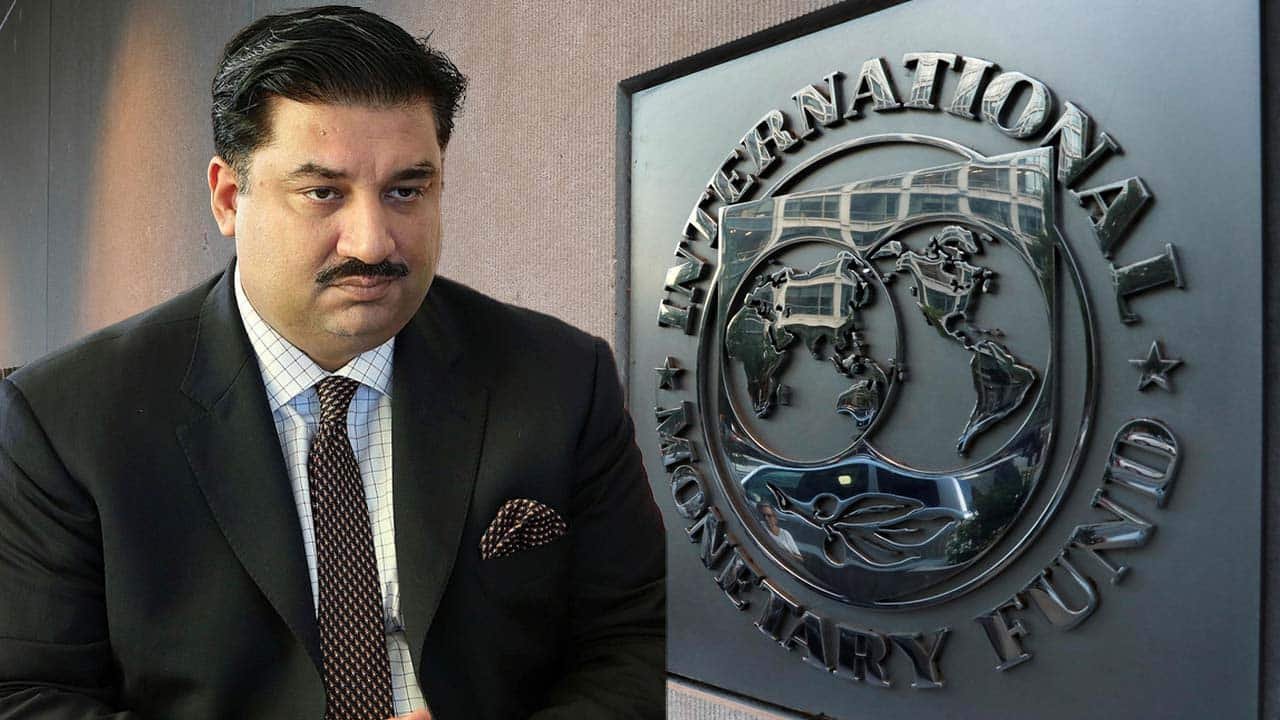
    Power Minister of Pakistan, Khurram Dastgir, announced that the country is close to sealing a deal with the International Monetary Fund (IMF) and that the agreement has been achieved on almost all the issues between the two sides.

    With a $350 billion economy, Pakistan is in need of a crucial installment of $1.1 billion from the IMF to avoid default. However, the IMF has identified a significant gap of approximately Rs900 billion, equivalent to 1 per cent of the country’s Gross Domestic Product (GDP), which has been a hindrance in reaching a staff-level agreement.

    Minister Dastgir reassured that the IMF has not demanded the government to cut its defense budget during his appearance on the Geo News program “Capital Talk” on Monday.

    The Minister stated that instead of cutting the defense budget, the IMF has asked the Energy Division to reduce its losses. The Fund has also emphasized the need for the government to reduce line losses in the northern, southern, and western regions of the country. The Minister emphasized that the IMF has made it clear to Pakistan that the country must establish its financial stability by increasing its tax revenues and reducing losses.

    He also mentioned that the international community is not displaying leniency towards Pakistan since the US withdrawal from Afghanistan. The Minister indicated that the country must take the necessary measures to align its financial position and meet the expectations of the IMF and the international community.

  • SBP-held foreign exchange reserves dropped to 9-year low of $4.34 billion

    SBP-held foreign exchange reserves dropped to 9-year low of $4.34 billion

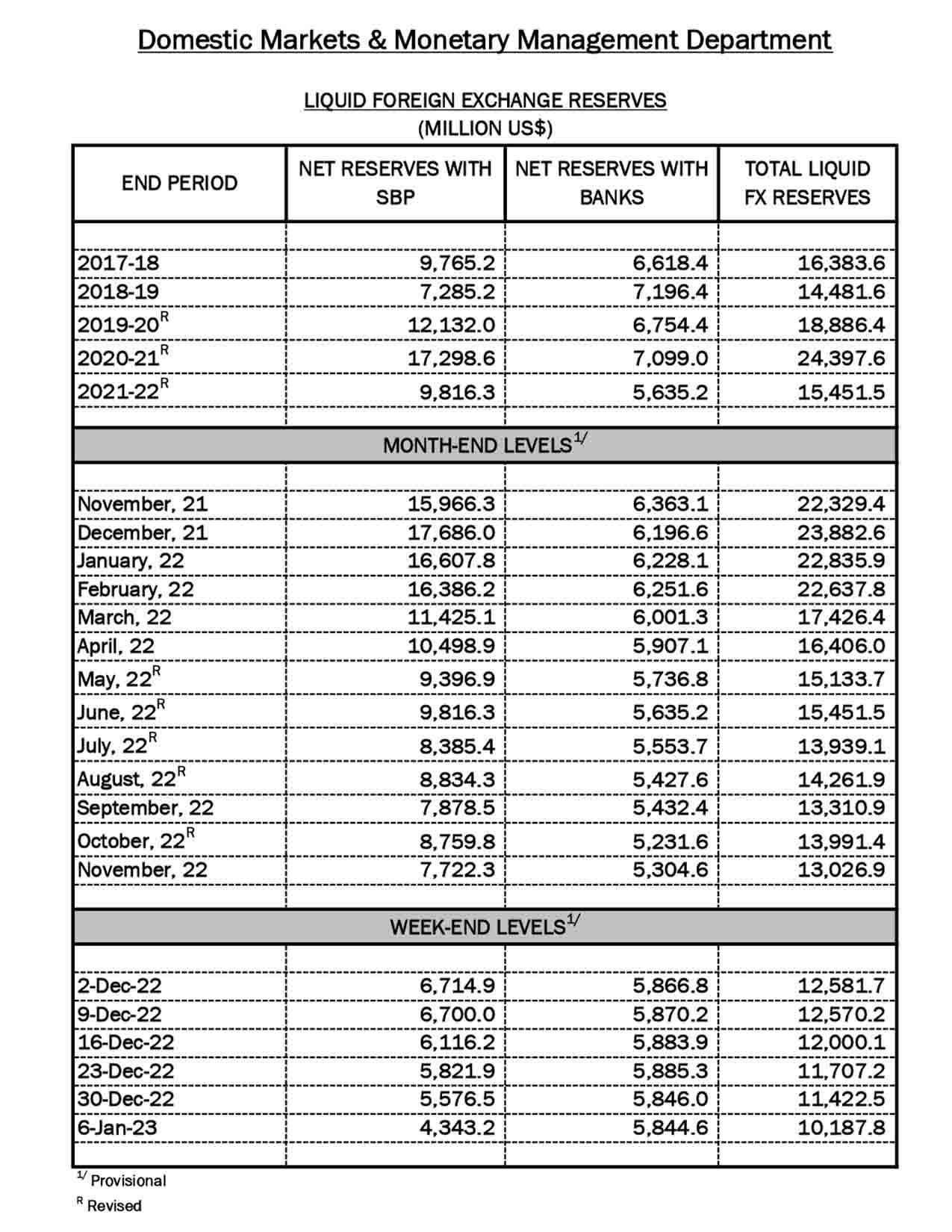
    The State Bank of Pakistan’s (SBP) foreign exchange reserves fell to $4.34 billion, its lowest level since February 2014, due to a lack of dollar inflows from the International Monetary Fund (IMF) or friendly nations.

    The SBP disclosed on Thursday that due to the repayment of external debt, its reserves fell by $1.23 billion during the week ended January 6.

    The country has been experiencing a severe dollar shortage, which is having a negative impact on the capacity to import even food and industrial raw supplies. The country doesn’t have enough dollars, according to the most recent status of foreign exchange reserves, to pay for even one month’s worth of routine imports.

    Data showed that commercial banks held $5.84 billion in net foreign currency reserves, while the overall amount of liquid foreign exchange reserves was $10.18 billion.

    Ever since the beginning of 2022–2023, reserves have been rapidly decreasing. In the upcoming months, analysts predict rising inflation and limited industrial output as manufacturing is constrained by the scarcity of imported raw materials.

    According to Geo, United Arab Emirates (UAE) will roll over the existing loan of $2 billion and give an additional $1 billion loan, which should stabilise the reserve position in the coming days.

    As the government strives to reduce imports amid a dollar shortage, the reserves, which fell to their lowest level since February 2014, would now only provide import coverage of 0.82 month.

  • S&P Global lowers Pakistan’s credit rating to CCC+

    S&P Global lowers Pakistan’s credit rating to CCC+

    Pakistan’s long-term sovereign credit rating was downgraded by S&P Global from “B” to “CCC+” to reflect the continuous deterioration of the country’s external, fiscal, and economic metrics.

    According to S&P, Pakistan’s already meagre foreign exchange reserves would continue to be under pressure through 2023 without a drop in oil prices or an improvement in international aid. The nation also faces significant political risks that could alter its future course of policies.

    According to the report, Pakistan’s economic and fiscal results are predicted to be negatively impacted by this year’s devastating floods, skyrocketing food and energy prices, and rising global interest rates, with refinancing issues over the medium term.

    The agency maintained its outlook at “stable”.

    With barely enough reserves to pay one month’s worth of imports, a dollar shortage, and a delay in its loan programme with the International Monetary Fund, Pakistan is in the midst of an economic catastrophe. Despite the payment of a $1 billion bond this month, long-term dollar bonds continue to trade at distressed prices, reflecting investors’ lack of confidence in Pakistan’s capacity to meet its international debt commitments.

    Following the terrible floods that hit the country earlier this year, Moody’s lowered Pakistan’s sovereign credit rating by one notch, from B3 to Caa1, citing heightened government liquidity and external vulnerability risks.

  • Pakistan is committed to completing IMF programme while meeting debt repayments on time: Ishaq Dar

    Pakistan is committed to completing IMF programme while meeting debt repayments on time: Ishaq Dar

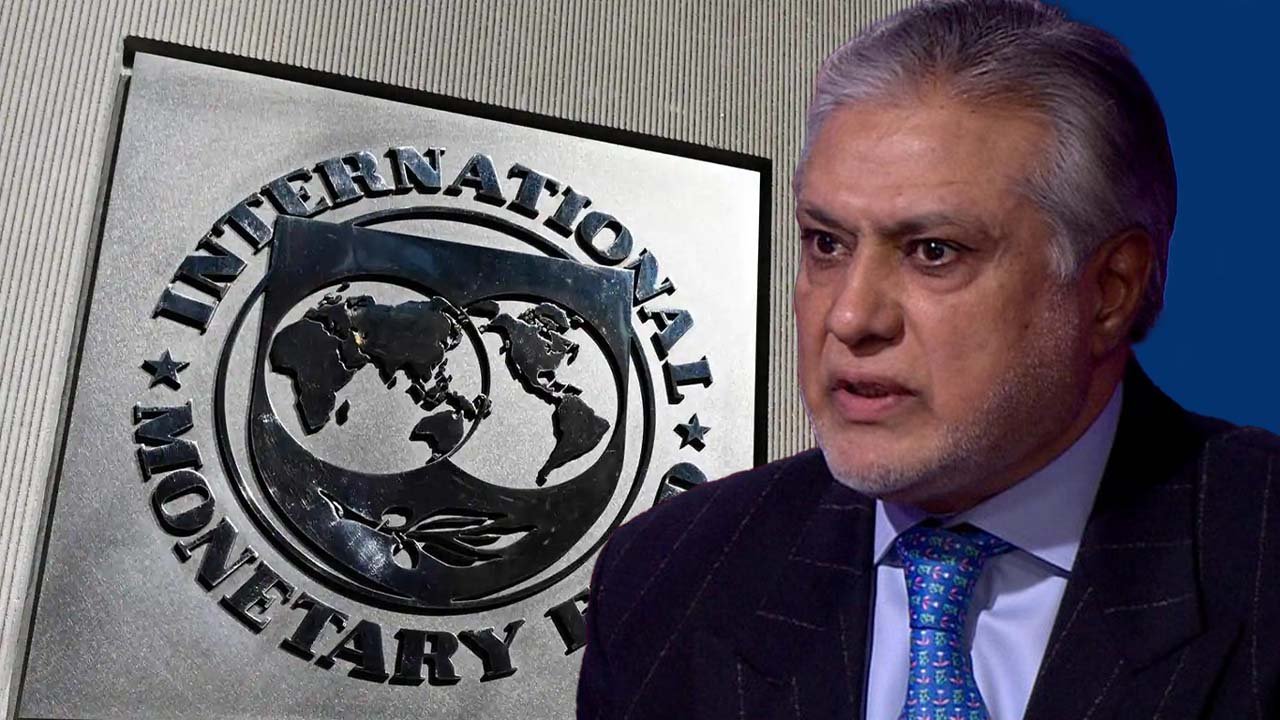
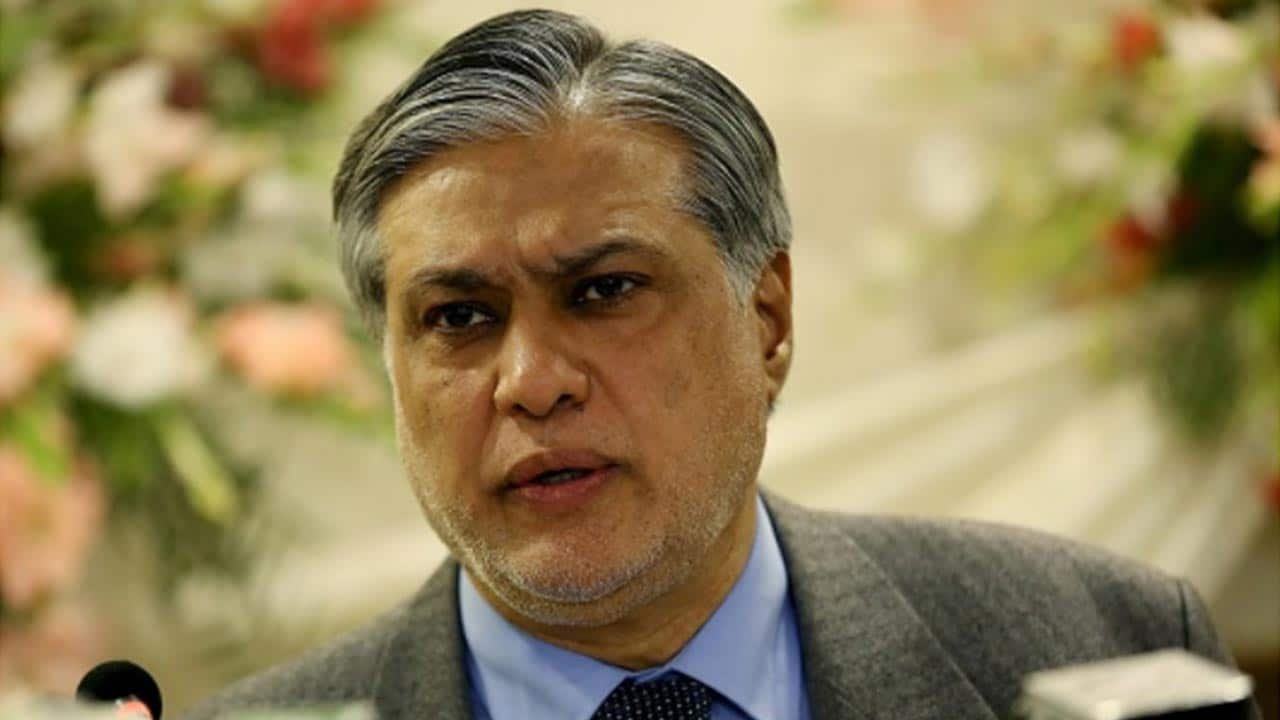
    Pakistan is committed to completing the International Monetary Fund (IMF) programme while meeting external debt repayments on time, Finance Minister Ishaq Dar said on Tuesday during a meeting with the ambassador of its top bilateral lender, China.

    The country is in desperate need of external financing as the IMF’s review for the disbursement of its next tranche of funding has been on hold since September, according to Reuters.

    Ishaq Dar, the finance minister, stated last week on local television that the IMF was “behaving abnormally” by not finishing the ninth review even though all targets had been met.

    “The Finance Minister … apprised the Chinese Ambassador that the Government remains committed to completing the IMF program while meeting all external debt repayments on time,” the finance ministry said in a statement.

    The IMF programme is “back on track,” according to a separate statement released by the finance ministry on Tuesday, and preparations for the ninth review were well underway.

    An Extended Fund Facility (EFF) bailout for Pakistan in 2019 included a $6 billion bailout that was later increased by $1 billion.

    Dar said that Pakistan’s government has a “realistic plan” for handling the costs associated with rehabilitating the areas damaged by devastating flooding a few months ago during his meeting with the Chinese Ambassador. Official estimates place the cost of flood damage at $40 billion.

    Pakistan is dealing with a balance of payments issue and a growing current account deficit. Dar announced last week that a $3 billion loan from a friendly nation will be used to bolster Pakistan’s foreign reserves, which have fallen to $7.5 billion.

    According to the finance ministry, the government has implemented austerity measures to cut non-essential spending and has prioritised energy conservation to lower its import expenses.

  • Total volume of debt on Pakistan has risen to Rs49.2 trillion

    Total volume of debt on Pakistan has risen to Rs49.2 trillion

    The National Assembly was informed on Monday that Pakistan now owes a total of Rs49,200 billion.

    According to Finance Minister Ishaq Dar, as of June 30, 2022, the country had a domestic debt of Rs31,000 billion and an external debt of Rs18,160 billion.

    Indicators for the sustainability of the nation’s external debt further declined in the previous fiscal year, according to a report from the finance ministry, as a result of the government’s increased reliance on short-term loans from abroad and the risks associated with refinancing and rupee depreciation.

    For the fiscal year 2021–2022, the public debt indicators linked to debt maturity, currency risks, refinancing risks, and interest rate risks had gotten worse, according to the Annual Debt Review and Public Debt Bulletin.

    The Public Debt Management Office and the federal government did a dismal job, within a year, the overall public debt increased by Rs9.3 trillion, from Rs39.9 trillion to Rs49.2 trillion. according to Express Tribune.

    According to the finance ministry, currency depreciation caused an increase of Rs3.8 trillion as the exchange rate dropped from Rs157.3 to a dollar in June 2021 to Rs204.4 in June 2022. Budget finance requirements were the cause of the remaining increase.

    The proportion of external debt in the total public debt climbed from 34 per cent in 2020–21 to 37 per cent in the most recent fiscal year. It was approaching the 40 per cent upper limit.

  • ‘Six months’: Murad Ali Shah gives estimate on when flood waters will drain

    Sindh Chief Minister (CM) Murad Ali Shah said that the government is working on rehabilitating people and the province’s drainage, irrigation network. According to him, it will take “three to six months” to drain the water from flood-affected areas of the province as in “some areas, there is at least eight to 10 feet of water”.

    While speaking to the media in Karachi, the chief minister talked about the damages and loss of assets. He said that “12.5 million people are affected by the disaster and around 350 billion rupees’ losses to the farmers are being reported in the province.”

    He revealed that even in places where the floodwater is receding, “the situation is not such that people can return”, highlighting that Pakistan had received unprecedented rainfall this year.

    It is pertinent to mention that Sindh is the worst-hit province so far after biblical floods wreaked havoc across the country. Sindh had the most deaths and injuries. Out of the 1,396 fatalities countrywide, 578 people have died in Sindh province alone.

    Moreover, CM Shah said that the province is facing a shortage of tents and medicines and he had raised the issue with the United Nations (UN) chief Antonio Guterres during his recent visit to Sindh.

    “The whole world has to come together to combat climate change,” he said, adding that Guterres had also called on the world to “pitch in” to help Pakistan navigate the crisis.

    Earlier, the UN chief on his visit to Pakistan’s flood-affected areas said that he has “never seen climate carnage on this scale”.

    At a press conference in Karachi on Saturday after witnessing the worst of the damage in southern Pakistan, he said, “I have seen many humanitarian disasters in the world, but I have never seen climate carnage on this scale.”

    Guterres also strongly urged international creditors to introduce a new mechanism ‘Debt Swap’ for flood-devastated Pakistan.

  • ‘Pakistan’s international debt should be immediately cancelled’: British MP

    ‘Pakistan’s international debt should be immediately cancelled’: British MP

    United Kingdom (UK) Member of Parliament (MP) Claudia Webbe has called on the international community to cancel Pakistan’s debt as the country’s inflation hits the highest level since 1973.

    In a statement on Twitter, Webbe said, “Inflation in Pakistan is at an all-time high at 27 per cent! Pakistan’s international debt should be immediately cancelled – they should instead be given reparations for the climate crisis caused.”

    According to the Pakistan Bureau of Statistics (PBS), Pakistan’s Consumer Price Index-based inflation (CPI) climbed by 27.3 per cent on a year-over-year basis in August 2022.

    Prior to this statement, she repeatedly urged foreign countries to stand shoulder to shoulder in full solidarity with Pakistan and termed the silence from western countries a “moral crime”.

    “We need a global climate tax so that the global rich can be made to pay for the climate damage they cause in the world,” she said.

    She also blamed rich countries for the climate crisis and said that they should bear the cost, not Pakistan, as the country is responsible for 1 per cent of global emissions.

    On her official Twitter account, she also shared videos of the devasting floods in Pakistan.

    Water levels continued to rise on Friday as the overall death toll from the devastating floods has crossed 1,200.

    On Thursday, the UK announced an additional £15 million of lifesaving support for flood victims in Pakistan.

    More than 33 million people are affected — one in every seven Pakistanis — and reconstruction work will cost more than $10 billion.

    United Nations (UN) chief Antonio Guterres called the floods a “climate catastrophe” and launched an appeal for $160 million in emergency funding. Meanwhile, western countries have also donated millions of dollars to Pakistan.

  • Pakistan gets temporary relief of $3.68 billion from G-20 countries

    Pakistan gets temporary relief of $3.68 billion from G-20 countries

    The Ministry of Economic Affairs stated that the Government of Pakistan and the French Republic on Monday signed an agreement as part of the G20 Debt Service Suspension Initiative (DSSI).

    The government signed a DSSI, which amounted to the suspension of loans totaling $107 million under the G20 DSSI framework, according to a statement made in this regard by the ministry, according to Profit.

    This sum, which was initially due between July and December 2021, will now be paid back over a six-year period (plus a one-year grace period) in semi-annual installments, according to the statement.

    Federal Secretary for Economic Affairs Division Mian Asad Hayaud Din and French Ambassador to Pakistan Nicolas Galey signed the agreement today in Islamabad.

    Agreements for the revocation of $261 million between the government and the French Republic have already been signed.

    The ministry mentioned that the G20 DSSI has provided the fiscal space required to address the immediate health and financial demands of the Islamic Republic of Pakistan as a result of the support given by Pakistan’s development partners.

    According to the ministry, $3,688 million in debt has been suspended and rescheduled overall under the DSSI framework, which covers the period from May 2020 to December 2021.

    Pakistan has so far reached 93 agreements and signed them with 21 bilateral creditors for the restructuring of its liabilities under the G20 DSSI framework, totaling a delay of nearly $3,150 million.

    The above-mentioned agreements have been signed, bringing the total to $3,257 million. The G20 DSSI’s remaining agreements are currently the subject of negotiations.