Tag: decline

  • Pakistani rupee falls to record low of Rs230 versus US dollar

    Pakistani rupee falls to record low of Rs230 versus US dollar

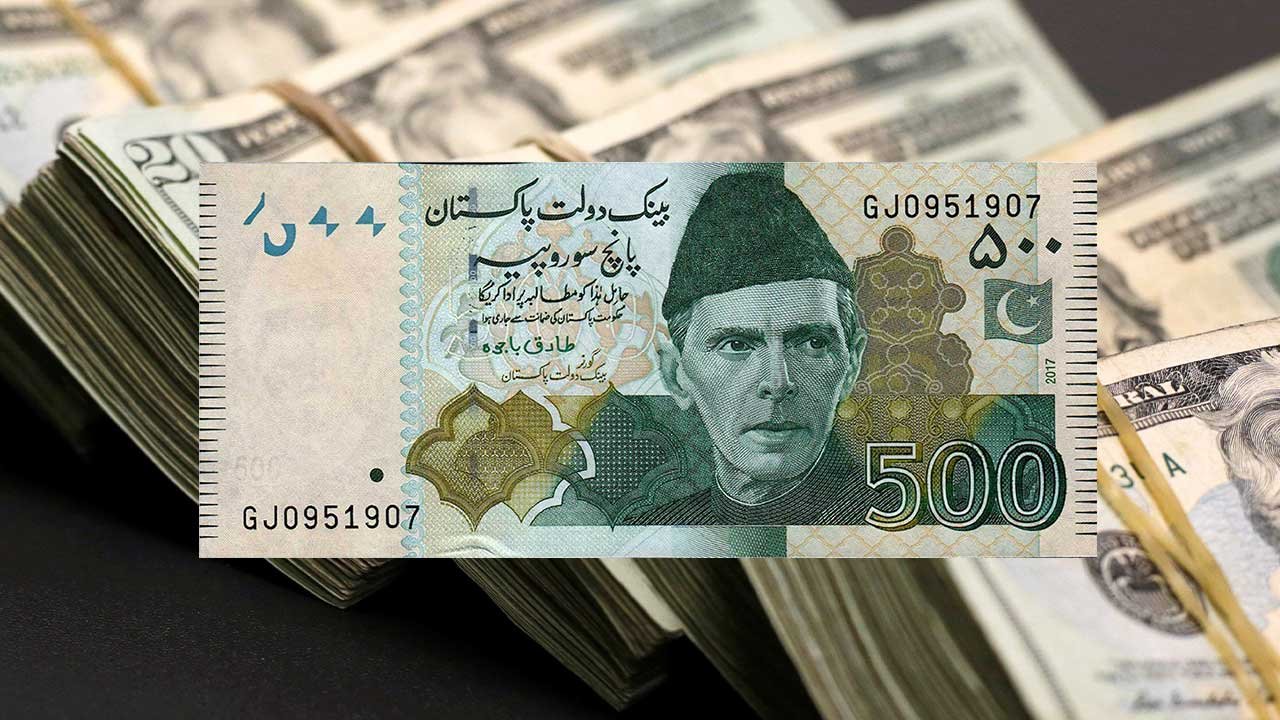
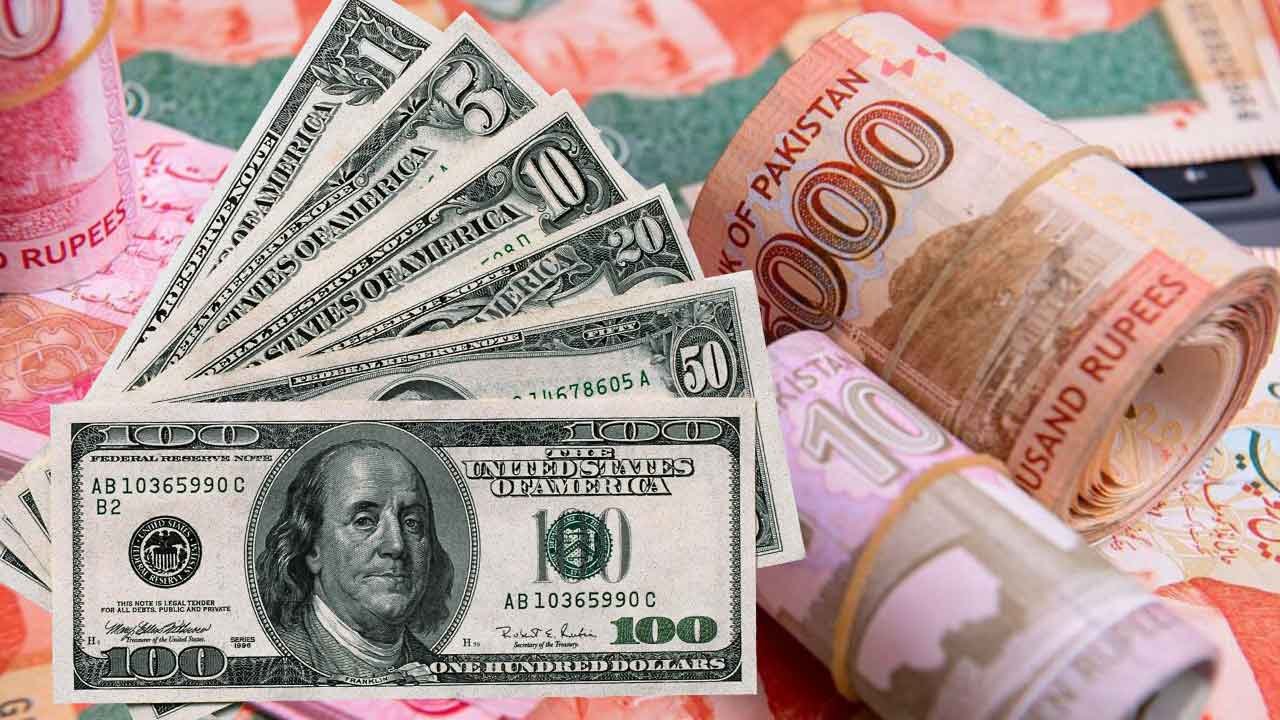
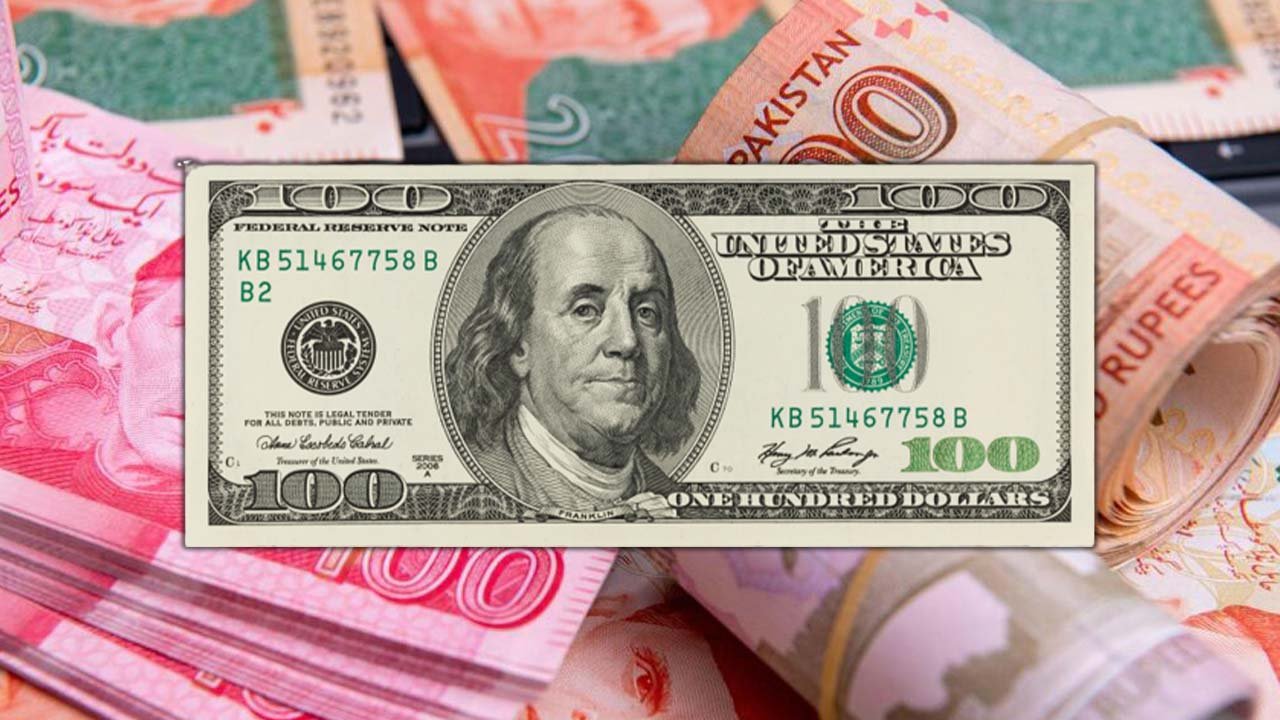
    As the political situation in the country worsens, the Pakistani rupee (PKR) touched an all-time low versus the US dollar on Monday during intraday activity in the interbank market.

    Data from the State Bank of Pakistan (SBP) show that during intraday trade, the PKR fell to Rs230 from a rate of Rs228.37.

    As local currency fell by over 8 per cent against the greenback in the most recent trading week, its foreign exchange reserves fell below $10 billion, and inflation reached its highest point in more than a decade, worries about the country’s ailing economy have grown.

    According to Geo, the acting governor of Pakistan’s central bank, Murtaza Syed, stated this in a recent speech to foreign investors: “Markets are responding to these shocks in an unfairly broad-brush way, without paying enough attention to Pakistan’s relative strengths.”

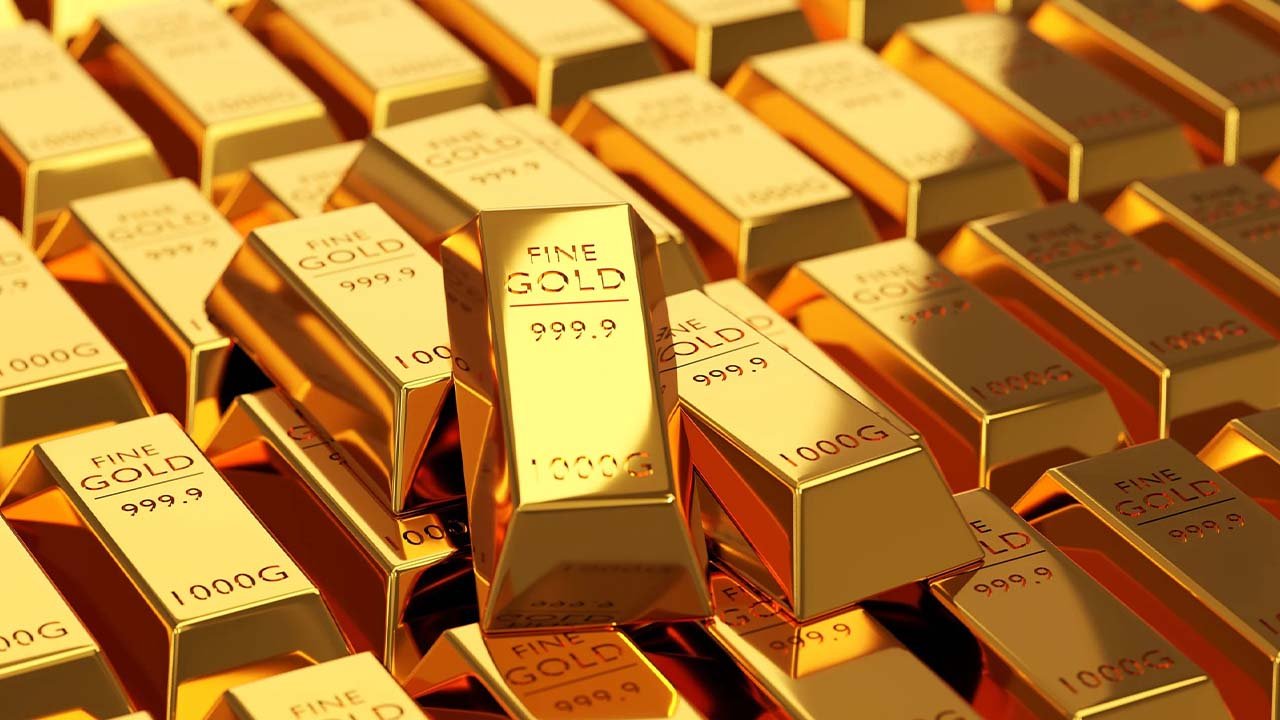
    On Monday, a tola of 24-karat gold costs Rs147,700 in Pakistan.

    10 grammes of 24 karat gold were priced at Rs126,700. A single tola of 22-karat gold was being offered for Rs135,391 while 10 grams of 22k gold was being traded for Rs116,141.

  • Pakistani rupee plunges to Rs227 against US dollar at midday trading

    Pakistani rupee plunges to Rs227 against US dollar at midday trading

    On Thursday, the rupee’s decline against the US dollar reached an all-time low of Rs227 in the interbank market.

    Experts blame the losses on political unrest and the fact that the dollar is bolstering against other currencies as well, according to DAWN. On Wednesday, the rupee had a closing value of Rs224.92.

    According to the Foreign Exchange Association of Pakistan (FAP), the local currency fell by Rs2.08 to Rs227 versus the US dollar when the session started today at 10:57 AM.

    According to experts, the country’s political unrest had reduced investor confidence, which had caused importers to worry and “unnecessarily” buy dollars from the market. He claimed that as a result, there was an increase in the interbank market’s demand for dollars.

    Furthermore, over the past week, the dollar’s value had increased against over 40 currencies, including the British pound and the Japanese yen, which had an impact on the local market’s use of the rupee, according to Bostan.

    After reaching Rs211.93 on June 22, the local currency climbed to Rs204.56 in the first week of July. When the country’s staff-level agreement with the international lender was reached on July 15, it briefly appreciated but again continued to depreciate against the US dollar.

  • Pakistani rupee fell by 34 per cent in FY 2021-22: Report

    Pakistani rupee fell by 34 per cent in FY 2021-22: Report

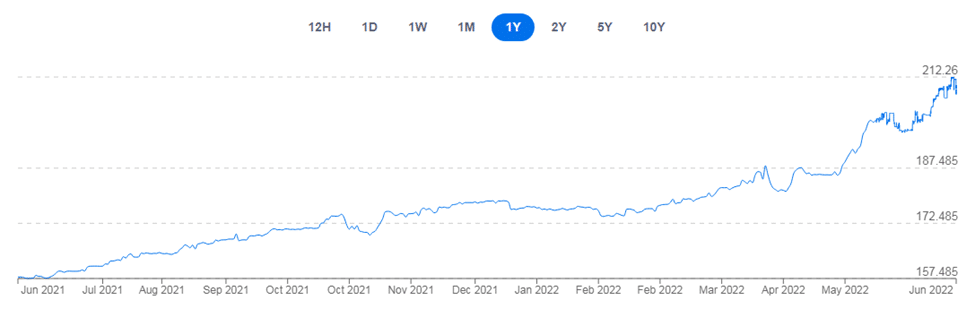
    Pakistan’s fiscal year starts on July 1st and ends on June 30th. The rupee to US dollar exchange rate was Rs158.06 at the beginning of fiscal year 2021-2022, and it reached an all-time high of Rs212.103 in the inter-bank market on June 21, 2022. This represents a depreciation of more than 34 per cent in less than a year.

    The graph below demonstrates how the PKR to USD exchange rate varied over time:

    During the fiscal year 2020-2021, the local currency plunged 17.47 per cent from Rs158.062 to Rs184.159 in 9 months, from July 1, 2022 to April 11, 2022, under the PTI regime. Since PDM took over, the rupee has lost nearly 14.31 per cent of its value in just three months.

    The table below compares PKR to dollar values over time, as well as the government in power at the time:

      PKR to Dollar Government
    July 2021 158.062 PTI
    August 2021 162.571 PTI
    September 2021 166.872 PTI
    October 2021 170.997 PTI
    November 2021 170.92 PTI
    December 2021 176.042 PTI
    January 2022 176.214 PTI
    February 2022 176.736 PTI
    March 2022 177.573 PTI
    April 2022 184.159 PTI and PDM
    May 2022 185.794 PDM
    June 2022 197.744 PDM
    June 23 2022 207.516 PDM

    Dollar demand remains strong in the market, pushing the greenback’s value higher against the rupee. The local currency is likely to remain volatile until the IMF agrees to disburse the next tranche of loans to Pakistan.

  • Gold surges to Rs147,250 per tola in local market

    Gold surges to Rs147,250 per tola in local market

    On Monday, gold prices in the local market rose by Rs1,450 per tola to a new all-time high, pushed up by the Pakistani currency’s continued depreciation against the US dollar.

    Despite no change in gold rates in the international market, gold rates in the local market increased to Rs147,250 per tola, according to data released by the All Sindh Saraf Jewelers Association. Similarly, the price of a gramme of gold increased by Rs1,243 to Rs126,243.

    However, gold prices on the international market remained unchanged at $1,840 per ounce.

    The price of silver per tola remained unchanged at Rs1,560. The price of a gramme of silver also remained unchanged at Rs1,337.44. When compared to rates in the Dubai gold market, local jewellers said prices in the local market remained below Rs3,000 per tola.

    Pakistani rupee dips to new lows

    Experts predict that the Pakistan rupee will continue to fall against the US dollar and other major currencies owing to concerns regarding the IMF’s $6 billion program’s restoration, the country’s expanding current account deficit, and dwindling foreign exchange reserves.

    The PKR which lost 32.5 per cent of its value in the current financial year 2021-22 is forecasted to remain under stress as the dollar is in high demand in the market due to economic crises.

    The central bank appears helpless to stem the rupee’s speculative fall, as demand for the US dollar continues to rise due to quarter-end payment strain.

  • Intra-day trade: Pakistani rupee touches Rs207.7 against US dollar

    Intra-day trade: Pakistani rupee touches Rs207.7 against US dollar

    In intra-day trade in the inter-bank market on Thursday, the local currency sank to Rs207.7 against the US dollar, continuing its downward trend.

    The rupee hit an all-time low against the dollar on Wednesday, closing at Rs206.46.

    This was partly due to the strengthening of the dollar on the international stage, but it was also due to the local currency market anticipating a greater increase in inflation.

    Finance Minister Miftah Ismail had previously stated that the government’s budget for 2022-23, which was announced last week, failed to persuade the International Monetary Fund (IMF) to disburse the next tranche of Pakistan’s $6 billion loan programme, and that changes to the finance bill would be required.

    The finance minister has declared unequivocally that the IMF is dissatisfied with the budget and that it will be revised.

    Experts believe that the rupee would only stabilise if the amendments are put into the Finance Act. He predicted that the local currency will remain volatile in the coming days.

    Pakistan’s government announced a third increase in petroleum prices in less than three weeks late Wednesday, as it tries to placate the IMF, which has emphasised the elimination of energy subsidies in order to resuscitate its bailout programme.

    The next payment of the IMF scheme is slated to give Pakistan $900 million, but the global lender has put the programme on hold due to a variety of circumstances, including fuel subsidies and a worsening current account deficit. It has also stated that greater direct taxes are required.

  • Pakistani rupee falls to a new all-time low of Rs205 against the US dollar

    Pakistani rupee falls to a new all-time low of Rs205 against the US dollar

    In the interbank market today, the Pakistani Rupee (PKR) plummeted below its previous record low versus the US Dollar (USD).

    The local currency lost Rs1.30 in the interbank market today, depreciating by 0.63 per cent against the US dollar and closing at Rs205.16. During today’s open market session, the local currency reached an intraday high of Rs203.75 versus the US dollar.

    The PKR was trading between Rs206 to Rs208 against the US dollar in the evening. The rupee’s devaluation was in line with market expectations, with traders expecting the local currency to fall even lower if Pakistan fails to persuade the International Monetary Fund (IMF) on its fiscal year 2022-23 budget.

    The Financial Action Task Force (FATF) meeting in Berlin, which starts today, is another reason that is likely to have influenced the FX market. On the 15th and 16th of June, issues concerning Pakistan will be discussed.

    In today’s interbank market, the PKR reversed gains versus the majority of major currencies. It fell 22 paisas against the Canadian dollar (CAD), 34 paisas against the Saudi riyal (SAR), 35 paisas against the UAE dirham (AED), 62 paisas against the British pound sterling (GBP), and Rs1.25 versus the Euro (EUR).

  • After five days of losses, British stocks holding firm

    After five days of losses, British stocks holding firm

    A day after economic slowdown fears dragged the major British stocks to their sixth straight session of losses, UK equities stabilised on Tuesday, with some positive momentum from financial sectors and some excellent earnings announcements.

    By 0712 GMT, the FTSE 100 had up 0.6 per cent, with shares in British bank HSBC up 2.6 per cent providing the biggest boost to the blue-chip index.

    Following volatile crude prices, oil majors BP Plc and Shell Plc climbed 1.5 per cent and 0.8 per cent, respectively.

    After finishing at its weakest level in more than three months on Monday, the domestically focused mid-cap FTSE 250 index gained 0.7 per cent. Paragon Banking increased by 4.7 per cent after raising its expectations for 2022 and indicating robust new lending growth.

    FirstGroup jumped 1.2 per cent when the transportation company reported a higher yearly profit and restarted dividend payments, as passenger numbers on its buses increased after COVID-19 limitations were relaxed.

    Crest Nicholson rose 6.1 per cent after projecting an adjusted profit before tax of between 135 and 140 million pounds for fiscal year 2022. In 2021, the housebuilder made an adjusted profit of 107.2 million pounds.

  • Pakistani rupee drops to Rs202 as market ambiguity extends

    Pakistani rupee drops to Rs202 as market ambiguity extends

    Pakistani currency slid to another historic low of Rs202 versus the US dollar on May 25 and lost ground in the interbank market.

    It fell 0.25 per cent against the US dollar today, closing at Rs201.92 after losing 51 paisas in the interbank market. During today’s open market session, the rupee hit an intraday low of Rs202.12 against the US dollar. In two weeks, the dollar has gained Rs15.23 against the rupee, and Rs18.98 since the new regime took power.

    The political situation in Pakistan also played a significant role in keeping the forex market on its toes, as players on both sides of the fence intensified their narratives against one another. Riots have broken out across the country after the month-old government shut down roads leading to Islamabad, where former Prime Minister Imran Khan’s party is planning a large rally calling for the removal of the incumbent and immediate general elections.

    International oil prices maintained Monday’s gains as concerns about tight global supply continued to outweigh short-term trade forecasts. Brent crude rose to $114 per barrel, while West Texas Intermediate (WTI) crude in the United States rose to $111.

    Today, the PKR fell further against the majority of the other major currencies in the interbank market. It fell two paisas against the Pound Sterling (GBP), 13 paisas against the Saudi Riyal (SAR), and 38 paisas against the Australian Dollar (AUD).

    In today’s interbank currency market, it gained 12 paisas against the Canadian Dollar (CAD) and 17 paisas against the Euro (EUR).

    It is worth noting that the PKR reported losses against the greenback for the fourteenth day in a row.

  • Gold prices in Pakistan hit historic high of Rs143,600 per tola

    Gold prices in Pakistan hit historic high of Rs143,600 per tola

    Gold prices in Pakistan continued to rise as the Pakistani currency fell deeper versus the US dollar, pushing the precious metal to a high of Rs143,600 per tola.

    The price of gold per tola increased by Rs1,950 per tola, as per the All Sindh Sarafa Jewellers Association (ASSJA). Moreover, the price per 10 gramme jumped by Rs1,672 to Rs123,114.

    Following yesterday’s gain of Rs1,950 per tola, the gold price has risen by Rs5,250 in the last four days (Friday-Tuesday).

    During the current economic crisis, gold has resurfaced as a secure investment, and consumers have been eagerly buying gold to preserve their savings against inflation.

    The rupee’s collapse, which reached an all-time low of Rs201.41 versus the US dollar in the interbank market, compelled the gold trading body to drastically raise the bullion price.

    The price of yellow metal fell by $4 per ounce on the international market to settle at $1,858. When compared to the Dubai market, gold prices in Pakistan are roughly Rs1,500 lower.

  • Govt bans import of ‘luxury items’ to fight economic crisis

    Govt bans import of ‘luxury items’ to fight economic crisis

    For the first time in Pakistan, luxury or non-essential commodities have been completely banned in the country to help the nation emerge from its financial crisis. Minister of Information Marriyum Aurangzeb confirmed the economic strategy established by the federal government on Thursday.

    The Information Minister stated that this is an emergency situation and Pakistanis will have to make sacrifices under the economic plan. This will have a quick impact on foreign reserves. The ban will have an impact of $6 billion.

    Aurangzeb went on to say that the government’s priority was to cut imports, thus it was going to implement an export-oriented policy that would help local industry and producers.

    Prime Minister (PM) Shehbaz Sharif is working “day and night” to stabilise the economy, according to the information minister, and has decided to ban the import of all commodities that are not in common use.

    Food, decorating, and luxury automobiles were among the imports, according to Aurangzeb, who emphasised that the country was in a “difficult economic condition” as a result of the previous government’s policies.

    Here’s a detailed list of banned goods:

    1. Cars
    2. Mobile phones
    3. Home appliances
    4. Private weapons and ammunition
    5. Fruits and dry fruits (except Afghanistan)
    6. Crockery
    7. Shoes
    8. Chandeliers and lighting (except energy savers)
    9. Headphones and loudspeakers
    10. Sauces, ketchup etc.
    11. Doors and window frames
    12. Travelling bags and suitcases
    13. Sanitary ware
    14. Fish and frozen fish
    15. Carpets (except Afghanistan)
    16. Preserved fruits
    17. Tissue paper
    18. Furniture
    19. Shampoos
    20. Confectionary
    21. Luxury mattresses and sleeping bags
    22. Jams and jelly
    23. Cornflakes
    24. Bathroom ware/toiletries
    25. Heaters/blowers
    26. Sunglasses
    27. Kitchenware
    28. Aerated water
    29. Frozen meat
    30. Juices
    31. Pasta etc
    32. Ice cream
    33. Cigarettes
    34. Shaving goods
    35. Luxury leather apparel
    36. Musical instruments
    37. Saloon items like hairdryers etc.
    38. Chocolates

    The declaration, according to the information minister, is part of the present government’s fiscal plan to combat the PTI’s incompetent policies.

    Aurangzeb chastised the PTI for criticising the incumbent administration over the country’s economic woes, claiming that the Imran Khan-led government had raised inflation, taken historic debts, committed “economic terrorism,” and manipulated the economy by subsidising gasoline prices.

    By subsidising the price of petroleum goods, the PTI administration broke its agreement with the International Monetary Fund (IMF), according to the Information Minister.

    Via: Geo