Tag: decline

  • Netflix loses 200,000 subscribers in Q1 2022, projects deeper losses in Q2

    Netflix loses 200,000 subscribers in Q1 2022, projects deeper losses in Q2

    Netflix lost 200,000 clientele in the most recent quarter, a significant loss for the streaming titan which has enjoyed exponential user growth over the previous decade. The company revealed that it fell far short of its own low estimates of 2.5 million new users by the start of 2022.

    Except for the Asia Pacific market, where it witnessed a net gain of almost 1 million customers, the streaming giant lost users in nearly every region.

    Netflix lost roughly 640,000 subscribers in the United States and Canada in the first quarter, a higher decline than its prior subscriber loss in the region last year, and 300,000 in Europe, the Middle East, and Africa, and 350,000 in Latin America.

    The decline is projected to continue into the second quarter when Netflix expects to lose another 2 million customers.

    Netflix co-CEO Reed Hastings stated in a pre-recorded interview that the company will look into creating an ad-supported tier in the “next year or two” – a move that Netflix officials had previously opposed.

    “Those who have followed Netflix know that I have been a vocal opponent of advertising complexity and a strong supporter of subscription simplicity. But, as much as I enjoy that, I prefer consumer choice, and letting consumers who want a lower price and are tolerant of advertisements to obtain what they want makes a lot of sense,” Hastings added. “Think of us as being fairly open to delivering even lower costs as a consumer choice with advertising”.

    .According to CFO Spencer Neumann, the streamer will also draw back some of its content investment over the next two years in order to boost revenue growth. During the pre-recorded interview, Neumann added, “We’re cutting back on some of our spend increases across both content and non-content expenditure and we’re trying to be wise and sensible about it, reining in some of that expenditure increase to match the realities of the business’s revenue growth”.

    Due to the company’s poor performance in Q4 and lowered estimates for the first quarter, Wall Street had low expectations for Netflix going into Tuesday’s earnings. Netflix’s move to cease service in Russia, where the streamer claims to have 700,000 customers, was also expected to have an impact on subscriber growth.

    Read more: Samsung Galaxy S23 to launch with high capacity battery, inspired by electric vehicles

    Netflix said in its shareholder letter that it would have added 500,000 customers in the first quarter if the losses in Russia were not taken into account.

    However, Netflix attributed its slowing growth in Q1 to a number of issues, including account sharing, the pandemic’s prolonged disruption, and, once again, greater competition from competing streamers.

    Netflix revealed in a shareholder letter on Tuesday that more than 100 million of its 222 million paid subscriptions were pooled with viewers outside of paying customers, with 30 million shared accounts in the US and Canada alone.

  • PKR continues losing streak against US dollar, sheds Rs1.48

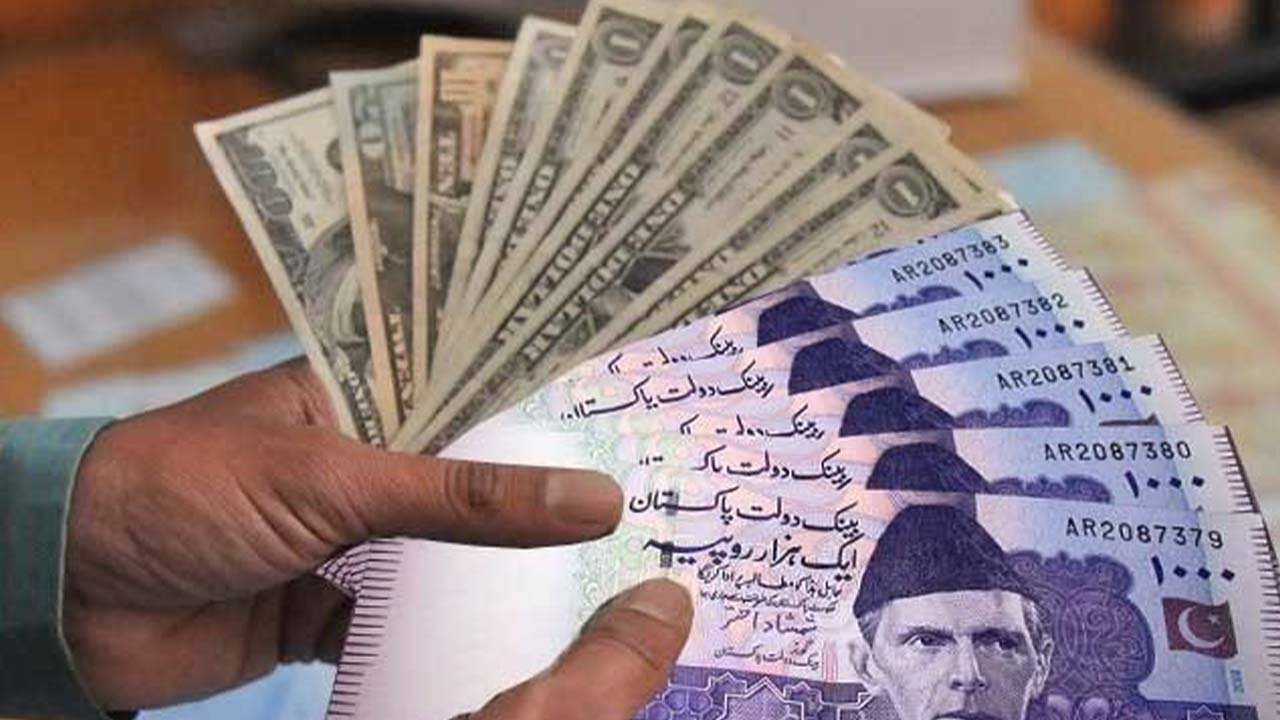
    PKR continues losing streak against US dollar, sheds Rs1.48

    The Pakistani currency plummeted further against the US Dollar (USD) on April 20, with losses reported on the interbank exchange. At the completion of today’s session, the Pakistani rupee (PKR) lost Rs1.48 versus the US dollar.

    It declined by 0.80 per cent versus the greenback, closing at Rs185.92, after shedding Rs1.90 in the interbank market on Tuesday, April 19th, and concluding at Rs184.44. During today’s open market session, the Indian rupee (INR) fell to an intraday low of Rs185.95 over the US dollar.

    The local currency weakened against the dollar as businesses remained under pressure amid the ongoing dialogue between Pakistan and the International Monetary Fund (IMF). The Pakistani government is likely to undertake certain difficult and problematic steps in order to revive the local economy.

    Read more: PKR declines against US Dollar after winning for a week

    Oil prices rallied following steep losses the previous day as concerns about tighter supply from Russia and Libya arose, although industry data showed a decline in US crude inventories in the previous week.

  • Pakistan’s cotton fabric trade climbed by 28.23 per cent

    Pakistan’s cotton fabric trade climbed by 28.23 per cent

    In the first eight months of the fiscal year 2021-22, Pakistan’s textile and garment exports grew to $1.65 billion. The Pakistan Bureau of Statistics (PBS) estimates that the textile and apparel sector brought in $12.607 billion this time, compared to $ 9.999 billion in exports from July to February 2020-21.

    Knitwear exports surged by 33.86 per cent to $3.302 billion on a year-over-year (YoY) basis, while non-knit readymade clothes trade increased by 25.11 per cent to $2.516 billion. Additionally, cotton yarn exports increased by 34.40 per cent to $815.375 million, up from $606.690 million the previous year.

    Cotton fabric trade climbed by 28.23 per cent in 2022, reaching $1.584 billion in value. Also, over the eight months of 2021-22, the distribution of bed clothing jumped by 20.34 per cent.

    The industry has engaged in synthetic fiber imports, which increased by 31.65 per cent from July to February 2021-22, and the cost of artificial silk yarn soared by $ 569.256 million.

    Consequently, the value of textile machinery in Pakistan has climbed dramatically over the last eight months, reaching $577.249 million.

    Read more: SBP determined to curb inflation, improve foreign exchange reserves

    For those unaware, Pakistan’s textile sector has the capacity to generate $30 billion in annual revenue. The country’s leaders and economic experts should assess the existing economic situation and devise an effective economic strategy to boost textile exports.

    To summarise, the industry has tremendous potential and can significantly contribute to the country’s economic success by providing job opportunities. Which could help the country’s GDP and GNP grow even more.

  • US Dollar continues to slide, reaches Rs183

    US Dollar continues to slide, reaches Rs183

    The US Dollar fell by Rs1.43 shortly after the interbank market opened, and is now being traded at Rs183.25.

    Following days of depreciation, the Pakistani rupee (PKR) rebounded against the US dollar in the interbank market on April 11, signaling that the currency value is stabilizing.

    On Friday, the Pakistan Stock Exchange (PSX) index KSE-100 reversed course and experienced an uptrend, adding 657.75 points, or 1.50 per cent, to close at 44,444.58 points, up from 43,786.83 points the previous working day.

    The KSE-100 index began on Monday morning to strong investor optimism, following a historic weekend in which Imran Khan became the first prime minister in Pakistan’s history to be removed by a vote of no confidence, putting an end to the country’s ongoing political crisis.

    According to foreign currency dealers, the greenback is now selling at Rs183.20, after weakening Rs1.83 versus the PKR in early trade.

  • SBP determined to curb inflation, improve foreign exchange reserves

    SBP determined to curb inflation, improve foreign exchange reserves

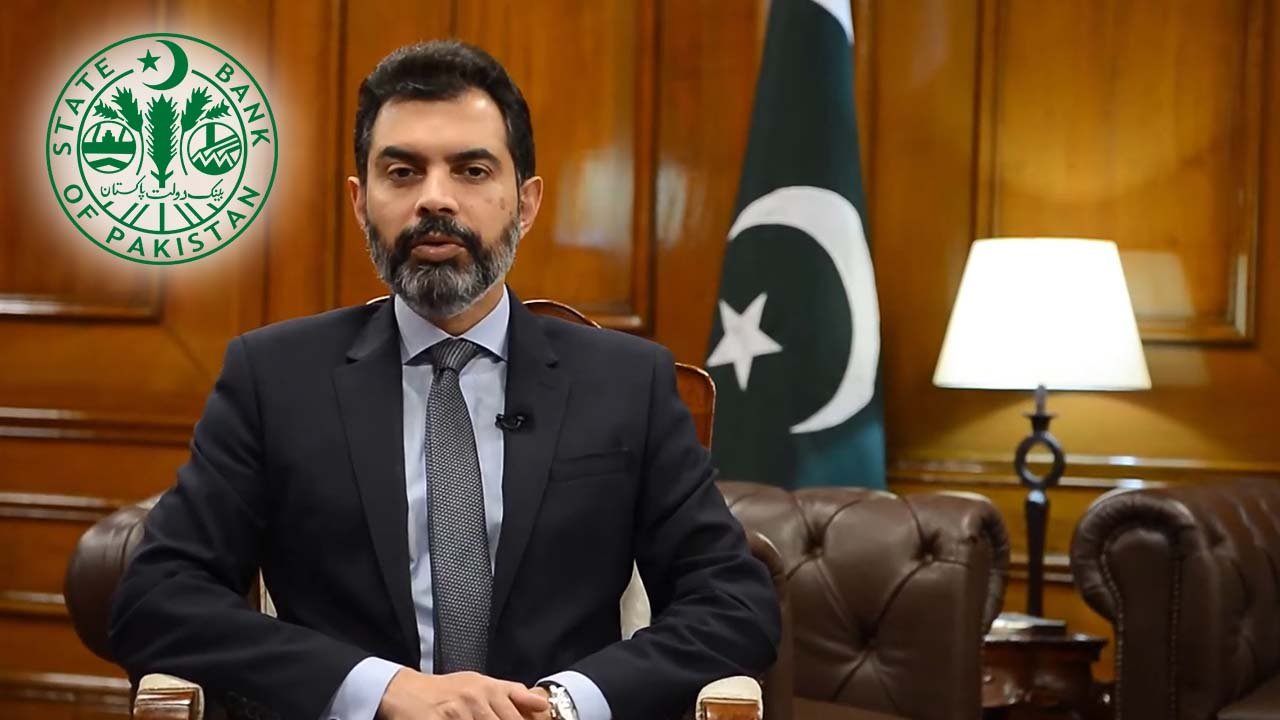
    In a recent interview, the Governor of the State Bank of Pakistan (SBP), Dr. Reza Baqir expressed concern over the continuous deterioration in foreign exchange reserves but remained optimistic that a renewal of loans will be witnessed in the near future, which, coupled with SBP’s initiatives, will enhance market confidence.

    He claimed that the decline in reserves is “clearly alarming, but we are convinced that the central bank’s initiatives will prevent further deterioration”.

    According to data issued by the central bank on April 7, the reserves massively declined by $728 million to $11.32 billion as of April 1.

    The decline, according to SBP, is primarily attributable to debt repayment and government payments linked to the settling of an arbitration judgment.

    In addition to this, the currency even hit new lows in the week, forcing the SBP to intervene by boosting the policy rate, declaring a 100 per cent cash margin on 177 commodities with instant effect, and hiking the markup percentage by 2.5 per cent for borrowing under the Export Finance Scheme (EFS).

    In response to the Monetary Policy Committee’s (MPC) recent rate hike, Baqir stated that the move was made to tackle growing inflation and lessen external pressures. “The foreign exchange market has been under a lot of pressure for more than a month. A number of factors contributed to it: first, there was political uncertainty; second, our reserves were drained due to debt payments”.

    Consequently, the Pakistani rupee ended its devaluation run on April 8, and the KSE-100 Index witnessed positive sentiment, ending the day with an impressive gain of 658 points.

    The SBP Governor also discussed the skyrocketing petrol prices, which remain elevated because of the Russia-Ukraine conflict, adding more pressure on the local currency.

    The central bank made a determined decision after analyzing the statistics to lower inflation, improve foreign exchange reserves, and boost business confidence.

  • PKR closed at 184.09 against USD, the lowest level in history

    PKR closed at 184.09 against USD, the lowest level in history

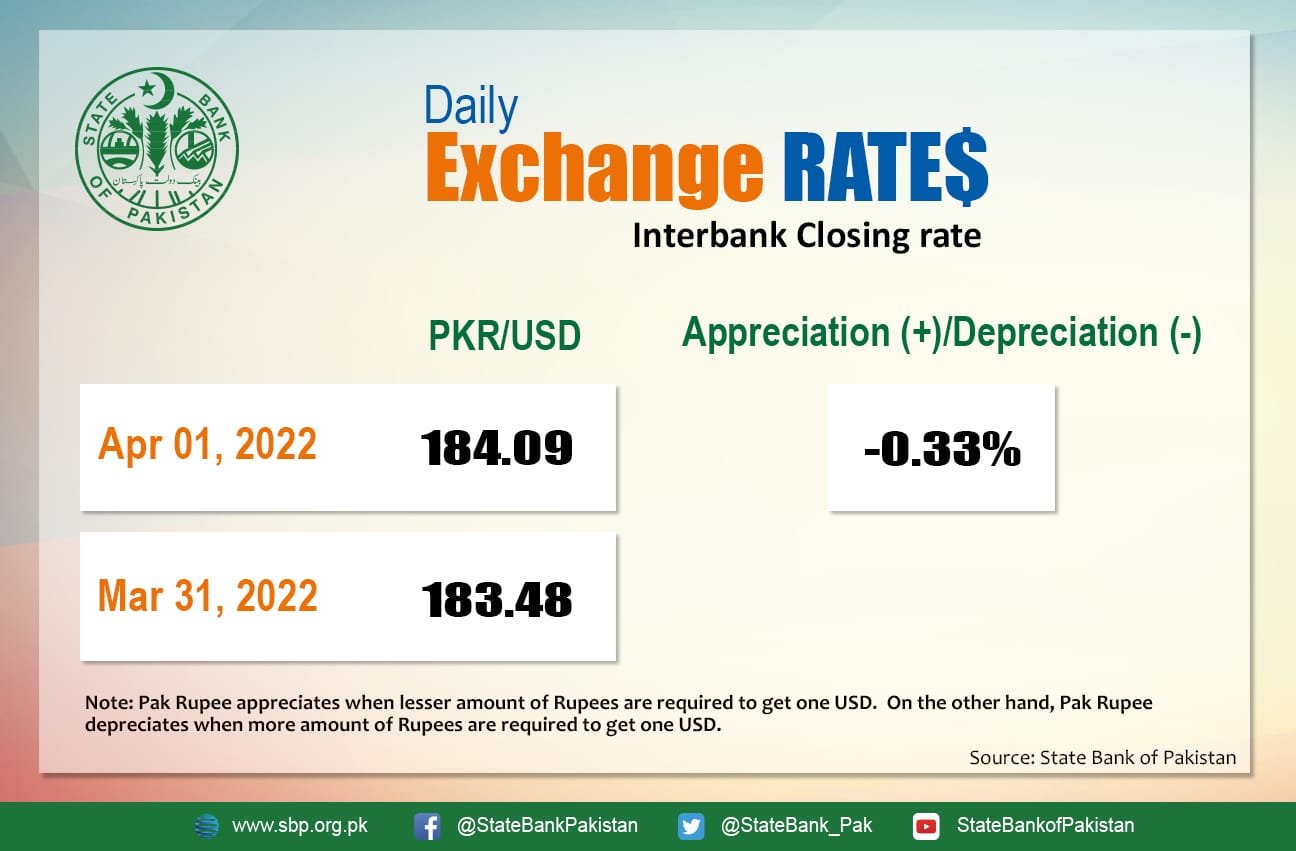
    A substantial decline in foreign exchange reserves, persistent political instability, and hefty petroleum costs dragged Pakistan’s currency (PKR) to new lows on Friday, with the rupee closing over the 184 level for the first time against the US dollar following a 0.33 per cent drop in the interbank market. 

    After a day-on-day devaluation of 61 paisas, the PKR closed at 184.09, its lowest level recorded, according to the State Bank of Pakistan (SBP).

    Since its most recent peak in May of last year, the PKR has lost over 17 per cent, while the local currency has devalued by over 14 per cent in the fiscal year to date (FYTD).

    The last time the PKR rose versus the US dollar (during its most recent weakening run) was on March 11. It has dropped in 13 sessions since that while staying stable in the remaining.

    Moreover, the State Bank of Pakistan’s (SBP) reserves also fell by $2.915 billion, to $12.05 billion, according to figures issued by the central bank on Thursday.

  • Pakistani rupee continues its record-breaking decline against the US Dollar

    Pakistani rupee continues its record-breaking decline against the US Dollar

    The Pakistani Rupee (PKR) continued its decline against the US Dollar (USD) today, reporting losses in the interbank market. At the close of the session today, the local currency lost 30 paisas against the US dollar.

    It fell 0.16 percent against the US dollar, closing at Rs182.64 after losing 30 paisas and closing at Rs182.34 in the interbank market on Tuesday, March 29.

    Pakistan’s ongoing political volatility and economic problems continue to weaken currency reserves as the country attempts to remove obstacles toward financial relief.

    After global oil prices surged on Monday, the PKR maintained its downward trend against the greenback.

    The rupee has lost about 17 per cent of its value since its last peak in May 2021. To date, the local currency has lost more than 13.6 per cent of its value.

    It is worth noting that the Pakistani currency depreciated 30.5 per cent against the US dollar in the last three years under the government of Prime Minister (PM) Imran Khan.