Tag: Default

  • Nearing default and lying about phone calls? Not good Pakistan, says IMF

    Nearing default and lying about phone calls? Not good Pakistan, says IMF

    The International Monetary Fund (IMF) stated on Sunday that Managing Director Kristalina Georgieva and Prime Minister Shehbaz Sharif spoke on the latter’s request, a claim that suggests Islamabad has continued to engage in politics while being on the verge of default.

    “The call took place in response to a request by the Prime Minister of Pakistan to discuss the International Conference on resilient Pakistan,” Esther Perez, the resident representative of the IMF told The Express Tribune.

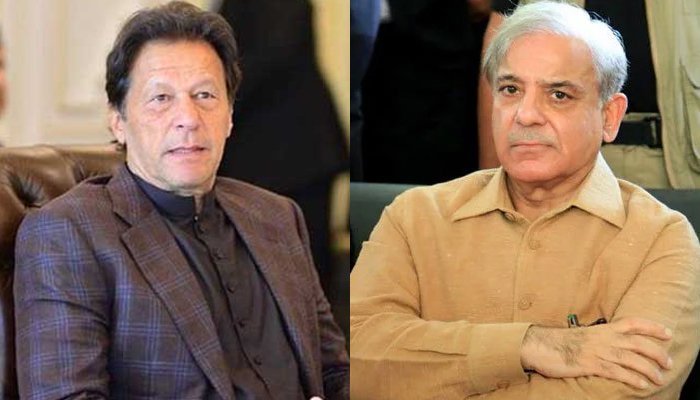
    On Friday, the PM’s office issued an official handout stating that “the IMF managing director phoned premier Shehbaz on the phone” following his address at the Hazara Electric Supply Company’s (HAZECO) inaugural ceremony. The PM had also stated in his address that the managing director of the Fund had called him.

    As the country makes dubious claims of strength and has just $4.5 billion in foreign exchange reserves, it appears that the administration is still not ready to change its ways.

    Only three weeks’ worth of imports may be covered using the remaining funds. Pakistan has paid back $8.5 billion in debt during the past three months (January through March). Included in this is a $2 billion loan to the UAE for which the government is attempting to obtain a rollover.

    Given the long-standing animosity between the two parties, such factually erroneous claims might make it harder for Pakistan to persuade the IMF.

    Due to its propensity to make pledges while receiving a loan tranche but then break them after the tranche has been released, the country has had a rough history with the IMF. This has led to a significant gap.

    A spokesperson of the IMF in a statement to the media also said that “the Managing Director had a constructive call with Prime Minister Sharif in the context of the International Conference on Resilient Pakistan to be held in Geneva on Monday, January 9.”

    The MD once more conveyed her sympathies to those who were directly impacted by the floods, and it was also said that she backed Pakistan’s attempts to create a more robust recovery.

    Additionally, the PM asserted on Friday that an IMF delegation will visit Pakistan in a matter of two to three days.

    “I asked her to send an IMF team for the completion of the pending 9th review of the programme so that the next loan tranche is released. She assured that the mission will visit [Pakistan] in the next two to three days,” Shehbaz had said.

    However, in its statement to the media, the IMF spokesperson said that the IMF “delegation is expected to meet with Finance Minister Ishaq Dar on the sidelines of the Geneva conference to discuss outstanding issues and the path forward”.

    The self-claimed deadline, which ends on Monday, for the 9th review mission’s arrival in Pakistan was not mentioned in the statement.

    On Saturday, it was revealed that due to significant debt repayments, Pakistan’s official foreign exchange reserves have for the first time dropped to a perilous level of $4.5 billion.

    The sources in the finance ministry also stated that no dates for the IMF review mission had been decided upon as of the PM’s address.

    Additionally, the prime minister said that Georgieva had asked if Saudi Arabia and China were aiding Pakistan.

    After thereafter, Pakistan’s interior minister Rana Sanullah said that even foreign countries won’t assist without the IMF’s protection.

    “If we back out from these [IMF] conditionalities, then our economic survival will become next to impossible and even our friendly countries cannot extend financial help to us,” Sanaullah had said in Faisalabad.

    The interior minister had said that if the current administration tried to adhere to the strict requirements of the IMF, inflation would soar, prices would soar, and the economy would suffer.

    Since the 9th review negotiations between Islamabad and the Fund have not concluded as of yet, a $1.1 billion loan tranche has been withheld.

    In order for the World Bank and the Asian Infrastructure Investment Bank (AIIB) to disburse their funds, Pakistan is eager to finish the ninth review.

    Disagreements about import restrictions, currency rate regulations, demands for the imposition of more taxes, and raising energy costs to pay off over Rs500 billion in circular debts have caused the discussions to be postponed.
  • Plans of long-term caretaker govt in pipeline, claims journalist

    Plans of long-term caretaker govt in pipeline, claims journalist

    News anchor Meher Bokhari in her programme ‘Program Hum Meher Bokhari Kay Sath’ on Hum News has claimed that a crucial meeting has taken place where plans of installing a long caretaker government in Pakistan have been discussed.

    She said that considering the worsening economic conditions in the country, the caretaker government can be in place for six months or even two years, emphasising that the situation has slipped out of politicians’ hands.

    During her show, she pointed out that the incumbent government has failed to steer the country out of the economic crisis, despite making promises to do so. Moreover, she said that since the takeover of the coalition government, the dollar value rose exponentially, plunging the country into economic disaster.

    She highlighted Pakistan’s failure to get the next International Monetary Fund’s (IMF) tranche and the reluctance of friendly countries to help Pakistan.

    Reacting to the journalist’s claims, Pakistan Tehreek-e-Insaf (PTI) senior leader Fawad Chaudhry termed it a “stupidity”, stressing that the “country’s crisis is more political than economic”.

    In a tweet, he said that these are “schemes” to keep Imran Khan out of politics but are not in Pakistan’s favour. Terming general elections as the only solution to the country’s problems, he added that PTI will resist the move of forming a technocrat government.

    However, Finance Minister Ishaq Dar on Wednesday assured the Pakistan Stock Exchange (PSX) that the country will not default but admitted that the economy is in a “tight position”.

    “It’s been three months since I took charge. We hear every day that we will default. How will there be a default? There is no chance that Pakistan will default,” the finance minister said.

    It should be noted that the financial situation in the country is perilous with inflation at the highest levels in recent years. A day earlier, the price of gold rose by Rs4,500 to a fresh all-time high of Rs182,700 per tola. The price of gold has increased by more than Rs20,000 per tola since the beginning of December.

  • ‘Not a Banana republic’: Ahsan Iqbal hits out at people saying that Pakistan is going to default

    ‘Not a Banana republic’: Ahsan Iqbal hits out at people saying that Pakistan is going to default

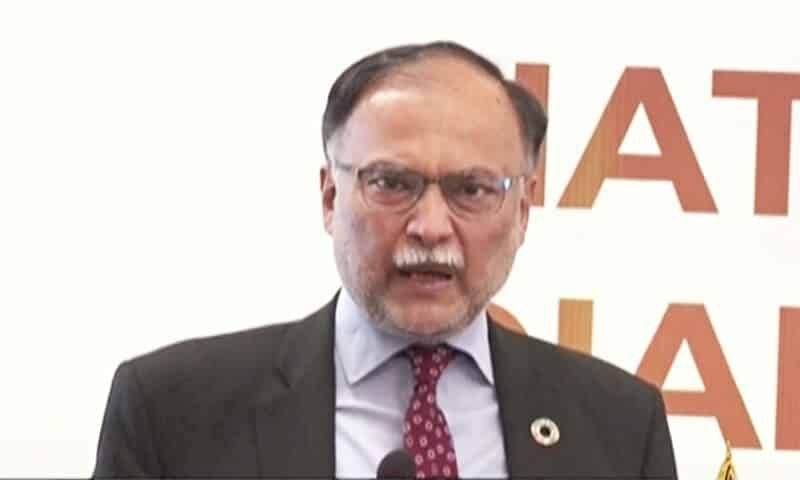
    Federal Minister for Planning Ahsan Iqbal has hit out at speculation that Pakistan is going to default.

    Talking to Geo News’ programme ‘Aaj Shahzeb Khanzada kay Sath‘, he said, “Pakistan is not Africa’s banana republic. We have a large economy. Voices saying that the country is heading towards default shouldn’t come from inside of Pakistan.”

    The federal minister said that when people were saying Pakistan is going to default in two weeks, the coalition government took tough decisions to pull the country out of danger.

    He also took a jibe at the rival party— Pakistan Tehreek-e-Insaf (PTI)— accusing the former ruling party of building the narrative that Pakistan is going to default.

    “Even India is not speculating about Pakistan’s financial crisis but PTI and Imran Khan have launched a war against the country,” he pointed out.

    The federal minister also claimed that 80 per cent of Pakistan’s total debt was taken during Imran Khan’s tenure, which the current government has to handle now.

    He reiterated his government’s commitment to the International Monetary Fund (IMF) programme but added that the administration is trying to minimise the burden on people as inflation is already at a historic high and Pakistan has just suffered a natural disaster that caused damages worth $30 billion.

  • ‘Imran Khan nay Pakistan ki izzat ko khaak mein mila diya’:PM Shehbaz

    ‘Imran Khan nay Pakistan ki izzat ko khaak mein mila diya’:PM Shehbaz

    Prime Minister Shehbaz Sharif on Monday said that Pakistan Tehreek-e-Insaf (PTI) Chairman Imran Khan destroyed the respect that Pakistan had.

    Talking about the economic situation of Pakistan, PM Shehbaz said that when he took over as the premier of Pakistan, the country was on the brink of default.

    He said that the ruling coalition saved Pakistan from default with the help of friendly countries.

    The Premier said that the government will not tolerate rise in terrorist attacks and vowed to crush it by developing liaison between government and law enforcement agencies (LEAs).

    He assured the people of Pakistan that the coalition government will rescue them from economic quagmire.

    PM Shehbaz also accused Imran Khan’s government of neglecting the western route of the China Pakistan Economic Corridor (CPEC).

  • Aanay waalay dinon mein koyi barra toofaan barpa ho sakta hai: Hamid Mir

    Aanay waalay dinon mein koyi barra toofaan barpa ho sakta hai: Hamid Mir

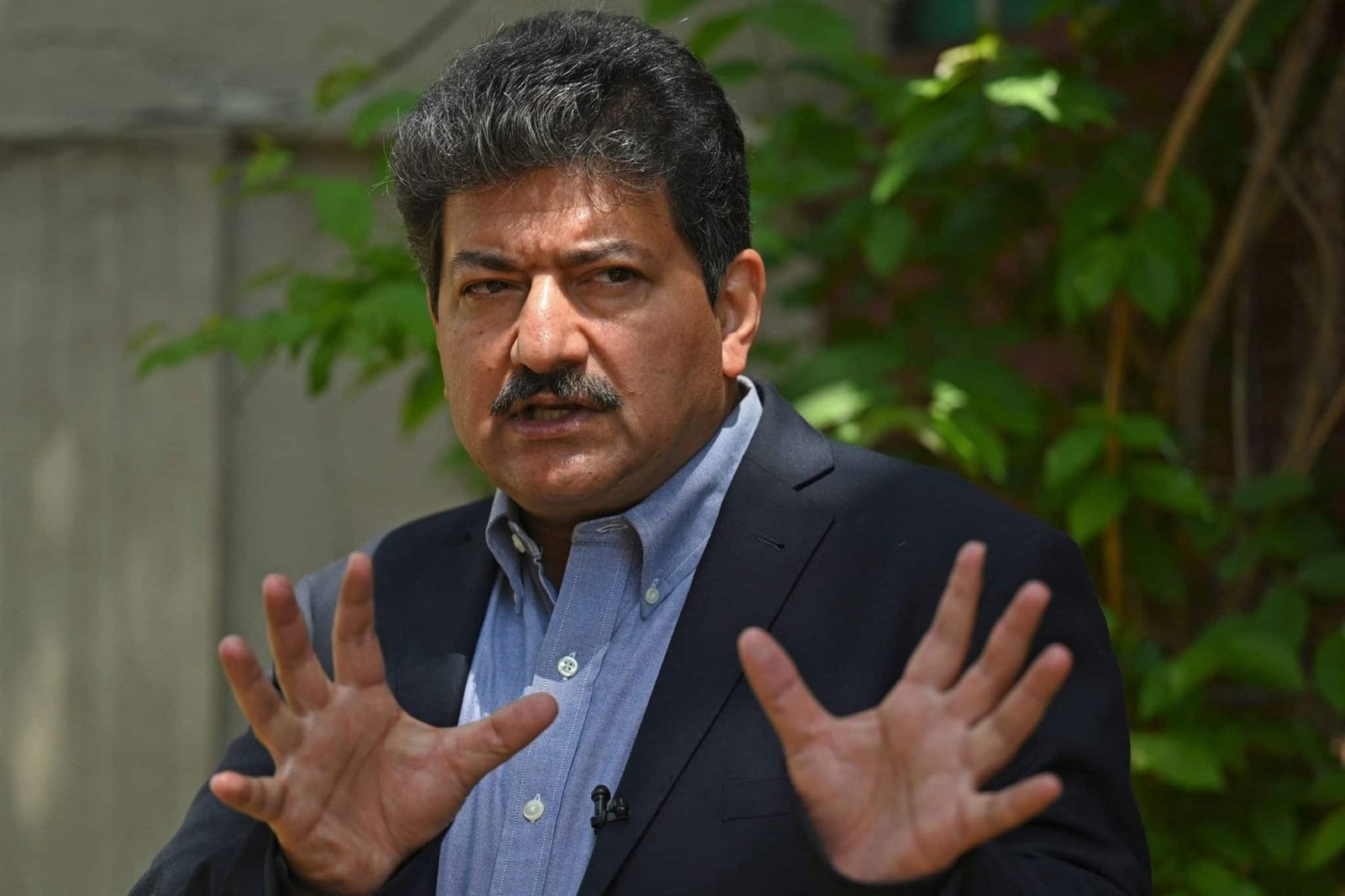
    Senior journalist Hamid Mir has warned that all is not well in Islamabad and a big storm may hit the corridors of power in the near future.

    While speaking on Geo News’ programme Geo Pakistan, Mir said, “Maujooda haqoomti ittehaad mein sab kuch acha nahin hai aur Islamabad mein honay waali siyaasi garma garmi aanay waalay dinon mein koyi barra toofaan barpa kar sakti hai” (All is not well within the incumbent coalition government. The political heat in Islamabad could create a big storm in the coming days).

    Mir said that if Pakistan Tehreek-e-Insaf (PTI) Chairman Imran Khan dissolves the Khyber Pakhtunkhwa (KP) and Punjab Assembly, then the heat in Islamabad can create a huge storm.

    He was of the view that junior coalition parties could also force Prime Minister (PM) Shehbaz Sharif’s government to hold general elections.

    Separately, differences can also be seen within Pakistan Muslim League-Nawaz (PML-N) as Finance Minister Ishaq Dar and his predecessor Miftah Ismail put forward their conflicting views on the state of Pakistan’s economy.

    While Dar argued that the country’s performance criteria are up to the mark and “complete” for the International Mone­tary Fund’s (IMF) ninth review, Ismail insisted that the default risk wouldn’t subside unless the Fund came to the table.

    Mulk mein default ka khatra hai, says Miftah Ismail

    Miftah Ismail said on Tuesday that there is still a threat of the country defaulting until the government completes the IMF ninth review. On the contrary, Dar said that he was not concerned whether the IMF team arrived or not for the ninth review, asserting that the IMF could “not dictate” the government.

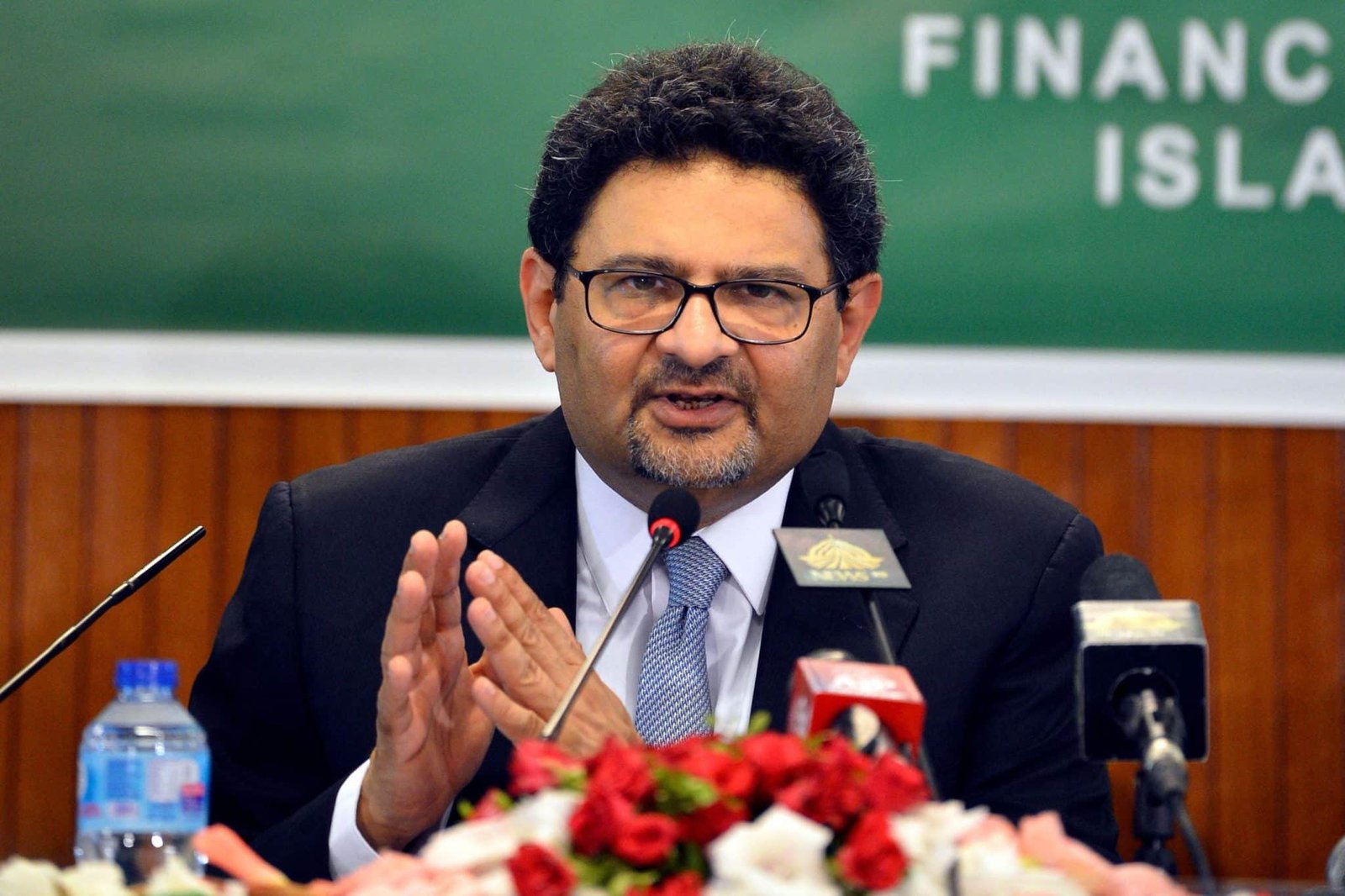
    Appearing on Geo News’ programme ‘Aaj Shahzeb Khanzada Kay Saath”, Miftah rang alarm bells, stating that Pakistan is in jeopardy. “It has gone back in jeopardy and as long as IMF is not back on the table, the threat of default will remain high,” he emphasised.

    Moreover, he believed that the path Pakistan is on might take the country toward default urging the incumbent government to take steps to prevent that from happening.

    On the show, the former minister blamed Khan for the ongoing economic crisis. He said, “Khan is responsible for pushing Pakistan towards default; he is the one who broke his promise with the IMF; Khan is the one who wanted to derail the IMF programme when we tried to revive it under PM Shehbaz Sharif’s leadership.”

    When asked that the incumbent finance minister Ishaq Dar has said several times that IMF is being unreasonable, Miftah responded that first we need to take a good look at ourselves.

    “When the IMF gives you a loan, this means they are helping you out. We need to look at ourselves, why did we go to the IMF previously. Dealing with the IMF is not an easy task,” Miftah said. He reiterated that if the IMF didn’t come to the table, “It will be very difficult to save Pakistan from a default”.

    He stressed that the country needed to take action on certain matters to bring the IMF mission to Pakistan, saying that funds from neighbouring countries could only last the country for weeks.

    Earlier this month, Pakistan ended its immediate default risk when the State Bank of Pakistan (SBP) made a payment of $1 billion for sukuk bond.

  • Pakistan’s default risk hits a 13-year-high, reflecting foreign investors’ lack of faith

    Pakistan’s default risk hits a 13-year-high, reflecting foreign investors’ lack of faith

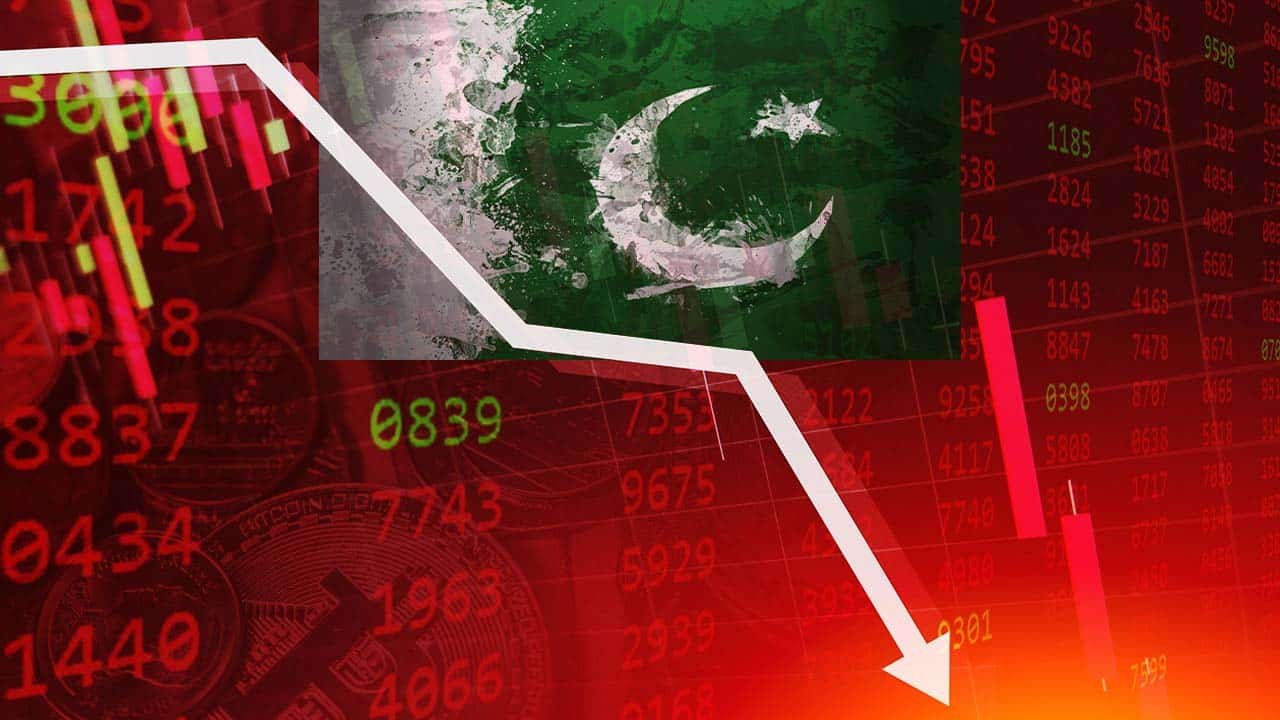
    The risk of default for Pakistan, as determined by the 5-year credit default swap (CDS), increased on Tuesday by 3.07 percentage points in a single day to reach a 13-year high of 52.8 per cent, indicating that foreign investors no longer have confidence in the nation.

    Before the Covid-19 outbreak in Pakistan in February 2020, the CDS was between 5 per cent and 6 per cent.

    According to Express Tribune, owing to uncertainties surrounding the renewal of the International Monetary Fund (IMF) loan programme, it peaked at over 30 per cent in the middle of this year.

    Later, as the major lender resumed its $6.5 billion programme in late August 2022 and subsequently released a $1.2 billion tranche, the CDS experienced a small recovery.

    Today, meanwhile, it is rapidly rising once more, indicating that international investors now believe Pakistan will not be able to pay back its maturing debt.

    On December 5, 2022, the country is required to repay $1 billion to overseas investors against the maturity of the 5-year Sukuk.

    The 5-year Third Pakistan International Sukuk’s yield (rate of return) is quite high, hovering at 145 per cent. Before the Covid-19 epidemic, it was around 10 per cent.

    In addition, the yield on bonds due in 2024 and 2025 is currently high at 90 per cent and 57.5 per cent, respectively, up from a low of 10 per cent in the past.

    The country’s foreign exchange reserves have decreased by about $9 billion over the past 10 months, which has caused alarm among the foreign investors.

    They are currently only covering about 1.10 months’ worth of imports at $7.6 billion, down from $20 billion (three months’ worth of imports) in August 2021.

    Ishaq Dar, the finance minister, and Miftah Ismail, his predecessor, have taken every precaution to avoid the likely default.

    They have repeatedly reassured the foreign investors that when the time came, the nation would easily repay the maturing $1 billion in December as well as fulfil other international payment obligations.

    Foreign investors are receiving warnings from the situation that the nation may default.

    However, the leadership of the nation has fully secured the $36–40 billion needed from international lenders for the current fiscal year 2023 to pay off the nation’s approximately $21 billion in foreign debt, finance approximately $10–12 billion current account deficit, and increase its foreign exchange reserves to approximately $16 billion by June 30.

    According to experts, the country’s foreign exchange reserves will increase and confidence among foreign investors will be restored with the arrival of $1.5 billion from the Asian Development Bank (ADB) in a few days and another $500 million from the Asian Infrastructure Investment Bank (AIIB) in the current month.

    They continued by saying that the inflows should also aid in lowering bond and CDS yields.

    Experts said that Saudi Arabia was the destination of Prime Minister Shehbaz Sharif’s official visit. The host nation has declared that it is resuming its investment ambitions, which include establishing an oil refinery in Pakistan for an investment of $10 billion.

    The Kingdom’s investment choice coming to fruition will also aid in regaining the trust of foreign investors in Pakistan.

    When PM Shehbaz travels to the second-largest economy in the world in November, the nation is also anticipated to get a rollover loan from China worth $6.3 billion, they claimed.

  • ‘Pakistan is not going to default’: Miftah Ismail

    ‘Pakistan is not going to default’: Miftah Ismail

    The pressure on the Pakistani rupee will “vanish” in a few weeks, according to Finance Minister Miftah Ismail, who also stated that Pakistan is not going to default.

    He predicted that dollar inflows into Pakistan will exceed dollar outflows soon, creating a “stable exchange rate”. Additionally, he said that within three months, imports will “organically” decline, and exports will soar as a result of the government’s impending strategic plan.

    “It’s no fun going to the world, to the International Monetary Fund (IMF), to the Chinese, to the Saudis, asking for money,” said Miftah Ismail in an interview with Mosharraf Zaidi, CEO of advisory services firm Tabadlab.

    According to Miftah, the IMF loan influx will be completed within weeks.

    “The only thing is that from August 1 to August 15, the directors of the IMF are on vacation. That’s why the meeting is starting a little later than I’d prefer,” he added.

    The finance minister defended the government’s policy of limiting imports to stop the dollar from leaving the country during the discussion. “Nobody is happy with the surgery, but sometimes it’s necessary,” he added.

    Without mentioning the country, Miftah stated that Pakistani authorities had requested a “friendly country” to shore up foreign exchange reserves through dollar-denominated deposits but it turned down Islamabad’s request, saying the latter never returned the deposits.

    The friendly nation subsequently expressed interest in purchasing shares of publicly traded government-owned companies under a buyback arrangement, giving Islamabad the option — but not the obligation — to repurchase the same ownership at a 5 per cent higher price.

    In addition to stating that “there’s not even (a question of) price discovery,” the minister stated that the country “tried to help Pakistan and is giving a great deal”.

    =Earlier today, the Pakistani rupee again fell to a record low versus the US dollar. During intraday trading on Wednesday at 1:00pm, the US dollar reached Rs239.

  • Pakistani rupee falls to Rs233 per US dollar in the interbank market

    Pakistani rupee falls to Rs233 per US dollar in the interbank market

    The Pakistani rupee (PKR) continued to fall on Tuesday as the country’s political turmoil worsened, trading at Rs233 to the dollar in the interbank market.

    Today, the US dollar gained Rs3.12 versus the local currency, compared to the previous day’s finish of Rs229.88, which was an all-time high at the time.

    The local currency has been under pressure for the past week due to increased political tensions in the country following the July 17 by-elections in Punjab, which the PTI easily won. Also, the rupee has been one of the world’s worst performers, falling 30.2 per cent since the beginning of 2022.

    PKR had its worst week in more than two decades, ending on July 22, highlighting investor fear that a $1.2 billion loan tranche from the IMF approved last week could not be enough to alleviate the balance of payment crisis.

    Fears of Pakistan defaulting on its foreign repayments remain in the market, despite the central bank’s guarantee that the country would comfortably cover its funding obligations as long as an International Monetary Fund (IMF) loan programme remained in place.

    The rupee fell by nearly 8 per cent last week, the most in a single week since October 1998.