Tag: defence budget

  • Govt increases defence budget by 16% to Rs1.8 trillion

    Govt increases defence budget by 16% to Rs1.8 trillion

    In response to the prevailing internal and external security challenges faced by Pakistan, the federal government has put forward a proposal for a substantial 16 per cent rise in the defence budget. According to the budget document, the allocation for defence in the fiscal year 2023-24 is projected to be Rs1,804 billion, signifying an increase from the revised defence spending of Rs1,591 billion assigned for the outgoing fiscal year.

    Experts opine that the justification for a 15.7 per cent surge in the defence budget stems from the record inflation and devaluation of the rupee against the dollar witnessed over the past year. A detailed examination of the budget reveals that the figure of Rs1,804 billion excludes Rs563 billion designated for retired military personnel pensions, Rs280 billion for the armed forces development program and other crucial expenses, and Rs58 billion for UN peacekeeping missions.

    According to the 2023-24 budget document, out of the total defence allocation, Rs705 billion has been set aside for employee-related expenses, Rs442 billion for operational costs, Rs461 billion for local purchases and import of arms and ammunition, and Rs195 billion for civil works. Interestingly, all three branches of the military—the army, navy, and air force—have received equal budget increments, albeit with the army receiving the largest share due to its size and role.

    Pakistan’s defence spending currently accounts for 1.7 per cent of its GDP, representing a decline compared to the previous year. In the 2022-23 fiscal year, defence spending constituted around 2 per cent of the country’s GDP, which expanded due to the reevaluation of the economy.

    When comparing the average spending per soldier, Pakistan allocates $13,400, while India dedicates $42,000, Saudi Arabia $371,000, Iran $23,000, and the United States allots a substantial $392,000 annually. It is important to note, however, that the disparity lies in the significant disparity in the sizes of their respective economies compared to Pakistan’s.

    Defence expenditure has consistently been a topic of discussion, with some advocating for greater transparency and open debate regarding the military budget. In recent years, the government has provided more detailed information about the defence budget. Nevertheless, there has been no open parliamentary debate on the subject. Observers argue that the increase in the defence budget is warranted, considering the imminent external and internal security challenges faced by the country.

    Despite the withdrawal of US troops from neighbouring Afghanistan, Pakistan continues to deploy a substantial number of troops along its western border and erstwhile tribal areas to combat the threat of terrorism. Similarly, tensions persist between Pakistan and India, although the restoration of a ceasefire has provided some respite.

  • Budget explained: How it will affect you

    Budget explained: How it will affect you

    Finance Minister Shaukat Tarin unveiled the budget 2021-22. The total expenditure of the budget had been kept at Rs 8,478 billion and had set the tax collection target at Rs 5,829 billion. 

    Leader of the Opposition in the National Assembly Shehbaz Sharif and Pakistan People’s Party (PPP) chief Bilawal Bhutto Zardari were in the house. Opposition members continued to bang desks and shouted slogans of “Go Niazi Go!” as the minister spoke.

    Earlier, Bilawal met Sharif at his chamber in the assembly and they decided both parties would jointly oppose the PTI’s budget.

    Tarin began his speech by saying it was an honour for him to present the Pakistan Tehreek-e-Insaf (PTI’s) third budget.

    The minister paid tribute to the PTI government for stemming the spread of the coronavirus pandemic and taking steps to ensure businesses did not suffer massive losses in the country due to the lock downs.

    Pension

    Pensioners will get 10 per cent rise. Integrated allowance for Grade 1-5 has been raised from Rs 450 to Rs 900.

    Defence budget

    He said the defence budget of the country had been allocated Rs 1,370bn while the government had earmarked Rs 1,168 bn for development and non-development grants for provinces. 

     Subsidies

    The government had allocated Rs 682bn for subsidies to various sectors of the economy, adding that Rs 479bn had been allocated to run the civil government. 

    Coronavirus

    The government was serious in stemming the spread of the coronavirus and keeping its adverse effects at bay, adding that the government had set aside Rs100bn for it. 

    He announced the government’s initiative to earmark $1.1bn to procure coronavirus vaccines, adding that the government aimed to vaccinate 100mn people by July 2022.

    Ehsaas Emergency Cash Program

    “The government, through the Ehsaas Emergency Cash Programme, provided cash to 12mn people across the country,” he said. The finance minister announced that the government had set aside Rs260bn for the Ehsaas programme in the budget. 

    Remittances

    Tarin said remittances had increased in Pakistan to record levels, adding that these are expected to rise to $29bn by the end of this month. “This is proof of the love that overseas Pakistanis harbour for Prime Minister Imran Khan,” he said.

    Tax Collection

    Speaking about tax collection, he said it had grown by 18% and had crossed Rs4,000bn, adding that critics had no response to the government’s impressive performance in this regard. 

    Growth Sector

    Finance minister announced that the country’s economy was now entering the growth period, adding that almost every sector is growing. 

    He said Pakistan was seeing a “historic growth” in agriculture, stating that apart from cotton, all other crops saw extraordinary increases. He said that growth in the services sector helped improve numbers pertaining to poverty and had also played a major part in generation of wealth in Pakistan. 

    Tarin said the government had kept the growth target at 4.8% for the fiscal year, adding that the government will not leave the poor and the destitute at the mercy of inflation.  “Never in our economic history, were poor people able to realise their dreams,” he said, adding that PM Imran Khan wanted to uplift the poor. 

     Interest-free loans

    He said the government had decided to provide interest-free loans of up to Rs500,000 to the poor. 

     Development package

    He announced that the Public Sector Development Programme will be increased from Rs630 billion to Rs900 billion to counter the adverse impact of the coronavirus pandemic. 

    Tarin announced a development package for 14 districts in Sindh, adding that these will focus on improving education, solving the province’s water issues, and carrying out development in these districts. Rs16.5 billion have been allocated for Karachi-based projects for the fiscal year 2021-22.

    For developmental projects in Gilgit-Baltistan, the government has allocated Rs 40 billion. Meanwhile, Rs 54 billion have been allocated for Khyber-Pakhtunkhwa. Rs 601 billion will be given to South Balochistan for uplift programs, he added.

    Sales Tax

    The minister announced that the government has slashed sales tax on locally manufactured cars from 17% to 12.5%. The government has also exempted Federal Excise Duty (FED) on 850cc cars and will slash duty on electric cars.

    Tarin said the government was slashing withholding taxes on mobile phones, adding that it will be reduced to 10% at first and then 8% later. 

    If mobile phone call duration exceeds three minutes, one rupee per call in addition to the rates of duty will be charged. For SMS service, ten paisa per SMS in addition to the rates of duty will be charged.

    Tax on Internet services not approved by the Cabinet. FED reduced to 16 per cent from 17 per cent . IT and IT-enabled services given zero duty regime status. Data storage and Cloud computing included in the definition of IT enabled services.

    Third-party audit

    Tarin said the government was introducing third-party audits which would thwart the Federal Board of Revenue (FBR) harassing any individual or business entity. He said those who are found guilty of evading taxes or deliberately hiding their income will be fined severely. 

    Energy sector

    In the budget for the next fiscal year, a special plan for the elimination of circular debt would be introduced. “The government plans to reduce line losses through investment,” Tarin added. Moreover, an electric vehicle policy would also be announced.

    Development expenditures

    In the next fiscal year, the government has increased the PSDP budget to Rs 900 billion from Rs 630 billion. Tarin assured that the government would improve road infrastructure. Furthermore, through PSDP, it will invest in high return projects.

    Agriculture

    Talking about agriculture, the minister said that the agriculture sector witnessed historic growth.

    Unveiling the federal budget, the finance minister announced a national agriculture emergency program. The government plans to enhance livestock on modern lines and has decided to allocate Rs12 billion for the most important sector.

    Dasu, Diamar-Bhasha and Mohmand dams are a part of the budget. Rs91 billion have been allocated for water resources. Moreover, Rs14 billion have been allotted for the Neelum Jhelum power project. Tarin mentioned that the ML-1 project will be completed in three packages.

    Sharing the allocations for next year, he mentioned that Rs22 billion have been allocated to produce 100 MW electricity at Jamshoro. Moreover, Rs22 billion have been allocated for coal-based power projects, Rs16.5 billion for Tarbela fifth extension and Rs118 billion for different power transmission lines.

    Climate change

    The federal minister stated that Pakistan is one of the 10 countries most hit by climate change. Highlighting PM Imran’s vision of planting trees, he said Rs14 billion have been allocated for the government’s vision of “One Billion Tree Tsunami.”

    Rs 118 billion have been allotted under PSDP for the social uplift. Non-tax revenues to rise by 22% during FY22, meanwhile federal expenditures to rise 15%.

    Under the budget, $1.1 billion have been allocated for vaccine import.
  • No one, including Gen (r) Asim Bajwa, above law: Alvi reacts to corruption allegations against CPEC chairman

    No one, including Gen (r) Asim Bajwa, above law: Alvi reacts to corruption allegations against CPEC chairman

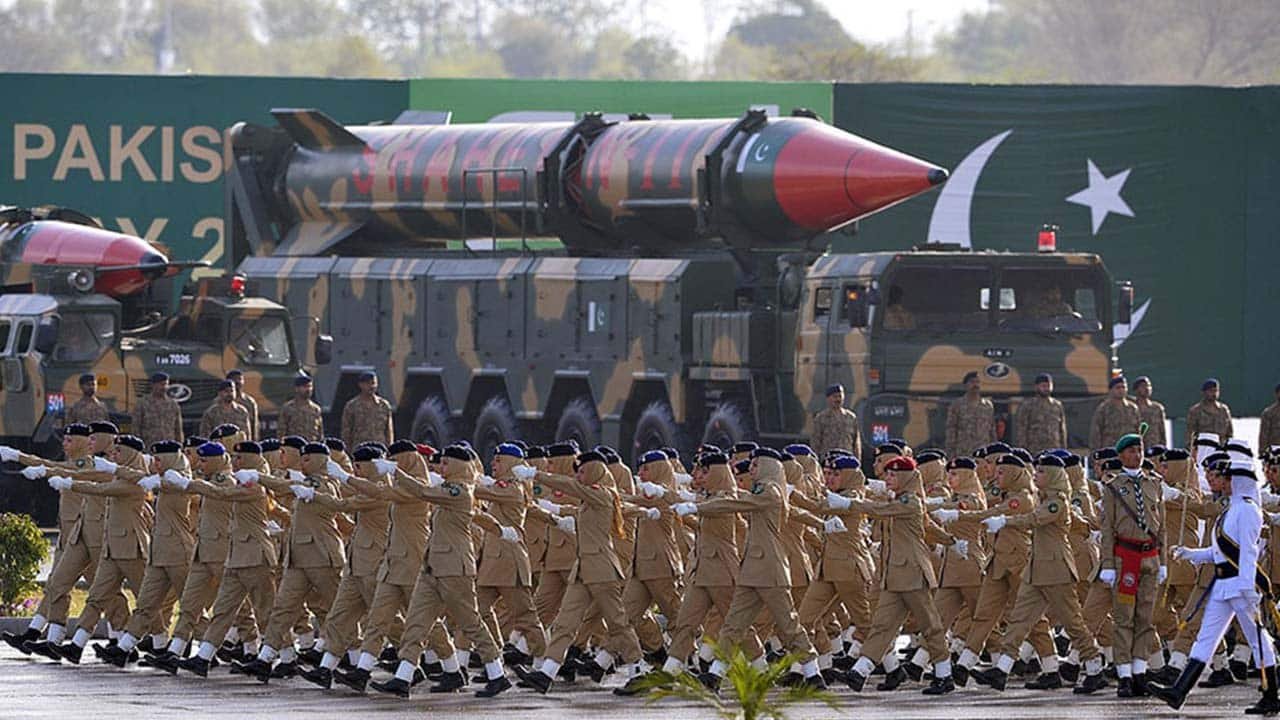
    President Arif Alvi has said the National Accountability Bureau (NAB) should take notice of corruption allegations against former chief military spokesperson and China-Pakistan Economic Corridor (CPEC) Chairman Asim Saleem Bajwa as no one is above the law.

    https://twitter.com/SpotlightAajtv/status/1364265897221791745

    The president made these comments in response to a question by Aaj TV host Munizae Jahangir over rampant corruption in Pakistan. The president said that Pakistan has suffered due to corruption over the past 70 years, adding that his government’s focus should be on curbing corruption. “I am very serious about it; it is very painful for me,” the president said.

    At this, the host asked about allegations against Gen Bajwa, saying the opposition has accused the government of refusing to take action against the ex-general despite graft allegations. The president responded that if the general is accused of corruption then there should be a probe against him.

    “Who will launch this investigation?” asked Jahangir. “NAB [National Accountability Bureau] should,” Alvi responded.

    “No one is above the law, even Prime Minister Imran Khan,” Alvi said, adding that as the president of Pakistan he will never endorse corruption.

    The president also talked about defence budget, saying this has strengthened Pakistan over the years. “The budget has decreased compared to inflation,” the president claimed.

    “In principle, you agree that parliament should debate the defence budget and that everyone accused of corruption, whether it is a bureaucrat, a politician or a general, must be held accountable,” the host asked. “I fully agree [with you],” said the president, adding that parliament is the supreme authority to discuss such matters.

  • Rs93bn on education, Rs25bn on health, Rs1,289bn on defence: How govt is spending in ‘Naya Pakistan’

    Rs93bn on education, Rs25bn on health, Rs1,289bn on defence: How govt is spending in ‘Naya Pakistan’

    Public sector universities are facing a financial crunch due to budget cuts and the coronavirus pandemic. Despite tall claims, the Pakistan Tehreek-e-Insaf (PTI) government didn’t allocate much for the higher education and the budget for the Higher Education Commission (HEC) remains nominal.

    Pakistan has at least 135 public-sector higher education institutions that cater to at least 1.8 million students, says a report in The News. But how much the country spends on its education? Not a lot when compared to other expenditures, such as defence and development.

    Education:

    The government had allocated Rs93 billion — Rs29.4bn is development budget — for the HEC for 2020-21 for development and non-development expenditures in the education sector. The HEC, however, had asked the government for a budget of Rs104bn, reported Dawn at the time.

    The decision to keep the education budget static amid a pandemic has proved expensive, as a number of universities are struggling to make ends meet. According to The News, the University of Engineering and Technology (UET) Lahore, the University of Peshawar, Shah Abdul Latif University Khairpur, Quaid-e-Azam University (QAU) Islamabad and others are facing issues regarding finances.

    Health:

    Pakistan is one of the countries that do not spend a lot on health. In 2019-20, the federal government had budgeted Rs11 billion for the current expenditure on health, reported Express Tribune. However, the government funneled Rs1bn more into the budget to counter the coronavirus threat. In the current financial year, Pakistan more than doubled the health budget to Rs25.5 billion due to COVID-19.

    However, the decision was still criticised as the country’s healthcare needed more than that to battle the deadly pandemic.

    Defence:

    The government spends a major chunk of its money on defence-related expenditures. In financial year 20-21, the allocations to the defence sector saw an 11 per cent increase from the previous year. Rs1,289 billion was allocated to the military.

    According to Ayesha Siddiqa, the author of Military Inc., “major acquisitions by the armed forces, spending on the public sector development programme (PSDP), expenditure on the nuclear programme and para-military forces, payments for military pensions, a newly set-up national security division and a few other military expenditures are not reflected in the budget. If these were to be added to it, Pakistan’s defence spending would be even higher — at around $11bn”.

     Development budget:

    Due to the COVID-19 pandemic and a lull in economic activity, the government could increase its public-sector development spending. It had been budgeted at Rs1,324bn, 18pc below than last year’s budget.

    Of this, federal PSDP had been allocated Rs650 billion, while Rs676 billion had been allocated to provinces, as per Dawn.