Tag: Delay

  • Having trouble with renewing your passport? There’s a WhatsApp number you can contact for help

    Having trouble with renewing your passport? There’s a WhatsApp number you can contact for help

    The Department of Immigration and Passports has released a phone number and WhatsApp number for complaints and awareness on the issuance or renewal of passports.

    Afzal Nadeem Dogar’s report in Geo states that the Director General of Immigration and Passports, Mustafa Jamal Qazi, explained that due to his efforts, the issuance of passports is going on as usual. However, if the public has any problems, they should call phone numbers 0519107072 and 0519107072 to register their complaints or get information.

    According to DG Immigration and Passports, in case of delays in receipts or printing of passports, citizens should send a photo of their passport token receipt to WhatsApp number 03368566685 so that their complaint can be redressed.

    To read more: Why aren’t you getting your passport?

  • IMF’s disapproval of budget raises odds of default and economic fallout for Pakistan

    IMF’s disapproval of budget raises odds of default and economic fallout for Pakistan

    In a recent report, the International Monetary Fund (IMF) expressed criticism of Pakistan’s latest budget, increasing the likelihood that the lender may withhold the much-needed aid before the bailout programme concludes at the end of June.

    According to Bloomberg, this development could lead to a severe dollar shortage in the first half of the upcoming fiscal year, potentially resulting in a higher chance of default, lower growth, and increased inflation and interest rates.

    The IMF’s critique of the budget stems from its belief that it does not adequately address the need to broaden the tax base and includes a tax amnesty. The current foreign currency reserves of Pakistan stand at $4 billion. However, with approximately $900 million in debt repayment due this month, the reserves will deplete by the end of June unless the expected IMF aid materialises.

    The country faces the challenge of repaying an additional $4 billion between July and December, which cannot be rolled over. Given the projected reserves falling below $4 billion at the start of fiscal year 2024, default seems highly probable, according to the report titled “Pakistan Insight.”

    The absence of an IMF programme would significantly limit the options for obtaining fresh external funding. The report suggests that negotiations for a new bailout agreement with the IMF are unlikely to commence until after the elections in October. Furthermore, even if an agreement is reached, actual aid disbursement under a new programme would not occur until December.

    In the meantime, Pakistan must focus on conserving dollars by restricting import purchases and maintaining a surplus in its current account balance to fulfill its obligations. To avert default in the first half of fiscal year 2024, the country will also need to seek assistance from friendly nations.

    The report warns of severe consequences for Pakistan’s economy if the anticipated IMF aid is not received by the end of June. Import restrictions will need to remain in place, and the State Bank of Pakistan is expected to raise interest rates above the current level of 21 per cent to further reduce demand for imports and preserve foreign exchange reserves.

    The report’s base case assumes that the State Bank of Pakistan will maintain its current policy stance until December, but that prediction relies on the assumption of IMF aid arriving by the end of June.

    Continued import restrictions and a weaker Pakistani rupee are likely to contribute to higher inflation in fiscal year 2024 compared to current forecasts. It is projected that inflation will average around 22 per cent, while increased borrowing costs and limitations on importing raw materials will further hamper production and dampen consumption.

    In addition, if the expected IMF aid does not materialise this month, the report predicts that Pakistan’s growth in fiscal year 2024 will be much weaker than the current forecast of 2.5 per cent.

    Furthermore, the higher interest rates resulting from the aid shortfall will lead to increased debt servicing costs for the government. The report reveals that approximately half of the fiscal year 2024 budget is allocated to debt servicing, exacerbating the country’s fiscal challenges.

    With the IMF aid hanging in the balance, Pakistan faces a critical period in its economic trajectory, where strategic financial decisions, reliance on friendly nations, and stringent economic measures will be essential to avoid further complications and ensure stability in the future.
  • Russian crude oil shipment faces delay, expected to reach Pakistan on June 11

    Russian crude oil shipment faces delay, expected to reach Pakistan on June 11

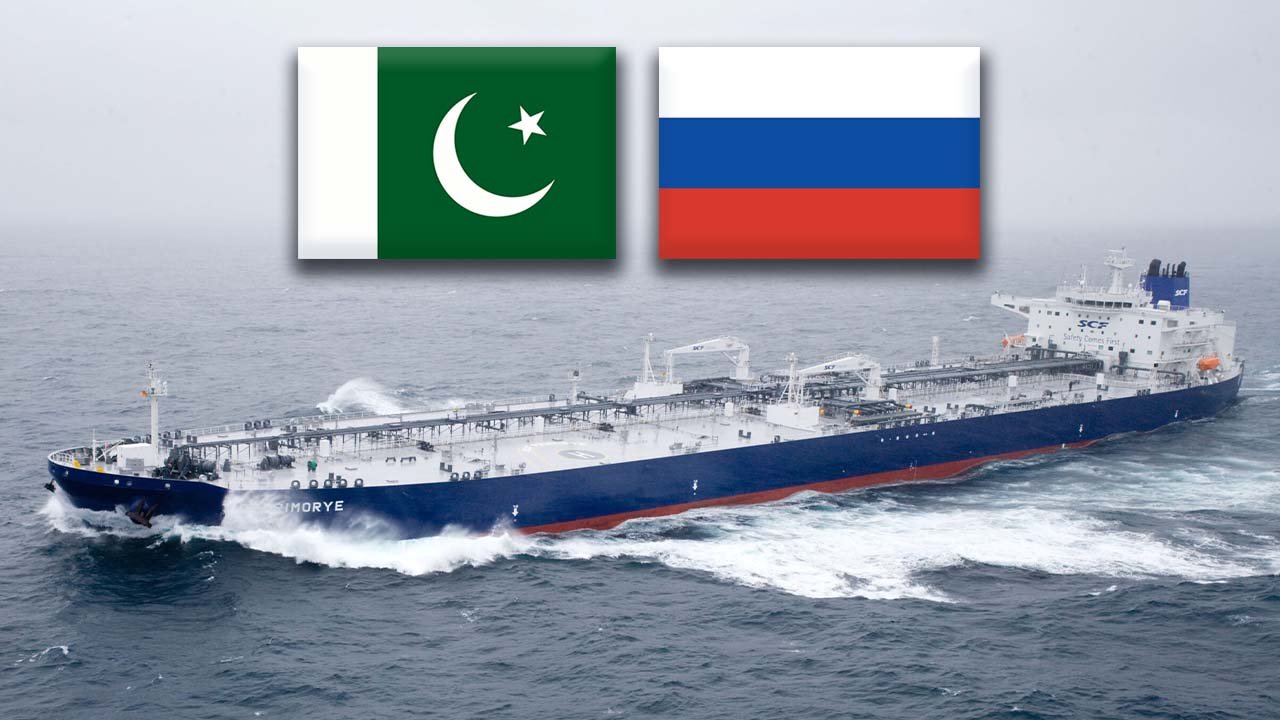
    In a recent development, a Russian cargo vessel carrying 100,000 tonnes of crude oil has experienced delays and is now expected to reach the Omani port of Duqm on June 7. This delay has caused a setback in Pakistan’s plans as the oil was initially scheduled to arrive in Oman on May 27-28.

    According to an official, the crude oil will be transported to Pakistan via smaller ships from the Omani port, which will take approximately two weeks to reach Port Qasim in Karachi. The Russian vessel, loaded with Ural crude on April 21 at a Russian port, encountered a delay of 10 days due to technical issues. Subsequently, it arrived at Egypt’s Suez Canal on May 17, where it faced a lengthy 12-day wait in a queue to cross the canal.

    Following its journey across the Red Sea, the vessel is anticipated to reach Duqm on Tuesday. Upon arrival, the crude oil will be unloaded onto a smaller vessel with a capacity of 50,000 tons. This smaller vessel is expected to reach Port Qasim on June 11. The remaining 50,000 tons of Russian crude will be transported separately and is scheduled to arrive at Port Qasim on June 20.

    According to The News, authorities have assured the safe and smooth arrival of the Russian crude, despite the logistical challenges that caused the delay. The official stated that the transportation cost has already been settled with the Russians, so the delay will not result in additional expenses. However, there is a concern that if the price of crude oil decreases during this period, it could have detrimental effects on the country.

    Pakistan Refinery Limited (PRL) has been entrusted with the responsibility of refining the test cargo of Russian crude oil. PRL will blend this oil with crude imported from the United Arab Emirates and Saudi Aramco. The test cargo will provide valuable data to the government regarding the quality, yields, and commercial viability of the Russian oil. Additionally, it will assist the government in assessing transportation costs, refining expenses, and refining margins for the country’s refineries.

    The government is eagerly awaiting PRL’s test report, which will aid in making informed decisions about future oil imports and refining processes.

  • Pakistan gets temporary relief of $3.68 billion from G-20 countries

    Pakistan gets temporary relief of $3.68 billion from G-20 countries

    The Ministry of Economic Affairs stated that the Government of Pakistan and the French Republic on Monday signed an agreement as part of the G20 Debt Service Suspension Initiative (DSSI).

    The government signed a DSSI, which amounted to the suspension of loans totaling $107 million under the G20 DSSI framework, according to a statement made in this regard by the ministry, according to Profit.

    This sum, which was initially due between July and December 2021, will now be paid back over a six-year period (plus a one-year grace period) in semi-annual installments, according to the statement.

    Federal Secretary for Economic Affairs Division Mian Asad Hayaud Din and French Ambassador to Pakistan Nicolas Galey signed the agreement today in Islamabad.

    Agreements for the revocation of $261 million between the government and the French Republic have already been signed.

    The ministry mentioned that the G20 DSSI has provided the fiscal space required to address the immediate health and financial demands of the Islamic Republic of Pakistan as a result of the support given by Pakistan’s development partners.

    According to the ministry, $3,688 million in debt has been suspended and rescheduled overall under the DSSI framework, which covers the period from May 2020 to December 2021.

    Pakistan has so far reached 93 agreements and signed them with 21 bilateral creditors for the restructuring of its liabilities under the G20 DSSI framework, totaling a delay of nearly $3,150 million.

    The above-mentioned agreements have been signed, bringing the total to $3,257 million. The G20 DSSI’s remaining agreements are currently the subject of negotiations.