Daraz Group, an e-commerce subsidiary of Alibaba Group, will be reducing its workforce by 11 per cent in response to the challenging market conditions.
The CEO, Bjarke Mikkelsen, noted the adverse impact of a war in Europe, significant supply chain disruptions, rising inflation, heightened taxes, and the elimination of crucial government subsidies on the company’s operations, which are in Pakistan, Bangladesh, Sri Lanka, and Nepal.
Daraz, which was founded in Pakistan in 2012 and acquired by Alibaba in 2018, is the largest e-commerce platform in Pakistan and serves over 100,000 SMEs in the country.
According to Ehsan Saya, Managing Director of Daraz in the country, Pakistan remains the company’s largest market with the largest number of employees across its markets.
He adds, “almost one-third of the staff in Pakistan is from regional teams which work with teams in Bangladesh, Nepal, Sri Lanka, Myanmar, Singapore, and China.”
Ehsan Saya confirmed to Reuters that the 11 per cent reduction in the workforce of Daraz Group will also result in an equivalent cut in its workforce in Pakistan. The group did not provide further details regarding the specific number of employees affected and further details on the restructuring.
In a letter, CEO Bjarke Mikkelsen stated that Daraz has been able to grow its active shopper base from three million in 2018 to over 15 million currently, with an average order growth of nearly 100 per cent until last year. The company reported having access to 500 million customers in 2021 and a workforce of 10,000 employees. In the past two years, Daraz has invested $100 million in Pakistan and Bangladesh.
As expected, Pak Suzuki Motor Company (PSMC) has announced a price hike for all cars after Toyota Indus Motor Company (IMC) and Honda Atlas Cars Limited (HACL).
The revised retail sale prices will come into effect from January 25, 2023, according to PSMC.
Here are the new prices:
Model
Old Price (Rs)
New Price (Rs)
Increase (Rs)
Alto VX
1,699,000
1,859,000
160,000
Alto VXR
1,976,000
2,156,000
180,000
Alto VXR AGS
2,120,000
2,310,000
190,000
Alto AGS
2,223,000
2,423,000
200,000
Wagon R VXR
2,421,000
2,629,000
208,000
Wagon R VXL
2,564,000
2,789,000
225,000
Wagon R AGS
2,802,000
3,059,000
257,000
Cultus VXR
2,754,000
3,039,000
285,000
Cultus VXL
3,024,000
3,339,000
315,000
Cultus AGS
3,234,000
3,569,000
335,000
Swift GL MT
3,180,000
3,479,000
299,000
Swift GL CVT
3,420,000
3,742,000
322,000
Swift GLX CVT
3,760,000
4,115,000
355,000
Ravi
1,424,000
1,539,000
115,000
Ravi w/o Deck
1,349,000
1,464,000
115,000
Bolan Van
1,500,000
1,619,000
119,000
Bolan Cargo
1,487,000
1,606,000
119,000
Surprisingly, the automaker has announced the highest price increase for its flagship hatchback, the Suzuki Swift GLX variant, which will now be sold for Rs4.115 million, a Rs355,000 increase from its previous price of Rs3.760 million.
According to the notification from PSMC, the revised retail prices include the FED and sales tax but exclude advance income tax, with another condition that the prices are subject to change without notice at the time of delivery.
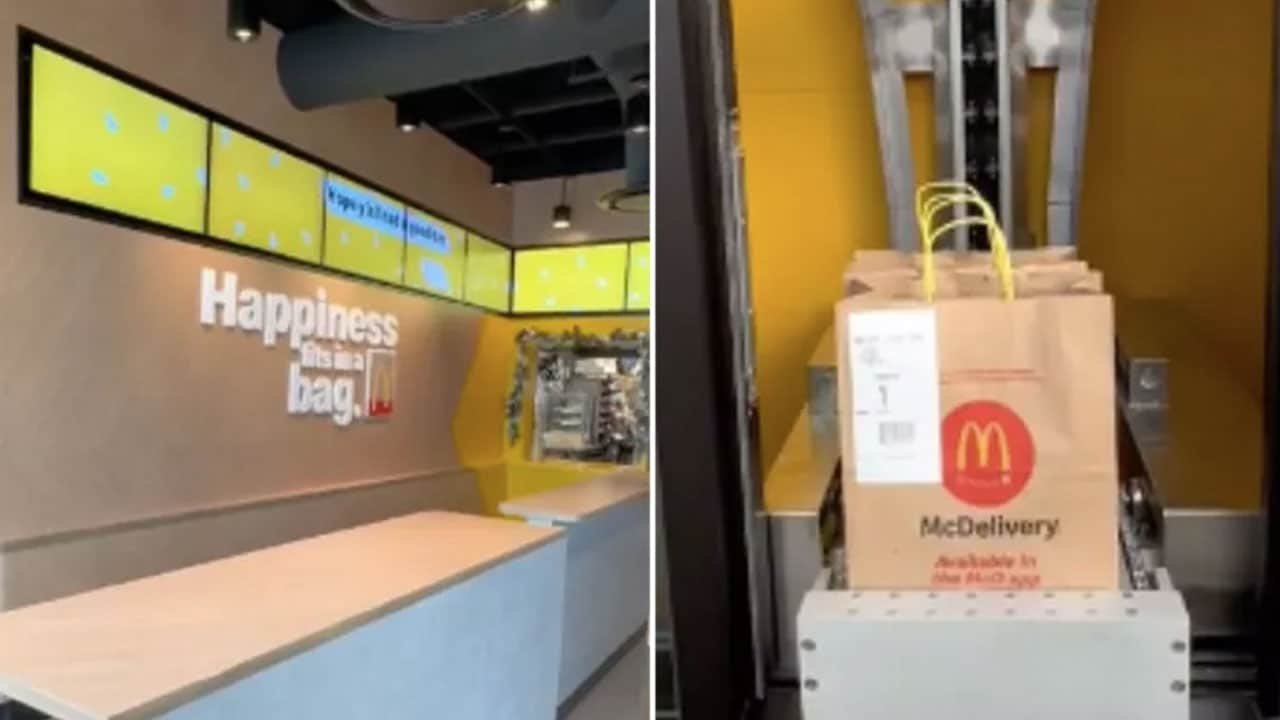
The renowned fast food chain McDonald’s has opened an automated outlet in Texas, which is a first of its kind. The restaurant allows customers to order food without requiring a kiosk or a smartphone app.
Without any human interaction, customers will get their orders on the conveyor belt. The restaurant lacks any seating or set-ups for eating inside since it is meant to be a “grab and go” outlet.
This unique McDonald’s is smaller than other McDonald’s, and the restaurant’s primary objectives are to improve accuracy and order speed. Instead of waiting and ordering at the restaurant, guests can place their orders before they arrive.
The business claimed to be creating fresh approaches to provide clients with faster, more effective service.
Although there are still people working in the restaurant to prepare the food, the new approach only eliminates client interaction. According to the restaurant’s franchisor, Keith Vanecek, the new strategy enables the restaurant team to focus more on order speed, enhancing the effectiveness and enjoyment of both the customer and employee experiences.
The food chain has, however, come under heavy fire for automating the process since it would harm people’s jobs. At $7.25 per hour, Texas’ minimum wage is one of the lowest in the country. Additionally, reducing employment in such a situation scares those who are already wary of automation and robots taking jobs away from people.
Many individuals opposed the plan and posted their opinions and personal experiences on social media.
This McDonalds is “fully automated” in the same way an automat or dumb waiter is fully automated: they’re designed to hide the (poorly paid) human labor and make it look like your food appears out of nowhere. https://t.co/C82KkkMTVV
Please, unless people boycott this, expect your livelihoods to be made redundant in the future. Supporting this is supporting the future demise of JOBS FOR HUMANS.
A Twitter user said that it would result in the elimination of jobs for restaurant employees. Another user said that after speaking with Google and Siri, he now needs to communicate with yet another robot.
While McDonald’s believes that the strategy will improve the consumer experience.
A 32-year-old Hindu woman from a village in Chhachhro, Tharparkar, delivered a dead breech baby girl at a charity hospital on June 16.
Breech delivery is when a baby’s bottom comes out first during the delivery.
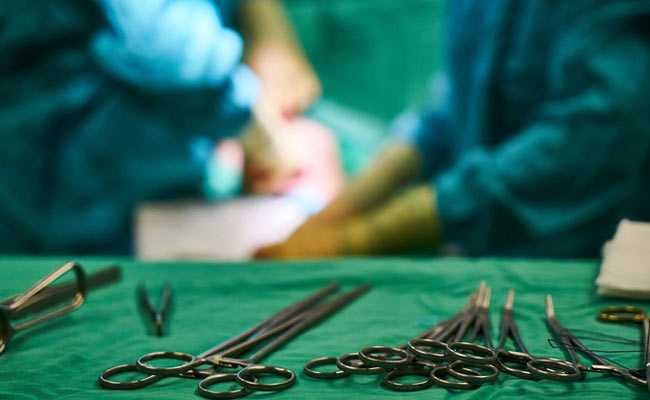
In Chhachhro the hospital staff tried to deliver the breech baby’s head for half an hour but failed. After failing to deliver the rest of the baby, the hospital staff cut off the head before the mother was sent to Mithi hospital. The procedure was done in the absence of a gynaecologist and female staffers. The woman was then taken to the Mithi district headquarters hospital, where she was advised to rush to Liaquat University of Medical & Health Sciences, Jamshoro (LUH), which was 220 km away from Mithi. Altogether, she had to travel 319 km with the baby’s head inside her womb.
According to the baby’s father, they had an X-ray taken from a hospital, where the doctor had told him that his wife would have an operation because the baby was upside down in the mother’s womb. According to him, the doctor also told him the date of delivery. He said that as soon as his wife’s condition deteriorated, he took her to a local midwife who said that she was not feeling well, after which he took his wife to the hospital.
In LUH, an abdomen surgery was performed on her and the baby’s head was taken out after 18 hours of back-to-back delivery pains. This was the woman’s fifth child who died during delivery.
Prof Dr Raheel Sikandar of LUH said that usually breech babies are delivered and they survive. According to him, the woman had a ruptured uterus.
“Healthcare providers [in Chhachhro] might have tried to save the baby, but in vain. The baby’s head was entrapped. In such breech baby cases, deaths occur in one minute if they are not fully delivered.”
“The baby’s buttocks and legs were fully developed, but unfortunately it was a dead breech baby,” Dr Sikandar added. However, the woman’s life has been saved. She is currently admitted to the gynecology unit of LUH.
The charity hospital in Chhachhro said that while the nurses were cleaning the patient, the dead baby’s torso detached from the neck because the neck had already been broken. They revealed that at the time they didn’t have any gynaecologist, which is why they could not operate. The hospital further claimed that the woman’s family was told to go to Mithi but they insisted on getting the treatment at the charity hospital, reports BBC Urdu.
Action taken by the authorities:
A notification issued by the Director-General (DG) Sindh Health on Saturday stated: “The fetus was not in a cephalic position. So the head got stuck after delivering the torso because the delivery was done by inexperienced hands.” DG Sindh Health said that an investigation has been started in which the statements of the staff of the missionary hospital have been recorded. An inquiry was also ordered by the provincial health secretary.
Pakistan has the highest infant mortality rate in South Asia. According to the United Nations International Children’s Emergency Fund (UNICEF), the country reported 54 infant deaths per 1,000 live births.
News of infant deaths and the non-availability of doctors in hospitals have been circulating in the media for the last decade in Tharparkar. Several times, this issue was brought up in the Supreme Court (SC), High Court, and the Sindh Assembly but all in vain.
Honda Atlas, like its counterpart Indus Motor Company, announced a price hike for the second time in less than two months, increasing ex-factory prices up to Rs170,000, claiming rupee devaluation as the cause for transferring the burden to the consumers.
The ‘latest generation’ of Honda city in Pakistan is now priced at Rs3,264,000 after getting a hike of Rs135,000. Aspire 1.5 variants of Honda city witnessed a hike of nearly Rs150,000 in their previous rate.
Meanwhile, Civic prices increased by Rs150,000 across all three variants: the Civic 1.5L CVT, Civic 1.5L Oriel M CVT, and Civic RS 1.5L CVT. The top variant of Honda civic RS 1.5 LL CVT from May 1 will be offered at a price of Rs6,649,000 which was previously sold at Rs6,499,000.
Honda’s MPV, the BRV, is now priced at Rs4,249,000 after a price increase of Rs170,000. BRV was earlier sold at Rs4,079,000.
“The smartphone has transformed online shopping in Pakistan and the COVID-19 lockdown has accelerated it,” says Jarrar Shah of 24seven, an online grocery store based in Lahore.
Shah’s words ring true because the past couple of weeks have witnessed a great shift in the way the world functions. As cases of coronavirus rose in Pakistan, the country went into lockdown, until recently, with all offices, shops, malls, restaurants closed. Only pharmacies, grocery stores and essential businesses were allowed to operate and that too for a limited number of hours. Unfortunately, us Pakistanis are not very used to that lifestyle – our day begins well into the afternoon and ends just before midnight – but changing circumstances forced us all to alter our routines and many of us turned to online shopping in a bid to make life easier for ourselves. According to Google Trends, searches for ‘online grocery’ grew exponentially in the last few weeks with the sharpest rise registered in the week following the lockdown.
While we’re all aware of how online shopping works at our end, on the other side it’s a whole different ball game.
Speaking to The Current about the procedure that follows, Jarrar explained that after the customer places an order on any of their portals – website, application, Whatsapp – the order is processed and their team begins to collect the items. He shared that though they have their own warehouse, they have partnered with other stores, bakeries and meat shops and sometimes depending on the order placed, they have to collect items from different locations to complete an order. Both Jarrar and Bilal Bakhtawari of D Watson, Islamabad said that the app is the most convenient of them all because it mentions the price and availability of products saving the time of both the customers and the stores. Once the order is complete, the riders deliver it.
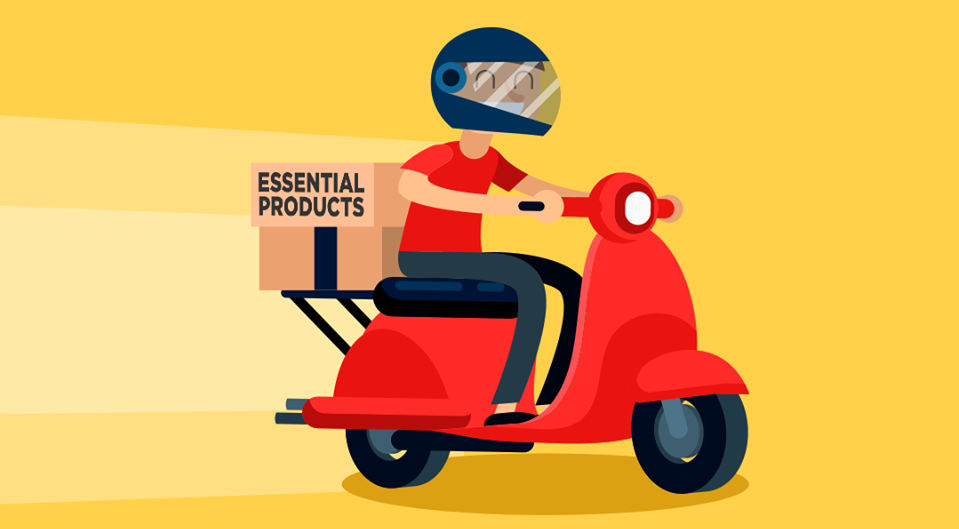
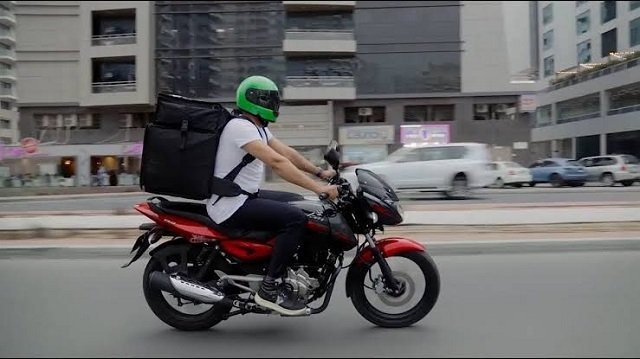
In this whole process, the rider perhaps has the toughest job.
“We provide the riders with all the necessary precautions, including sanitisers, masks and regular temperature checks, but to what extent can we keep them safe? These guys often have to deliver stuff, come rain, come sun and often have to travel long distances to deliver orders,” says Bilal, adding that if any of the riders feel ill, they are told to immediately get themselves checked and are sent home.
Both Jarrar and Bilal also asserted that their premises are regularly disinfected and cleaned.
While most customers are accommodating and patient and are willing to overlook delays and incomplete orders, given the situation, there is a small percentage of them who tend to be unreasonable.
“Customers have been by and large accommodating. Only ten percent of them have issues,” says Shah.
Both business owners explained that they initially faced problems because they were not prepared to manage such a situation as they went from a few orders to a hundred or more orders every day. However, with time they managed to streamline their services by increasing staff and opting for better rider services.
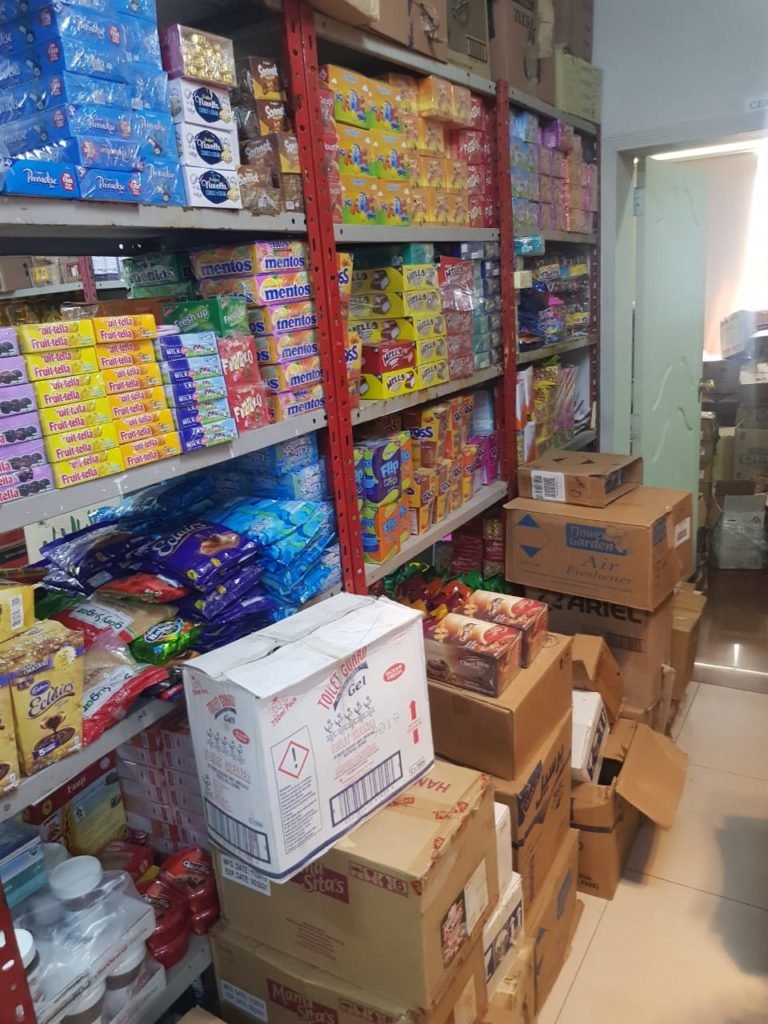
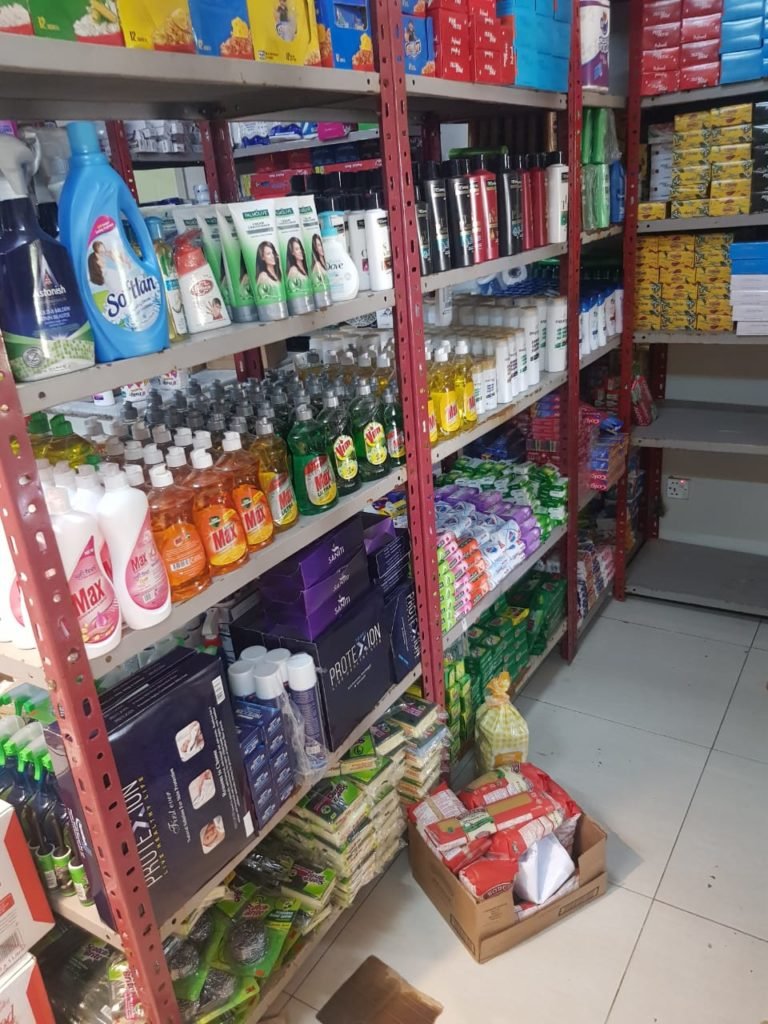
24Seven’s warehouse
Sharing a particularly harrowing experience, Shah shared that someone placed an order from abroad for their loved ones in Lahore using a credit card.
“When the rider went to deliver they said the stuff is not up to the mark and kept the rider hostage, demanding that we refund them the amount in cash. It turned out that the whole situation was a scam. The person from abroad wanted to send money to Pakistan and because all money wiring services were closed, they attempted to use our store to do so.”
“We’ve referred the matter to the police,” he added.
Similarly, Bilal recounting his nightmarish experience shared that a lady placed an order for fruits and vegetables on their app after store timings. He said that the prices of fresh goods are revised daily and when her order was processed the next day, she was informed of the change in prices before confirming her order. However, when the rider went to deliver her order, she claimed that she had cancelled her order. After a whole fuss, it was revealed that her husband was not satisfied with the prices and was not willing to pay for the order because of which she put the entire blame on the management to try to get out of the situation.
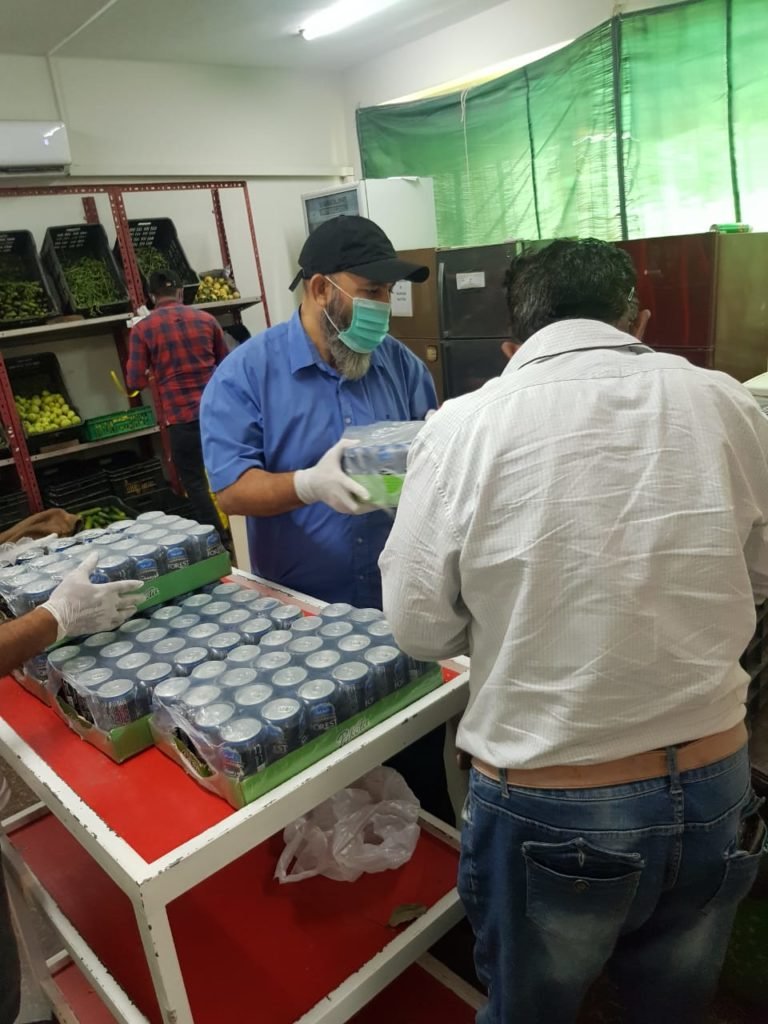
Orders being put together at 24Seven’s warehouse
While people in Pakistan still prefer to go and buy their groceries in person, online shopping is slowly but steadily getting popular, especially among those who lead fast-paced lifestyles and have limited time.
On whether this is feasible in Pakistan or not, Jarrar is positive that it is. However, Bilal feels that until online payments like Paypal don’t come to Pakistan, online businesses won’t flourish.
“As we have observed in the past couple of weeks, the market for online shopping is definitely promising. However, in my opinion, it won’t flourish until a proper payment system is put into place,” says Bilal. “We often receive bogus orders with Cash on Delivery because of which our business suffers. People place orders but when our rider goes to the address, there is no one to receive the order.”
“Until online payments come to Pakistan, online businesses will not flourish.”
A small market in Washington DC is turning to technology to deliver essential supplies during the coronavirus pandemic in one Northwest neighborhood.
Broad Branch Market in Chevy Chase is using robots to deliver the groceries. The store began using the robots about two weeks ago and makes 10-15 deliveries a day within a limited area of the neighbourhood.
While talking to a news outlet the owner said that she has learned to adapt to the times being a small business owner and since lots of customers have concerns about coming to the store during the COVID-19 outbreak, she can now deliver to them.
A food delivery robot from the Broad Branch Market grocery store goes to work in the Chevy Chase neighborhood of Washington, DC.
The store began using the robots about two weeks ago and makes 10-15 deliveries a day within a limited area of the neighborhood